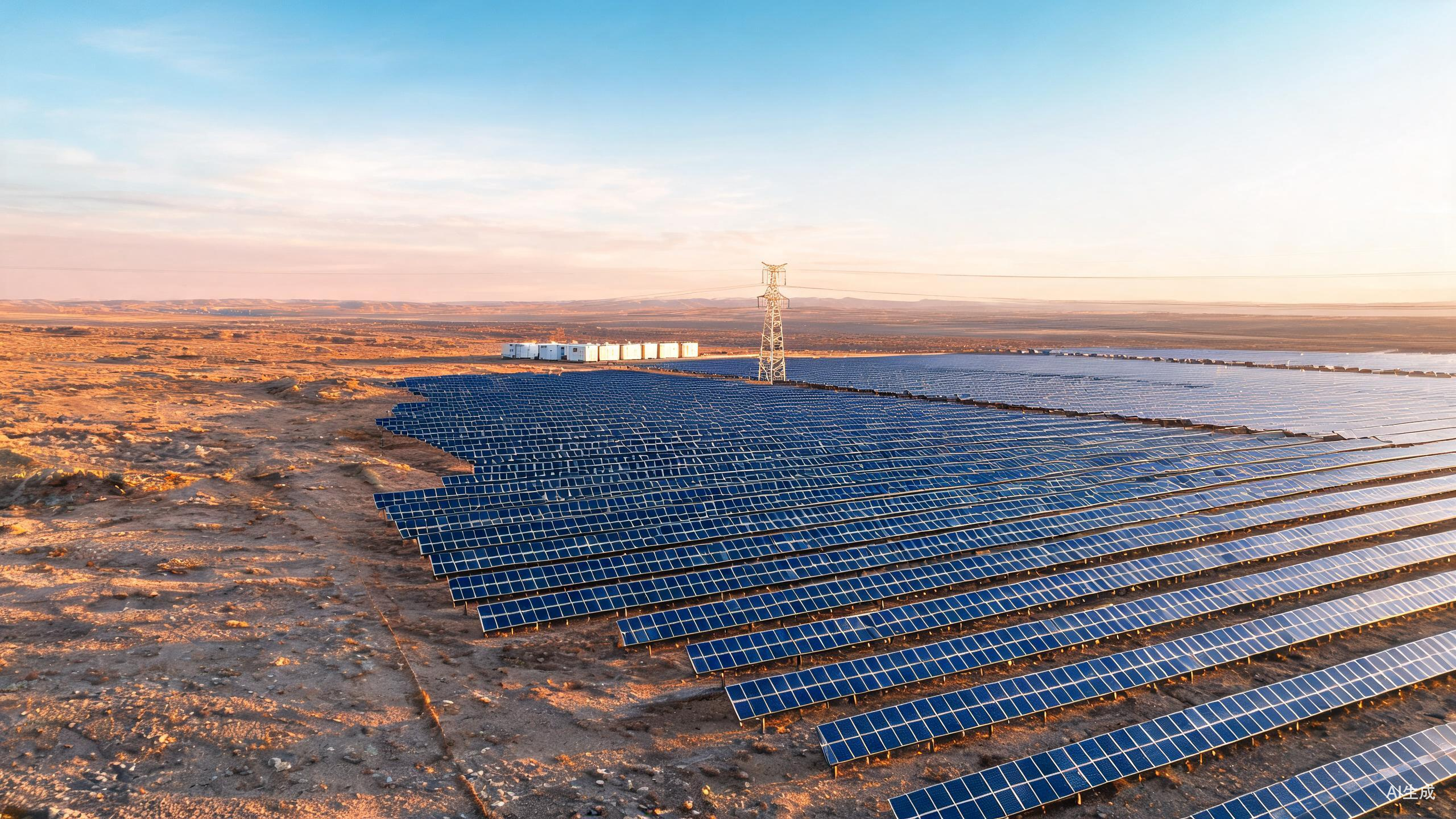
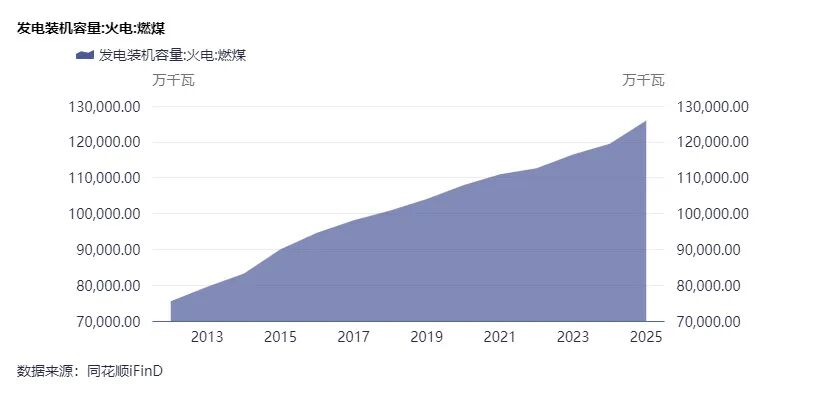
China's Solar Power Hits Historic Milestone On September 1, the National Energy Administration released data showing that as of the end of July 2026, China's installed photovoltaic power capacity reached 1,286 gigawatts — surpassing the country's installed coal power capacity of 1,285 gigawatts for the first time.
China's Solar Power Generation Achieves Historic Breakthrough As of the first half of this year, the cumulative installed capacity of photovoltaics
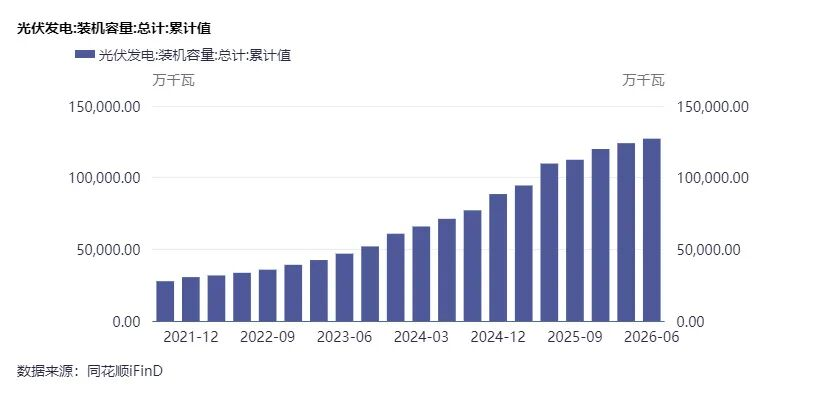
China's Solar Power Achieves Historic Breakthrough This marks the first time photovoltaics have taken the top spot in terms of installed capacity, becoming the largest source of power in China, accounting for 31.5% of the country's total installed power generation capacity of 408 billion kilowatts.
China's Solar Power Generation Achieves Historic Breakthrough Monthly Cumulative Newly Added Photovoltaic Installation Capacity So Far This Year
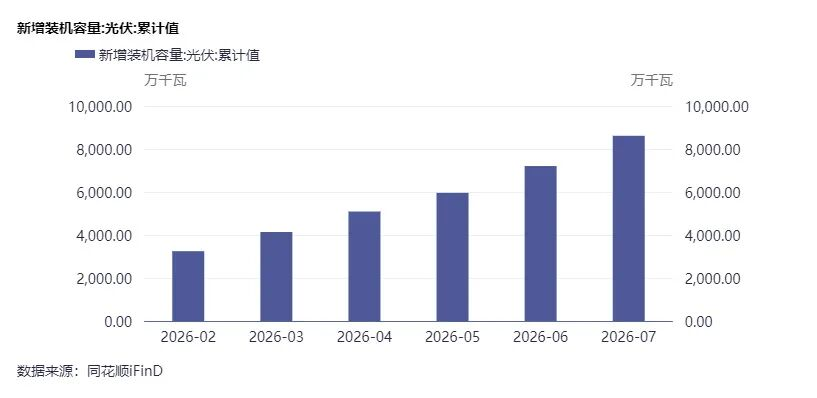
China's Solar Power Generation Achieves Historic Breakthrough More specifically, in the first 7 months of this year, the country's photovoltaic power generation exceeded 802.4 billion kilowatt-hours, up 15.5% year-on-year, outpacing the growth rate of total social electricity consumption by about 10 percentage points. A more intuitive conversion is that for every 8 units of electricity consumed nationwide, approximately 1 unit comes from photovoltaic power generation.
China's Solar Power Generation Achieves Historic Breakthrough However, Daily Economic News reporters (hereinafter referred to as Daily Economic News reporters) have noticed that, against the backdrop of photovoltaics becoming China's largest power source, individual photovoltaic companies are still under pressure from cyclical adjustments. On one hand, there is the rapid development of green energy, while on the other hand, there is the reality of narrowing profit margins in the industry chain and insufficient absorption. How to balance the rapid growth of installed capacity with absorption, and explore new paths for high-quality development, has become a pressing issue that the entire capital market and industry must face.
China's Solar Power Achieves Historic Breakthrough Photovoltaic Power Generation Cost
China's Solar Power Achieves Historic Breakthrough, Price Can Drop Below 0.25 Yuan per Kilowatt-Hour
China's Solar Power Generation Achieves Historic Breakthrough The surpassing of photovoltaic installed capacity is a result of the continuous iteration and advancement of industry technology, as well as the decrease in costs. Looking back at the data from the past few years, China's total social electricity consumption has maintained steady growth, exceeding 1 trillion kilowatt-hours by 2025.
China's Solar Power Generation Achieves Historic Breakthrough In the face of massive new electricity demand, China's power generation structure has undergone significant changes. In 2025, the country's new power generation capacity reached 550 million kilowatts, with wind power and solar power accounting for over 80% of the total new capacity.
China's Solar Power Generation Achieves Historic Breakthrough In contrast, the overall coal-fired power generation in 2025 decreased by 1.9% year-on-year, with the effect of reduced capacity gradually becoming apparent. In some regions, as old units are gradually retired, the space for coal-fired power generation growth has become very limited. The combination of increased solar power and decreased coal-fired power has laid the foundation for photovoltaics to become the largest power source in 2026.
China's Solar Power Achieves Historic Breakthrough As of the end of 2025, the installed capacity of coal-fired power generation
China's Solar Power Achieves Historic Breakthrough The underlying logic driving this structural reversal is that the photovoltaic industry, through technological iteration and large-scale expansion, has successfully reduced initial investment costs significantly. Currently, the equipment investment cost of domestic photovoltaic systems has generally fallen below 2.5 yuan/watt. As the component link with the highest cost proportion in the power station system, the price per watt has fallen below 0.8 yuan/W this year, with some mainstream N-type products even dropping to below 0.7 yuan/W, a significant decline compared to the high prices in previous years.
China's Solar Power Achieves Historic Breakthrough The decline in component prices has directly reduced the levelized cost of photovoltaic (PV) power. In areas with abundant solar resources, the cost of PV power has fallen to below 0.25 yuan per kilowatt-hour, with the resource-rich regions in the northwest seeing even further declines. In comparison, in many southeastern provinces, the cost of PV power has substantially fallen below the local coal-fired power benchmark grid price. The emergence of economic viability has effectively increased the willingness of terminal power generation companies and industrial and commercial owners to install solar panels.
China's Solar Power Achieves Historic Breakthrough Monita Advanced Manufacturing's Chief Researcher Chen Bing said in an interview with Netease reporters that the core reason photovoltaics have surpassed coal-fired power is the decline in the levelized cost of electricity due to advancements in photovoltaic technology, which has given photovoltaic project investments a stronger internal rate of return (IRR).
China's Solar Power Generation Achieves Historic Breakthrough Shanghai Steel Union's photovoltaic industry analyst, Wang Zhichao, also told E Jing reporter that the cost of photovoltaic power generation has decreased by more than 90% over the past 10 years, which is the core driving force behind the significant increase in installed capacity. With the top-level goal of "dual carbon" pulling demand, domestic terminal demand continues to increase, making photovoltaic projects economically competitive without subsidies.
China's Solar Power Generation Achieves Historic Breakthrough He further analyzed that power grid reform has removed the bottlenecks of long-distance transmission and absorption, the marketization of green electricity has created additional premiums, and the implementation of large-scale and distributed projects in various regions has amplified the cost reduction advantages, forming a positive feedback loop.
China's Solar Power Achieves Historic Breakthrough Polysilicon Prices Continue to Decline
China's Solar Power Generation Achieves Historic Breakthrough Industry Chain Accelerates Clearance of Inefficient Production Capacity
China's Solar Power Generation Achieves Historic Breakthrough NBD reporters have noticed that despite the country's terminal installation volume ranking first, the photovoltaic industry chain is still undergoing a profound cyclical adjustment.
China's Solar Power Generation Achieves Historic Breakthrough Wang Zhichao analyzed to Eju.com reporters that the root cause of the current industry's in-depth "involution" lies in the concentrated expansion of production during the previous period of high prosperity, with the release of production capacity far exceeding the growth rate of domestic and foreign demand. Additionally, the severe homogenization of products and the failure of loss-making capacity to withdraw have led to a further exacerbation of the domestic supply and demand mismatch due to overseas trade pressures. In 2026, the photovoltaic industry as a whole faces the challenges of narrowing profit margins and increasing asset impairment pressure, and the entire industry is in a stage of de-stocking and capacity optimization.
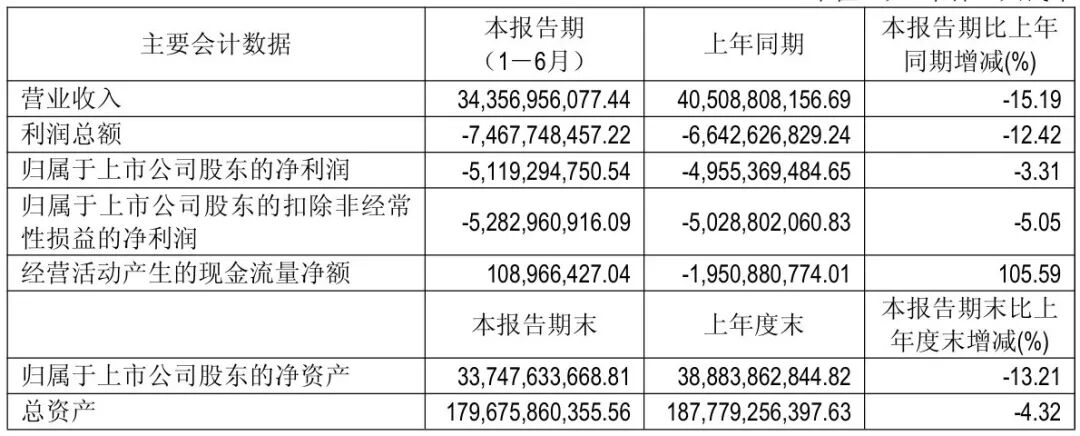
China's Solar Power Generation Achieves Historic Breakthrough The imbalance between supply and demand in the industry chain is intuitively reflected in the financial reports of leading enterprises. Tongwei Co., Ltd.'s 2026 semi-annual report shows that the concentrated release of new investments inside and outside the industry in recent years has led to a temporary imbalance between supply and demand in the photovoltaic industry.
China's Solar Power Achieves Historic Breakthrough According to data from the China Photovoltaic Industry Association (CPIA), in July 2026 compared to January, the price of polysilicon products dropped by over 40%, while the prices of silicon wafers and solar cells decreased by nearly 30%. The rapid compression of profit margins has been transmitted downstream, leading to a further decline in operating rates across the industry chain, with major product prices continuing to run at low levels.
China's Solar Power Achieves Historic Breakthrough Trend of Polysilicon Product Price Index Over the Past Half Year
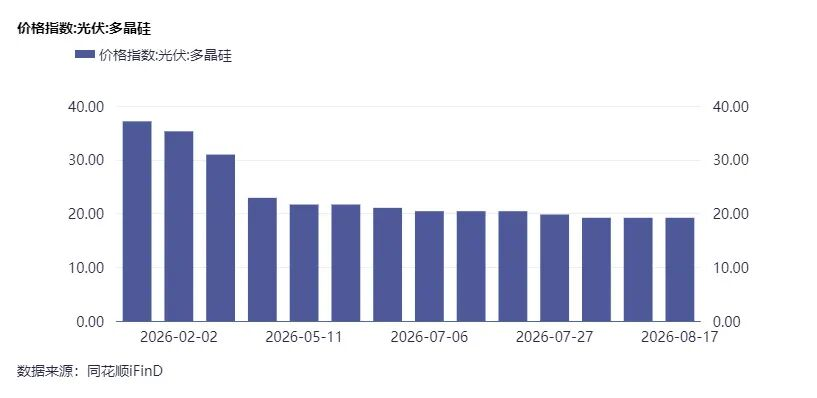
China's Solar Power Generation Achieves Historic Breakthrough Under the dual pressure of low product prices and declining utilization rates, some undercompetitive production capacity is gradually being phased out.
China's Solar Power Generation Achieves Historic Breakthrough Taking Tongwei Co., Ltd. as an example, its revenue in the first half of 2026 reached 34.357 billion yuan, down 15.19% year-over-year, with a net loss of 5.119 billion yuan attributable to the parent company. In the face of cyclical challenges, leading enterprises are proactively adjusting their business strategies, shifting their focus to stringent risk control and ensuring cash flow security.
China Solar Power Achieves Historic Breakthrough Tongwei Co., Ltd.'s Key Accounting Data for the First Half of the Year (Unit: Yuan)
China's Solar Power Generation Achieves Historic Breakthrough Meanwhile, on the policy front, the government is accelerating the elimination of outdated production capacity through upgraded standards. On June 27, the Ministry of Industry and Information Technology and other agencies issued three mandatory national standards, including the "Energy Consumption Limits per Unit Product for Polysilicon and Germanium," setting strict production energy-consumption caps and product-efficiency thresholds to drive out low-efficiency capacity through standardization.
China's Solar Power Generation Achieves Historic Breakthrough In response to the industry's low capacity utilization rate, relevant departments have begun to guide the industry's standardized development. The Ministry of Industry and Information Technology and other departments have established a dynamic monitoring and early warning mechanism for capacity, and have uniformly raised the minimum capital ratio for new polysilicon projects to 30%. At the same time, the photovoltaic conversion efficiency threshold for new battery and component projects has also been raised accordingly.
China's Solar Power Generation Achieves Historic Breakthrough Chen Bing emphasized to NBD reporters that this round of capacity clearance focuses more on improving product quality standards and canceling export tax rebates, using more market-oriented means to guide inefficient capacity to exit, which is fundamentally different from the policy approach of using administrative measures to cut capacity in the past.
China's Solar Power Generation Achieves Historic Breakthrough Wang Zhichao stated that, unlike previous pure market-driven clearance, this round belongs to a dual-driven clearance of policy and market. Measures such as increasing the capital ratio, canceling export tax rebates, tightening energy consumption and efficiency standards, and prohibiting sales below full cost, all help to force low-efficiency production capacity to accelerate its exit.
China's Solar Power Achieves Historic Breakthrough The adjustment of import and export policies is also reshaping the industry's competitive logic. Starting from April 1, the policy of canceling the export tax rebate for photovoltaic products has officially taken effect. Industry analysts believe that this policy change will increase the cost of enterprises going overseas in the short term, but in the long term, it will force photovoltaic enterprises to change their competitive approach in overseas markets, promoting the industry to transform towards relying on technology and product quality.
China's Solar Power Generation Achieves Historic Breakthrough Regarding when the industry will hit bottom and rebound, Wang Zhichao proposed three key indicators: first, the industry chain achieves substantial cooperative reduction in production and inefficient capacity is gradually cleared; second, the prices of various links in the photovoltaic industry can stabilize above the cost line; and third, domestic and foreign installation demand warms up and industry chain inventory returns to a healthy range.
China's Solar Power Generation Achieves Historic Breakthrough Chen Bing also predicts that with the increase in electrification demand from energy storage, ultra-high voltage construction, and data centers, which will enhance the power grid's absorption capacity, the photovoltaic industry is expected to see a slight recovery starting from 2027.
China Solar Power Achieves Historic Breakthrough Energy Storage Allocation Becomes Hard Requirement for Projects
China's Solar Power Achieves Historic Breakthrough Photovoltaic Companies Explore Multiple Channels to Expand Application Scenarios
China's Solar Power Generation Achieves Historic Breakthrough After reaching the top in terms of installed capacity, the photovoltaic industry's incremental space will increasingly rely on the improvement of absorption capacity and the expansion of new application scenarios.
China's Solar Power Generation Achieves Historic Breakthrough According to data from the National Energy Administration, the country's cumulative photovoltaic utilization rate reached approximately 94.8% in 2025, but the photovoltaic absorption rate in some northwestern provinces dropped below 90% during the noon period, with the "noon photovoltaic abandonment" phenomenon becoming increasingly prominent, and the single photovoltaic grid-connected power generation mode has encountered systemic bottlenecks.
China's Solar Power Generation Achieves Historic Breakthrough In this context, the configuration of energy storage has transitioned from early policy guidance to a mandatory threshold for new photovoltaic projects. As of the end of June 2026, the country has built and put into operation a new energy storage installation capacity of 153 million kilowatts/3.96 billion kilowatt-hours, representing a year-on-year increase of 61%. Energy storage is becoming a crucial infrastructure for stabilizing solar power fluctuations and enhancing absorption capacity.
China's Solar Power Generation Achieves Historic Breakthrough New application scenarios are also opening up new market space for photovoltaics. In the industrial sector, commercial and industrial distributed photovoltaics have shown strong installation resilience due to their advantages in local consumption and reducing comprehensive electricity costs. Meanwhile, new high-energy-consuming infrastructure such as AI computing centers are becoming a new growth driver for green power demand.
China's Solar Power Generation Achieves Historic Breakthrough According to data from the China Academy of Information and Communications Technology, the power consumption of China's computing centers reached 196 billion kilowatt-hours in 2025. The "Eastern Data and Western Computing" hub node explicitly requires that the proportion of green electricity used by new data centers be no less than 50%.
China's Solar Power Generation Achieves Historic Breakthrough Furthermore, cutting-edge technologies such as photovoltaic hydrogen production are being rapidly implemented, with China Petroleum's 20,000-ton/year photovoltaic green hydrogen demonstration project in Kuqa, Xinjiang, now operating stably. Multiple large-scale photovoltaic hydrogen production projects, each with a capacity of over 10,000 tons, in Inner Mongolia, Xinjiang, and other regions have entered the construction or production phase.
China's Solar Power Achieves Historic Breakthrough In the international market, the overseas strategy of domestic photovoltaic companies is evolving. Leading companies are no longer satisfied with simply exporting components, but are instead accelerating the construction of localized production capacity overseas. Longi Green Energy has over 10GW of integrated production capacity from silicon rods to components in Kuching, Malaysia; Jinko Energy signed a joint venture agreement with the Saudi Public Investment Fund (PIF) to build a 10GW high-efficiency battery and component project in the Middle East; and Trina Solar, JA Solar, and others are continuously expanding production in Thailand, Vietnam, Indonesia, and other countries. Through localized deployment, companies can more flexibly respond to international trade friction risks and better meet the actual needs of overseas terminal markets.
China's Solar Power Achieves Historic Breakthrough On the product front, technological iteration has not stagnated due to industry cycle adjustments. According to CPIA data, the domestic N-type component market share has become the absolute mainstream by 2025, with TOPCon (tunnel oxide passivation contact) dominating the N-type sector, fully replacing traditional P-type PERC (passivated emitter and rear cell) production capacity. The continuous improvement in conversion efficiency has further reduced the cost of electricity per unit for power stations.
China's Solar Power Achieves Historic Breakthrough In this round of cyclical adjustments, manufacturers with earlier advanced production capacity layouts, strong R&D capabilities, and integrated cost advantages are leveraging technological differences to establish clearer competitive barriers.