China's Tourist Attractions' "Violent Uglification": Spending the Most Money to Create the Ugliest Scenery How to drastically transform famous foreign scenic spots into domestic 5A scenic areas? If you've been to a domestic scenic area once, you'll know how to do it with your eyes closed.
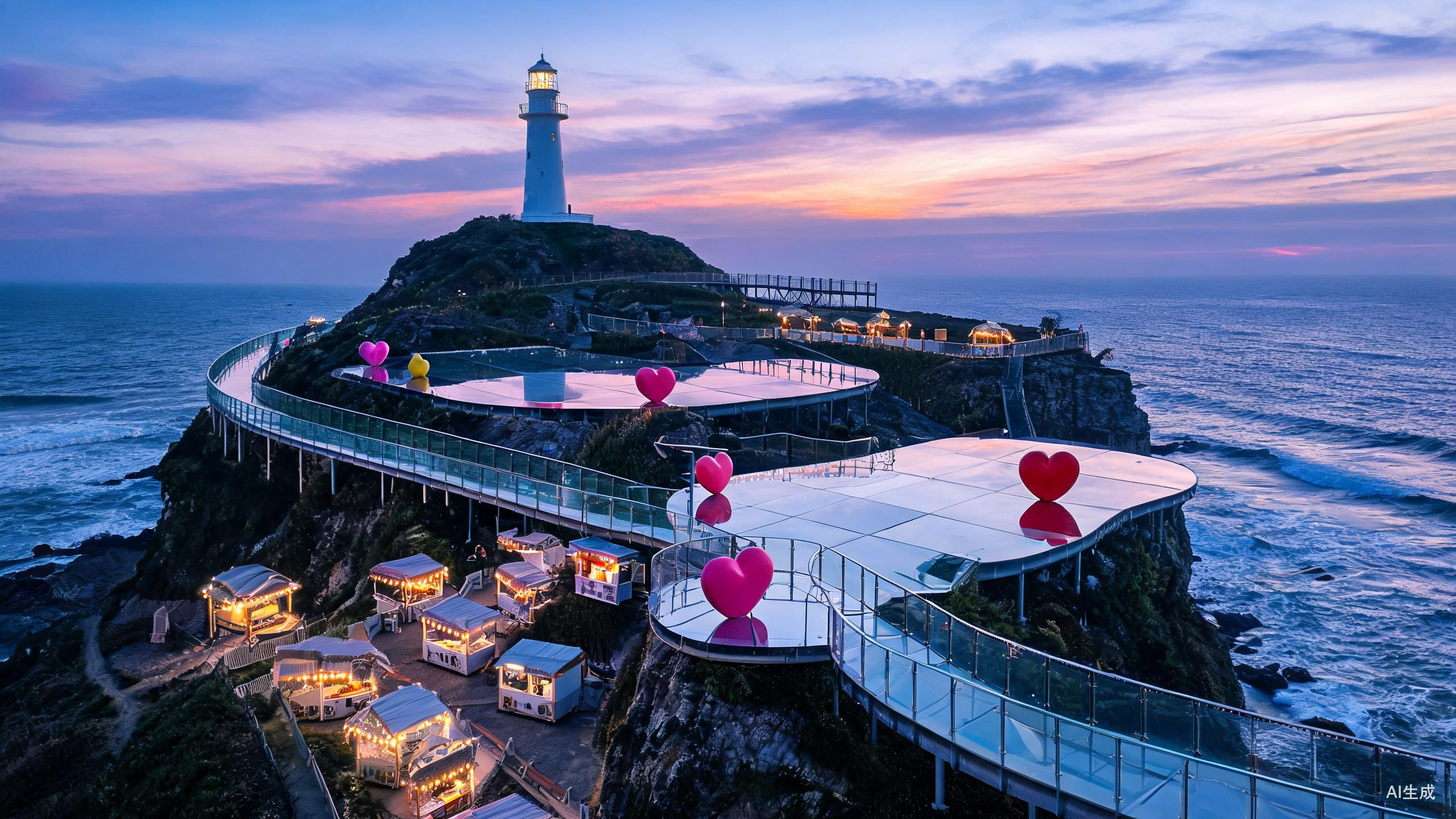
China's tourist attractions have a "violent uglification" phenomenon: spending the most money to create the ugliest scenery. For example, the White Cliffs of Dover in the UK originally had only grassy slopes, cliffs, a lighthouse, and a dirt road. The wind blew by, the grass leaned to one side, and the sea below churned with white waves, creating a clean and expansive landscape.
China's Scenic Spots Embrace 'Violent Ugliness': Spending the Most to Build the Ugliest Views In the internet's "Chinese scenic area edition," cleanliness is out of the question—it must be bustling.
China's Scenic Spots and the Aesthetics of Ugliness: Spending the Most to Build the Ugliest Attractions First, a glass walkway is bolted onto the cliff face. At the summit, a "Sky Mirror," a cliff swing, and a cloud-top café are arranged. Beside the lighthouse, a giant red sign reads "I Miss You at White Cliff." At the entrance, a British-style commercial street lines up "Old London Stinky Tofu," "White Cliff Grilled Sausage," and "Royal British Yogurt" in a row.
China's tourist attractions have a "violent ugliness": spending the most money to create the ugliest scenery. Shuttle buses come and go, loudspeakers remind visitors in a loop, and at night, there's a large-scale light show of "Ocean England".
China's Tourist Attractions' "Violent Uglification": Spending the Most Money to Create the Ugliest Scenery A once pristine natural environment has finally been developed into a project.
China's tourist attractions have a "violent ugliness": spending the most money to create the ugliest scenery. This entire process has been directly integrated into AI as a skill, where you only need to input a picture and let it transform into a Chinese tourist attraction style, complete with all the aforementioned features.
China's tourist attractions have a "violent uglification" phenomenon: spending the most money to create the ugliest scenery. China's tourist attractions have a strong impulse to decorate. When they see a mountain, they worry it's just a mountain; when they see a lake, they're afraid it's just water; when they see a grassy slope, they feel that not putting anything there is a waste. They must add something to prove that someone is in charge, money has been spent, and meetings have been held.
China's tourist attractions have a "violent ugliness": spending the most money to create the ugliest scenery. Nature is in charge of growing the scenery, while humans are in charge of placing a red and blue gradient plastic heart next to it.
China's Tourist Attractions' "Brutal Ugliness": Spending the Most Money to Create the Ugliest Scenery, Then Charging Admission Fees.
China's Tourist Attractions' "Violent Ugliness": Spending the Most Money to Create the Ugliest Scenery Mature domestic tourist attractions usually don't have much to offer in terms of scenery
China's Tourist Scenic Spots' "Violent Ugliness": Spending the Most Money to Create the Ugliest Landscapes First, you will see the tourist center.
China's tourist attractions have a "violent ugliness": spending the most money to create the ugliest scenery. They often have a grand appearance, but are also grandly far from the actual scenic spots. Private cars are parked outside, and visitors must first pass through the ticket gates, then take a shuttle bus. The shuttle bus is, of course, "voluntary", but the signs will gently remind you: the core scenic area is over ten kilometers away from here, and it's expected to take three hours to walk, so please choose wisely based on your physical condition.
China's Tourist Attractions' "Violent Ugliness": Spending the Most Money to Create the Ugliest Scenery At this point, those who can still insist on voting with their feet are generally the ones who truly vote with their feet.
China's Tourist Attractions' "Violent Ugliness": Spending the Most Money to Create the Ugliest Scenery Shuttle buses are not inherently problematic. Nature reserves need to control the number of vehicles, high-altitude areas need to reduce congestion, and the elderly, children, and people with disabilities require transportation services. The issue lies elsewhere: why are the entrances being built further and further away, why is it necessary to take a shuttle, why are the costs broken down into multiple layers, and why are the fees only revealed after tourists have already purchased the previous ticket.
China's Scenic Spots' "Violent Ugliness": Spending the Most Money to Create the Ugliest Scenery In April 2026, the Ministry of Culture and Tourism publicly named scenic spots such as Daocheng Yading, Changbai Mountain, Longhushan, Tianzhushan, and Laoshan, citing issues including poorly designed tourist tram routes, unreasonable prices, and long wait times. Daocheng Yading subsequently suspended the collection of fees for sightseeing cars and electric cars, while continuing to provide the services.
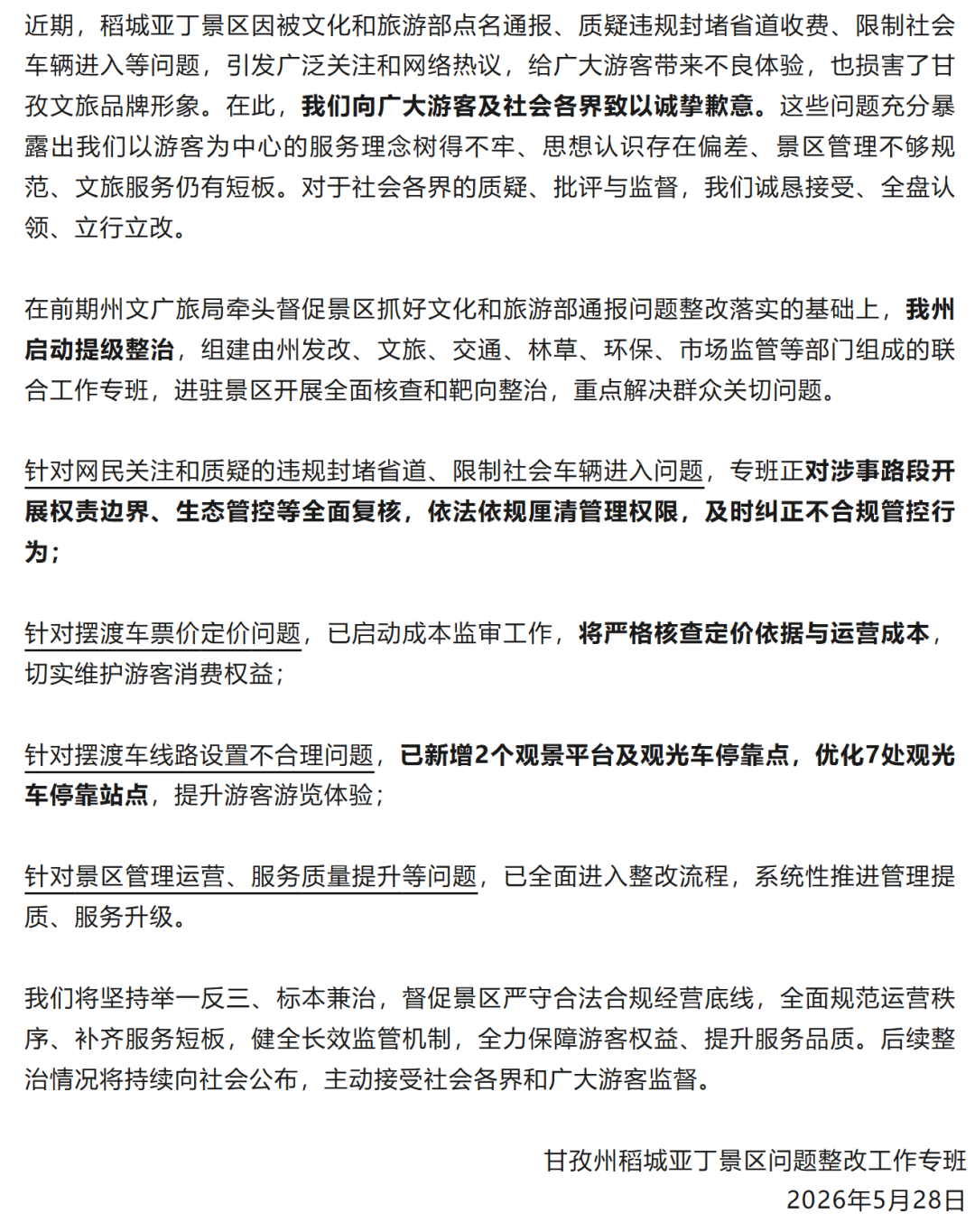
China's Tourist Attractions' "Violent Ugliness": Spending the Most Money to Create the Ugliest Scenery This matter is quite interesting. Many excuses that were made to justify the high prices, citing "objective conditions of the scenic area", suddenly changed when it came time for serious rectification.
China's tourist attractions have a "violent ugly learning" approach: spending the most money to create the ugliest scenery. After finally finishing the tour, the exit cannot directly face the parking lot. That would be too abrupt and disrespectful to the commercial circle. It's better for tourists to be guided into a long commercial street, where they can be subjected to a series of businesses along the only route, including roasted sausage, milk tea, silver accessories, medicinal materials, cultural and creative snow cones, and "local specialties" in a last-ditch effort to sell.
China's Tourist Scenic Spots' "Violent Ugliness": Spending the Most Money to Create the Ugliest Scenery You've clearly seen that the parking lot is just on the other side of the fence, but your body is being led by the designated path, forcing you to walk an extra kilometer.
China's tourist attractions are plagued by "violent ugliness": spending the most money to create the ugliest scenery. The attractions may not capture your heart, but they make a great effort to keep you rooted to the spot.
China's Scenic Spots and Their 'Violent Ugliness': Spending the Most to Build the Ugliest Attractions The ticket is just the startup fee. Shuttle buses, cable cars, elevators, cruise boats, performances, photo ops, and the commercial streets at the exit — those are the in-app purchases that follow.
China's tourist attractions have a "violent uglification" approach: spending the most money to create the ugliest scenery. If the pyramids were developed in this way, the pharaohs would not only have to buy tickets to visit their own tombs, but also purchase an additional immersive mummy experience ticket.
China's Tourist Attractions' "Violent Ugliness": Spending the Most Money to Create the Ugliest Scenery Don't care what you think, I care what I think
China's Tourist Attractions' "Violent Ugliness": Spending the Most Money to Create the Ugliest Scenery Charging high fees is at least a matter of money. What's even more unbearable is that after taking your money, the tourist attractions start to impose their aesthetic tastes on you.
China's Tourist Attractions' "Violent Ugliness": Spending the Most Money to Create the Ugliest Scenery In August 2026, tourists found that a row of artificial fountains had appeared at the top of the Huangguoshu Waterfall's steep slope. Staff at the scenic area explained to the media that the fountains were part of the nighttime performance equipment, and the water spraying during the day was due to equipment testing or the failure to turn off the valves after the show.
China's Scenic Spots' "Violent Uglification": Spending the Most Money to Create the Ugliest Scenery It's absurd, is Huangguoshu lacking water? Are the waterfalls not waterfall-like enough? After nature has done its job for millions of years, it still needs a few sprinklers to perfect it in our hands.
China's tourist attractions have a "violent ugliness": spending the most money to create the ugliest scenery. Similar practices can be seen everywhere in the country. Giant photo frames are placed on mountains, glowing wings are set up by lakes, pianos are erected on grasslands, and ancient towns are filled with plastic oil-paper umbrellas. At night, when the red, green, and blue lights are turned on, the pavilions and buildings instantly take on the dazzling appearance of a county-level wedding celebration square.
China's Tourist Attractions' "Violent Ugliness": Spending the Most Money to Create the Ugliest Scenery There's also the "Sky Mirror".
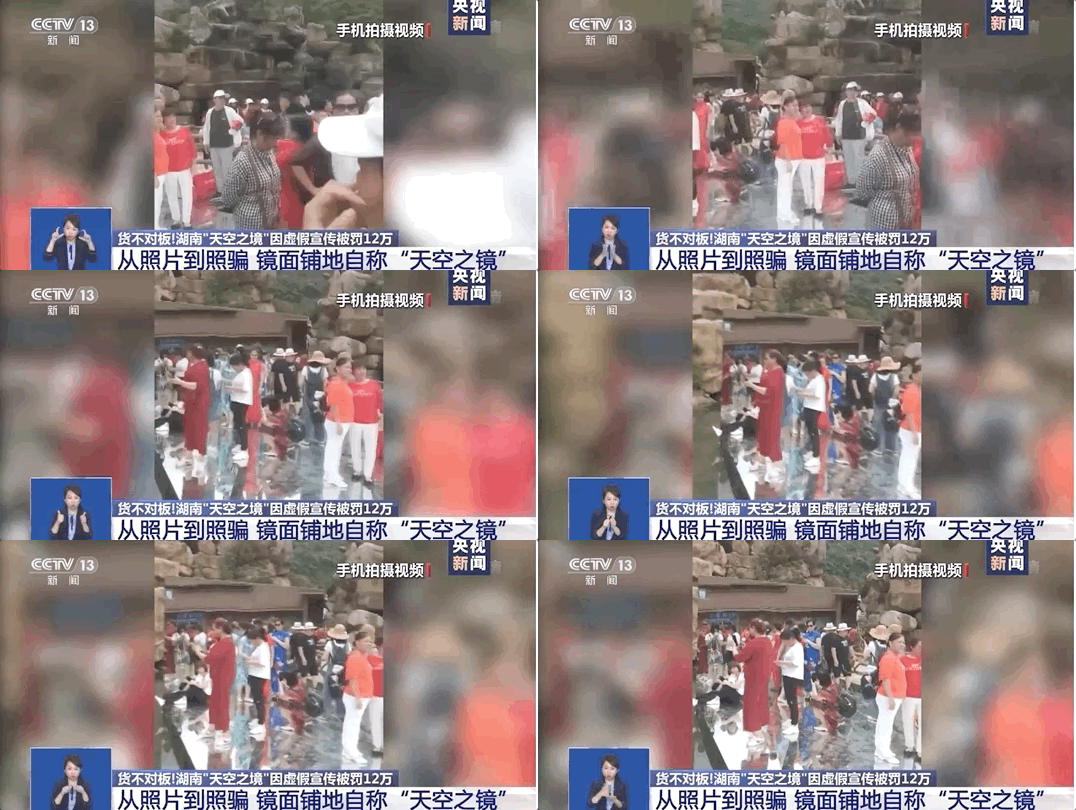
China's Tourist Attractions' "Violent Ugliness": Spending the Most Money to Create the Ugliest Scenery In 2020, the Linwu Dishuiyuan Scenic Area in Hunan used misleading promotional images that didn't match the actual scenery to advertise a so-called "Sky Mirror". When tourists arrived at the scene, they found that the "mirror" was indeed a mirror, but the "sky" was mainly created through post-production editing. More remarkably, CCTV later revealed that the construction cost of the project was only 150,000 yuan, but it generated 400,000 yuan in revenue within four days of operation, and was eventually fined 120,000 yuan for false advertising.
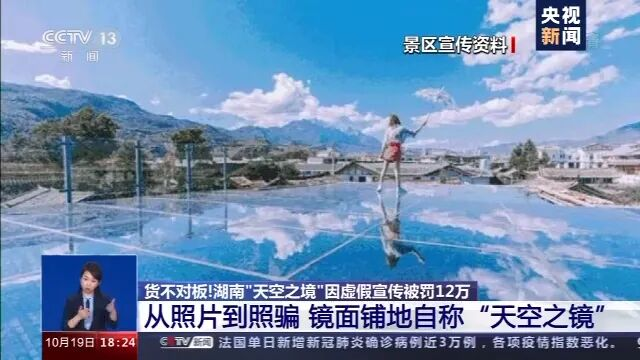
China's tourist attractions have given rise to a phenomenon known as "violent ugliness": spending the most money to create the ugliest scenery. From a business perspective, these few mirrors are quite excellent. They require little investment, generate quick returns, and enable tourists to bring their own photographers, filters, and promotional channels.
China's Tourist Attractions' "Brutal Ugliness": Spending the Most Money to Create the Ugliest Scenery While others make money through low-cost deception, some places choose to lose money at a high cost.
China's Tourist Attractions' "Violent Ugliness": Spending the Most Money to Create the Ugliest Scenery The 57.3-meter-tall giant statue of Guan Yu in Jingzhou cost 172.9 million yuan to build. According to a CCTV report, Guan Yu Temple Park had total revenue of less than 13 million yuan in its first four years of operation. The project was later criticized for violating the ancient city's protection plan, damaging its landscape and historical context, and the relocation project cost an additional 155 million yuan.
China's Tourist Attractions' "Brutal Ugliness": Spending the Most Money to Create the Ugliest Scenery Guan Yu, a legendary general, crossed five passes and beheaded six generals throughout his life, but ultimately failed to cut through the project budget.
China's Tourist Attractions' "Violent Ugliness": Spending the Most Money to Create the Ugliest Scenery Guizhou's Dushan County has a building called Shuise Tower, which stands at 99.9 meters tall, with an investment of 2.56 billion yuan as reported by the Ministry of Housing and Urban-Rural Development. Online, it's often said that "Dushan spent 400 billion yuan to build a tourist area", but this statement inaccurately conflates local debt issues with individual projects. However, spending 2.56 billion yuan on a building that has been officially criticized for being "out of touch with reality, blindly building cultural landmarks, and destroying the natural landscape" is already sufficient to illustrate the problem, without needing to exaggerate further.
China's tourist attractions have a "violent ugliness": spending the most money to create the ugliest scenery. The Bailu Yuan Folk Culture Village in Lantian, Shaanxi, is a typical example. The most widely circulated figure online is an investment of 350 million yuan, but Xinhua News Agency later verified that this is the total planned investment for the three phases, with the actual investment for the first phase being 108 million yuan. On its opening day, it welcomed 120,000 visitors; by 2019, the daily average number of tourists was less than 1,000, with many shops closed, and subsequently, the village was shut down and demolished.
China's Tourist Attractions' "Violent Ugliness": Spending the Most Money to Create the Ugliest Scenery From 120,000 visitors a day to less than 1,000, tourists who have been to these places have found that folk villages across the country are roughly the same: imitation ancient gate towers, gray-tiled and green-bricked roofs, oil-paper umbrellas, smashed bowl liquor, roasted squid, and a stinky tofu street that exists in every dynasty for some unknown reason.
China's Tourist Attractions' "Violent Ugliness": Spending the Most Money to Create the Ugliest Scenery The biggest mistake that cultural and tourism projects often make is equating "completion" with "attracting visitors," and then equating "attracting visitors" with "ensuring repeat visits."
China's tourist attractions have fallen victim to "violent ugliness": spending the most money to create the ugliest scenery. When Hengdian is popular, they build a film city; when Wuzhen is popular, they construct an ancient town; when a large Buddha is popular, they paint an even bigger one; when glass bridges are crowded, they make every mountain suffer from acrophobia.
China's Tourist Attractions' "Violent Uglification": Spending the Most Money to Create the Ugliest Scenery The problem is, mimicking the exterior of a project only takes a few months, but cultivating a rich history, lifestyle, and charm takes hundreds of years.
China's tourist attractions have a "violent ugliness": spending the most money to create the ugliest scenery. Money can make statues over a hundred meters tall, but it can't scale up culture in the same proportion.
China's Tourist Attractions' "Violent Ugliness": Spending the Most Money to Create the Ugliest Scenery But all for a few pieces of silver
China's Scenic Spots' 'Violent Ugliness': Spending the Most Money to Build the Ugliest Attractions Of course, it wouldn't be fair to put all the blame on the scenic areas themselves.
China's Tourist Attractions Embrace "Vulgar Kitsch": Spending the Most Money to Create the Ugliest Scenery Tourist attractions are eager to create proof of "I've been here" because some tourists really need it.
China's Tourist Scenic Spots' "Violent Ugliness": Spending the Most Money to Create the Ugliest Scenery Many of our vacations are short, with long distances to travel and packed itineraries. We assemble at 6:00 a.m., visit ancient cities in the morning, have group meals at noon, climb famous mountains in the afternoon, and watch light shows at night. At each location, we stay for 90 minutes, of which 40 minutes are spent finding a spot to take photos, 20 minutes waiting in line, and 10 minutes editing photos.
China's Tourist Attractions' "Violent Ugliness": Spending the Most Money to Create the Ugliest Scenery Twenty minutes left to experience the culture.
China's Tourist Attractions' "Violent Ugliness": Spending the Most Money to Create the Ugliest Scenery "Since you're already here" are the four most powerful words in domestic tourism. They can convince people to take a ferry they don't want to take, and to wait in line behind 40 people for a ordinary road sign. Having waited in line, it would be a waste not to take a photo.
China's tourist attractions have given rise to "violent ugliness": spending the most money to create the ugliest scenery. Tourists all take photos and look for landmarks, which is not unique to any particular country. However, after long-term training by social media and algorithms, travel has become more like a task that requires submitting photos as proof.
China's tourist attractions have given rise to a "violent ugliness" trend: spending the most money to create the ugliest scenery. A truly beautiful mountain is too complex in terms of information. How the clouds move, the color of the trees, and how small people appear in the valley - these things may not immediately grab attention on a mobile phone screen. A giant pink photo frame is different. It has a standard camera angle, standard composition, and a standard answer, all of which can be conveyed to others within three seconds: I'm here, I'm happy, and my life is temporarily away from my workstation.
China's Tourist Attractions' "Violent Ugliness": Spending the Most Money to Create the Ugliest Scenery For tourists, this is a low-cost way to express themselves. For the attractions, it's free advertising.
China's tourist spots have given rise to a "violent ugly learning" trend: spending the most money to create the ugliest scenery. As a result, all parties quickly reached a tacit understanding. Tourist spots produce check-in facilities, tourists produce content, platforms distribute traffic, and the next batch of people follow the same photo to arrive. Once a place becomes popular due to its "sky mirror", lakeshores across the country quickly start to reflect; once a certain "missing you" signboard gains traffic, people across the country are suddenly forced to think of each other.
China's Tourist Attractions' "Violent Ugliness": Spending the Most Money to Create the Ugliest Scenery In 2025, domestic tourists reached 6.522 billion, with expenditures of 6.30 trillion yuan; the country's A-level scenic spots received 7.51 billion tourists. With such a massive flow of tourists, even if the vast majority of people only visit once, it's enough for many scenic spots to make a one-time business last a long time.
China's tourist attractions have given rise to a "violent ugliness": spending the most money to create the ugliest scenery. This has formed a very solid cycle: tourists don't plan to come again, so they want to take all the photos at once; the attractions also don't expect you to come again, so they want to collect all the money at once.
China's Tourist Attractions' "Brutal Ugliness": Spending the Most Money to Create the Ugliest Scenery Everyone is in a rush and has no intention of building long-term relationships.
China's tourist attractions are plagued by "violent ugliness": spending the most money to create the ugliest scenery. Aesthetics are being ground down by this efficiency. There's no shortage of people who can design, what's truly scarce is a process that allows designers to exercise restraint. Leaving empty space is hard to report on, and details are inconvenient to inspect; preserving a grassy slope makes it look like nothing has been done. In contrast, installing a giant love symbol allows leaders to point to it during inspections and say, "This is our new cultural and tourism project this year."
China's Tourist Attractions' "Violent Ugliness": Spending the Most Money to Create the Ugliest Scenery Ugliness is not always a matter of capability. Sometimes, ugliness is the standard product delivered after a smooth operation.
China's tourist attractions have a "violent uglification" phenomenon: spending the most money to create the ugliest scenery. Of course, this doesn't mean we should swing to the other extreme and think that the best attractions are those that don't undergo any development.
China's tourist attractions are plagued by "violent uglification": spending the most money to create the ugliest scenery. Roads need to be paved, toilets need to be clean, signs need to be clear, and garbage needs to be removed in a timely manner; dangerous sections require guardrails, ecologically fragile areas require crowd control, the elderly and those with mobility issues need transportation, and rescue, fire prevention, interpretation, and accessibility facilities all require funding.
China's tourist attractions have a "violent ugliness": spending the most money to create the ugliest scenery. Services have value, but it's infuriating when they create obstacles and then sell solutions to overcome them. Business has value, but it shouldn't block the only exit. Modern design has value, as long as it doesn't use a plastic installation that can be replicated nationwide to cover up the original appearance of a place.
China's Tourist Attractions' "Violent Ugliness": Spending the Most Money to Create the Ugliest Scenery Truly good development often doesn't have such a strong presence.
China's scenic spots have a "violent ugliness": spending the most money to create the ugliest scenery. It allows the road to follow the terrain, buildings to recede behind trees, signs to appear only when needed, and lighting to only illuminate the path beneath, without taking responsibility for dyeing the entire mountain purple. It spends money on drainage, maintenance, rescue, cleaning, and interpretation. After tourists leave, they remember the mountains, rivers, wind, and local people's way of life, rather than a nationwide free shipping check-in card.
China's tourist attractions are plagued by "violent uglification": spending the most money to create the ugliest scenery. The most scarce product in natural scenic areas is originally the unreplicated natural landscape. The most valuable thing in ancient towns is also the streets and alleys where people still live. By transforming them into a uniform national commercial template, it's equivalent to taking something one-of-a-kind and intentionally replacing it with a mass-produced Yiwu version.
China's tourist attractions have a "violent uglification": spending the most money to create the ugliest scenery. The UK's White Cliffs only have grassy slopes, cliffs, lighthouses, and dirt roads, but that doesn't mean they are underdeveloped. Sometimes, that's the most difficult engineering feat for developers: knowing when to stop.
China's tourist attractions have a "violent ugliness": spending the most money to create the ugliest scenery. A mountain doesn't need to prove it has been invested in. A lake doesn't need to shout "I'm thinking of you" in front of the camera.
China's Tourist Attractions' "Violent Ugliness": Spending the Most Money to Create the Ugliest Scenery We pay to enter tourist attractions, and what we actually want to see is it.
China's Tourist Attractions' "Violent Ugliness": Spending the Most Money to Create the Ugliest Scenery It's not about how many things are hung on it later.