
It's no longer about "going out," but rather "rising to the top."
On the first day of September, BYD, Geely, and Chery, three leading domestic automakers, simultaneously released their August sales figures, with total sales exceeding 990,000 vehicles. However, another set of data behind these numbers is even more noteworthy: the three automakers' combined overseas sales for the month surpassed 487,000 vehicles, with overseas contributions accounting for nearly half of their total sales growth.
This also means overseas markets are no longer a "supplementary option" for absorbing excess domestic capacity, but have genuinely become a core pillar driving overall growth and offsetting structural pressures at home.
The "ice and fire" of the car market in August
If we take a closer look at China's passenger car market in August 2026, we will see a very contradictory picture.
In the domestic market, the downward pressure on fuel vehicles continues, and the price war among traditional joint-venture brands has reached the bottom line of their system capabilities. Many brands are barely maintaining their market presence by reducing production capacity and adjusting their product lines. Some joint-venture brands, such as Chevrolet and Ford, have even chosen to retain their local factories and instead export Chinese-made models to overseas markets, using global supply chains to digest domestic production capacity.
On the other hand, the new energy sector of independent car companies has bucked the trend, with Geely's new energy sales accounting for 65% of its total sales in August. Chery's new energy monthly sales have exceeded 10,000 units for five consecutive months. BYD is making a dual-track effort on both pure electric and plug-in hybrid fronts, and the new energy penetration rate in the domestic market continues to rise, offsetting the decline in the fuel vehicle market.
What is even more noteworthy is the upgrading of the product structure.
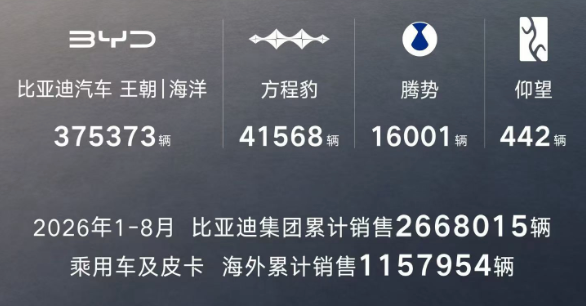
BYD's high-end brands, Tang and Denza, had combined sales of over 57,000 vehicles in August, indicating that Chinese brands are no longer reliant solely on models priced below 100,000 yuan to drive sales volume, and have also established a stable foundation in the high-end market above 300,000 yuan and even 500,000 yuan.
Geely's mid-year report data shows that both the average selling price per vehicle and the profit per vehicle have reached historic highs for the same period. The capital market has also cast a vote of confidence with real money, making it the only Chinese passenger car listed company to achieve positive stock price growth in both A-shares and H-shares so far this year.
However, the underlying tone of the "competition for market share" in the domestic market has not changed.
The price war has continued from the beginning of the year to the end, with users holding onto their money and adopting a wait-and-see attitude, which reached a peak before the "Golden September and Silver October" period, and all car companies can feel that relying solely on the domestic market's internal competition has made it difficult to support the high growth curve of the past. It was at this time that the explosion of overseas markets was like a newly opened gate, lifting the industry's growth level once again.
However, a closer analysis of the overseas performance reports submitted by the three leading automakers in August reveals a scenario that would have been unimaginable just five years ago.
BYD's overseas sales exceeded 180,000 vehicles in a single month, setting a new historical high; Chery exported 197,000 vehicles, up 52.1% year-on-year, with cumulative exports surpassing 7.18 million vehicles, making it the first Chinese automaker to cumulative exports exceeding 7 million vehicles; Geely's overseas exports in August reached 110,100 vehicles, up 205% year-on-year, with new energy product exports surging 446% year-on-year, and new energy exports accounting for 64% of total exports.
The combined overseas sales of the three companies exceeded 487,000 vehicles in August, a figure that surpasses the monthly sales scale of the vast majority of mainstream automakers in the domestic market.
What's even more noteworthy is that, apart from traditional leading automakers, new forces' brands have also seen a surge in their overseas expansion this year.
NIO delivered 103,129 vehicles in August, up 1.8% month-over-month and 80.7% year-over-year, maintaining monthly sales of over 100,000 units; from January to August, cumulative deliveries reached 560,883 vehicles, with cumulative year-over-year growth of 70.6%. The core driving force behind this high growth also comes from overseas markets. From January to July 2026, NIO's cumulative export volume reached 113,863 vehicles, completing 75.9% of its annual challenge target. In the first half of the year, exports totaled 96,294 vehicles, up 372.6% year-over-year, already exceeding the total export volume for 2025.
It's not hard to see from the data that Chinese automakers going overseas have completely bid farewell to the old model of relying on low-priced fuel vehicles to drive sales, which was prevalent ten years ago.
In Geely's August exports, 6 out of every 10 vehicles sold were new energy vehicles. BYD's semi-annual report showed that in the first half of the year, overseas revenue reached 181.268 billion yuan, accounting for 52.57% of the group's total revenue, with overseas revenue exceeding domestic revenue for the first time. Nezha topped the market share of pure electric brands in Italy, and its T03 model won the top sales spot in the local pure electric market in the UK, becoming the best-performing Chinese new force brand in the UK during the same period.
So even though in the past when we mentioned automakers going overseas, we would always use the phrase "walking out," as if it were an uncertain expedition, this year we can easily see that going overseas is no longer just about "walking out," but about "rising to the top." This is especially true when the growth space in the domestic market has been squeezed to the limit by intense competition, and overseas markets have directly taken over the production capacity released by automakers, stabilizing their profit base and even driving the entire group's sales curve to continue upward.
Cui Dongshu, a person in charge of the China Automobile Dealers Association's (CADA) Passenger Car Division, once judged that the car market in August was in a bottom-out recovery phase, and as the policies to stabilize consumption are gradually implemented, the industry will enter a mature development period driven by value and structural optimization. Looking back now, it is the overseas market, with its far-beyond-expectations incremental growth, that has made this "recovery" process more stable.
New Joint Venture Experiment
If the large-scale overseas expansion of leading automakers has demonstrated the breadth of China's auto industry globalization, then the cooperative model between companies like XPeng and Stellantis is redefining its depth.
Zero-run and Stellantis' joint venture, "Zero-run International", has turned upside down the traditional model that has persisted for decades, where "foreign parties provide technology and vehicle models, while Chinese parties provide the market and factories, with both sides forming joint ventures domestically in exchange for market share and technology".
Nowadays, Leapmotor utilizes its core technology architecture and mature new energy vehicle products, while Stellantis contributes its global sales and service network, as well as its experience in localizing brands overseas. Both parties are jointly expanding their business in global markets outside of Greater China.
Zero-run Auto executives admitted frankly during the semi-annual performance conference call that localized manufacturing is both a passive choice in response to the EU's tariff barriers and an active deployment to take root in overseas markets. This model allows Zero-run to comprehensively select the factory with the lowest cost and most complete supporting facilities from Stellantis' global production capacity pool, without having to invest in new production capacity from scratch.
However, there are still many external voices asking: what has the "bonus period" of overseas-driven growth actually brought?
One obvious benefit is that it directly offsets the losses incurred from the price war at home.
Over the past two years, the price war in China's domestic auto market has escalated from the sub-100,000 yuan market to the high-end market above 300,000 yuan, with many automakers sacrificing per-vehicle profits to defend their market share, and even selling at prices close to their cost lines.
While the pricing system in overseas markets is relatively healthy, with product pricing logic in different regional markets completely different from that in China, automakers can use profits from the global market to support domestic technology research and development, and are no longer solely reliant on domestic market profits to "fund war with war spoils".
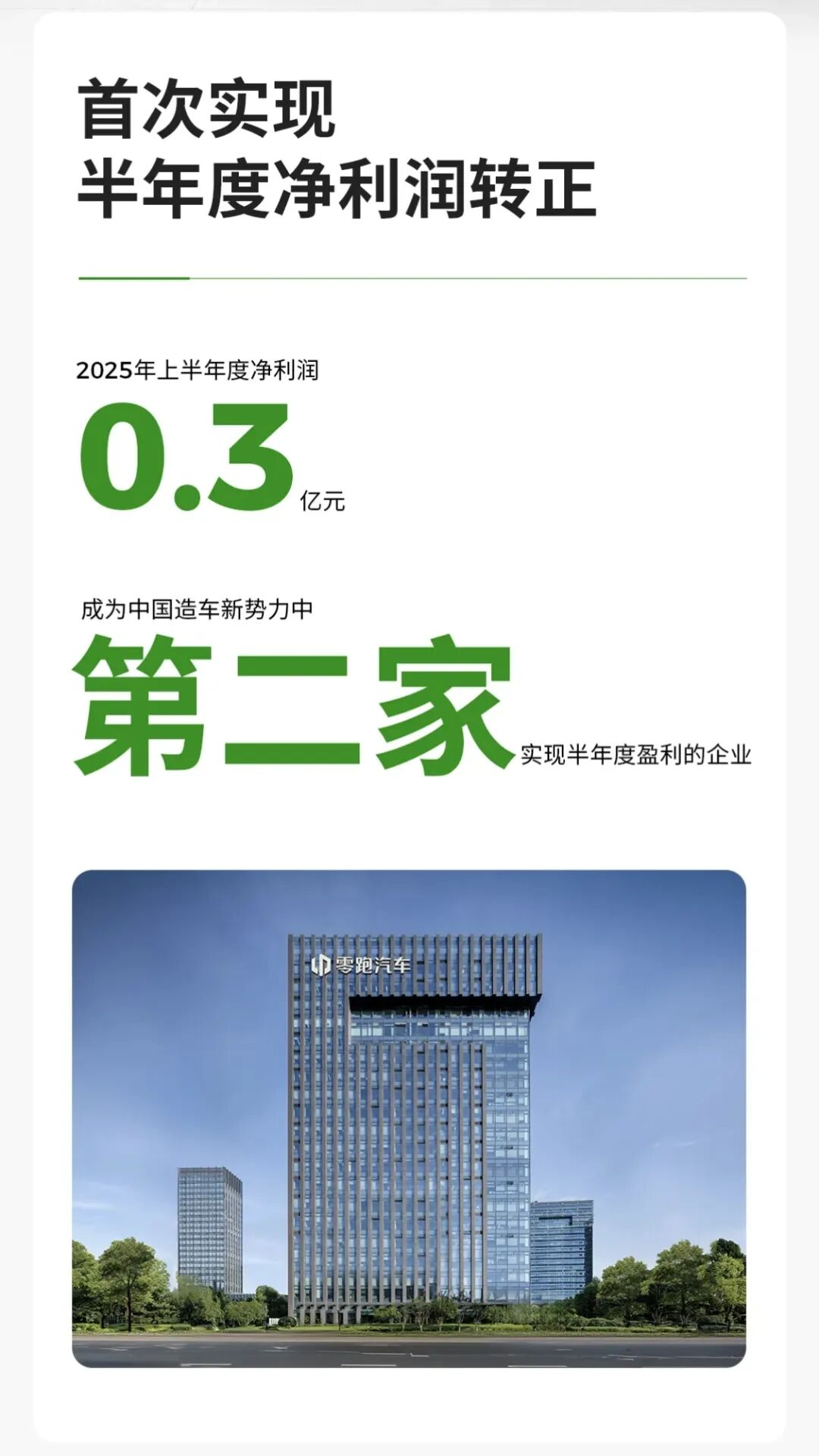
This is also why, so far this year, many leading automakers have seen their overall financial performance become even more stable than last year, despite facing intense competition in the domestic market. For example, in the first half of 2026, Zeropark's revenue reached 38.11 billion yuan, a historic high for the same period, with a net profit of 2.1 billion yuan, achieving profitability for three consecutive half-years, with the rapid growth of its overseas business being the core support for this stable performance.
The second benefit is that it will bring the capacity utilization rate of Chinese automakers back to a healthy range.
For a long time, the industry has been discussing the issue of "overcapacity". Many newly built new energy factories, if they only serve the domestic market, are at risk of facing insufficient operating rates. Now, with the continuous influx of overseas orders, domestic complete vehicle factories and component supply chains have been fully activated. Many core factories of Chery, Geely, BYD, and Leapmotor are now operating at full capacity in a "domestic and overseas dual-line production" mode.
This scale effect in turn further diluted the research and development and manufacturing costs, making Chinese brands more competitive in the global market, forming a "scale-cost-competitiveness" positive cycle.
The deeper value lies in driving Chinese automakers to truly complete the capability upgrade from "Chinese enterprises" to "global enterprises".
In the past, nearly all of an automaker's strategy, R&D, and supply chain arrangements were built around the Chinese market. Now, to sell cars in Europe, Southeast Asia, the Middle East, and Latin America, automakers must understand the regulatory standards, consumer habits, charging infrastructure, and localized service systems of each distinct market.
Of course, we must also be aware that as overseas markets become the core driver of growth, new contradictions and challenges are also emerging.
Behind the growth frenzy, those overlooked concerns
The risk of "inward involution and outward spillover" is rapidly accumulating.
Today's Chinese automakers have grown accustomed to competing for users in the domestic market with extremely fast iteration speeds and extremely high cost-performance ratios. When over a dozen brands simultaneously enter the same overseas market, it's easy to directly replicate the price wars from back home. Once different brands start competing to undercut each other to gain market share, they risk rapidly depleting the brand value of Chinese brands in local markets, and may even trigger anti-dumping and trade protection investigations by local regulatory authorities.
A second concern is that the shortcomings in global operations capabilities are being magnified.
Many automakers' approach to overseas markets in the past was simply to export and sell domestically produced vehicles, a "trade-based" approach to going global. However, when sales reach a scale of 100,000 to 200,000 vehicles per month, it becomes necessary to build local assembly plants, establish sales and service networks, complete localized supply chain support, and even adapt to different countries' carbon footprint regulations, data security regulations, and OTA monitoring rules.
The development of these capabilities cannot be achieved simply by investing money within one to two years. If the growth rate of overseas markets exceeds the pace of building systemic capabilities, it is likely that sales will increase, but user reputation and service experience will decline.
Even the joint venture model between Zero Run and Stellantis still faces new challenges, such as localized production, which can offset tariff costs, but local component procurement prices are significantly higher than those in China, and the improvement in gross margin after offsetting the two is not as significant as expected. The true release of localized profitability will still require a gradual process.
And the biggest uncertainty lies in the global geopolitical environment and trade rules.
Since 2026, multiple major global automotive markets have been introducing new regulatory policies for new energy vehicles, ranging from tariff adjustments to carbon barriers, and from local production ratio requirements to battery traceability rules. Every policy change has the potential to directly alter the competitive landscape of a regional market. Future overseas market competition will no longer be a test of a particular vehicle's product strength, but rather a company's ability to understand global rules and hedge against different regional risks.
What is even more worth considering is that as the proportion of profits contributed by overseas businesses continues to increase, the strategic focus of automakers will inevitably shift. In the past, all technological research and development prioritized serving domestic users, but in the future, how to balance resource allocation in different regional markets, and how to avoid sacrificing long-term needs of domestic users for short-term sales in overseas markets, will be a new challenge facing each leading automaker.
Of course, on the road to fully opening the window of global electrification, there won't only be flowers and applause, but also trade barriers, challenges from localized operations, friction between different cultures and markets, and even many instances of trial and error and adjustments, and moreover, directly facing the new challenges of globalized operations and the game of global rules.