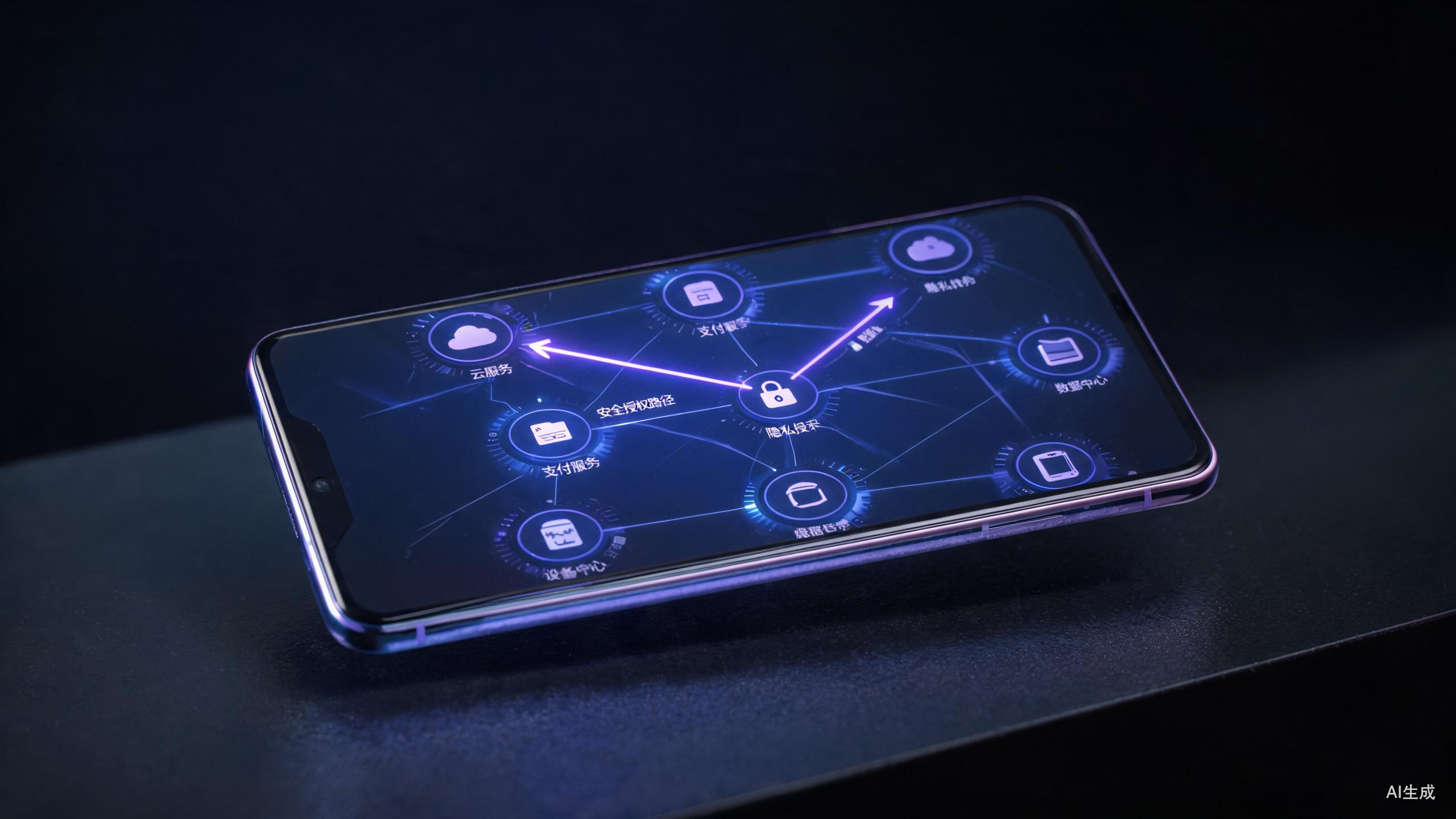
On September 1, the Nubia NaviX Ultra obtained network access permission. Niu Fei, President of ZTE's Terminal Division and President of Nubia Technology Co., Ltd., subsequently announced that this product, which comes with the Doudou phone assistant, will be launched in September. ZTE calls it the "world's first AI smart somatosensory phone", and the Nubia M153, which was previously used for technical previews, has finally found a mass-produced successor for ordinary consumers.
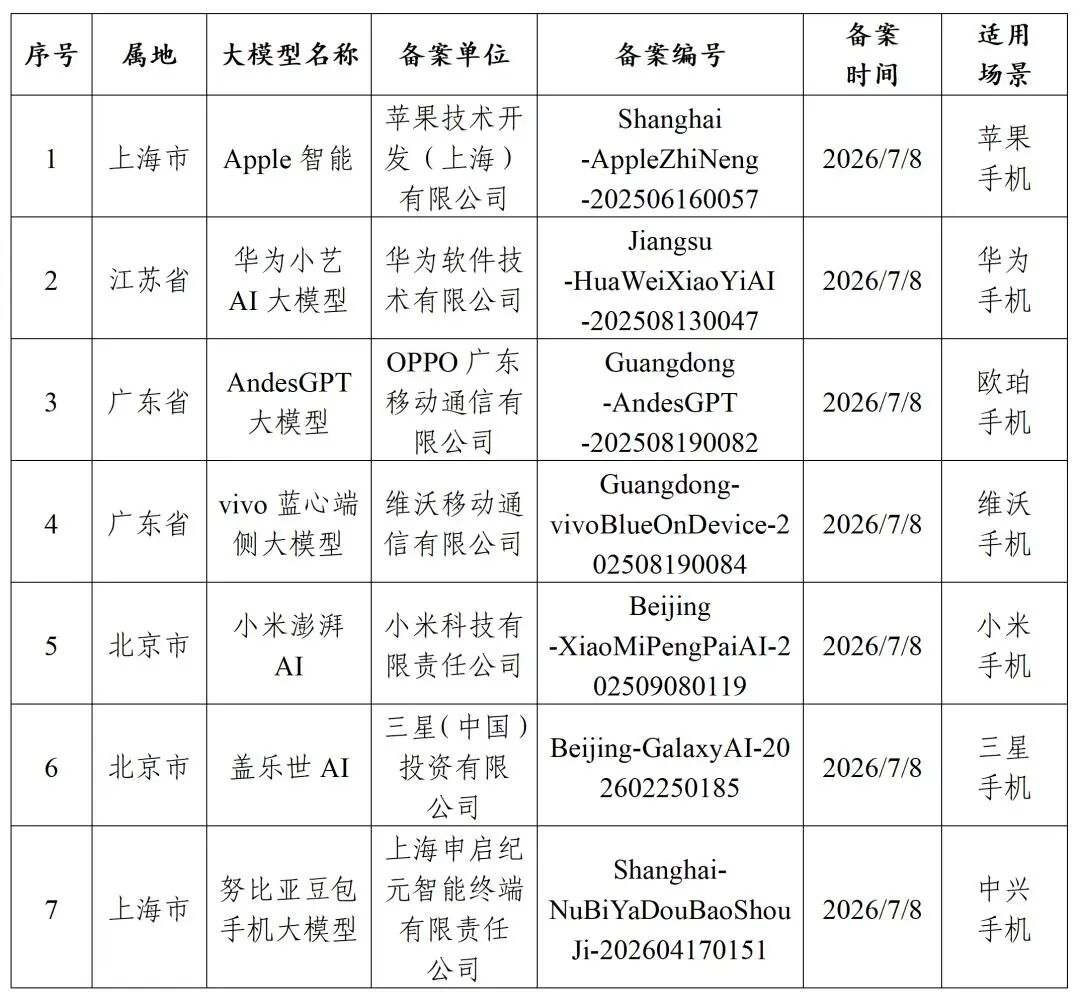
In July, edge-side large model company Mianbi Intelligent also announced a partnership with Samsung Mobile, with its self-developed MiniCPM series edge-side model to be installed on Samsung phones, covering several flagship models. On the same day, the Cyberspace Administration released an announcement, including "Apple Intelligent" and six other companies that provide mobile edge-side generative AI services, which have completed the filing process.
At first glance, this seems like just another round of AI smartphone competition: flagship chips, more powerful NPUs, larger local models, and an AI button to boot. But over the past two years, AI-powered photo editing, summarization, translation, and Q&A functions have been introduced in numerous new devices, yet consumers still lack a compelling reason to upgrade.
Doubao Phone wants AI to go beyond just "answering" and start handling tasks on behalf of users. When users request services such as booking tickets or comparing prices, the assistant breaks down the steps, calls up applications, and delivers the results. While the speed at which the model runs is certainly important, what's even more difficult to obtain is the authority to call up services, process information, and even initiate transactions on behalf of the user. This can be referred to as agency power on a mobile phone.
AI capabilities are becoming a standard feature, but reasons to upgrade phones have yet to emerge
AI smartphones are no longer a scarce concept. Counterpoint expects that phones with generative AI capabilities will account for 45% of global smartphone shipments in 2026, up from 36% in 2025; in the high-end market with a wholesale price of over $400, such capabilities are almost standard.
However, Counterpoint also notes that AI has yet to become a decisive factor for consumers when upgrading their devices, and there is still a significant gap between the functions that devices possess and the high-frequency usage by users, with hardware penetration outpacing the synchronization of usage value.
Image editing, audio transcription, and call summarization are useful features, but they are rarely enough to justify a high-priced upgrade on their own; integrating large model Q&A into systems has also not changed the fundamental way people use their phones. Most people still have to find apps, enter pages, and click through steps to complete tasks themselves.
The system-level intelligent agent provides another hypothesis: users only express their intentions, without needing to learn the operational paths of each application. The metric for AI phones has thus shifted from the number of functions installed to the number of tasks completed. The NaviX Ultra product needs to be tested on whether the task completion rate can become a new reason for consumers to upgrade their devices.
Edge intelligence is not about locking large models inside mobile phones
The concept of "edge-side" is often oversimplified as a matter of migrating computing power: compressing large cloud-based models and loading them onto mobile phones, with the beneficiaries being reduced to NPUs, memory, and heat dissipation. However, the privacy and security white paper publicly released by Doupai Mobile Assistant reveals a more complex structure.
According to the white paper, the on-device deployment includes OCR, text vectorization, named entity recognition, content recognition, and multimodal models, which handle text extraction, personal data retrieval, and security review. The document also details the authentication, encryption, and desensitization mechanisms used when inference is offloaded to the cloud. At least based on the public architecture, Doubao's mobile assistant does not keep all processing on the device, instead adopting a device-cloud collaborative approach.
It is more realistic for sensitive information and low-latency tasks to be kept local, while complex reasoning and continuously updated general capabilities can still be called from the cloud, with the system organizing capabilities on both sides according to tasks and permissions.
Edge models and edge intelligence are not the same thing. The latter also includes operating systems, personal data, cloud capabilities, application interfaces, and security confirmation. Smartphones are more like repositories for personal data and operational permissions rather than miniaturized computing power centers: they determine what AI knows and how far it can go.
Edge intelligence will increase the demand for chips and storage, but it cannot be inferred that the larger the model, the higher the value of the hardware. If the local call frequency is not high, or the key steps still rely on the cloud, hardware upgrades may not necessarily translate into consumer perception. A system with less aggressive parameters that can stably call services may be closer to a usable product.
After learning to operate a smartphone, I realized that permissions are more difficult to manage than computing power.
The first-generation Bean Bag phone has demonstrated the appeal of AI operating a phone, but also encountered mass production difficulties. In December 2025, the nubia M153, equipped with the Bean Bag phone assistant technology preview, was released. The AI can recognize the screen, simulate clicks and swipes, and perform continuous operations between apps. The product sold out quickly, with a temporary premium appearing in the secondary market.
Subsequently, multiple users reported experiencing abnormal exits or login restrictions on WeChat, Taobao, Alipay, and some banking apps. Doudou Phone Assistant restricted score brushing, incentive brushing, and some game scenarios that month, and temporarily took offline operations for banking, internet payment, and other financial applications, citing reasons related to fund security, competitive fairness, and the requirement for real interaction with apps.
This experience shows that AI being able to click does not mean it has the right to click. GUI schemes have a wide range of adaptability, but they bypass the management of interfaces, traffic, and risk by applications. Automated operations may trigger financial risk control, disrupt game and scoring rules; third-party assistants directly taking away results may also weaken the pages, ads, and recommendation entrances that super Apps rely on to operate.
New products are changing this relationship. According to reports, NaviX Ultra is more reliant on Agent protocol calls to access applications, rather than primarily relying on GUI simulation clicks. Other media outlets have also stated that the DouBao team is pushing application manufacturers to open up their interfaces or services. Which major applications have been integrated and what protocols are used for different tasks will have to be confirmed through official releases and actual testing.
The interface route sacrifices some universality but returns operational control to the application. The application can decide which data and actions to open up, and sensitive steps can also retain manual confirmation. The issue then shifts to business negotiations: Why would an app allow a third-party AI to bypass its own pages? How will traffic, data, advertising, and commissions be allocated? Who will be responsible for mistaken orders, incorrect payments, or mis.sent messages?
The first-generation product attempts to prove that AI can operate all apps, while the mass-produced version must prove that all parties are willing to let it operate. The latter is far more difficult than just running a demo once.
The value of mobile portals is being renegotiated
In the mobile internet era, the value of mobile entrances is mainly controlled by operating systems and super apps. Users first open an application and then search for services within the platform's designated pages. Smart assistants have reversed this sequence: users first express their needs to AI, which then decides which application to call and which results to compare. Applications may retreat to the background, becoming a callable service.
For ByteDance, chatbots can obtain user inquiries, while system-level assistants have the opportunity to obtain real intentions closer to transactions. It doesn't have to own every service, as long as it can decide who to assign tasks to, it can become the entrance before the application. For ZTE and Nubia, cooperation provides a differentiated path beyond hardware parameters.
The application platform may not necessarily incur losses. If smart bodies bring more explicit purchase intentions, open interfaces may reduce customer acquisition costs and generate new interface fees or transaction commissions. It depends on whether the platform hands over its capabilities to external assistants or only allows its own smart bodies to make calls, and how the value of the entrance and new transactions are settled.
Sales volume can only indicate demand for trying out new products. More meaningful indicators include how many high-frequency applications NaviX Ultra supports, its task success rate and time consumption, how many times users need to intervene, what information is stored locally, and how many users continue to rely on AI after a month. The price will determine whether this capability can extend beyond the flagship market.
If mainstream apps are slow to open up, NaviX Ultra may still be a niche product; if users ultimately only use it for Q&A, image editing, and summarization, the demand for agency rights may not be genuine. Only when the interface, authorization, and responsibility mechanisms are in place can users possibly stop opening individual apps on their mobile desktop one by one.
Computing power determines how fast AI can think, while permissions determine how far it can go on behalf of humans. Whether the mobile industry can accept a new order of entry, only time will tell.