
This article was originally published in the 8th issue of the 2026 Bulletin of the Chinese Academy of Sciences, "Science and Technology and Society". This is an abridged version.
Huang Xirong1, Dong Jichang1,2, Li Xiuting1,2*, Dong Zhi1,2
School of Economics and Management, University of Chinese Academy of Sciences
University of Chinese Academy of Sciences Ministry of Education Philosophy and Social Sciences Laboratory (Cultivation) for Digital Economy Monitoring, Forecasting, Early Warning, and Policy Simulation
The Current Situation and Challenges of Regional Economic Growth and Coordinated Development
Since the reform and opening-up, China's overall strength has been continuously enhanced, achieving a series of breakthroughs. From 1978 to 2024, the country's Gross Domestic Product (GDP) increased from 368.48 billion yuan to 134.81 trillion yuan, with per capita GDP rising from 385 yuan to 95,700 yuan. However, behind the sustained growth in economic aggregate, due to the constraints of time and factors, the extensive economy and low-value-added development model that relied on material capital investment and labor to drive economic growth in the past are facing numerous bottlenecks, such as technological constraints and a lack of human capital, and urgently need to find new drivers for economic growth and regional coordinated development.
The report of the 20th Party Congress emphasized the need to adhere to the principles that technology is the primary productive force, talent is the primary resource, and innovation is the primary driving force. Since the introduction of the strategy to revitalize the country through science and education in the 1990s, China has successively implemented the strategy to build a strong country through talent and the innovation-driven development strategy, achieving notable results. The average number of students enrolled in ordinary higher education institutions per 100,000 people has risen from 463 in 2000 to 3,054 in 2024, and the country's research and development expenditure has increased from 89.6 billion yuan in 2000 to 36,326.8 billion yuan in 2024.
However, regional economic growth and coordinated development in China still face three major challenges.
The level of innovative research and development remains insufficient, and the structure of research and development investment needs to be further optimized.
In terms of research and development investment levels, although China's R&D funding has seen significant growth, there is still room for improvement in R&D investment intensity compared to developed countries. In 2024, China's total social R&D expenditure accounted for 2.69% of GDP, lower than that of the US (3.59%) and Japan (3.41%) in 2022, as well as South Korea (5.21%) and the average level of the Organisation for Economic Co-operation and Development (OECD) countries (2.73%).
In terms of R&D investment structure, there is still room for improvement in basic research investment and key technology field R&D investment. On one hand, although China's total social R&D expenditure reached 84% of the US total in 2022 (US$771.501 billion and US$923.243 billion, respectively), basic research investment accounted for only about 39% of the US level (US$50.714 billion and US$131.295 billion, respectively). On the other hand, comparing the R&D intensity (R&D expenditure as a percentage of operating revenue) of some industries in China and the US, the R&D investment intensity of Chinese large-scale manufacturing enterprises is approximately 1.6%, lower than that of US manufacturing enterprises (5.1%). Specifically, the R&D investment intensity of US computer and electronic product manufacturing enterprises exceeds 10%, while that of Chinese large-scale enterprises in these industries is around 2.6%.
There are disparities in human capital levels between regions, and the digital literacy of rural residents needs to be improved.
Although the average years of education in China have increased year by year, there is still a significant gap in human capital levels between regions. Using the J-F method to calculate human capital levels, China's total human capital in 2022 was 6.0685 trillion yuan, with rural areas accounting for only about 10% of urban areas, at 512.9 billion yuan and 5.5557 trillion yuan, respectively. The per capita human capital was 525,800 yuan, with rural areas' per capita human capital level being less than a quarter of that in urban areas, at 153,900 yuan and 676,800 yuan, respectively. Additionally, the average annual growth rate of per capita human capital in urban areas over the past decade was 6.39%, while in rural areas it was only 1.12%.
There is a gap in digital literacy between urban and rural residents, with rural residents' digital literacy in need of improvement. In the digital economy era, digital literacy has become an important part of human capital. According to the "National Digital Literacy and Skills Development Level Survey Report (2024)" released by the Central Cyberspace Affairs Commission and the China Association for Science and Technology, among Chinese adults, 42.79% of urban residents have intermediate or higher digital literacy levels, while this proportion is only 27.47% for rural residents.
"I " "I " " " " " " " " " " " " " " " " " " " " " " " " " " only " " " " " " " " " " " " " ". " " " " " " " " " " " " " " " " " " " " " " " " " " " " " " " "." " " " only " " " " " " "ifications " " " " " " " " " " " " " " " " " " " ". " " " " " " " " " " " " "." " no " " " " " " " " " " " " " " " " " " " " " " " " " " " " " " " " " " " " " " " " " " " " no " " " " " " " "." " " " " " " " " " " " " " " " " " " " ". " " " " " " " " " " " " " ". " " " " " " " " " " " " " " " " " " " " " " " " " " " " " " " " " " " " "
The development gap between the eastern and western regions still exists, and the divide between the north and south has intensified. The difference in the proportion of GDP between the eastern and western regions has narrowed from 41.7% 20 years ago to 31.9% in 2023, with the relative gap shrinking; however, the difference in the proportion of GDP between the northern and southern regions has expanded from 19.6% to 29.7%, with the gap continuously widening (Figures 1 and 2).
The per capita GDP gap between regions remains relatively large. Although China's per capita GDP variation coefficient narrowed from 0.71 in 2000 to 0.43 in 2023, the gap has gradually decreased. However, compared to other countries at a similar development stage, China's per capita GDP gap remains at a relatively high level (Figure 3). Furthermore, China's Gini coefficient for per capita disposable income has been rising and then stabilizing since it first exceeded the global warning line of 0.4 in 2000, remaining above the global warning line.
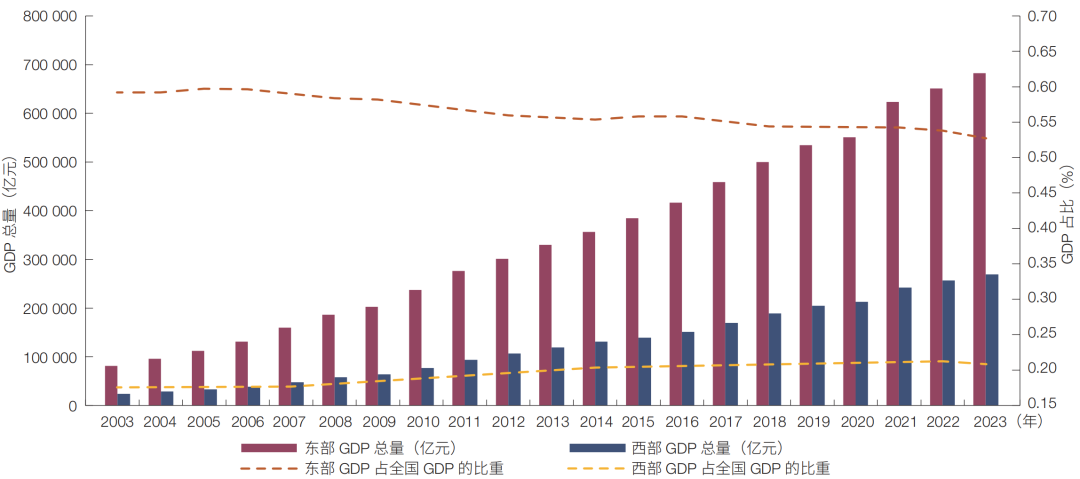
Changes in the Total GDP and Proportion of National GDP of China's Eastern and Western Regions from 2003 to 2023
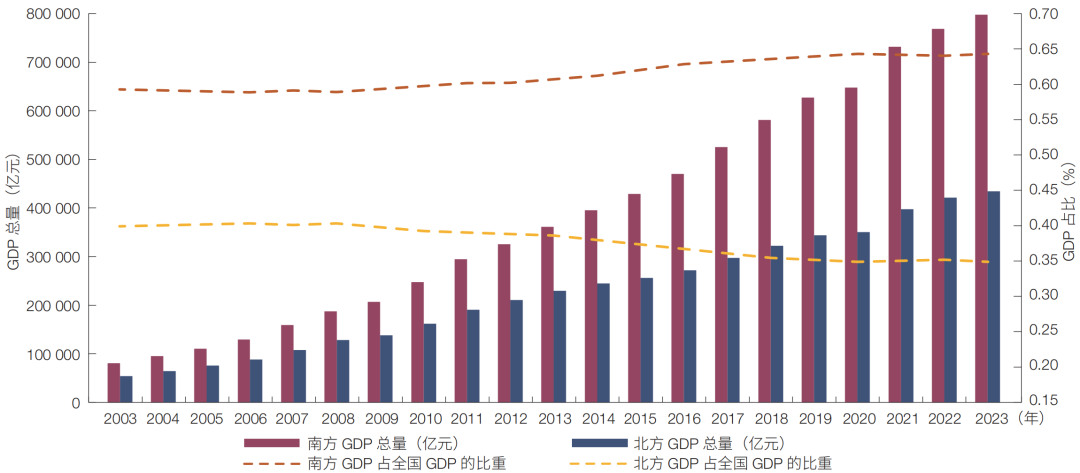
Figure 2: Changes in GDP and proportion of national GDP in China's southern and northern regions from 2003 to 2023
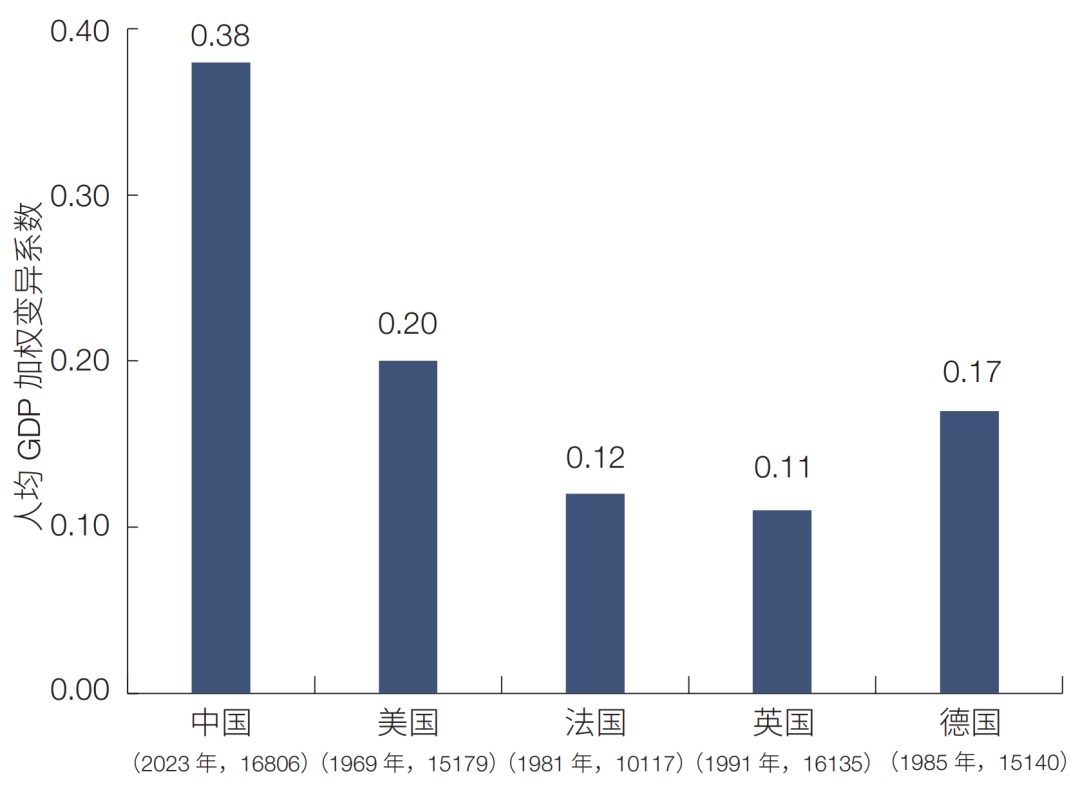
Figure 3: International comparison of regional per capita GDP disparities during periods of equivalent development levels
Financial technology refers to the financial innovation driven by technology, aiming to transform or innovate financial products, business models, and processes using modern technological achievements, thereby promoting the high-quality development of the financial sector. In recent years, with the deep integration of information technologies such as artificial intelligence, big data, and cloud computing with financial businesses, financial technology has developed rapidly, becoming a new engine driving the transformation and upgrade of the financial sector, a new approach to serving the real economy, and a new opportunity to promote inclusive financial development. From 2013 to 2023, the total amount of global financial technology investment and financing grew from $18.9 billion to $113.7 billion, with a compound annual growth rate of 19.7%. In 2018, the total investment in financial technology in the Asian region reached $22.7 billion, with China attracting a total of $18.2 billion in financial technology investment, accounting for 80% of the total. From 2012 to 2023, the number of financial technology companies in China grew from over 2,000 to more than 80,000.
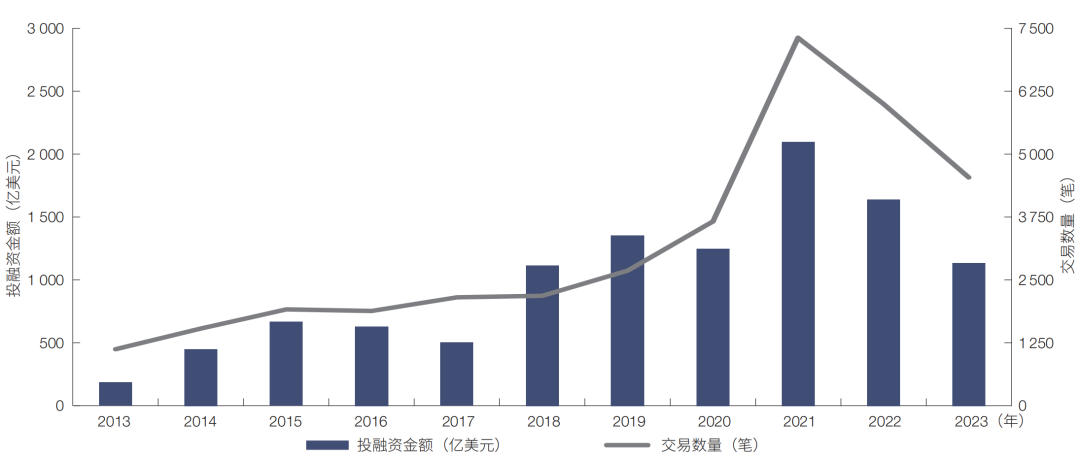
Chart 4: Global Fintech Investment and Financing Totals and Number of Deals from 2013 to 2023
Financial technology incentivizes research and development innovation by expanding financing channels and reducing additional risk costs, thereby empowering innovation-driven economic growth.
The development of financial technology has given rise to a wide range of financial technology products and service platforms that are more targeted, facilitating innovation in financial products and optimization of financial services, and expanding financing channels for enterprises.
For instance, companies like Yonyou Financial provide the financial industry with technology, information, and software services. Additionally, banks and other financial institutions undergo digital transformation through cooperation with external financial technology platforms or by establishing their own financial technology departments. China Industrial and Commercial Bank and China Merchants Bank, for example, utilize digital technology to launch services such as "Rong e Borrow" and "Zhaoyi Loan". Construction Bank has also partnered with external companies to launch the "Yinqitong" financial services platform. Meanwhile, internet technology companies are leveraging their vast amounts of multidimensional data from platform browsing, shopping, and payment activities to enter the financial sector.
Financial technology enhances the efficiency and accuracy of financial services, reducing the additional risk costs faced by research and development enterprises.
The application of technologies such as big data, cloud computing, and blockchain in the financial sector enhances information retrieval capabilities and borrower screening capabilities, increases the savings-investment conversion rate and credit approval speed, and helps financial services more accurately target innovative science and technology enterprises that lack collateral but have greater innovation potential. This enables the screening of more valuable R&D projects, guides funding towards key areas with longer R&D cycles, and provides stable funding for these areas. The above two aspects expand the financing channels for R&D innovation enterprises, reduce the extra risk costs faced by R&D enterprises, stimulate the willingness of R&D departments to invest in R&D, increase R&D investment, and conduct substantive R&D activities, which are more likely to produce leading and breakthrough innovative outputs, thereby enhancing the frontier productivity level in the economy and ultimately empowering innovation-driven economic growth (Figure 5).
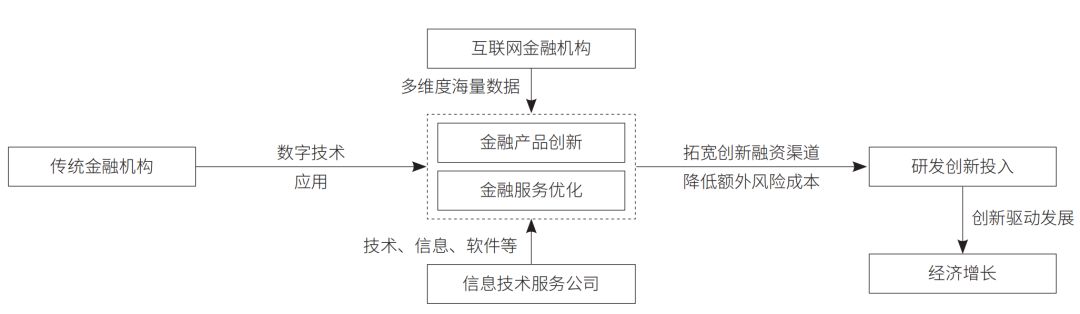
Figure 5: The Path of Financial Technology Empowering Innovation-Driven Economic Growth
Financial technology is driving the transition from a "demographic dividend" to a "talent dividend," empowering talent to lead economic growth.
Financial technology boosts human capital levels by incentivizing investment in human capital.
Financial technology improves the accessibility of financial services, thereby playing a role in promoting inclusivity, alleviating the funding constraints of special groups such as low-income and impoverished populations in urban areas, and providing credit support for educational investments and vocational skills training for long-tail groups such as rural residents, incentivizing human capital investment and promoting the enhancement of human capital levels.
FinTech has given rise to a new labor market and consumer market for "finance + digital technology", enhancing residents' financial and digital literacy.
On one hand, the development of fintech encourages the demand for high-skilled digital and financial talent and enables relevant financial and technology professionals to accumulate production experience and knowledge skills through a "learn-by-doing" effect, which is beneficial for improving the overall quality of social laborers. On the other hand, the consumer group of fintech accumulates financial and digital knowledge through a learning effect in the process of accessing and using fintech products and services, thereby achieving a comprehensive improvement in human capital levels, represented by financial literacy and digital literacy.
Financial technology plays a role in knowledge spillover effects, enhancing human capital levels
On the demand side of financial technology, the main carriers of financial technology are mobile smart terminals and the internet, which possess vast amounts of free information and learning resources. During the process of using mobile terminals and the internet to access financial technology services, consumer groups can come into contact with and learn more information, knowledge, and skills, thereby achieving an enhancement in human capital levels. On the supply side of financial technology, the modular research and development mode of financial technology and smart contracts reduce the marginal cost of financial technology service supply, decrease the exclusivity and competitiveness of financial technology service supply, and incentivize financial technology suppliers to research and develop more convenient financial technology products and services. This is conducive to the expansion of both the demand and supply groups of financial technology, thereby facilitating the further spillover of knowledge among a broader group of people and enhancing human capital levels.
The improvement in human capital levels drives economic growth through both direct and indirect effects.
According to the Lucas endogenous growth theory, on the one hand, human capital, as one of the factors of production, directly participates in economic activities, exhibiting a production effect, thereby enabling the improvement of human capital levels to drive economic growth. On the other hand, human capital indirectly drives economic growth through the endogenous technology path by promoting the interaction among various factors of production (Figure 6).

Figure 6: The Path of Financial Technology Empowering Talent-Led Economic Growth
The dual attributes of financial technology amplify the regional spillover effect, empowering coordinated regional development.
As a product of the integration of capital and technology, the dual attributes of financial technology can amplify the regional spillover effect
Fintech carries financial attributes that generate spatial spillover effects on regional economic growth. From the perspective of financial geography, as financial scale expands, institutions concentrate, and functions strengthen, financial growth poles evolve into financial centers that diffuse across the broader region, forming a financial network system with financial center cities as core nodes and financial hinterland cities as peripheral nodes. By the same logic, fintech networks link nodes across different regions, serving as critical conduits through which capital, technology, and other factors flow and aggregate across areas. Nodes occupying different positions within the network exert varying degrees of attraction on factor resources, which in turn shapes regional economic disparities.
Financial technology has the attribute of technical knowledge, and compared to traditional finance, it can better break through geographical constraints and amplify spatial spillover effects. On the one hand, the application and dissemination of technical analysis tools such as cloud computing rely on the internet, and under the effect of network externalities, financial technology can better break through geographical restrictions on knowledge spillovers, achieving the cross-regional application and dissemination of explicit knowledge. On the other hand, based on the talent flow effect, talents carrying financial technology-related knowledge flow across regions, achieving the cross-regional transmission of implicit knowledge that is difficult to encode and record. As a result, financial technology amplifies the economic effect of spillovers between regions through network effects and talent flow effects, affecting regional economic disparities.
As population, capital, and other factors flow between regions, fintech has a more significant spatial spillover effect on regional economic growth, thereby affecting the economic gap between regions.
In recent years, with the development of networked and digital communication technologies, as well as the advancement of urban agglomeration and metropolitan area construction and regional market integration, the interactive modes between cities have become increasingly diversified, and regional connections have gradually broken through "geographic isolation" and transitioned towards "spatiotemporal sharing". According to the "flow space" theory, cities can be seen as nodes and hubs for the flow of factors, and the spatial flow of various factors such as population and capital has an impact on and reshapes the geographic proximity-based connections between cities and regional spatial patterns. By using multi-source big data to construct a China city association network based on population flow, investment flow, and financial flow, it can be seen that the associations and interactions between regions under factor flow have emerged with high-intensity cross-provincial long-distance associations (Figure 7). Therefore, with the flow of factors between regions, one region can produce a spatial spillover effect on other regions with which it has factor associations. As a result, the development of regional financial technology, in addition to producing a spatial spillover effect on the economic growth of geographically adjacent regions, can also produce a spatial spillover effect on the economic growth of regions with
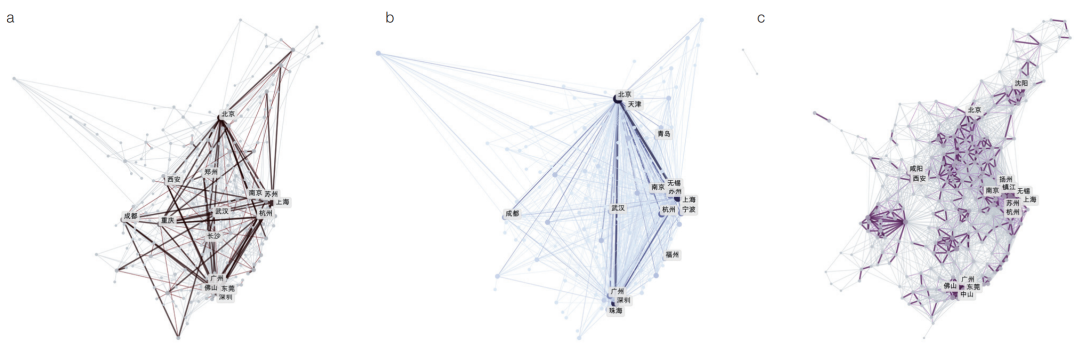
Figure 7: China's Urban Network Association Characteristics Based on Latitude and Longitude of Population, Investment, and Financial Flows
There is a significant gap in the development of financial technology between regions.
There are still issues of unbalanced and inadequate financial technology development among regions, which fundamentally hinders the ability of financial technology to empower coordinated regional development. As of the end of 2023, Guangdong Province ranked first among China's 31 provinces, autonomous regions, and municipalities in terms of the number of financial technology enterprises, exceeding the total number of financial technology enterprises in the 15 provinces that ranked below it.
The development of regional financial technology requires matching financial infrastructure and digital infrastructure, but there is still a gap in the level of financial and digital infrastructure construction between regions in our country. On the one hand, the lack of regional financial infrastructure restricts the application and diffusion of financial technology, limiting the economic effects of financial technology and hindering the effective realization of regional coordinated development empowered by financial technology. On the other hand, under the wave of financial digitalization, the endowment of digital elements in regions affects the cost of digital access, influencing the economic effects of financial technology and leading to the increasing prominence of the digital divide between regions in our country, as well as the "Matthew effect" of digital development between large and small financial institutions.
The economic effects of financial technology in underdeveloped areas are being hindered
China's vast territory is characterized by significant disparities in resource endowments and development levels among cities of different tiers. The economic effects of financial technology can only be fully realized when matched with corresponding talent, business environments, and infrastructure. In cities with relatively low development levels, the effectiveness of financial technology is limited by factors such as inadequate infrastructure and a lack of local appeal to attract talent. Furthermore, under the influence of factor mobility, central cities have a certain "siphoning" effect on surrounding underdeveloped cities, which to some extent hinders the ability of financial technology to drive coordinated regional development. Different cities urgently need to formulate differentiated policies to attract and rationally allocate resources.
There is an overall shortage of compound talents in financial technology.
The development of financial technology has increased the demand for compound talents with expertise in both finance and technology. According to a report from the 2023 Financial Street Forum, China is facing an overall shortage of digital finance talents, with a particular lack of high-level, cross-disciplinary digital talents. The average proportion of IT staff in Chinese banks is around 4%, which is only one-fifth of the proportion at JPMorgan Chase in the US (20%). In the insurance industry, the average proportion of IT staff is approximately 2.8%, which falls short of the 5% target set by the "Insurance Technology 14th Five-Year Plan". Small and medium-sized financial institutions in remote areas are facing an even more severe shortage of digital talents.
The regulatory framework for financial technology and the system for protecting financial information still need to be improved.
The rapid advancement of fintech has transformed financial service workflows, business models, and product categories in unprecedented ways, yet regulatory frameworks for fintech oversight and financial information protection remain underdeveloped. As financial institutions and technology companies accelerate their fintech deployments, incidents of information infringement have inevitably emerged, involving the illegal acquisition, excessive use, and unauthorized trading of personal financial data. The low barriers to information access and financial usage enabled by fintech have also made credit guarantee schemes and fraud schemes more prevalent. Traditional financial regulatory regimes, designed for conventional banking models, have proven inadequate, underscoring the urgent need to build a new supervisory architecture and strengthen financial information protection systems.
Improve the regional layout of financial and digital infrastructure construction, and accelerate the construction of an interconnected financial technology ecosystem
The coordinated development of financial technology among regions is the foundation for financial technology to empower regional coordinated development. The development of financial technology should not be limited to a single city as a node in a "point"-style development, but rather should be strengthened with city clusters and metropolitan areas as units in a "surface" and "circle"-style development. Starting from accelerating the construction of a unified national market, efforts should be made to help areas with low financial network coverage increase the number of outlets, reduce the cost of local residents accessing financial services, and guide areas with relatively low digital endowments to improve internet coverage, add data centers, and perfect 5G communications and other new infrastructure. This will enable the construction of an interconnected financial technology ecosystem, fully leveraging the knowledge spillover advantages of financial technology, driving the sharing of financial technology achievements and complementary advantages among regions, achieving efficient docking of financial technology factors among regions, and realizing the overall improvement of financial technology levels in city clusters and metropolitan areas driven by core cities.
Guide underdeveloped areas to introduce differentiated policies and facilitate the economic effects of financial technology
Guide underdeveloped cities and remote areas to fully examine their advantages and characteristics, make up for their shortcomings, and introduce differentiated policies to attract and reasonably allocate resources. Leverage the role of central government transfer payments, while encouraging and guiding social forces to actively participate, and on the basis of improving corresponding infrastructure construction and building a financial technology platform for efficient resource allocation, increase investment in human capital and establish a sound talent introduction and incentive policy, creating a favorable business environment and smoothing the economic effects of financial technology. Emphasize and encourage the popularization and cultivation of basic financial literacy and digital literacy among the long-tail crowd, develop simple and easy-to-use financial technology products and platforms, and help a wider range of people adapt to the financial technology trend.
Efforts are being made through multiple channels to strengthen the cultivation of composite financial technology talents.
In the era of financial digitization, there is a mismatch between the supply of traditional financial talent and the demand for composite talent, and three measures are needed to cultivate composite talent.
Encourage universities to keep pace with the trend of technological innovation, adjust and optimize their curriculum systems, strengthen the construction of financial and digital talent cultivation systems, and cultivate compound financial talents in the financial digitalization era.
Guide commercial banks and other financial institutions to strengthen on-the-job training for existing financial talent, enhance the digital skills of financial professionals, and provide financial foundation knowledge training for technical talent, while intensifying assessment and incentive mechanisms to eliminate the knowledge gap between financial professionals and technical professionals, thereby facilitating the progress of financial institutions' digital transformation.
Guide local governments to collaborate with local computer associations, financial associations, and financial technology associations, among other relevant associations, to leverage the role of industry associations and increase efforts to train and cultivate composite talents.
Strengthen financial technology regulation and improve the financial information protection system
In the face of financial technology development and its derived products and platforms, targeted measures will be taken to strengthen financial technology regulation, establishing a corresponding early warning system to achieve comprehensive regulation of financial technology platform transactions. Regulatory capabilities will be enhanced through technological means, using big data, blockchain, artificial intelligence, and other technologies to build a distributed, intelligent, and real-time regulatory system based on big data. At the same time, flexible regulation will be adopted as appropriate, empowering regional coordinated development while ensuring the healthy and orderly development of the financial technology industry. Regarding financial information protection, emphasis will be placed on the standardization of financial information access by financial technology platforms and the "informed consent" mechanism. Financial technology platforms will be urged to use clear language and prominent markings in user consent terms, reduce ambiguity, and strengthen explanations for user information usage. Furthermore, efforts will be made to popularize and educate citizens on personal information security knowledge, promoting basic information security awareness among financial consumers, and jointly building a safe and orderly information environment in the financial digitalization era.
About the Author
Huang Xirong is a postdoctoral researcher at the School of Economics and Management, University of Chinese Academy of Sciences. Her main research areas include fintech and regional economics.
Li Xiuting is a professor at the School of Economics and Management, University of Chinese Academy of Sciences, a standing director and deputy secretary-general of the Chinese Input-Output Association, and a director of the Decision Science Division of the Chinese Operations Research Society. Her main research areas include real estate economics and financial decision-making, asset allocation behavior, and macro-financial management.