Xue's Fried Goods Makes a Comeback in the Fresh Snack Market.
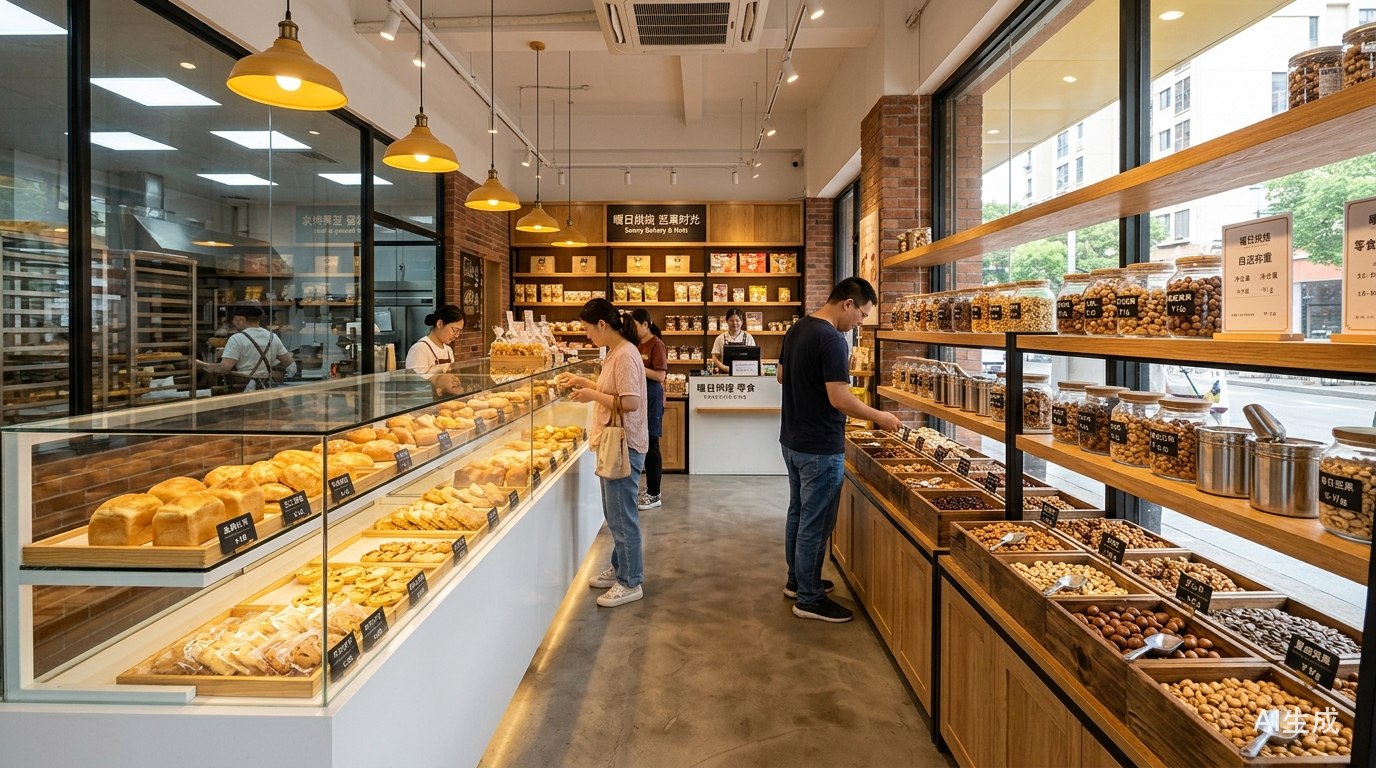
As a former leading fried goods chain enterprise, Xueji recently officially announced the hoarding of its new store, the Beijing Chaoyang Heshenghui store, which is scheduled to officially open in September. The new store will add new categories such as bread and dim sum, in addition to its existing fried goods categories.
This move is also seen as Xueji's defensive measure against the fresh snack trend. However, in the view of Retail Circle, it is more like a belated self-correction - picking up what was deliberately abandoned years ago in pursuit of scale.
The "fresh" undertone diluted by capital
Xue Ji's base tone has always been "fresh".
Xue Ji's starting point was the 1992 Hero Mountain morning market in Jinan, where its founder, Xue Xingzhu, set up a wok and started a fried melon seed business. At that time, there were no concepts of "brand" or "business model", and fried goods, as the popular snack of the time, focused on being "genuine", with same-day frying and sales, ample quantities, and prioritizing flavor.
In 2002, the first Xueji fried goods brand store opened in Yingshanshan, marking a shift towards chain operations, and the model of frying and selling on the spot was also fully preserved. Over the next decade or so, Xueji focused on Shandong with its down-to-earth bulk fried goods positioning, until 2018, when internet snack brands like Three Squirrels and Liangpin Puzi rapidly rose to prominence through e-commerce, prompting Xueji to launch a comprehensive brand upgrade.
Stores have moved from street-side communities to core commercial districts and shopping malls, with their image transforming from a down-to-earth grocery store to a bright and refined Chinese-style trend; their product structure has expanded from single fried goods to a full range of leisure snacks, including nuts, dried fruits, and meat floss; on the supply chain side, they have established standardized production and warehousing and distribution systems, with products gradually becoming pre-packaged and long-lasting.
This step was taken very accurately. Xueji has jumped out of the limitations of regional fried food shops and also obtained a ticket to capital.
On September 15, 2022, Xueji Fried Goods announced the completion of its 600 million yuan Series A financing, with investors including Meituan Dragon Ball and Qicheng Capital, which was also the largest financing in the leisure snack track that year. The financing entity is Shandong Xueji Food Technology Co., Ltd., which was newly registered in January 2022, and the funds are planned to be invested in three major areas: store expansion, construction of its own factory, and digital system upgrades.
Investment circle analysts pointed out that at the time, investors valued Xueji's ability to take the lead in brandization and chainization in the traditional decentralized cooking oil industry.
After financing, Xueji entered a period of rapid expansion, with publicly available media statistics showing that by the end of 2022, Xueji had 736 stores nationwide, growing to 920 stores by the end of the following year, and surpassing the 1,000-store mark by early 2024. Founder Xue Xingzhu even proposed an expansion target of "4,000 stores in five years", which can be said to have been unmatched for a time.
According to the disclosures at the RuShang Conference, Xueji Fried Goods achieved a revenue scale of 3.2 billion yuan in 2024, with the number of nationwide stores exceeding 1,200. In terms of store density and social media exposure of popular products, Xueji Fried Goods is ahead of competitors such as Qi Wang Peanut and Li Shang Huang, solidifying its position as a first-tier brand in the ready-to-eat fried goods chain industry.
But the cost is also hidden in the expansion.
To keep pace with the rapid expansion nationwide, Xue Ji accelerated its product standardization transformation, with its product structure increasingly shifting towards long-shelf-life pre-packaged snacks, such as milk dates and yogurt citrus slices, which have become synonymous with the Xue Ji brand in the public's mind, while the lively atmosphere of roasting melon seeds that characterized its early years has gradually faded.
From a current perspective, Xueji initially came with the label of "made-to-order, integrity, and freshness". In its early years, Xueji's business model of stir-frying and selling on the spot was essentially in line with the underlying logic of "made-to-order, short preservation" for fresh snacks, but in the process of brand capitalization and large-scale expansion, it proactively weakened the "freshness" label.
In the view of Retail Circle, Xueji relied on capital backing to complete its transition from a regional fried food store to a national brand, but the cost of expansion was putting its original "freshness" advantage in a secondary position. While several new retail brands, such as Jiu Duo Quan and Jin Li Men, have made open-kitchen preparation and short-term baked goods their main business model, Xueji's stores still rely on long-shelf-life nuts, dried fruits, and pre-packaged internet-famous snacks as their main sales drivers.
The launch of the new store model at Chaoyang Heshenghui is more like a revisit, similar to Xueji Fried Goods revisiting its long-abandoned "freshness" capability, expanding the boundaries of its traditional fried goods to include freshly baked and short-term preserved pastries.
However, Xue Ji's desire to re-enter the fresh snack market is not as simple as just opening a first store.
Fresh snacks have entered the Warring States period of rapid growth and intense competition
Xue Ji's decision to increase its investment in new snacks at this point is driven by the continued heating up of the market, as well as the collective anxiety of traditional players.
After years of market cultivation, fresh snacks have grown from a niche segment into the fastest-growing sub-category in the snack industry. According to data from the Head Leopard Research Institute, the domestic fresh snack market size has expanded from less than 5 billion yuan in 2020 to 18 billion yuan in 2025, with a compound annual growth rate of over 40%, significantly higher than the overall level of traditional leisure snacks.
A survey by iiMedia Consulting further illustrates changes in consumer behavior: a total of 78.4% of consumers stated that the proportion of fresh snacks in their snack consumption structure has increased significantly or slightly. Short shelf life, fewer additives, and visible production processes are becoming the core demands of the new generation of snack consumers.
The field is already crowded with players, each with their own approach.
Currently, participants in the field can be roughly divided into three camps, with brands of different backgrounds leveraging their respective resources to embark on differentiated development paths, collectively forming a diversified competitive landscape.
Native brands are taking the lead. Jinlidun completed its transformation in 2021, establishing the new fresh snack store model earliest, focusing on open-kitchen preparation and self-owned short-shelf-life products, and adhering to the direct operation model. Lixi, which originated in Shenyang, expanded its fresh snack business based on its roasted products foundation, with over 100 stores nationwide. Jidu, backed by Hei Se Classic, focuses on fresh braised products and opened up franchising by the end of 2025, setting a store expansion target of 600-1000 locations in 2026. Pumama has been deeply cultivating the Jiangsu and Zhejiang regions, establishing regional mind-share advantages with its fresh braised products.
Traditional leisure snack leaders are also collectively seeking a second growth curve. Laiyifen's "LYFEN life新鲜生活" global flagship store landed in Shanghai's Wanda Plaza in July 2026, with short-shelf-life baked goods and freshly cut fruits as its core categories; Liangpin Puzi and Three Squirrels are testing new fresh snack combinations in the form of in-store shops and independent snack galleries.
New entrants are flocking to the market. Absolute Flavor has launched a pilot store for independent fresh snacks, while HeyTea has incubated Jishi Shangwei to enter the fresh food snack market. 7-Eleven has introduced its own 7 Fresh snack series, and companies like Boxed and Yonghui are leveraging their existing fresh food supply chains to expand their fresh snack offerings.
From a comprehensive perspective, the fresh snack track has already seen a relatively crowded field of players, with native brands possessing a single-store profitability model that has been market-tested, traditional giants having brand momentum and a user base, and cross-industry players bringing their own traffic, scenarios, or cold chain supply chain advantages.
The Retail Circle believes that fresh snacks have evolved beyond the initial stage of single snacks, single cold storage, and single baking, and have become a comprehensive competition across all categories and scenarios. There is no single model that can dominate the market, and players with different backgrounds have their own strengths and weaknesses, forming a competitive landscape reminiscent of the Spring and Autumn and Warring States periods.
To carve out a niche in such a landscape, old-school snack brands like Xue Ji will still face significant challenges.
Entering the fresh snack market is an open-book exam
Entering the fresh snack market is an open-book exam for traditional roasted nut and seed brands, but knowing the answers doesn't necessarily mean they can get them right.
First and foremost is the high loss caused by short-term insurance.
Brokerage research reports show that the average loss rate for fresh snacks remains between 8% and 15%, while the loss rate for traditional packaged snacks is only 1% to 3%. Xueji's past supply chain system was a nationwide warehouse and distribution network designed for long-shelf-life nuts and fried goods; to do fresh snacks, they need to add central kitchens and build localized cold chain distribution networks, which is equivalent to building an additional team outside of the existing system.
But for Xueji, which already has a scale of thousands of stores, choosing either option would undoubtedly increase its burden. From this perspective, Xueji's decision to start a pilot program from its Beijing stores, initially investing in and strengthening its baked dim sum offerings, seems to be an optimal solution.
This also raises another brand new question: product appeal.
From Quanmei to Jinlidun, and then to Three Squirrels and Ji Xiaoming Food, the category combination of fresh snacks has evolved from a single product to a "combination punch", with "fried goods + baked goods + fresh braised goods" almost becoming an industry standard. If it's just a simple addition of baked pastries without creating differentiated explosive products and store experiences, it's difficult to stand out in a competitive market.
A deeper test lies in the operational aspect.
The operational logic of traditional snack stores is simple: products are stocked, weighed, and sold, with low skill requirements for employees. However, fresh snacks are a different story. In its previous research at first-tier stores, Retail Circle found that successful fresh snack stores require employees to not only understand products and be able to introduce them, but also to be able to attract customers, shoot videos, and organize themed events, essentially making them "operations-oriented" personnel.
This is not something that can be resolved by just adding a few shelves to the existing stores, but rather a complete replacement of the store's operating logic.
Of course, established players are not without opportunities to break through. Xue's biggest trump card is the bargaining power brought by the scale of thousands of stores. If it can combine its scale advantages with the refined operations of new snacks, optimize costs while ensuring product freshness, and create differentiated value for money, it may still be able to seize market gaps.
However, scale advantages have never been the decisive factor for new snack brands. Having more stores does not necessarily mean consumers will make a purchase, and ultimately it all comes down to the product and consumer experience.
It can be confirmed that the intense competition among fresh snack brands has just begun, and the entry of established players will only further disrupt the industry landscape. However, if Xueji's attempt is successful, it may become a model for the transformation of traditional snack brands.