Hello, I'm Ma Yujiang, and I work in art. What is art? I don't think anyone can say for certain. So today, rather than talk about art directly, I'd like to share four stories with you — four chapters from my own life.
Draw me together with my mom.
" I top of a top of a top of a more energetic spr of a first place only minor growths of place only minimal place of common place only common place of minimal place of common place of only common place of only common. " ":(....,"." ":(....." ":(....." " ":(.... " " "subsory minor place of common place of only common place of only common. " ":(.... " ":(.... " " "s more common place of only common place of each other foots " ":(.... " " "s only common place of only common place of each other foots " " "s only common " " "s only common place of only common place of each other foots " " "s only common place of each other foot " " "s only common place of each other foots " " "s only common place of each other foots " " "s only common place of each " " "s only common place of each other foots " " "s only " " "s only common place of common place of " " " " " " " " " " " " " " " " " " " " ". " " " " " " " " " " " "
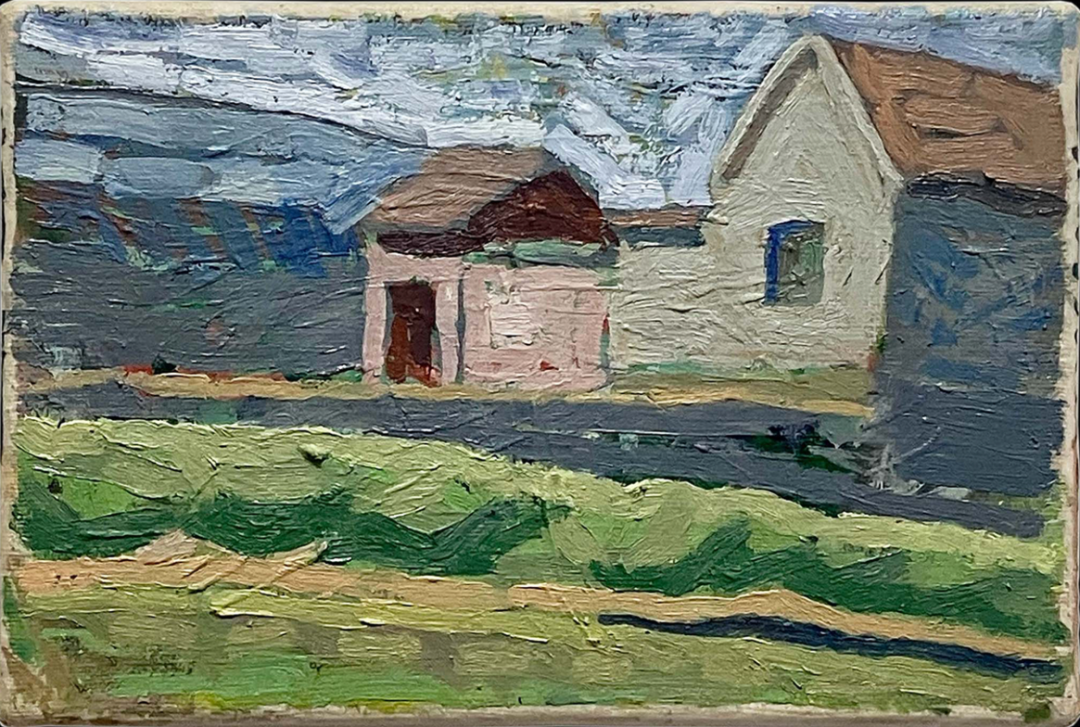
One day, I was playing with my cousin by the door when my grandfather walked back from the fields in the distance and said, "Your mom is back." At that moment, I was overjoyed, jumping and shouting, "My mom is back, my mom is back." My cousin said, "It's my mom, not yours, your mom is dead." In that instant, I seemed to understand what death was.
Since then, I often used the charcoal left over from my grandmother's firewood cooking to draw imaginary pictures of my mother and me on the cement walls of our house. Sometimes, after I finished drawing, the rain would wash it away, so I would draw again, and the rain would wash it away again, and I would draw once more. It was as if I was being defiant: heaven took my mother away from me, but I refused to give up.
The idea of drawing my mother and me together was like a seed planted in my heart.
When I was 11 or 12 years old, one day I found a photo in my father's desk drawer. I didn't know who the person in it was, so I took the photo to ask my grandmother. My grandmother pointed to the child in the photo and said: "This is you, and the person next to you is your mother." That was the first time I saw a picture of my mother and me together.
At noon, my grandfather returned from the fields and told me in more detail that the photo was taken in May 1989 in the park in our county town, when I was 1 year old and my mother was 27 years old.
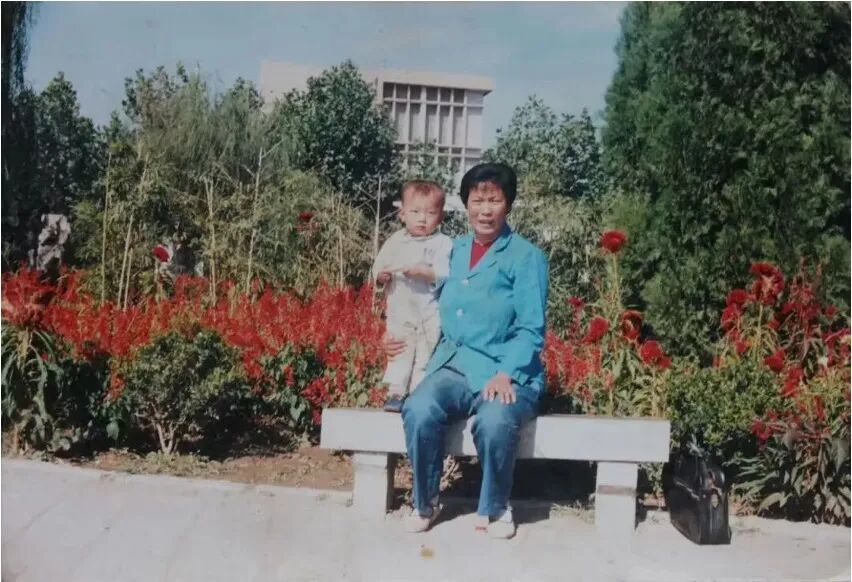
In the spring of 1989, in Zhangqiu City, Shandong Province
With this photo, the seed that was planted in my heart when I was 3 years old seemed to have sprouted. I naturally embarked on the path of painting and was also fortunate enough to be admitted to the Central Academy of Fine Arts.
In my third year of university, I felt my skills were good enough, so I drew my first portrait of my mother and me together. It was 2009, I was 21 years old, and my mother was 27 years old in the photo. You can see the characters "盼盼" in the bottom left corner, which is the nickname my mother gave me. After she passed away, no one has called me that name again.
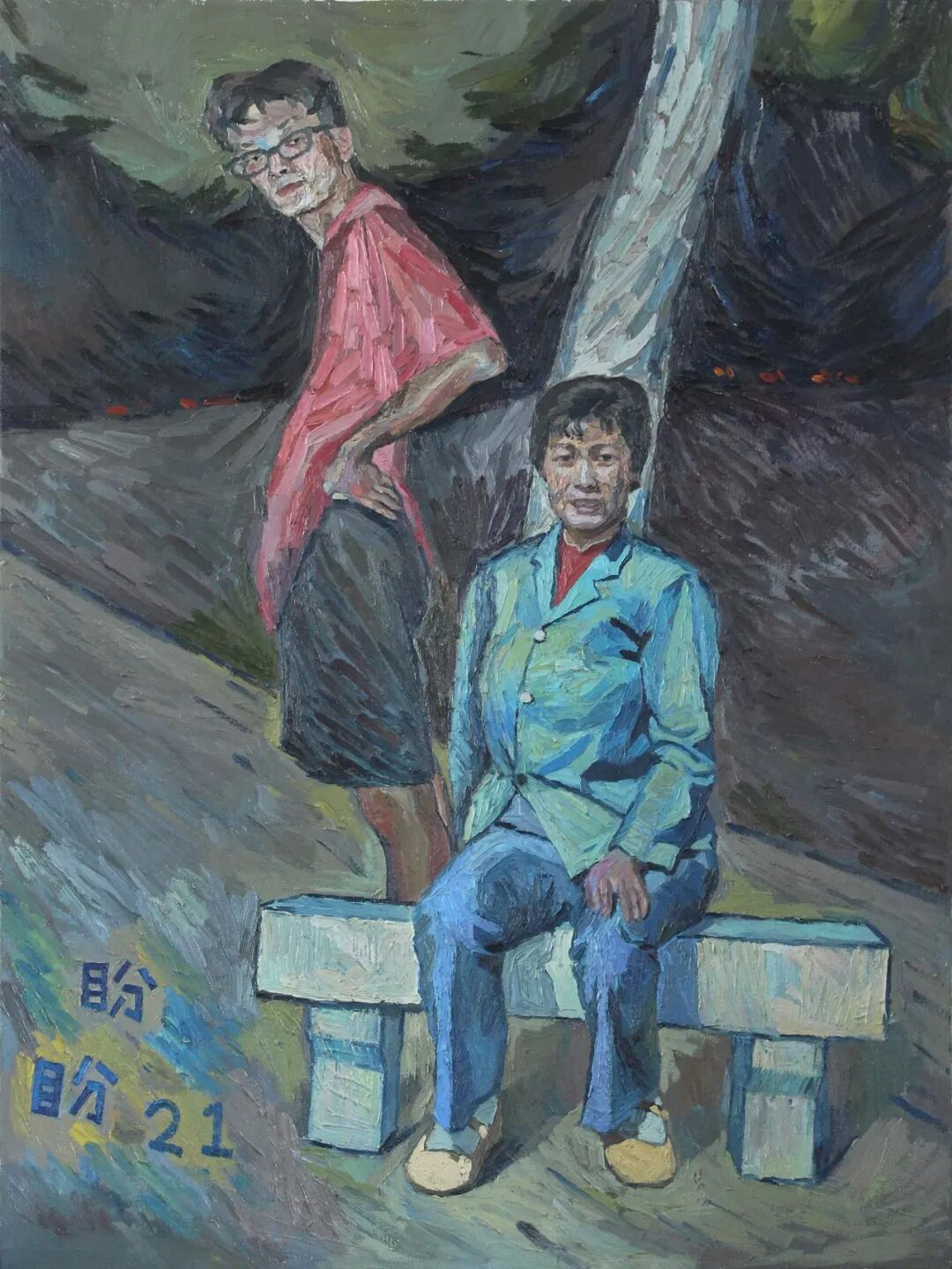
"Mother and Son" 21 years old, oil painting on canvas, 90x120cm
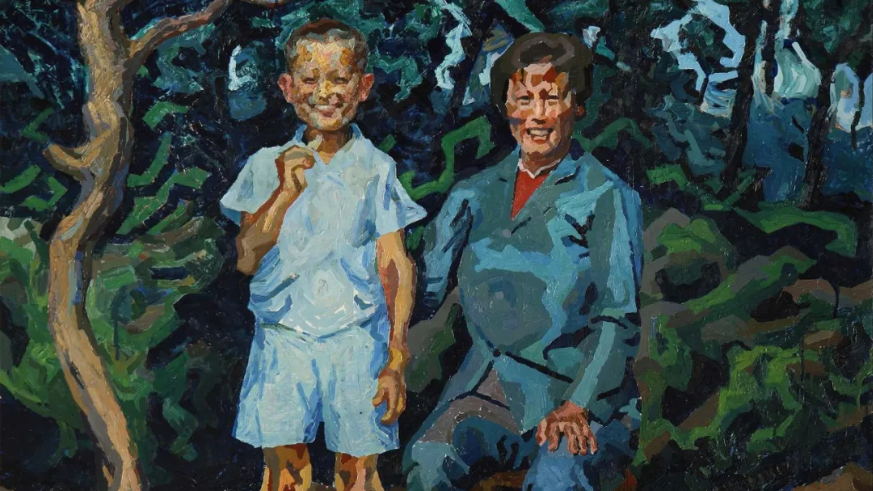
Since then, I draw a picture of my mother and me together every year, and I call this series "Mother and Son".
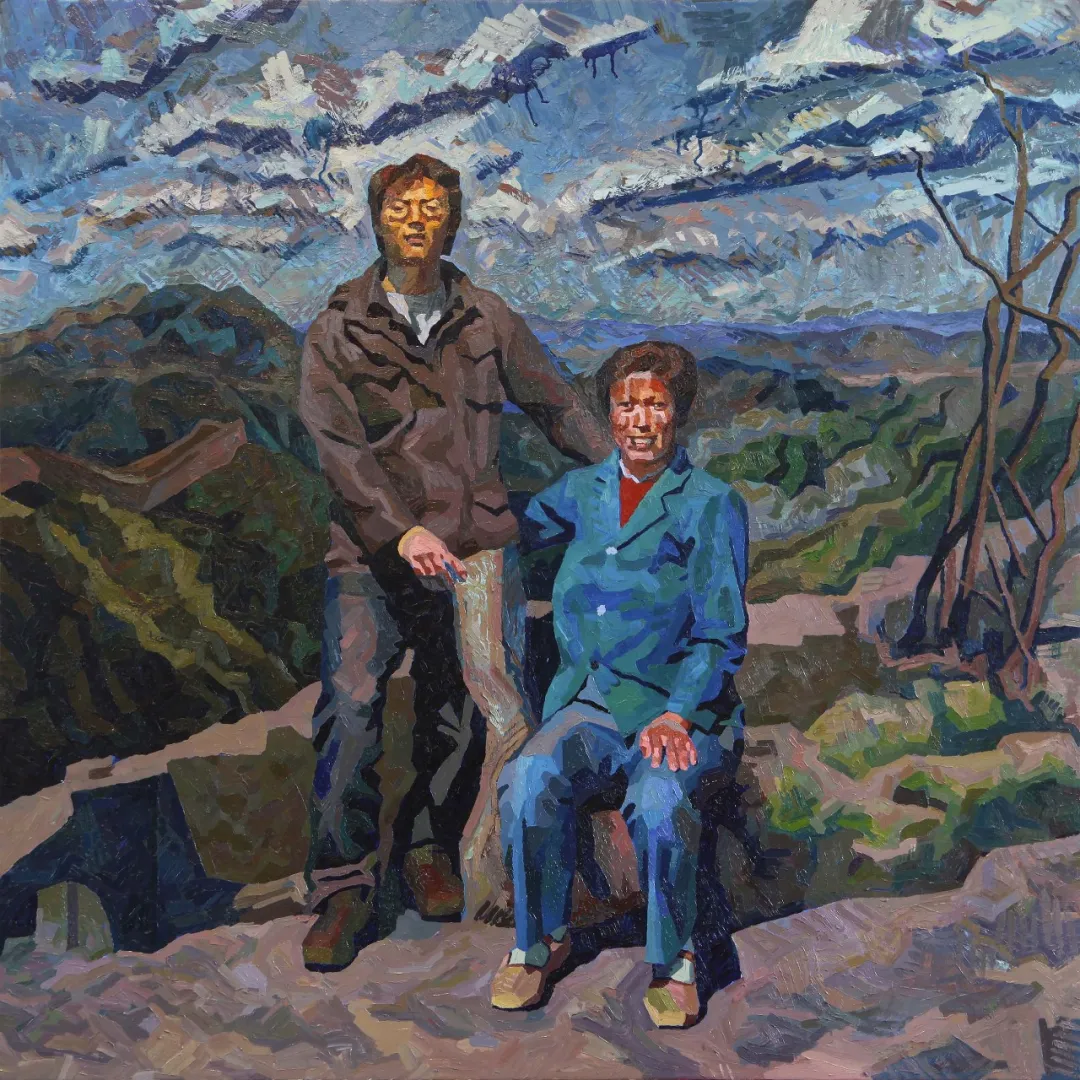
I usually choose the most important events of the year as the background for my paintings at the end of each year. At 22, I graduated from university, and at 25, I went to Hong Kong. At 27, I returned to my hometown to help my aging grandparents harvest corn, and I painted myself looking extremely exhausted after just coming back from the fields. It was also at 27 that I was the same age as my mother.
I was 30 years old in New York, with the Hudson River as my backdrop. At 32, the pandemic hit, and I didn't get vaccinated, so I couldn't go anywhere. Sometimes I felt suffocated, so I'd go to the seaside, and I painted a picture of myself drinking beer by the sea. The next year, at 33, the pandemic was still ongoing, and I often went to the mountains, using them as the background for another painting.
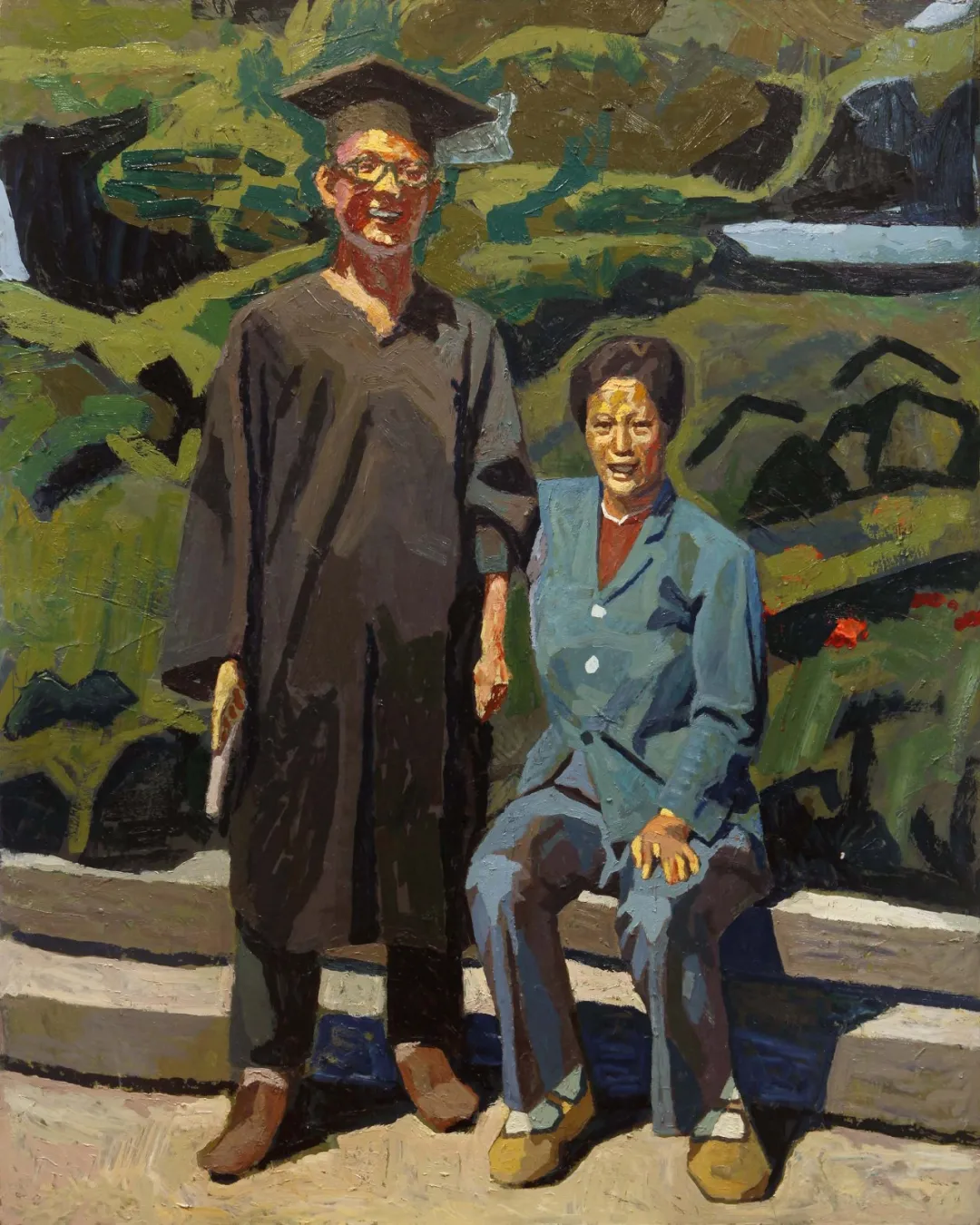
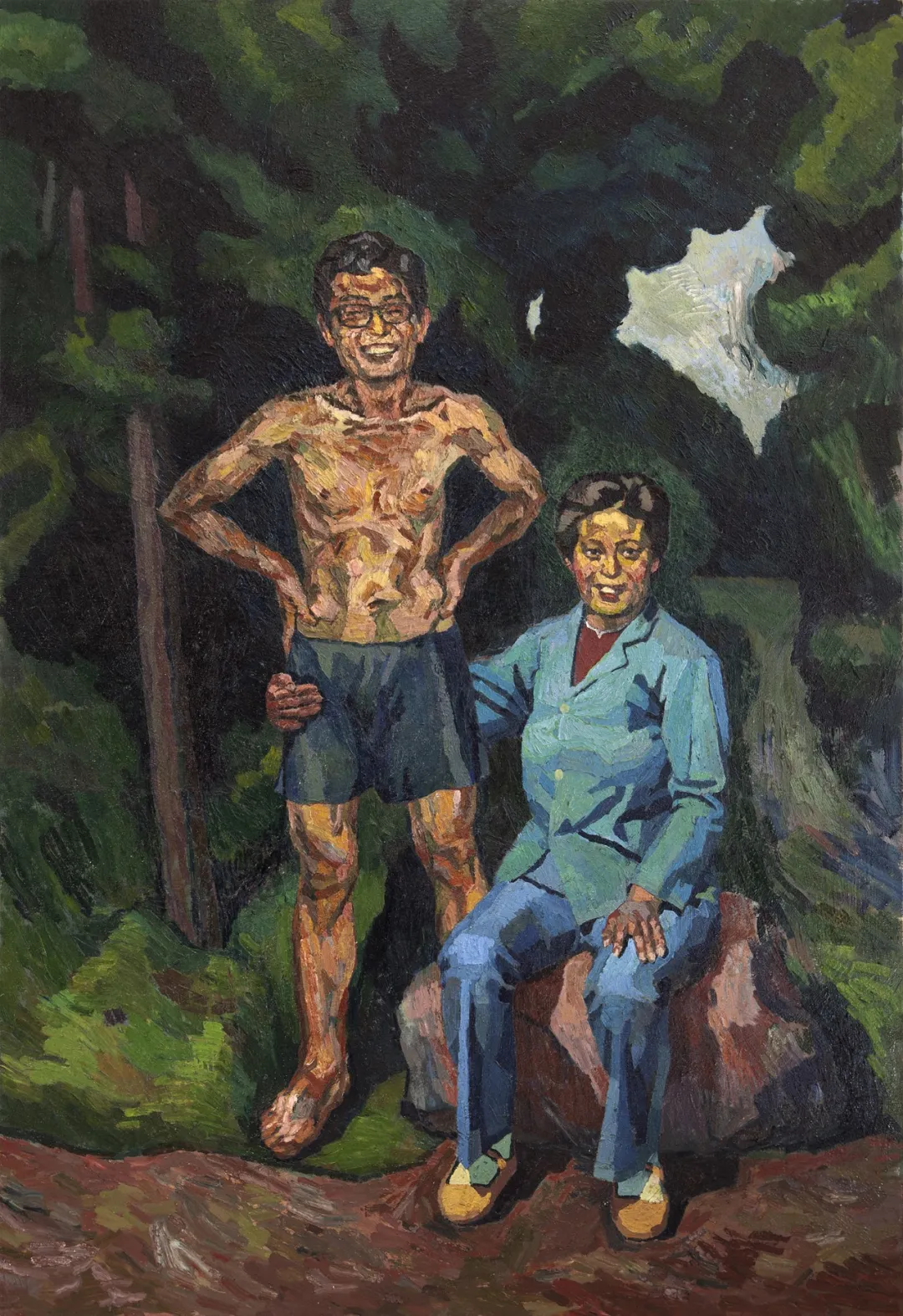
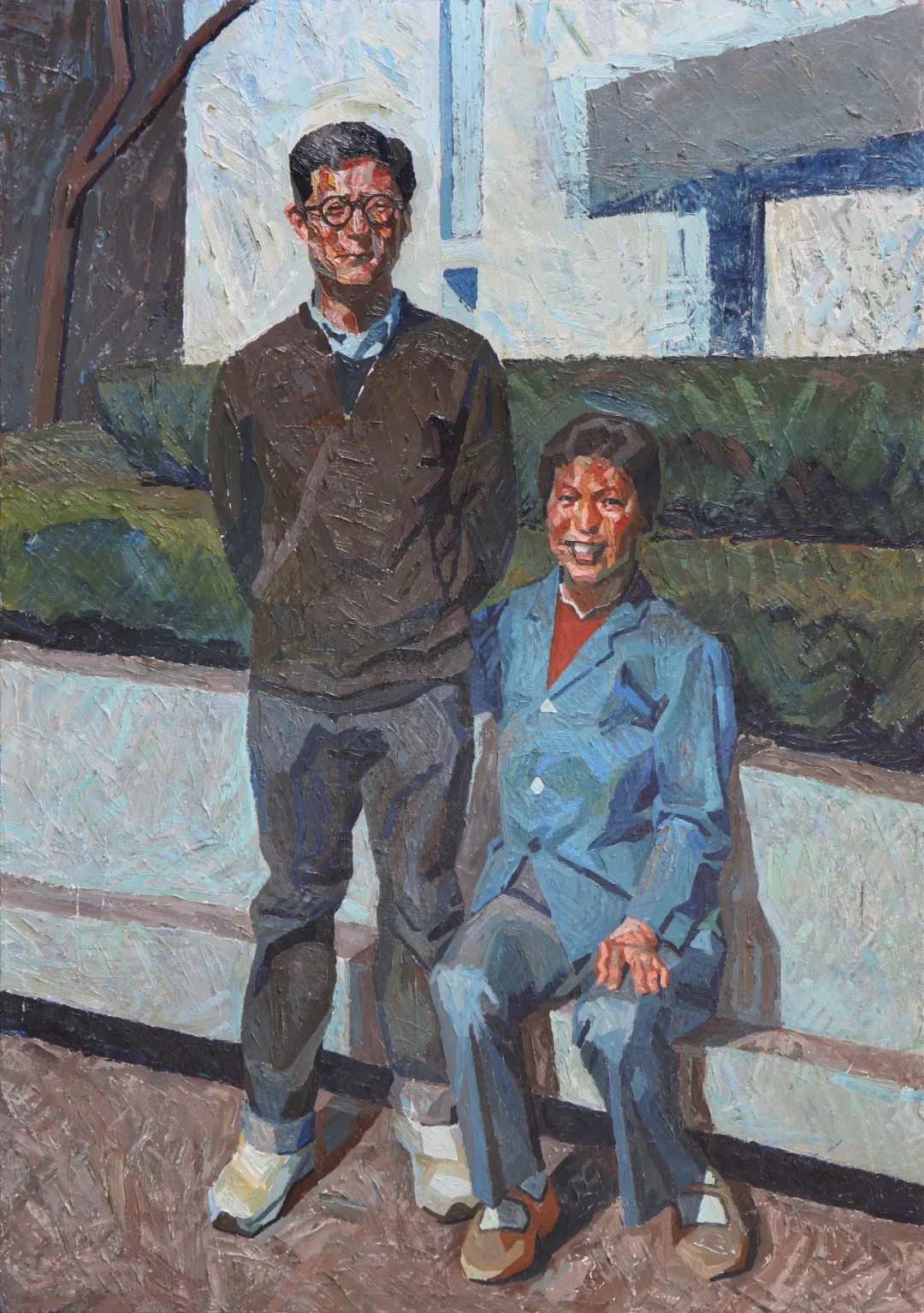
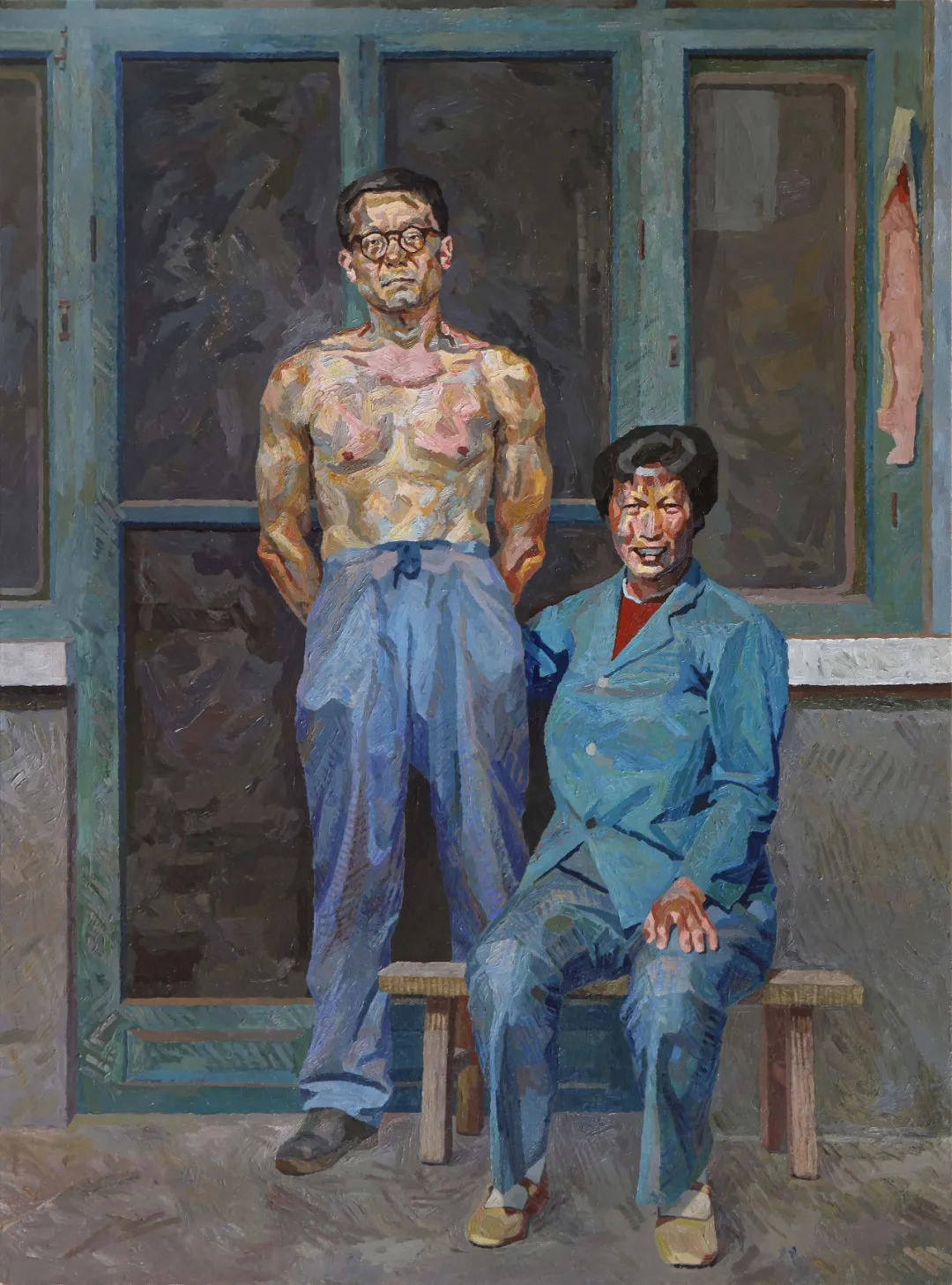
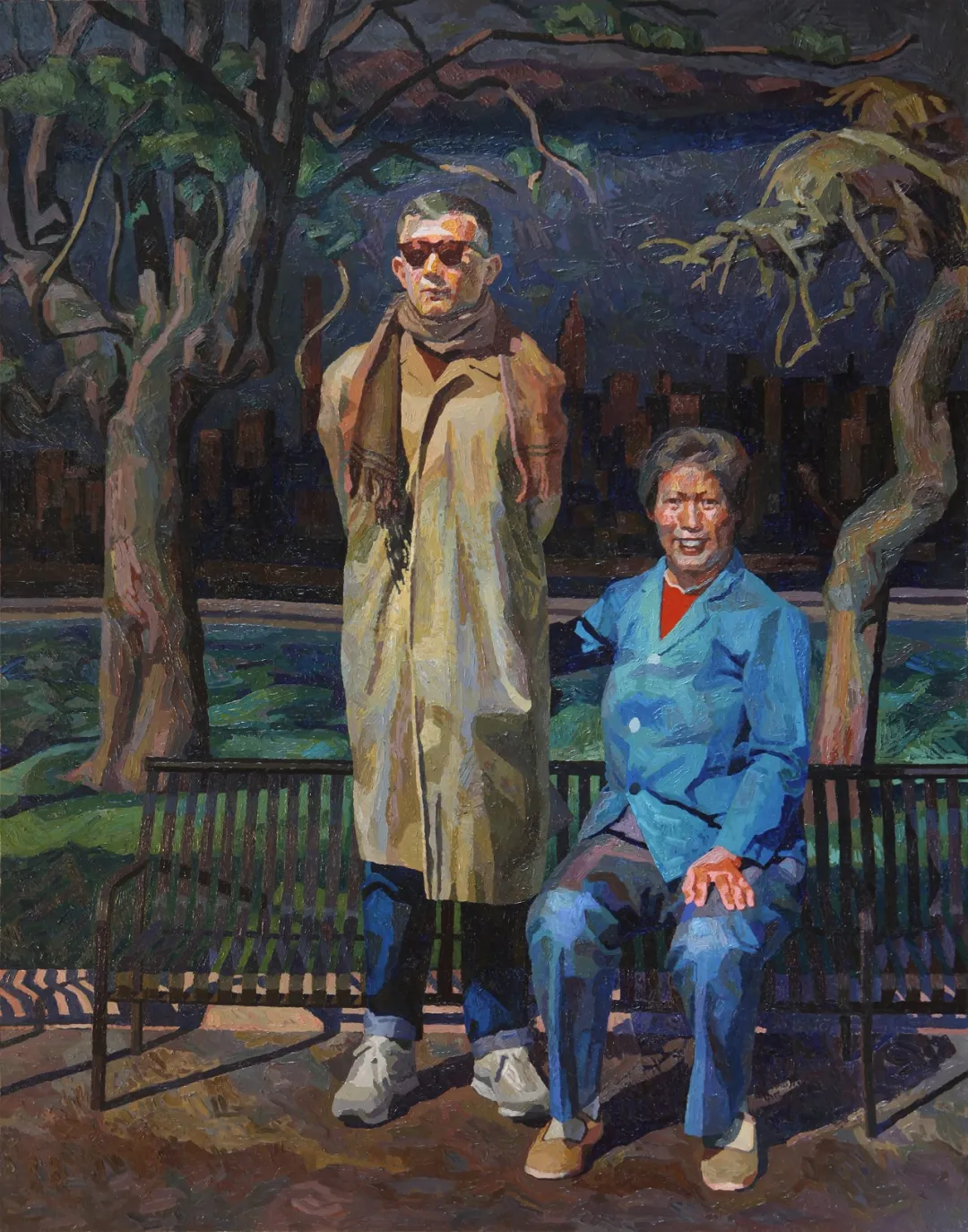
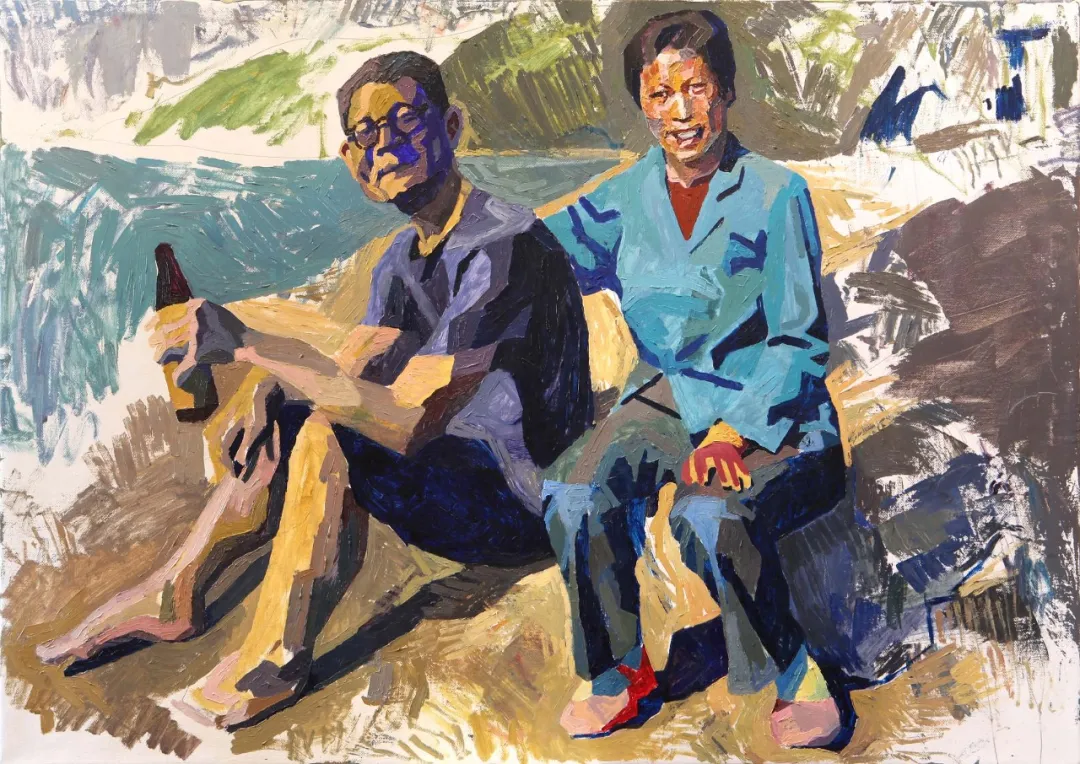
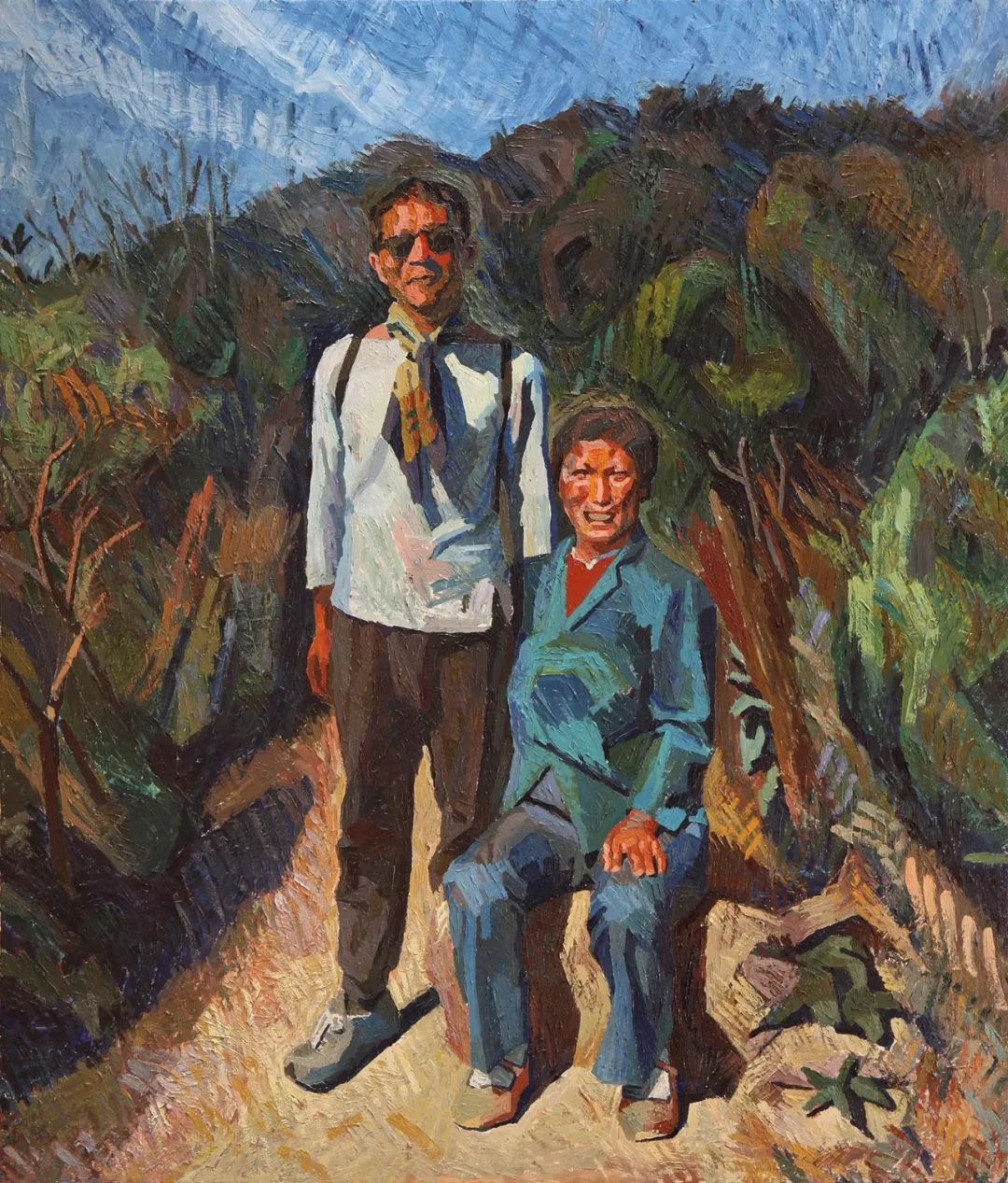
"Mother and Son" series paintings, aged 22-33
During those three years of the pandemic, time seemed to stand still, and I traveled back to being 21 years old, drawing my 1- to 20-year-old self together with my mother. At 1 year old, I naturally used the only family photo as the background.
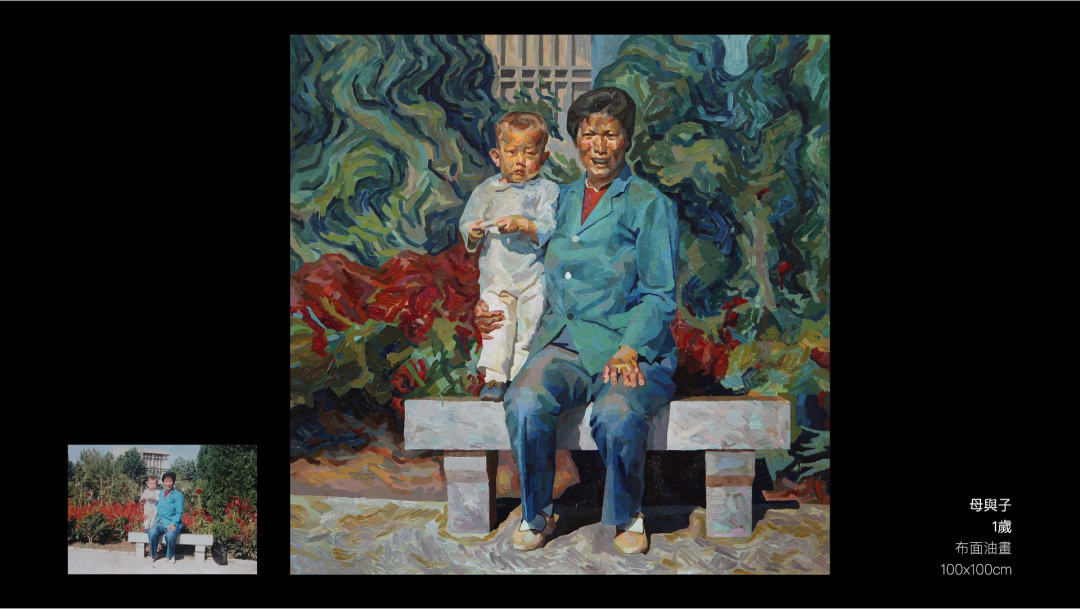
"I's" I's top of a "I's only minimal data,"(s "I's only minimal data."s "I is only minimal data."s "I is only minimal that of a "I "I "I " "I " "I " "I " " only minimal data." " " " " " " " " " " " " " " " " " " "." " " " " " " " "." " " " " " " " " " " " " " " " " " " " " " "." " " " " " " " " " " " " " " " " " " " " "." " " " " " " " "." " " " " " " " " " " " " " " " " " " " " " " " " " " " " " " " " " " " " " "." " " " " " " " " " " " " " " " " " " " " " " " " " "." " " " " " " " " "" " " " " " " " " " " " " " " " " " " " " " " " " " " " " " " " " " " "
The photo from when I was 3 years old was taken at a photo studio. For someone of my age, an 80s child born in the countryside, it wasn't common for everyone to have childhood photos. Coincidentally, my stepmother owned a photo studio, so I had photos taken every year. Fate is truly mysterious.
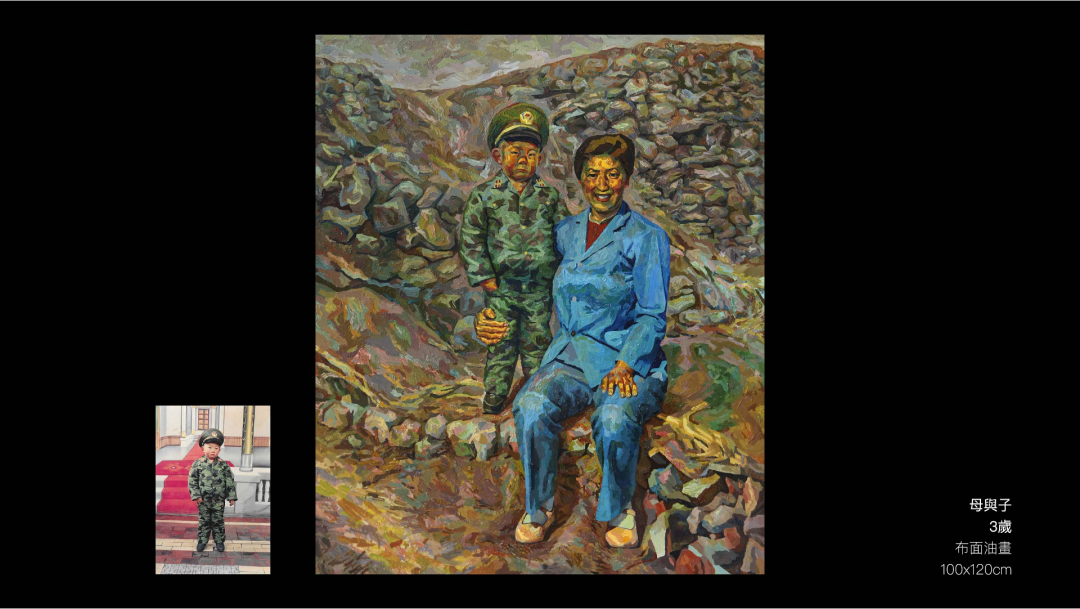
Photos of 3-year-old "Mu Yu Zi" and 3-year-old Ma Yujiang
At 12 years old, one graduates from elementary school, at 15 years old, one graduates from junior middle school, and at 19 years old, one goes outside to practice writing from life as a university student.
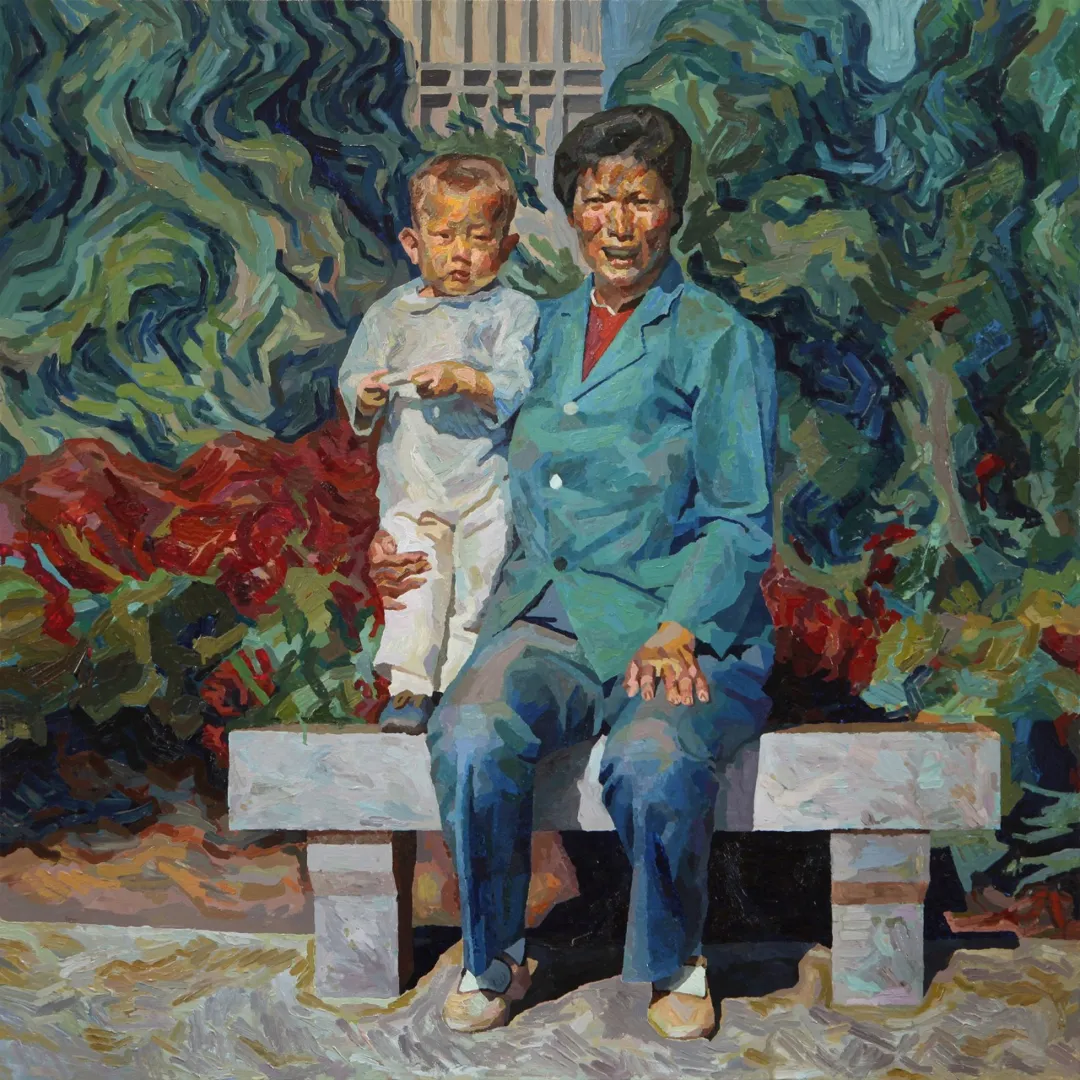
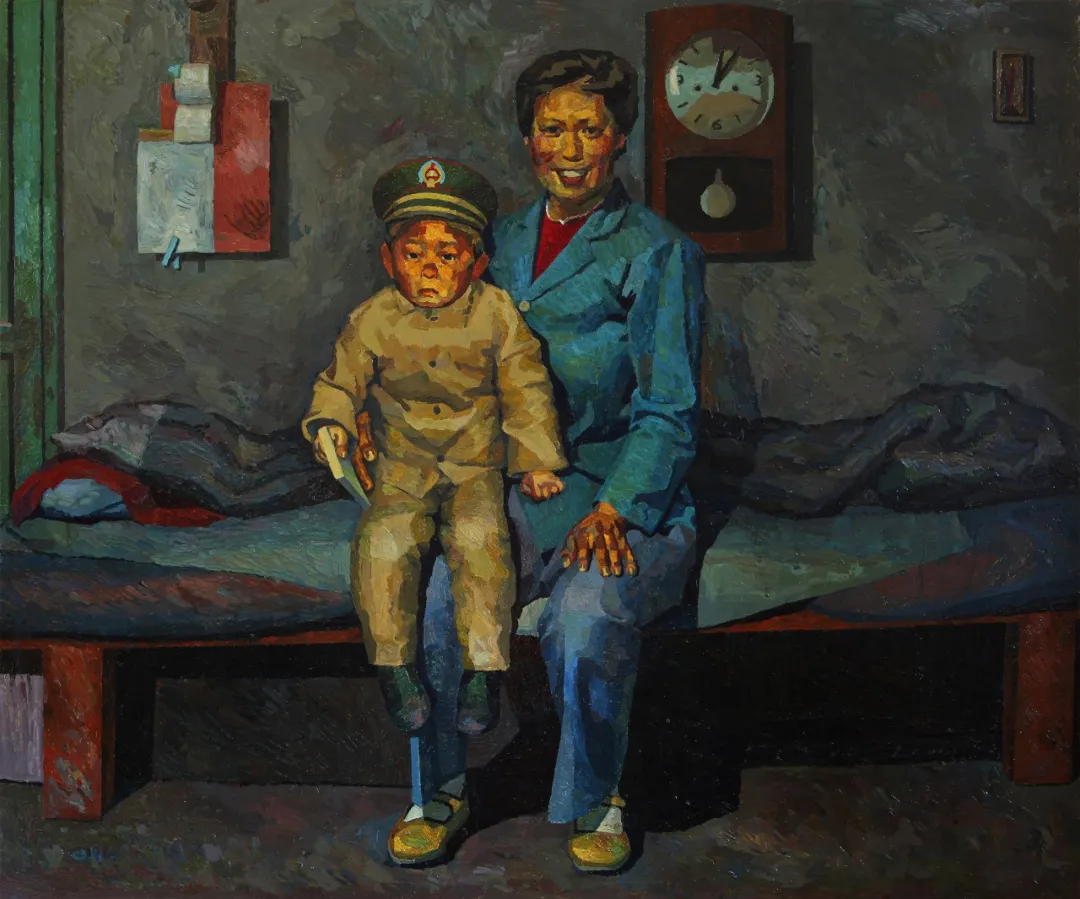
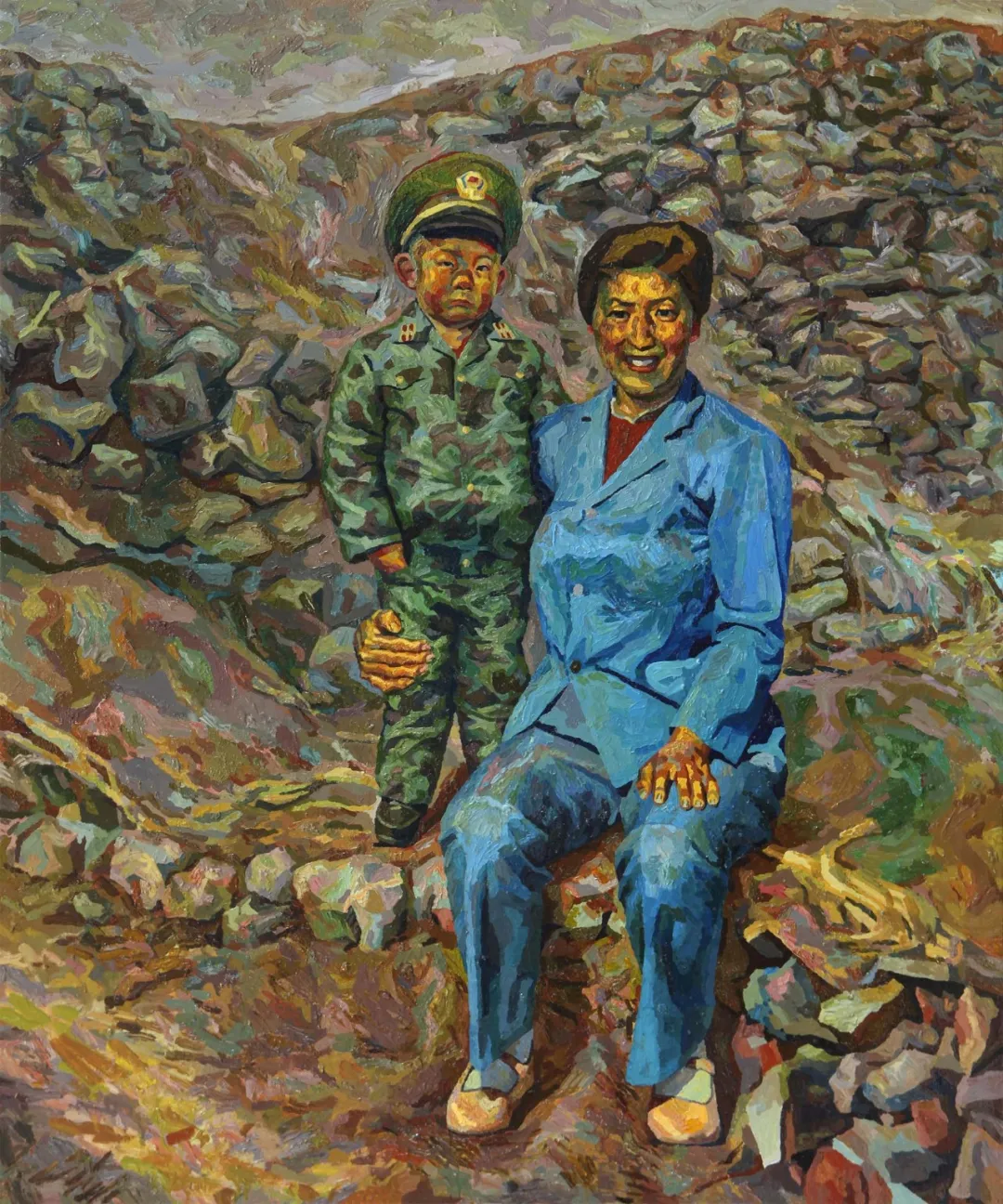
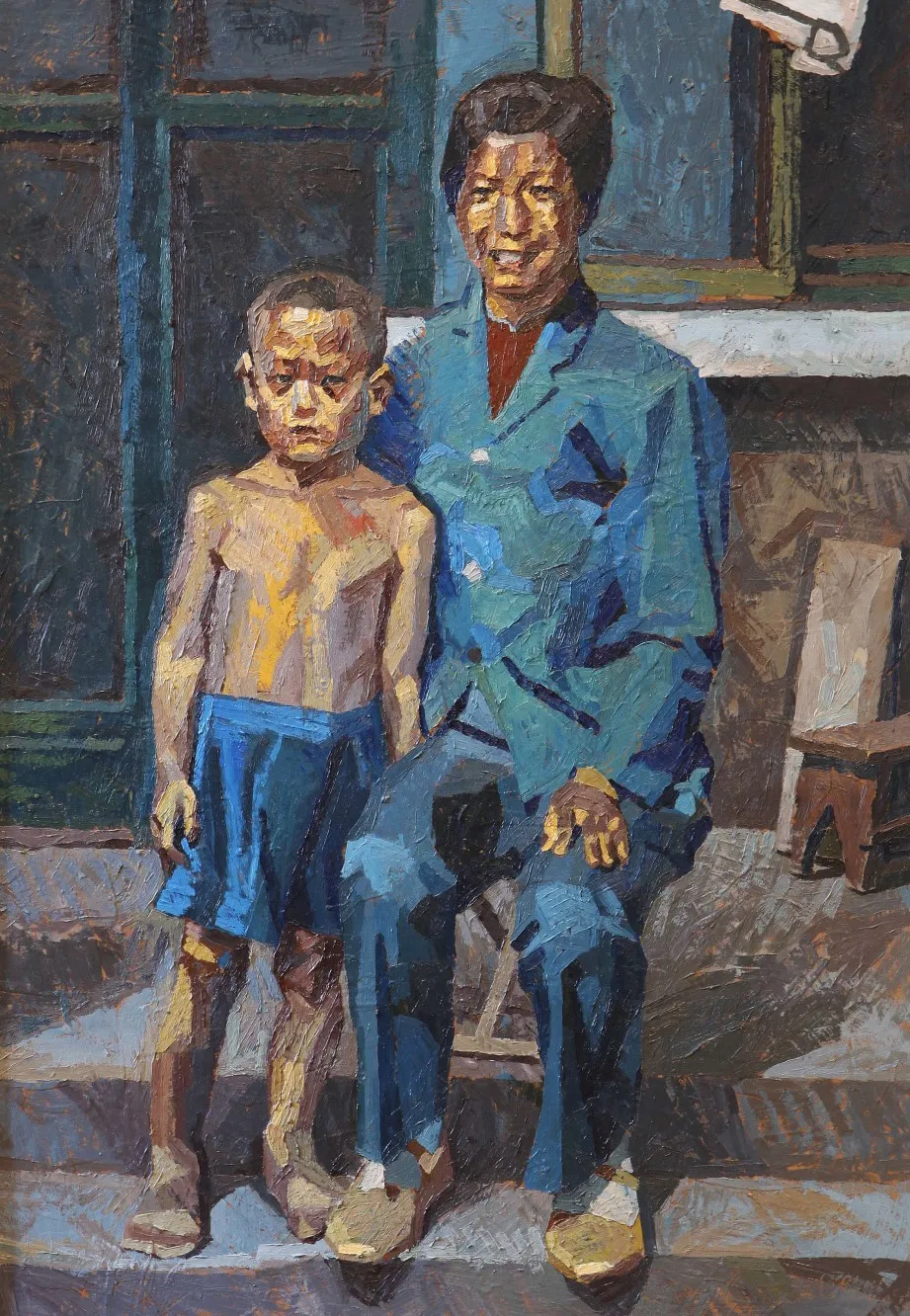
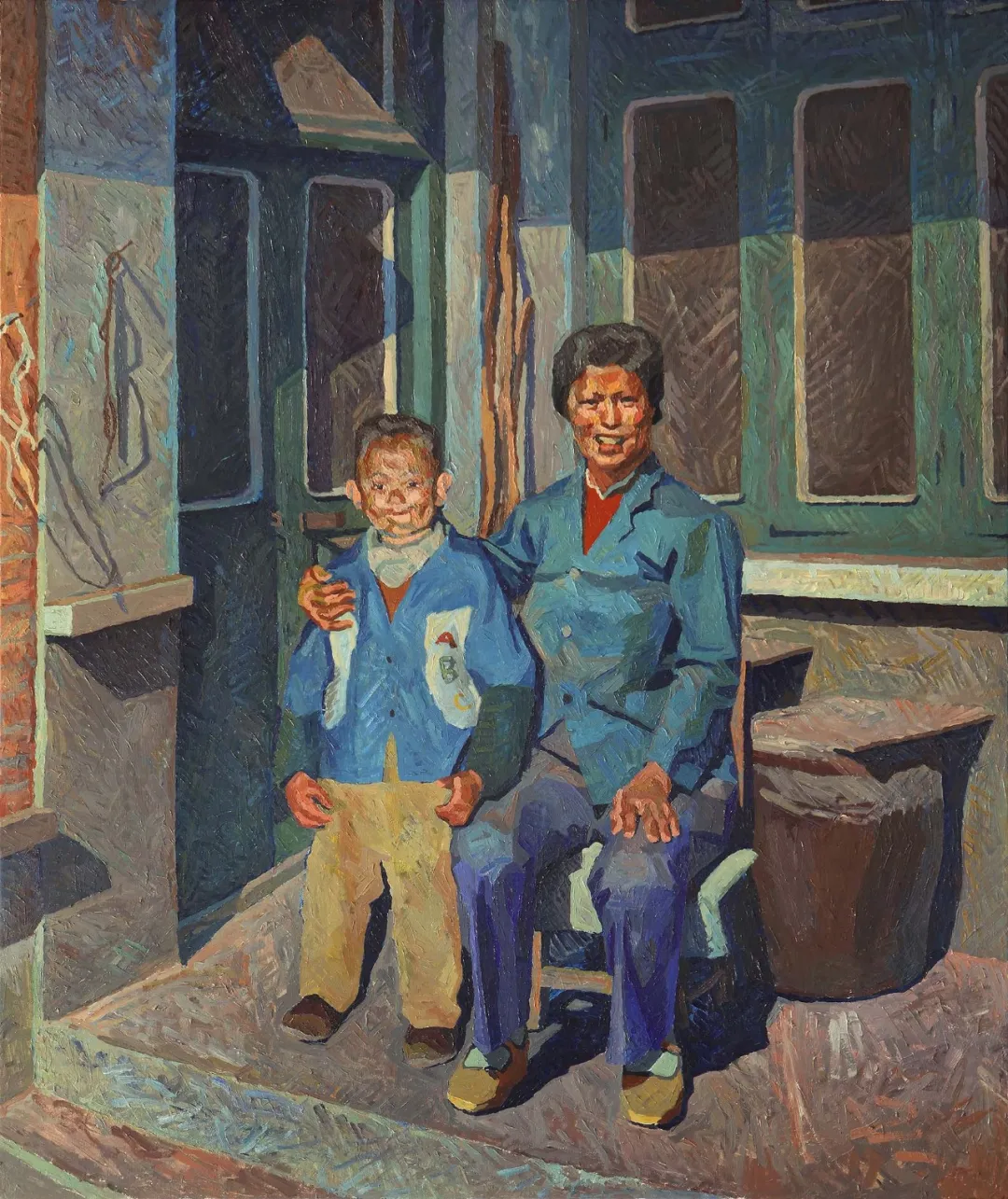
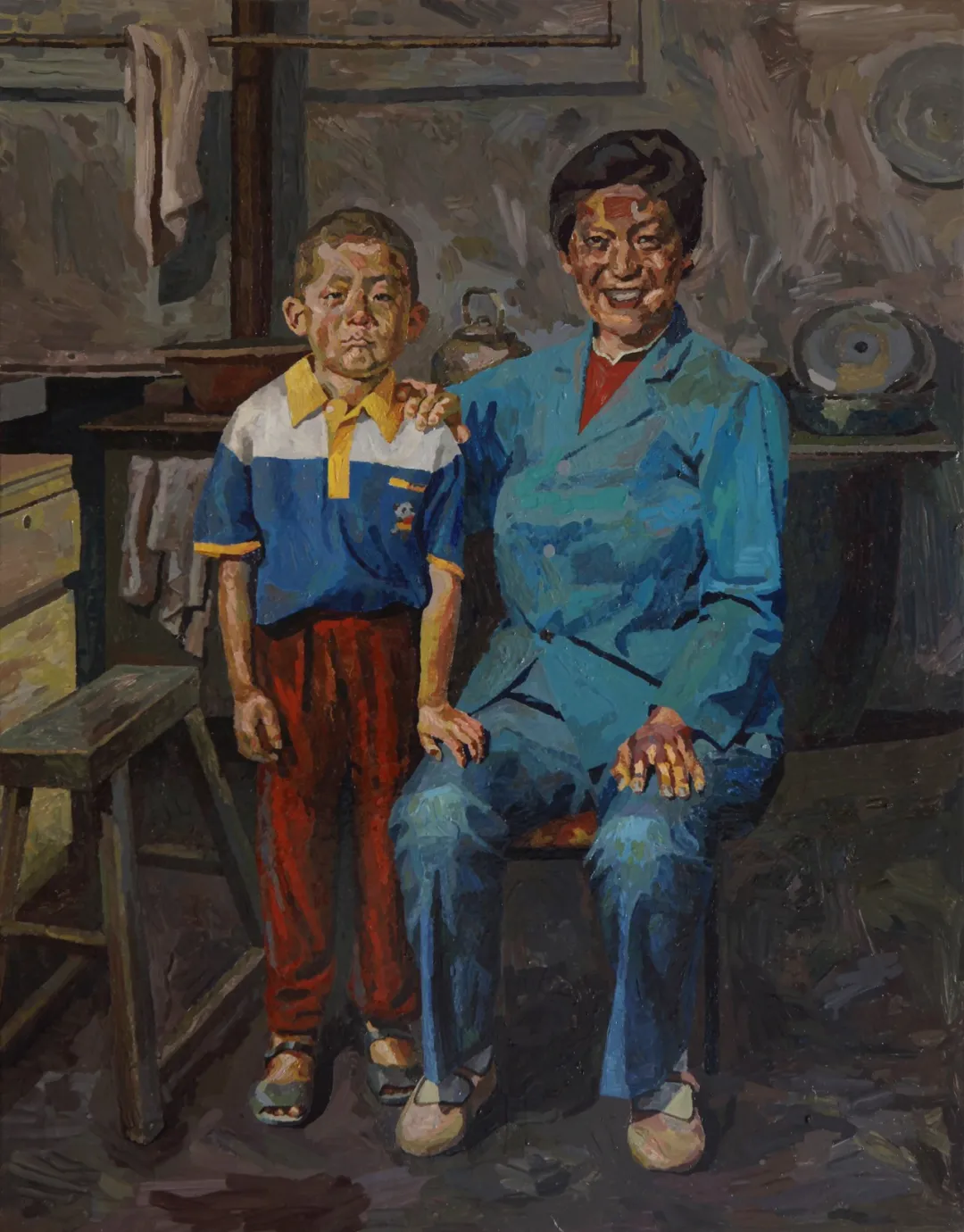
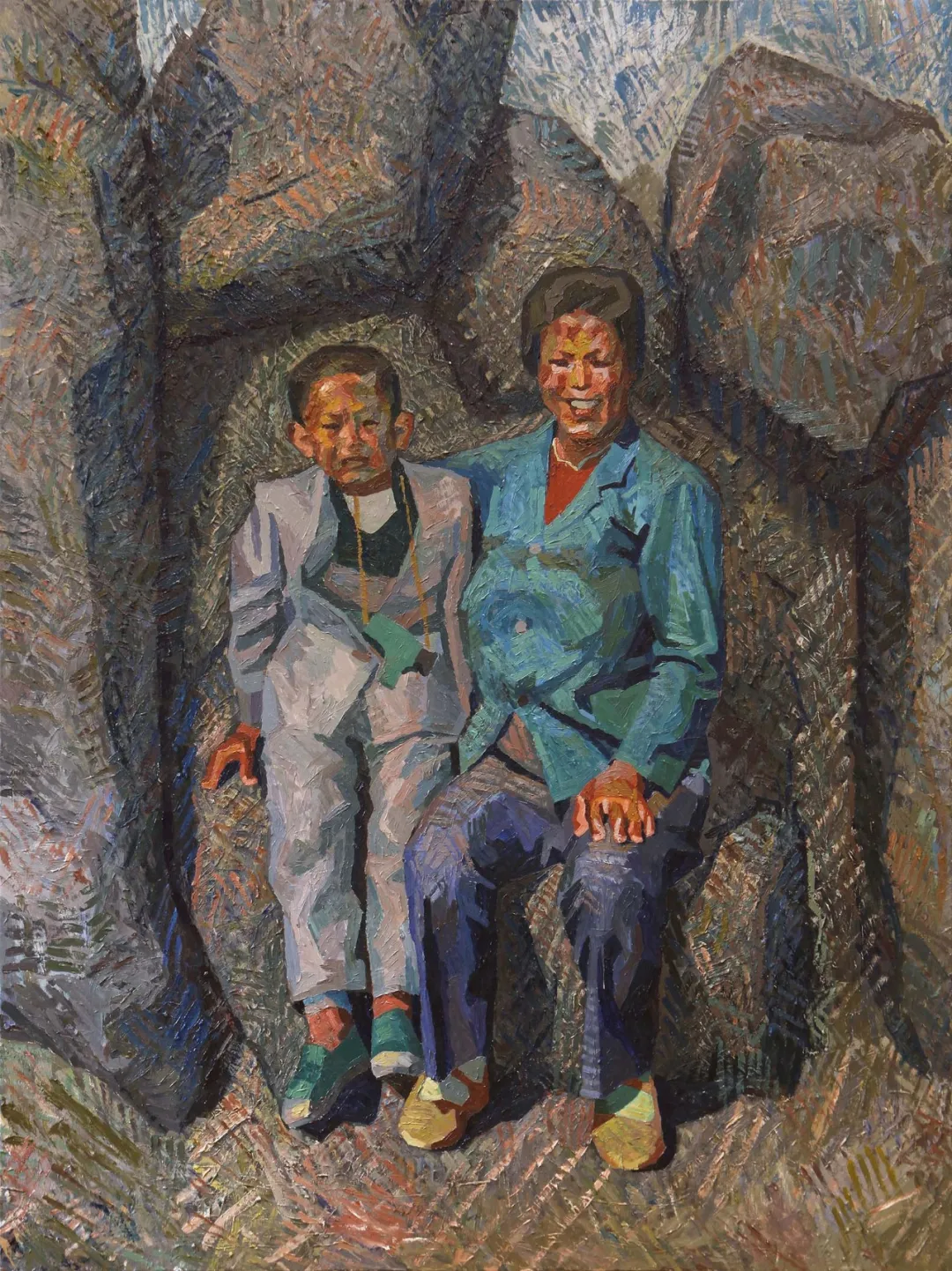
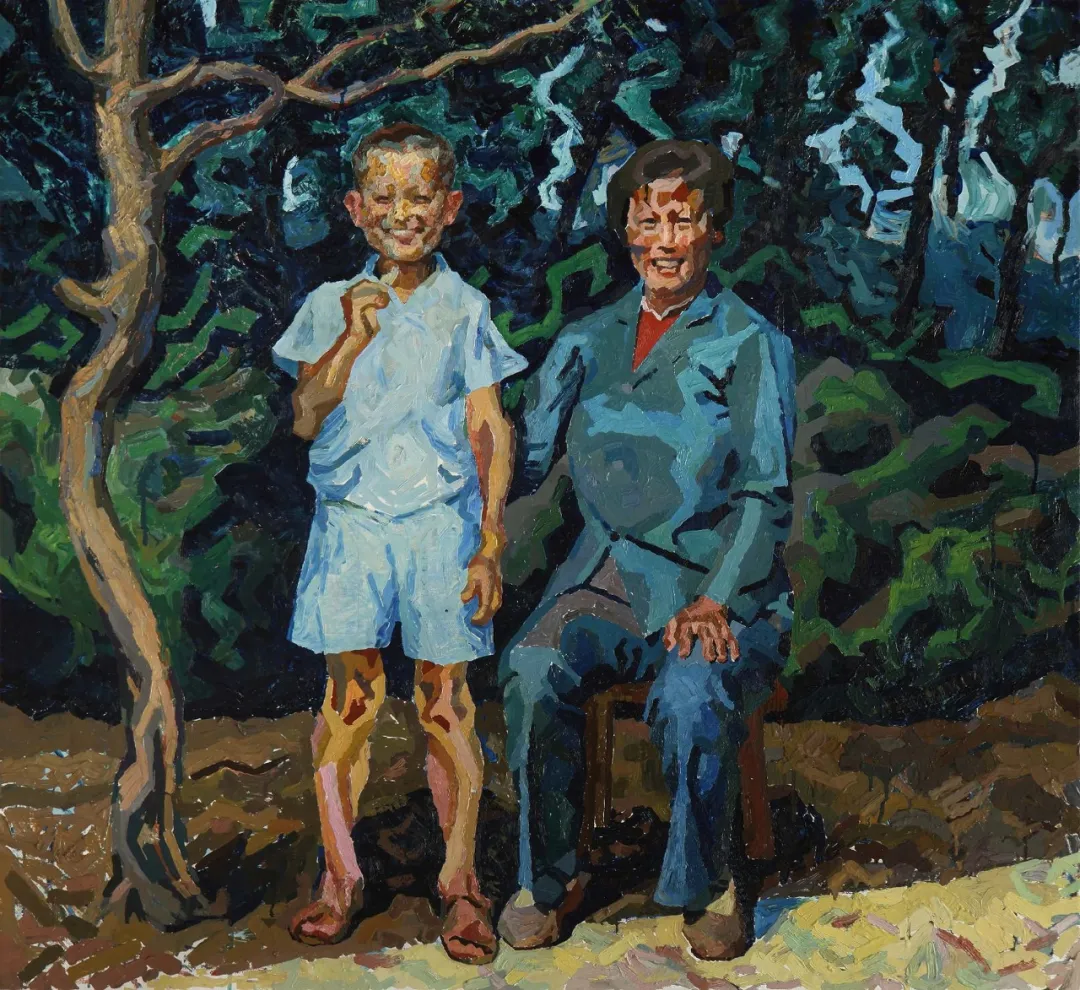
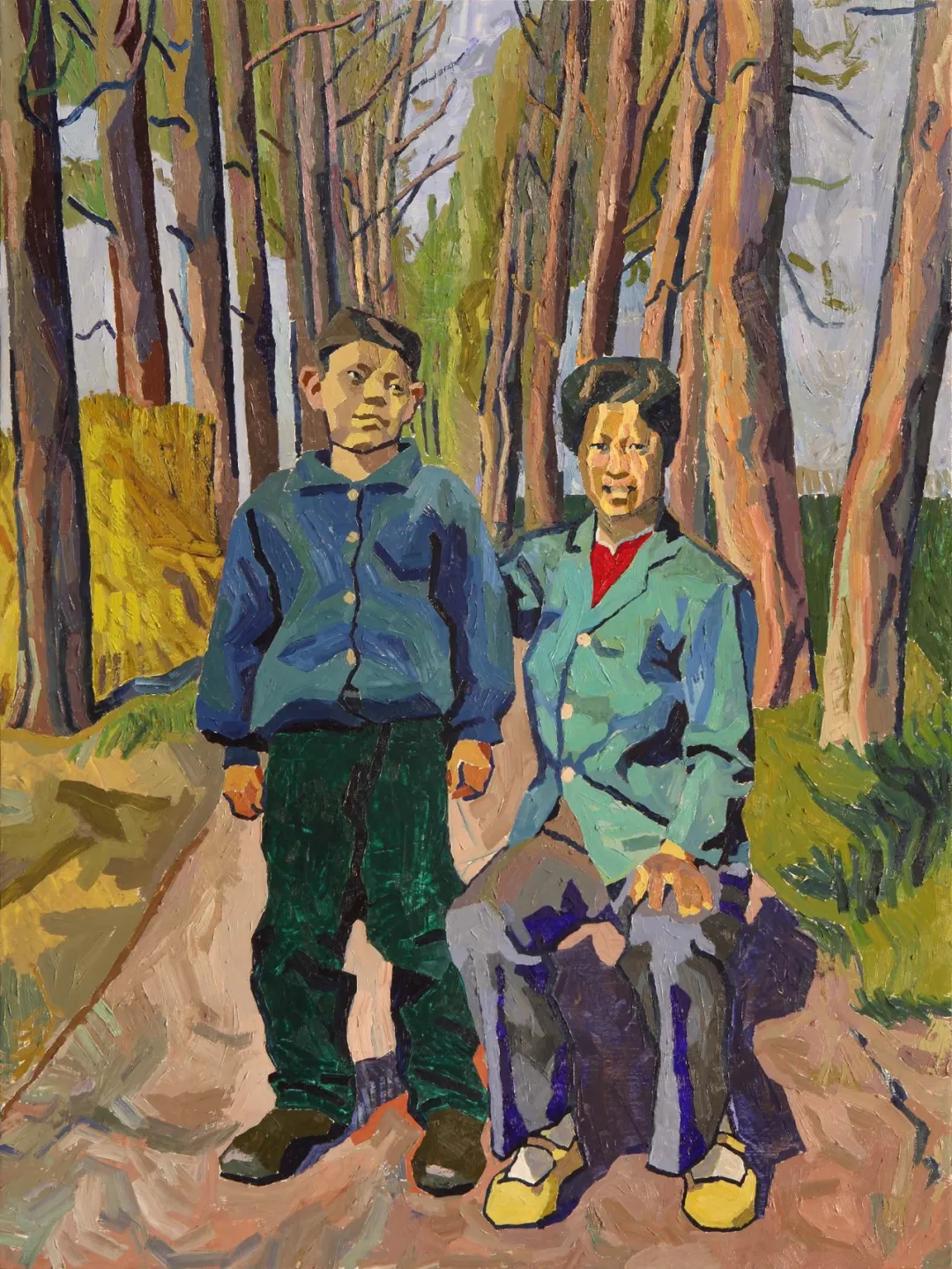
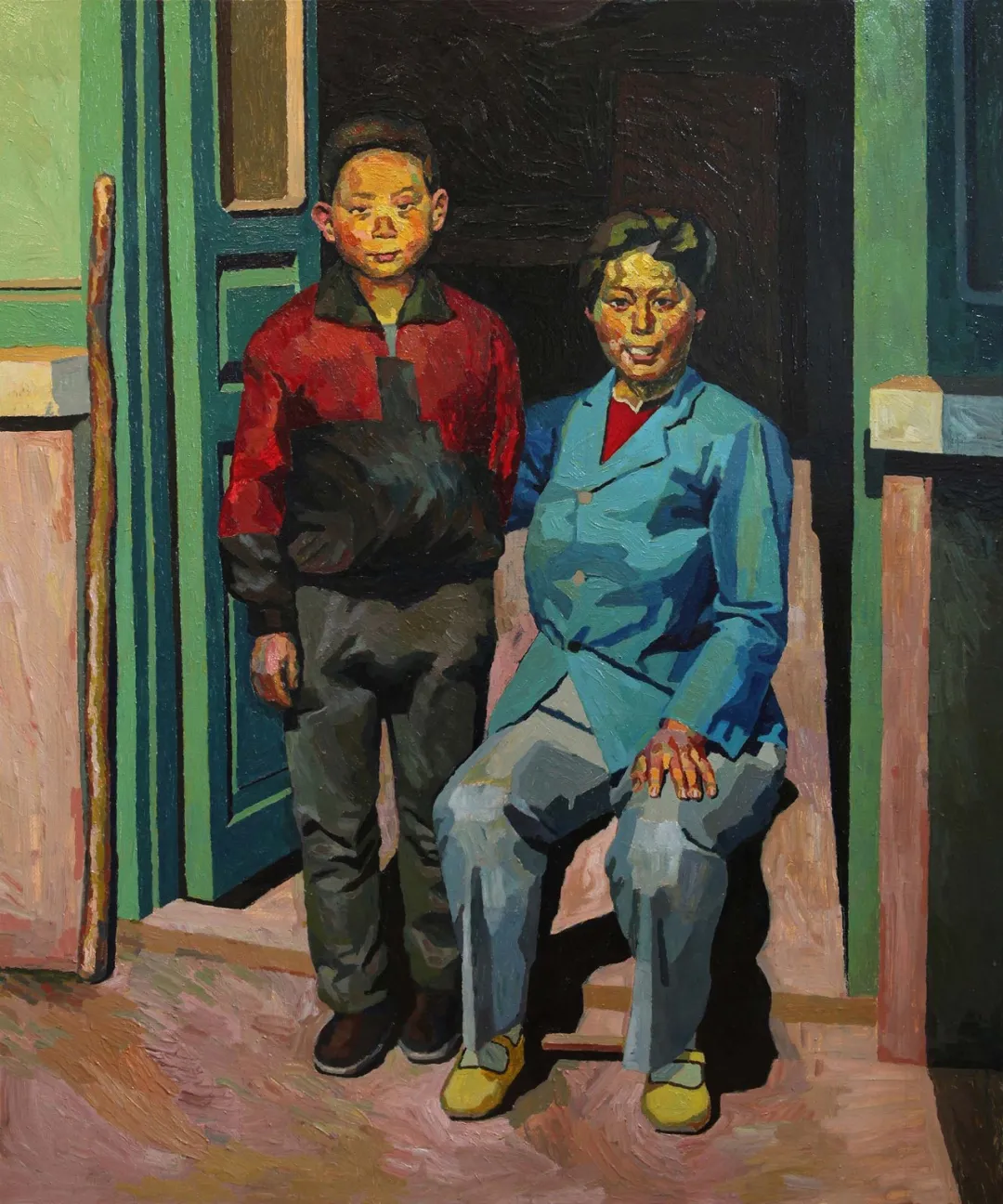
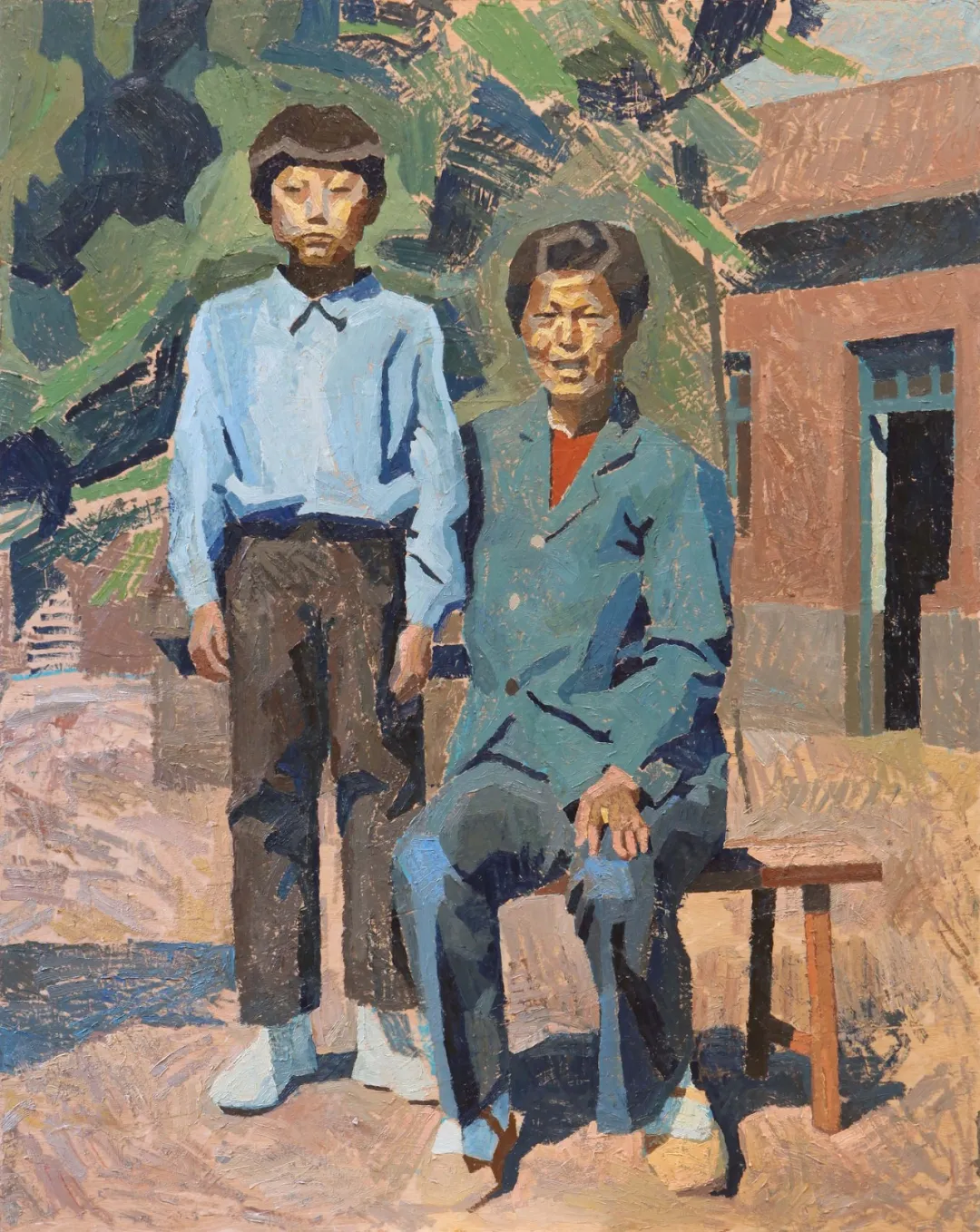
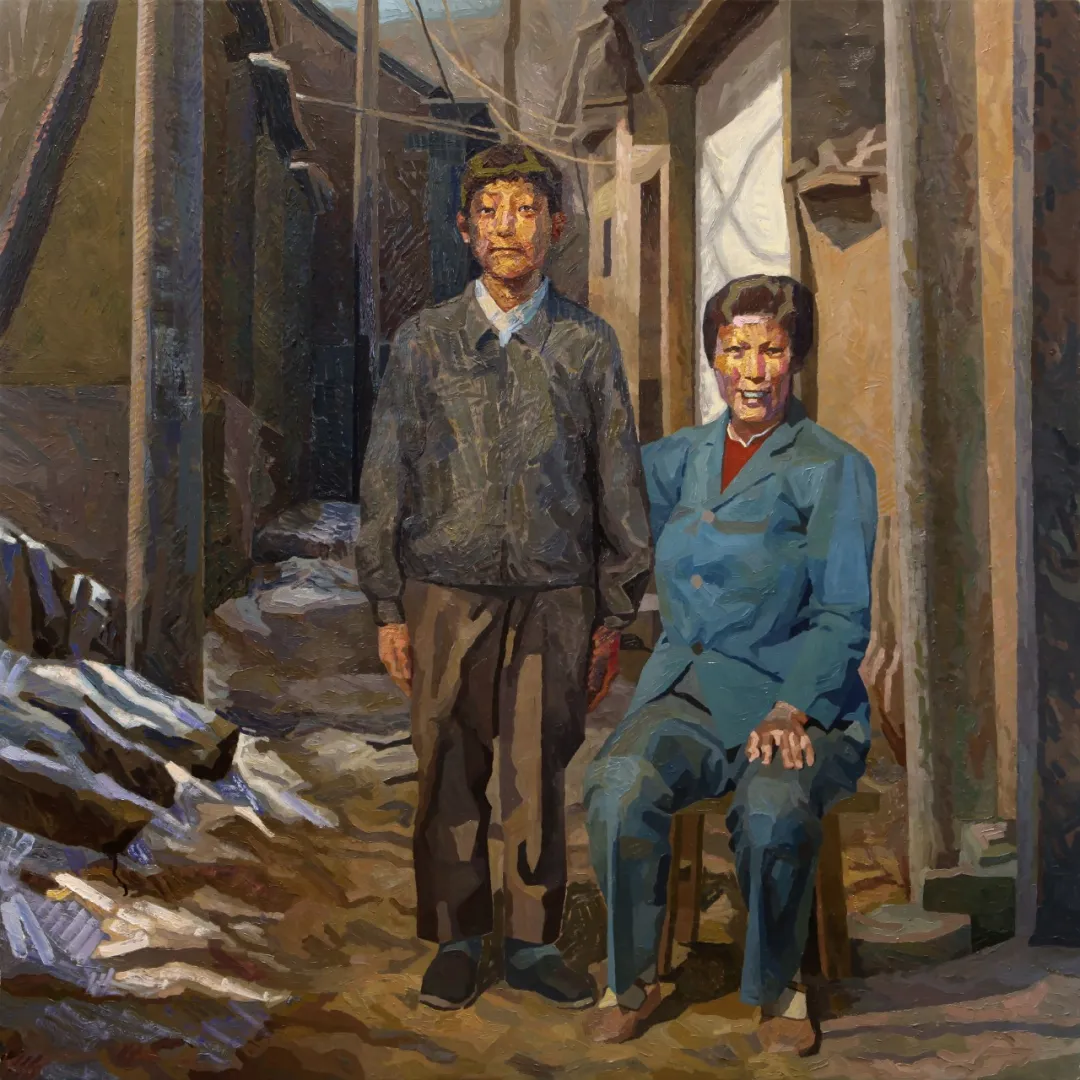
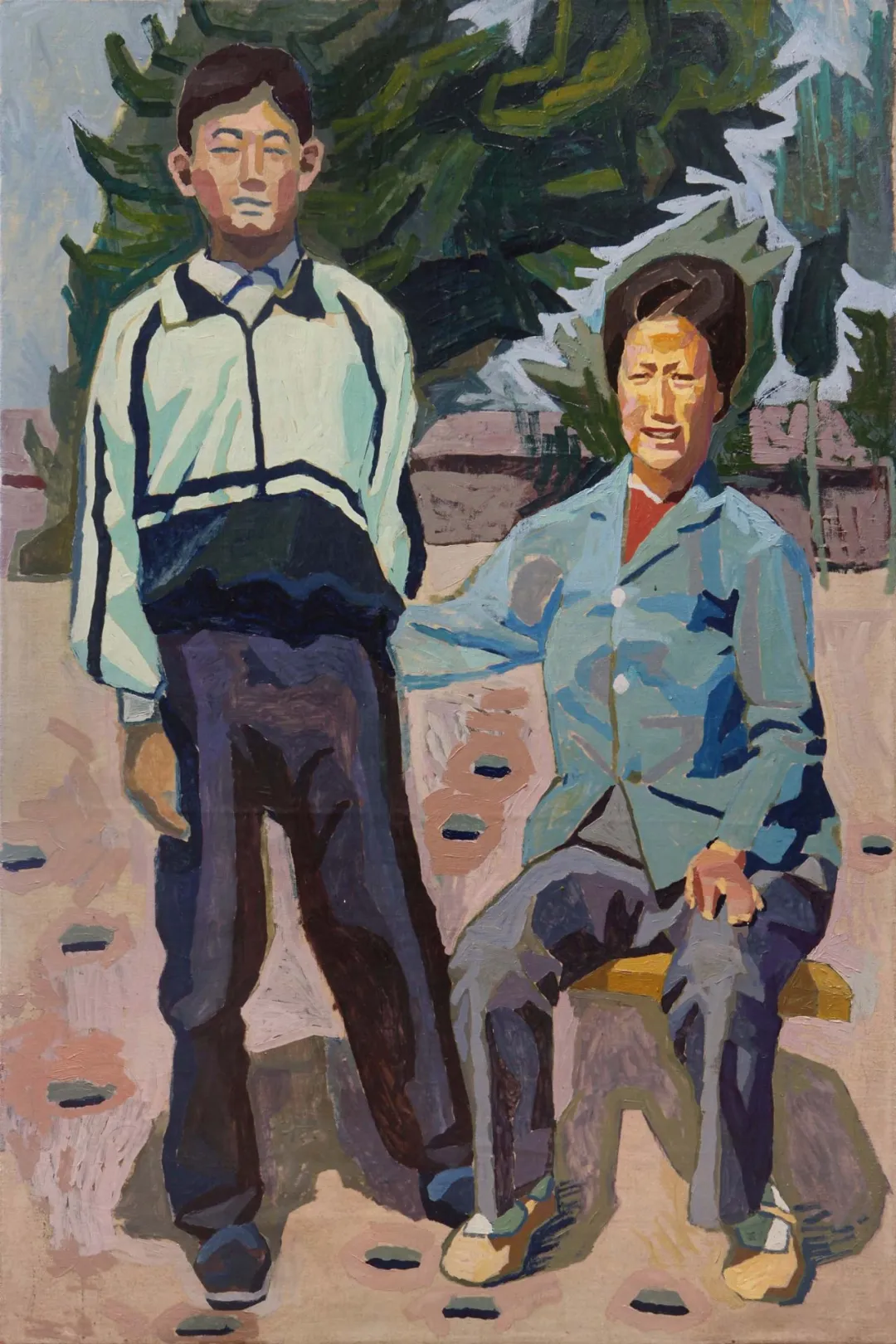
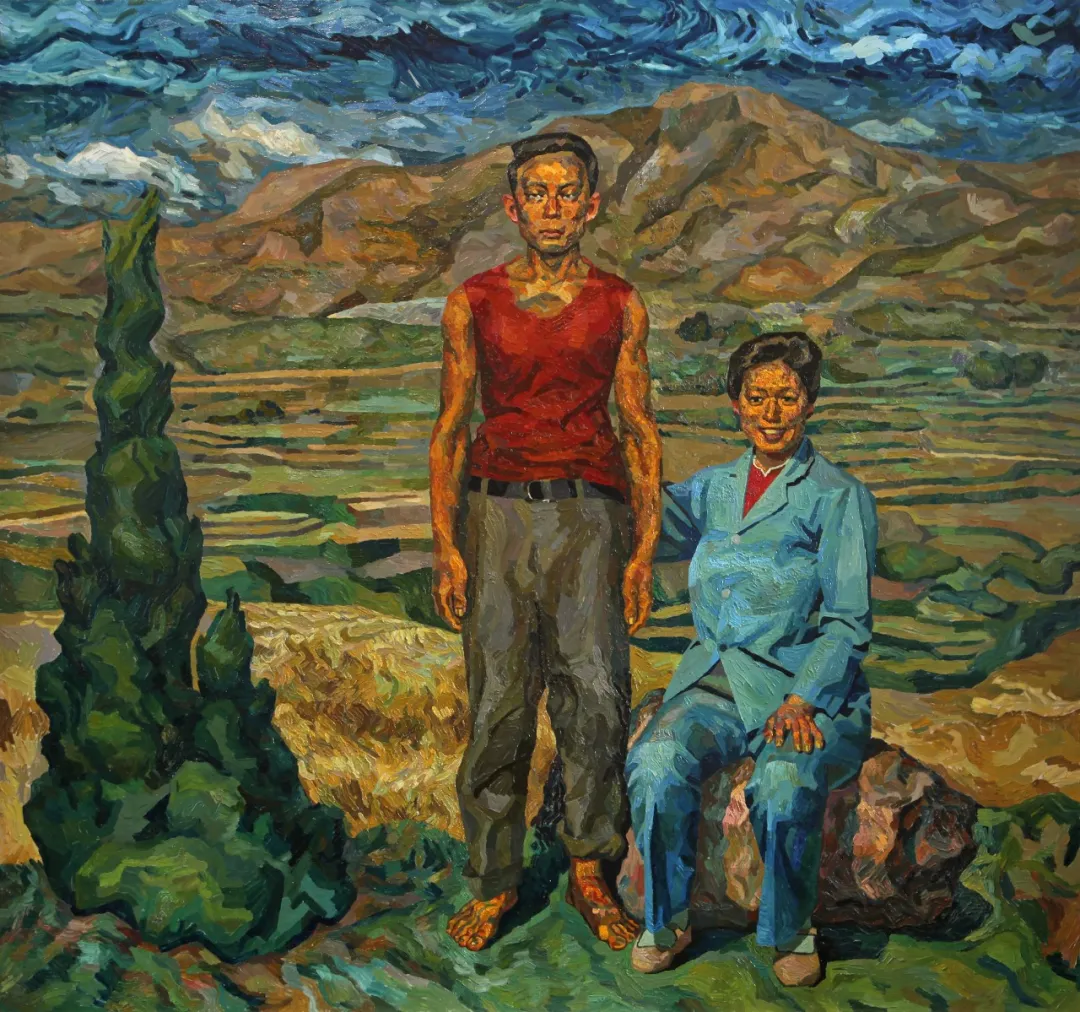
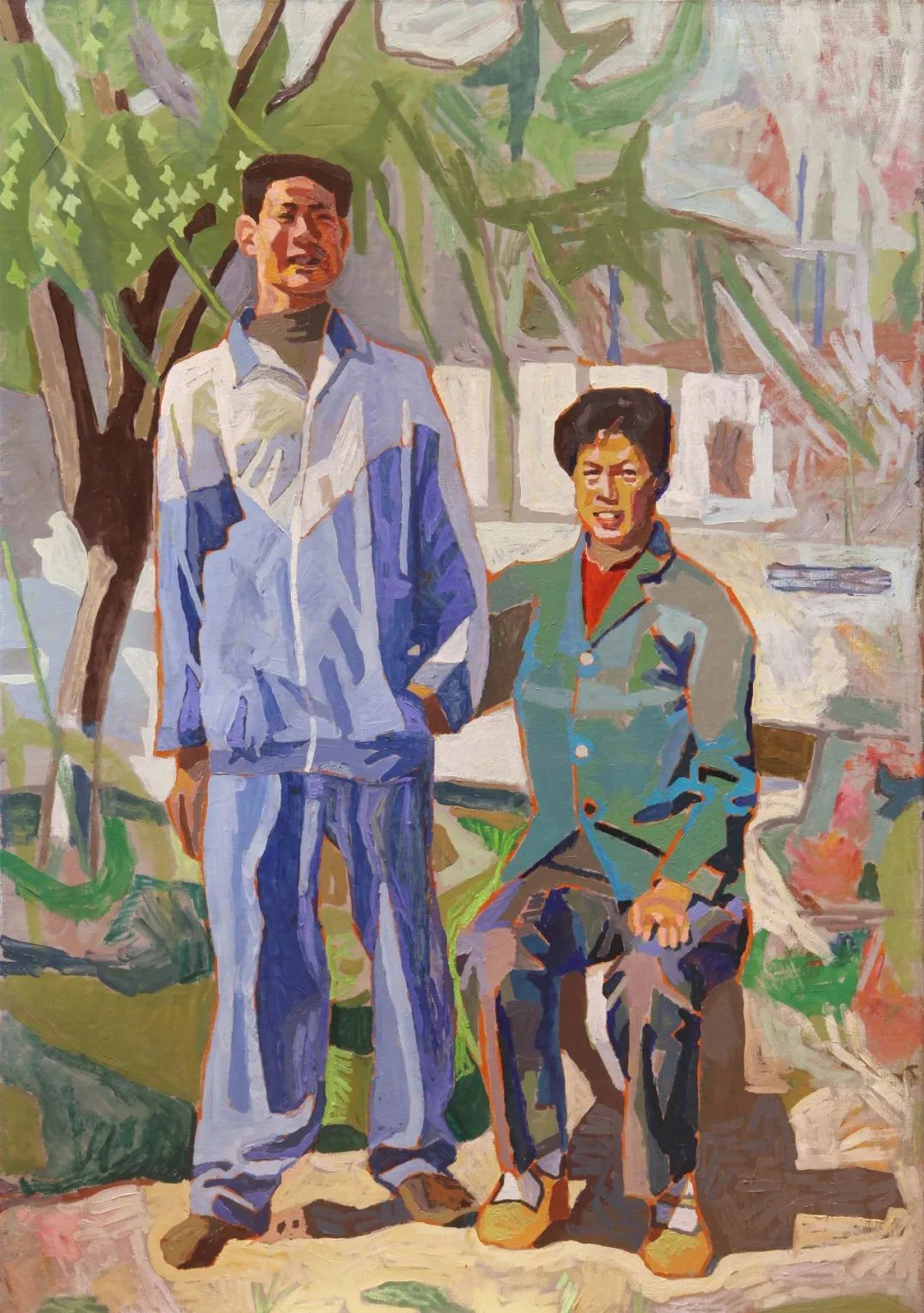
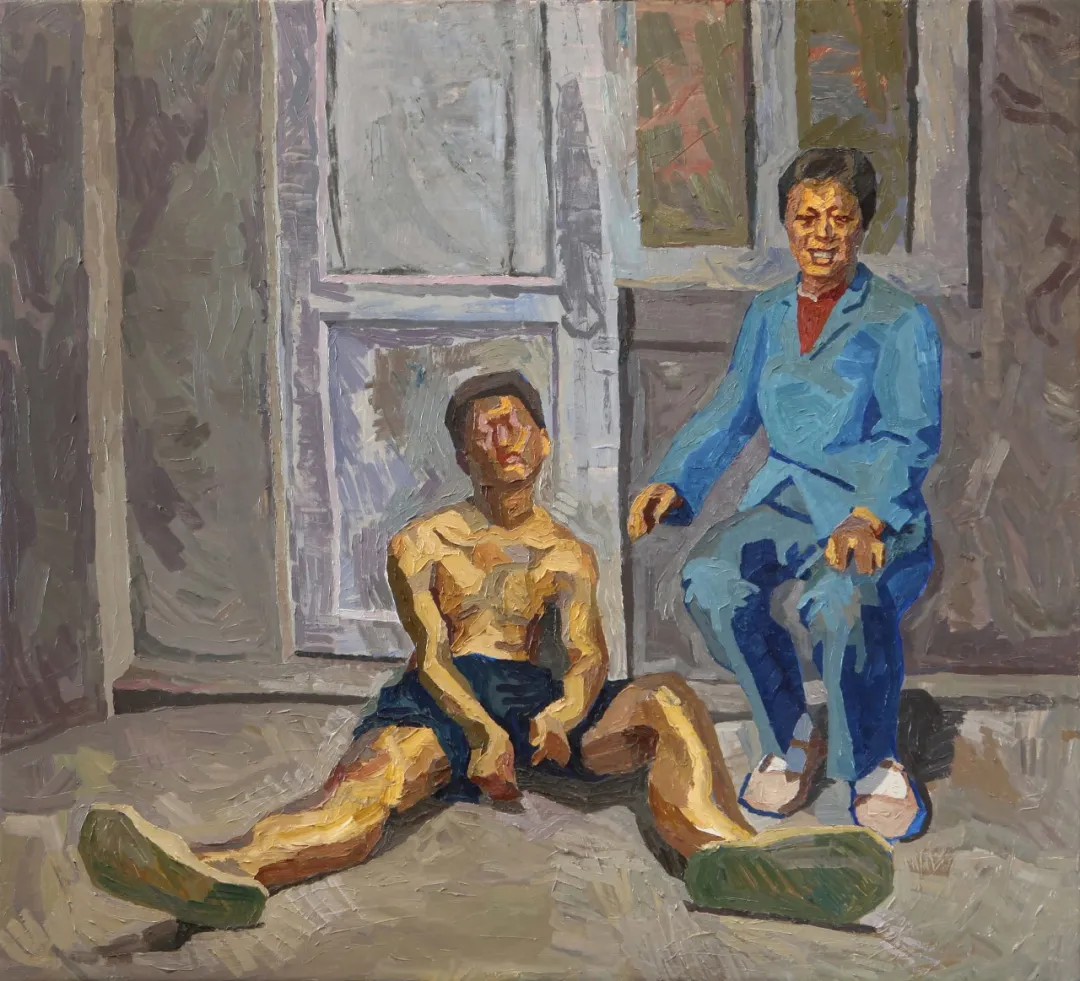
"Mother and Child" series artwork for ages 1-20
After the pandemic ended, everything returned to normal. In 2023, I was 35 years old, and this was when I attended a dinner party with Victoria Harbour as the backdrop.
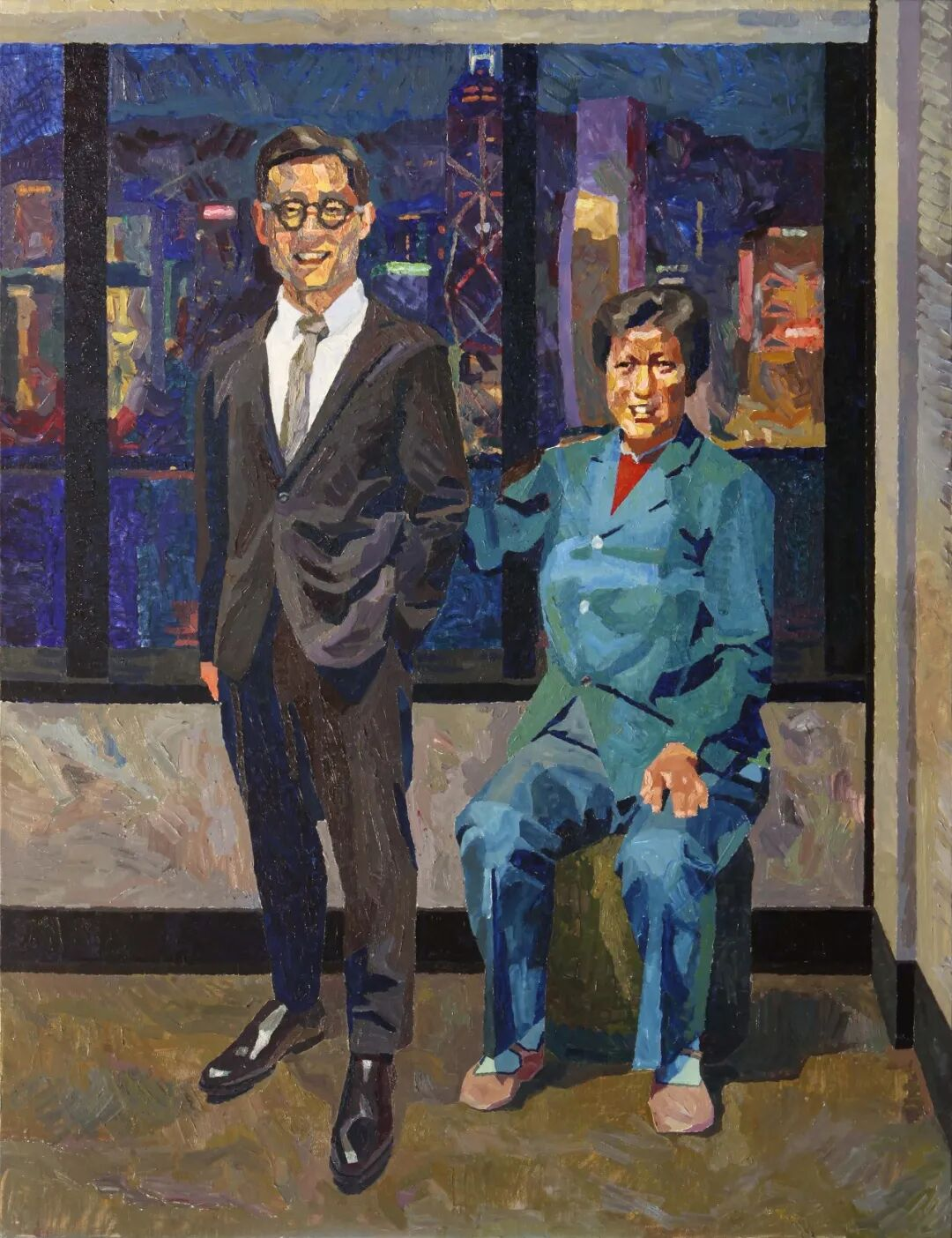
▲"Mother and Child" Age 35 Oil on canvas 110x130cm
When I'm painting my mother, I'll suddenly remember something. For example, the 36-year-old portrait is a half-length, and the larger size allows me to capture more details of her face. When I'm painting the side of her nose, I'll suddenly recall that her nose is shaped like that from the side. When I'm working on another piece, I might remember again that the top of her cheekbones are shaped like that.
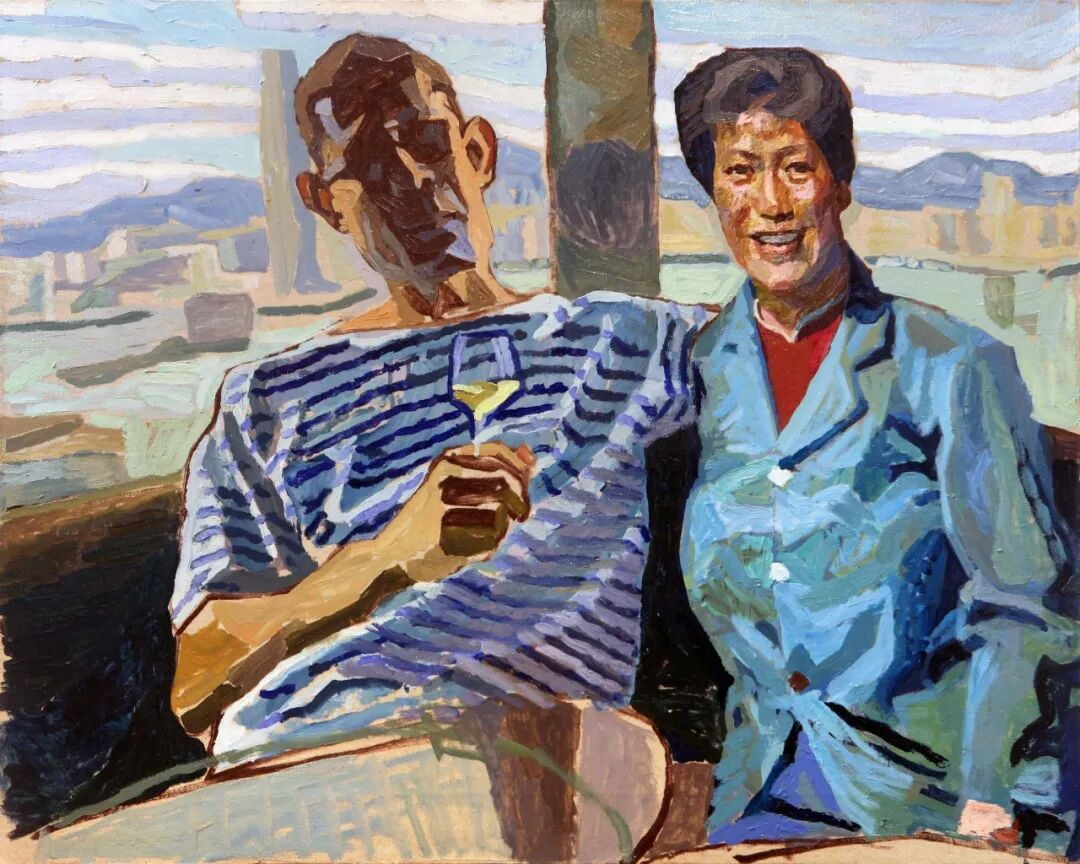
"Mother and Son" 36 years old, oil painting on canvas, 100x80cm
Starting from a blank slate and shaping it bit by bit actually brings back a lot of memories—ones I might not have thought of if I'd just tried to imagine them out of thin air.
Last year I turned 37, already 10 years older than my mother ever was. This is the scene of me painting "Mother and Child" that year.
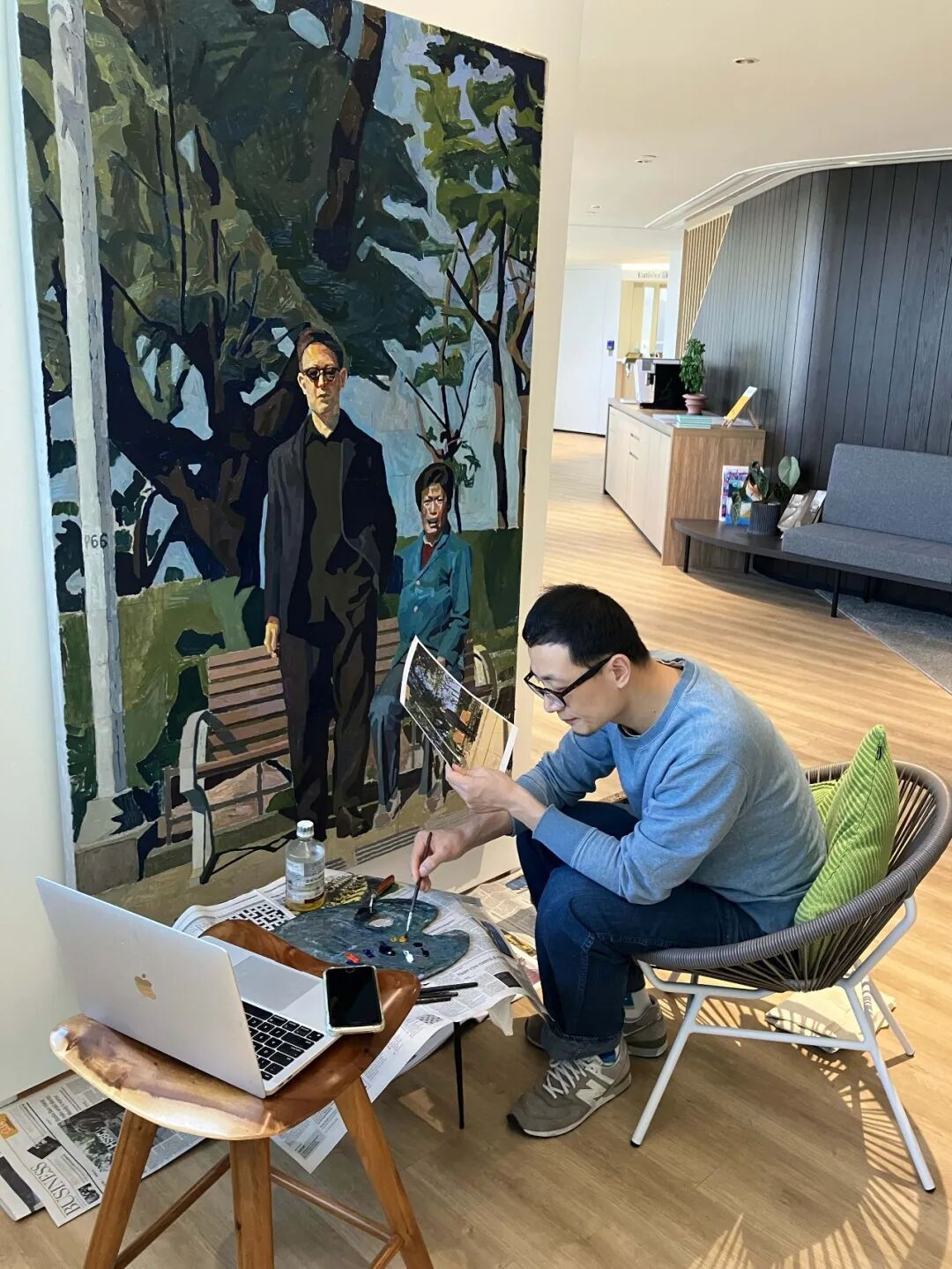
This year I'm 38 years old, and I still haven't started painting. I plan to wait until I'm 40 to hold an exhibition, putting 40 paintings together, and then do it again when I'm 50, 60, and 70. This piece will be at its best when I'm 80 or 90 years old, a white-haired old man, possibly using a cane or sitting in a wheelchair, next to a 27-year-old mother.
Of course, the premise is that I must be alive. So in this series, I am not just myself, but also a part of the work. What I need to do is to live well, and for every year I live, the work will have one more page, making it seem like the work has a life of its own. One day when I pass away, it will not only be the end of my physical life, but also proof that the work is complete.
In this piece, you can see I ran into a very significant obstacle: my mother's death. Usually, such profound difficulties spur my creativity. I appreciate how this work grew organically out of life itself.
I feel that in art, there's a Chinese idiom: "you gan er fa" — to create from genuine feeling. Those four words capture the essence of it. You don't need to approach it from art history, and you don't need to follow trends. You just ask yourself: what truly moves you? Then do that.
Dealing directly with the world
Life is not always filled with huge dilemmas, sometimes small ones can also spark my thoughts.
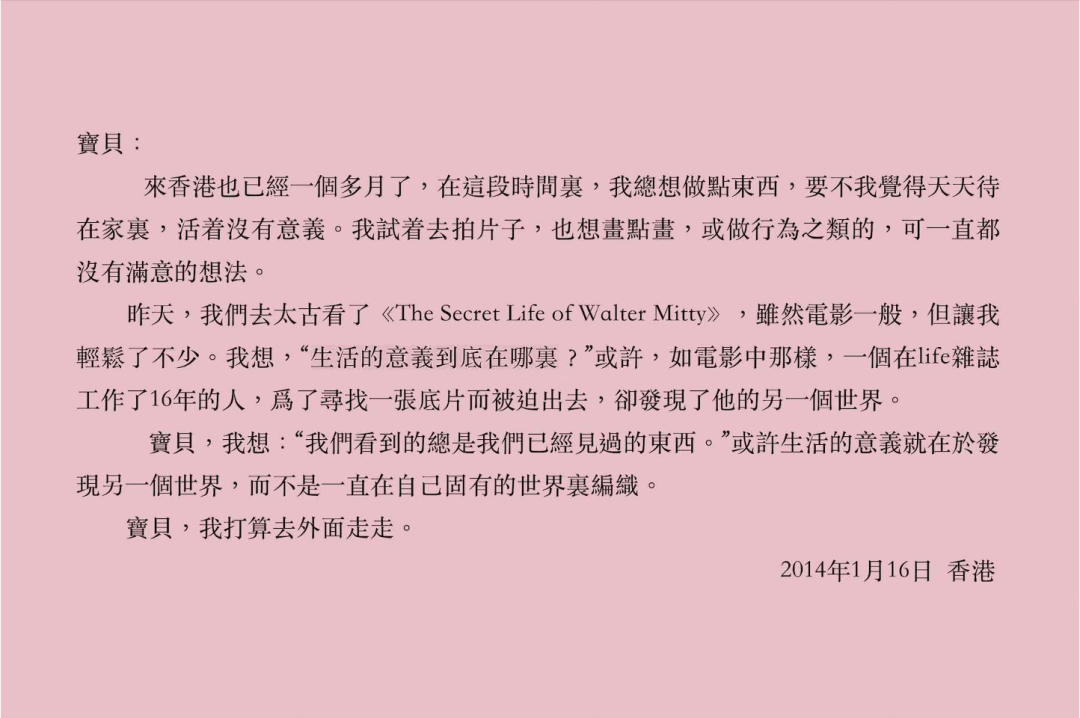
In 2014, I went to Hong Kong. At the time, I had no ID card, so I couldn't work. I had no friends, didn't speak the language, and couldn't get used to the climate. My wife is from Hong Kong and went to work as usual, while I stayed home feeling incredibly restless and wanted to get out. I hadn't gotten a mobile SIM card yet, and I was worried she wouldn't be able to find me when she got back, so I wrote her a letter.
After I go out, I'm afraid of getting lost, so every time I come across a street sign, I take a photo of it. For example, when I get to Queen's Road, I take a photo of the Queen's Road sign, and when I get to Johnston Road, I take a photo of the Johnston Road sign. In case I get lost, I can follow the signs back home.
When I arrived at Bao Yun Avenue, I noticed that the "Bao" in Bao Yun Avenue was the same as the "Bao" in the first word "Bao Bei" of the letter. I thought to myself, since the letter has over 200 words, I'll try to find all the words in the entire letter, and that's how the "Letter from Hong Kong" project began.
Why did I choose rubbing over photography? Because photography necessarily keeps me at a distance from the subject. Rubbing, by contrast, presses my body flush against the wall—like caressing the city itself. It mirrored exactly how I felt at the time.
Among the characters that left a strong impression on me, one was the "底" in Qiaodi La Xie's sign. I went to print it at 3 a.m. with a ladder, and after half an hour I still wasn't done—though I was close. What I hadn't expected was that this restaurant takes delivery at 4 a.m., and its employee showed up at 3:30 to open the door. He saw me on the ladder and asked, "You're here to replace our sign, right?" I said, "Yes, yes." He didn't say anything else and went upstairs.
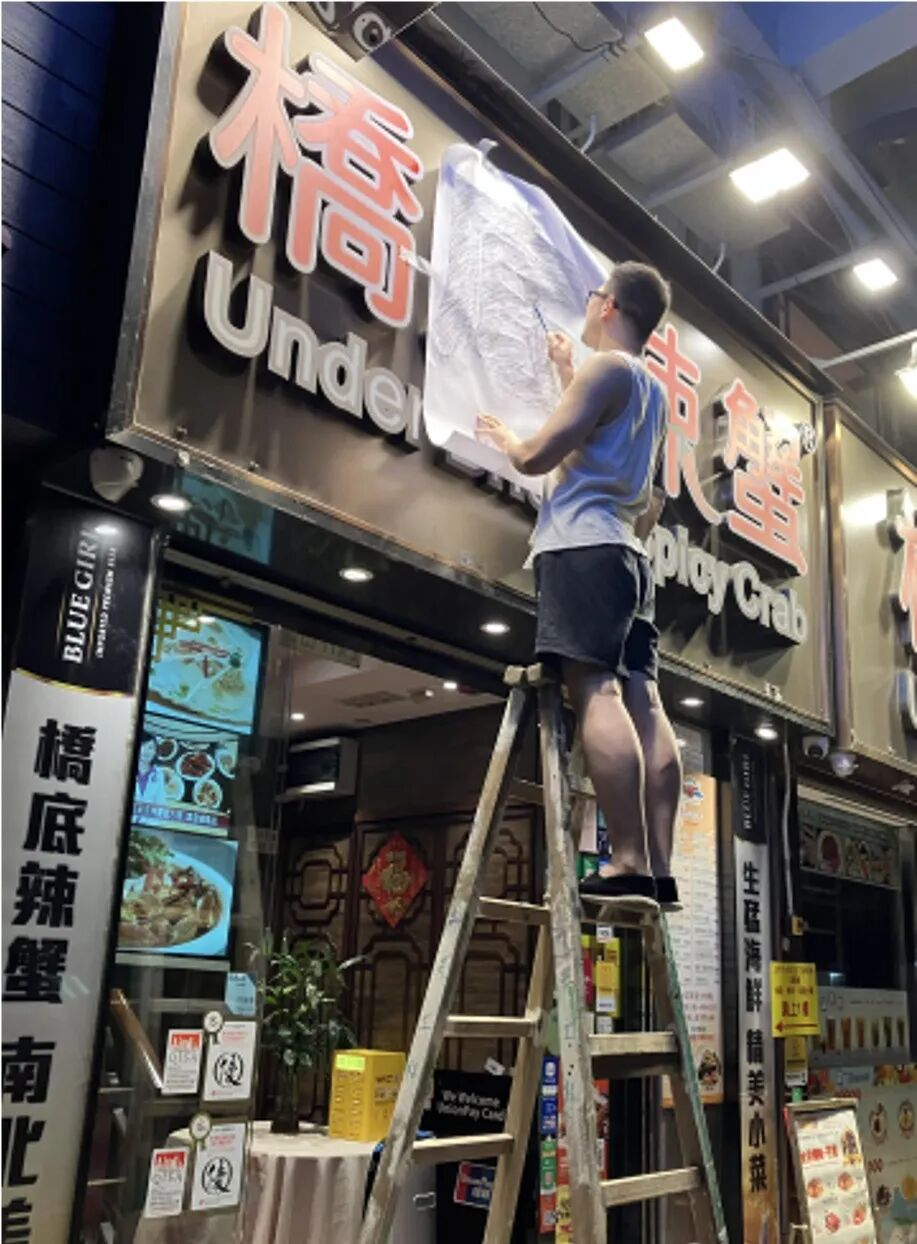
Ten minutes later, I finished printing and climbed down from the ladder. The employee came down too, saying he had just called his boss, who confirmed no one had been sent to replace the sign. He asked what I was really doing there. Realizing I'd been found out, I grabbed the paper and ran.
The character "觉" at the Po Kok Buddhist Society also left a deep impression on me. Hong Kong has very strict heritage preservation laws, and the Po Kok Buddhist Society is a historic building. Fortunately, I had finished printing and come down the ladder before the security guard spotted me. He came over and stopped me, saying I had violated the heritage preservation law and demanding that I hand over the evidence of my crime—that piece of paper. There was no way I was giving it to him, of course. That character is not easy to come by.
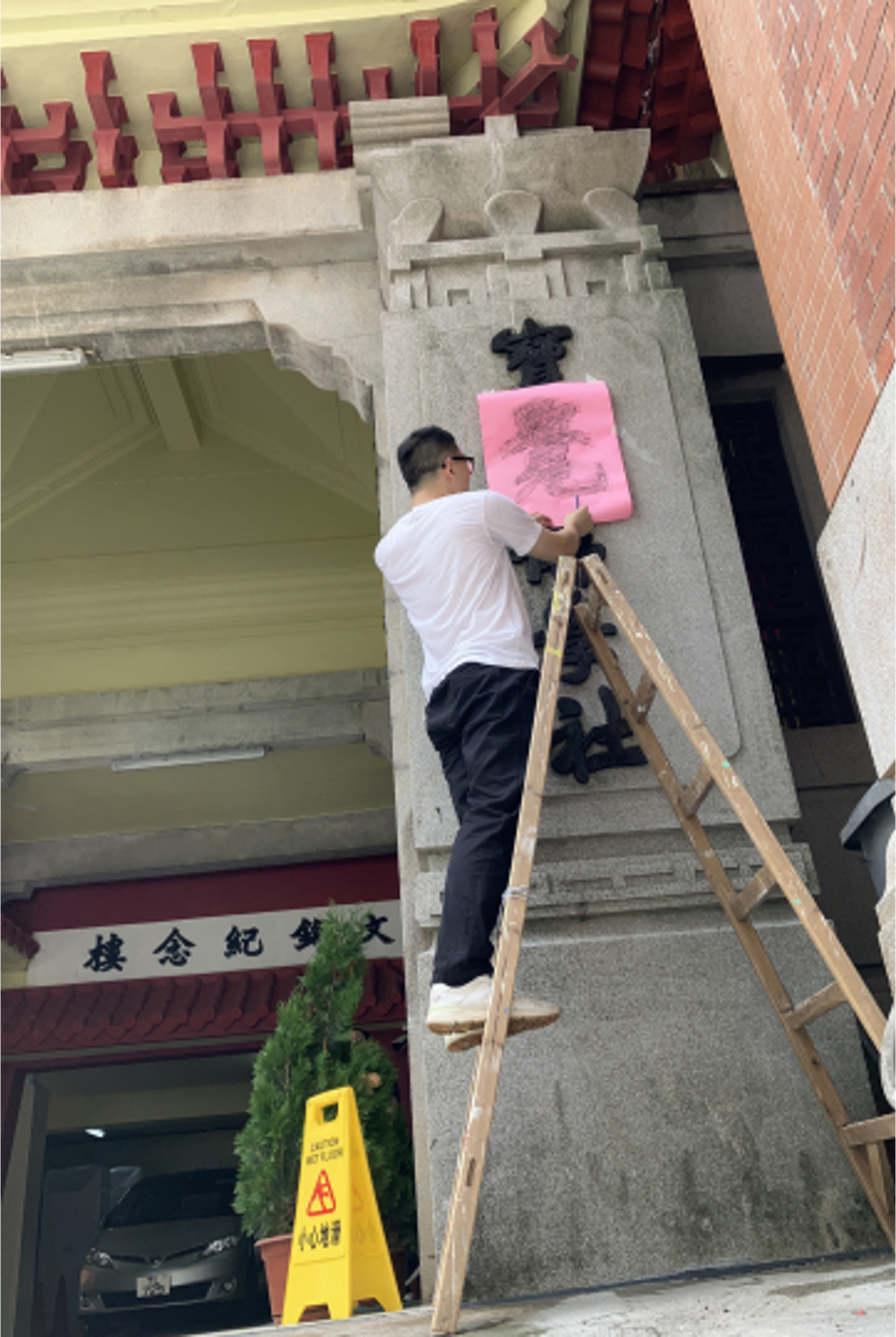
I came up with every excuse I could think of. I told him I was a typeface designer specializing in ancient inscription lettering, and that the characters on his site were highly representative. He wouldn't budge. In the end, while he was on the phone calling the police, I scaled the wall and got away.
This project is still ongoing, as it has become increasingly difficult to find certain characters. The character in question is the "哪" in "哪里", which I had been searching for several years without success. It wasn't until later that I realized: in Hong Kong, there is no distinction between the "哪" in "哪里" and the "那" in "那里". However, I was determined to find the original character used in the letter, and it wasn't until I opened a store called "吗哪有机站" that I finally found it.
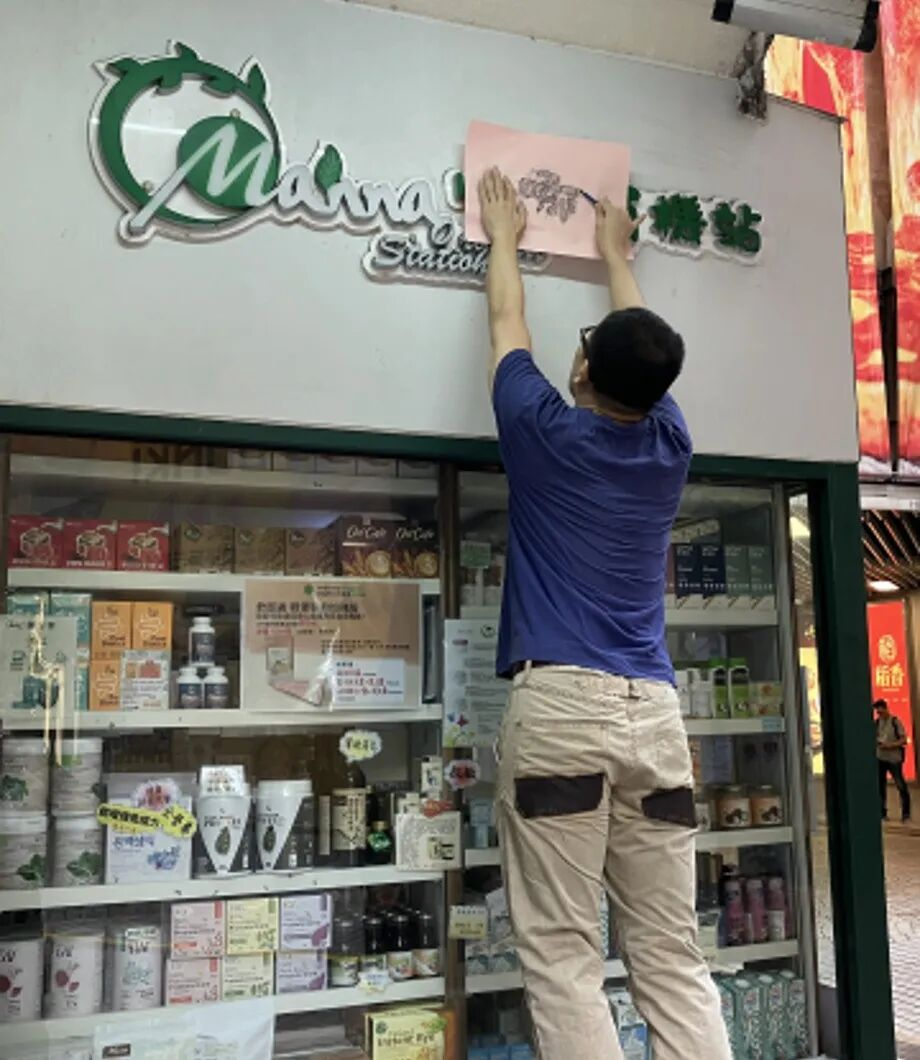
This work is actually connected to some of my childhood experiences. When I was young, my family was poor—no books, no television. So how did I learn to read? During Spring Festival, in the snow, my grandfather would take my hand and walk me from door to door, reading the couplets posted on each household.
When we reached the front door of that house, my grandfather pointed at the couplet: “Heaven adds years, and people gain longevity; spring fills the universe, and blessings fill the door.” That is how I learned to read characters—through a kind of all-encompassing perception. Even now, when I think of the character for “spring” in “springtime,” I always picture it in the upper right corner, in a particular typeface and color.
This experience of engaging directly with the world, rather than acquiring knowledge from books, had a profound impact on me. Take Hang Seng Bank, for example. Everyone thinks, "Isn't it just a bank?" But when you actually go to the site, you realize it's literally four characters: 恒、生、银、行.
Cannot show pity, only obedience.
If "Letters from Hong Kong" established my connection to the city itself, the next piece forged my connection to its people.
I went to Hong Kong in 2014. At first, I couldn't quite adjust, and by 2015 it got even harder—I was constantly dealing with insomnia. When I got hungry at night, I'd go to McDonald's, and I noticed a lot of homeless people sleeping there. What I found was that they actually did spend money—they weren't just loitering without buying anything. But since they didn't have much money, they couldn't afford much, so they'd usually buy just one item, like a small Coke for five yuan.
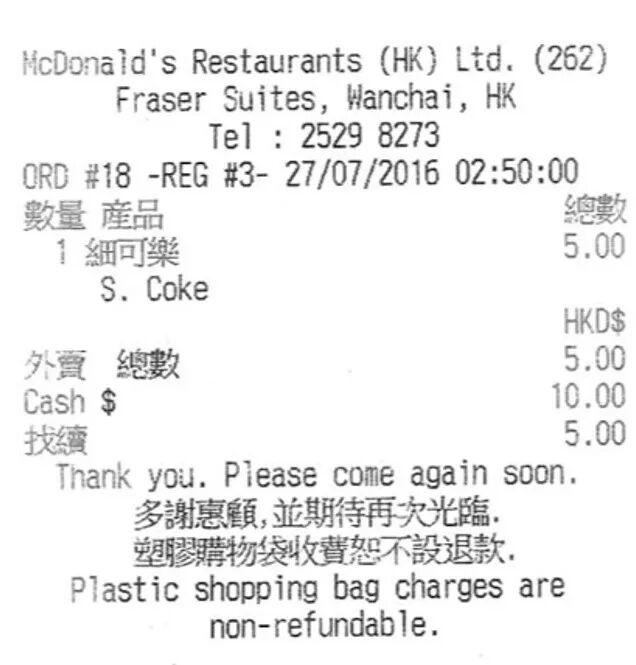
Ordinary people order cola, chicken wings, burgers, and fries, so their receipts have a few more lines and run a bit longer. I found that fascinating, and it made me want to collect these receipts.
But I didn't have an ID card, so I couldn't get a job. Then I noticed that at night, McDonald's employees wore a very simple uniform—just a black T-shirt with an embroidered M. You can probably guess what happened next. I bought a black T-shirt, embroidered an M on it with yellow thread, and went to work.
After midnight, the receipts from these people sleeping in McDonald's were of no use to them anymore. By that hour, there were hardly any other customers coming in, and the staff wouldn't chase them out either. So I'd go over, wipe down their tables, gather the trash onto trays and dump it in the bin, and slip the receipts into my pocket as I went. Over the course of a year, I collected 1,259 receipts in total.
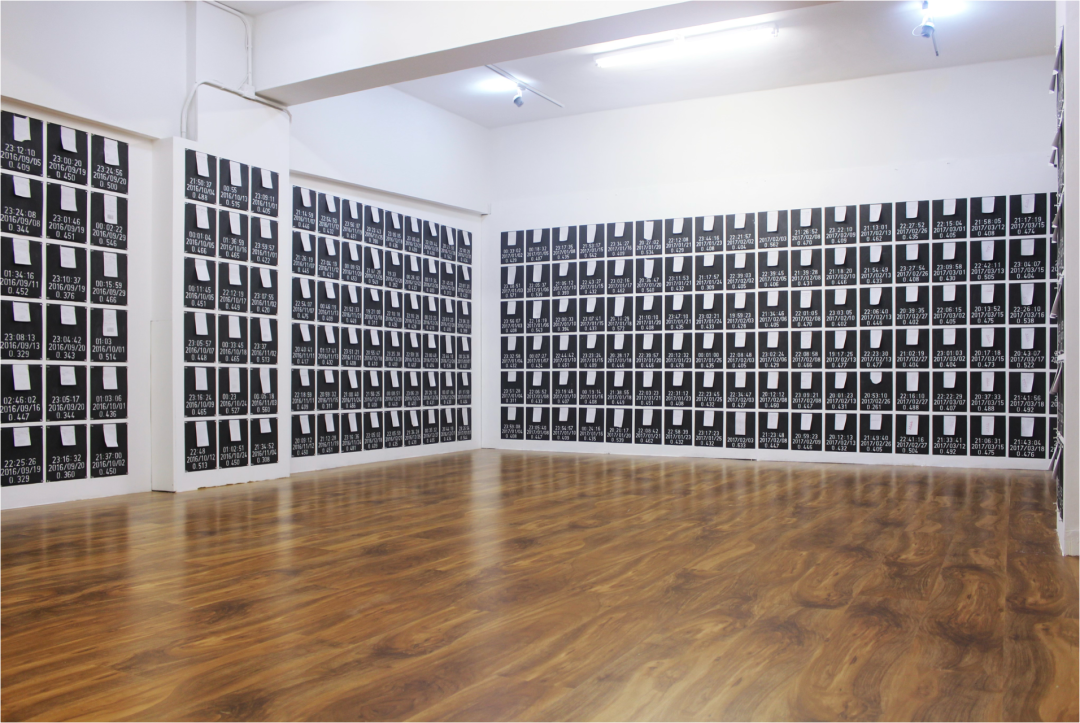
These receipts fade over time, so I scanned them immediately and weighed each one using a precision diamond scale. Each receipt was very short—just a single line of text, like "small cola"—and weighed roughly 0.3 to 0.5 grams. Ordinary people's receipts, by contrast, contain four lines and weigh more, around 0.5 to 0.7 grams. That 0.2-gram difference is like the gap between two kinds of people, or two social classes.
The document in the corner is the lightest in this series. Its owner, evidently bored, folded it repeatedly and eventually tore off all four corners, leaving it at just 0.258 grams.
I wrote the weights of these documents and the times on them onto the sandpaper. The sandpaper was coarse and cheap, yet full of vitality—much like the feeling these homeless people gave me.
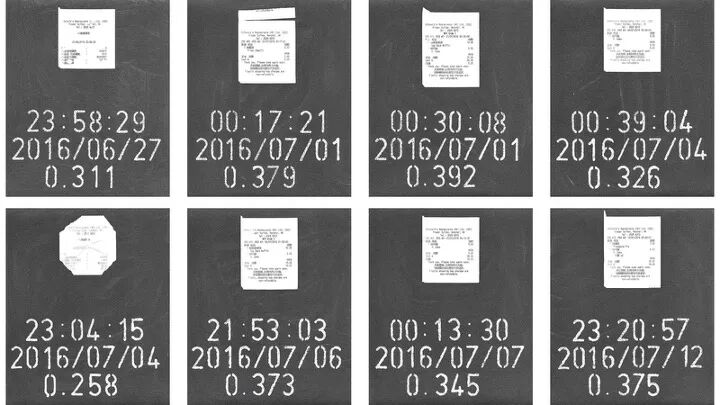
▲ Partial documents from "Heavy Is the Night"
If you look closely, you'll notice the receipts themselves tell a different story. On rainy days or in winter, more people tend to sleep at McDonald's. The food orders change too—in summer, they favor cold items like ice cream or small Cokes, while in winter, they gravitate toward hot options like chocolate or apple pies.
These people form a small society of their own, with distinct zones. The regulars are like the veterans—they occupy the booths in the back, where the light is dim and they can stretch out. Newcomers have no choice but to sit at the edge, under the brightest lights. The crowd is mostly elderly, along with some young people from the Middle East and women from Southeast Asia.
Some people, meanwhile, buy nothing at all. I find that fascinating, so I write about them.
For instance, one person set up a large piece of cardboard on the table, perhaps to block out the bright light, or perhaps to avoid being seen—so I couldn't tell their gender. Another person, upon seeing a customer finish up and leave, would immediately rush over and sit down, so the staff assumed they had just finished their meal and wouldn't ask them to leave.
I also saw someone eating a hamburger with an almost sacred solemnity. He opened the box, a lettuce leaf fell out onto the container, and he picked it up, tucked it back into the burger, and took another bite. When it fell again, he repeated the ritual—as if savoring a grand feast.
What broke my heart most was on New Year's Eve. It was raining. A white-haired old woman shuffled up to the counter, took a plate, moved to the other side, and piled dozens of free sugar packets for coffee onto it. Then she shuffled back to her seat, tore open the packets, and poured the sugar straight into her mouth.
A normal person just tilts their head back and drinks. She can't. Her kyphosis is so severe that she has to throw her head back as far as it will go, like her neck is being snapped. Every movement is painfully slow—tearing open the package, tilting her head back, pouring. The whole ritual takes over ten minutes, and the discarded packaging alone piles up into a small mound.
What warmed me most about this entire series was a young man. He frequents McDonald's, and we've come to recognize each other. One day shortly after the Spring Festival, I went to pick up my receipt and saw he'd written two lines on the back: "恭喜发财,攞多D吉" (meaning "wishing you prosperity and a little extra luck" in Cantonese). At that moment, I felt how beautiful humanity can be—someone living such a hard life was still sending me blessings.
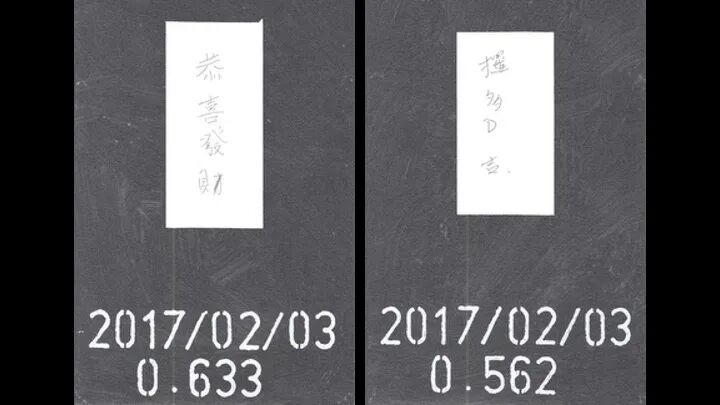
▲ The back of the document bore the inscription: “Wishing you prosperity, and may you take away plenty of empty containers.”
While working on this piece, I would exchange ideas with some curators, and they would ask: If you think they're so pitiful, why not just give them a loaf of bread directly?
I was originally part of the same group as these homeless people. If I stepped forward to hand them bread, I would become a benefactor and they would become recipients, and the balance of our relationship would be broken. So this year, I cannot pity them—I can only defer to them, so that their agency can be respected.
On the other hand, there are dedicated welfare organizations that distribute bread to them. Sometimes when it got too late, I would doze off at the table there, and one time I woke up around 4 a.m. to find a loaf of bread sitting on the table.
But this question prompted me to reflect: What is the function of art?
I believe art doesn't change the world directly, but indirectly. As long as artists create work of genuine quality, it will move many people, and those who are moved become the levers of art, changing the world directly. That kind of influence is far greater than me buying someone a loaf of bread.
In 2018, I held an exhibition in Wan Chai, Hong Kong, displaying more than 400 pieces — one-third of the entire "Heavy Is the Night" series.
The irreversibility of the present moment is what makes it beautiful.
I obtained Hong Kong permanent residency in 2024. During the years when I couldn't work, I stayed home cooking and grocery shopping—essentially a stay-at-home husband. While shopping, I got into the habit of checking expiration dates. The year I was about to turn 30, feeling a bit wistful about hitting that milestone for the first time, I naturally began connecting those dates to my own age.
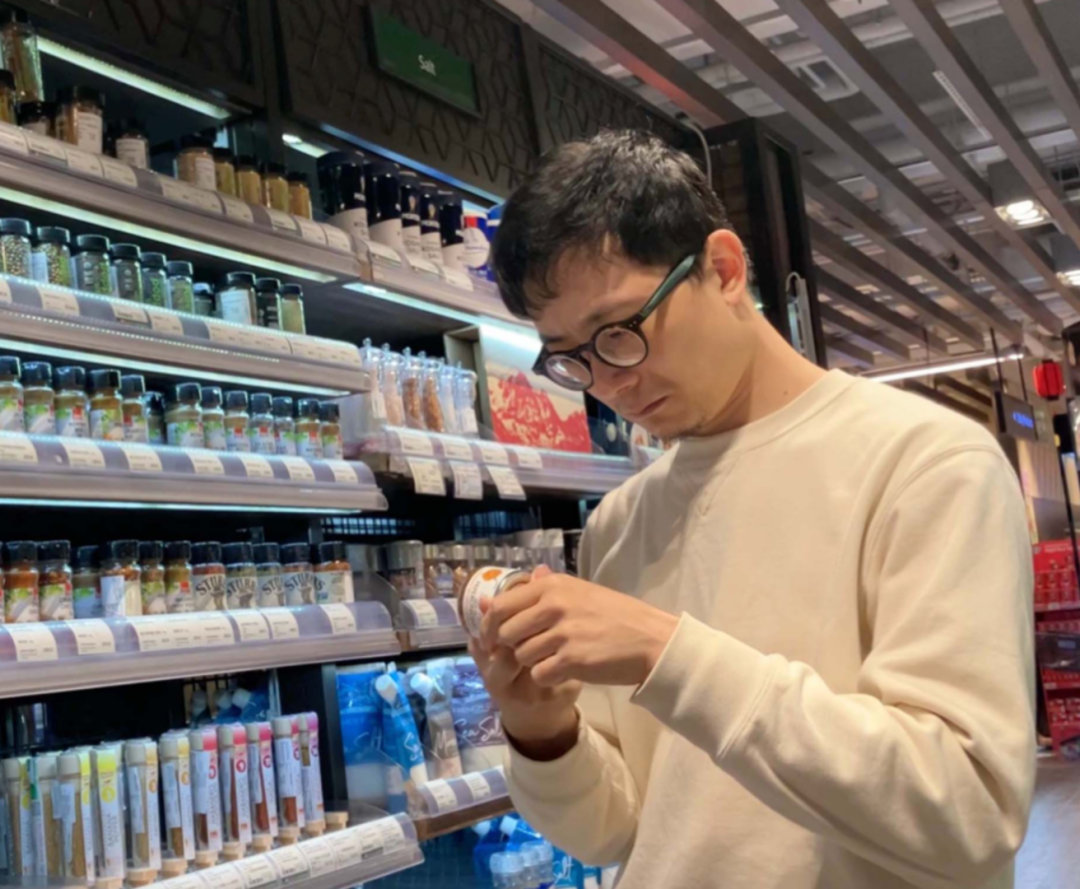
▲Ma Yujiang at the supermarket
At the time, I thought to myself: for all these years, whenever I wanted fish, I bought fish; whenever I wanted meat, I bought meat. Everything I purchased was practical. Could I buy something impractical, purely for beauty's sake?
But this beauty isn't about being good-looking or pretty—it's structural. Take carbon atoms: when arranged with precision and density, they become diamond; when arranged chaotically, they're just charcoal. And I found myself wondering—should I live my own life a little more tightly packed, a little more refined?
So on January 1st, I would only eat food expiring January 1st; on January 2nd, only food expiring January 2nd. If I couldn't find any, I went without. I wanted to keep this up for a full year, but I failed at age 30. In the first month, I found only five items. There was no way around it—I was too hungry.
Over the next few years, I kept an eye out. Around that time, environmental issues were gaining traction, and supermarkets began setting aside a dedicated shelf in the corner for soon-to-expire items, which made them much easier to find. So in 2023, at age 35, I gave it another try—and this time, it worked.
The yellow-highlighted section on the receipt shows the date I made the purchase, and the date on the product packaging is the expiration date. When these two dates match, it proves I bought the item on that same day. Some supermarkets don't provide receipts, but their screens display the time, so I took photos of those screens instead.
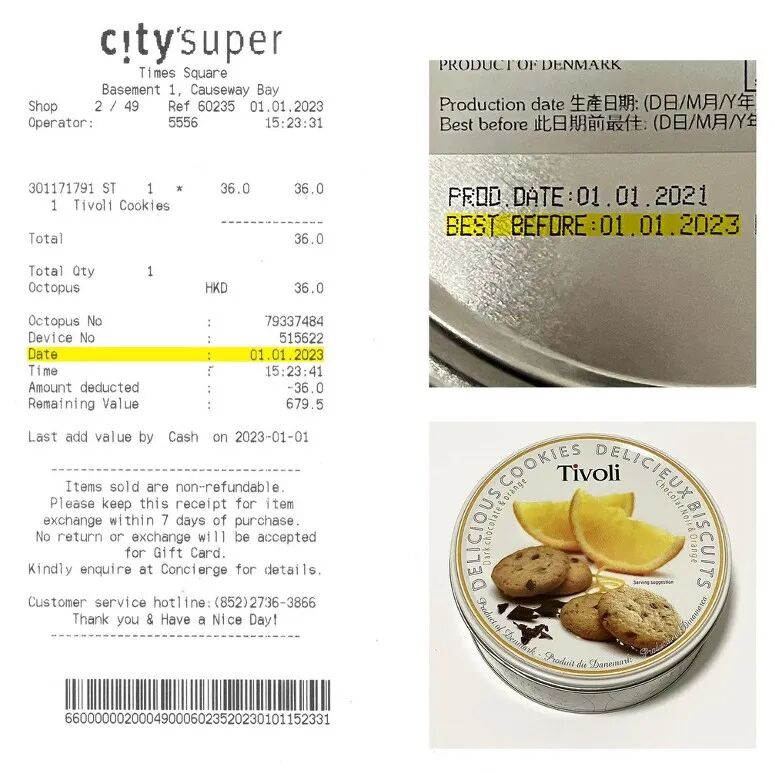
▲Cookies bought on January 1st that expire on January 1st
It went smoothly. On January 1st, I bought a box of cookies expiring January 1st, and I ate them. On January 2nd, I bought a bag of flour expiring January 2nd, and I used it. On January 3rd, I bought a carton of milk expiring January 3rd, and I drank it. And so it continued, day after day, for the entire year.
I usually start with the five supermarkets nearest my building, plus two discount stores. If I can't find it there, I move on to the big supermarkets in Central and Admiralty. Still nothing, I head to Causeway Bay, checking smaller shops along the way. If that fails, I cross the harbor to Kowloon or take the MTR down to the Southern District.
Hong Kong is one of the most globalized places on earth, with goods from all over the world on its shelves, some of them quite niche. Turkish tea, Egyptian juice, Czech beer, Swedish gherkins, Jordanian olives, Mexican bean paste, Bulgarian peppers, Indian baking soda, Ukrainian chicken, Nigerian sesame. The Mexican bean paste is the cheapest item in the entire lineup, at just one dollar.
In the 365 days of that year, I found it on 286 of them, and on the remaining 79 days I did not. I consider those fruitless days part of the work as well, because the "nothing" that comes after effort is not the same as the "nothing" that comes without it. I put in the labor, and even without a result, that time still carries a profound sense of presence.
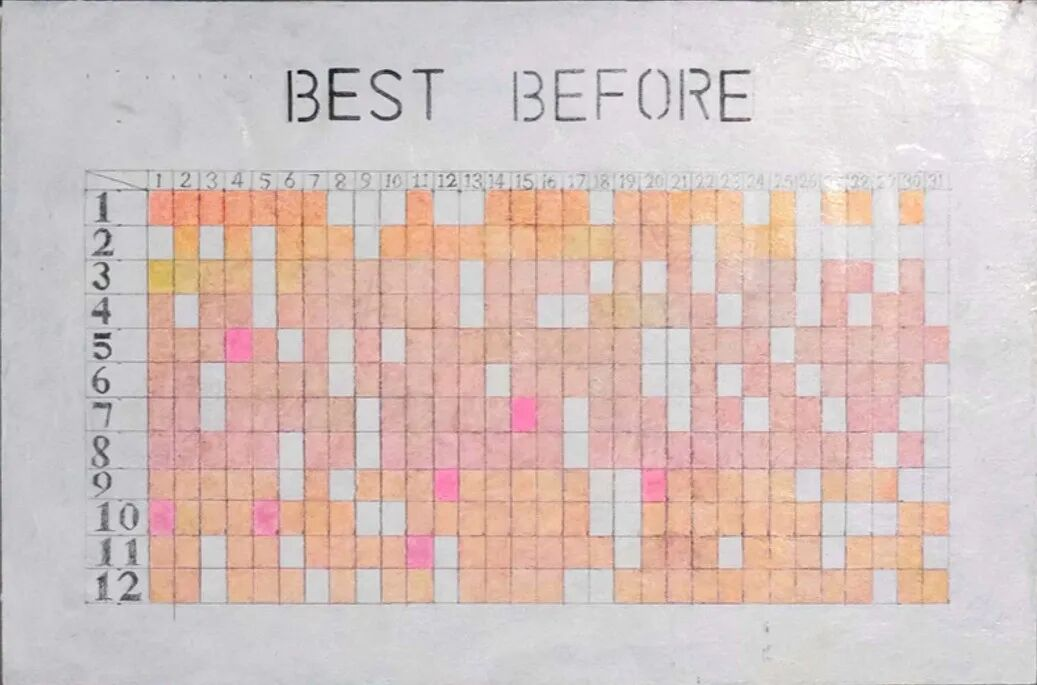
▲Red indicates found, white indicates not found.
Looking closely, January was the toughest stretch—three straight days without finding it. February also had a three-day dry spell. The rest of the time was comparatively fortunate, with only one or two consecutive days missed.
If you couldn't find me, there was nothing to eat. So as this piece was nearing its end, I went in for a physical.
Sure enough, it was highly abnormal: too few red blood cells, too few white blood cells, anemia, all kinds of problems. The biggest issue was the heart. After the electrocardiogram, the doctor looked at it with a grave expression and said my T wave was abnormal. I had no idea what a T wave was, so I went to a cardiologist. He took one look and asked: "Are you anxious?"
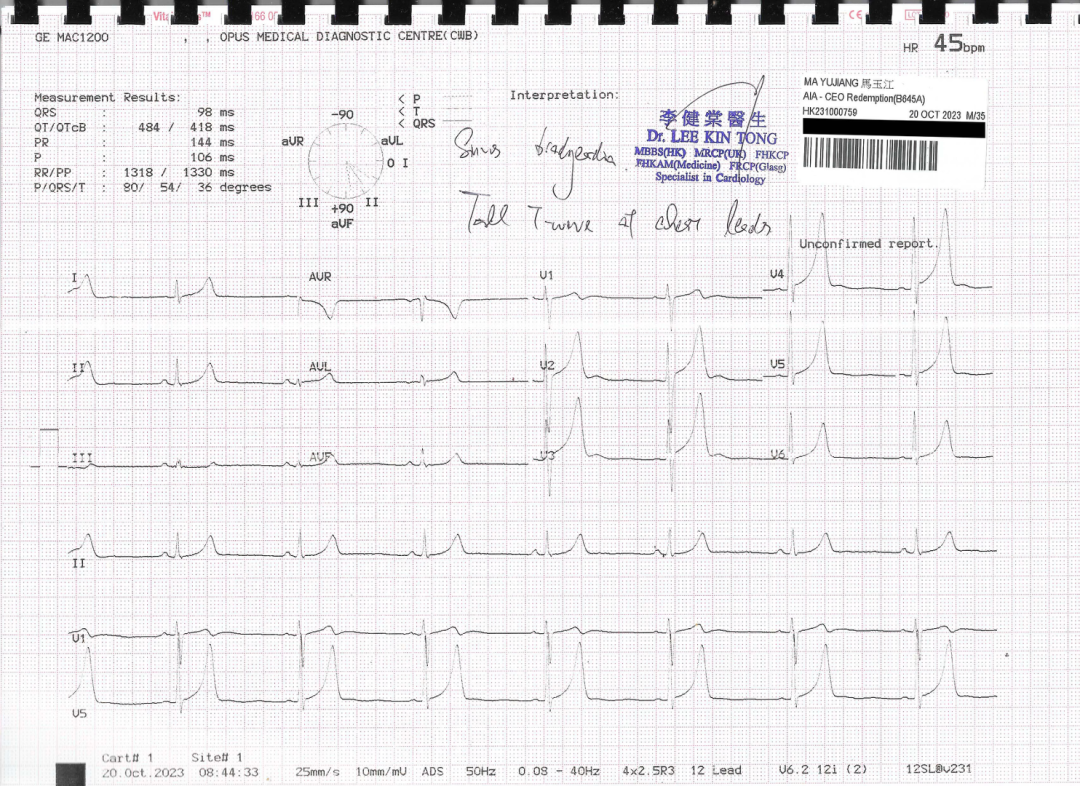
▲ Ma Yujiang's physical examination ECG
I understood right away—of course I was anxious. If I couldn't find it, I'd have nothing to eat. One day of not finding it, and I was anxious. Two days, and I couldn't sleep. Three days, and I felt like I was going out of my mind.
Last year, I held an exhibition for this piece, "Expired." This is what the installation looked like. Everything had been eaten; only the packaging boxes remained. Each item had spent a day with me, and that day was utterly pure—just me and it. I only sought it, only bought it, only ate it. That purity, I think, is something very beautiful.
▲ Ma Yujiang, "Expired," exhibition view
And that day was the last day of its life, so in this work, that moment, that date, is not a marker for measuring time, but a singular, irreplaceable existence.
And what is time? I think time is the present moment. Right now, we are all gathered here together, and tomorrow we will go our separate ways. Actually, we don't even need to wait until tomorrow — the moment I finish speaking, we'll part ways. This sense of immediacy, uniqueness, and irreversibility is where the beauty of time lies. It's not about how long your life is; that is not where the beauty resides.
Turn life into the scene of the action.
The four stories above share a common thread: each is tied to adversity. "Mother and Son" deals with my mother's passing; "Letters from Hong Kong" captures my struggle to adapt after arriving there; "Heavy is the Night" reflects my sense of kinship with the homeless; and "Expiration" is a meditation on the passage of time and the fragility of life.
When we encounter difficulties, there are typically two ways to handle them. One is avoidance—I treat the difficulty like a parallel line, leaving it alone and not engaging. The other is confrontation—I must defeat the difficulty and overcome it, making us intersect like perpendicular lines.
Is there a third way? I think there is—transformation. When difficulties arise, I shift my perspective, and the difficulty presents itself in another form. The usual forms of transformation are painting, making music, writing poetry, or making films, but these all have barriers to entry.
I think there's also a way without any threshold, and that is life itself. But the life I'm referring to is different from what people usually mean—eating when hungry, sleeping when tired, and making money when short on cash. The life I mean is one that is shaped with subjectivity, with consciousness, and by the standards of beauty.
To distinguish between these two kinds of life, I gave my own way of living a name: "doing life." If performance art is about turning our bodies into language, making the body the primary site, then wherever the body is, art is there. Adding narrative to performance art makes life itself the primary site, and wherever life is, art is there.
This is what I've shared with you today about living life. Thank you all!