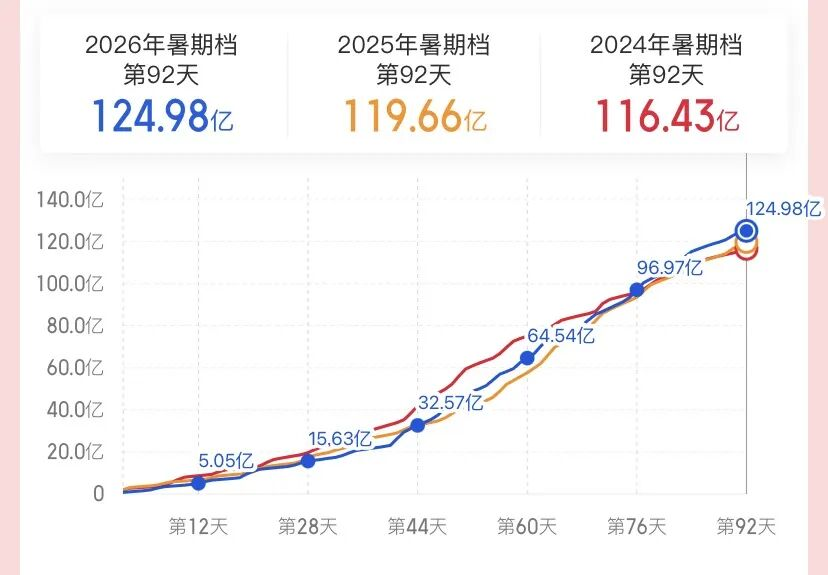
The recently concluded summer box office totaled 12.498 billion yuan, with increases in the number of moviegoers and total screenings. This is a fairly satisfactory result, continuing the stable growth trend of the past nearly three years, but the question of who drove the box office this summer can be said to be "unconventional" in every way.
Firstly, the top films were concentrated in the 1.5 billion and 2 billion yuan range, with the three films "Kung Fu Girls," "Welcome to the Dragon Restaurant," and "Eight Immortals" taking up nearly half of the summer box office, but there was a lack of big-budget films exceeding 3 billion yuan, which is the first time in nearly five years that such films have been absent from the summer season. Secondly, the traditional pace of film releases has been completely disrupted, with limited releases and temporary withdrawals or changes in release dates becoming the new norm, making film releases face more uncertainty, giving this year's summer season a sense of chaos and disorder.
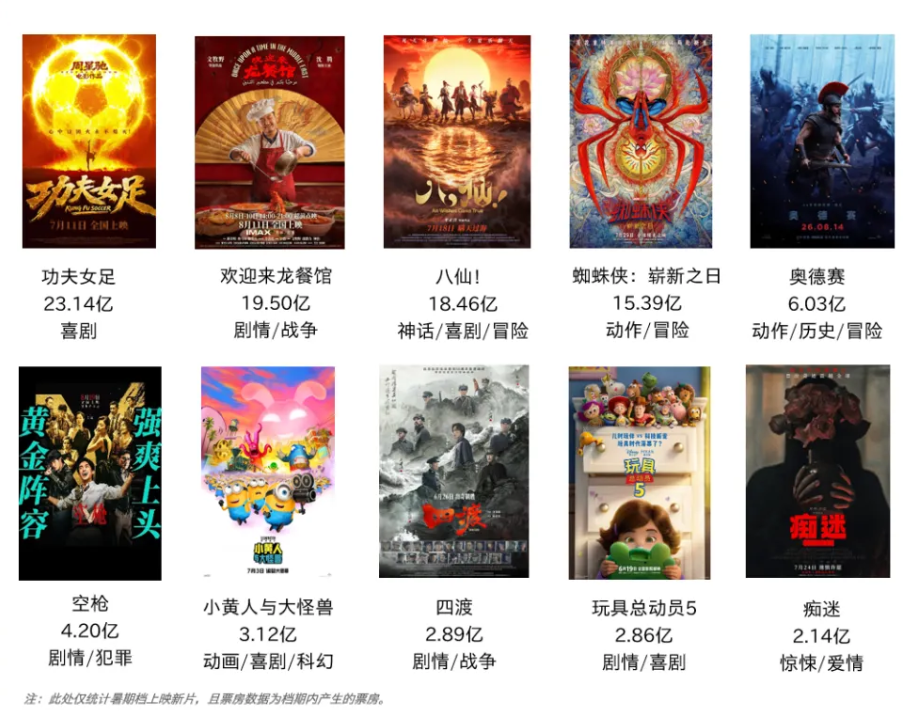
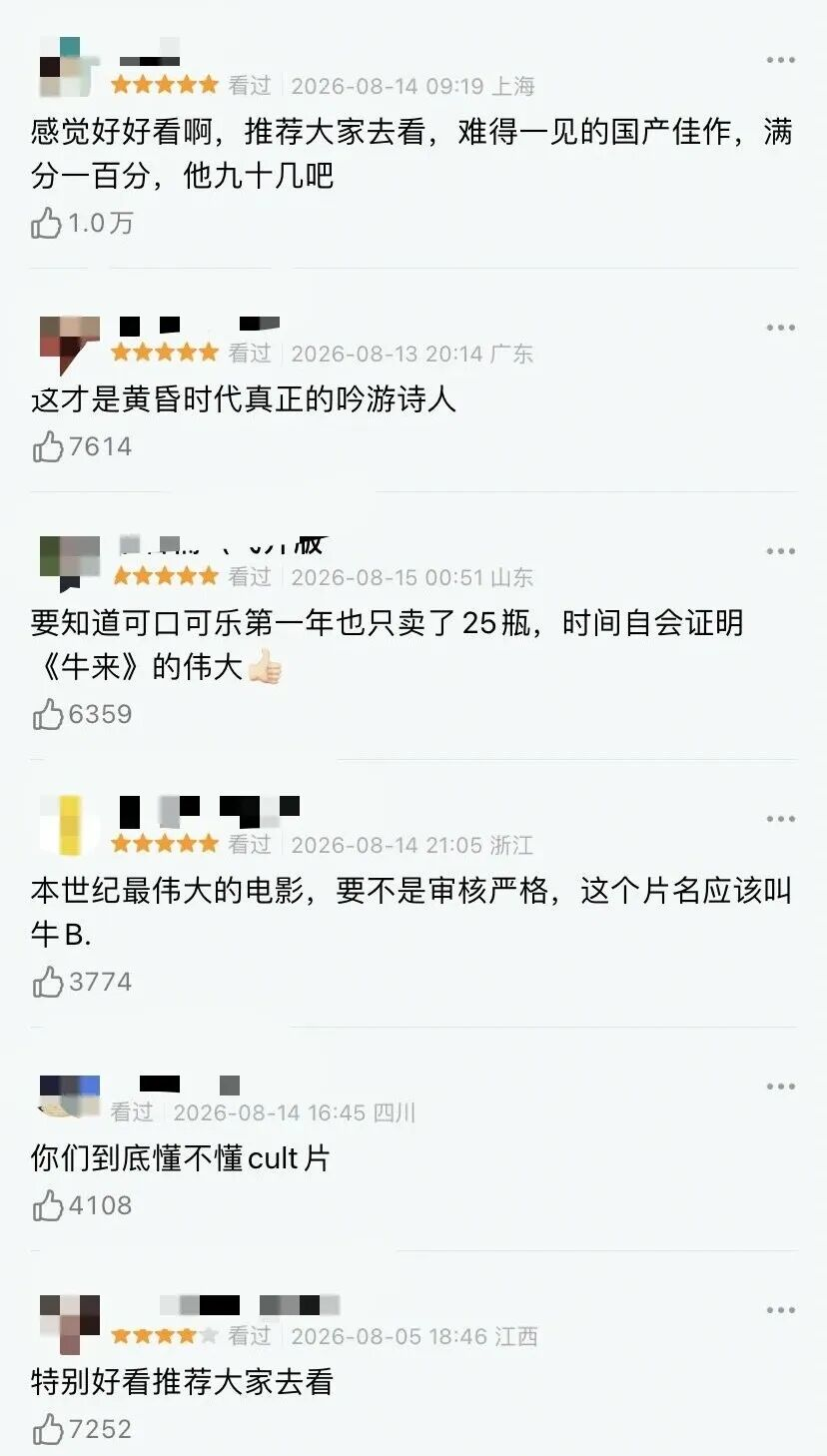
In this process, many past experiences in the industry have proven ineffective, with many films performing unexpectedly at the box office. The film "抓特务" earned less than 120 million yuan, while "给阿嬷的情书" earned 2 billion yuan, with the latter achieving nearly 600 million yuan in box office revenue during the summer season due to its extremely long tail, ranking it among the top 10 in the season's box office rankings. However, the most "magical" film is still "牛来", which, despite having a first-day screening rate of less than 0.1%, not only improved its Douban rating to a passing score but also earned nearly 600 million yuan in box office revenue during the season, surpassing many well-received films.
Going against the norm, this year's summer box office seems to be pulled in two directions, with one side losing control and the other creating surprises.
Chaotic schedules and a "chaotic" summer
Looking at the overall box office trend of this summer's film season, the final box office revenue of nearly 12.5 billion yuan has exceeded many people's expectations. The reason is that the first half of the summer season was particularly slow, with Cat Eye Professional Edition data showing that the total box office revenue for the entire month of June was only 1.645 billion yuan, while the single-month box office revenues for July and August were 5.019 billion yuan and 5.833 billion yuan, respectively, indicating that the box office potential of the first half of the summer season was far from being fully released.
It's worth noting that the market is not without major releases at this stage. A typical example is Feng Xiaogang's new film "Grab the Spy", which has a strong lineup, and according to online rumors, the production cost is on a scale of 250 million to 300 million yuan, but so far, the film's cumulative box office has not exceeded 120 million yuan.
In the context of a sluggish market and a string of box office flops, film distributors that were already cautious became even more hesitant to set release dates, causing the summer blockbuster season to stall. This continued until Stephen Chow's "Kung Fu Girls" was given a limited release - the film was released on July 11, just five days after its release date was officially announced. The film quickly became a turning point for the summer season, earning 324 million yuan at the box office, and marking the first time that single-day box office sales exceeded 100 million yuan for more than three days.
However, the schedule almost simultaneously became lively and fell into a rare kind of "chaos".
The most obvious manifestation is that the traditional model of setting a release date one to two months in advance has been almost completely abandoned during this period. When the film side cannot determine who its competitors are in advance, it is difficult to make a prediction, resulting in a high density of last-minute withdrawals and changes to release dates after the film has been released.
The day before the release of "Kung Fu Girls", "The First Part of the Three Kingdoms: The Fight for Luoyang" officially started screening, but it later chose to withdraw from theaters due to competition from "Kung Fu Girls" and "Eight Immortals", with the former emphasizing "sentimental appeal" and the latter becoming the biggest dark horse of the season.

It was also during this time that the highly-anticipated film "The Battle at Sea" (澎湖海战), originally scheduled for release on July 25, was withdrawn due to technical reasons. The film features a star-studded cast, including Yi Yang Qian Xi and Zhao Li Ying, and was expected to be a top contender for the summer box office. Another film, "When the Stars Shine" (群星闪耀时), was also withdrawn from theaters just two days after its release. These moves further exacerbated the chaos in the market, leading to a re-evaluation of the remaining releases and a new wave of limited releases and withdrawals.
First, the highly anticipated "Eight Immortals" was released a week earlier, followed by "Annual Meeting 2", which also premiered a week ahead of schedule. The two films are competing for the core fermentation period originally allocated to "The Battle of Penghu" and "When the Stars Shine". Meanwhile, "Welcome to the Dragon Restaurant", starring Shen Teng, began preview screenings just two days after its release date was announced. Additionally, "Empty Gun" suddenly appeared and caught the tail end of the summer season, becoming a major work in the second half of the summer schedule.
Up to now, following "Mulan on the Football Field", the summer box office has almost formed a situation where there is a blockbuster every week, and under the contrast of the dull first half, the "chaos" shown in the summer box office is even more worth pondering.
Several "extreme" cases have emerged
The logic behind content and publicity is changing
The reason is that this "chaos" is not just a simple mistake in film scheduling, but rather that the underlying order of the industry is becoming "out of control", with many "abnormal" phenomena and "extreme" typical cases emerging in the scheduling process, all of which serve as good evidence.
In terms of content, one major feature of this year's summer blockbuster season is that overall word-of-mouth has improved. Films such as "Welcome to Dragon Restaurant", "Eight Immortals!", and "Odyssey" all have Douban ratings above 8. This overall improvement also means that being well-received has become the "key" to getting audiences into theaters, rather than just a marketing gimmick.
This is actually in line with the changes in the publicity aspect. According to the "2026 Summer Movie Market Insights Report" released by Lighthouse Professional Edition, the top three factors driving people to watch movies are genre/story attracts me, high ratings, and exquisite production, all of which are directly related to the quality and word-of-mouth of the film, while the main reasons for hindering movie-watching point to the opposite side.
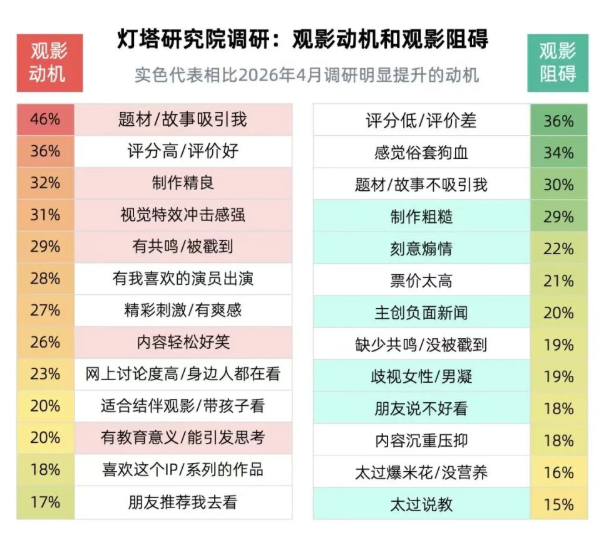
Source: Lighthouse Professional Edition "2026 Summer Box Office Market Insights Report"
Thus, a key trend in this summer's box-office season is that it has become harder for films to break out beyond their core audience. Good word-of-mouth can only influence whether audiences show up; to keep them in their seats and turn them into organic promoters, a film needs a sufficiently strong standout strength. Judging by the overall performance of films during this period, that strength most often comes down to whether the film has found an angle that feels "relevant to me" — a point of resonance.
For example, "The First Part of the Three Kingdoms: The Fight for Luoyang" also received a good reputation with a Douban score of 8, but the film's serious subject matter and higher viewing threshold failed to sustain audience attendance. In fact, the film was pulled from theaters after about half a month, a decision based on its good reputation, in an attempt to leave enough time for word-of-mouth to spread, but during this process, the film failed to find a resonance with audiences. In contrast, "8 Immortals!" which is closer to the audience, ran a completely different box office curve.
This year's summer blockbuster season saw the most extreme case of a "boomerang effect" in terms of film content and marketing. For a long time, film marketing often raised people's expectations, but when audiences went to the cinema, they were disappointed, a phenomenon known as "deceptive marketing".
Now, the focus of film promotion is shifting towards post-release, not only due to the objective factor of scheduling conflicts, but also because past marketing missteps have led more audiences to trust genuine word-of-mouth after a film's release.
This summer box office season, "Catch the Spy," a film with a fairly respectable reputation, found itself mired in controversy with ticket sales far below expectations. Meanwhile, "Niu Lai," a film of extremely poor quality, pulled in nearly 60 million yuan—two divergent outcomes under the breakdown of traditional marketing. The "surreal" performance of "Niu Lai" owes much to the wave of spontaneous, meme-driven marketing from audiences, and the underlying cause of this phenomenon is a large number of viewers joining the ranks of "deceptive marketing" in a spirit of retaliation.
The resurgence of imported films and the rise of genre films
A new order is taking shape
Objectively speaking, one reason the total box office for this summer season can continue to grow is the strategy of prioritizing market share over price, with an average ticket price of 35.7 yuan during the season, a new low for the past five years. Even so, this summer season's performance is still surprising, as amidst the "chaos" and "disorder", some new phenomena are emerging.
From the perspective of content supply, under the premise that the market's vacuum effect remains strong, the box office space for mid-budget films is still being compressed. For example, during this year's summer holiday season, the top four films at the box office were all concentrated above the 1.5 billion yuan level, while the fifth-ranked film, "Odyssey", dropped sharply to 600 million, with a large gap. However, these films have penetrated more niche markets, and many small-scale themed films have also produced works that exceeded expectations.
For example, during this summer's film season, the two horror movies "Chi Mi" and "Hou Shi" together took in over 400 million yuan at the box office. In terms of user demographics, these types of films have a high concentration of young users, with audiences under 24 years old accounting for over 40%, far exceeding the market average of around 26%. Similarly, "Huo Zhe Yan", which focuses on stress-relieving entertainment, has become a paradigm for action films, with its intense and realistic fight scenes drawing a male audience that accounts for nearly 70%.
It is clear that the differentiated supply of genre films continuously optimizes the user structure of the movie market, which has a positive impact similar to the resurgence of introduced films.
According to Maoyan Pro data, during this year's summer season, imported films accounted for 28.3% of the box office, a new high in nearly six years. Among them, "Spider-Man: Across the Spider-Verse" successfully tapped into the young audience and lower-tier markets with its IP appeal. Christopher Nolan's new film "Oppenheimer" was more in line with the viewing preferences of high-line city audiences. Moreover, imported commercial blockbusters naturally cater more to male viewing preferences, and the box office contribution driven by imported films made the gender structure of this year's summer season more balanced.
Additionally, this summer, parent-child viewing is not limited to low-age-oriented animated films. From "Kung Fu Girls" and "Eight Immortals" to "The Cows Come", the parent-child viewing scene is constantly expanding.
It can be seen that the market's coverage of user age groups and structural distribution have further improved, which is also a positive manifestation of the industry's development of a new order. Behind this, changes in content, promotion, and market structure are being concentratedly revealed through an "abnormal" sample of summer releases, which is also the key to the greater discussability of this year's summer releases.