Saudi capital has invested $70 billion to enter the gaming circle.
$55 billion, the price at which a consortium led by Saudi Arabia's Public Investment Fund (PIF) is to fully acquire Electronic Arts (EA).
Last September, EA officially unveiled the acquisition framework. This August, the transaction was formally completed, with PIF holding approximately 93.4% of EA's shares, and EA delisting from Nasdaq to become a private company. With this, the second-largest M&A deal in the history of the gaming industry came to a close, with a value second only to Microsoft's acquisition of Activision Blizzard.
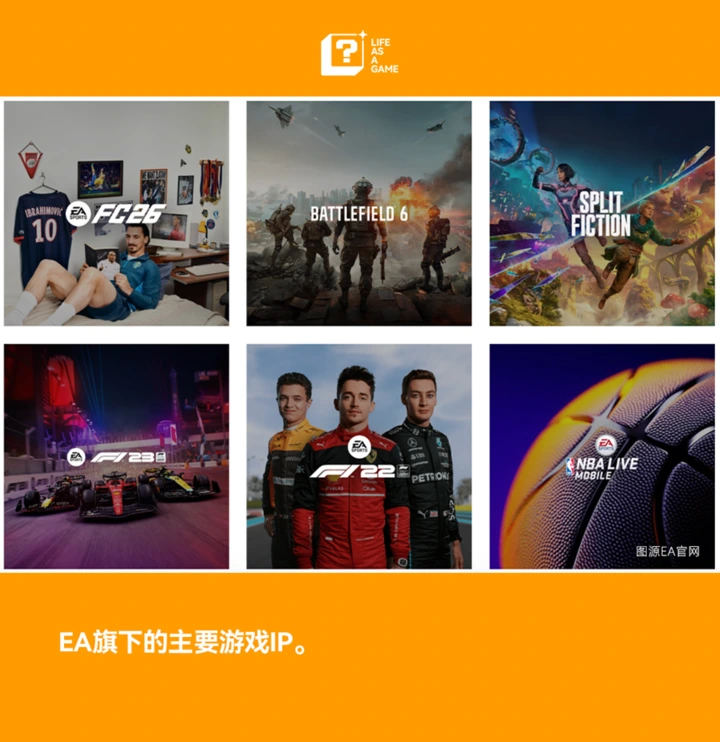
The acquired EA is a game giant almost on par with Activision Blizzard. Founded in 1982, its IPs include Battlefield, The Sims, EA Sports FC (formerly the FIFA series), Apex Heroes, and more. According to Sensor Tower data, in 2025, EA ranked first among global PC/console game publishers with 206 million downloads.
However, the main player in this acquisition is not EA, but rather the Saudi sovereign fund PIF. In the past few years, this business entity, which was previously unknown to most players, has initiated multiple mergers and acquisitions or investments in the gaming industry, with a total investment of over $70 billion.
Middle Eastern tycoons, why have they suddenly become infatuated with gaming?
Saudi capital has invested $70 billion to enter the gaming sector
The Saudi-backed acquisition of EA is not an impulsive decision, as the Middle Eastern tycoons' enthusiasm for gaming has been ongoing for nearly six years.
As early as the fourth quarter of 2020, PIF simultaneously acquired stakes in three US game companies, spending approximately $3.4 billion. Coincidentally, the three game companies were Activision Blizzard, which was later acquired by Microsoft, EA, which was later fully acquired by PIF, and Take-Two, the publisher of the GTA series.
From then on, Saudi tycoons embarked on a lavish spending spree.
The Public Investment Fund (PIF) has established Savvy Games Group (hereinafter referred to as Savvy), with initial funding of $38 billion, focusing on investments in gaming and esports. Savvy has also appointed Brian Ward as CEO, who is a former executive of EA, Microsoft Games, and Activision Blizzard. A series of investments by Saudi Arabia are basically operated jointly by PIF and Savvy.
In 2022, Savvy acquired ESL and FACEIT for $1.5 billion. The former is one of the world's largest esports tournament operators and the founder of the Intel Extreme Masters (IEM), while the latter is a well-known competitive platform in Europe. PIF merged them into ESL FACEIT Group, thereby controlling around 40% of the global esports tournament organization business.
In 2023, Saudi tycoons set their sights on mobile games, acquiring Scopely, the developer of mobile game Monopoly GO!, for $9.4 billion. In 2025, they spent $3.5 billion to acquire Niantic's gaming division, which developed Pokémon GO. The following year, as ByteDance considered selling Moonton Technology, the developer of the Southeast Asian hit Mobile Legends: Bang Bang, Savvy spent $6 billion to acquire it.
Additionally, PIF invested a total of $12 billion to acquire 5% stakes in Japanese gaming giant Capcom, known for its Resident Evil and Monster Hunter series, and Korean online game developer NEXON, known for its MapleStory and Dungeon & Fighter titles, filling the gaps in its console and online gaming portfolios. Even Nintendo, one of the "big three" console manufacturers, was not left out, with PIF investing $3 billion to acquire a 5% stake, which was later adjusted to 6.3%.
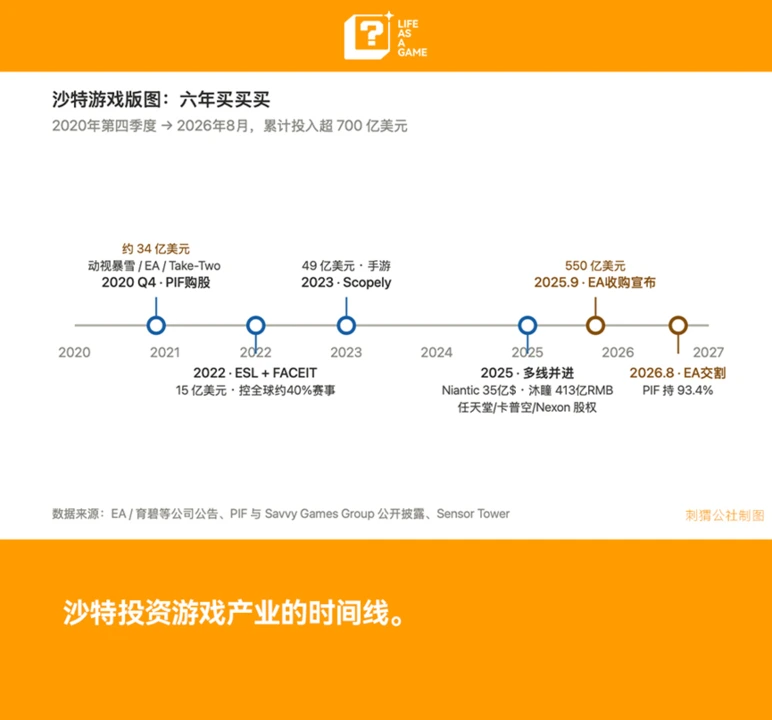
From e-sports to mobile games, from online games to consoles, Saudi Arabia is saying "I want it all," and the direction of each investment is logical: controlling events through ESL/FACEIT, entering mobile games through Scopely, acquiring EA to obtain sports IP, acquiring Moonton to tap into the Southeast Asian market, and using Nintendo shares to gain a say in the world's most culturally influential game company.
It a tops of a " ( incremental path of a " ( path of a common path of a minimal path of a common path of a unique path of a incremental path of a " path of a common path of a unique path of a " " " " " " " " " " " " " " in a " " " " " " " " " " " " " " " " " " " " " of " " " " " " " " of " " " " " " " " " " " " " " " " " " "ori " " " " " " " " " " " " " " of " " " " " " " " " " " " " " " " " " " " of " " " " that " " " " " " " " " " " " " " " " " " " " " also " " " " " " " " that " " " " " " " " " " " " " " " " " " " " " " " " " " " " " " " " "," " " " " " " " " " " " " ". " " " " " " " of " " " " " " " " " " " "
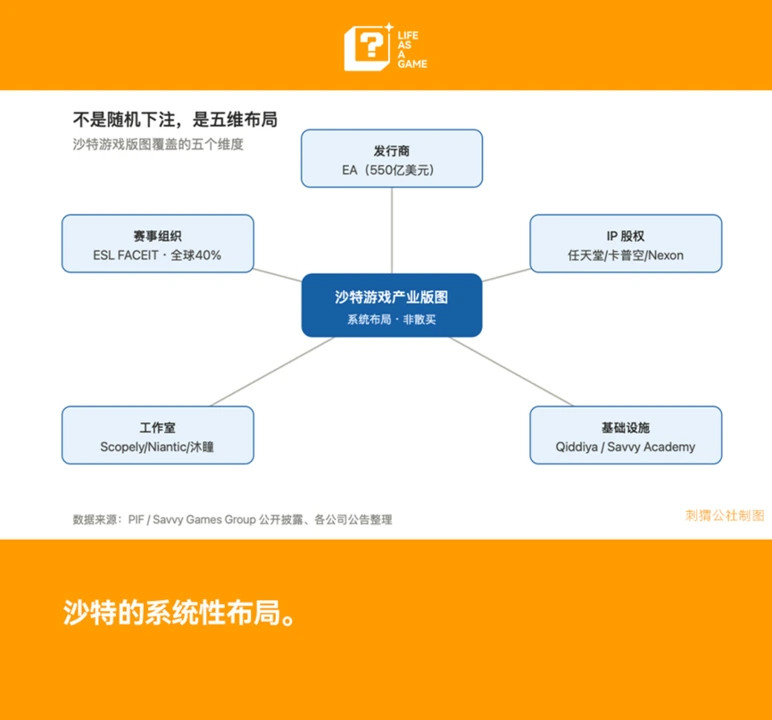
In retrospect, Saudi Arabia's $55 billion investment in EA was not an isolated transaction but the latest move in a larger strategic game.
For Saudis who splurge thousands on games, what's the motivation behind it?
A series of acquisitions in Saudi Arabia cannot be separated from a key figure - Saudi Crown Prince Mohammed bin Salman, also known as MbS, who is also the main controller of the PIF.
There is a popular saying that MbS is not only a hardcore player of "Call of Duty", but also a fan of the EA Sports FC series, which is why he "used the country's money to buy a game company". After acquiring EA, MbS even changed his Steam account name to "I bought EA", revealing his pride and excitement.
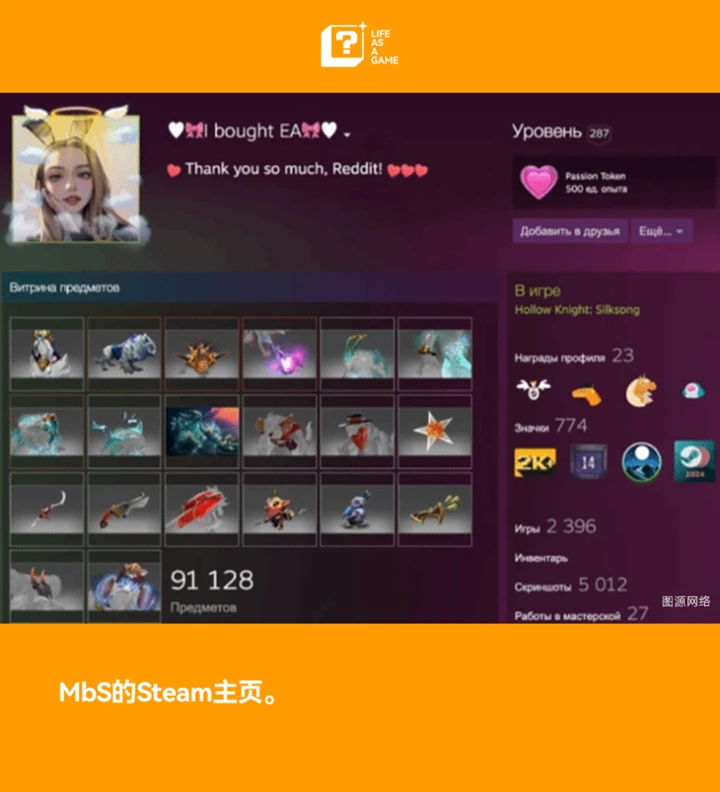
MbS's personal interests are certainly not negligible, but interpreting more than $70 billion in investments as merely the Saudi crown prince's whims is hardly convincing.
In fact, a series of investments by PIF, although related to MbS's personal will, are more importantly aligned with Saudi Arabia's own macro vision.
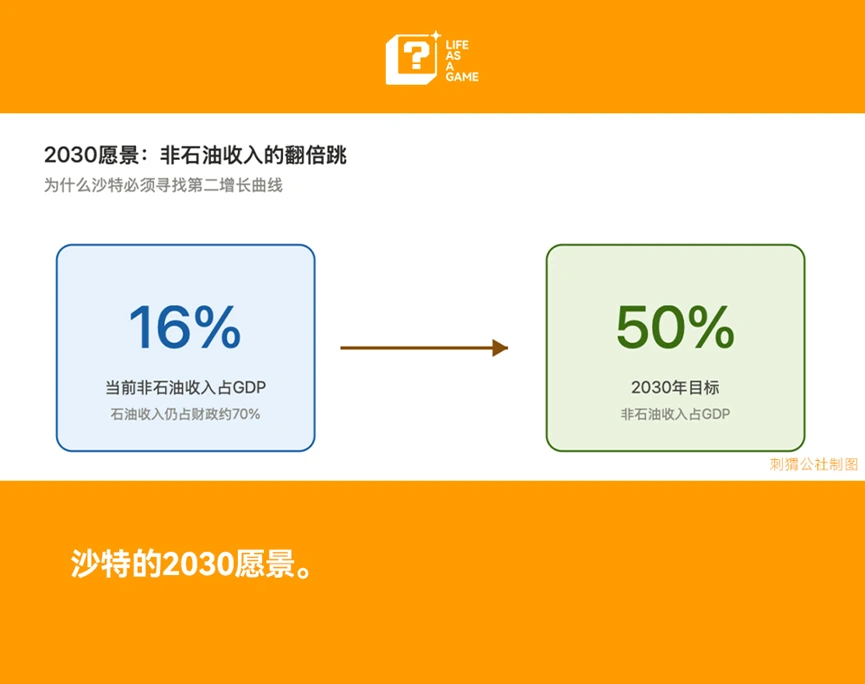
In 2015, MbS expanded the PIF's mandate from managing money to driving economic transformation. The following year, Saudi Arabia unveiled its so-called Vision 2030, aimed at leveraging the kingdom's geographic advantages, investment potential, and Arab culture to elevate its international standing—with the PIF positioned as the central implementing body of that agenda.
One of the core objectives of the "2030 Vision" is to increase the proportion of Saudi Arabia's non-oil revenue in its GDP from 16% to 50%. The reason is easy to understand: as the world seeks to transition to a low-carbon economy, oil's position as the core of global energy is being shaken, and Saudi Arabia, which relies on oil for 70% of its revenue, cannot afford to ignore external changes.
Thus, new industries that can create value have become the target for Saudi Arabia. Following this line of thinking, the game industry, with a scale of over $200 billion, has a sufficiently large number, and it does not rely on natural resources and rarely causes direct pollution, apparently meeting the transformation standards.
However, Saudi Arabia is also familiar with downstream petrochemicals and financial technology, so why did it choose the game industry, a completely unfamiliar field?
This is closely tied to Saudi Arabia's unique social structure, where 70% of the population is under the age of 35 and 67% of the nation, approximately 23.5 million people, are already gamers. The country's young people do not need to be encouraged to develop a gaming habit, as electronic games are already a part of their daily lives.
Another overlooked context is that in the early 1980s, Saudi Arabia, which adheres to strict Islamic rules, shut down all cinemas on the grounds that they "easily lead to moral corruption." It wasn't until April 2018, as part of the "Vision 2030" social reform, that the ban was lifted, and the first cinema opened in the capital Riyadh.

This means that in a country where there have been no cinemas for nearly 40 years, video games are almost the only legitimate entertainment outlet for young people. While their global peers watch blockbusters in cinemas, young Saudis opt for controllers and screens. Games are not just a pastime, but also provide an alternative public cultural space.
In addition, developing the gaming industry can not only meet the spiritual needs of young Saudis, but also drive social employment. Savvy has pledged to create 39,000 jobs in the gaming industry, including game testers, event executives, programmers, graphic designers, and more. These are no longer physically demanding jobs in the oil industry, but rather careers that are closer to the vision of a "modern digital society".
However, even after explaining "why gaming", there is a deeper question to consider: why isn't Saudi satisfied with just buying equity stakes and "enjoying the fruits of their labor", but instead wants to control game companies and deeply intervene in content?
Does having "financial capability" mean one can buy the right to shape cultural narratives?
There are currently 330 million Arabic-speaking gamers worldwide, a number that surpasses the total number of gamers in Western Europe or the United States. However, their cultural needs remain largely unmet, a fact that weighs heavily on the minds of Arab players.
Imagine American players being able to play with the familiar IP of Spider-Man, swinging through webs in the game's New York City; French players being able to relive the Great Revolution and admire the Notre Dame Cathedral in the game; and Japanese players not only seeing Japanese history in their own works, but also being able to play Tsushima, a game created by an American company that has been culturally exported in reverse.
Even China, which was once absent from the 3A market, has in recent years produced a global hit based on a domestic myth, "Black Myth: Wukong", with more major projects emerging. But what about Arab players? They are still experiencing the same "pain" that Chinese players once went through: despite having strong consumer power and a large player base, most of the time they can only play stories from other cultures.
From a macro perspective, the game industry is one with extremely high concentration and extremely low skill transfer difficulty. This means that as long as a country seizes the first-mover advantage, it is easy for game talent from developing countries to be sucked away, making it difficult for their own industries to take shape.
Therefore, while there appear to be over 200 countries worldwide, only a dozen or so have a truly established gaming industry, and the cultural narrative power within games is controlled by just a handful of countries.
Saudi Arabia wants to change this situation. According to The Paper, MbS hopes to "promote Saudi and Arab culture" through games, producing new games that promote Saudi and Arab culture.
Ubisoft has already made its move: in 2025, Assassin's Creed: Mirage launched a free DLC "Memory Valley", where the protagonist Basim travels to the 9th-century Saudi city of Al-Ula in search of his lost father.
It is worth noting that Ubisoft had previously stated that Assassin's Creed: Mirage would not have any follow-up content. However, in December 2024, Ubisoft CEO Yves Guillemot met with Savvy in Saudi Arabia. Apparently, the latter made an offer that Ubisoft could not refuse. Subsequently, the DLC "Memory Valley", which was funded by Savvy and developed by Ubisoft, was released for free to all players.
This is the first time Saudi capital has directly altered the content of a mainstream 3A game, introducing the Arab world into the game.
However, as Saudi Arabia is determined to create an Arab cultural narrative, an unavoidable contradiction arises: Saudi Arabia is a country that adheres to conservative Islamic rules, which conflicts with many mainstream games, with EA alone having multiple games that do not meet Saudi "standards".
Former BioWare chief writer Patrick Weekes publicly predicted that "politics they don't like" would be abandoned. EA creator Lilsimsie wrote when leaving the EA creator network: "The values represented by the people acquiring EA are in direct opposition to what I support and stand for."
This is not an overreaction. In 2020, the League of Legends European division was forced to cancel its partnership with Saudi Arabia's NEOM just 14 hours after it was officially announced, due to strong protests. In October 2025, the International Olympic Committee announced it would "withdraw" its commitment to the Saudi esports Olympics, stating that it needed to "pause and reflect".
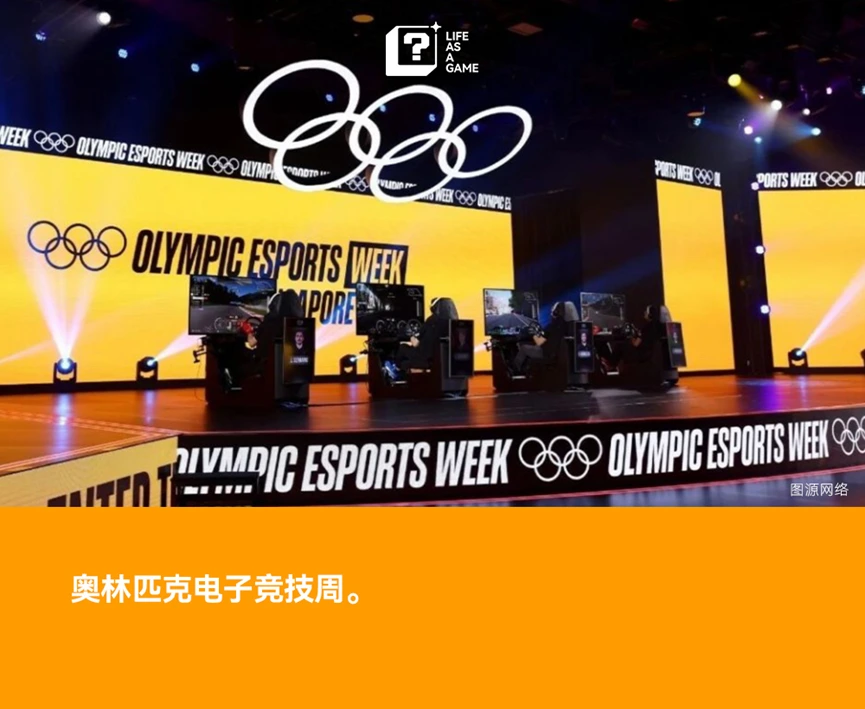
When two sets of values collide, game development, which was never truly free to begin with, will face even more constraints. For players, this is likely not a good thing. However, it is clear that Saudi Arabia has invested $70 billion and its will is unlikely to be swayed.
A more profound issue is: money can buy a company, but can it buy an industry?
So far, we have not seen a sufficiently influential Saudi game emerge. Savvy has acquired many companies and invested in many stocks, but there is still no original masterpiece that truly belongs to Saudi Arabia.
Looking back at the history of the gaming industry, no country has ever acquired a complete gaming industry chain through purchasing alone. Japan's gaming industry was built on decades of accumulation by companies like Nintendo, Sony, and Sega. South Korea's foundation was laid by its PC bang culture and the MMO boom. China's gaming industry took twenty years to evolve from licensed operations to original development.
In simple terms, the game industry needs three things: a market foundation, talent accumulation, and time. Saudi Arabia has money and a market, but accumulating talent and culture cannot be achieved overnight.
Saudi Arabia's Nine66 department is reportedly in negotiations with over 20 game companies worldwide to bring studios to Riyadh, with a core condition being "you have to teach them how to make a product".
" ( ( " ( " " : " " " : " " " : " " " " " " " " " " " " " " " " " " " " " " " " " " " " " " " " " " " " " " " " " "." " " " " " " " " " " " " " "." " " " " " " " " " " " " " " " " " " " " " " " " " " " " " " " " " " " " " " " " " " " " " " " " " " " " of " " " " " " " " " " " " " " " " " " " " " not " " " " " " " " " " " " " " " " " " " " " " " " " " " " " " " " " " " of " " " " " " " in " " " " " " " " " " " " " " " " " " "uality " " " " " " " " " " " " " " " " " " " " " " " " " " " " " " " " " " " " " " " the " " "
This article was first published in the Huawei Browser View series column "Big Players"