Qianli Technology recently released its 2026 semi-annual report, delivering a notably strong set of results.
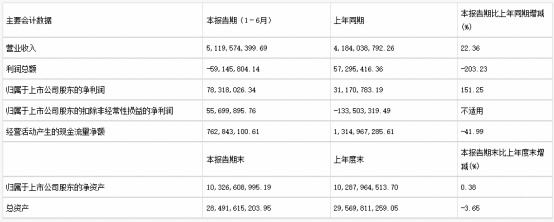
(Qianli Technology: 2026 Semi-Annual Report)
During the reporting period, operating revenue reached RMB 5.12 billion, up 22.36% year over year. Net profit attributable to shareholders totaled RMB 78 million, a surge of 151.25%. Notably, net profit attributable to shareholders excluding non-recurring items came in at RMB 55.7 million, swinging to a profit from a loss of RMB 134 million in the year-ago period.
This performance turnaround was hard-won.
Previously, Qianli Technology had recorded negative non-GAAP net profits for three consecutive years. Its return to profitability this time has undoubtedly come as a relief to investors.
Revenue and profit have increased simultaneously, indicating that the company's "AI+vehicle" strategy has officially transitioned from the investment phase to a cycle of scaled profitability. However, as performance continues to rise rapidly, what is the actual quality of this growth?

Unlike other smart driving solution providers, Qianli Technology originated from Lifan Technology, with a deep foundation and a business landscape that covers automobile and motorcycle manufacturing, possessing a strong manufacturing gene.
In July 2024, Megvii Technology founder Yin Qi invested in the company and took on the role of chairman in November of the same year, after which intelligent driving gradually became a core business.
In 2025, Yin Qi further proposed an "AI + automotive" strategic transformation, setting a clear direction for the company's future growth.
By business segment, the automotive division generated revenue of 2.327 billion yuan in the first half, down 12 percentage points year on year.
The reason for this decline may be due to internal adjustments at Qianli Technology and a drop in new energy vehicle sales.
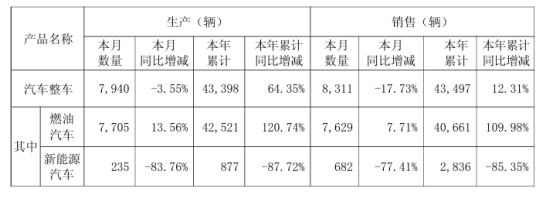
(Qianli Technology: June 2026 Production and Sales Report)
According to the production and sales report disclosed on July 3, fuel vehicle production in the first half reached 42,521 units, up 120.74% year over year, while sales totaled 40,661 units, a surge of 109.98%.
New energy vehicle production was only 877 units, down 87.72% year-on-year, with sales of just 2,836 units in the first half of the year, a decrease of 85.35% year-on-year.
Monthly new-energy vehicle sales data is equally discouraging: 577 units in April, 852 in May, and 682 in June, with year-over-year declines exceeding 75% in each month.
This pivot away from electric vehicles and back toward heavy oil has indeed delivered a marked improvement in gross margins over the short term—the automotive segment's gross margin jumped from 3.3% to 12.7%.
The continuous surge in the cost of major new energy vehicle raw materials is an industry-wide known fact, and compressing new energy production capacity directly reduces operating costs;
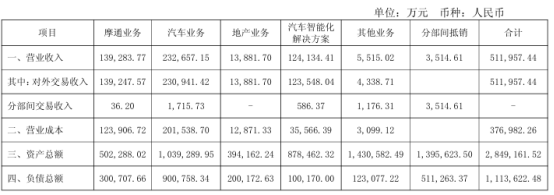
In addition, the operating costs of the automotive business were compressed to 2.015 billion yuan in the first half of the year, a year-over-year decrease of about 20%. Even with a decline in overall revenue, it was still able to drive a gross profit margin that was about 180 million yuan higher than last year.
However, the issue is that domestic gasoline-powered vehicles are accelerating their exit from the market, and the penetration rate of new energy vehicles has exceeded 60%. Qianli Technology's decision to shrink its new energy business and bet on gasoline-powered vehicles at this time is causing concern: in its "AI+vehicle" strategic layout, how long can its automotive business, the foundation, continue to support it?
Meanwhile, the motorcycle business generated revenue of 1.392 billion yuan, a 6% decrease from the same period last year, with gross profit roughly the same as last year.
From the perspective of the two businesses, the terminal vehicle business as a whole did not make a positive contribution to overall revenue, but its profit contribution actually increased.
So why did the company still manage to achieve 22% revenue growth in the first half of the year?
The answer lies in the intelligent driving business. In the first half of the year, the automotive intelligentization solution achieved revenue of 1.241 billion yuan, with a revenue proportion of over 24%, and has become the company's largest growth engine.
It's worth noting that Qimingpilot was only consolidated into the financial statements in the fourth quarter of last year, and there was no such revenue in the same period last year.
This additional 1.241 billion yuan exactly offset the decline in revenue from the terminal vehicle business, resulting in the company's total revenue increasing by about 1 billion yuan compared to last year.
However, the actual profit contribution of the intelligent driving business still needs to be viewed with caution.
Although the segment's gross profit reached 885 million yuan, exceeding the combined total of its automotive and motorcycle businesses, the high costs incurred for this business almost entirely offset it.
In the first half of the year, the company's research and development expenses reached 1.12 billion yuan, surging 289.57% year-over-year, with the intelligent driving division alone incurring 837 million yuan in research and development expenses.
This single increase will almost offset most of the gross profit brought by Zhi Jia.
In addition, management expenses amounted to approximately RMB 300 million, up 79.19% year over year, an increase of about RMB 132 million. The financial report explicitly attributes this primarily to newly added management and operating costs following the consolidation of Qianli Zhijia.
In other words, the high gross margin brought by the intelligent driving division is basically offset by the surge in research and development and management expenses that follow.
The final contributor to non-recurring net profit may still be the automobile sales business - but the additional gross margin from this part is, to some extent, a "short-term gain" that comes at the cost of sacrificing future new energy competition.
It is also worth noting that sales expenses for the first half of the year were 125 million yuan, a year-on-year decrease of 12.33%.
The financial report explained that the company's previous investments in advertising and promotion have yielded results, and as a result, it has appropriately reduced related expenditures.
Taking a comprehensive view, Qianli Technology's revenue surged 22.36% in the first half of the year, with non-net profit turning from negative to positive, achieving a year-on-year growth of 141.72%, making the surface data look impressive.
The downside is that revenue growth is mainly driven by the consolidation effect of Qianli Zhijia, while profit growth is partly due to the automotive business's short-term operations of "exchanging the future for the present", and is also offset by various miscellaneous expenses.
In other words, Qianli Technology's impressive financial report was made possible to a certain extent by "forcing" the numbers.
The underlying nature of Qianli Technology's operations may not have undergone a fundamental change, and Qianli Technology is still the same company it was last year.

For investors, the real metric to watch at Qianli Technology is no longer its car or motorcycle sales figures, but the actual pace at which its much-touted "AI+car" strategy translates into commercialized intelligent driving.
According to a report by Xinhua Net, as of June 30, 2026, the cumulative installation volume of Qianli Zhi Jia's ASD had exceeded 500,000 vehicles, covering 16 mainstream models including Arcfox, Lynk & Co, Galaxy, and Smart.
Compared to other suppliers' long-term dedication, Thousand Li Technology has achieved significant success in just a few years of transformation.
But behind this report card, the presence of Geely is ubiquitous.
Qianli Technology's connection with Geely can be traced back to its predecessor, Lifan Technology.
In 2020, Lifan Technology underwent bankruptcy restructuring due to a debt crisis, and Geely, in partnership with Chongqing state-owned assets, established the "Manjianghong Fund" to take control, holding approximately 29.85% of the shares and becoming the controlling shareholder.
The restructuring injected capital and industrial resources into Lifan, enabling it to restart operations. Current Chairman Yin Qi's move to Qianli Technology was likewise backed by Geely founder Li Shufu.
In 2024, Megvii Technology founder Yin Qi, through his controlled entity "Jiang He Shun Su", acquired 19.91% of Geely's shares for 2.43 billion yuan, becoming the second-largest shareholder.
After the equity transfer, Geely is still the largest shareholder but no longer the controlling shareholder. However, from a business perspective, Qianli Technology is closely tied to Geely.
The 2025 annual report shows that the sales to related parties accounted for 29.26% of the total annual sales from the top five customers, and the procurement from related parties accounted for 30.76% of the total annual procurement from the top five suppliers, both of which are related to Geely.
In other words, Geely is both the largest customer and the largest supplier of Qianli Technology.
For this reason, many brokerages have listed the "risk of over-reliance on a single client" as a primary concern for investing in Qianli Technology in their research reports.
Over an extended period, from 2023 to 2025, Qianli Technology's affiliated sales to Geely Group were 2.249 billion yuan, 2.144 billion yuan, and 2.925 billion yuan, accounting for 33.6%, 30.8%, and 29.6% of the company's total revenue, respectively.
On the procurement side, the associated procurement amounts for the same period were 3.387 billion yuan, 1.963 billion yuan, and 2.648 billion yuan, accounting for 50.1%, 29.3%, and 30.8% of the total procurement amount, respectively.
In 2023, nearly half of its procurement came from Geely, and although this has since declined, it still accounts for around 30%.
Even for the expansion of its Robotaxi business, Qianli Technology has chosen to cooperate with CaoCao Mobility, which is part of the Geely ecosystem.
The two parties signed a strategic cooperation agreement at the end of last year.
It is worth noting that in April this year, Qianli Technology submitted its listing application to the Hong Kong Stock Exchange for the second time.
This "shareholder-customer-supplier" triple binding relationship is rare among A+H listed companies.
This may raise questions in the Hong Kong Stock Exchange's compliance review, as the exchange has always had strict requirements for disclosing related-party transactions.
It is a coincidence that Chairman Inchi is not facing for the first time the listing woes of "shareholders as customers".
The company he founded, Megvii Technology, was once hailed as one of China's "AI Four Little Dragons." Its STAR Market IPO application was accepted in March 2021 and approved in September of the same year, but then fell into a prolonged wait.
It was still updating its financial documents in July 2024, but ultimately withdrew its application four months later.
During the listing process, the "shareholders are also customers" relationship became a focal point of repeated inquiries by regulators.
Ant Group is not only the largest shareholder of Megvii Technology, but also one of its top five customers.
In June 2021, the first round of inquiries directly targeted the "legitimacy of data sources," requiring Megvii to provide a detailed explanation of the boundaries of its cooperation with Alibaba.
Additionally, the Shanghai Stock Exchange has questioned the related-party transactions between Megvii and Alibaba, citing suspicions of profit transfers: in 2017 and 2019, the company's founder shareholding platform transferred shares to Ant Group's wholly-owned subsidiary at a price of around $1.33 per share, while external investors' entry prices during the same periods were $10.42 and $28.48 per share, respectively, with significant price discrepancies.
This "low-price conversion" behavior has been repeatedly questioned by regulators.
It can be said that founder Yin Chi has paid the price for being "overly dependent on large manufacturers".
Now back at Qianli Technology, it still faces the same objective reality.
Perhaps due to considerations for its Hong Kong stock exchange listing, or perhaps due to its own development needs, Qianli Technology has been continuously emphasizing its independence.
Co-Chairman Zhao Ming publicly responded just two months after joining, stating that there are misconceptions about Geely's investment in Qianli and the boundaries of their business cooperation. Although Geely is an investor and core major customer, Qianli Technology's overall business operates completely independently and autonomously.
From its equity structure and corporate entity to its capital base, Qianli Technology is indeed an independently operated company.
Its predecessor, Lifan Technology, is now fully controlled by Yin Qi, with Mercedes-Benz having completed its strategic investment, and its Hong Kong IPO is progressing steadily. Meanwhile, it is cooperating with BAIC on the "Youxin" brand, and is indeed making progress in maintaining its independence.
However, the issue is that whether it's procurement, sales, or the rollout of the Robotaxi business, it is essentially all being supported by Geely's ecosystem.
In this case, no matter how much emphasis is placed on independence, it is unavoidable to conflict with commercial reality.
For Qianli Technology, however, deep integration with Geely and the pursuit of independent development are inherently contradictory. Yet it must embrace both simultaneously, carving out room to move forward within that tension.
At the start of the year, Qianli Technology set itself an aggressive roadmap: installations targeting 1 million to 1.3 million vehicles by the end of 2026, officially entering the smart-driving "million club"; new installations of 2.7 million to 3.3 million vehicles in 2027; and cumulative installations surpassing 8 million vehicles by 2028, positioning itself among the world's top-tier smart-driving solution providers with the ambition of capturing one-third of the global market.
Given the current installation scale of 500,000 vehicles, the achievement is not insignificant, but there is still a noticeable gap from the one million threshold - in the next step, it will be necessary to maintain a loading pace of about 100,000 vehicles per month, which is a considerable pressure.
More crucially, the vision of "dividing the world into three" cannot be shouldered by Geely alone.
The annual sales volume of the Geely system is around 3 million vehicles, and even if all of them are equipped with it, it would still be far from enough to support the ambitious plans of Qianli Technology.
Thus, Qianli Technology has put forward a compromise "1+N" customer strategy: taking core large customers as the foundation "1" while extending to multiple brands and multiple categories of new customers "N".
For now, "1" naturally refers to Geely, while "N" points to Youxin and Mercedes-Benz.
The key to this approach is not "casting a wide net," but rather "deep cultivation" - not pursuing expansion in terms of customer numbers, but instead focusing on in-depth binding and value excavation for individual customers.
However, whether this business model can truly be viable still needs to be verified over time. After all, whether it's Momenta, Horizon Robotics, or Huawei, the leading players are all taking a route that relies on scale to win.
Momenta has accumulated over 230 fixed-point models and has just achieved delivery of 1 million vehicles.
Qianli Technology has taken a different approach, choosing to go "deep" rather than "broad", but behind this decision, there are at least two concerns:
One challenge is that it may be difficult to find a second client like Geely that can form such a deep partnership with Qianli Technology.
In-depth cooperation with Qianli Technology may lead to concerns among some clients about Qianli Technology's neutrality and the potential risks to their own data security.
Just as Zhiyu Tech faced scrutiny over its independence after BAIC's investment, Qianli Tech's close relationship with Geely will likely face even more questions.
Second, betting on deep cultivation means relying heavily on a single client's hit-product output, yet the odds of producing a blockbuster have never been controllable. That suggests only broader collaboration can improve the odds—which seems to create a paradox.
This strategy also requires Qianli Technology to possibly follow in Huawei's footsteps, empowering automakers with its full-stack capabilities and establishing a smart driving brand identity, in order to gain a competitive edge and create more space for growth.
The Youxin project may be the embodiment of Qianli Technology's "Huawei-like" model, where Qianli Technology provides full-stack AI and intelligent driving capabilities, while BAIC takes the lead in manufacturing, with Qianli Technology playing the role of "enabler".
However, when Huawei created AITO, it had the strong brand appeal of a C-end brand and coincided with the window period of the automotive industry's incremental era.
Since the start of this year, the market has entered a stock phase: according to data from the China Association of Automobile Manufacturers, domestic new-car sales in the first half of this year totaled 9.921 million units, down 21.1% year on year.
Against the backdrop of narrowing incremental space, the threshold for replicating the "questioning" model's success is clearly higher.
So, for Qianli Technology, the path to dividing the market into three parts will not be easy to tread, and it may be facing its most difficult moment yet.
Of course, Qianli Technology, being named as such, naturally has long-term ambitions.
From Lifan's restructuring to Inchie's takeover, from Geely's partnership to independent listing, the company has undergone several transformations, each time adjusting its posture and recalibrating its direction.
The challenges ahead may just be one of the necessary paths, and the market is willing to give time to those who are patient, and opportunities to those who are prepared.
Sincere hopes are held for Qianli Technology to ultimately stand on its own stage.
No translation provided as there is no text to translate.
Image source: internet, please contact 327508737@qq.com for any objections or complaints regarding this article
|Note: Personal views, for reference only
The data in this article comes from:
Qianli Technology announces the release of its "2025 Annual Report", "2026 Semi-annual Report", and the sales and production flash report for April-June 2026
Related public reports on the prospectus for listing in Hong Kong
The China Automobile Dealers Association has released market analysis and data related to the automotive industry, as reported by the China Association of Automobile Manufacturers. According to the data, in recent months, the Chinese automotive market has experienced a significant shift in consumer demand and sales trends. The association's analysis highlights key factors influencing the market, including government policies, technological advancements, and changes in consumer behavior. The data from the China Association of Automobile Manufacturers provides insight into the current state of the industry, with detailed statistics on sales volumes, market share, and other relevant metrics.
Xinhua Finance, Securities Times, China Securities Journal, Shanghai Securities News, The Beijing News, Jiemian News, Wallstreetcn, China Fund News, Blue Whale Media, and Caihua News Agency, among other media outlets, reported
Geely Automobile's official sales announcement and the Shanghai Stock Exchange's public review of Megvii Technology's IPO application
The proportion and increase/decrease amounts are calculated based on publicly available data, and the original disclosure caliber shall prevail.