
Xingyu Inc. (601799.SH) has been busy lately.
First, 107 campus recruits for the class of 2026 had their offers rescinded. Several recruits said the company gave them only two options: resign voluntarily with half a month's salary as compensation, or transfer to an assembly line position.

The timing of the controversy is delicate.
Less than a month earlier, on July 29, 2026, Xingyu had just filed again with the Hong Kong Stock Exchange to pursue an A+H listing. Over a longer horizon, the company had already begun adjusting its workforce: at the end of 2025, total employees fell to 7,532 from 10,426 a year earlier, a reduction of 2,894 in one year. Meanwhile, outsourced labor hours rose 25.89% year over year.
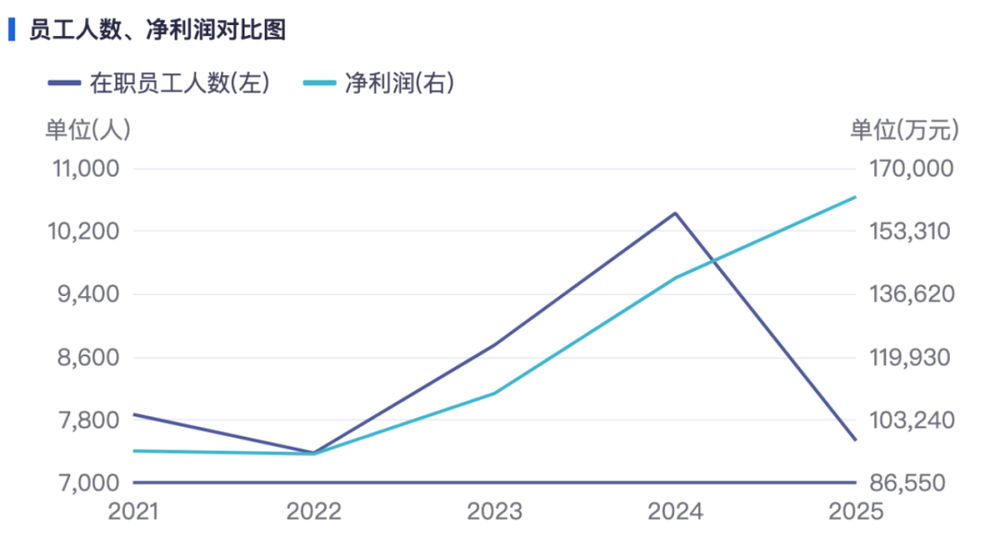
Looking only at the income statement, Xingyu doesn't appear to be a company needing major contraction. In 2025, it still posted double-digit growth; only in 2026 did growth begin to slow noticeably.
Beyond the rescinded offers to 107 graduates, a more pressing question emerges: what is happening to this Chinese auto-lamp leader that has grown steadily over the past few years?
1 | How Expensive Can a Car Light Be?
Xingyu's business is straightforward: it supplies automotive lighting.
Founded in Changzhou, Jiangsu in 1993 and listed on the Shanghai Stock Exchange in 2011, Xingyu mainly supplies automakers with headlamps, rear combination lamps, fog lamps, ambient lighting, and associated controllers.
Car lights were once a relatively traditional components business. But as vehicles become electrified and intelligent, lights have changed: no longer just for illuminating the road. ADB adaptive high beams, AFS adaptive headlights, full-width taillights, welcome lights, ambient lighting, digital projection and even light-language systems that interact with pedestrians have emerged. Lights have evolved from mechanical and optical parts into automotive electronic products integrating optics, electronics, software and control systems.
That has created two key opportunities for Xingyu: higher value per vehicle and greater share for domestic suppliers. According to the prospectus Xingyu filed with the Hong Kong Stock Exchange in July 2026, citing Frost & Sullivan data, the company was China's largest automotive lighting supplier by 2025 revenue, with an 11.6% domestic market share, and ranked seventh globally with a 4.6% share.
In the original-equipment lighting market for passenger cars priced above 200,000 yuan, Xingyu held a 26% domestic share. In smart lighting, it ranked first in both China and globally by revenue, with a 28.4% domestic market share.
That is also key to understanding Xingyu's growth in recent years. It still sells "lights," but the lights on each car are becoming more complex and more expensive.
At the same time, Xingyu's customer base has expanded from domestic Chinese brands to global mainstream automakers. According to the prospectus, it works closely with domestic brands including Hongqi, Chery, Seres, Geely, Li Auto, NIO and XPeng, and has entered the supply chains of international automakers such as BMW, Volkswagen, Toyota, Nissan, Honda and Bentley. As of the end of March 2026, it had established relationships with nine of the world's top 10 automakers.
Intelligence, import substitution and the rise of domestic brands have together driven Xingyu forward. From 2021 to 2025, revenue rose from 7.909 billion yuan to 15.257 billion yuan, nearly doubling, with a clear acceleration after 2023.
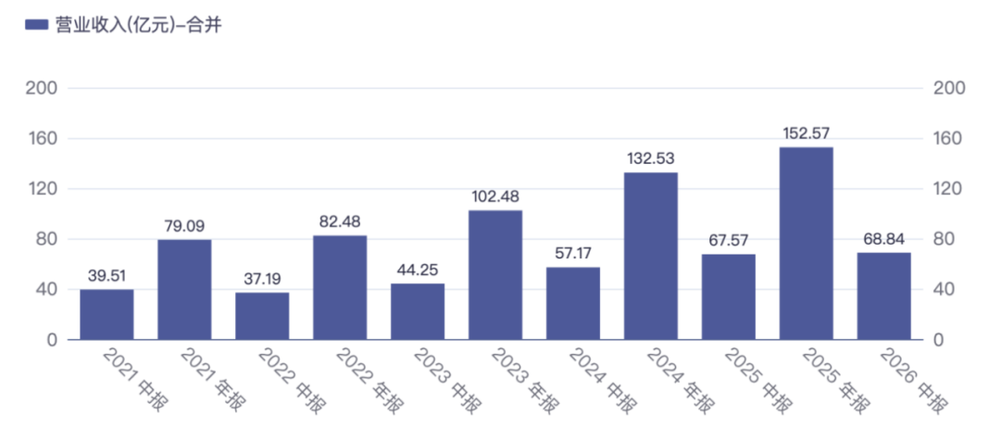
To some extent, Xingyu is a microcosm of the upgrade of China's auto supply chain in recent years: no longer just winning business with cheap parts, but making an originally inconspicuous component increasingly expensive through technological upgrading. Everything seems to be moving in the right direction.
Part 2 | Why Is Growth Getting More Expensive?
In 2026, Xingyu's growth slowed markedly. In the first half, revenue rose 1.87% year on year, while net profit attributable to shareholders fell 5.26%. In the second quarter, revenue and net profit fell 5.70% and 18.26% year on year, respectively.
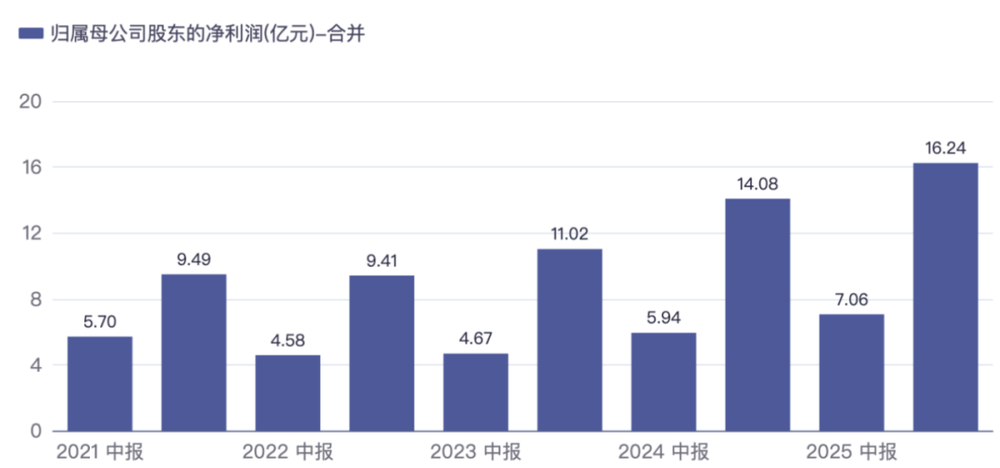
This is not yet an operational stall, but growth has indeed slowed. The company cites weak domestic passenger-car sales, lower-than-expected sales of some models it supplies, and higher raw-material prices.
Looking beyond the half-year report, the factors shaping Xingyu's next phase of growth go beyond short-term demand swings.
First, price.
As a tier-one supplier, Xingyu faces continuous cost-reduction pressure from automakers. While smart features raise the value of lamps per vehicle, price competition in the vehicle market also passes down the supply chain, partially offsetting the premium from product upgrades.
According to the prospectus, from 2023 to the first quarter of 2026, Xingyu's smart automotive lighting products rose from 0.3% to 19.6% of revenue, while gross margin for the segment fell to 20% from 25.1%. Smart lamps are ramping up quickly, but product upgrades have yet to bring higher profitability.
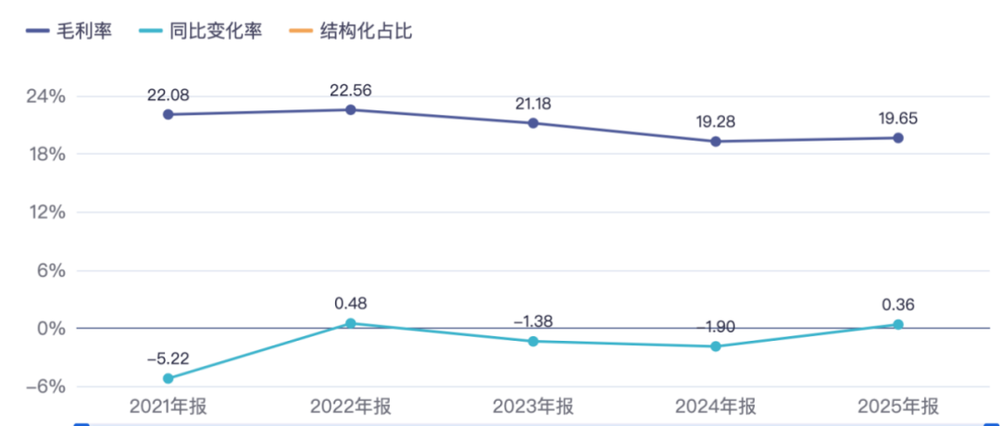
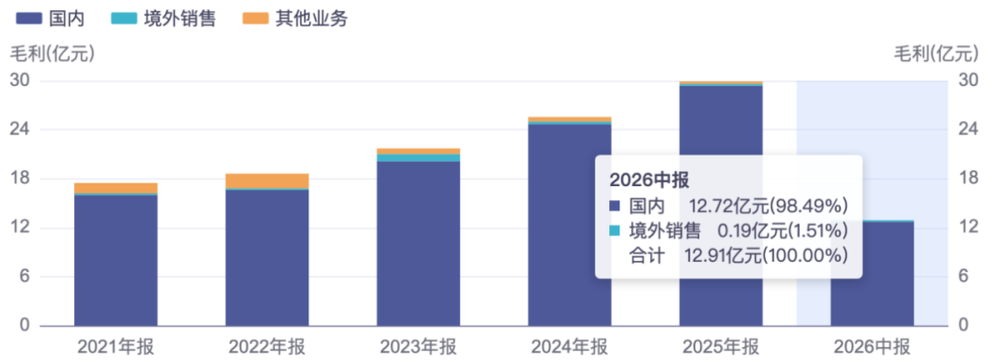
The pattern is also clear company-wide. From 2021 to 2025, Xingyu's consolidated gross margin stayed around 20%, at 19.65% in 2025. In other words, lamps are getting smarter and more valuable per vehicle, but overall gross margin has not risen markedly.
The controller business has a relatively higher gross margin, around 28% in 2025, but annual revenue was just 216 million yuan, about 1.4% of total revenue — still too small to meaningfully change the overall profit structure.
The second factor is capacity.
At the end of 2025, Xingyu's domestic front- and rear-lamp capacity utilization stood at 87.2% and 91.8%, respectively; by the first quarter of 2026, they had fallen to 69.7% and 68.6%. Yet even as domestic utilization declined, the company continued to build overseas capacity.
The reason is straightforward. After entering global automakers' supply chains, suppliers increasingly need to produce close to customers, handling R&D, manufacturing, and delivery locally.
For Xingyu, globalization is therefore not simply about selling lamps abroad, but replicating an entire production system. That system is still in its investment phase.
In the first half of 2026, Xingyu's overseas revenue was about 332 million yuan, with gross profit of 19 million yuan and a gross margin of just 5.86% — far below the 19.41% posted domestically. Overseas operations now resemble a ticket the company must buy, though its short-term profitability has yet to materialize.
The capital burden is even heavier. In 2025, Xingyu spent 884 million yuan on R&D and employed more than 2,000 R&D staff.

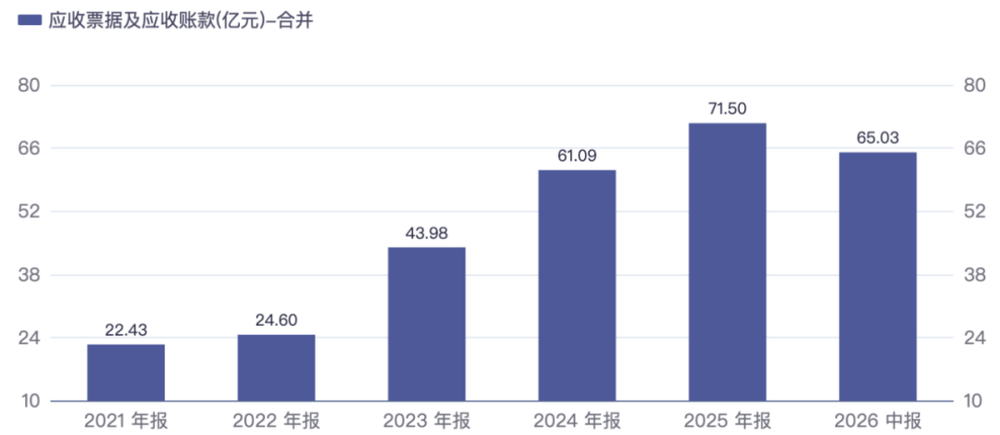
Meanwhile, from 2021 to 2025, bills receivable and accounts receivable grew from 2.243 billion yuan to 7.15 billion yuan, further stretching receivable turnover days. With R&D and overseas expansion requiring continued spending on one hand, and lengthening customer payment cycles on the other, Xingyu's growth is starting to consume more capital.
It is against this backdrop that Xingyu's workforce adjustments merit attention. While this does not directly prove a causal link between the cancellation of campus-hire contracts and operational pressure, it is at least clear that Xingyu has begun proactively adjusting its fixed employment and production organization.
This campus recruitment round has introduced a new variable.
One of the advantages Xingyu has built over the years is its access to the supply chains of global automakers such as Volkswagen, BMW, and Toyota. Now Volkswagen China has launched a special investigation into the matter. For a Tier 1 supplier seeking a Hong Kong listing and pushing further into global markets, labor disputes are no longer just an internal management issue — they have entered the scrutiny of customers' supply-chain reviews. In the past, being inside the global customer system was Xingyu's moat; now, meeting that system's requirements is a capability it must learn.
Xingyu once stated in its ESG report that it 'attaches great importance to the protection of employee rights.' Perhaps now is the time to put that commitment into practice.