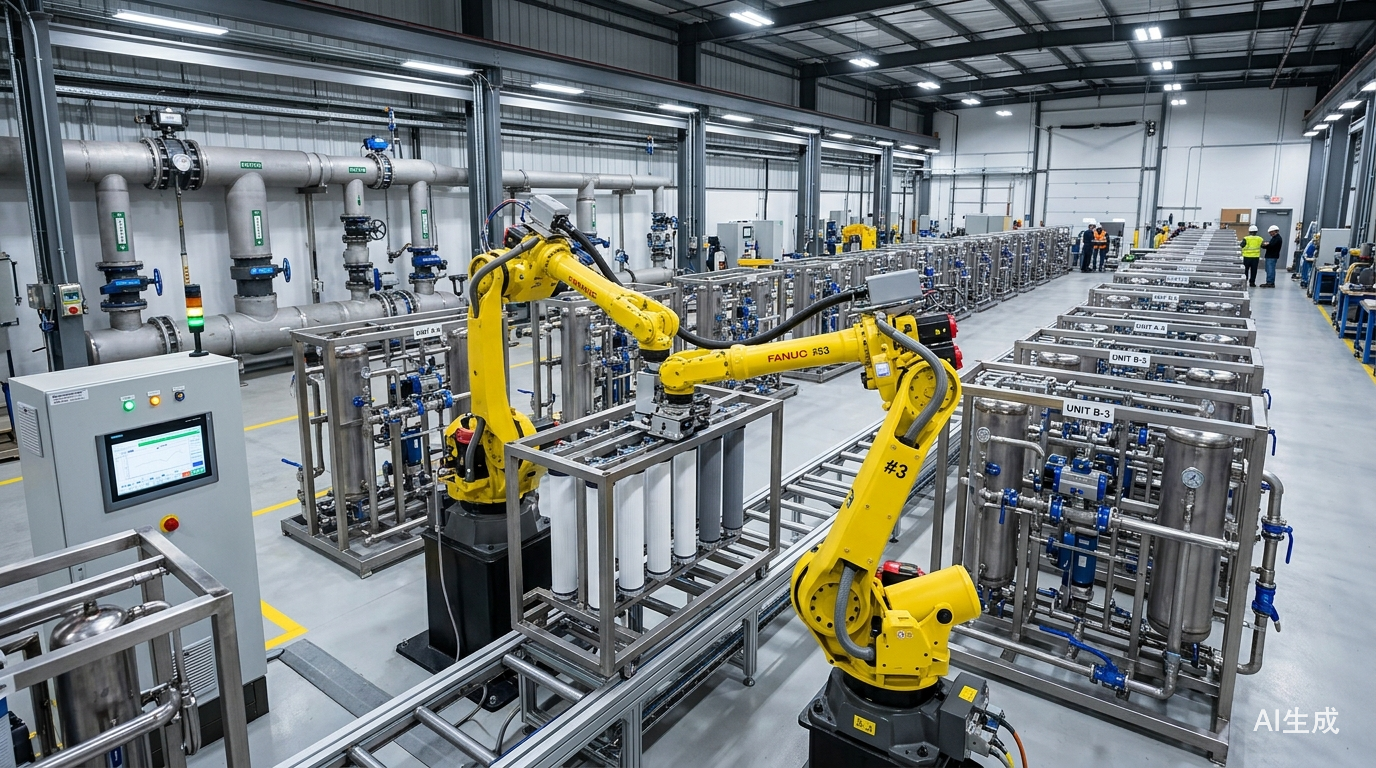
The environmental protection industry is shifting from "project-based supply" to "efficiency-based supply".
Users are increasingly unwilling to pay for "building another set of things," but are more willing to pay for "using less electricity, taking fewer medications, occupying less land, recycling more resources, and allocating fewer personnel."
Thus, a problem that had long been obscured by the engineering model began to surface:
Can the numerous technologies mastered by environmental protection enterprises be turned into products?
For a large number of tech-savvy private environmental protection enterprises, this may be the most worthy transformation path to study seriously in the next few years.
Qingshan Research Institute has long tracked the commercialization of environmental technologies and corporate transformation cases. Increasingly, we see a clear pattern: in the next round of environmental industry innovation, the competitive edge may not lie in who can design a more complex engineering system, but rather in who can encapsulate complex problems into a simpler, more stable, and more easily replicable product.

The End of the Engineering Era
Environmental Companies Must Move Beyond One-Size-Fits-All Approach
The core unit of the engineering mode is the "project".
Thus, a company's revenue growth is basically dependent on project growth. To achieve 1 billion yuan in revenue, it is necessary to continuously undertake a sufficient number of projects, while also configuring more design personnel, project managers, procurement personnel, construction personnel, and regional sales teams. The larger the scale, the more cumbersome the organization tends to become.
The core unit of the product model is the "product".
After incurring significant research and development costs initially, the second, the hundredth, and even the thousandth set of products can be replicated at a lower marginal cost. Develop once, sell multiple times. Design once, replicate multiple times. Solve a class of problems, rather than just solving one project.
This is also a problem that has long been easily overlooked in the environmental protection industry.
Chinese environmental protection companies are not lacking in technology, with many possessing patents, processes, equipment, and engineering experience, and some having accumulated extremely rich know-how after focusing on a specific niche for over a decade or even twenty years.
However, a large portion of the technology exists in the form of "engineering solutions." The same problem requires a redesign for a different client, the same technology requires a redraw for a different project, and the same set of experiences requires a re-debug by a different engineer.
Ultimately, knowledge resides in people's minds, technology is scattered across blueprints, and experience is buried in project sites. Companies actually possess the technology but do not truly own the products.
This is also why many environmental companies, after being established for over a decade and having completed hundreds of projects, still find it difficult to clearly explain what they do.
The answer is often a long list: we handle planning, design, equipment, construction, commissioning, and operations and maintenance. We can also do EPC, or BOT, or tailor solutions to specific customer needs...
The biggest risk of the engineering model also lies here, as the number of projects cannot disguise the low replication efficiency. As the business becomes increasingly complex, the organization becomes larger, cash flow becomes tighter, and profits become thinner.
Once the company enters the stock market, these issues will be exposed. The number of projects will decrease, competition will increase, gross profit margins will decline, and the payment cycle will be prolonged, while the company's internal systems for pre-sales, design, procurement, and project management remain bulky.
The root of the problem may not be that the technology is not good enough, but rather that its commercial form is too heavy-handed.
From this perspective, the environmental protection industry's upcoming efficiency competition will involve two rounds of elimination: one round will eliminate low-efficiency enterprises, and the other round will eliminate low-efficiency organizational models.
The essence of productizing technology is to gradually solidify work that was previously reliant on human labor, projects, and experience into equipment, materials, software, control systems, and standardized processes, transforming individual capabilities into company capabilities and project experience into product assets.

What the Environmental Protection Industry Really Lacks is Not Technology
Technology That Can Be Efficiently Replicated
True productization is the process of transforming a problem-solving capability into a standardized, modular, parameterized, mass-producible, deliverable, maintainable, and sustainably iterative business vehicle, which involves at least five thresholds.
Firstly, technology must shift from being able to operate to operating stably.
The product needs to face the following challenges: can it still run if moved to a different location? Can it still run if operated by a different person? Can it still run if the water quality fluctuates by 20%? Can it still run in winter and summer? Can its performance still be maintained after three years of use?
The biggest difference between products and technical solutions is the need to eliminate a large amount of uncertainty. Engineers can rely on experience to troubleshoot on the spot, but products cannot have an expert on site for every unit sold.
Therefore, the real process of productization is essentially about constantly eliminating the dependence on "experts".
Second, it is necessary to find boundaries that can be standardized.
The environmental protection industry inherently has non-standard attributes. The wastewater from a coking plant and a semiconductor plant will not be the same, and the leachate from a landfill and a waste incineration plant will also be different.
It's difficult for the entire environmental governance system to be fully standardized, but a large number of its functional units can be.
For example, pre-treatment modules, membrane treatment units, high-salinity wastewater concentration devices, sludge dewatering systems, odor treatment equipment, online monitoring modules, precise dosing systems, aeration control systems, and resource recovery units can all be gradually productized through parameterization and modularization.
The key to productization is not forcing standardization across the entire engineering process, but rather identifying the islands of standardization within complex engineering.
In the past, the industry was accustomed to treating entire projects as a whole. In the future, it's more worthwhile to break down systems and identify which links have high frequency, commonality, and stable demand, and then encapsulate them into products.
Third, implicit experience must be incorporated into products.
In environmental protection projects, the most valuable thing is often not the equipment itself, but the parameters in the minds of the experienced technicians.
When to add medication, when to backwash, when to adjust aeration volume, and what water quality is likely to cause membrane contamination - these have long relied on engineers' experience to determine.
True high-level productization involves converting this experience into control logic, algorithms, and software, which is also why digitization and productization are naturally a pair.
Hardware determines whether a device can function, while algorithms and control systems determine whether it can operate autonomously under different conditions.
Environmental protection equipment manufacturing policies specifically promote the development of modular, digital production methods and intelligent upgrades, which essentially drive the evolution of environmental protection equipment from simple mechanical devices to systematized products.
Fourth, it is necessary to shift from "delivery of qualified products" to "quantifiable results".
Engineering companies tend to focus on parameters such as processing capacity, COD removal rate, membrane flux, and equipment power. In contrast, product companies should focus on outcomes, such as the reduction in water and electricity consumption per ton, the reduction in chemical consumption, the decrease in land occupation, the decrease in labor, and the resource recovery rate.
Behind these two framings lie entirely different market logics. Once customers shift from "we must build environmental facilities" to "we must cut environmental costs," what they are purchasing is no longer a stack of equipment but an economic outcome.
Therefore, the most important instruction manual for excellent environmental protection products in the future may not be a process flowchart, but a financial account.
Fifth, it is essential to establish manufacturing capabilities.
This is one of the most easily overlooked aspects of productization for many technology companies.
Designing a product is a completely different capability from being able to continuously produce 100 sets of qualified products, the latter of which involves supply chains, manufacturing processes, quality systems, testing standards, delivery standards, and after-sales systems.
Thus, as technological products are finalized, environmental companies are often forced to shift from being "technology service companies" to being closer to "industrial enterprises".
This is also an important watershed in the industry: genuine product companies will ultimately have to exhibit manufacturing attributes.
In 2024, the total output value of China's environmental protection equipment manufacturing industry reached approximately 920 billion yuan. The 416 standardized companies disclosed by the Ministry of Industry and Information Technology accounted for only about 2.77% of the total number of companies in the industry, but contributed about 16.7% of the industry's total output value. Among them, the research and development investment of standardized enterprises in the environmental monitoring instruments category accounted for 10.5% of their operating revenue.
These figures are worth pondering for the environmental protection industry. In the next stage, what will truly set companies apart is no longer just "whether or not they have technology," but whether they can transform technology into stable manufacturing and continuous delivery capabilities.

Eco-Friendly Products Gain Traction as Market Matures
Productization of technology is not a new concept, as evident in the development history of international environmental and industrial technology companies such as GE, Thermo Fisher, Suez, Veolia, and Danaher, which have all employed significant productization logic.
Pumps, membranes, instruments, detection equipment, aeration systems, dosing systems, filtration systems, and later, digital operation platforms, are essentially standardized products that encapsulate complex professional capabilities.
China's environmental protection industry has had such companies in the past, but the macro environment has long been more favorable to the engineering model, a situation that is now changing.
First, there is a shift from a "newly established market" to a "stock market".
As environmental protection infrastructure increases, market demand will not disappear, but the demand structure will change.
For instance, a sewage treatment plant may not need to double its capacity, but rather reduce aeration power consumption, increase inlet water concentration, and optimize chemical dosing.
Waste-to-energy plants may not necessarily build another furnace line, but they may need to improve thermal efficiency, reduce fly ash costs, and enhance heat supply capabilities.
Industrial enterprises may not necessarily rebuild wastewater treatment plants, but they may need to reuse more water and recycle resources such as fluorine, phosphorus, copper, and lithium.
This means that the value that environmental protection enterprises can create is shifting from construction value to efficiency value, and efficiency value is naturally suitable for productization.
Second, equipment updates are creating a market that differs from the previous round.
The large-scale equipment update launched in 2024 has included the updating and renovation of sewage treatment, sanitation, waste disposal, and urban lifeline perception devices.
"Equipment updates" and "new construction projects" are two completely different businesses. New projects can redesign an entire system, whereas retrofitting existing facilities often requires uninterrupted production, minimal land occupation, short construction periods, simple interfaces, and rapid return on investment, which naturally favors modular products.
In the era of stock, what is likely to explode is not a "smaller version of EPC", but a large number of products that can be inserted into the existing system: a smart aeration control module, a precise dosing system, a membrane component, a sludge reduction equipment, a resource recovery unit, an online analysis instrument, and a digital operation and maintenance system.
They are like "plug-ins" in industrial systems, which can continuously improve the efficiency of the original system without having to start from scratch.
Third, industrial customers are increasingly willing to prioritize cost-effectiveness in their purchasing decisions.
The municipal environmental protection market has long been driven by policies and finances, whereas the industrial environmental protection market operates under a different logic, with companies ultimately concerned about costs.
In industrial scenarios such as steel, chemicals, electronics, photovoltaics, lithium batteries, and food, as long as environmental protection technology can simultaneously achieve cost reduction, water conservation, energy conservation, resource recycling, or production line stability, customers' willingness to purchase is often significantly higher than for "environmental upgrades" alone.
This will drive environmental protection technology to shift from "governance equipment" to "production tools". For instance, once industrial wastewater resource utilization technology becomes truly competitive, clients will not only consider treatment costs, but also calculate the reduction of hazardous waste, the decrease in chemical agents, the recovery of valuable resources, the conservation of new water, and the decrease in overall treatment costs.
Once a technology enters a customer's production economic model, its market nature changes completely, and it is no longer just an environmentally friendly investment, but begins to approach a productive investment.
Fourth, the Chinese market is sufficiently complex and large enough.
China's environmental protection market has a seemingly contradictory characteristic, with extremely complex scenarios yet a large number of similar scenarios.
Tens of thousands of industrial enterprises, thousands of urban sewage treatment plants, numerous industrial parks, waste incineration plants, landfills, mines, and county-level environmental facilities mean that as long as a sufficiently universal problem can be found, even a very niche one, it may still form a product market of considerable scale.
This is one of the best soils for product innovation.
Productization has never been about solving every problem. It's about taking a problem that occurs frequently enough and solving it well. This is especially critical for private environmental companies.
Large central state-owned enterprises can undertake city-level projects, basin management, and infrastructure investments. If a private enterprise with a scale of only a few hundred million yuan still tries to compete in terms of capital, credit, and project volume, its chances of success will only continue to decrease.
However, if it can develop a product that is indispensable to the industry in one of the extremely narrow segments, such as membrane pollution control, industrial wastewater resource recovery, high-salinity water treatment, odor governance, sludge dewatering, fly ash resource utilization, online monitoring, or intelligent control, the competitive landscape will be rewritten.
Small businesses can hardly become "large-scale engineering companies." Yet they can absolutely become hidden champions in a specialized niche.
True Technology Commercialization
Doubao and Nubia to Complete 4 Conversions
What the environmental protection industry truly needs to research is not "whether or not to commercialize products," but rather how technology can be transformed into products. From the numerous enterprise practices currently underway, it is clear that at least several conversions are necessary.
First, shift from "what technology do I have" to "what high-frequency problems do customers have."
This is the first step in product thinking—and the one where many environmental technology companies go wrong.
Much of what the industry calls innovation follows a predictable logic: technology, then patents, then application scenarios.
The correct order should be reversed, which type of customers repeatedly encounter the same problem, how much money does this problem cost customers each year, what methods are customers currently using to solve it, and why are the existing solutions not good.
Only by finding demand that is frequent enough, rigid enough, and of sufficient economic value can a product possibly succeed.
The value of technology is not determined by its technical difficulty, but by the problems it solves.
A technology with dozens of patents that can only be sold in small quantities may have less commercial value than a small device that every sewage treatment plant needs.
Second, break out the "minimum standard unit" from the "integrated project".
Productization requires one crucial capability: the ability to break things down.
Breaking down a massive environmental protection system to find the smallest functional unit that can be resold repeatedly.
For example, an industrial wastewater system may comprise pretreatment, biochemical treatment, membrane filtration, evaporation, and resource recovery. A company doesn't need to manufacture all five stages as complete products.
Truly good companies often choose one of the links with the highest technical barriers, the easiest standardization, and the most obvious customer pain points to take to the extreme.
The clearer the boundaries of a product, the stronger its replicability tends to be.
Third, shifting from non-standard customization to modular assembly.
The environmental protection industry can't completely eliminate non-standard practices, but it can reduce them from 100% to 30%.
For instance, a product forms several standard modules of 100 tons, 500 tons, and 1000 tons, and adjusts to different water qualities by modifying the module quantity, core parameters, and software strategy.
What customers see is a customized solution, but internally, the company is actually combining standard products, which is a more realistic approach to productization in the environmental protection industry: customized on the front end, standardized on the back end.
This is similar to the automotive industry, where consumers can purchase different configurations, but car manufacturers do not redesign the engine for each individual consumer.
One of the greatest organizational capabilities of environmental protection enterprises in the future will be to converge "infinite non-standardization" into "limited configuration".
Fourth, shifting from "selling equipment" to "equipment + process package + algorithm".
Truly competitive eco-friendly products of the future won't be mere iron boxes that anyone can easily replicate.
The manufacturing process itself is easy to replicate, but what is truly difficult to replicate is the operational data, process know-how, control algorithms, and parameter libraries that have been accumulated over time.
So the value hierarchy of environmental products may evolve progressively: equipment → complete equipment systems → equipment plus process packages → equipment plus process packages plus software → ongoing operations services.
The further it goes, the stronger the customer stickiness, and the easier it is for the company's gross margin structure to improve. The real intelligentization of the environmental protection equipment industry should also occur at this level.
Simply equipping a device with a screen or building an app does not make it truly smart or green. The real value of intelligent technology lies in a machine's ability to automatically adjust its operating strategy in response to changing conditions such as water quality, water volume, temperature, and load. Ultimately, what once resided in the mind of an exceptional engineer must be embedded into the controller.

The Next Wave of Green Innovation
Turning Technology into Products
The environmental protection industry is not short of "tech companies", what is truly scarce are product companies that can complete this entire transformation.
This also explains why many environmental protection companies have good technology but can never scale up. They have solved the technical problems, but not the replication problem.
Once an industry reaches maturity, commercial efficiency ultimately hinges on the ability to replicate.
So the next round of innovation that the environmental protection industry is truly worth looking forward to may not be the emergence of more complex new processes, but rather more and more companies starting to do something that seems inconspicuous but is actually more difficult:
Break complex technology into simple modules, distill non-standard expertise into standardized parameters, and turn engineering capabilities that depend on a few key individuals into products that can be sold continuously.
Private environmental firms in China once aspired to become miniature versions of central state-owned enterprises: expanding headcount, broadening geographic reach, and scaling up project portfolios—only to find themselves locked in head-on competition over capital, credit, and project resources.
The more desirable path for the future may be the opposite: companies don't have to be large, but products must be exceptional; projects don't have to be numerous, but products must sell well; the scope can be narrow, but it must be irreplaceable.
In this sense, the productization of technology is not just a method of technological innovation, but actually a business model restructuring for eco-friendly private enterprises to redefine their position.
In the past, environmental companies grew by continuously winning new projects. In the next phase, truly high-quality companies will increasingly rely on a different capability: solving one real problem thoroughly, then replicating that solution a thousand or ten thousand times over.