Google has also started updating larger models on a monthly basis.
Just three weeks after the release of Gemini 3.7 Flash, Google has unveiled Gemini 3.8 Flash and Gemini 3.8 Flash Cyber, which specializes in cybersecurity.
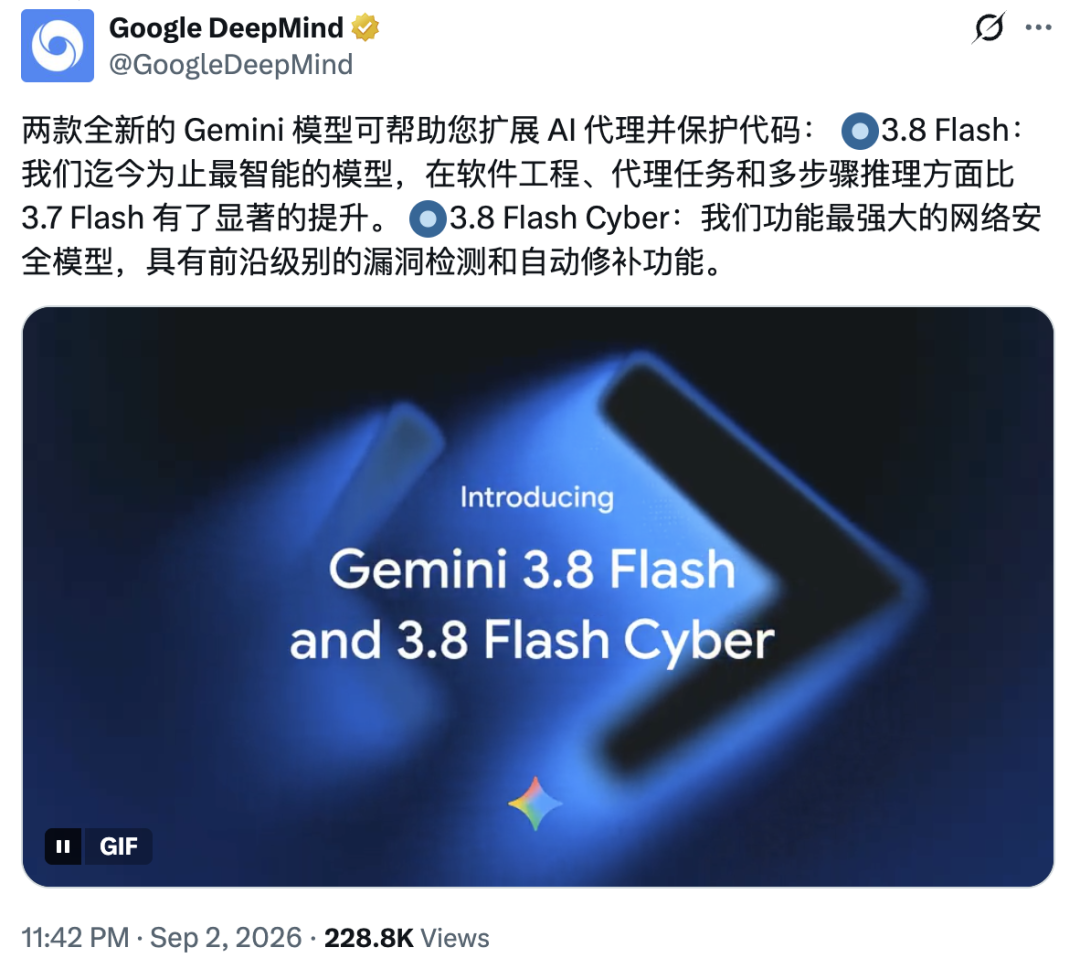
In just six weeks, the Gemini Flash product line has undergone three major version iterations, with a new model emerging every three weeks on average.
In the past large-model industry, such a pace of updates would have been almost unimaginable.
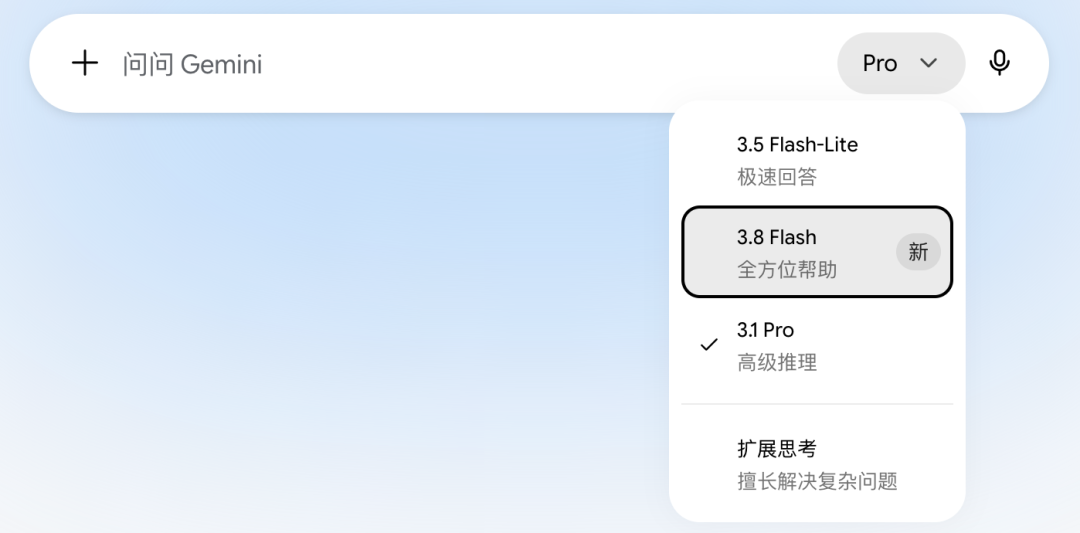
More noteworthy is that a new approach to model development is gradually emerging within Google: an increasing number of new capabilities related to Agents, reinforcement learning, and tool invocation are being prioritized on Flash, which has a smaller footprint and lower modification costs.
And it's not just Google that has suddenly accelerated recently.
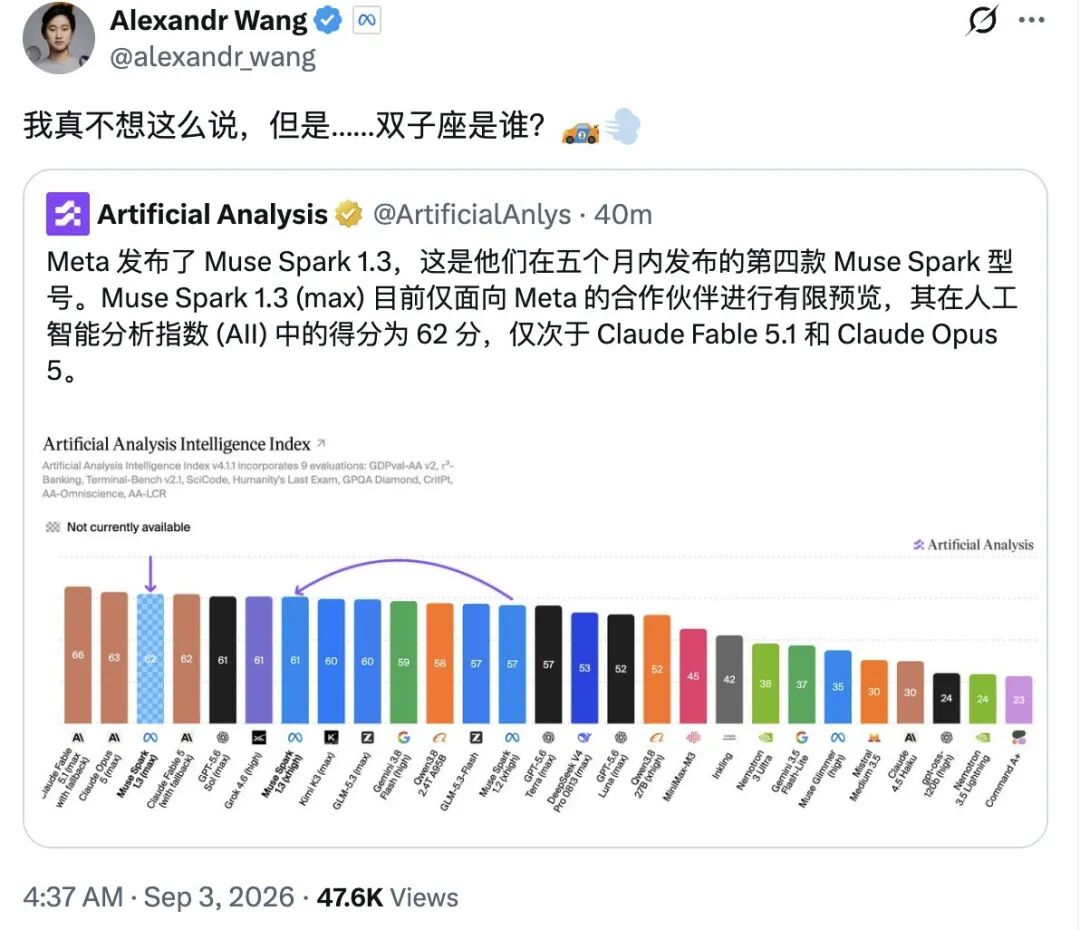
Right before the release of Gemini 3.8, Meta also updated Muse Spark to version 1.3, with the main upgrade directions for this generation of models being long-task agents, coding capabilities, and inference efficiency.
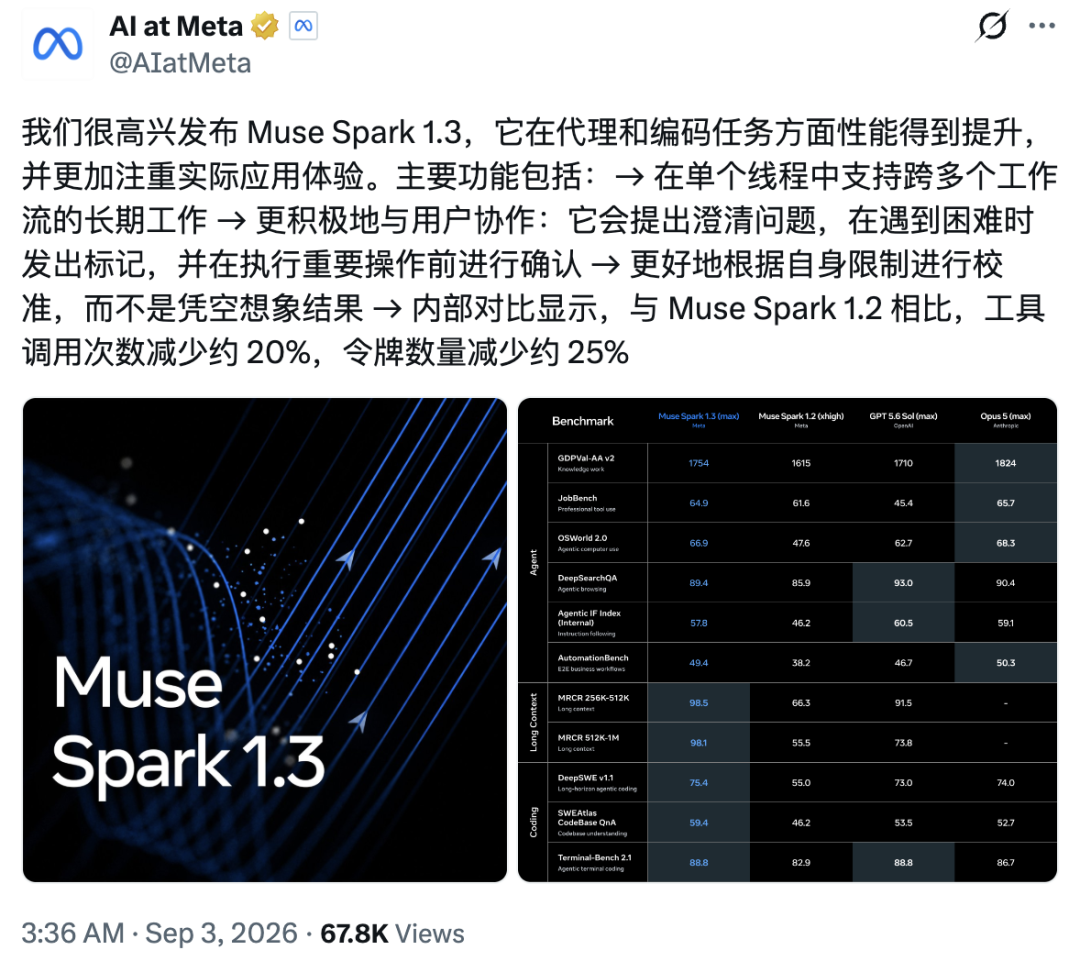
What's even more interesting is that after Meta AI head Alexandr Wang released the new model, he again made a sarcastic comment, saying: "I don't want to say this, but... who is Gemini?"
Pro faces difficulties, Flash takes center stage
First, let's look at the main character, Gemini 3.8 Flash.
Google has high expectations for it, calling it one of the company's most intelligent reasoning and programming models to date, with a focus on end-to-end autonomous agent workflows and software engineering tasks that require continuous running for extended periods.
According to the officially released Benchmark, Google apparently hopes to drive Flash beyond its inherent positioning as a "cheap, fast model" and further undertake the execution of complex tasks.
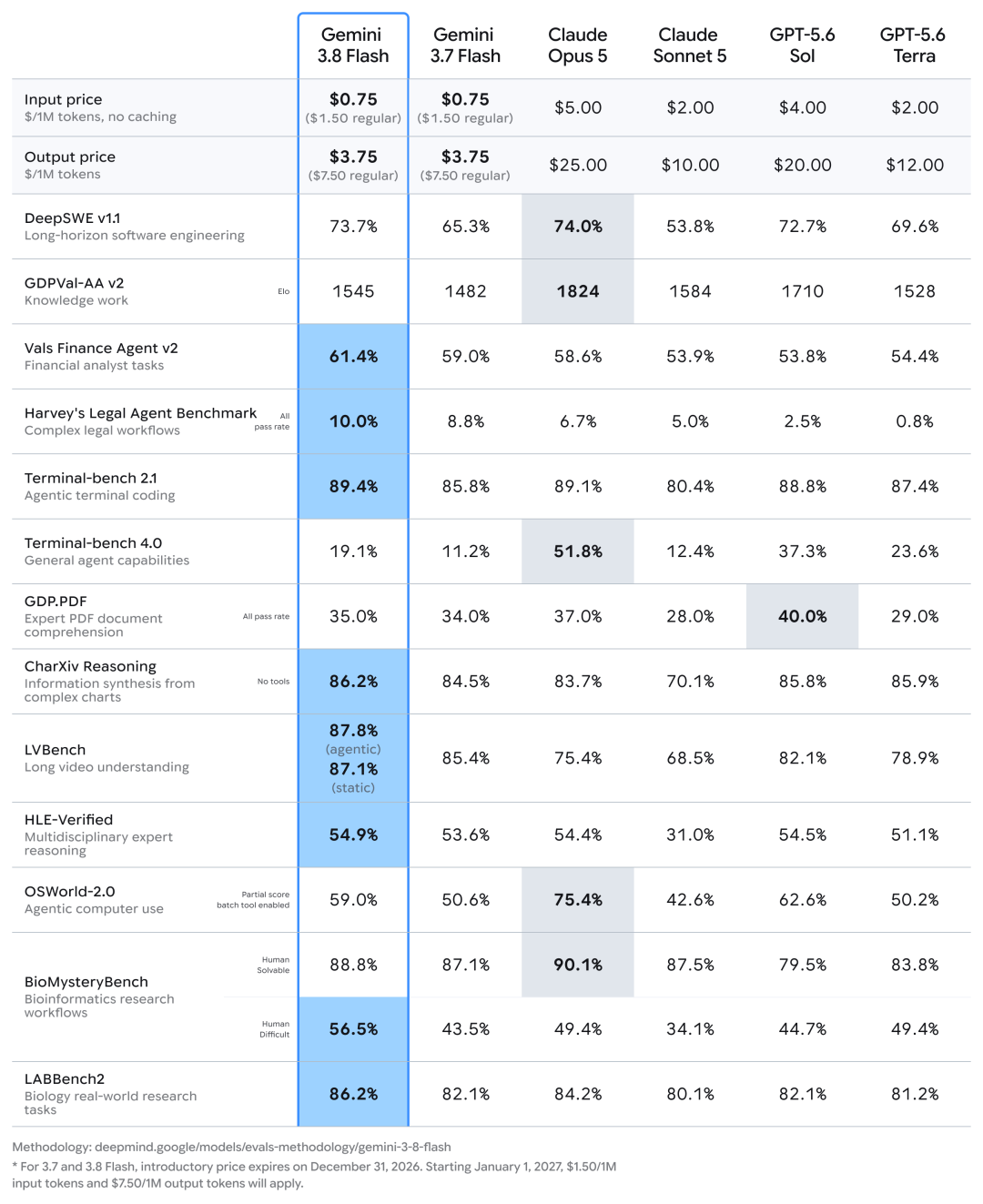
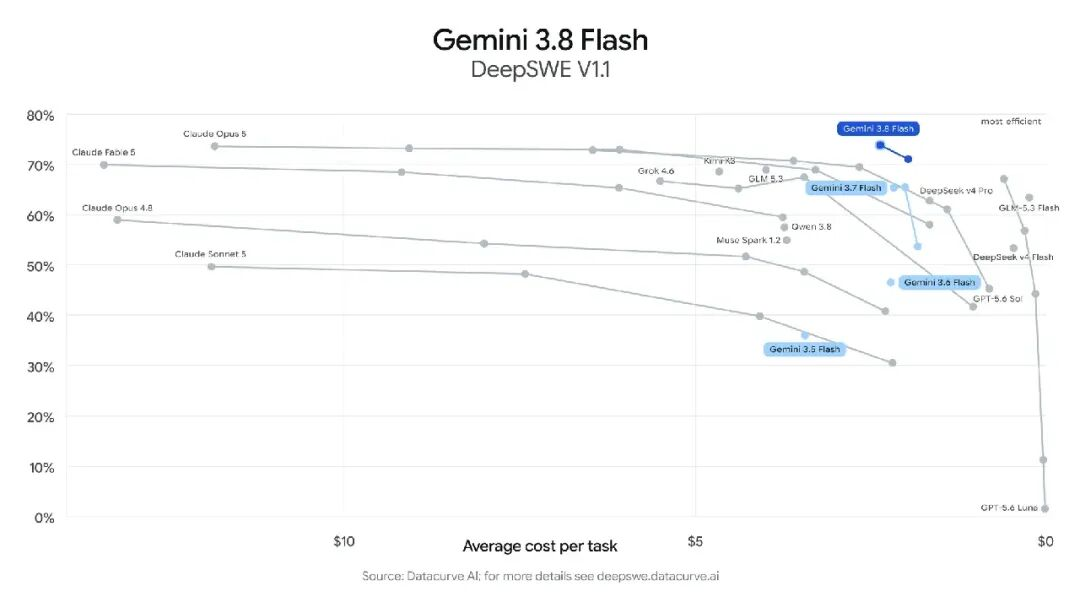
In the DeepSWE v1.1 long-cycle software engineering test, Gemini 3.8 Flash was able to autonomously handle complex end-to-end engineering problems, outperforming many larger state-of-the-art models.
It has also seen significant improvement in professional scenarios such as finance and law.
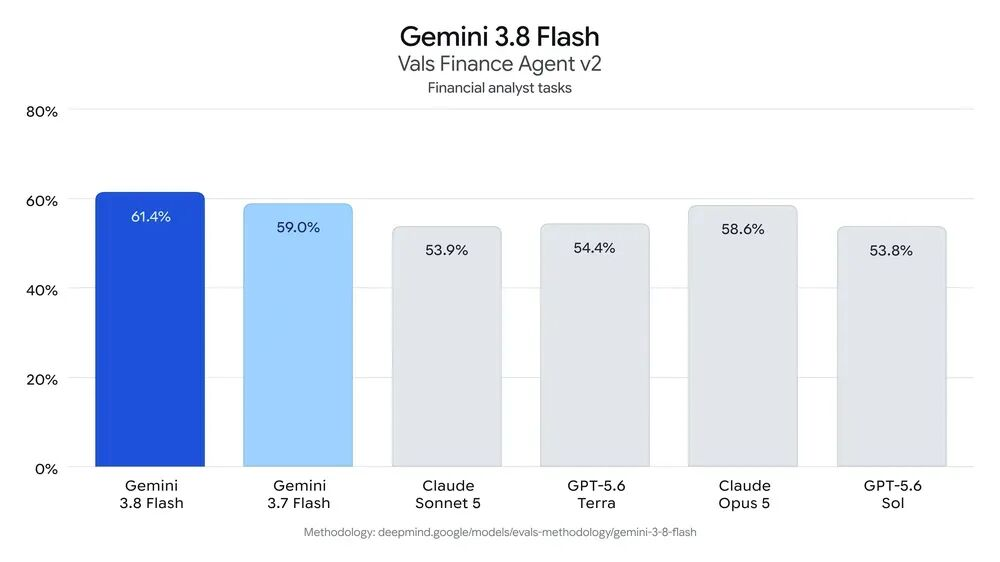
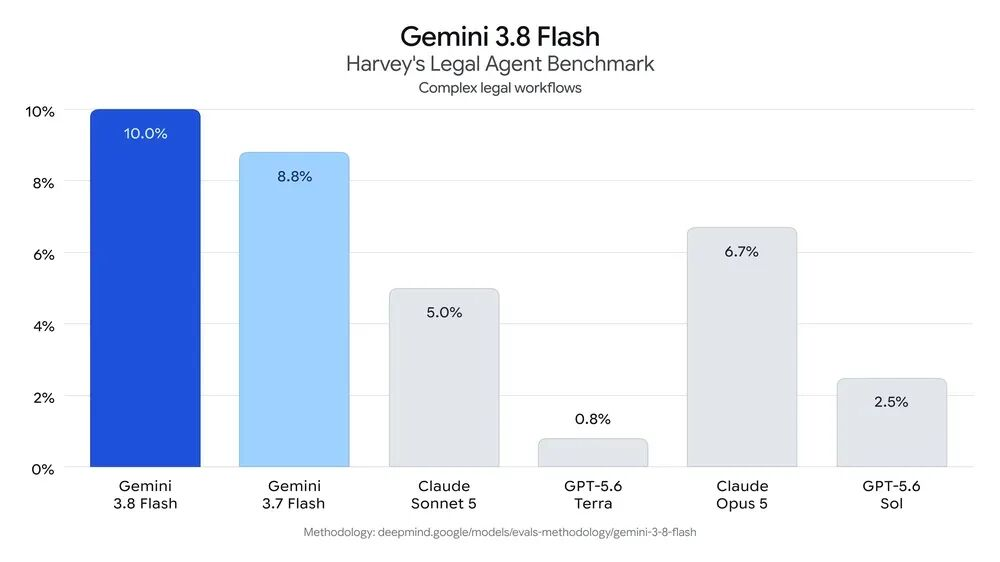
In tests such as Vals Finance Agent V2 and Harvey's Legal Agent Benchmark, 3.8 Flash significantly outperformed its predecessor, 3.7 Flash. In the HLE-Verified test, which covers STEM, humanities, and professional knowledge, it achieved a score of 54.9%.
As for how the model achieves this, it's necessary to mention Agentic loops, which Google has emphasized this time, referring to the model's ability to continuously reason, call tools, check results, and correct plans when completing complex tasks.
In the past, many coding models were more like one-time answer providers, generating a piece of code and then requiring users to intervene to determine whether it could run successfully and where modifications were needed.
The current 3.8 Flash is increasingly like a "diligent saint" willing to get the job done.
When faced with complex tasks, it can proactively increase the number of reasoning steps, continuously call different tools, reevaluate plans based on execution results, and continue to modify them after discovering problems.
When users increase the effort level, the model allocates more reasoning and token budget to achieve a higher completion rate for complex tasks; for ordinary tasks, users can lower the effort level to control response speed and usage costs.
The official demo can better illustrate this change.
On Google Antigravity, giving a relatively simple cyclic task instruction can allow Gemini 3.8 Flash to continuously call upon tools to complete a playable 3D wizard obstacle course game, which includes puzzles, environmental narrative, and texture resources generated by Nano Banana.
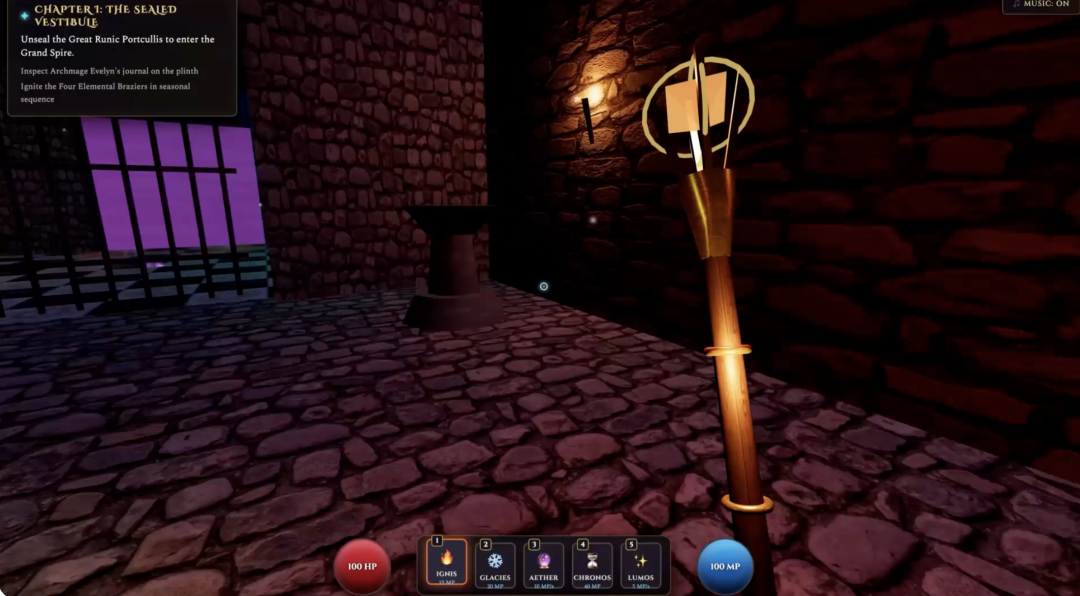
It can even produce a fully playable DOS version of Google Maps, complete with Street View and navigation functions.
However, according to netizens' real-world tests, the pros and cons of the 3.8 Flash have become more pronounced.
The prevailing sentiment is that it is extremely fast and surprisingly cheap, but for now, there is still a distinction between "doing it quickly" and "producing the best final product".
Using the same prompt, Gemini 3.8 Flash and Claude Opus 5 each generated four independent Three.js physical scenes, including a needle popping a balloon, a water balloon falling, a mushroom cloud, and a dynamic atomic model.
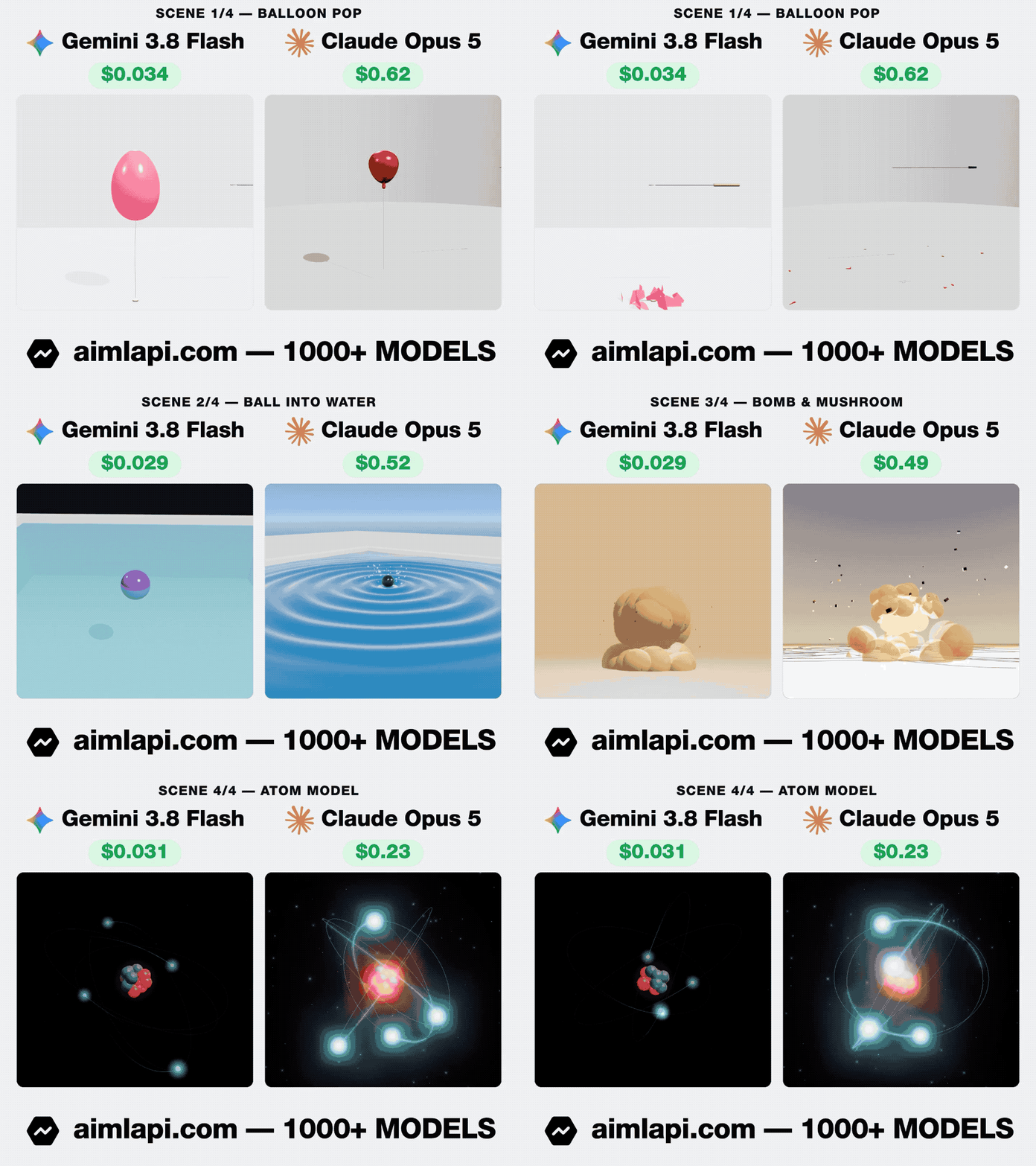
The total cost of Gemini 3.8 Flash was only $0.12, while Claude Opus 5 cost $1.86, a price difference of more than 15 times; meanwhile, Flash completed each scene in less than 70 seconds, while Opus 5 took nearly 5 minutes at its slowest.
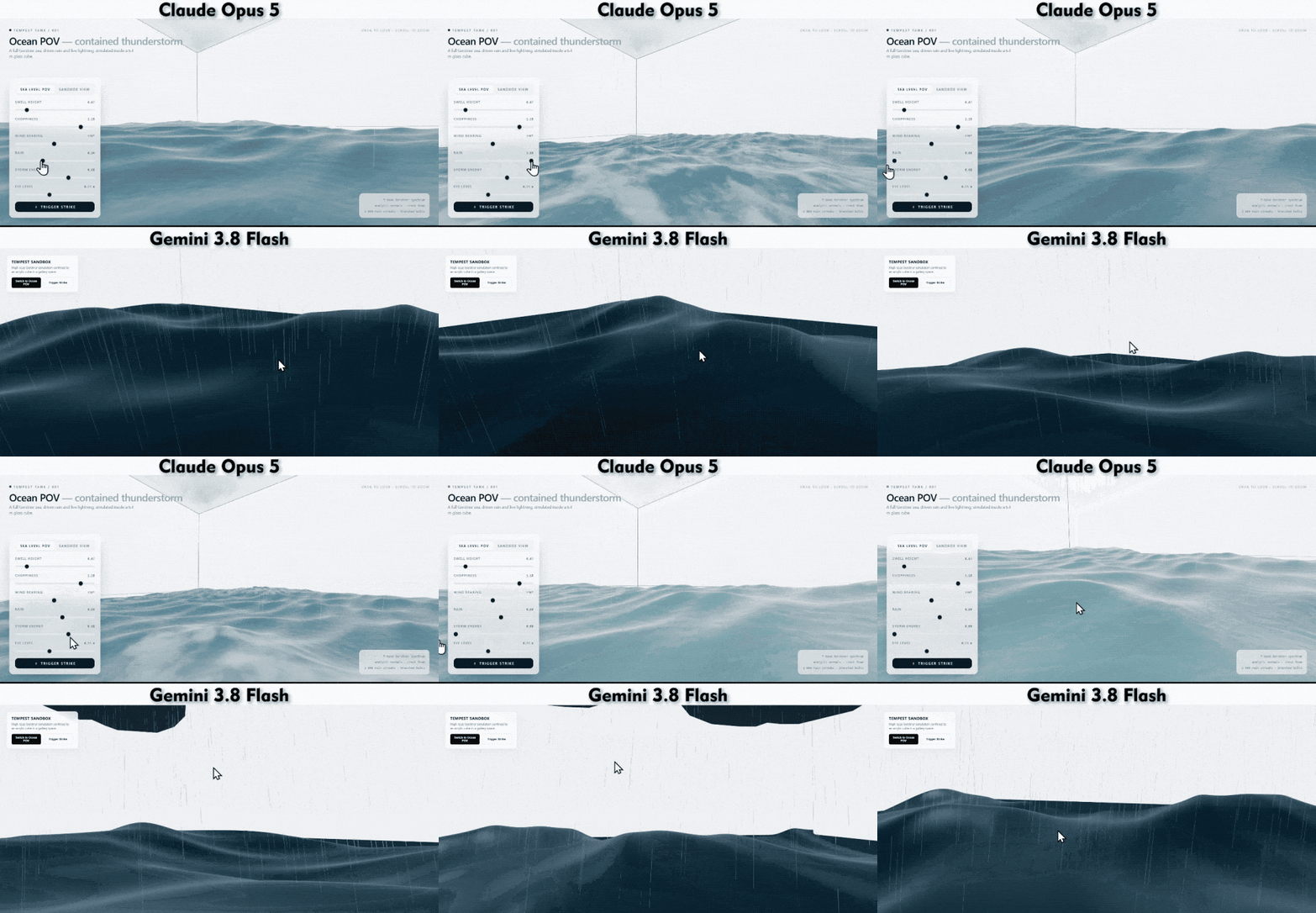
Developer Tim Jayas' results were even more striking, with the same prompt taking Opus 5 a full 24 minutes to process, while Gemini 3.8 Flash completed it in just 37 seconds.
However, another round of testing also exposed another typical aspect of Flash.
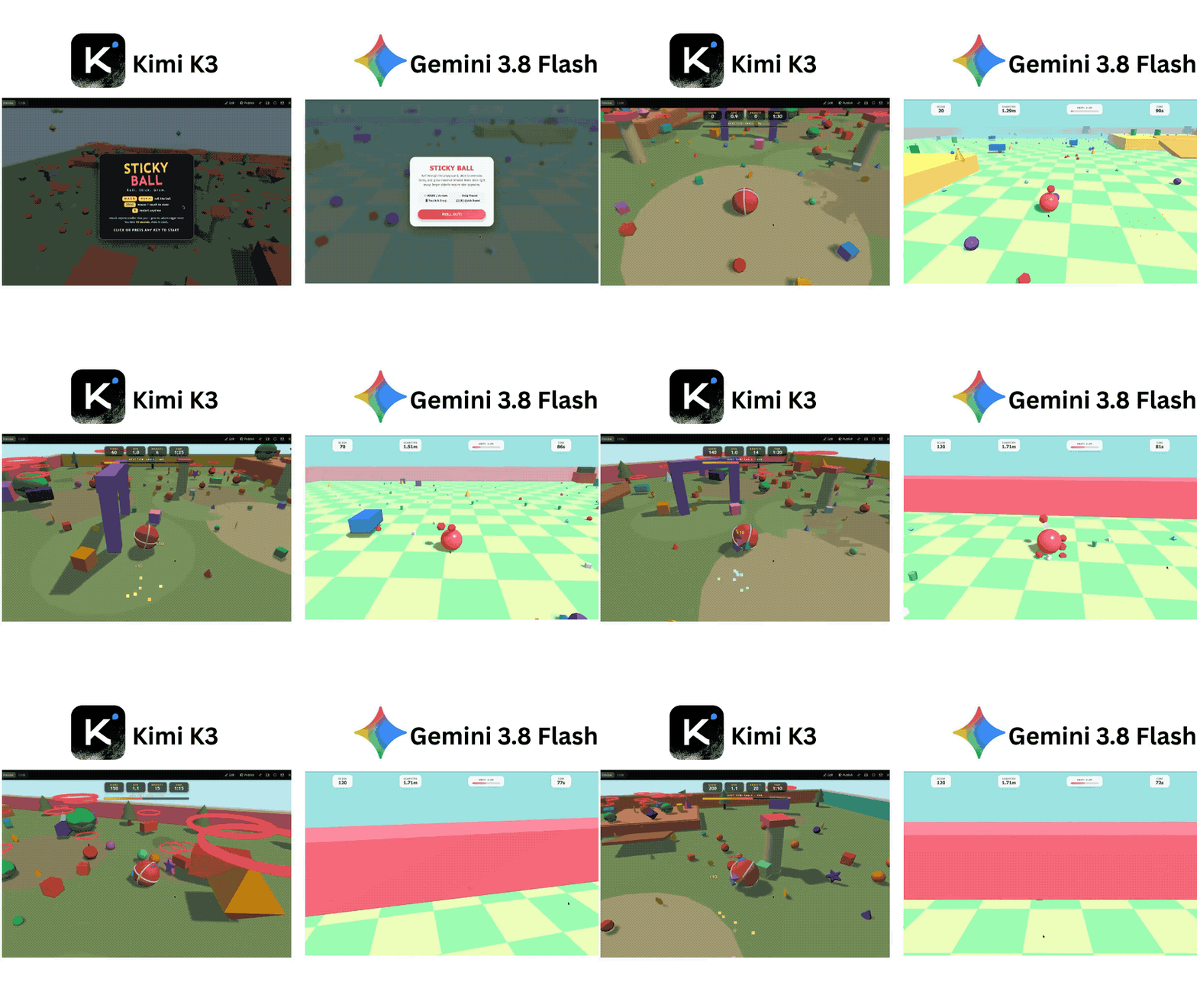
Developer Aditya found that when creating the same Sticky Ball game using Gemini 3.8 Flash and Kimi K3, Flash had a much faster generation speed and consumed significantly fewer Tokens, but the final gaming experience was significantly inferior to K3, with gaps in motion mechanisms, movement performance, and overall game design.
A similar situation also appeared in a high-complexity market scenario test in New York City.
Blogger AI Pulse Daily used the same prompt to test Gemini 3.8 Flash, 3.7 Flash, and Opus 5, asking the models to generate a detailed Three.js New York City market scene.
The 3.8 Flash filled the entire city with only 6 trees, even fewer than the 10 trees in the 3.7 Flash three weeks ago, while Opus 5 managed to fit in 1840 trees.
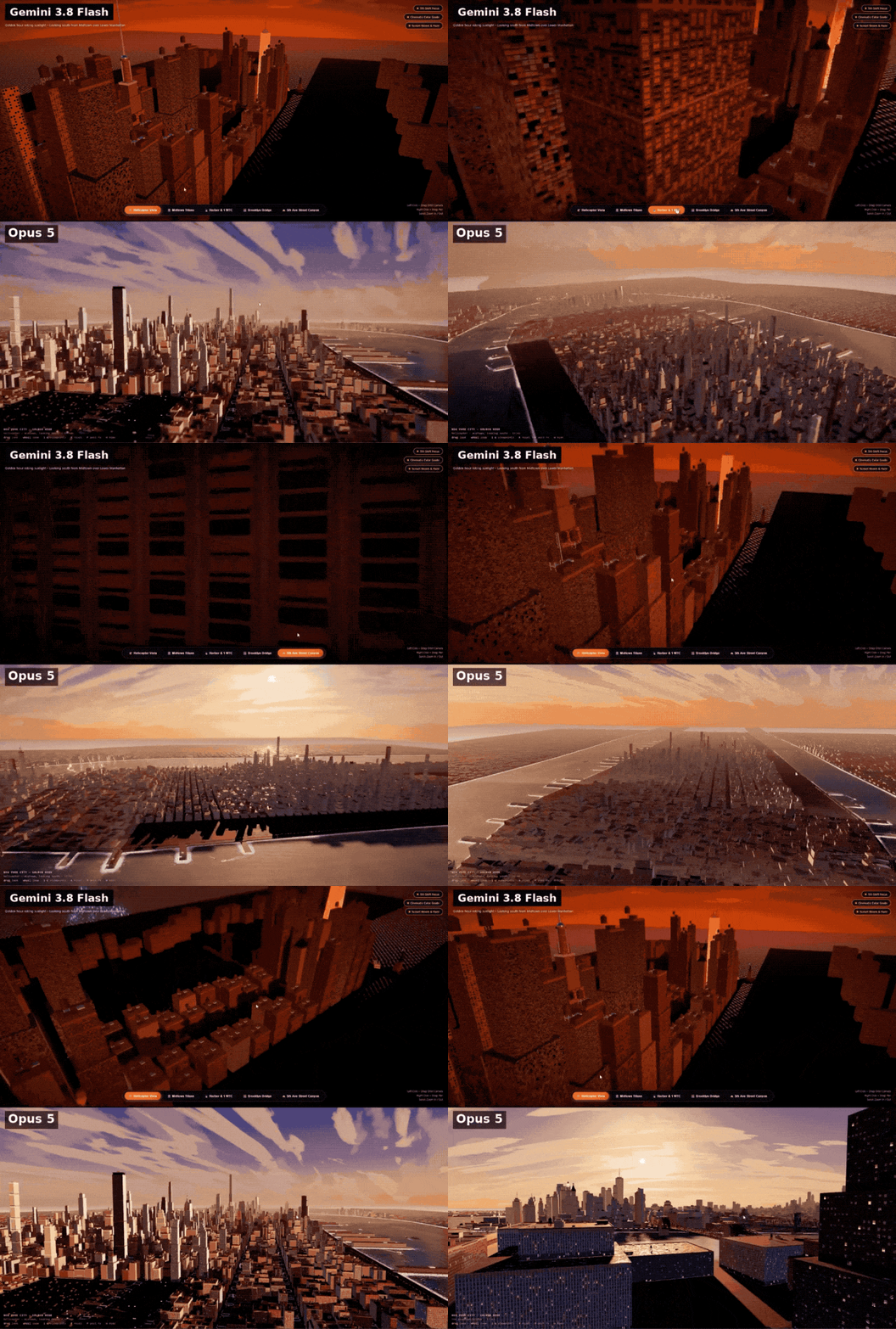
It explicitly skipped the pedestrian crossing stripes, underwater scattering, and chromatic aberration effects requested by users, as well as the 3.8 Flash, but instead proactively added 5 camera presets, 3 post-processing switches, a title card, and a real-time clock, many of which were not even mentioned in user requests.
In addition, in terms of pricing, the input price for Gemini 3.8 Flash remains at $0.75 per million tokens, and the output price is $3.75 per million tokens, consistent with the price reduction of Gemini 3.7 Flash three weeks ago, with the current preferential price to continue until the end of 2026.
For Google, the role of the Pixel 7 Pro's Tensor G2 chip's "Flash" core has become increasingly clear: it is responsible for both cost and speed, and to some extent, it also undertakes complex tasks that were previously handled by flagship models.
Why Does Gemini's New Capability Always Debut on Flash First?
Released alongside Gemini 3.8 Flash is Gemini 3.8 Flash Cyber, specifically designed for training on cybersecurity tasks.
The latter is open to vetted defenders through its new Fairwind program, with capabilities focused on scenarios such as vulnerability discovery, penetration testing, and automatically generating security patches.
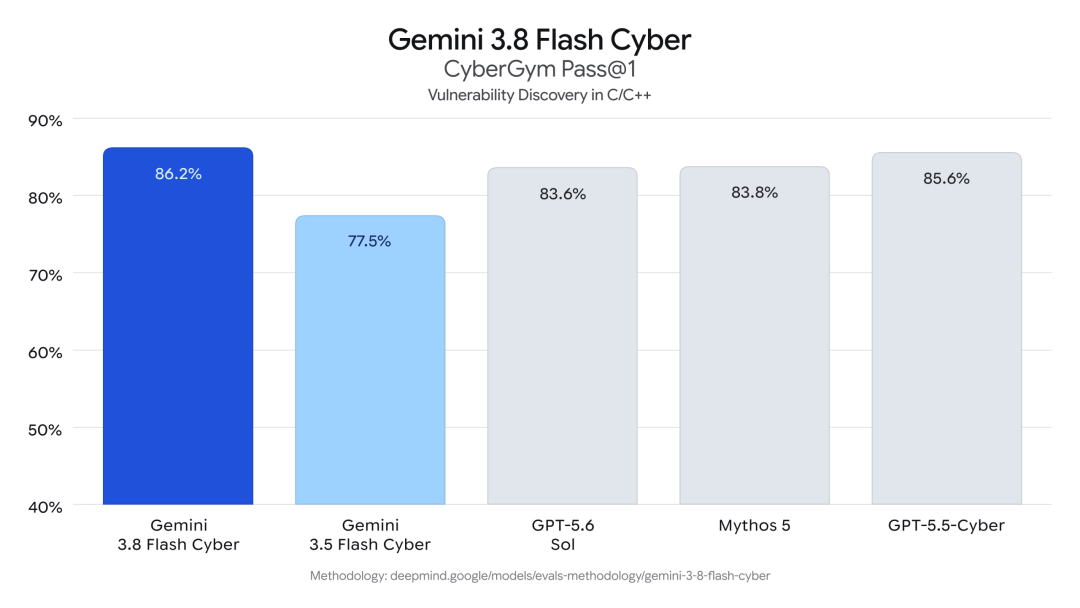
Gemini 3.8 Flash Cyber significantly outperformed its predecessor Gemini 3.5 Flash Cyber in the standard CyberGym vulnerability discovery benchmark, while also surpassing several larger state-of-the-art models.
In a real-code test covering 20 programming languages internally at Google, it found vulnerabilities with a success rate of over 70%.
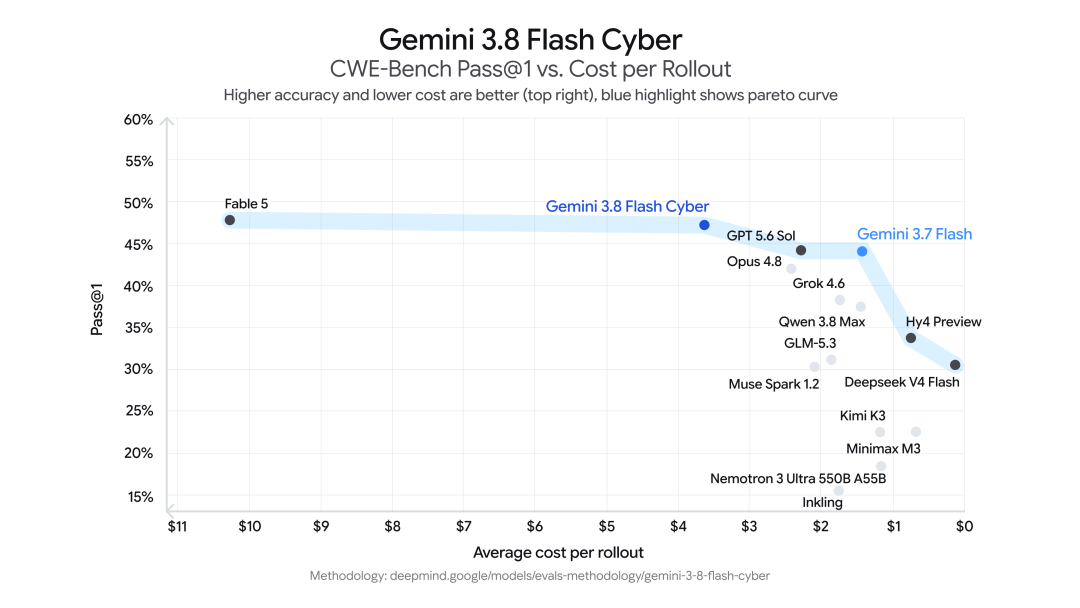
In terms of automatic vulnerability repair, Gemini 3.8 Flash Cyber achieved 47.2% Pass@1 on CWE-Bench, which is very close to the 47.8% achieved by the best-performing state-of-the-art model, while the model's running cost is significantly lower.
Chrome's security team has released internal results showing that Gemini 3.8 Flash Cyber can generate a correct vulnerability patch quantity that is 2.6 times that of some large commercial models.
Security company Wiz's tests also showed that after using the model for penetration testing, the vulnerability recall rate increased by approximately 7.5% to 9.7%, while costs decreased by about 2.3 to 5.2 times.
Google Cloud's vulnerability research team also disclosed a more extreme case, in which they used Gemini 3.8 Flash Cyber to discover a severe foundational vulnerability in under two hours, a process that would typically take months using traditional research methods.
Notably, prior to the release of the Gemini 3.8 Flash series models, The Wall Street Journal had revealed that the internal code name for Gemini 3.8 Flash at Google was Skimaki.
Employees once benchmarked it against Anthropic's Claude Opus in the internal coding tool Jetski, and a significant number of Google engineers actually preferred their own new model.
Code capabilities have once again become a key battleground for Google, with Flash currently playing a rather important role.
In contrast, Google's progress on its flagship models over the past year has been marked by significant setbacks.
Gemini 3.0 briefly took the lead after its release in November last year, but OpenAI and Anthropic's new models have continued to advance, and Google's advantage did not last long.
Key technical figures such as Noam Shazeer and Jeff Dean also left the company in succession this summer.
The originally planned new version of Gemini Pro has also undergone adjustments.
Pichai had revealed in May that a new Pro version might arrive in the following month, but Google's internally prepared Gemini 3.5 Pro plan was ultimately canceled, with one major reason being that its capability upgrades were not significant enough compared to the Flash series.
Further away, Gemini 4 has completed part of its pre-training but is still in the post-training phase, and is still some distance from its official release.
Google subsequently adjusted DeepMind's management team, with Koray Kavukcuoglu taking on more management responsibilities. The new management team has made one clear requirement to the team: to further accelerate the development and release of models.
The elder brother is struggling to deliver, so it's up to the younger brother Flash to take the lead.
However, the recent near-frantic update frequency of Flash actually corresponds to a change that is taking place in the development approach of large models.
Relying solely on expanding model size to achieve capability growth has yielded diminishing returns, with marginal benefits no longer as pronounced as in previous years; meanwhile, the importance of reinforcement learning, agent training, tool invocation, and other post-training technologies continues to rise.
The Wall Street Journal mentioned a crucial detail: Flash is relatively small in scale, so the computing power required to modify and retrain the model is lower, allowing multiple teams within Google to try out different approaches simultaneously.
After switching to the large-scale Pro series, every model adjustment involves more GPUs, longer training times, and cross-team resource coordination, so the cost of post-training experimentation and trial and error is naturally much higher.
Meanwhile, Google has significantly increased its investment in reinforcement learning and fine-tuning this year, and also recruited Barret Zoph, the head of fine-tuning at OpenAI, as a vice president of research.
After the change in resource allocation, one result has gradually become apparent: new Agent training methods, RL strategies, and tool invocation mechanisms are more likely to be experimented with on Flash first, and then quickly enter the official version after being verified as effective.
In terms of product development approach, the current Flash has somewhat of a Gemini "high-speed development branch" connotation.
The model is smaller, with lower modification costs, so Google can have multiple teams try out different Agent training, RL, and tool invocation schemes simultaneously, completing a new version iteration in about three weeks.
The Pro series has taken on tasks that are increasingly close to those of a true flagship version, with upgrades only being made when the increase in capabilities is substantial enough to justify the massive investment of computing power and internal resources.
In the end, Google may not have initially planned for Flash to take the lead, but coincidentally, this situation coincided with a shift in the focus of large model development.
As reinforcement learning, agent training, and tool calling grow in importance, Flash—with its smaller model size and lower experimentation costs—is proving better suited than Pro for rapid post-training in the short term.
Thus, in the event of a flagship model being delayed, Google has instead gained an early advantage in the more important capabilities of the Flash model in the second half: namely, faster training, faster verification, and faster delivery of new post-training results to users.
Of course, all of this is predicated on Gemini 4 ultimately living up to expectations and not disappointing again.