
Many have experienced dull, anxious moments. Something is brewing in the tense atmosphere, but the direction is unclear; a turning point seems imminent yet never arrives, purely draining morale.
That is the market today. The same may be true for a giant like the Chinese economy.
The pulse of the AI technology revolution has reached a plateau. It has been exactly three years since the GPT explosion.
Technology's standout performance contrasts sharply with the broad weakness in livelihood-related industries. And this lone bright spot appears to be at a critical juncture, facing a choice between up and down.
A comprehensive, systematic look at economic data reveals just how unstable the lower leg of the K-shaped recovery is.
While firmly trusting official data, we can discern clues from trends in data measured on different bases.
Internal and External Divergence
GDP is released quarterly, but consumption, investment, public spending and net exports have proxy indicators published monthly. We use monthly data to fit.
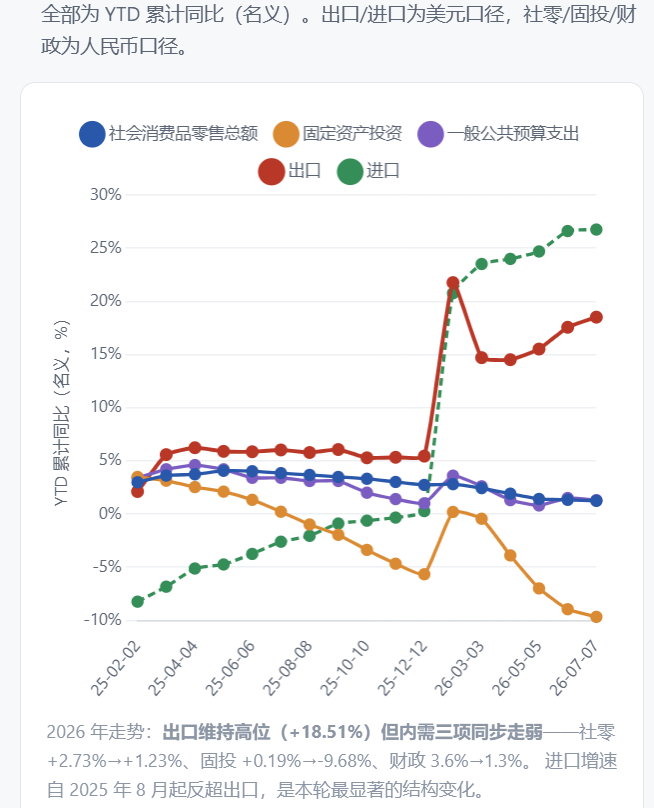
The divergence in the chart above is stark. Fixed-asset investment continues to shrink; the tech investment boom cannot offset the weakness in property and general manufacturing. Retail sales growth keeps softening, like public spending, barely holding at the edge of positive territory.
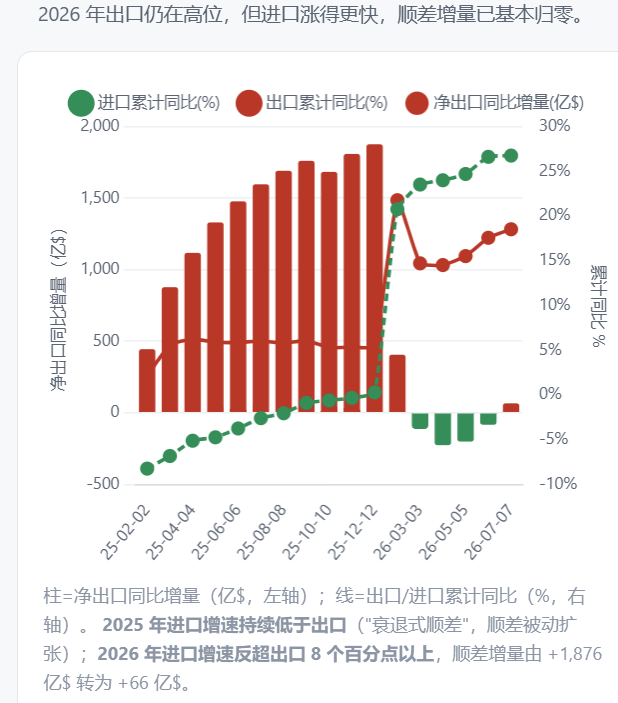
Only imports and exports both grew strongly. Imports, which had a lower base and were long weighed down by weak domestic demand, have even outpaced exports in cumulative growth this year.
But this is largely driven by imports of semiconductor raw materials, electronics, and crude oil — including stockpiling to hedge against price increases, heavy input purchases to support better exports, and growth in strategic resources, especially gold. This is fully consistent with micro-level experience: many optical module companies tell the market that their revenue growth is often constrained by upstream material shortages, much of which must be imported. Semiconductor firms are also accelerating input purchases and production to support robust global demand for AI hardware.
The chart below makes it clear: imports of integrated circuits stand out conspicuously.
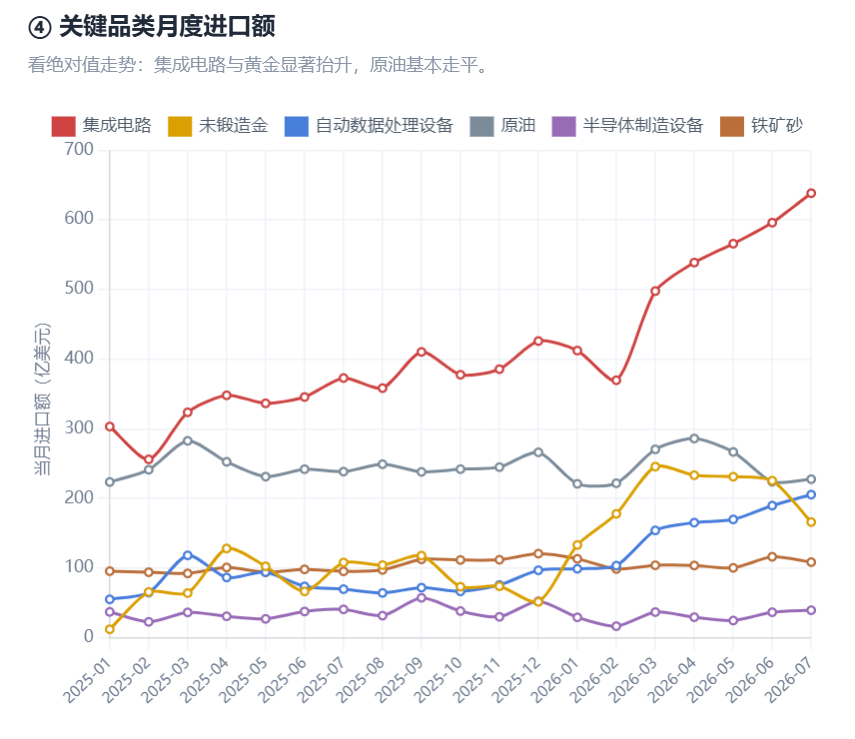
These are related to domestic demand, but not significantly.
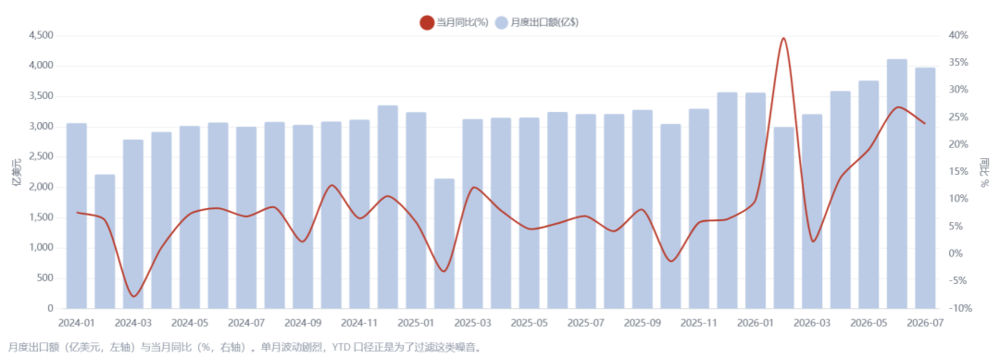
For short-term growth, imports growing faster than exports will further push net exports' contribution to growth into negative territory. But that is actually a minor issue. The more important point is that the economy's reliance on external demand is rising. The active part of the economy is increasingly resonating with the global AI cycle.
Divergence from Official Data
Comparing our fitted GDP growth with official data, the gap represented by the gray bars is widening. Note that we use nominal growth rates and official deflators, so the measures are comparable.
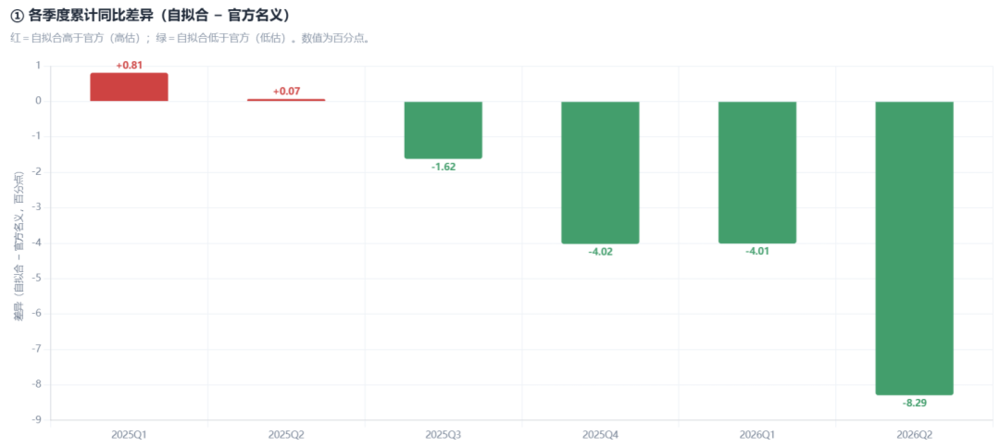
What might explain the discrepancy?
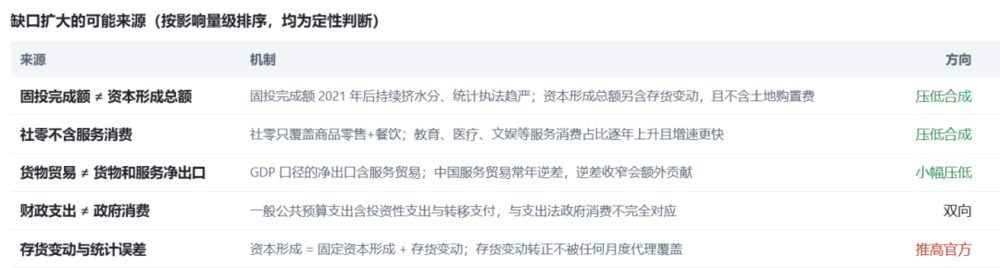
We trust the data's reliability. That leaves a few possible explanations:
Official data incorporate inventories, a major omission. Inventories have built rapidly over the past two years, reflecting both unsold goods and stockpiling of materials for high-growth industries.
Monthly retail sales data exclude services, the driver of domestic demand growth and the new engine of the old-to-new economy transition. The data support this. After years of e-commerce and discounting, demand for physical goods has plateaued, and marginal spending is shifting toward services. It's an inevitable step as the economy moves up a level.
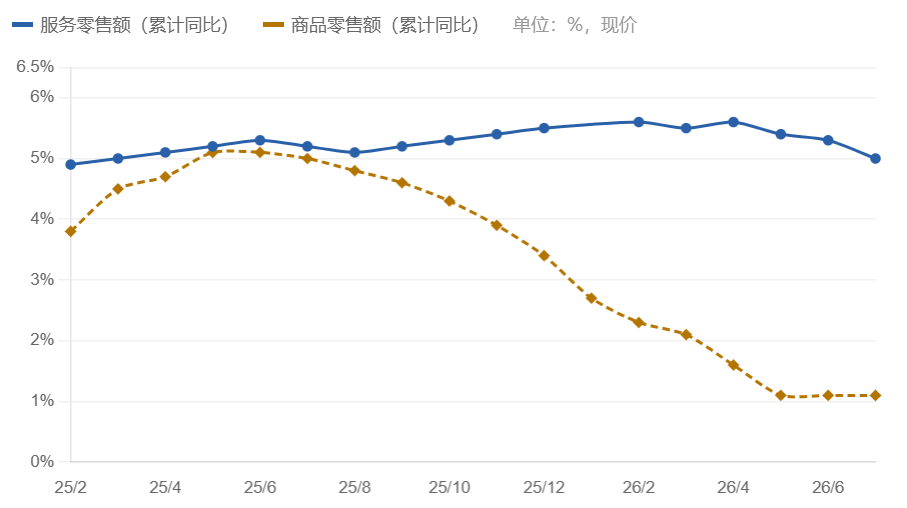
On the official measure, net exports' contribution to GDP growth is also turning negative, consistent with the model.
How Much Does Export Growth Depend on the AI Cycle?
China's massive export growth has made it the largest exporter in human history, surpassing Japan, the United States, and the British Empire at its peak.
Here's a breakdown of incremental export destinations this year. After ASEAN, Hong Kong ranks second. But Hong Kong can't absorb such volumes; it's a transit point. ASEAN may take some low- and mid-end manufacturing exports, but not this year's increment. The final destination of the transit point—the ultimate source of incremental demand—which country is still investing and buying aggressively? Not hard to guess.
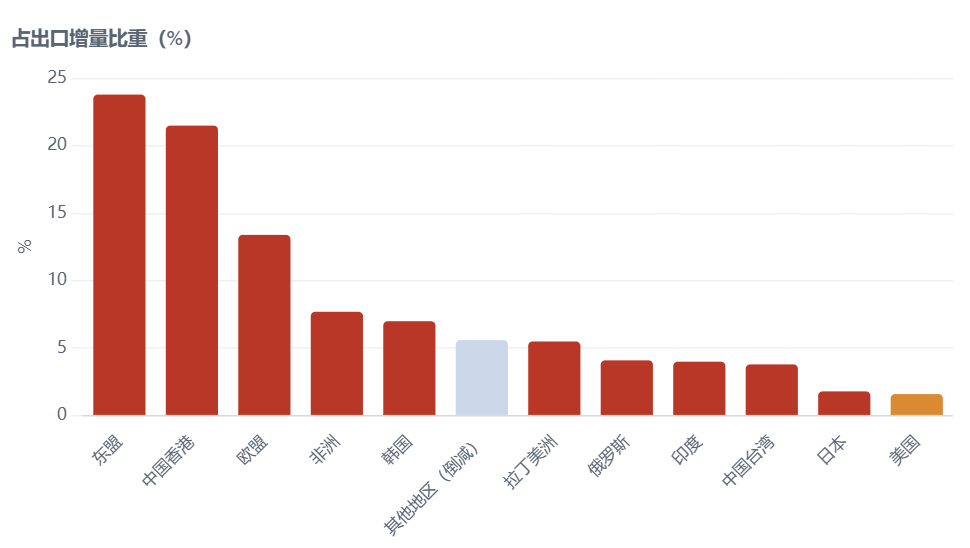
The paradox is that the key source of demand is also the one trying to contain China. To make money, China scrambles to circumvent barriers to sell there. Demand is external, not domestic, and rests on an unreliable external pillar—a shaky foundation.
That's the market. What if the same applies to the economy?
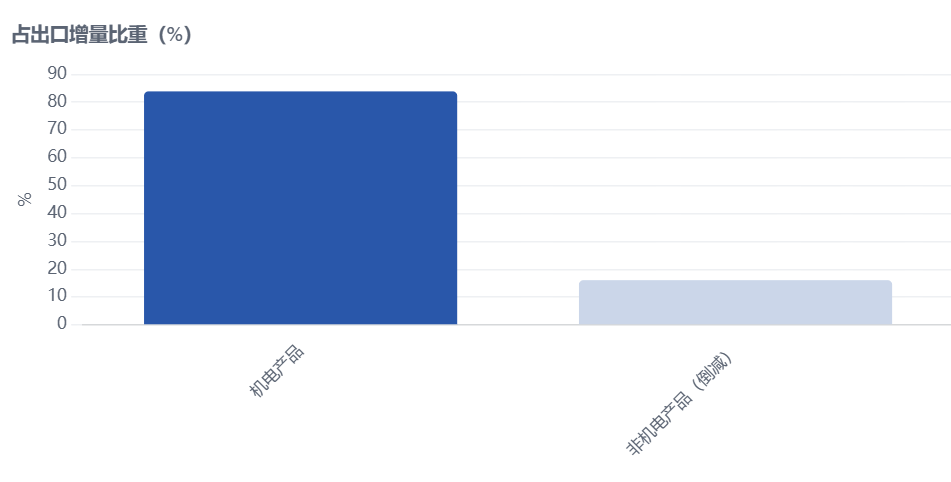
In China's export growth this year, the incremental split between electromechanical and non-electromechanical products looks like this.
Within the machinery and electronics sector, the breakdown is as follows:
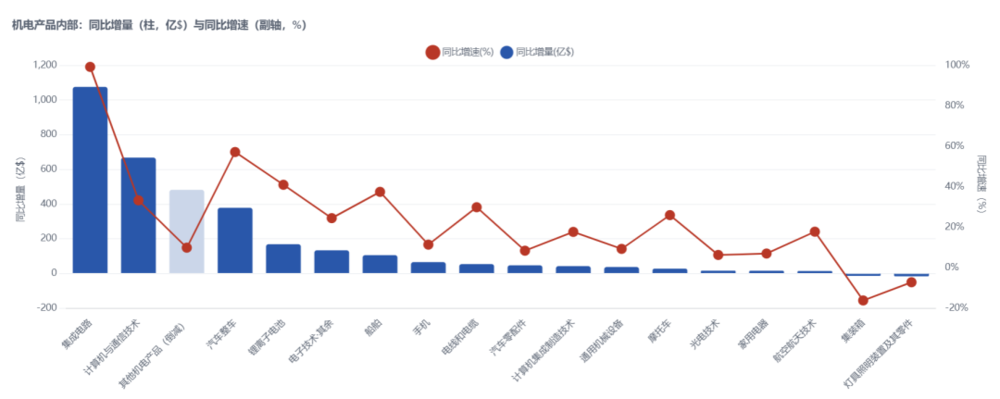
The two largest growth engines were integrated circuits and computer and communication products.
Of course, the benefit of riding this AI demand wave and selling abroad is that the export price index has finally rebounded with the price surge. It's no longer a case of losing money for the sake of attention.
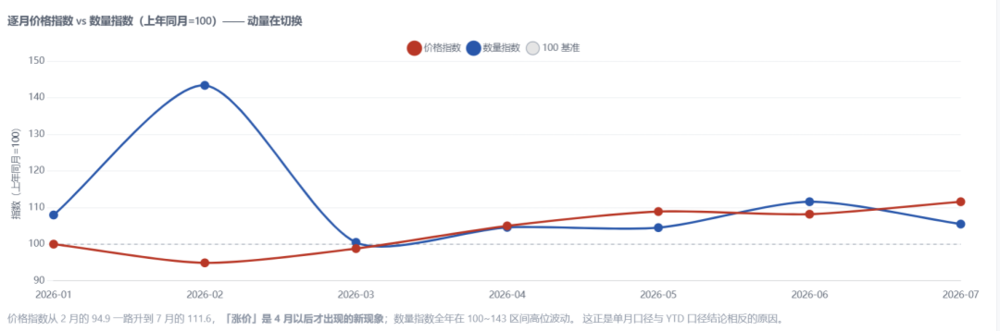
So China's manufacturing is indeed the world's best at capturing demand. But the economy's growth has narrowed to a few focal points, and those focal points are tied to overseas markets at both ends.
We may joke that South Korean livelihoods hang on a highly leveraged stock market and American pensions on the Fed's next rate decision, but we should not forget how much current economic growth depends on external demand for a specific industry.
(End of article)