
It's been over two months since I moved from Europe to New York, and I've been wanting to write something, but every day is busy with work, and in my free time, I've been absorbing new things, so I've written down many ideas but haven't been able to finish drafting them. Today, I'm forcing myself to publish some of my thoughts. It's already September, and it's been three years since I left my job back home and started anew. I suppose this can serve as a commemoration of sorts.
Over the past three years, I have lived in Zurich, Switzerland, Cologne, Germany, and Brussels, Belgium, for a period of time, in addition to a stint in Vienna, Austria, during my university days, giving me a wealth of firsthand experiences and impressions of Europe.
Similarly, I had previously visited the US as a tourist, and in previous articles, "The Rise of the East and the Decline of the West - My Observations of America" and "My Ten Takeaways from CES", I briefly shared my experiences.
It truly feels like being a "New Yorker" has begun, in both work and life, and some realizations have become more profound, so for now, I'll just write whatever comes to mind, discussing some of the more obvious contrasts and feelings.
This is just my own observation and thinking, which has strong limitations, so if there's anything incorrect, readers are welcome to point it out, and we can learn together.
New York is indeed a big city
Big in every sense—space, noise, margin for error, all of it. Walking through New York, every day I feel like I've just arrived in the big city.
When it comes to refrigerators, in Europe, for single-person households, many homes are equipped with refrigerators that are about half a person's height, around 40L, and the freezer is about the size of a shoebox. Washing machines are also very small, and many rooms don't even have one, requiring residents to go to a laundry room on the street. In New York, everything is big - large refrigerators, large washing machines, large beds, and skyscrapers. For example, if you want to buy an extra-large refrigerator in Europe, that type of product is even called an "American fridge". I tried searching on Reddit and found that others have asked the same question:
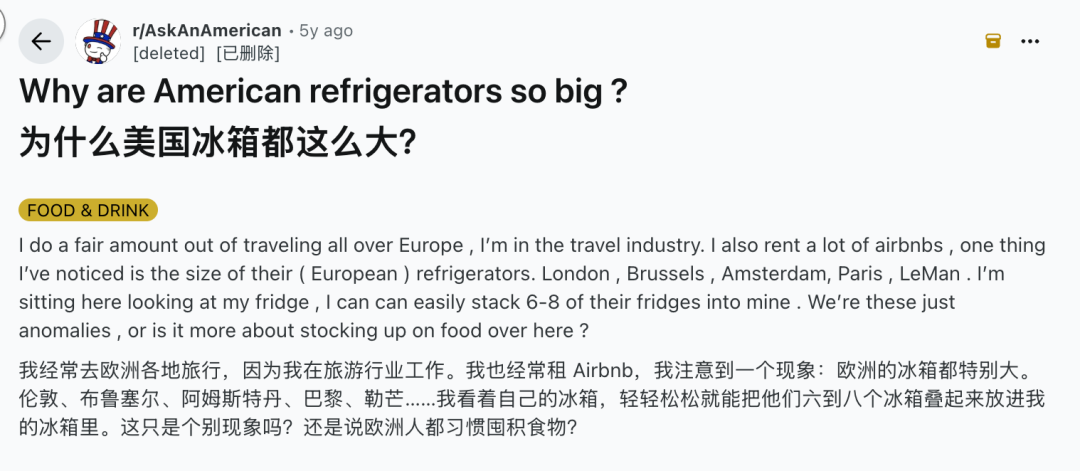
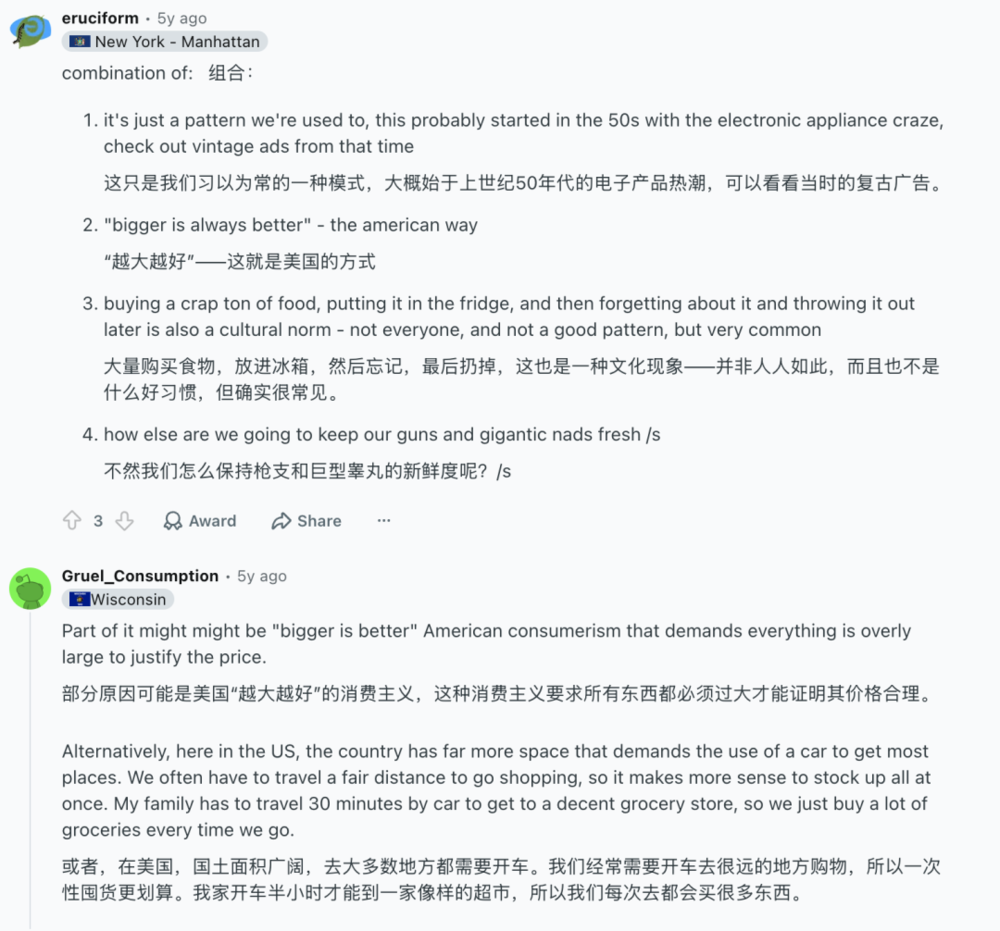
This translation is machine-generated for the convenience of readers and may contain some inaccuracies, so readers proficient in English are advised to refer to the original text.
One answer in the discussion noted that "bigger is always better"—a cultural crystallization formed during the 1950s-60s, when postwar America experienced large-scale industrialization, rampant consumerism, and a booming automotive industry. This directly shaped American aesthetics and values. Cars of that era, for instance, grew ever larger in displacement and size (a familiar pattern). It aligned perfectly with capitalism's pursuit of economies of scale and the advertising psychology of encouraging consumers to buy bigger-sized products.
Another factor is that the post-war suburbanization of urban planning and the national highway system in the US have resulted in a business model that is completely different from Europe's, typifying spatial capitalism, which maximizes the compression of trivial time by leveraging the abundance of land and the scale of industrialized procurement. In Europe, I may need to go to the supermarket every day, on the one hand, because it's convenient, just around the corner from my home, and my fridge is essentially next door to the supermarket. On the other hand, the work pace is not hectic, and it's very regular, so buying groceries and cooking after work can be a form of leisure. In New York, however, affordable supermarkets like Costco and Walmart often require a drive, and with a faster work pace, there's no inclination to go to the supermarket every day, so the time-saving and labor-saving approach is to make a large purchase once a week and stock up the fridge.
Starting from 2022, I developed a hoarding habit, and I feel anxious when my food supplies at home are not abundant, so I still buy and hoard frequently, which is a kind of greed. When I was in Belgium and Germany, my refrigerator was about 40L, but now it's 450L. The food in the refrigerator is enough for me to eat for about two weeks, and it's still half empty. This contrast is more intuitive (of course, refrigerators in China are generally very large now, but here I'm comparing with Europe and the US).
Corresponding to this is cheaper energy
Living in New Jersey, just across from Manhattan, and basically working from home, in a two-bedroom apartment of about 70 square meters, with the air conditioner on every day, using water and electricity normally, and using gas for three meals a day, last month's bill was $100 (approximately 700 yuan), which is relatively high compared to the rest of the United States.
In Europe, specifically Belgium, the monthly cost of water, electricity, and gas is around 80 euros, approximately 640 yuan, without using air conditioning. In comparison, the average electricity price in the US is lower, at around 18.5 cents per kilowatt-hour, while Germany and Belgium have prices that are more than twice that of the US.
During the World Cup, it just so happened that the temperature in Europe was scorching, and many Europeans were overwhelmed by the heat. Those who came to New York were even more overwhelmed - how could it be that air conditioning was everywhere in New York, and all the indoor air conditioning was freezing people to death.
It's quite ironic that when I worked in Germany, our office building was specifically designed to be energy-efficient, and there was a display screen in the lobby that showed how much carbon dioxide the building had saved for the Earth every day. My colleague's parents, who are geologists from the Netherlands, have always refused to use AI, because they believe that every time they ask AI a question, the computing power consumed will accelerate carbon emissions and have a negative impact on the environment.
After arriving in New York, every time I shiver in the office due to the air conditioning, I think of the elderly couple and can empathize with why Europeans might dislike Americans.
But on the other hand, who made you shut down your own nuclear power plants and thermal power plants?
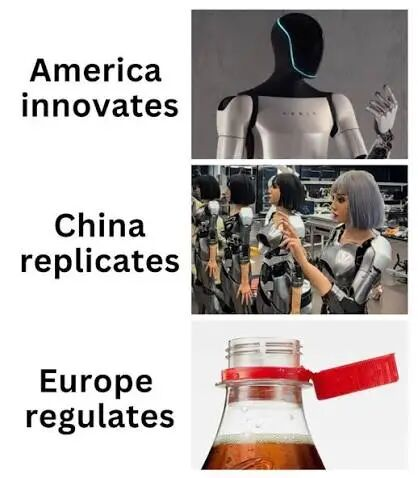
(Meme: The Three Giants of the AI Era - The US Innovates, China Copies, and Europe Regulates)
Commodity prices are cheaper than in Europe
This statement may sound unbelievable to many people and goes against their intuition, leaving them thinking "no way, that's impossible."
However, after coming to New York and keeping detailed accounts, I found that the cost of living is similar to that in Europe, excluding rent.
In terms of basic living necessities like meat, eggs, and dairy products, it may even be cheaper than in Europe.
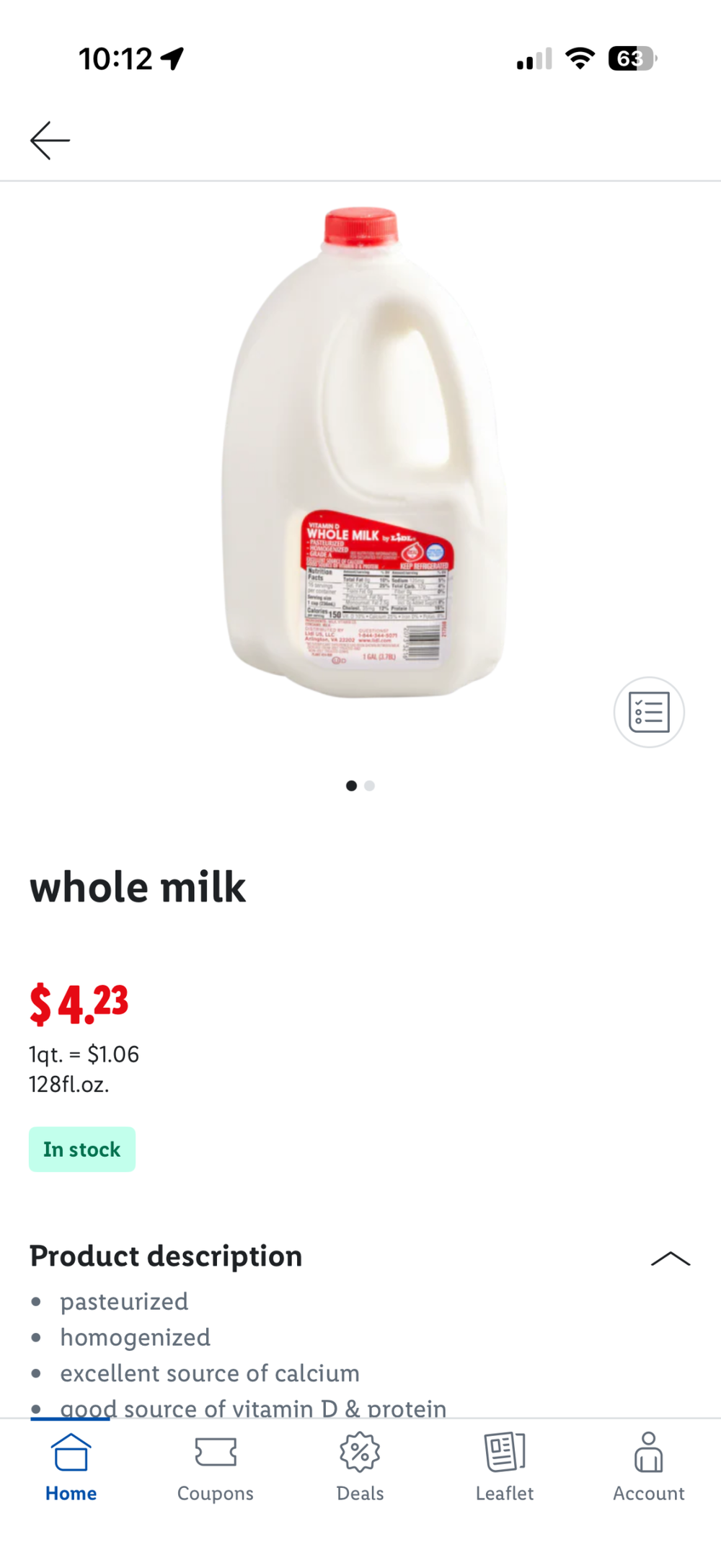
(Lidl's most basic whole milk in the US, 1Qt ≈ 0.946 liters)
For instance, a quart of milk costs around $1.06 (approximately 7 yuan, a little over 7 yuan but less than 8 yuan), while in Europe it's about 1 euro per liter, which is the most basic standard for evaluating milk. Eggs are even cheaper. When I was in the US last year, it was during the avian flu outbreak, and domestic social media were enthusiastically claiming that Americans couldn't afford eggs. To put it simply, the days of "garlic is expensive and beans are playful" haven't passed yet.
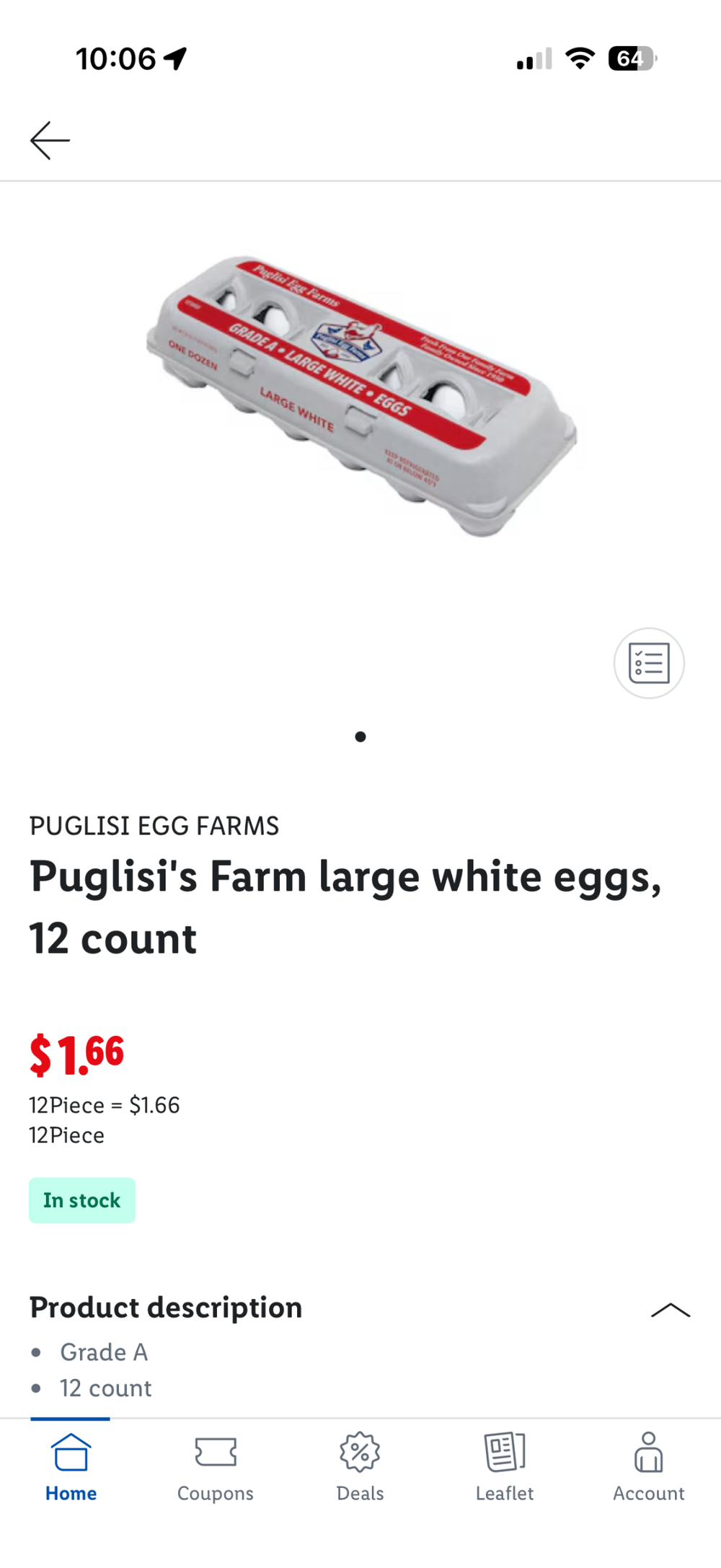
Lidl's most basic eggs in the US, 12 for $1.66, or approximately 10 yuan
The above examples are based on price comparisons with US and German Lidl supermarkets. Relatively speaking, the same supermarket brand's procurement and supply choices for the same category of goods follow a set logic, making it possible to compare prices as objectively as possible.
So, the real difference lies in the rent.
Another fact is that Americans' average salaries are higher than those of Europeans. For example, the actual take-home median salary for a single young person in Germany is around 34,000 euros (approximately 265,000 yuan) per year, while the national average in the US is $50,000 (336,000 yuan) per year, with the figure being even higher in the New York area.
High salaries come with long working hours
In the US, people are more overworked, with New York being a prime example. In Europe, there is a clear distinction between work and life, and there is a sense of shame associated with long working hours or overtime, which is a mechanism rooted in the social system and social norms. In the US, working is seen as a given, and not working is considered shameful. In Europe, the legally mandated paid vacation days are around 20 to 24 days, but in reality, it often reaches 28 to 30 days. In the US, vacation days are determined by the employer: sometimes, some companies do not offer any paid vacation days, while larger corporations typically offer around two weeks.
This actually ties back to the Protestant ethic, which I'll explore in greater depth in subsequent articles in this series. Looking purely at wages and cost of living, the threshold for living in Europe is indeed higher. But Europe offers far stronger protections in other areas—healthcare and vacation time, to name a few.
5. Living convenience is higher in the US than in Europe.
The social development model in the US is driven by capital, with every effort made to get you to spend money and consume, and then using the resulting profits to think of ways to further stimulate consumption. Walking on the streets of New York, I can clearly feel that this place is stimulating your desires, with society and the surrounding environment encouraging you to have desires, acknowledge them, and satisfy them, thus forming a cycle, which is the essence of consumerism.
In Europe, where desires are relatively restrained due to cultural traditions, having money is not enough, and making money cannot be the only goal.
These are two completely different sets of value assessment systems, which is why it's understandable that Europeans are not too fond of Americans: on the one hand, Americans appear to be extremely greedy, with their desires openly on display, while Europeans are relatively restrained; on the other hand, the American way of life has shaped the consumption landscape and imagination in modern society, influencing every aspect of the world and becoming the mainstream, which makes Europeans feel that the world has gone astray.

(Meme: Comparing 30-year-old men in Europe and the US who don't own cars, and going out with girls)
In a place like New York, the level of convenience in daily life is extremely high.
For instance, if I want to drink a cup of milk tea in New York, I can choose from over 50 different flavors and brands in Flushing, which is even more diverse than what I can find in Beijing. Meanwhile, in Europe, opening a CoCo store is an occasion worth celebrating for local Chinese students.
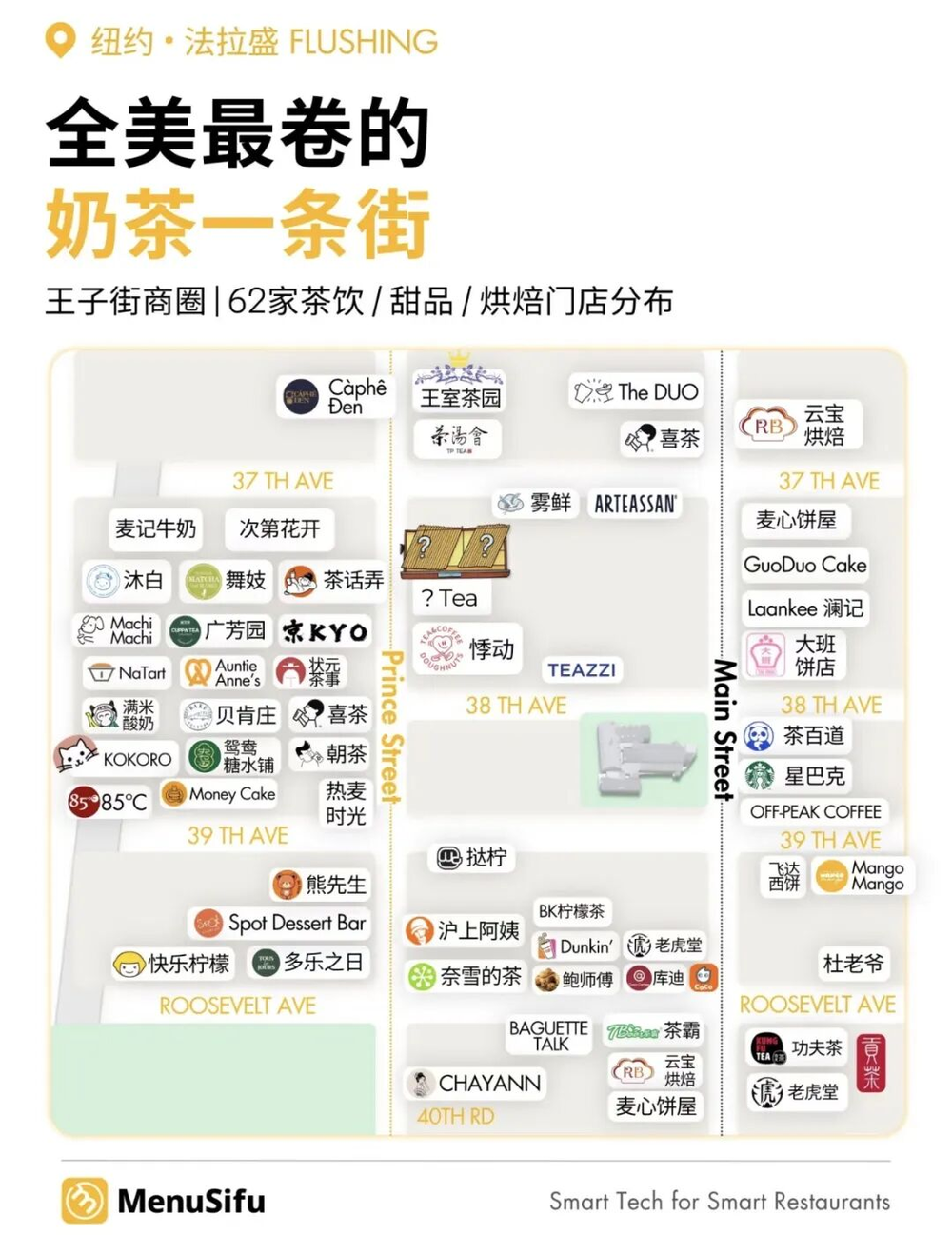
The Frightening Purchasing Power of Flushing: 62 Tea Drink Shops Within 500 Meters, Source: @MenuSifu Data
6. Customer service is highly effective.
One of the things I like most about being here is making customer service calls. When I was in Europe, the language barrier made it difficult to make calls, but in the US, calling customer service can resolve many issues, such as setting up water, electricity, and energy services, handling bills, internet, bank accounts, and bank cards.
Calling customer service to chat can actually be a good way to practice spoken language skills, and more importantly, it allows you to clearly feel that frontline customer service personnel have a lot of operational space and authority in certain aspects. For example, when I was installing broadband, I was originally supposed to pay a $99 installation fee, but after chatting with the customer service representative, the fee was waived. Another example is when I applied for a securities account, which theoretically requires passing some qualification reviews and exams to obtain certain trading permissions, but after chatting with the customer service representative, I was directly given some permissions that I wouldn't have been able to apply for otherwise.
This is also a point I find interesting: in the US, it seems like many things can be negotiated. According to my friend who studied law, jokingly, in this country, you can even negotiate with the judge after committing a crime, and there's nothing that can't be discussed. Although it's not rigorous and is just a joke, it roughly reveals the underlying mechanism.
This is also different from Europe, which will be discussed in detail in subsequent articles. In my understanding, one reason Americans are more outgoing than Europeans is that they must communicate to solve problems, whereas in Europe, many things do not require communication as the laws and rules are already in place, and compliance is key.
The Liberation of the Mind
This is just my personal subjective feeling. Because I don't understand other minor languages, when living in many places in Europe, it is obvious that my own radius and circle of cognition are greatly limited. For example, in Germany, when taking the bus, going to a restaurant to order food, or even going to the supermarket to buy things, I have to hold a translator while learning. I also can't browse bookstores and can't accept direct input on the ideological level. However, in the United States, language is not as big of a barrier, and at least in daily life, the friction cost I feel is not so high.
I can finally climb out of basic survival mode and start to experience life. For example, I can go to the movies now because they won't have German or Dutch dubbing; I can take the subway or bus without constantly staring at my phone to check the stops, and I can understand the meaning of the station names at a glance. My cognitive bandwidth is freed up, and I feel much more at ease mentally. If you've lived in a non-English speaking and non-native country, I think you'll understand what I'm talking about.
The logic behind food safety is different
The feeling is particularly strong on this point. Although the cost of living in the US is not high, the price level is okay, and the level of convenience is also good, I personally think that the US food safety framework is not as good as Europe's. The main reason is that the standards on both sides are different.
For instance, the US relies more heavily on end-point detection and sterilization, but the EU's "precautionary principle" focuses on solving problems from the source, such as strictly limiting the use of clenbuterol and genetically modified crops, and imposing a complete ban on growth-promoting hormones in all food-producing animals. In contrast, the use of growth hormones is still permitted in some US agricultural products, particularly beef and dairy products, and antibiotic residues have even been detected in related meat inspections.
Speaking of which, I just learned recently that eggs in the U.S. are stored in the refrigerator, whereas in Europe, eggs have always been kept at room temperature. The reason is that eggs sold in the U.S. must be washed to remove the cuticle layer before sale; without refrigeration, bacteria can penetrate the shell. In Europe, this step is not performed. The two regions take different approaches to preventing salmonella.
Rich Life and Entertainment
In Europe, entertainment is essentially a simplified lifestyle. On weekends, young people even prefer lying on the grass and soaking up the sun.
However, in New York, there are too many entertainment options, and it's hard to keep up. The reason I haven't been writing updates lately is that I simply don't have the time to sit down and write something seriously. Every day, I'm taking in a large amount of new and exciting information, and I haven't had enough time to digest it all.
Sometimes I secretly wonder: if you brought those European philosophers to New York, would they still be able to produce profound philosophical insights? It's often said that suffering is the breeding ground of literature, and looking at American literature, it clearly lacks the pain and oppression of Russian literature. Russians are perpetually anguished over where their souls will rest after death, while tragedy in American literature tends to mean not having enough money to court women (downward class mobility), or heading out to the frontier (Western literature) after some major upheaval. European suffering is rooted in the soul—a spontaneous, existentialist state of mind—whereas American pain is more "shallow": actionable, pragmatic, solvable, built on consumerism and individual striving.
10. Integration issues
For Chinese people living abroad—whether in Europe or the United States—they are outsiders, and the question of integration is an unavoidable topic.
The difference lies in the fact that in Europe, integration issues are a constant presence in daily life, whether you think about them or not. This can be due to language barriers, differences in skin color, living habits, occupational obstacles, and more, all of which exist in the various gaps of everyday life, subtly yet persistently.
In the US, especially in New York, the issue is often oversimplified to just a green card or a status, and apart from that status, one can hardly feel the troubles that come with it.
In New York, over 800 languages are spoken, and no single race or ethnic group can claim to be the majority. Different people cluster in different neighborhoods, forming their own cultures. You can taste authentic Italian cuisine and excellent Chinese food. In Flushing, you can even buy the same cockroach killer sold at rural market fairs back in China.
In today's world where everyone is turning right, it's becoming increasingly difficult to stay in the US, especially with the recent introduction of a series of visa policies, which have raised the bar for international students and job seekers to stay locally. Meanwhile, on the other side of the ocean in Europe, the economy is weak, new industry directions have yet to emerge, and pillar industries are being eroded one by one. The unified market that was initially attempted is also mere lip service, with each country having its own agenda.
Over the past few years, I have traveled to various places and experienced how people in different countries live. I have also received help and kindness from people across nations, which has driven me to strive to understand others' lives from an objective perspective—such as what lies behind a phenomenon, and what is common between people who speak different languages and come from different cultures.
Having seen many of our compatriots struggling to make a living abroad, looking ahead, the Yangtze River is shrouded in mist, and looking back, dark waves are surging, everyone has their own struggles in life, and none are easy. Originally, we talked about globalization and a global village, where people's hearts are connected and we are all one family, but nowadays, the atmosphere can only be described as sharing the same joys and sorrows around the world.
The next article will continue on the United States, offering a deeper look at my thinking behind these trends. That's all for today.
Happy September, that's all.