
For many people, it takes a moment to recall the last time they pushed open the glass door of an internet cafe, which may have been back in their student days: dozens of computers crammed into a room, the sound of keyboards clacking away, and the air thick with the smell of instant noodles, cigarettes, and sweat. Some people stayed up all night playing League of Legends, others teamed up with friends to play games, and some simply because they didn't have a powerful enough computer at home, spent a few yuan to buy a couple of hours of gaming time.
Later, as computers entered ordinary households and smartphones put games, social media, and video in people's pockets, the internet cafes that once dotted areas around schools, commercial streets, and residential neighborhoods began to disappear in droves. For many, "internet cafes" have become a nostalgic memory, much like arcades and video rental shops, evoking a bygone era.
It should have been a story with a foregone conclusion, but the plot has taken a surprising turn in recent years.
You may not have been to an internet cafe in a long time, but you might discover that some cities have seen the resurgence of e-sports venues, e-sports hotels, and internet cafes with increasingly sophisticated decor; malls now have e-sports zones, and when popular games are released, some stores are even packed to capacity again. More notably, this is not just a perceived "rebound".
Data released by the China Internet Cafe Services Industry Association shows that from 2023 to 2025, the number of internet cafes in the country grew from approximately 77,700 to 122,600, with the industry's revenue scale also increasing from 53.4 billion yuan to 101.68 billion yuan. The number of main entities in the national internet services market reached 122,600, up 12.68% year-on-year, with total consumer visits reaching 5.571 billion times.
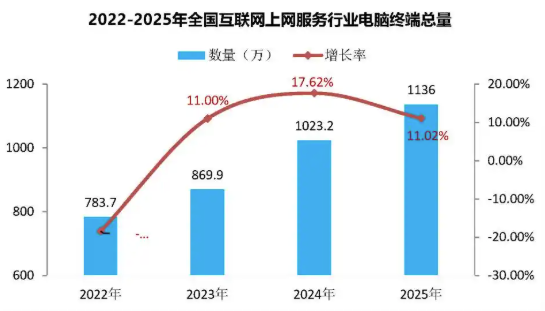
Prior to this, from 2016 to 2023, the number of internet cafes nationwide had plummeted from 152,000 to 77,000, which translates to nearly 30 internet cafes disappearing every day. An industry that had been cornered by the combined forces of smartphones, home computers, and the pandemic, and was once thought to be "gradually exiting the historical stage", has started to grow again.
This business, which had almost been made obsolete by the times, is somehow thriving again.
The Rise and Fall of Internet Cafes
To understand today's seemingly sudden resurgence, we need to go back to the heyday of internet cafes and examine why they swept the nation in a short period of time, and why they later declined.
From the late 1990s through the early 2000s, personal computers were far from ubiquitous, and the cost of home internet access remained steep. For many first-time netizens, the internet café was their gateway to the web. Around 1998, Feiyu Cybercafé drew crowds with its low-price strategy, becoming a defining snapshot of that golden era.
During those years, QICQ, the precursor to QQ, began to gain popularity, and online gaming experienced rapid growth. As ordinary families could not afford computers or broadband, internet cafes naturally became the go-to destination for chatting, researching, and gaming. Relevant data shows that at the beginning of 1998, there were only 299,000 computers connected to the internet nationwide, but this number expanded to 20.83 million in just over three years, while the number of internet users grew from 620,000 to 59.1 million.
Early internet cafes still carried a strong "game room" vibe. After the rise of the first generation of online games like *The Legend of Mir 2*, more and more players shifted from arcades to computer screens, and both licensed internet cafes and unlicensed "black internet cafes" grew side by side. Many early professional esports players first encountered competitive gaming in these environments. Internet cafes were not just consumer venues—they also became some of the densest offline hubs for early internet culture and gaming culture.
In my recollection, from around 2005 to 2008, an hour of internet access in smaller cities typically cost just 1 to 2 yuan. It wasn't until around 2010 that prices gradually climbed to 3.5 yuan, 4 yuan, or even higher. After *Legend*, a wave of games including *Fantasy Westward Journey*, *KartRider*, *Audition*, *World of Warcraft*, and *MapleStory* took turns dominating the scene. When a game caught fire, it often brought a surge of business to internet cafes along the entire street.
However, this rapidly growing industry soon encountered its first major turning point. In 2002, a fire at the "Blue Speed" internet cafe in Beijing killed 25 people and injured 12. While the direct cause of the accident was arson, the fact that the internet cafe was operating without a license, lacked fire safety facilities, and had welded shut its external window security bars also brought to the public's attention the long-standing regulatory loopholes in the industry.
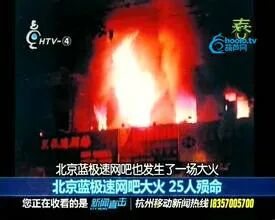
Local authorities quickly launched campaigns to rectify fire-safety and operating standards at internet cafes. By the end of June 2002, more than 39,000 such venues had been inspected nationwide, with over 11,000 ordered to suspend operations for remediation, more than 3,100 shut down in accordance with the law, and over 19,000 safety hazards identified and eliminated. In the years that followed, approval and licensing requirements tightened, moving the industry from a free-for-all entry environment into a more regulated phase with higher barriers to entry.
Tighter regulations are only the beginning of a shift. What truly changed the fate of internet cafes is that the technological conditions they rely on are also changing. Personal computers are becoming increasingly affordable, home broadband is becoming more widespread, and mobile phones have moved a large portion of online entertainment demands from computer desks to the palm of one's hand. By 2016, internet cafes no longer had the exclusivity of being the only place where one could access the internet or play games.
What's even more troublesome is that the old internet cafes themselves have not been upgraded in terms of experience. People who have been through that era probably all remember some "classic configurations" that are quite vivid: cracked headphones, mice so greasy they seem like they could be used to stir-fry food, and "syrup keyboards" with sticky keys. In Hunan, some internet cafes even reek of smoke, sweat, and betel nut year-round, with betel nut residue visible around the monitors.
I used to frequent an internet cafe that had almost all of these elements. The ventilation system was virtually non-existent, and after spending an hour or two there, your clothes would be saturated with that distinctive smell. When you got home, you almost didn't need to explain where you'd been - your parents could tell just by smelling you. Even so, at the time, we didn't have good enough computers at home, and if you wanted to play games, you still had to go to the internet cafe.
In other words, many old internet cafes are not retaining users through experience, but rather through a lack of alternatives. Once users have choices, their problems are quickly magnified. Mobile internet and mobile games have taken away a batch of young people who would have otherwise become PC gamers, and short videos have further consumed fragmented entertainment time. At the same time, the threshold for building a home computer has continued to decrease since the release of 10-series graphics cards, with several thousand yuan enough to build a PC that can smoothly play most games.
When home computers had satisfactory performance and a more comfortable environment than internet cafes, the question of "why spend money to go to an internet cafe" became increasingly obvious. With the arrival of the pandemic, this dilemma was further exacerbated: internet cafes, as densely populated and relatively enclosed spaces, were directly impacted, with 12,800 closing nationwide in 2020 alone. In those years, it seemed that internet cafes had indeed hit rock bottom.
What's Behind the Internet Cafe Revival?
By conventional logic, internet cafes would seem to have little reason to flourish again. Anyone can afford a computer, games can be played at home, and smartphones deliver entertainment anytime, anywhere. Yet precisely when the industry was at its lowest ebb, new variables began to emerge.
The first variable comes from policy and operational environment. In the past, what gave investors in the internet cafe industry the most headaches was not how to purchase computers, but rather the preceding steps of licenses, approvals, and fire safety inspections. After 2015, the relevant procedures gradually became more relaxed; by the end of 2024, multiple locations continued to simplify the approval process for opening internet cafes, with the reduction rate of approval materials reaching as high as 56%. In 2025, there were even reports of internet cafes being able to open with "zero approvals".
Of course, having fewer procedures does not mean that one can open a business at will. The location of internet cafes is still subject to regulations such as distance from schools, and fire safety inspections remain an unavoidable threshold. Fire safety facilities, safety passageways, and fire hydrants must all meet requirements. However, compared to the past, the entire entry process has become more streamlined, and after funding, venue, and equipment are in place, the speed of opening new stores has significantly accelerated.
This shift quickly showed up in the market. Data from the China Internet Service Industry Association shows that as of the end of 2024, the total number of internet service venues had reached 81,700. Hangzhou alone saw more than 300 new internet cafes open in a single year, while industry leader Wangyu Esports surpassed 1,300 locations nationwide. In Liling, a county-level city in Hunan Province, 23 internet cafes have crowded into a main urban area of roughly 20 square kilometers—including several large-format locations exceeding 1,000 square meters.
The financial environment is also improving. In 2025, nine departments including the Ministry of Finance and the Ministry of Civil Affairs introduced a loan interest subsidy policy, providing support to operating entities in eight categories of consumer service industries that meet the conditions. Internet cafes were included in the cultural and entertainment support category, with eligible operating entities able to receive support of up to 1 million yuan in loan scale and a 1% annual interest subsidy.
For investors, internet cafes have a very practical aspect: their most core assets are computers and equipment. The China Internet Cafe Services Industry Association has mentioned that even if business is not doing well, computer equipment still has a certain residual value, which can theoretically reduce some of the losses from exiting the business. Policies address the issues of "whether they can open" and "whether they dare to invest", but they do not explain another more critical problem - where will the customers for these new internet cafes come from?
The answer lies in e-sports and gaming. Over the past decade, long-standing games such as League of Legends and PlayerUnknown's Battlegrounds have maintained a stable PC player base, and the emergence and rise of e-sports events have brought the originally online gaming experience back offline. University e-sports competitions, city tournaments, and store competitions are becoming increasingly common, with some internet cafes themselves becoming competition venues and also transforming into daily gathering spots for young players.
The popularity of major e-sports events can even directly drive store sales. Industry data shows that the performance of Chinese e-sports teams in major tournaments can bring significant increases in customer traffic to some internet cafes. The August 2024 launch of "Hei Shen Hua: Wukong" provides a more intuitive example: the combination of high configuration requirements and phenomenal popularity led many players who had not visited an internet cafe in a long time to return to the stores.
Meanwhile, the requirements of PC games for hardware have once again widened the gap between home devices and internet cafe devices. Having a computer at home is no longer unusual, but not everyone is willing to upgrade their graphics cards, memory, and monitors for a few 3A or competitive games. Especially when the cost of building a computer increases, spending a few dozen yuan to experience a high-performance machine at the 4080 or 4090 level is more cost-effective for those who occasionally want to play high-quality games. With the intense competition in the group-buying market, consumers can now enjoy experiences that would normally cost hundreds of yuan for just a few dozen yuan through new membership activities offered by various internet cafes, further increasing the value for money.
In particular, the hardware price surge starting from the end of 2025 may continue to bring short-term benefits to operating internet cafes - specifically existing ones. However, if one were to invest in a new internet cafe at this time, considering the typical 2-year payback period, it would be wise to exercise caution.
While high-performance hardware has drawn some gamers back to internet cafes, shifting consumption habits have given these venues a broader role beyond gaming. Offline entertainment formats such as script murder games and board game cafes, after a period of rapid expansion, are now undergoing a shakeout. Some young people are seeking cheaper, more flexible leisure options, and internet cafes have stepped in to fill that gap.
What's even more interesting is that people who go to internet cafes today don't necessarily just want to be in a lively atmosphere. The high occupancy rate of single-person private rooms is a very typical change: people enter a public space, yet they also hope to have their own private corner. Young people use it as a place to play games together, while some middle-aged players use it as a temporary escape from the rhythm of work and family life. Internet cafes are no longer just selling "computer usage time", but also catering to emotional, social, and solitary needs.
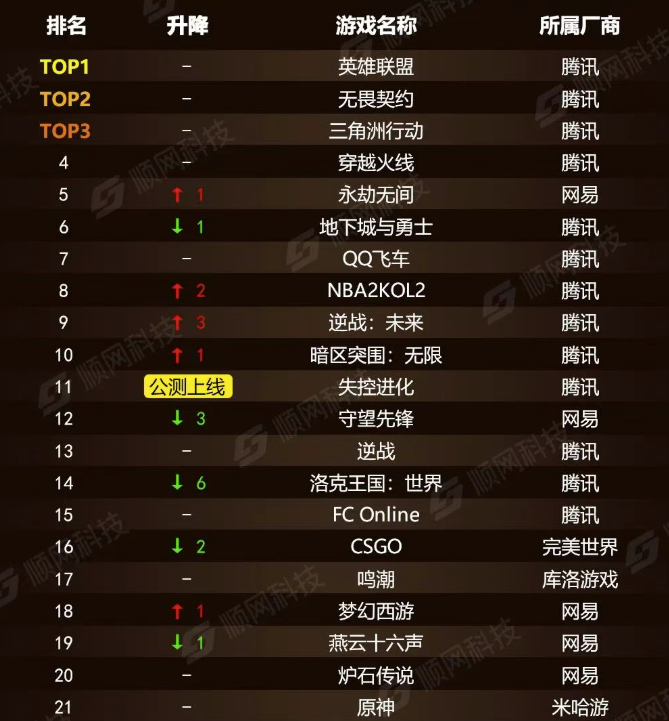
Internet Cafe's July Hot Game List (Statistics: Shunwang Technology)
New games are also expanding this user base. Titles such as *Delta Force*, *Valorant*, and *Naraka: Bladepoint* are driving fresh traffic to internet cafes, with *Valorant* in particular drawing in more female players. In turn, venues are reinforcing this clustering effect through privileged internet cafes, offline tournaments, and themed events. Games funnel players into cafes, while cafes provide offline social spaces for games—together, the two have formed a new cycle.
Rolling Out New Tricks
But the return of foot traffic doesn't mean old-school internet cafes are being resurrected unchanged. On the contrary, the most striking shift in this recovery is that the cafes themselves have transformed first. Some have rebranded as esports arenas, others have added private rooms, dining, and lodging, and some have even folded bathing and board-game services into the same space. When "cheap internet access" is no longer the only selling point, the real competition in this industry has moved well beyond hardware specs.
In the traditional image of an internet cafe, the core offering was a chair and a computer. Today's gaming cafes, esports venues, and esports hotels increasingly resemble complete consumer spaces. Internet access is just the entry point—environment, dining, rest, social interaction, and even accommodation are what determine whether users are willing to stay for hours and return next time.
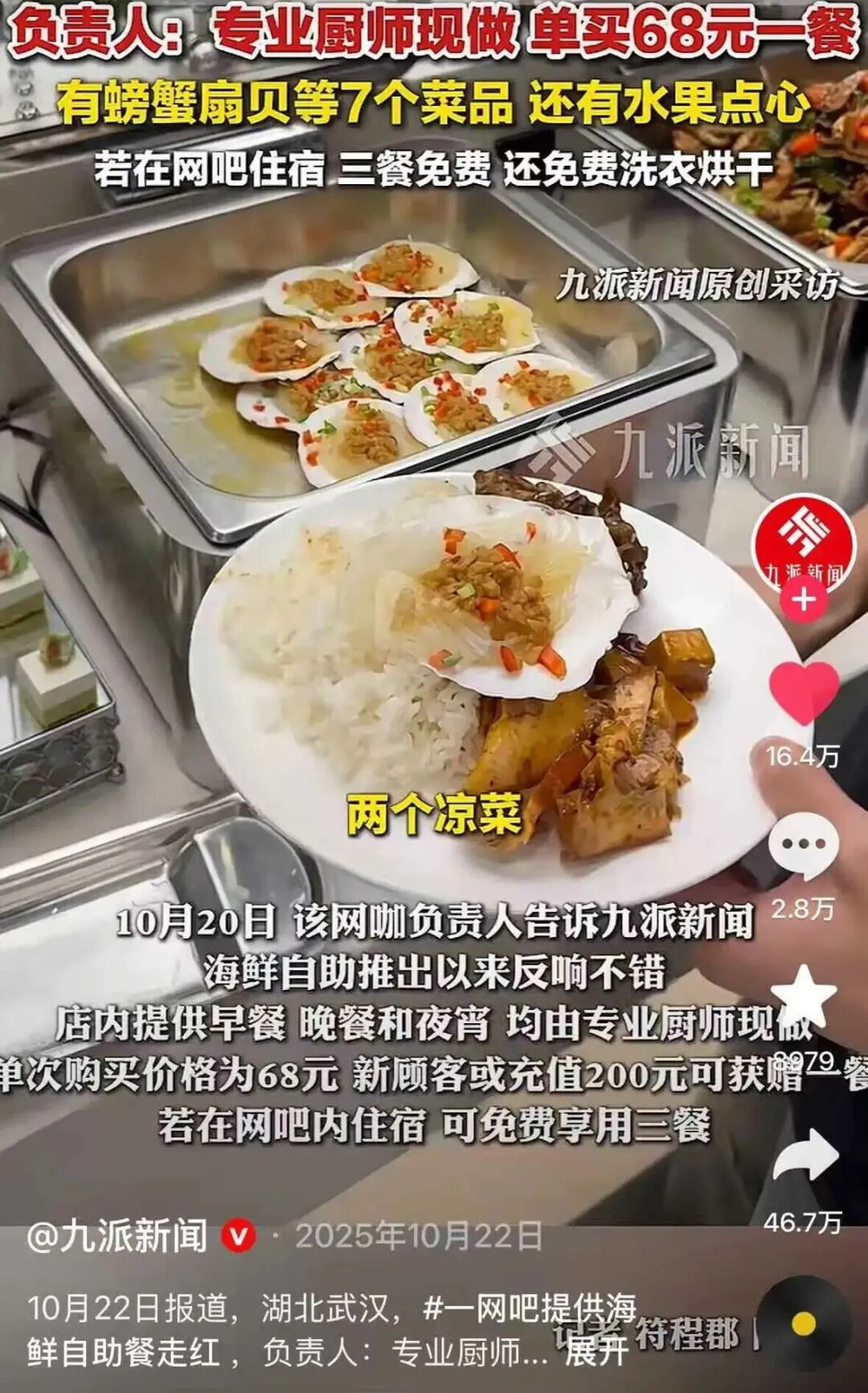
This is also why new business models like e-sports hotels will expand rapidly in the post-pandemic era. They have leveraged the favorable trends in the cultural tourism and e-sports industries, transforming "internet access rentals" into "comprehensive services". For operators, what users are buying is no longer just the right to use machines, but a more comfortable and convenient entertainment experience.
Price remains the most basic competitive edge for internet cafes. For many people, an overnight session costs just 10 to 20-plus yuan—compared with movies, escape rooms, KTV, or board games, it offers longer entertainment time at a lower per-hour cost. After a wave of closures during the pandemic shrank supply, demand for gaming and squad play never fully disappeared. In a climate of more rational consumption, the appeal of "paying little, staying long" has come back into view.
A chain internet cafe owner in Changsha once said bluntly that in an environment where consumers are becoming more cautious, people cut back on high-end entertainment spending, while internet cafes—thanks to low prices and long session times—may actually see more stable demand. Another internet cafe manager noted that in earlier years, college students mainly came for overnight gaming sessions, at most grabbing a cup of instant noodles on the side; now many young people arrive in groups, treating it as a social gathering, with a higher share of spending going to drinks and snacks.
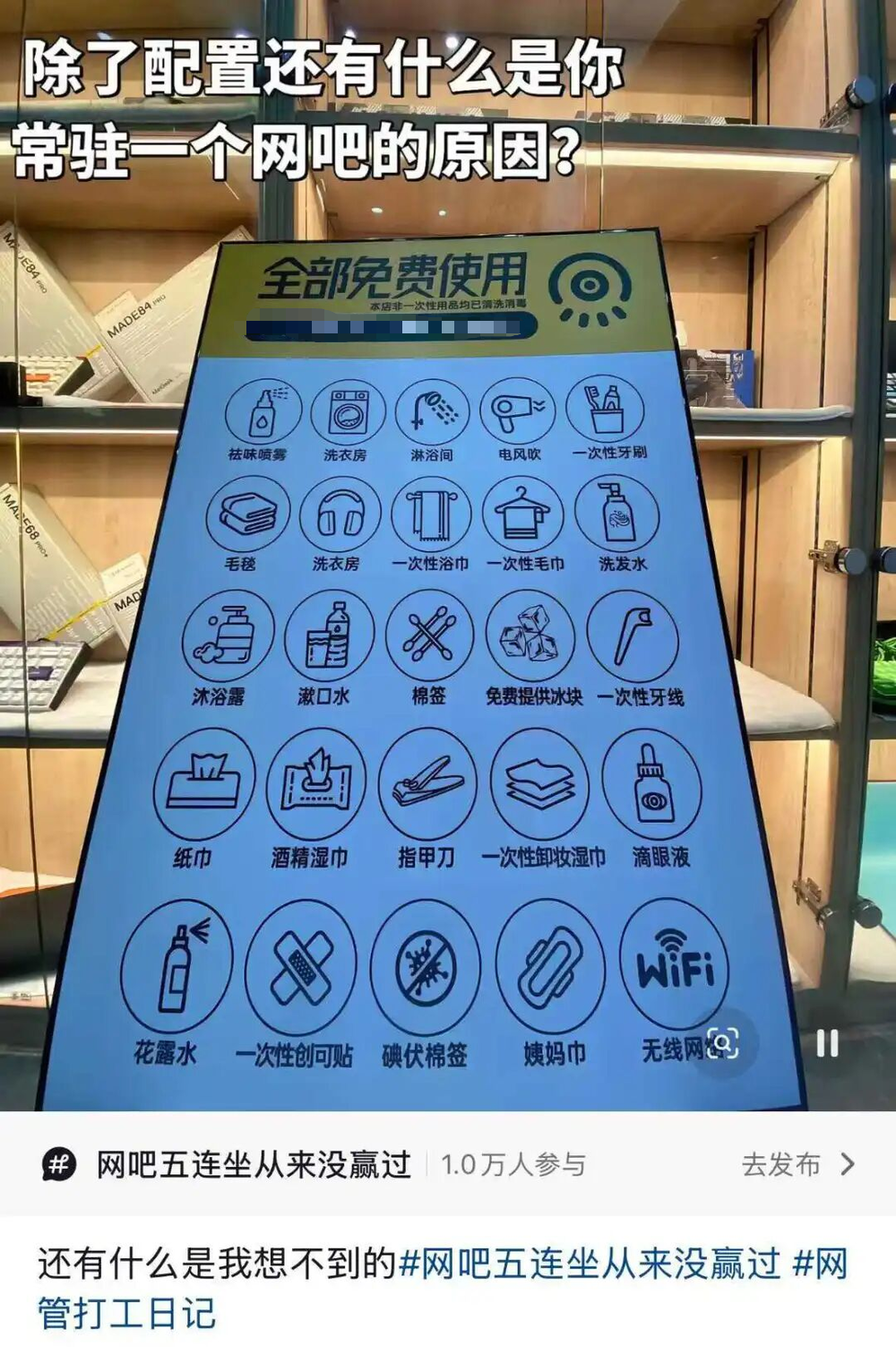
Customers have changed, so internet cafe environments must evolve accordingly. Non-smoking and smoking zones are now clearly separated, cleaning supplies for peripherals are provided free of charge or maintained by staff on a regular schedule. Equipment such as gaming chairs, high-refresh-rate monitors, and mechanical keyboards has gradually shifted from "bonus features" to standard offerings. The old environment—hazy with smoke, sticky with grime on desks, and littered with cracked headsets—is being replaced by a premium esports aesthetic, private rooms, and more standardized service.
Some large-format locations are doubling down on the heavy-asset model, offering not just food and rest areas but also showers and laundry services. The share of single-occupancy and double-occupancy private rooms has risen markedly versus a decade ago, catering to solo players while also accommodating couples and friends gaming together. Where internet cafes once competed on shaving a few mao off the hourly rate, they now increasingly resemble a hybrid of hotel, coffee shop, and esports arena.
Of course, not every internet cafe is moving upmarket. Across the vast urban and rural markets, traditional low-cost internet cafes remain widespread, sustaining a different ecosystem: low prices draw a steady stream of customers, while demand for live streaming and game-related services creates additional use cases. High-end e-sports cafes and budget internet cafes are not displacing one another—each is simply finding its own users within the same market.
Business models have diverged accordingly. Beyond internet fees, a growing number of venues are branching into value-added services such as beverages, convenience goods, food and dining, esports peripherals, and game streaming. Survey data from Chaoxin News shows that in Zhejiang province, most esports venues and internet cafes still derive the bulk of their revenue from internet fees, with drinks and snacks accounting for roughly 10% to 20%. In contrast, at larger internet cafes in cities like Chengdu and Shanghai that have added food and dining options, value-added revenue can reach 30% to 40% of total sales.
This means internet cafes are shifting from a business of "selling machine time" to a more typical space-driven model: per square meter, what matters now is how to make customers stay longer, spend more, and want to come back—rather than simply undercutting on internet fees.
Hardware, of course, hasn't exited the competition either—it has simply shifted from being "good enough" in the past to delivering "experiential differentiation" today. At present, per-unit investment in many internet cafes has reached 10,000 to 20,000 yuan, with 32GB of memory gradually becoming the standard configuration. Main halls and private rooms are outfitted with different tiers of graphics cards depending on their positioning, and some high-end esports venues have even placed 5090 GPUs in their premium private rooms, pushing the hourly rate up to more than 20 yuan.
The internet cafe industry today presents a curious paradox: on one end, establishments offer overnight packages for as little as a dozen yuan, while on the other, premium experiences command over twenty yuan per hour. Some patrons simply want a place to game together, others treat it as a social gathering spot, and still more have folded esports hotels into their short-break leisure plans. This very fragmentation is proof that the industry no longer depends on a single demand stream to survive.
From the sustained contraction after 2016, to the trough in 2023, and then the renewed expansion over the past two years, internet cafes have not undergone a simple cycle of death and rebirth. What has truly returned is not the old internet cafe that survived on information asymmetry and scarce equipment two decades ago.
It has more or less found its place again after years of being squeezed between home computers and smartphones: turning high-end hardware into an experience, offline gatherings into social interaction, and low prices with long hours into value for money — while gradually folding dining, accommodation, and other services into this aging business.
So internet cafes certainly won't return to that golden age that defined nearly an entire generation. Yet they haven't fully exited the stage like video rental stores or arcades. An industry once written off as doomed is finding new ways to endure — and that, perhaps, is more worth paying attention to than the narrative of "internet cafes are making a comeback."