
China's sustained economic growth over the past few decades has been based on urbanization.
The sustained growth of China's economy over the next few decades will be based on suburbanization.
Many of the problems weighing on China's economy today—weak consumption, involution, demographic pressures—stem from the country's failure to follow the objective developmental trends of suburbanization and counter-urbanization. One key path to resolving this bottleneck is a suburbanization model centered on retired people relocating to rural areas.
Renowned scholar Qian Wenzhong once made a crucial point: the core group of backbone members after China's reform and opening-up were the educated youth who went to the mountains and countryside, including the first batch of entrepreneurs and even some of today's leaders, who originated from the educated youth. They gained an understanding of China's true national conditions and honed their comprehensive abilities through this experience, which became one of the major dividends driving China's rapid development after reform and opening-up.
Today, a new wave of retirees returning to their hometowns will recreate China's development dividend in the new era.
All economics should be developmental economics; if not, it means the direction for further development has not been found. Developmental economics refers to the fact that the economic laws corresponding to each stage of development are different, and economic policies must be considered in accordance with the developmental laws of that stage. If the current stage of development is violated or ignored, it will inevitably lead to serious problems. China has obviously entered the stage of "suburbanization" and "counter-urbanization", but both the academic and government circles have almost completely ignored this, and are instead distracted by other aspects, which is the root cause of being unable to find a solution.
The so-called "consumption deficiency" is an illusion, it's not that people don't have money to spend or lack the desire to consume, but rather that cities simply don't have the physical space for consumption. This is no longer an economic issue, but a geometric one.
Suburbanization and Counter-Urbanization Represent the Pinnacle of Industrial Civilization
In the past, urbanization was always seen in our minds as the hallmark of entering modern civilization—"leaping over the farm gate" into the city was the only way for rural people to transform their fate and improve their standard of living. Few likely ever considered that China might one day turn toward suburbanization, a process long since completed in developed countries. Although Chinese scholars had long been familiar with "suburbanization" as an academic concept, in the minds of most Chinese it remained a distant intellectual abstraction. Even among scholars themselves, very few imagined it would become a reality in China so quickly.
20 years ago, I was the technical deputy general manager at ZTE's fourth marketing division. In 2004, I made my first business trip to Europe, and my colleagues at the local sales office introduced me to the daily life and habits of Europeans. They specifically mentioned to me that one way European elites show off to others is by saying "I live in the countryside." At the time, I could quickly understand this from the academic concept of "suburbanization," but I found it hard to directly appreciate the psychological state of living in the countryside as a way for elites to show off, because the living standards in rural China were vastly different from those in cities. However, after traveling to the US and Europe for business many times, especially driving through rural areas in Europe and the US, I indeed found it much more comfortable than in cities. The high-rise buildings in European and American cities, which we imagine to be the epitome of modern civilization, are actually where the poor people live. The truly wealthy and elite people all live in the suburbs.
At the time, I told my colleagues that maybe one day when I retire, I'll be able to boast about living in the countryside. I thought it was just a joke, and maybe we wouldn't see that day in our lifetime.
What I never expected was that China has truly already entered this state today. I'm writing this piece only now, having lived in the countryside for nearly six months—long enough to prove that rural living is genuinely something worth boasting about.
Each village committee surprisingly has its own fire truck, patrol car, and sanitation vehicle.
Every household in each village has a trash can at their doorstep, unlike in cities where they are concentrated in each community. Trash is collected every day.
Is this an isolated case or does it have broader implications?
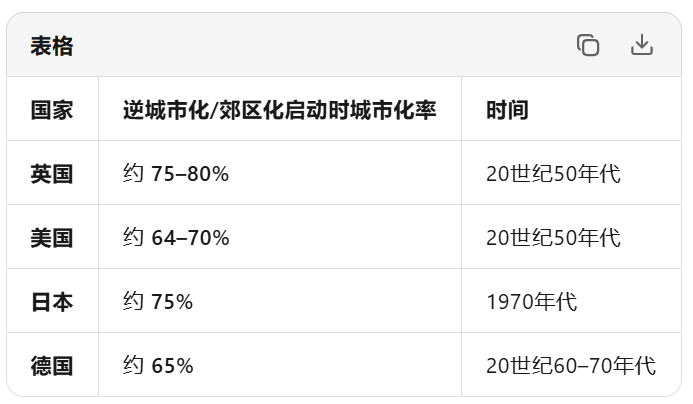
First, let's look at the macro level to see if China has already entered the suburbanization stage. Generally, developed countries also started with an urbanization stage, similar to China's past few decades, where economic development and rising urbanization rates led to a constant influx of rural people into cities. However, when the urbanization rate reaches a certain level, the suburbanization process begins. Looking at the specific practices of various developed countries, the urbanization rate at which they started suburbanization varies slightly, and is roughly at the following stages:
China's current urbanization rate is 67.89% as of the end of 2025, according to official data from the National Bureau of Statistics, up 0.89 percentage points from the end of 2024, when the rate was 67.00%. Official data for the first half of 2026 has not been released yet. Based on the trend of an average annual increase of around 0.8-0.9 percentage points in recent years, it is estimated that the rate may have approached around 68.5% by the middle of 2026.
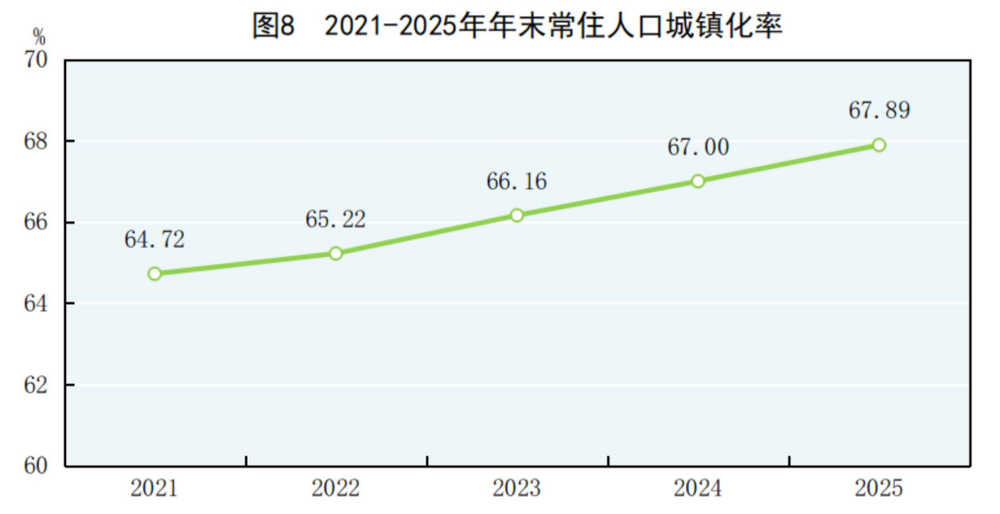
In other words, China has quietly reached the threshold where it should or must begin "suburbanization" and "counter-urbanization".
China's Academic Research Status on This Issue
The concept of "counter-urbanization" was introduced in 1976 by American geographer Brian Berry, referring to the process in which, after urbanization in Western countries reaches a certain stage, metropolitan growth begins to slow and large numbers of urban residents and resources flow to rural areas and small towns. In 1979, American urban geographer Ray Northam, through empirical analysis of urbanization processes in Western countries, found that urbanization follows a slightly flattened "S"-shaped curve (the Northam curve), further confirming that counter-urbanization is a stage within the broader urbanization process. He divided urbanization into three phases: the initial stage (urbanization rate below 30 percent), the acceleration stage (urbanization rate above 30 percent and below 70 percent), and the stable development stage (urbanization rate above 70 percent). In the late stage of urbanization, growth slows or even stagnates, giving rise to counter-urbanization. Since then, counter-urbanization has been regarded not only as an inevitable stage in urban development but also widely used as an important theoretical framework for studying urbanization issues.
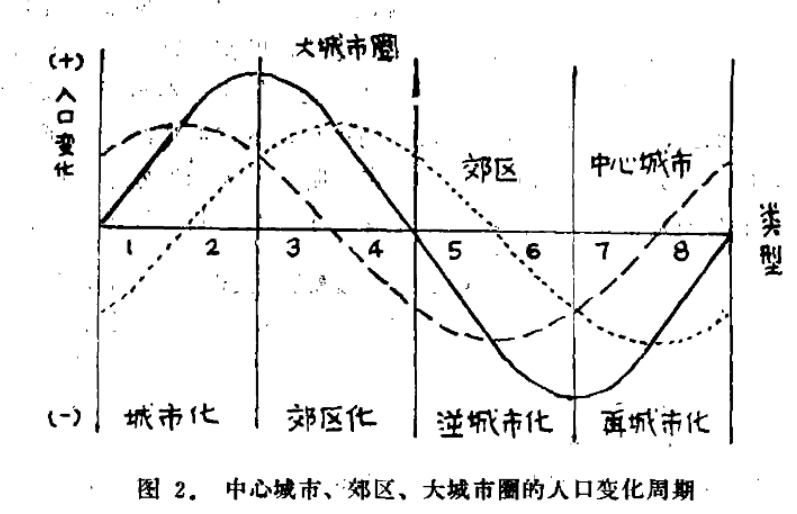
Excerpted from "Yamada Hiroshi, Li Gongchao: 'The New Crisis Threatening Urban Civilization - What Can Be Learned from European Experience?', International Economic Review, No. 12, 1983." Since then, the Chinese academic community has continued to study this issue.
But when I ran a big-data analysis of Chinese academic papers on CNKI using "suburbanization" and "counter-urbanization" as keywords, I found a highly unusual result:
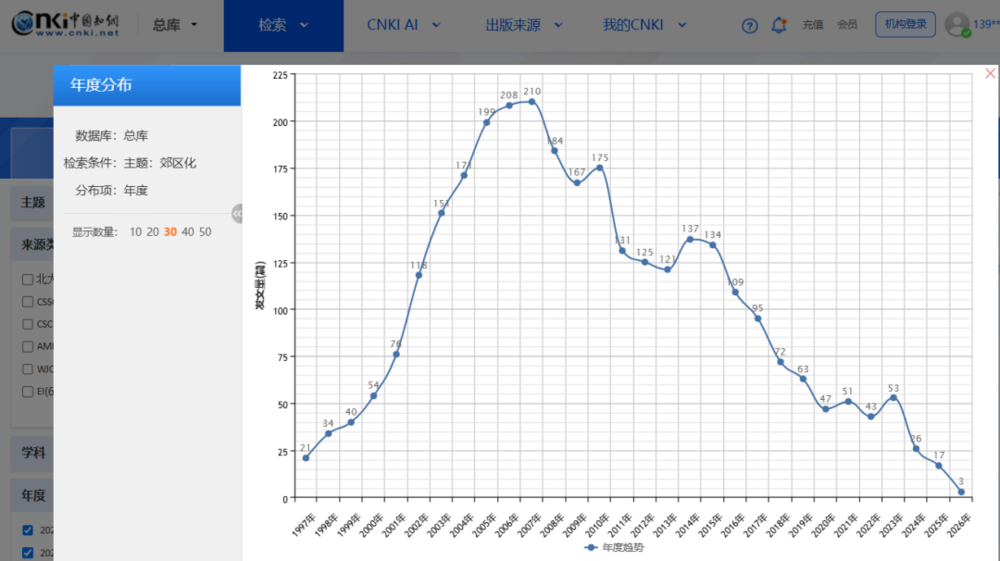
A big-data analysis of annual publication trends in Chinese academic research using "suburbanization" as a keyword shows the peak occurred in 2007.
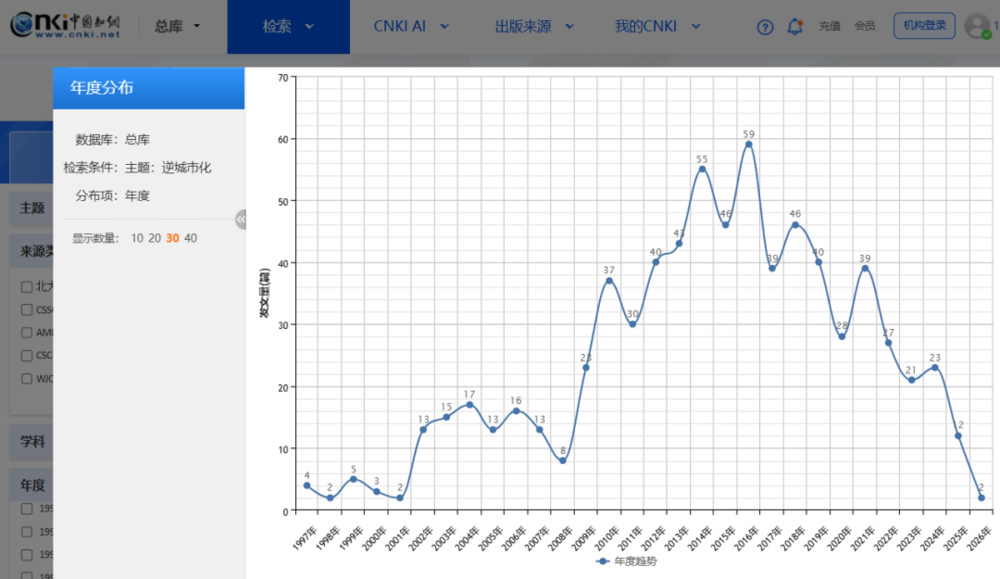
The annual number of academic research papers in China with the theme of "counter-urbanization" showed a trend of big data analysis, with the peak in 2016.
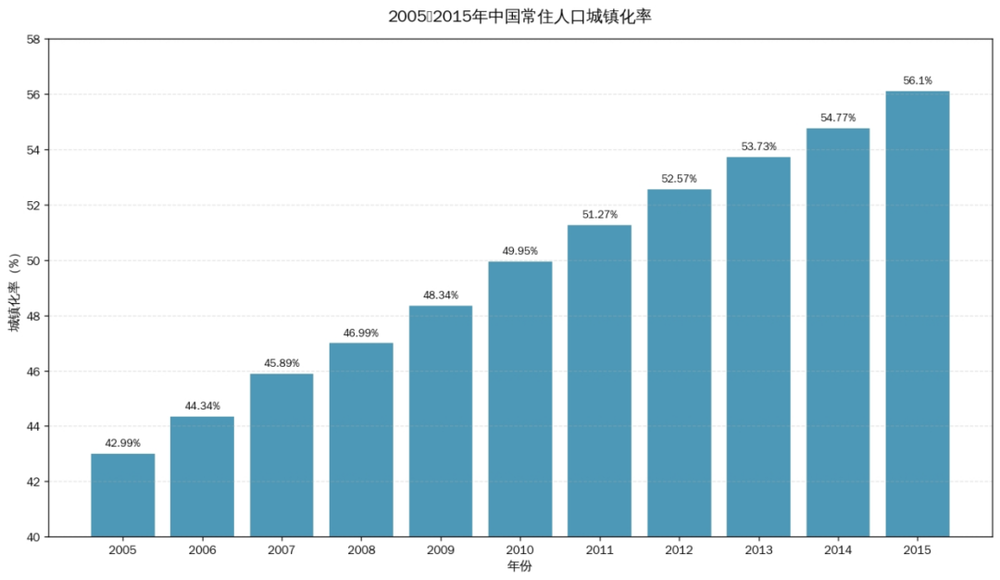
As can be seen from the above figure, from 2005 to 2015, China's urbanization rate increased by a total of 13.11 percentage points, with an average annual increase of approximately 1.31 percentage points, marking a period of rapid urban expansion in China, without clear signs of suburbanization. So, what about the "labor shortage" and "return to hometowns" back then? Looking back, it was actually a major industrial transfer within China.
In September 1999, the 4th Plenary Session of the 15th Central Committee of the Communist Party formally proposed the implementation of the Western Development Strategy.
In November 2002, the 16th Party Congress report proposed "supporting the acceleration of adjustment and transformation in old industrial bases such as the Northeast region". In October 2003, the Central Committee of the Communist Party of China and the State Council issued "Several Opinions on Implementing the Revitalization Strategy for Old Industrial Bases such as the Northeast Region", marking the official and comprehensive implementation of the revitalization strategy for the old industrial base in Northeast China.
In March 2004, the government work report proposed "promoting the rise of the central region".
It was the Chinese government's proactive promotion of inter-regional industrial transfer within China that triggered the subsequent "labor shortage" and "return to hometowns" phenomena in the eastern regions.
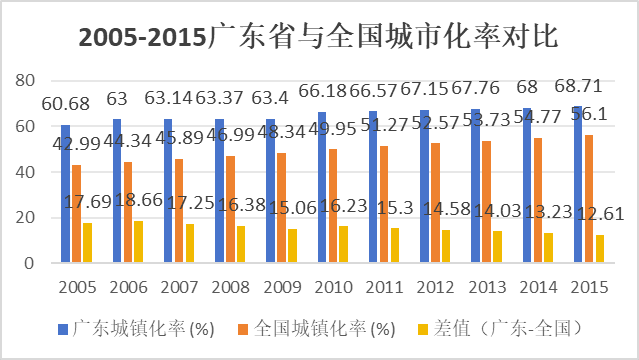
As shown in the chart comparing urbanization rates between Guangdong province and the national average, the current national urbanization rate is roughly equivalent to Guangdong's level in 2015. Guangdong's urbanization rate had already reached 67.76% in 2013, a figure comparable to the projected national level for 2025.
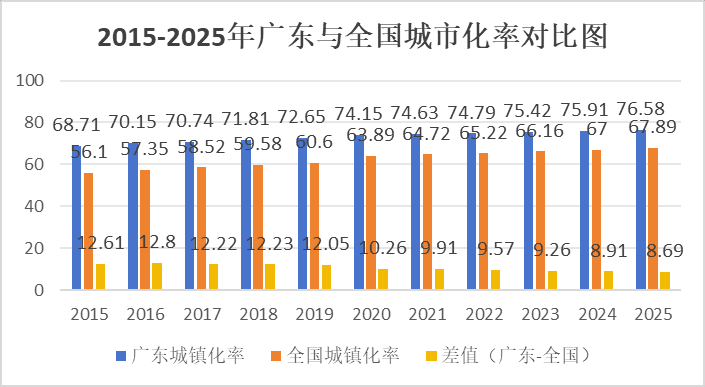
A comparison of the two graphs shows that the difference between Guangdong Province's urbanization rate and the national average is narrowing, from a 17.69 percentage point gap in 2005 to an 8.69 percentage point gap in 2025, a reduction of 9 percentage points.
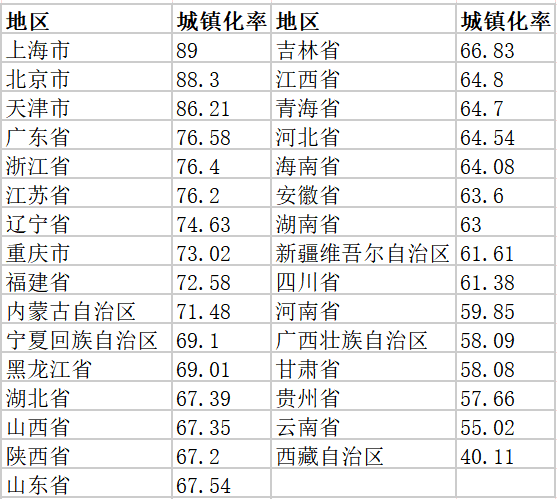
The urbanization rate of 31 provinces, municipalities, and autonomous regions nationwide in 2025
From the above analysis, it can be seen that whether from a national perspective or from the most developed regions and municipalities with naturally high urbanization rates, China should have begun to enter a stage of suburbanization and counter-urbanization on a large scale. The eastern coastal regions have long been in the stage of suburbanization development, so why is there no obvious suburbanization phenomenon? This is because the eastern regions have extremely scarce land resources, and the suburbs have directly become cities.
From a national perspective, it has undoubtedly entered a stage of suburbanization.
But now, almost no relevant voices can be heard from either the academic circle or the government level, why is that?
Why China Fears Suburbanization and Counter-Urbanization
The following are statistics on the vacancy rate of homesteads in rural areas from different sources.
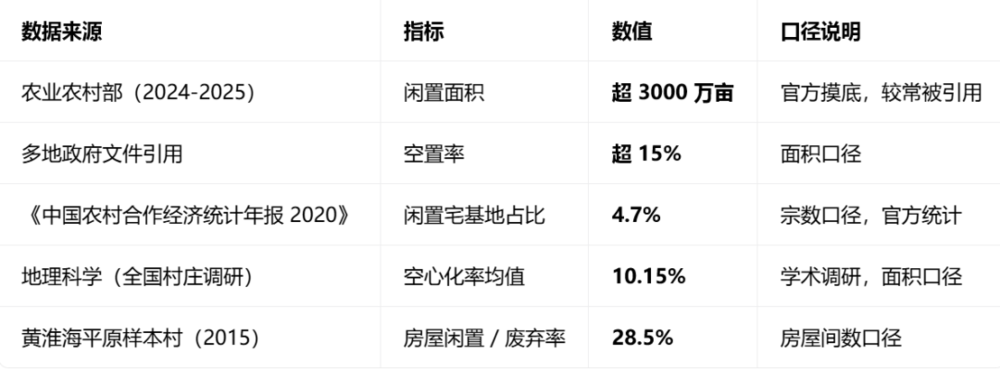
In terms of land area, the idle and vacant rate of rural homesteads nationwide is roughly between 10% and 18%; in terms of the number of houses, the rate is even higher, with some studies reaching 25% to 30%.
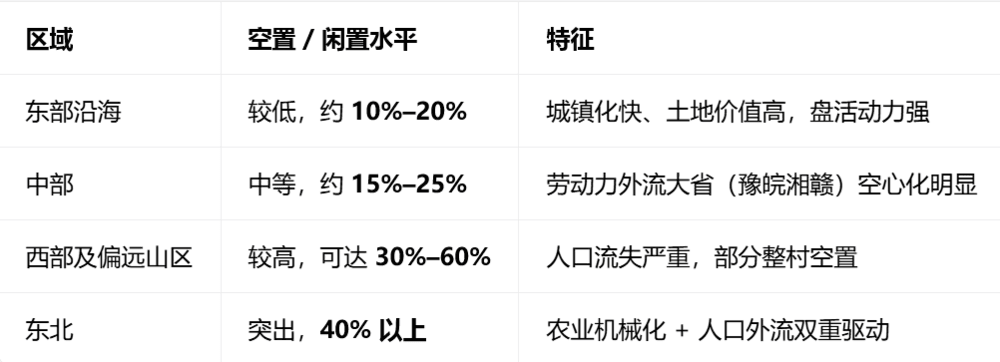
The idle rate of rural homesteads varies by region
Typical Case Studies
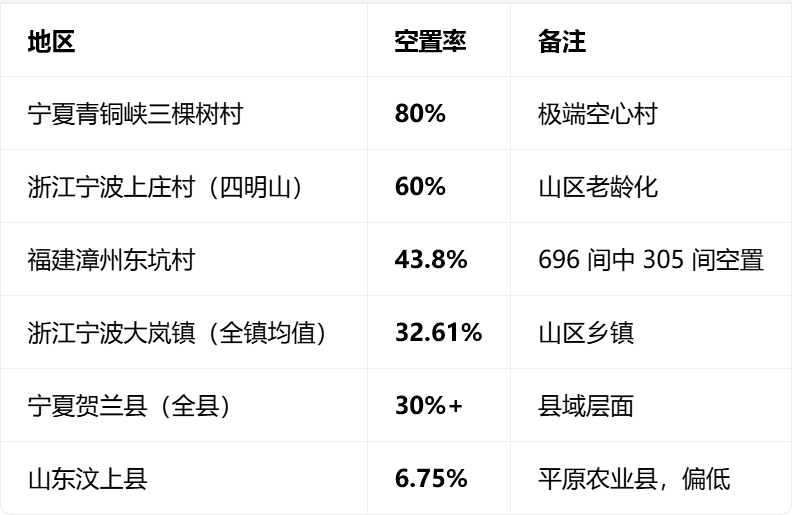
The analysis above shows that vacancy rates for rural homestead land vary widely across regions, ranging from minimal vacancy to complete abandonment.
The following are vacant rate data for China's commercial residential properties provided by various institutions.
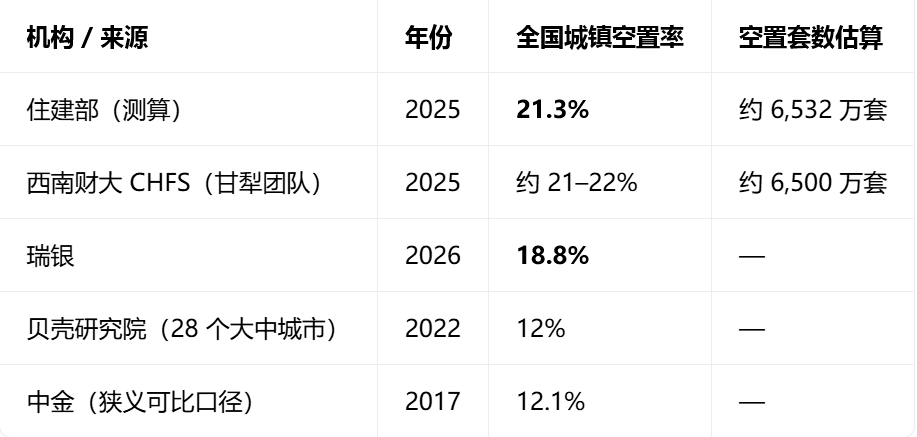
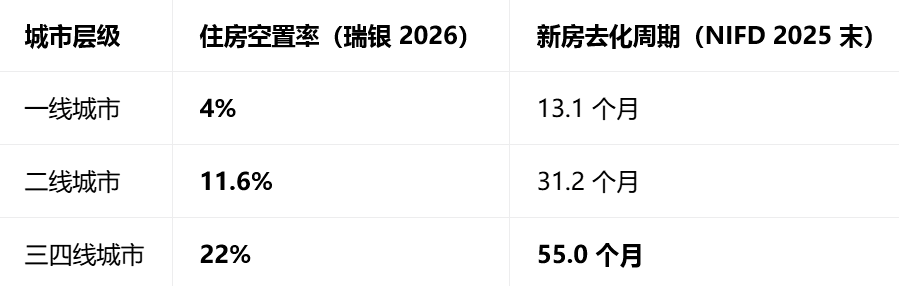
The following are the vacancy rates for commercial residential properties in different regions of China
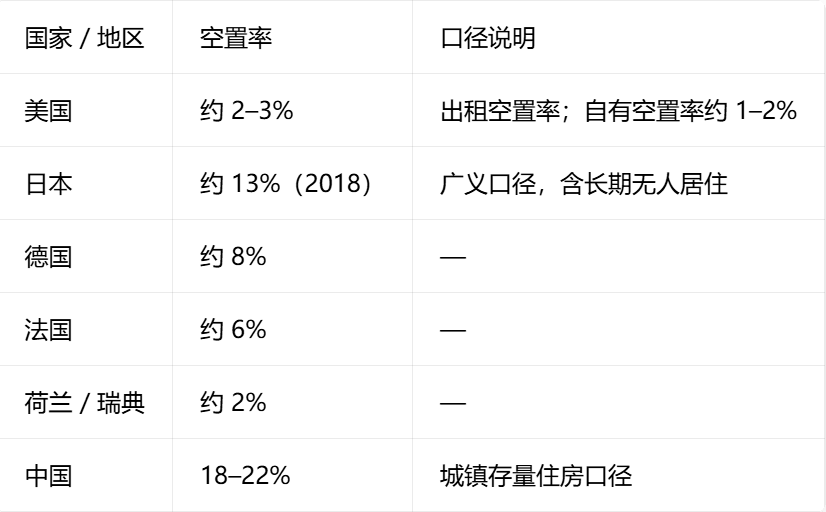
China's housing vacancy rate in international comparison
The market implications of different housing vacancy rates
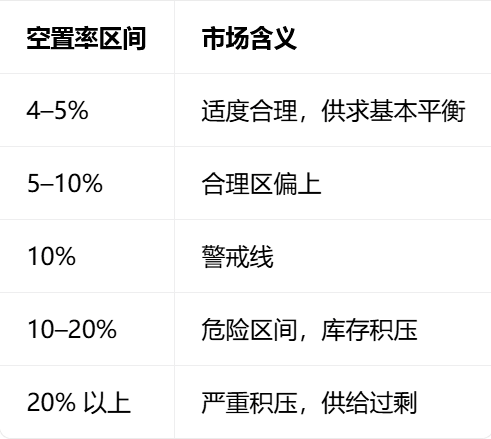
China is faced with a dilemma due to the simultaneous rise in vacant housing rates in both rural and urban areas, with the latter reaching a critical level. If the country were to undergo counter-urbanization at this time, wouldn't the vacant housing rate in urban areas increase even further?
However, this is not simply a matter of vacancy rates, but a structural issue. As the vacancy rate of urban housing continues to rise, the living conditions of people in cities, especially young people, have continued to deteriorate due to the significant increase in rent and sale prices in the past. It is common for a single-room apartment to cost 2,000 to 3,000 yuan in rent. This raises a question: why are many young people in cities now unwilling to have children? The "unwillingness" is also an illusion - if they do have children, where would they raise them? Of course, this issue involves more complex factors, which we will discuss later. This article will only discuss the issue of China's economic development stage.
Promoting Counter-Urbanization to Unlock Consumption Potential: Geometric Spatial Analysis
Let's take a look at my consumption situation after I moved to the countryside.
After scattering the grass seeds I bought, I was excited to water them every night at first, but in the end, a bunch of wildflowers and weeds also joined in and grew together, and even pumpkin vines grew, all thriving happily. The germination rate wasn't 95%, but possibly as high as 195%. The area where I scattered the grass seeds sprouted, and the area where I didn't scatter seeds sprouted even more.
The landlord was also stunned, and after staring for a long time, she blurted out, "I've spent my whole life pulling out weeds as soon as I see them." Initially, she pulled out all the grass I had planted, and I told her not to, explaining that I had intentionally planted it. When she saw me watering the grass seeds, she was disdainful, repeatedly saying, "You don't need to water them." However, the initially weak and small grass shoots eventually grew rapidly to the point of bursting. At least for this year, I really enjoy this kind of free-growing grass.
With so much grass in the yard, wouldn't there be more insects?
The living environment in the city is often overlooked by people, and the greenery in residential areas needs to be regularly sprayed with pesticides and weeded, otherwise it will be overrun with weeds and insects.
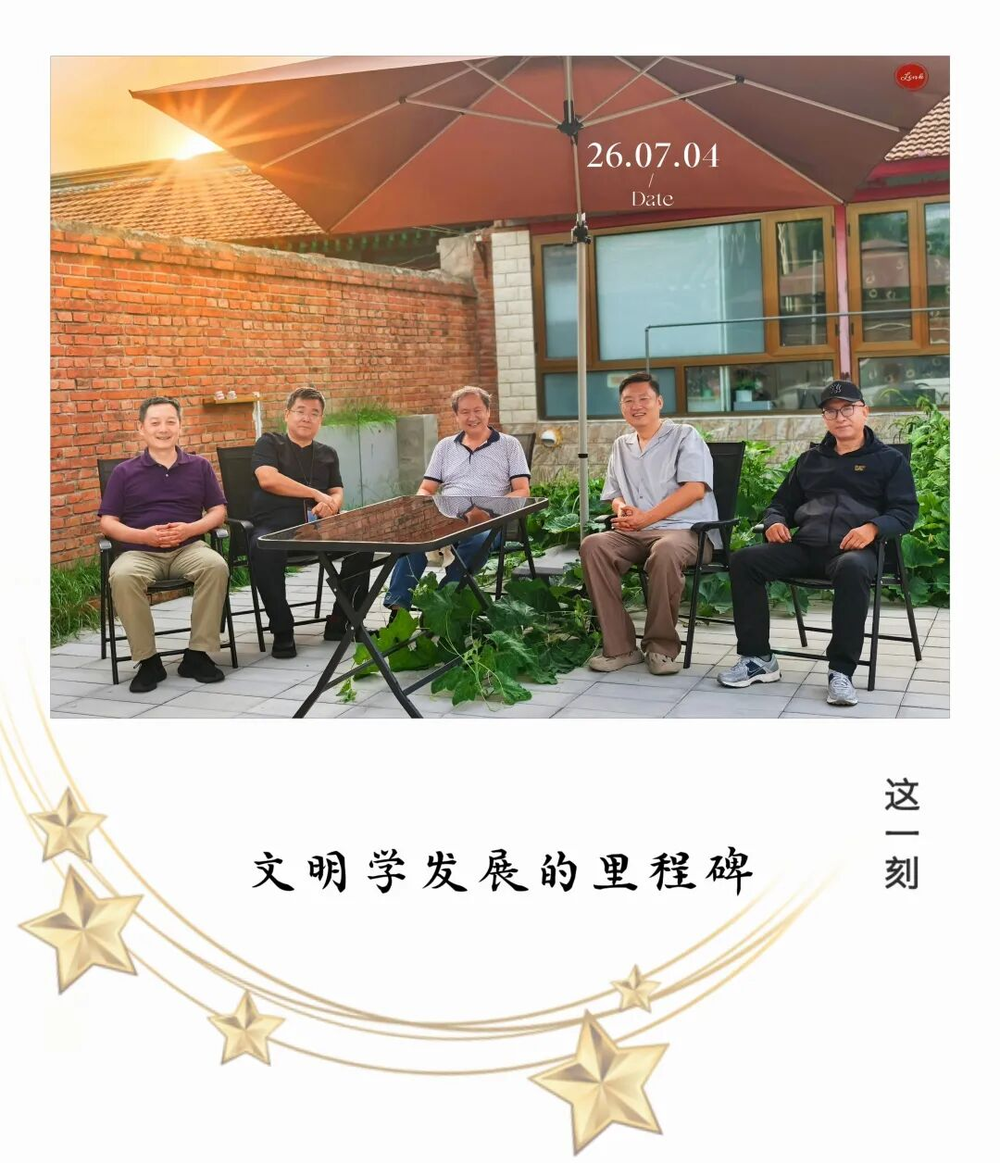
However, the pleasant surprise was eating several dozen pumpkins and stir-fried pumpkin tips.
So, China's economists are all talking nonsense with their eyes closed. China's current economic problems are not about tax rates, interest rates, reserve requirements, exchange rates, or the Medium-term Lending Facility (MLF), nor are they about investment rates. It's purely a geometric problem: the amount of living space in square meters determines the maximum possible consumption space. Why is consumption sluggish? Because there's no room to put the things you buy, so you just don't buy them. It's that simple. I have personal experience with this - I receive deliveries almost every day, and now I have plenty of space to store my purchases.
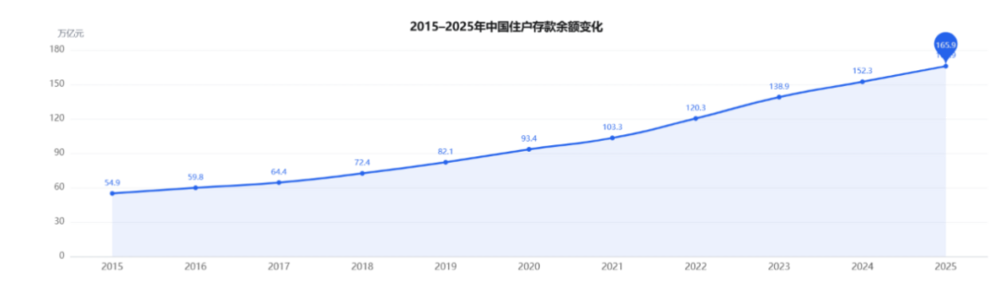
2018 marked a critical inflection point, after which annual household deposit growth jumped from the 5-trillion-yuan range to the 10-trillion-yuan range, and in 2022–2023 it exceeded 17–18 trillion yuan. By the end of 2025, household deposit balances stood at approximately 165.89 trillion yuan, with new deposits of 14.64 trillion yuan added during the year.
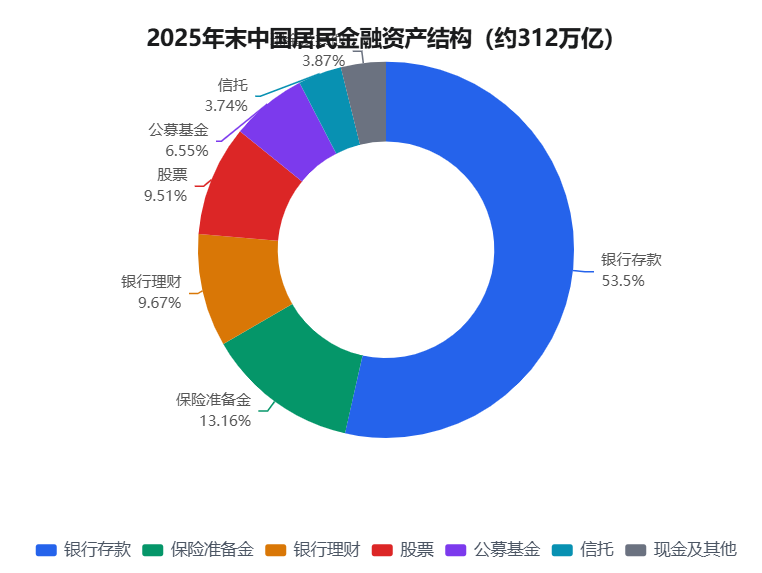
China's high savings rate, which is 12 times that of the US, cannot be simply attributed to the notion that "Chinese people love to save, while Americans do not." The strong consumption in the US can be partly explained by the high cost of medical care, but it is also because the living space in the US is virtually unlimited, with consumption only restricted by income, and not by other factors.
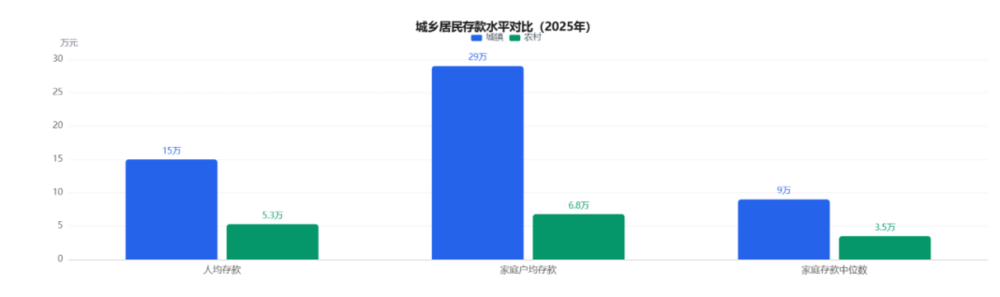
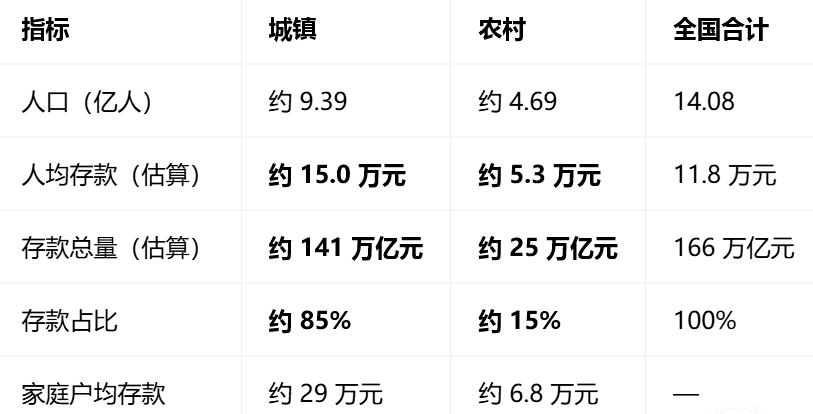
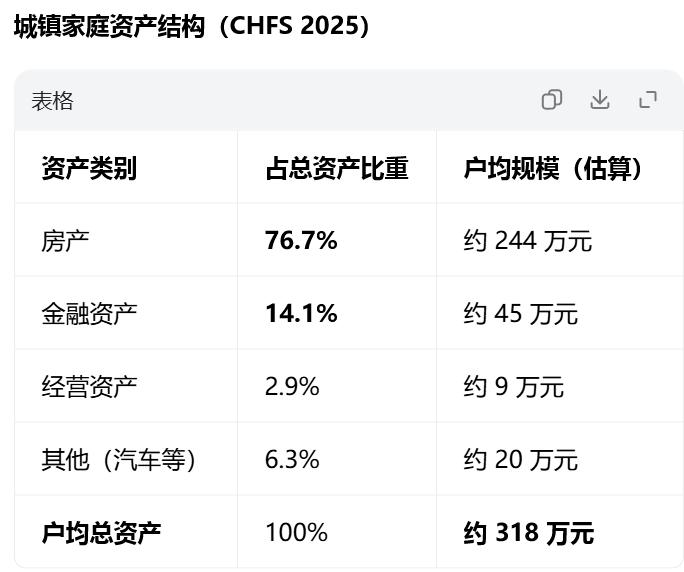
In China, rural areas have insufficient consumption space, and due to cognitive gaps, they lack the numerous consumption concepts that urban residents have. Even with some money, they don't entirely know what to buy. In contrast, city dwellers have abundant consumption resources and more advanced consumption concepts, but they lack the space to consume. Their valuable consumption resources are largely tied up in real estate.
Ultimately, what can they do if there's no way to spend? The wealthy have no choice but to shift their money to the United States, Australia, and New Zealand, where there's ample physical space to consume.
China's economy has now developed to a stage where it must be driven by consumption, which is to say it has developed to a stage where it must rely on suburbanization and counter-urbanization - opening up the geometric space of consumption, without needing to consider any economic spatial issues.
Cautious Progress on the Path of Counter-Urbanization
The 2024 Central Document No. 1 proposed: prudently advancing the reform of the homestead system.
The 20th Third Plenary Session's "Decision" allows rural households' legal residences to be activated through methods such as renting, equity participation, and cooperation.
China's economic and social development has currently entered a crucial turning point:
Government revenue, which originally relied on land sales income, will inevitably continue to decline, posing significant challenges to the government's fiscal situation.
On the revenue side of taxation, new economic factors such as high-tech are gradually scaling up, but at the same time, traditional industries are gradually shrinking. High-tech requires national support, and traditional industries also need assistance. Therefore, the growth of revenue obtained through taxation will face significant pressure.
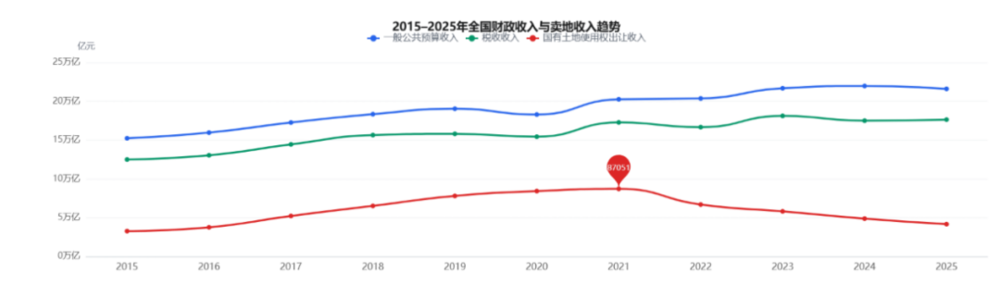
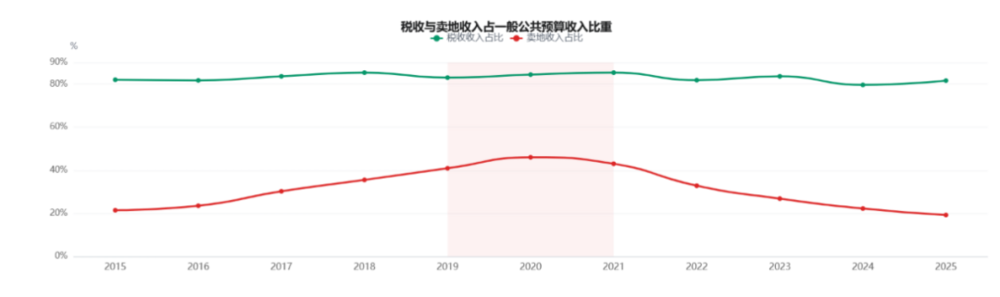
In 2021, China's land transfer revenue reached a peak of 870 billion yuan, but has since declined, dropping to 415 billion yuan by 2025, returning to the levels of 2016 and 2017, a decrease of 455 billion yuan from the 2021 peak, and is likely to continue to decline in the future. According to incomplete statistics, during the three-year pandemic from 2020 to 2023, the government increased spending by 2.3 to 3.5 trillion yuan for epidemic prevention, while revenue decreased by approximately 4 to 6.5 trillion yuan due to work stoppages and production halts. The total loss to the national treasury is estimated to be 6 to 10 trillion yuan, which will take many years to digest. China's general public budget revenue exceeded 2 trillion yuan for the first time in 2021, but only increased to 2.16 trillion yuan by 2025, a mere 135 billion yuan increase over four years. In contrast, from 2015 to 2019, China's general public budget revenue increased by 381 billion yuan over four years. Therefore, the notion that "the Chinese government has a lot of money" needs to be adjusted
On the expenditure side, facing unified problems and massive international challenges, defense spending is unwavering and must be continuously increased, even to prepare for potential large-scale wars.
More efforts are needed in energy and environmental governance.
Economic transformation and high-tech competition require increased expenditures.
On one hand, a large portion of revenue from land sales can only be continuously compressed, as the principle of "housing for living, not for speculation" must be upheld in the long term, and tax growth is subject to numerous constraints. On the other hand, expenditures continue to increase. If this situation is not handled properly, it may lead to fiscal exhaustion. Looking back at history, such a development trajectory is fraught with danger.
For example:
A tearful proposal was made to greatly increase farmers' pensions, which would only amount to a few hundred billion, a sum that the country can afford.
Someone is ostensibly advocating for the nation to allocate 1% or even 2% of GDP to subsidize childbirth — that's only 1 to 2 trillion yuan, which the country can certainly afford.
In one place, there are hundreds of billions, in another, 100 billion; calculated separately, they are manageable, but combined, it's a different story.
The country doesn't have that much money anymore, the government knows how to spend it without needing to be taught by you, who doesn't know how to spend more money?
How can farmers' incomes be increased while also boosting government fiscal revenue?
How can government fiscal expenditure be reduced while better solving problems?
To achieve a simultaneous increase in revenue for Chinese enterprises, employee income, and government income, several strategies can be implemented. Firstly, enterprises can focus on innovating and upgrading their products and services, thereby increasing their competitiveness and profitability. This can be achieved through investments in research and development, adoption of new technologies, and enhancement of their brand reputation. As enterprises grow and their revenue increases, they can provide higher salaries and better benefits to their employees, thus boosting employee income. Additionally, with increased profitability, enterprises can expand their operations, hire more staff, and contribute to the overall economic growth. Meanwhile, the government can play a supportive role by implementing policies that encourage innovation, entrepreneurship, and economic growth. This can include tax incentives for startups and small businesses, investments in infrastructure and education, and streamlining of regulatory processes to reduce bureaucratic hurdles. As the economy grows and enterprises thrive, the government can also increase its revenue through taxes. A thriving economy with high employment rates and rising incomes means more tax revenue for the government, which can then be used to fund public services and infrastructure, further boosting economic growth and improving living standards. Ultimately, achieving a win-win-win situation for enterprises, employees, and the government requires a coordinated approach that balances the interests of all parties involved
If you are a scholar, if you truly care about the country and its people, and if you have the capability to do so, then the above is the way to solve problems.
Young people may have to live in the city for work, but retirees don't need to live in the city, so why not move to the suburbs to enjoy life?
Suburbanization should not repeat the old path of commodifying housing and creating an intermediate "developer". Currently, the suburbs already have homes built by farmers themselves, which are starting to meet the basic conditions that city dwellers can accept. The state has invested many years in implementing various "village access" projects, and rural living conditions have improved significantly.
I have investigated many rural households and found that the toilet conditions in their hometowns have become almost identical to those in cities. These seemingly minor changes in living conditions, however, reflect the massive transformation underway in Chinese society. Although the living conditions in rural China still cannot be compared to those in American houses, at the very least, city dwellers who move to the countryside will no longer feel that their living standards have decreased, but instead will experience an improvement in their quality of life due to the vast expansion of their living space.
When discussing the gap between China and the US, many people only talk about technology and military, and at most, add discourse power. However, these are not the real issues. I have spent my entire career in high-tech and have personally witnessed how China's high-tech industry has caught up with and surpassed the US, step by step, from a huge gap. There is no mystery to it, just a thin layer of window paper. The real gap between China and the US that is hardest to bridge is the living conditions in rural areas, as well as the living conditions of urban residents.
Due to the enormous amount of vacant housing in rural China, even if a large number of retirees move to rural areas, it will not lead to the occupation of existing arable land. Especially if the developer model is fundamentally changed, it will not be necessary to add new land to achieve this. Additionally, the cultivation of desert resources in regions such as Xinjiang and Inner Mongolia has also effectively improved China's extremely tight arable land situation.
China's population has entered a downward trajectory, and the rapid growth in grain imports has likewise eased, shifting into a decline.
Freeing up urban housing on a larger scale would dramatically improve living conditions for young people, while also alleviating the chronic problems afflicting major cities.
Cities like Beijing and Shanghai no longer need to restrict car purchases, and the space for large-scale consumption has also been opened up. On the one hand, there is talk of insufficient consumption, and on the other hand, purchasing behavior is being strictly restricted due to spatial constraints - isn't this logic self-evident?
If urban residents directly pay rent to farmers, wouldn't that be more effective than increasing pensions? This not only greatly improves the living standards of retired urban residents, allowing them to spend their money, but also directly channels urban residents' money to farmers on a large scale, increasing farmers' consumption capacity and consumption concepts. Increasing overall social consumption benefits not just some farmers, but the entire society. This is the path to making farmers universally wealthy without the country having to spend more money.
Farmers' incomes increase, companies' profits rise, and the government can collect more taxes without increasing expenditures...
Develop the lush mountains and lucid waters in rural areas, and let city dwellers move in. Such lush mountains and lucid waters will be China's future gold and silver mountains.
This is the inevitable path to driving the economy through consumption, and it is also the inevitable path for China's social and economic development to truly surpass the United States in the future.