From surviving in the cracks to sitting at the table.
In contrast to the lukewarm reception of long dramas, medium-length dramas appear to be on the verge of their best moment.
In terms of intuitive box office results, the shows that aired at the beginning of the year, such as "Fanhua Luo Jin" with a cumulative box office of 32 million, "Ronghua Ling" with 23 million, and "Zhēi Yún" with 28.3 million. The summer season was even more prominent, with the two mid-season dramas "Linghun Baidu: Shí Nián" and "Lǐn Dōng Xià De Zuìè" both having a market share of over 50% on Yunhe City's platform, a data point that leaves most long dramas envious.
Beyond the results already visible, a wave of building momentum is also pointing toward the breakout of medium-length dramas. From the top down, among the online drama registrations published by the National Radio and Television Administration for July, medium-length dramas numbered as many as 33, including many projects from studios previously known for long-form dramas and web movies. On the platform side, iQiyi is aggressively pushing medium-length dramas, recently launching a suspense label called "Undercurrent Theater" for medium- and short-form content, positioned as "short, intense, and hard-hitting," with revenue sharing of up to 130% to incentivize creators. Meanwhile, mid-tier and even top-tier traffic actors from long-form dramas are increasingly entering the medium-length drama space—recent examples include Ao Ruipeng, who was reported to be starring in a medium-length drama and faced fan backlash over perceived resource downgrades.
More direct signals come from the "long-to-medium" reform, where long dramas are being adapted into medium-length ones. For example, the suspense drama "Yu Hong", adapted from Ban Yu's novel and starring Ma Yili, and the historical legendary drama "Qin Mi", starring Chen Xiao and Zhang Xincheng, are reportedly being reformatted to medium-length dramas with episodes around 20 minutes long, which are all key projects for the platform this year.
In the current drama industry, domestic dramas are one of the few content formats that can mobilize the enthusiasm of all parties, including platforms, production companies, actors, and audiences. At the same time, they have the potential to become a hub for integrating long-drama production capacity and AI-powered film and television creation.
Chinese dramas are shifting from a time-length concept to a new pivot for reconfiguring capacity in the episode industry. Strongly promoting Chinese dramas may activate the creative vitality of domestic TV dramas, and platforms that have been stuck in a bottleneck period for many years may also find the key to entering the next stage.

From shorts to mid-length dramas
So-called mid-length dramas, or "zhong ju," is a newly coined concept that originated from the new classification announced by the State Administration of Radio, Film, and Television's TV Bureau in August last year, referring to a type of drama with episodes lasting around 20 minutes, shot in landscape mode, and featuring continuous storytelling, falling between long dramas and micro-short dramas in terms of format.
The audience is actually not unfamiliar with the content corresponding to Chinese drama, whose predecessor can be seen as the previous horizontal screen short drama. Du Yan had previously analyzed in the article "Surviving in the Gap" that horizontal short dramas, like long dramas, are in horizontal screen mode and are broadcast on long video platforms, requiring them to compete with long dramas for audience attention. However, the platform and producers invest less in them than in long dramas, so they have to rely on innovative subject matter and character settings, and use word-of-mouth to make a splash in the market, despite being at a disadvantage in terms of costumes, makeup, and the appeal of the actors.
However, due to the longer production cycle compared to short dramas, the innovations of mid-length dramas are easily overtaken by short dramas. Two or three years ago, when the competition among short dramas was not as fierce, mid-length dramas could still carve out a niche for themselves, such as previous works like "Yu Yan", "Zhao Rao", and "Gu Xiang Si Qu". But with the surge in supply and competition of short dramas, mid-length dramas are finding it increasingly difficult to rely on creativity to compete with shorter works, and their situation is becoming more and more awkward. For many excellent creators, mid-length dramas have become a stepping stone to long dramas, with the most typical examples being directors Zeng Qingjie and Zhi Zhu, who are now renowned for their work in traditional Chinese dramas.
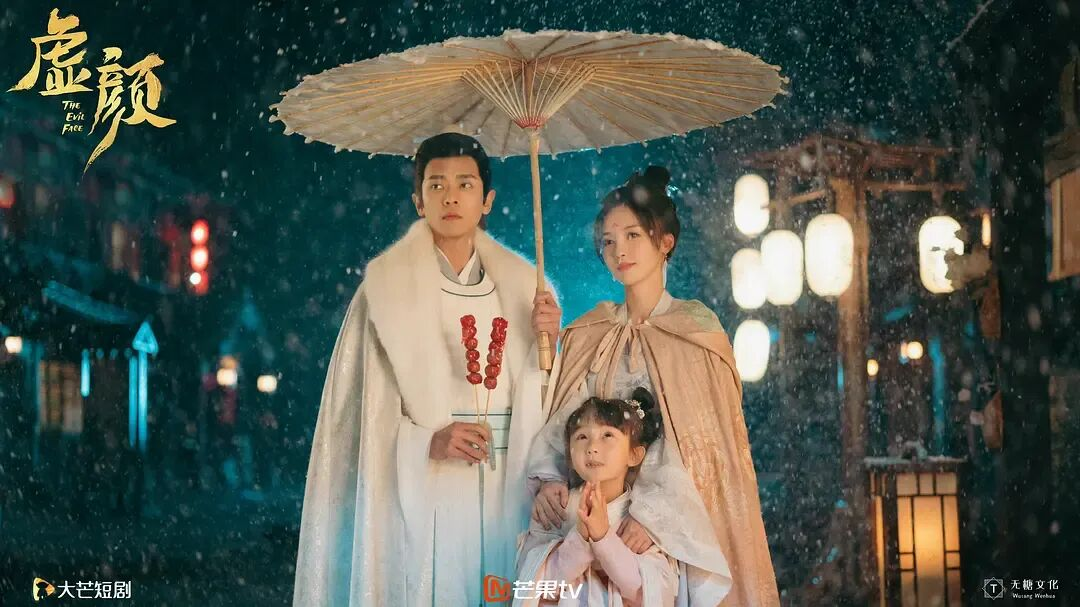
Horizontal short dramas cannot compete with long-form dramas in production quality or star power, nor can they match vertical short dramas in creativity or pacing. From creation and demand to commercial returns, horizontal short dramas have been nearly squeezed out of the mainstream drama market, losing their ecological niche. To some extent, horizontal short dramas have reached a stage where they can no longer rely on their own content capabilities to win audiences and commercial returns—they now require macro-level regulation and support from policy and platforms.
This ambiguity is also intuitively reflected in the awkward positioning of horizontal short dramas. Previously, horizontal dramas that were around 20 minutes long were not clearly defined as micro-short dramas, web dramas, or other categories. The term "horizontal short" is essentially a convention, and there is no unified name for it. In the eyes of many producers and audiences, horizontal short dramas are simply low-cost web dramas made by people who cannot afford to produce long dramas and are too proud to make short dramas.
While mid-length dramas have spun off from short dramas, they have received clear conceptual naming and policy support from the National Radio and Television Administration. This means that mid-length dramas have become an independent category, with clear guidelines for registration, review, support, platform scheduling, and industry statistics.
In terms of content, Zhongju has shown a clear transition over the past year, with its production scale gradually increasing. From "Zhu Que Tang" and "Bo Yi" to this year's "Ling Hun Bai Du: Shi Nian" and "Lin Dong Xia De Zui E", these works have seen a significant increase in terms of the weight of the actors and the platform's support in broadcasting and promotion compared to the past. Additionally, "Ling Bai" is a mature content IP, and "Zhu Que Tang" is preparing for its second season, which indicates that Zhongju's key projects are showing a trend towards seasonalization and IPization.
At the beginning of the year, Zhongju first entered the TV drama guidance and support project announced by the National Radio and Television Administration for 2026, and then, along with short drama series and online film, was referred to as the "new three main types of online drama", becoming the new mainstream direction for online drama in terms of form and creation. Therefore, from a cyclical perspective, up to the current point, the number of dramas being prepared for production and actually starting production has reached a peak. In the middle of the year, various platforms also successively released revenue-sharing policies to stimulate the vitality of Zhongju's creation, and with the friendly guidance of policies and platform revenue-sharing, Zhongju in the second half of the year will continue to attract new producers.
In terms of production cycles, these works will be launched at the end of this year and next year. Next year will officially become the year of explosive growth for Chinese dramas.

The Intersection of Industries
If in the past, mid-length dramas were just a content format sandwiched between long and short dramas, then today's mid-length dramas are becoming a convergence point for long dramas and AI-powered film and television production capacity.
In 2025, roughly 150 long-form dramas began production in China, down about 26% year-on-year. In the first quarter of 2026, around 30 long-form dramas started filming—a slight recovery from last year, but still far below the 55 filmed in the same period of 2024. Production of long-form dramas continues to shrink. Mid-tier projects without top-tier IP or the ability to secure star actors are finding it even harder to survive in the market, and even many A-list actors are anxious about having no roles to take or struggling to land quality scripts.
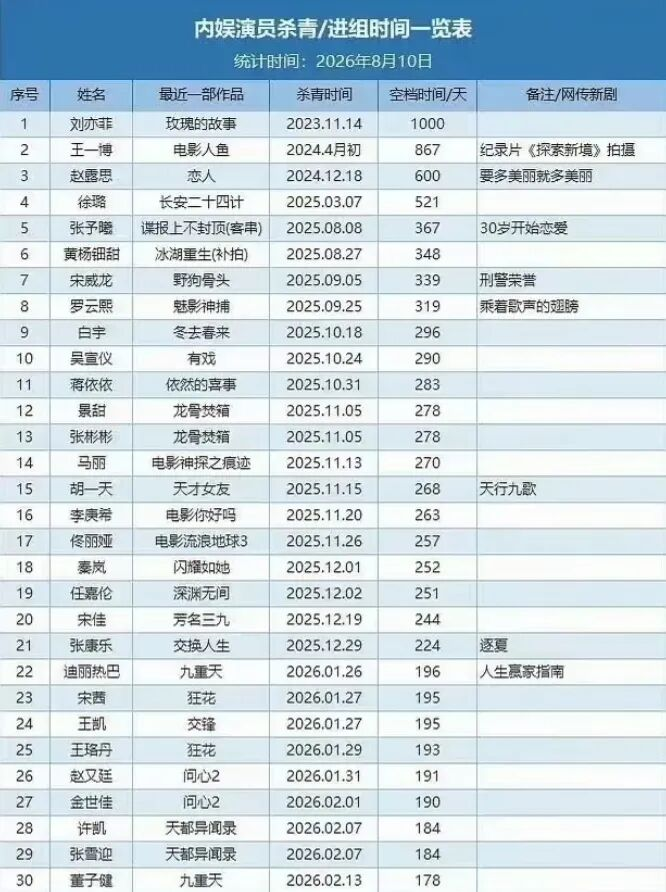
Some netizens have tracked the idle time of domestic entertainment celebrities, with Liu Yifei having not started filming for over 1,000 days, Bai Yu being on hiatus for nearly a year, and popular female celebrities such as Zhao Liying, Xin Zhilei, Liu Shishi, Jin Chen, and Wan Xi, all having not filmed new dramas for half a year. The situation for mid-tier actors is even more worrisome.
With the surge in short dramas and AI-powered film and television supplies, audiences' expectations for long dramas require more high-quality, flagship projects to meet their needs, meaning that long dramas will still have strong heavy-asset attributes, resulting in some content production capacity being underutilized.
Meanwhile, online dramas can effectively take on this production capacity, without having to take on market risks that can run into tens of millions or even hundreds of millions of yuan, while also accommodating complete storytelling, character development, and audio-visual expression, providing a platform for non-top IP, non-traffic-driven actors, genre-specific expression, and emerging creators to showcase their talents.
Based on aired mid-length dramas and this year's registration lists, multiple long-form drama content companies have incorporated mid-length drama production into their content portfolios. Examples include Linghe Culture's registered "Ce Tian Que," Shandong Film & TV's "Yi · Ju," Shaanxi Wenchuang's "Clearly It's Just About Drinking," and Mango Film & TV's "My Heartbeat Contract."
Many producers see strong potential in serializing Chinese dramas and developing them as IPs, with plans to build long-term franchises. Changxin Media, for instance, is developing new Chinese drama series and online feature films around *Lion City Mountains and Seas*. In recent filing announcements, one company registered four judicial-themed drama series at once, underscoring the production capacity and creative momentum the format is generating.
For mid-tier actors, participating in online dramas means more opportunities to take on leading roles and try out innovative subjects, increasing their exposure. Additionally, the shooting cycle for online dramas is generally around 30 days, with relatively flexible scheduling, which will not affect their ability to join longer projects.
Beyond long-form dramas, another portion of medium-length drama production capacity comes from AI-generated film and television. This summer, thanks to the maturation of AI film and TV applications and platform promotion, AI-generated content has moved beyond short films and short dramas, gradually acquiring the capability for long-form narrative. Looking at AI series alone, episode length has grown from one to two minutes in the vertical format to nearly ten minutes in the horizontal format, gradually approaching medium-length dramas. "Beipai Notes," aired on Tencent Video, earned over one million yuan in revenue sharing within its first week of release.
Whether in terms of advancements in model capabilities or the application and creative ambitions of AI creators, the current stage of domestic dramas and AI films are achieving a balance between capability and scale, and will also attract more emerging creators who have an interest in exploring AI films.
The drama industry is currently in a period of production capacity redistribution, driven both by mounting pressures and by the potential of new production methods and content formats. The contraction of long-form dramas and the rapid advance of AI-driven filmmaking may well combine to propel mid-length dramas into their ascendancy.

New version available
The expansion of production capacity and the increase in scale may enable Chinese dramas to establish a new business model based on revenue sharing, which is also a more practical consideration for platforms to vigorously promote Chinese dramas.
Long-form video platforms have evolved from their early reliance on licensed content to a model where key projects are now predominantly customized or self-produced dramas. Revenue-sharing dramas have never been a mainstream format.
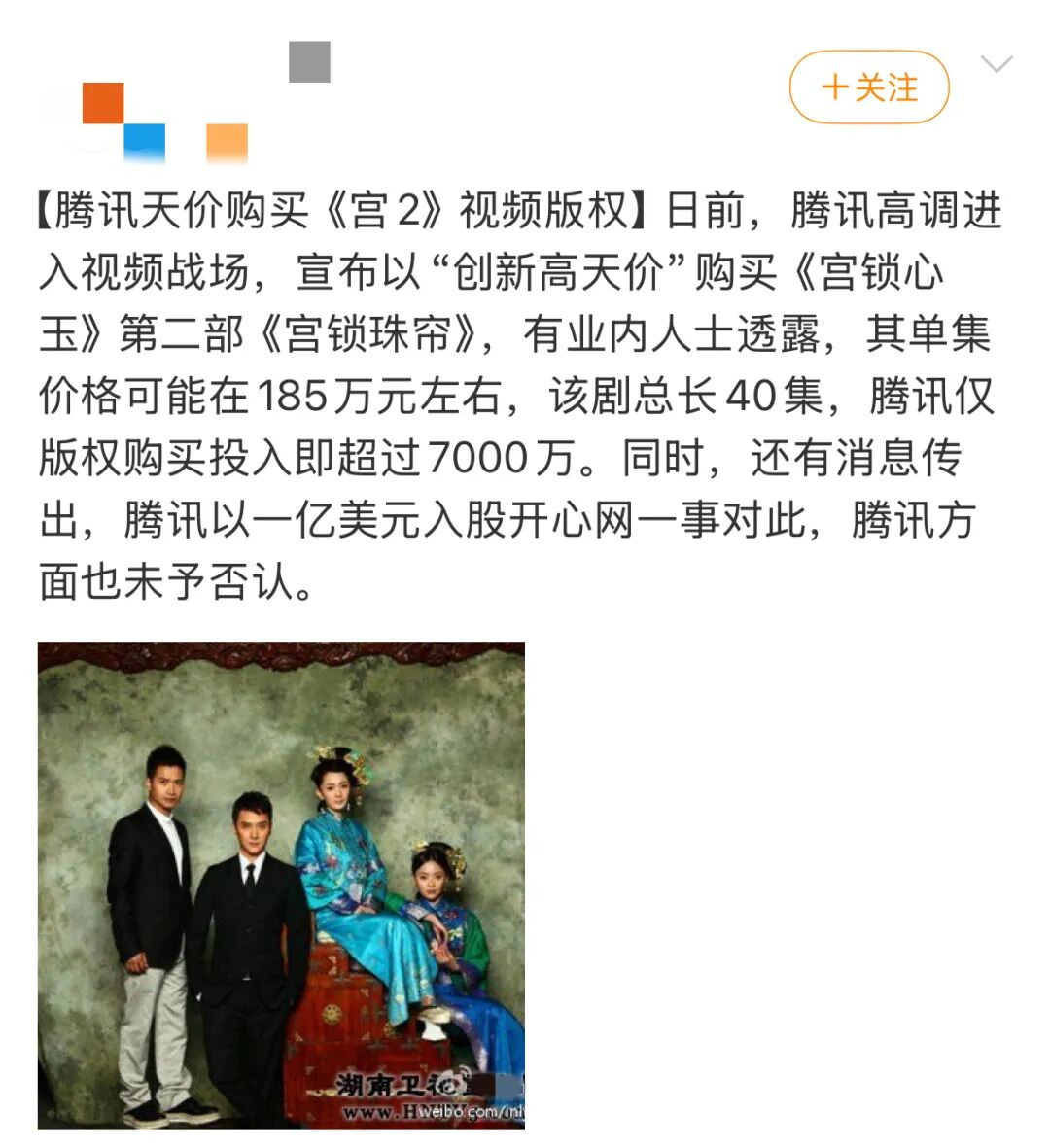
During its early expansion phase, the platform procured a large quantity of film and television works to rapidly enrich its library and expand its user base. For example, in 2011, CCTV reported that video websites had sparked a fierce competition for the exclusive copyrights of TV dramas, with Tencent Video's purchase of "Palace" setting a new industry high.
However, due to the continuous rise in copyright prices, relying solely on copyright procurement not only results in high costs but also leads to content homogenization among platforms. To obtain exclusive content and establish a platform brand, platforms have begun to extend their reach upstream in the industry, increasing their investment in self-produced and co-produced content. For example, Sohu Video's 2012 release of "Dou Shi Nan Shi" and iQIYI's 2015 collaboration with Huanrui Century on "The Lost Tomb" demonstrate how platforms have started to integrate major IPs, stars, and professional production resources into their online dramas, and have driven paid subscriptions through member-exclusive broadcast schedules.
Following this, to further grasp core IP, production capabilities, and project returns, the platform increased its investment in self-produced content, including works such as "The Bad Kids" from Mist Theater that year, which had a significant industry demonstration effect.
This clue corresponds to the expansion and growth phase of long-form video platforms. Their level of involvement in content production has deepened, and membership numbers have continued to climb. Despite persistently high cost outlays, they have secured a relatively stable market landscape and industry influence today.
However, the market demand side is currently undergoing profound changes, and even if platforms have scarce exclusive content, it is still difficult to retain their original audience, and they may even face continuous loss of viewers. With the rise in production costs for long dramas and increased uncertainty over blockbuster hits, platforms can no longer afford to bear the high upfront investments alone, and have entered a new stage where they need to share market risks with production companies.
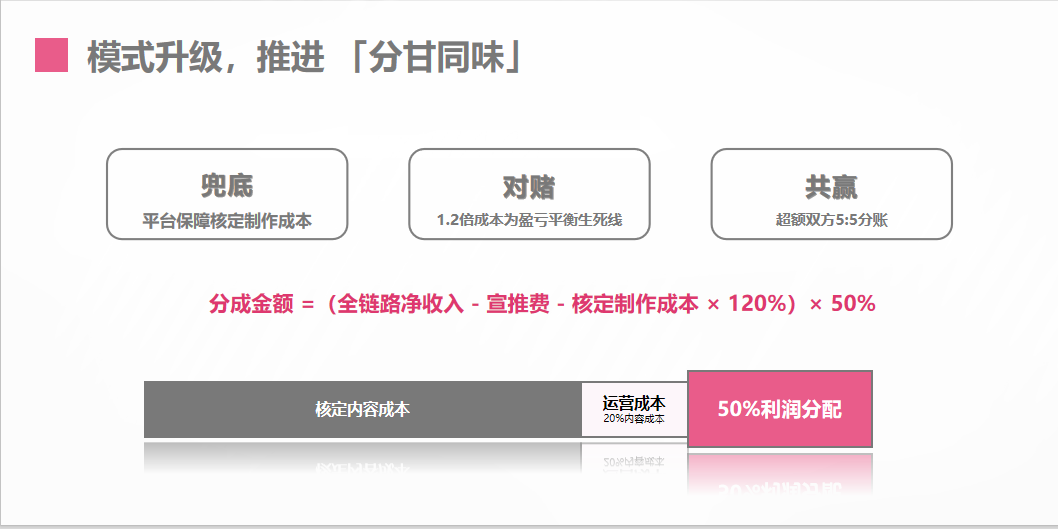
On Tencent Video, this model is referred to as "post-hoc incentives," while on iQIYI, it's known as "sharing the sweetness and bitterness." Both terms point to a revenue-sharing model, which means the platform reduces its upfront investment, with later profits tied to actual viewing performance, allowing the production side to share market risks.
(Source: WeChat public account @iQIYI Industry Express)
For the platform, the cost of content under this model can shift from a one-time fixed expenditure to a variable cost that matches the actual revenue generated by the work. For production companies, this means trading some certainty for a higher potential return. When a work fails, both parties share the risk; when it succeeds, the production company can not only receive a fixed production fee but also continue to participate in revenue from membership, advertising, derivative products, and serialized development, thereby benefiting from long-tail income.
Currently, the vast majority of Chinese dramas that have been broadcast adopt a revenue-sharing model. At the same time, the platform's incentive for content companies to join the Chinese drama track is its intuitive and beneficial revenue-sharing policy for producers. Compared to buying copyrights at a fixed price or investing heavily in self-produced or customized content, revenue-sharing appears more flexible and fair, stimulating creativity and better suited to the current market where creative homogeny is prevalent and audience fatigue is severe.
Furthermore, the emphasis on revenue sharing models and mid-form video content is also related to long-form video platforms re-evaluating their positioning. Currently, platforms need not only to reduce the cost of individual projects, but also to find a way to continuously expand content supply and connect more creators with audiences.
In April, iQIYI announced its transformation into a "decentralized social media" platform, building a community for creators and users. Although the platform will still retain its top content procurement, production, and investment, it can be imagined that in the future, the platform's content growth will rely more on external creators' autonomous development and production, rather than the platform initiating, funding, and organizing productions one by one. For most projects, the platform will return more creative decision-making power to the production side, in which case revenue sharing is a more suitable model for the platform's positioning and may gradually become a fundamental mechanism connecting the platform with a wide range of creators.
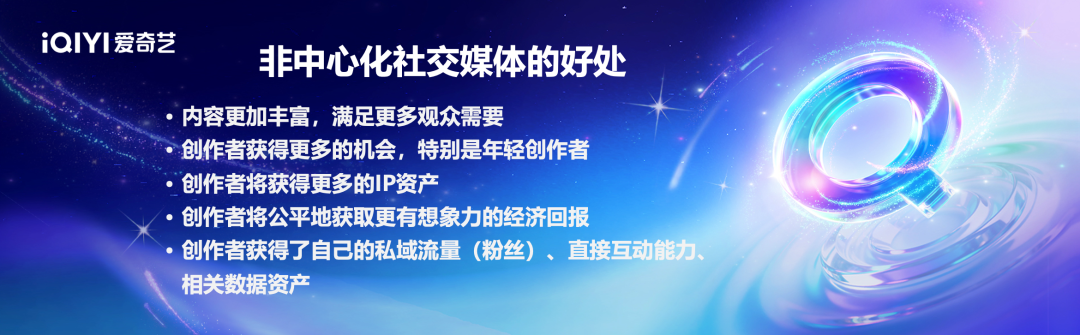
Chinese dramas are now a suitable and new content format at the intersection of this change. In the revenue-sharing rules accompanying this transformation, iQIYI has listed Chinese dramas and AIGC content as additional subsidy targets, also showing the platform's expectations for these two new types of content.
To be sure, whether Chinese dramas can become the new winning formula ultimately hinges on translating their format flexibility into sustainable creative and commercial returns. Only when a steady stream of substantial flagship works emerges, audiences develop genuine trust in Chinese dramas, and creators see a positive cycle between investment and payoff, can the genre truly move beyond the ambiguous space between long-form and short-form content and secure its own niche.