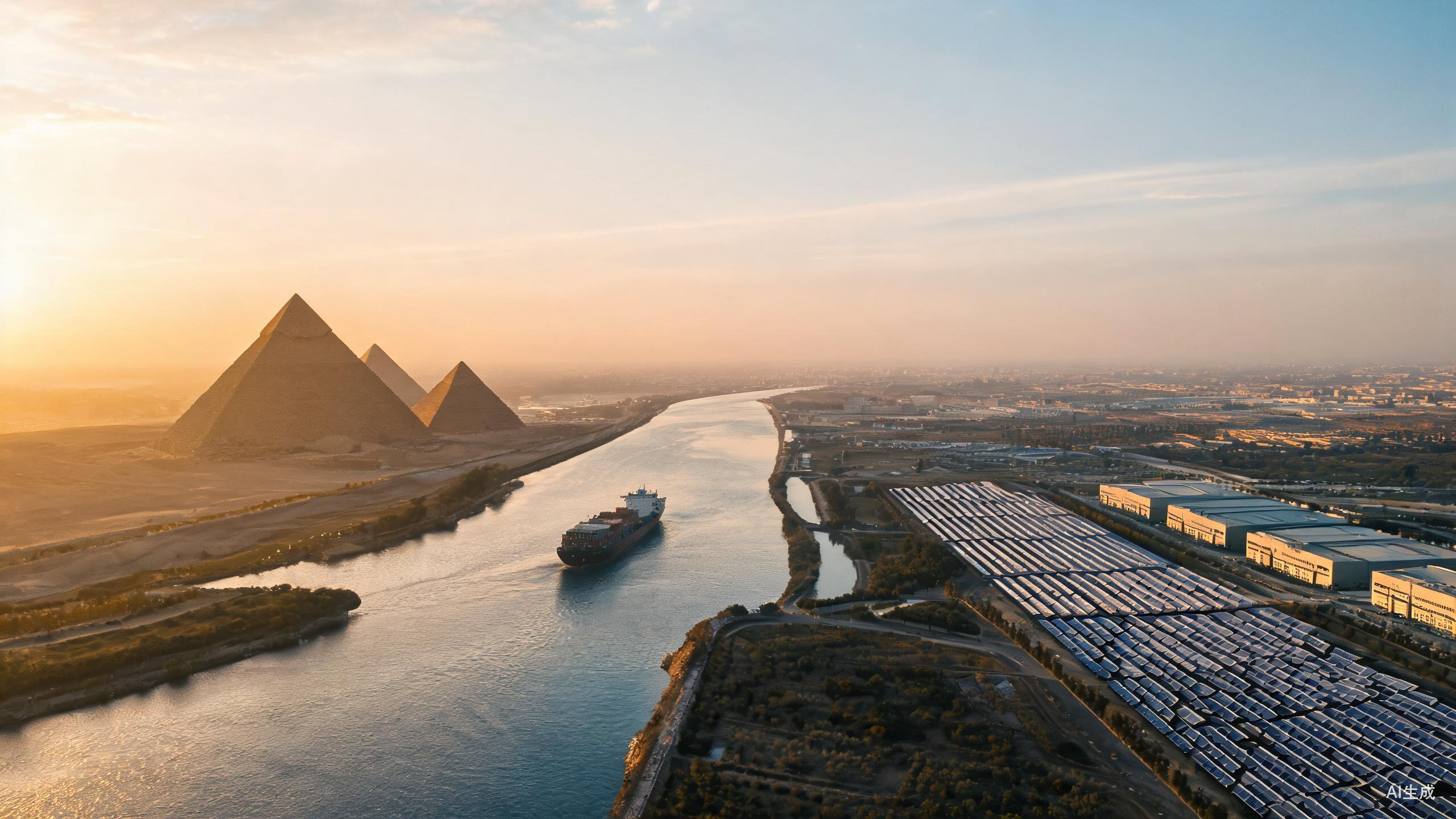
Chinese President Xi Jinping is making a state visit to Egypt for the first time in a decade, coinciding with the 70th anniversary of the establishment of diplomatic relations between the two countries.
As the first Arab and African country to establish diplomatic relations with the People's Republic of China, Egypt's story with China has long transcended diplomatic rhetoric, and is instead written in the industrial parks along the Suez Canal and etched in the skyline between the Nile River and the New Administrative Capital.
At this pivotal juncture of building on past achievements and charting new directions, the bilateral interaction has been imbued with fresh possibilities. Against this backdrop, Observer.com conducted a dialogue with Zhao Jun, associate professor at the Middle East Studies Institute of Shanghai International Studies University.
Zhao Jun has conducted on-site research in Egypt multiple times and has long been focused on China-Egypt relations and China-Arab cooperation. Centering on key topics such as the evolution logic of bilateral relations, the effectiveness and bottlenecks of economic and trade cooperation, and the prospects for cooperation in emerging fields like technology, he provides systematic analysis and practical judgment from an academic perspective, offering an in-depth and straightforward reference for observing the direction and prospects of China-Egypt relations in the new era.
Dialogue/Observers Li Ling
Looking Back Over Seventy Years
The year 2026 marks the 70th anniversary of the establishment of diplomatic relations between China and Egypt, with Egypt being the first Arab and African country to establish diplomatic relations with the People's Republic of China. From your research perspective, what evolution have China-Egypt relations undergone over the past 70 years?
Zhao Jun: The evolution of China-Egypt relations over the past 70 years can be broadly summarized into four stages: the first stage is the foundation-laying period centered on political mutual trust (1956-1970s); the second stage is the deepening period of transitioning from traditional friendship to institutionalized cooperation (1980s to the late 1990s); the third stage is the expansion period primarily focused on strategic cooperation and pragmatic collaboration (around 2000 to 2013); and the fourth stage is the period of comprehensive strategic development (2014 to present).
Looking at the development trajectory, I think it's not only necessary to see the upgrade of the bilateral relationship hierarchy, but also to pay attention to the relatively stable strategic mutual trust and deepening cooperation logic that has been gradually formed between the two sides in the face of multiple major changes in the international landscape - from political mutual support to all-round strategic cooperation, and then to jointly maintaining and developing the global South's interests today.
Among these, it has been consistently believed that 1956 was a watershed moment before and after the establishment of diplomatic relations, and that the upgrade to a comprehensive strategic partnership in December 2014 was the true watershed moment after the establishment of diplomatic relations. Since then, China-Egypt relations have developed significantly faster. Under the strategic leadership of President Xi and President Sisi, high-level interactions between the two countries have been extremely close. Publicly available information shows that the two heads of state have held at least 13 meetings over the past 10 years. It can be said that since 2014, China-Egypt relations have undergone a qualitative change, and are no longer limited to bilateral relations, but are increasingly characterized by regional, cross-regional, and global significance.
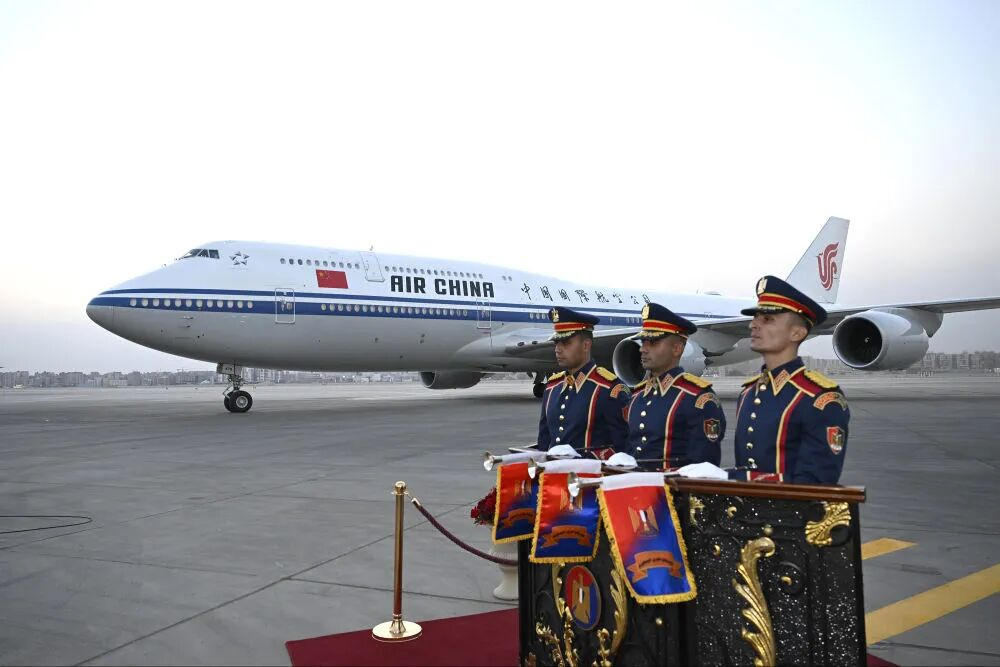
On the evening of September 1 local time, President Xi Jinping arrived in Cairo, the capital of Egypt, to begin a state visit to the country, according to Xinhua News Agency.
If we are to summarize the internal logic of the evolution of the relationship between the two countries over the past 70 years, I think there are three key "changes" that are particularly important.
The first change is a change in the nature of the relationship.
It started with mutual political support, then developed into strategic cooperation, and further into a comprehensive strategic partnership, and today it has moved further towards building a China-Egypt community of shared destiny for the new era. In other words, the relationship has transitioned from "friendly" to "strategic", and then from "strategic" to "sharing a common destiny".
The second change is a shift in the areas of cooperation.
Initially, the most prominent areas were diplomatic and political support; later, trade, investment, education, culture, military, and security were gradually added; and since entering the new era, new areas such as infrastructure, industrial parks, energy, automobiles, digital economy, artificial intelligence, and green development have been expanded.
For instance, the TEDA Suez Economic and Trade Cooperation Zone, which is well-known to many, has become a flagship project for China and Egypt's joint construction of the "Belt and Road". Currently, there are over 3,000 Chinese-invested enterprises operating in Egypt, with China's investment in the country exceeding $10 billion, making it an important part of driving Egypt's modernization process.
The third change is that the spillover effect of the bilateral relationship is becoming increasingly significant.
Previously, when we discussed China-Egypt relations, we mainly focused on the bilateral relationship itself; today, it's completely different, as can be seen from the extensive coverage and commentary, and even some over-interpretation (especially from a geopolitical perspective), in mainstream international media of President Xi's visit to Egypt.
Therefore, to understand China-Egypt relations today, one cannot simply look at it from a bilateral perspective. As Egypt is an Arab country, an African country, and a nation located at the intersection of multiple regions including the Middle East, Africa, the Mediterranean, and the Red Sea, while China is one of the largest developing countries globally, China-Egypt cooperation naturally has the attributes of China-Arab cooperation, China-Africa cooperation, and Global South cooperation. This is also why China has repeatedly referred to China-Egypt relations in recent years as a model of unity and cooperation among developing countries, as well as a template for collective cooperation between China and Arab states and China and African states.
In your view, what kind of historical juncture are the current relations between the two countries at?
Zhao Jun: In my view, this issue involves at least four aspects:
China-Egypt relations are currently at their best in 70 years, which is not just a diplomatic expression.
In terms of the hierarchy of relations, the two countries have established a comprehensive strategic partnership; in terms of high-level interactions, the heads of state of the two countries maintain close communication; in terms of economic cooperation, Chinese enterprises, industrial parks, and infrastructure cooperation have formed a considerable scale; in terms of international affairs, the two sides have many common positions on multiple multilateral platforms such as the United Nations and the BRICS countries.
Second is the period of evolving from bilateral strategic partners to global southern strategic partners, which I think is the most worthy of study today and is also where current research is relatively weak.
China and Egypt are now facing not only how to expand bilateral trade, but also, as important countries in the Global South, they face issues such as modernization, development, security, and global governance. Therefore, the topics of cooperation between the two countries are gradually expanding from "what we cooperate on between us" to "how we jointly respond to regional and global issues".
For instance, on issues such as the Israeli-Palestinian conflict and its ongoing spillover, Middle East peace, global governance, and multilateralism, Egypt has significant regional diplomatic and mediating capabilities, while China possesses important global diplomatic and economic influence, forming a certain degree of strategic complementarity between the two.
Third, it has transitioned from the phase of achieving cooperative results to the phase of upgrading cooperation.
Over the past 20-plus years, one of the main issues addressed by China-Egypt cooperation has been transforming political mutual trust into economic and social cooperative outcomes. In the next decade, I think what needs to be addressed is how to transform the existing scale of cooperation into higher-quality, more sustainable, and more innovative cooperation.
Both sides have sent multiple signals on the 70th anniversary of diplomatic relations - Egypt has explicitly expressed its desire to strengthen cooperation in areas such as electric vehicles, solar energy, and industrial parks, while China has proposed deepening cooperation in fields including economy and trade, military, and artificial intelligence. Areas worthy of special attention in the future include: industrial chain and supply chain cooperation; new energy, green development, and electric vehicles; digital economy and artificial intelligence; the Suez Canal and the Red Sea-Mediterranean interconnection; agriculture and food security; education, science and technology, and youth exchanges; China-Egypt third-party cooperation in Africa and the Arab world; and strengthening coordination in the Global South and multilateral mechanisms, among others.
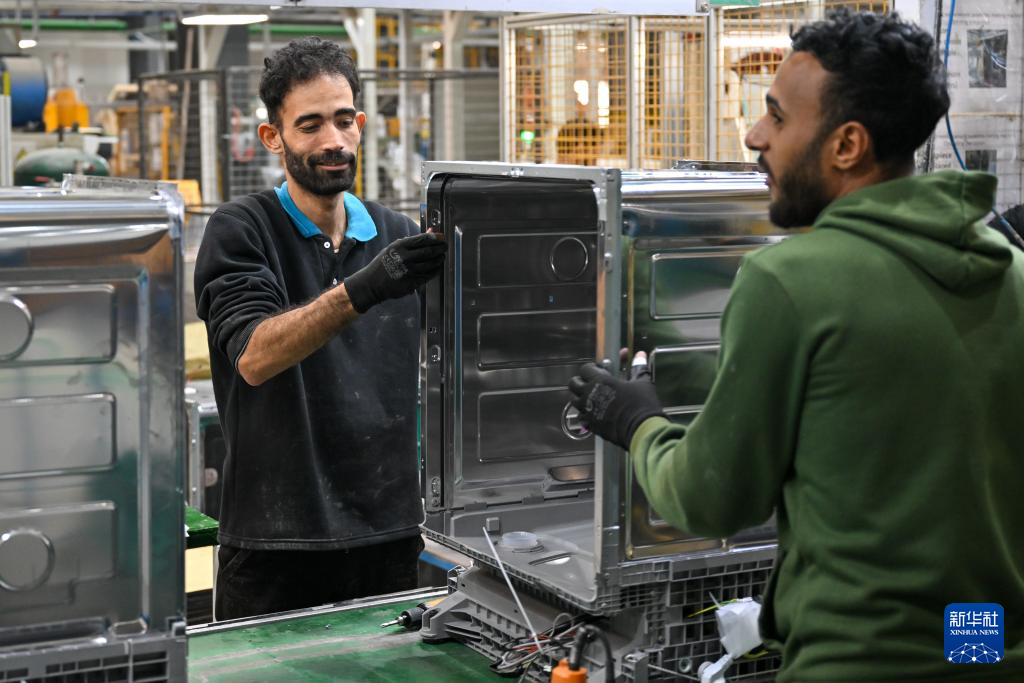
On January 19, Egyptian employees assembled dishwashers at the Midea Egypt Kitchen and Water Heater Co., Ltd. dishwasher production workshop in the China-Egypt TEDA Suez Economic and Trade Cooperation Zone in Suez, Egypt. Xinhua News Agency
This is a significant turning point that builds on the past and paves the way for the future.
The 70th anniversary also has a particularly noteworthy "significance of timing". If 1956 marked the beginning of China-Egypt relations, 1999 saw the mechanization of strategic cooperation, and 2014 the establishment of a comprehensive strategic partnership, then the 70th anniversary in 2026 is more like a new "restart". This historical node is extremely special, as it coincides with President Xi's second visit to Egypt in 10 years, exactly at the 70th anniversary of the establishment of diplomatic relations between China and Egypt. The Ministry of Foreign Affairs has positioned this visit as an important node for China-Egypt relations to "inherit the past and forge ahead into the future".
If today's China-Egypt relations are to be defined in one sentence, I believe: China-Egypt relations have gone through the stage of "laying a foundation of political mutual trust, deepening strategic cooperation, and expanding economic and trade cooperation," and are now entering a new stage with "joint modernization as a new driving force, global South-South cooperation as a broader platform, and the building of a community with a shared future as a long-term direction."
This is also why the 70th anniversary cannot be simply understood as a commemorative milestone - it is actually a coordinate for the transformation of China-Egypt relations from a "historical friendship" to a "future-oriented strategic community".
Achievements and Bottlenecks in Economic and Trade Cooperation
Ten years ago, you conducted a systematic analysis of the strategic docking of Egypt's "Renaissance Program" and the "Belt and Road" initiative, pointing out that the two have strong complementarity. Looking back on the past decade, what do you think is the greatest achievement in the strategic docking between China and Egypt? What is the biggest bottleneck?
Zhao Jun: Thank you for paying attention to my previous research. Looking back, my previous research was still relatively objective, but the conclusions were somewhat conservative.
Looking back over the past decade, I believe the greatest achievement of the China-Egypt development strategy alignment is the transition from idea alignment to project implementation, and then to industrial cooperation and coexistence. After China and Egypt established a comprehensive strategic partnership in 2014, the Belt and Road Initiative and Egypt's Vision 2030 have continuously deepened their alignment, with a number of landmark projects such as the China-Egypt TEDA Economic and Trade Cooperation Zone, the Central Business District of the New Administrative Capital, the electrification of the 10th of Ramadan City railway, and Egypt's second satellite, among others, being successfully implemented. In particular, the TEDA Economic and Trade Cooperation Zone has become the most representative carrier of bilateral strategic alignment, and has formed strong industrial agglomeration and employment-driven effects.
More importantly, cooperation is shifting from traditional infrastructure construction to localized production, supply chain and industrial chain collaboration. Chinese companies are continuously expanding their investments in Egypt in new fields such as building materials, textiles, new energy, automobiles and home appliances, helping Egypt transform the geographical advantages of the Suez Canal into manufacturing and export advantages. This means that the connection between the "Belt and Road" and "Vision 2030" is no longer just about "helping Egypt with construction projects," but to a certain extent, participating in Egypt's industrial upgrading and deeply integrating into its economic modernization transformation process.
If we're talking about the greatest achievements, I think they should be understood from at least three aspects:
One is the successful alignment of national development philosophies - Egypt seeks China's development experience and wisdom, and China provides support without any great power chauvinism, which is most evident in the equality of Sino-Egyptian relations and Egypt's demonstration of strategic autonomy.
Second, after the alignment of concepts, numerous major projects and other objective material achievements have been implemented in Egypt's localization process, which will not be elaborated on here;
Third is the construction of sustainable and symbiotic development elements for the future, namely how to further upgrade "project interconnection" to "industrial symbiosis" and truly transform scale advantages into long-term development quality advantages.
According to my understanding, the TEDA Suez Economic and Trade Cooperation Zone has attracted over 200 companies, with total investment exceeding $4.7 billion, and created more than 10,000 jobs; the iconic tower in the Central Business District of the new administrative capital has become the "tallest building in Africa". How do you evaluate the actual impact of these cooperation projects on Egypt's economic development? What experiences are worth promoting in terms of China-Egypt capacity cooperation?
Zhao Jun said that from the actual effects of Egypt's economic development, I believe the significance of China-Egypt cooperation projects has transcended simple infrastructure construction and is forming a comprehensive effect where investment, industry, employment, technology, and regional development drive each other.
The greatest value of the TEDA Cooperation Zone is that it has transformed Egypt's geographical advantages into industrial advantages, developing a former desert area into an industrial platform that connects the Suez Canal, the Egyptian market, and international markets.
The significance of the central business district in Egypt's New Administrative Capital extends beyond the completion of Africa's tallest skyscraper. The entire district serves as a concentrated demonstration of Chinese enterprises' integrated engineering capabilities, project management expertise, and technical standards. More importantly, it supports Egypt's national development strategy for the New Administrative Capital, embodying the integration of large-scale infrastructure with Egypt's urban modernization drive.
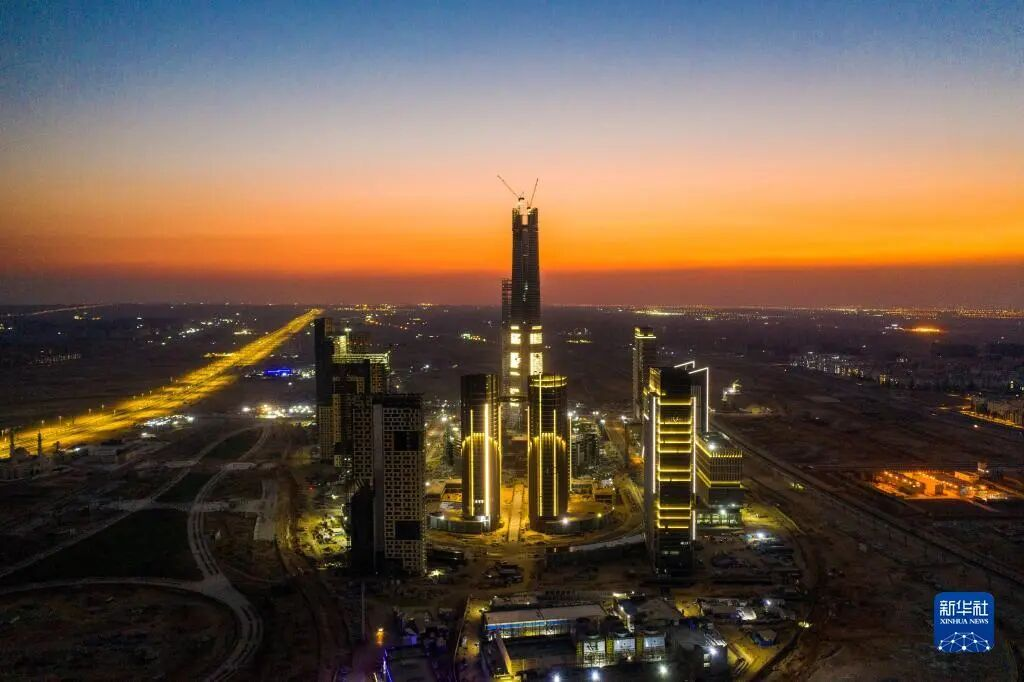
This is the Central Business District project of Egypt's new administrative capital, taken on July 19, 2022. Xinhua News Agency
In addition to aligning with Egypt's national development strategy, I think it is more noteworthy that China-Egypt cooperation has been transitioning from engineering contracting to localized manufacturing and industrial chain cooperation in recent years. Industries such as new energy, automobiles, home appliances, building materials, and textiles are being established, with some projects filling gaps in Egypt's industries, such as the Jushi Glass Fiber project, which has developed strong export capabilities.
From these practices, I believe that there are at least four experiences from China-Egypt cooperation on production capacity that are worth promoting: first, strategic alignment is a prerequisite, and only when the development strategies of both sides form a positive interaction can cooperation have long-term stability; second, industrial parks are an important vehicle, which can reduce the investment costs of enterprises, form a cluster effect, and increase the comprehensive economic benefits of projects; third, transitioning from product entry to industrial roots is an inherent requirement; fourth, adhering to mutual benefit, win-win outcomes, and common development is a political and market principle that both sides must follow.
Chinese companies gain market and international development space, while Egypt secures investment, employment, industrial capability, and export capability, making this alignment of interests the foundation for long-term cooperation.
So, I think the most replicable experience of China-Egypt production capacity cooperation is not simply relocating Chinese manufacturing to Egypt, but rather combining China's industries, technologies, capital, and management expertise with Egypt's location, market, resources, and development needs, ultimately forming a virtuous cycle where projects drive industries, industries drive employment, and employment promotes development, and then moving towards a deeper level of "industrial symbiosis".
While achievements are undeniable, there are also some bottlenecks, such as the issue of trade imbalance. Although starting from May 2026, China has implemented comprehensive zero tariffs on 53 African countries with which it has diplomatic relations, and in the first half of the year, Egypt's exports to China grew by 67.5%; however, looking at the long term, Sino-Egyptian trade has long been characterized by a large surplus - in 2025, the bilateral trade volume was approximately $20.8 billion, with China's exports to Egypt nearing $19.9 billion, while Egypt's exports to China were just over $800 million. How do you view this issue? In your opinion, to what extent can the zero-tariff policy change this situation?
Zhao Jun: The trade imbalance between China and Egypt is a problem that must be addressed head-on. For years, Egyptian officials at multiple levels have paid particular attention to this issue, and it has also been a key lever for the U.S. and the West in attempting to drive a wedge between the two countries. When I talk with Egyptian friends, they often joke: "You Chinese can't just keep making money off our poor country." This scene has repeated itself time and again, and it has consistently pushed me to think about this problem.
I think this issue cannot be simply reduced to China exporting too much and Egypt exporting too little, with China making money and Egypt losing out. More importantly, we need to look at the trade structure and the industrial chain structure. In 2025, China-Egypt trade volume reached $20.8 billion. Although Egypt runs a large trade deficit with China, China's imports from Egypt grew by more than 40%. In addition, about 66% of China's exports to Egypt in 2025 were intermediate goods, a significant portion of which entered Egypt's processing and manufacturing system before being re-exported by Egypt to other markets.
Thus, the key to resolving trade imbalances is not to mechanically pursue absolute balance in imports and exports for a given year - which is also impossible - but to expand Egypt's exports of products with comparative advantages to China, while improving the level of China-Egypt industrial chain cooperation, making the trade structure more balanced.
I believe the comprehensive zero tariffs implemented starting May 1 this year is a significant institutional breakthrough. Egypt's exports to China have been granted zero tariffs for all tax items, equivalent to opening a green channel for Egyptian companies to access China's ultra-large-scale market. In terms of short-term effects, positive changes have already emerged: Egypt's exports to China grew 67.5% in the first half of 2026; in August 2026, the Chinese side held an export promotion event in Cairo, and during the event, companies from both countries signed nearly $170 million in trade agreements - this is a beneficial attempt to further convert policy dividends into market orders.
However, I don't think zero tariffs alone are enough to fundamentally change the trade landscape. Tariffs are just one part of the export costs, and whether Egypt can increase its exports to China also depends on product quality and standards, supply capacity, logistics systems, brand building, and enterprises' understanding of the Chinese market. In particular, Egypt's exports to China are currently still mainly concentrated in agricultural products, food, and some raw materials, and the export product structure needs to be further diversified.
If I were to assess the extent to which zero tariffs can change the China-Egypt trade landscape in the next few years, my consistent argument is that zero tariffs can narrow the imbalance in incremental trade, but it's difficult to single-handedly eliminate the existing trade deficit. What truly determines whether the trade structure can undergo fundamental changes is whether Egypt can leverage zero tariffs to further transform its export advantages into industrial advantages, and enter and occupy the Chinese market share with high-quality products. In other words, zero tariffs are just the starting point, not the end goal, and trade balance ultimately relies on industrial balance to achieve.
In reality, both countries have become aware of this dilemma and, as previously mentioned, have already identified new energy, electric vehicles, artificial intelligence, digital economy, and green development as new growth drivers. The trade deficit has been formed over the long term and will also require time to resolve, making it difficult to eliminate in the short term.
When it comes to cooperation bottlenecks, Egypt's own macroeconomic pressures, financing costs, foreign exchange shortages, and changes in regional security environments will also affect the progress of some cooperation projects and enterprises' investment expectations. During my research trip to Egypt in July 2026, I deeply felt the difficulties faced by Chinese companies in Egypt. Therefore, the key to future China-Egypt strategic alignment will no longer be whether there are projects, but how to improve the economic benefits and sustainability of projects, and further achieve in-depth integration of trade, investment, industry, technology, and talent.
Technological Competition and Regional Diplomacy
According to reports, a Chinese company is bidding to provide AI chips to the Egyptian government's data center.
Zhao Jun: Yes, this development is well worth watching. It signals that China-Egypt technology cooperation is extending beyond past work in communications and digital infrastructure into the foundational pillars of the digital economy—AI computing power, chips, and data centers.
However, according to recent reports, Huawei has proposed a plan to the Egyptian government to build an AI data center, including training and inference computing power, in a recent bidding process. As the project has not yet been officially awarded, it is more suitable to view it as an important signal of emerging technology cooperation between China and Egypt, rather than a done deal.
I think AI and digital infrastructure are indeed one of the most noteworthy new growth points for the future, but not the only direction. According to Egypt's Industrialization Strategy 2026-2030, which was heavily promoted this year, what's more worth expecting is the formation of four new chains in key areas including digital, green, manufacturing, and others: first, AI, cloud computing, and data centers; second, solar energy, wind power, energy storage, and green energy; third, electric vehicles, high-end textiles, advanced manufacturing, and the Suez Canal Economic Zone's industrial chain; and fourth, aerospace, modern agriculture, logistics, and financial cooperation, all of which have significant room for development.
It's worth noting that cooperation in the AI sector has prompted the US to consider forming a tech alliance to counter it. Having hosted academic discussions such as "New Technology Revolution and New Challenges in the Middle East" and "New Trends in Tech Cooperation between Major Powers and Middle Eastern Countries," and having conducted in-depth analysis of US tech diplomacy towards Egypt, do you think China-Egypt cooperation in cutting-edge tech fields like AI is becoming a "new front line" for the China-US tech war in the Middle East?
Zhao Jun: In my opinion, it can be said that it is becoming a new frontier for China-US tech competition in the Middle East, but it's not accurate to simply say that Egypt has become the front line of the China-US tech war. A more accurate judgment is that as technologies such as artificial intelligence, chips, and data centers become increasingly strategic, China-Egypt tech cooperation is entering a highly sensitive competitive domain for the US, while Egypt is becoming an important node where China-US tech competition intersects with the digitalization demands of the Global South.
The recent Egyptian AI data center project, from what I understand, involves Huawei proposing an AI data center solution to the Egyptian government that includes approximately 2000 Ascend chips. Meanwhile, the US is considering organizing a competing solution involving companies such as Nvidia, AMD, and Microsoft. This has clearly gone beyond ordinary commercial competition, taking on the hues of tech diplomacy and strategic competition. I think this change reflects at least three trends.
First, the target of competition is expanding from "chips" to the entire digital infrastructure system.
Currently, whoever helps Egypt build its AI infrastructure is actually participating in shaping Egypt's future digital ecosystem and technological standards. Therefore, it is not surprising that the US is highly sensitive to Huawei's entry into Egypt's AI infrastructure sector.
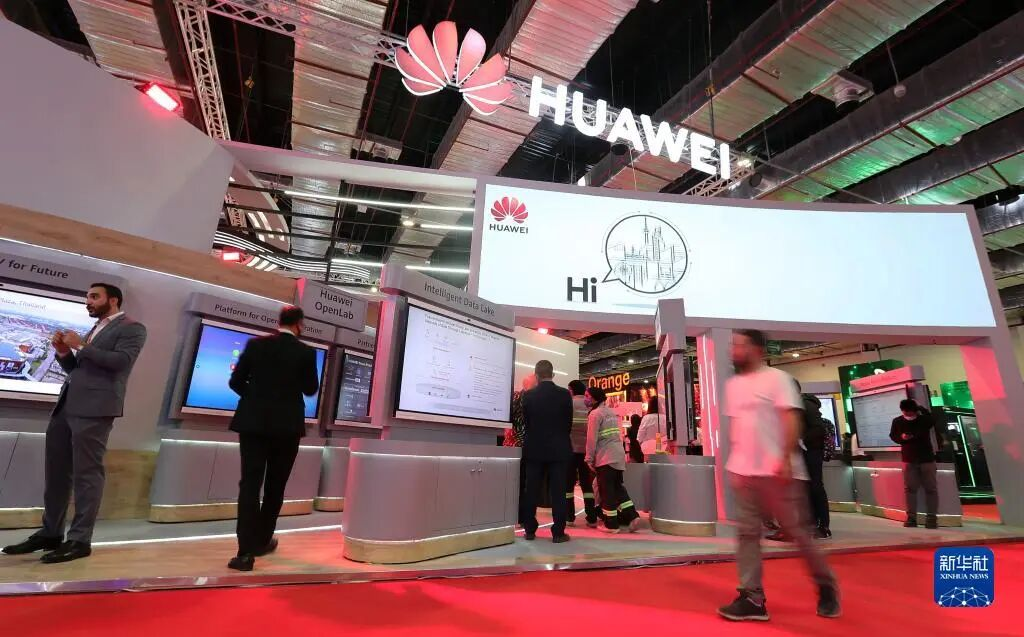
Visitors view the Huawei booth at an information and communication technology exhibition in Cairo, Egypt, on Nov. 7, 2021. Xinhua.
Second, Egypt's strategic value is on the rise.
Egypt is not just an ordinary technology market - with a population of over 100 million, it is a key country in the Arab world and Africa, and is strategically located at the intersection of the Middle East, Africa, and Europe. If Egypt were to establish a relatively complete AI infrastructure and digital industry ecosystem, its influence could extend far beyond Egypt itself. For China, this is an important pivot for entering the Arab and African digital markets; for the US, it is related to whether its so-called "trusted technology supply chain" can be extended to the Global South.
Third, and what I think is most important, is that Egypt does not want to take sides between China and the US.
Egyptian diplomacy has long been marked by strong strategic autonomy. For Egypt, the most practical interests lie in gaining access to more technology sources, greater investment, and stronger digital capabilities, making it entirely possible for the country to pursue tech cooperation with China, the United States, and other nations simultaneously. In fact, the U.S. Embassy in Egypt hosted a dedicated "American Innovation and AI Forum" this July, actively showcasing American AI technology and its ecosystem.
So, I don't agree with the idea that future China-Egypt tech cooperation can be simply understood as a choice between China and the US. A more likely scenario is that China and the US will intensify their competition, but Egypt will strive to maintain technological diversity.
Of course, this also means that China-Egypt cooperation must become more mature, particularly for data centers involving government data, military and public security, where data sovereignty, network security, privacy protection, and technological transparency will become unavoidable issues. If Chinese enterprises want to develop in Egypt in the long term, they will need to fully match Egypt's internal demands for national development.
In that sense, I would rather view Egypt as a key node in the U.S.-China technology competition than as a "proxy." Looking at the full arc of Sino-Egyptian relations over the past 70 years reveals a telling shift: in 1956, the core of the partnership was political sovereignty; later it moved to infrastructure and industrial development; and today it has entered a new phase centered on digital sovereignty and technological capacity.
Thus, the true significance of future China-Egypt AI cooperation may not lie in whether Chinese companies can win a particular data center project, but in whether Egypt can leverage different technological strengths, including those from China and the US, to establish a relatively autonomous, open, and competitive digital economy system. If this can be achieved, China-Egypt tech cooperation may become a new model for countries in the Global South to achieve digitization and technological modernization.
Observer Network: You just mentioned that "Egyptian diplomacy has always possessed strong strategic autonomy." Indeed, Egypt has been actively involved in ceasefire mediation and humanitarian coordination on hotspot issues in the Middle East, including the Gaza situation. We would like to further understand: amid sustained US-Iran confrontation and intensifying bloc polarization in the Middle East, how does Egypt, as a regional power, maintain its strategic autonomy amid great-power rivalry? Could you provide a more detailed analysis of how Egypt's "balanced diplomacy" affects China-Egypt relations?
Zhao Jun: Egypt's balanced diplomacy is not simply a matter of playing both sides. It is a realist foreign policy centered on national interests and strategic autonomy, preserving room for policy maneuver among major powers and regional forces. At a time when US-Iran confrontation persists and regional bloc polarization intensifies, this approach has become all the more important.
In general, Egypt's balanced diplomacy is not an uncertain factor in China-Egypt relations, but rather an important external condition for the continuous deepening of China-Egypt relations. What China needs is an Egypt with strategic autonomy, rather than one that is forced to take sides. The more China-Egypt relations expand into strategic areas such as artificial intelligence, digital economy, new energy, and infrastructure, the more they will need to respect Egypt's tradition of autonomous diplomacy.
In this sense, Egypt's value lies not only in its role as a partner for China in the Middle East and Africa, but also in its ability to serve as a "connector" and "buffer" between different forces. Especially as the Middle East transitions from US-dominated unipolarity to multipolar competition, this strategic autonomy is Egypt's most important diplomatic asset, and China-Egypt relations may become a typical and exemplary case of how Egypt's autonomous diplomacy and China's Global South cooperation concept can complement each other.
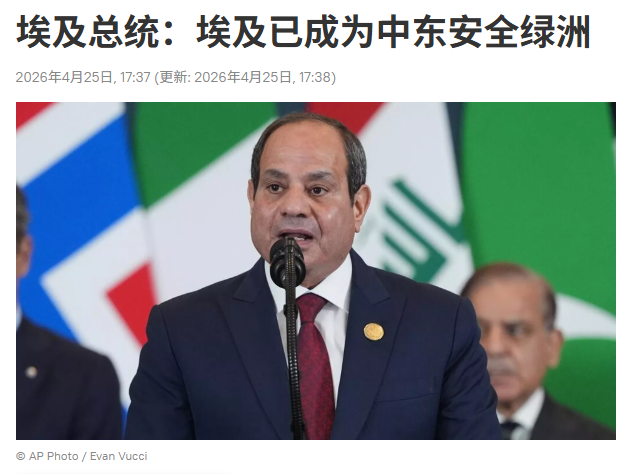
A screenshot of a report from Russian news agency RIA Novosti
The Observer: China and Egypt held their first "Civilization Eagle" joint air force training in April 2025, and a second one in August 2026. How do you view the deepening of China-Egypt military cooperation, and what impact will it have on the regional security landscape?
Zhao Jun: This China-Egypt joint training has received unusual global attention. China-Egypt military cooperation is indeed worthy of attention, but it should be understood in the context of the two countries' long-term strategic mutual trust and Egypt's tradition of diversified military cooperation, which may be more objective, and cannot be simply interpreted as a geopolitical alliance.
The 2026 "Civilization Eagle" is the second time the two countries have held this series of air force joint training exercises. Compared to 2025, this year's training is more combat-oriented and systematic: the Chinese side has dispatched multiple types of forces, including fighter jets, refueling aircraft, special-purpose aircraft, and helicopters. The training content has expanded from "1 vs 1" and "2 vs 2" aerial combat confrontations to include air superiority operations, combat search and rescue, and troop deployment.
I believe this indicates at least three changes: firstly, China-Egypt military mutual trust is transitioning from personnel exchanges to operational cooperation; secondly, the significance of such cooperation lies in enhancing mutual trust and boosting capabilities, rather than targeting a third party; thirdly, the greatest impact on the regional security landscape is not the formation of a new military bloc, but rather an increase in the diversity of regional security frameworks. For China, engaging in military exchanges with Egypt reflects normal defense cooperation between responsible major powers; for Egypt, it helps enhance its own military capabilities while maintaining strategic maneuvering space for cooperation with different major powers.
Therefore, I prefer to view the "Eagle of Civilization" as a security-sector pivot within the deepening China-Egypt comprehensive strategic partnership. Should the two sides channel more of their cooperation into non-traditional security domains such as counterterrorism, maritime security, search and rescue, peacekeeping, and disaster relief, its positive implications for regional stability would become even more pronounced.
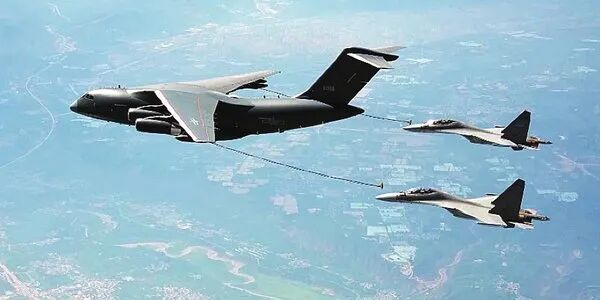
Multiple types of Chinese air force fighter jets have arrived in Egypt to participate in the "Civilization Eagle-2026" joint training exercise, according to China Aviation News.
The Observer: You just published a monograph in April 2026, "Theoretical Construction and Practical Path of the Arab League"; in previous responses, you also frequently mentioned the Arab world. Some analyses clearly point out that Egypt is becoming a "strategic fulcrum" in the Middle East and even Africa, leveraging its geographical advantages. Do you agree with this view? If so, to what extent do you think China is consciously operating Egypt as a "fulcrum"? How does this "fulcrum" role differ in essence from traditional "ally" or "partner" relationships?
Zhao Jun: Thank you for your attention to my new book. I basically agree with this judgment, but I would interpret the "strategic pivot" more accurately - Egypt is not China's "proxy" in the Middle East and Africa, but rather a comprehensive partner with a hub-like significance when China promotes China-Arab and China-Africa cooperation.
Egypt is said to have "pivot" value due to its unique combination of geographical location, political influence, development needs, and multiple identities. Spanning Africa and Asia, Egypt connects the Red Sea, the Mediterranean, and the Suez Canal, while also being a key country in the Arab world and a major African nation, with significant diplomatic capabilities in Arab countries, African countries, and multilateral mechanisms. As a result, the spillover effect of China-Egypt cooperation is naturally greater than that of ordinary bilateral relations.
Over the past decade, China has effectively developed a form of "pivot-based operations" in Egypt, though I see this more as a natural outgrowth of strategic positioning than as a deliberate use of Egypt as a geopolitical tool. Cooperation has deepened across infrastructure, industrial parks, finance, aerospace, new energy, electric vehicles, the digital economy, and military and security affairs. The 2024 joint statement further committed both sides to advancing toward building a China-Egypt community with a shared future for the new era, and in 2026, the two countries' leaders explicitly called for strengthening the strategic guidance, development synergy, and international influence of the bilateral relationship.
More noteworthy is that both sides have long expanded the scope of their cooperation from "Egypt itself" to third-party markets in the Middle East and Africa - for example, in 2016, they proposed encouraging companies to jointly undertake projects in Egypt, the Middle East, and Africa, which shows that the idea of using Egypt as a platform to serve a broader region has been around for a long time.
But a "strategic fulcrum" is fundamentally different from an "ally" in the traditional sense.
Alliance relationships emphasize security commitments and bloc attributes, often with a hierarchy, such as NATO, where the US is the leader and others are followers. In contrast, partnership relationships stress common interests, equality, and mutual benefit, which is also a fundamental difference between China and the US. The concept of a "hub" places more emphasis on a country's value as a network node and strategic pivot.
The pivot does not require Egypt to choose sides between China and the United States, nor does it require Cairo to adopt fully identical positions with Beijing on all regional issues. Quite the opposite: Egypt maintains diplomatic autonomy while sustaining relations with China, the United States, Russia, Gulf states, and Europe. This capacity for multi-directional connectivity is itself the source of its value as a pivot.
Therefore, I believe what China truly values is not the so-called control of a "pivot point," but rather, through a highly autonomous Egypt, transforming bilateral cooperation into regional cooperation, economic cooperation into development cooperation, and the China-Egypt relationship into a vital nexus for China-Arab, China-Africa, and even Global South cooperation.
From the perspective of multilateral diplomacy, what "demonstration" or "traction" role has the China-Egypt relationship played in advancing China's ties with the entire League of Arab States? Can the experience of China-Egypt cooperation be replicated in China's relations with other Arab countries?
Zhao Jun: Earlier you mentioned my new book, which contains a section devoted to China's overall diplomacy toward the Arab League. In my view, the significance of China-Egypt relations to China-Arab League ties indeed extends beyond the scope of ordinary bilateral relations. Egypt serves as both a testing ground and a connector, as well as a model of cooperation that can radiate outward to the regional level.
First, the "demonstration" role of China-Egypt relations lies in proving that political trust, development cooperation, and civilizational exchange can form a mutually reinforcing positive cycle. Since the two countries established diplomatic ties in 1956, they have maintained cooperation through multiple shifts in the international landscape. Today, the relationship has evolved into a comprehensive strategic partnership and is advancing toward a community with a shared future for the new era. In 2026, in congratulatory messages marking the 70th anniversary of diplomatic relations, the two heads of state explicitly described China-Egypt relations as "a model for collective cooperation between China, Arab states, and Africa."
Second, the China-Egypt relationship actually provides important space and a platform for institutionalized cooperation between China and the Arab League. This is highly distinctive because the Arab League's headquarters is in Cairo. The China-Arab States Cooperation Forum was indeed inaugurated in 2004 at the Arab League headquarters in Cairo, and has since developed mature multilateral mechanisms including ministerial meetings, senior officials' meetings, and strategic political dialogues. Furthermore, the diplomatic arrangement whereby China's ambassador to Egypt also serves as its plenipotentiary representative to the Arab League itself reflects this special status. Egypt therefore possesses a function that other Arab countries do not fully share.
Third, the aspect of China-Egypt cooperation most worth promoting to other Arab states is not any single project, but rather the methodology of strategic alignment — an approach Egypt fully understands and endorses. This involves linking China's Belt and Road Initiative with Egypt's national development strategies, including Vision 2030 and the Suez Canal Economic Zone, and then converting political consensus into economic returns through concrete projects in industrial parks, infrastructure, energy, manufacturing, and the digital economy. This model offers useful reference points for Arab countries at varying stages of development, including Saudi Arabia, the UAE, Oman, and Iraq.
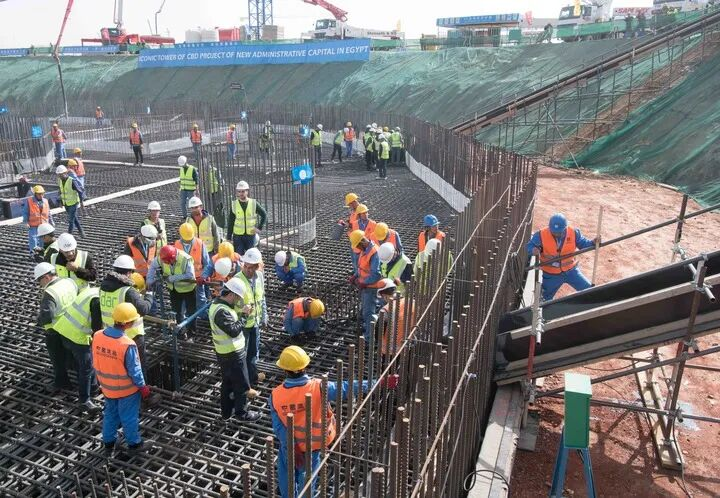
This February 25, 2019 photo shows workers at the construction site of the Central Business District project in Egypt's new capital, Xinhua News Agency
However, the China-Egypt experience cannot be simply replicated - I have always emphasized that only mechanisms can be replicated, not models, due to the significant differences between Arab countries.
Egypt’s population size, industrial base, the Suez Canal’s geographic position, and its political standing within the Arab League system all make it distinctive. Gulf states differ in their capital strength and energy structures, while North African countries vary in their industrial foundations and ties to Europe. As such, cooperation with Saudi Arabia may be better suited to advancing energy transition, artificial intelligence, and financial partnerships; with the UAE, the focus could shift more toward the digital economy and third-party market collaboration; and with Iraq, infrastructure and energy could take greater prominence.
So I would rather summarize the China-Egypt experience into three principles that can be promoted: political mutual respect, strategic alignment in development, and cooperation adapted to local conditions. These are also the key to upgrading China-Arab League relations in the future.
From historical resonance to shared modernization
Guancha.cn: A poll shows that 66% of Chinese people's first impression of Egypt is dominated by ancient civilization elements such as the pyramids. Could this highly "backward-looking" perception of civilization potentially constrain our "forward-looking" perspective, resulting in insufficient attention to the modernity of contemporary Egypt? How should China-Egypt "mutual learning between civilizations" be expanded from historical dialogue in museums to a deeper understanding of each other's contemporary social issues?
Zhao Jun: I've seen the related reports. Since I haven't seen the specific questionnaire for this poll, I won't pass judgment. But this poll is precisely a reminder that ancient civilization is an advantageous starting point for mutual understanding between China and Egypt — yet it must not become the endpoint for understanding modern Egypt.
Having personally gone through the journey of discovering Egypt, understanding it, and then experiencing it firsthand, I've encountered stark contrasts that forced me to completely reframe my perception of the country. If we remain stuck in the imagined Egypt of pyramids, the Nile, and pharaohs, we risk "museumifying" a modern nation that is actively undergoing urbanization, digitalization, industrialization, and social transformation.
In reality, Egypt today is both a country with a deep civilizational heritage and a major developing nation with a population exceeding 100 million, a relatively high share of young people, and an active push toward industrialization and digital transformation. What deserves greater attention from Chinese society is what Egyptians are thinking about today, what challenges young people face, what businesses and ordinary families care about, and how Egypt understands its own path to modernization.
Therefore, I understand that "civilizational mutual learning" must undergo at least three transformations.
First, shift from "looking at cultural relics" to "looking at society."
From my own observation, there remains considerable room for improvement in how China and Egypt understand each other. We should, of course, continue to protect the shared civilizational memory preserved in pyramids, temples, and museums. But we ought to go further—into universities, enterprises, communities, and ordinary households—to grasp the real issues facing Egyptian youth: employment, education, housing, digital life, entrepreneurship, and cultural consumption. Conversely, Egyptian society should gain a deeper understanding of the daily lives of ordinary Chinese people, not just the Great Wall, the Forbidden City, and pandas.
Second, shifting from "talking about one's own civilization" to "discussing common challenges faced together".
Truly vibrant mutual learning between civilizations is not about introducing each other to millennia of history, but about two civilizations, having both entered modernity, being able to answer common questions: How do we manage the relationship between tradition and modernity? How do we achieve economic growth alongside social equity? How do we advance urban modernization? How do we create better opportunities for young people? How will artificial intelligence reshape employment and education? How do we maintain balance between globalization and local culture? These questions may generate deeper intellectual resonance than exhibitions of artifacts alone.
In recent years, cultural exchanges between China and Egypt have indeed started to show this trend. Chinese has been incorporated into Egypt's education system, and exchanges between young people, education, and vocational education have continued to expand; both sides have also carried out joint archaeological and museum cooperation projects. The "Dialogue of Ancient Civilizations" (Cairo-Hangzhou) that opened in Cairo in June 2026, with the theme of "tracing the origins of civilization towards future imagination", is a signal of great significance.
Third, and most importantly, is the shift from taking pride in one's own civilization to mutual learning in the pursuit of modernization.
Both China and Egypt are ancient civilizations, yet what the two countries truly need to learn from each other today is not whose history is longer, but how to turn a long civilizational heritage into the capacity for future-oriented development. Egypt has its own development experience, and China has its practice of Chinese-style modernization. The two can engage in an exchange of experience on an equal footing, rather than a simple one-way transfer.
Overall, if the past 70 years were a period of mutual understanding and affinity between the two countries, what truly needs deepening going forward is the transition from civilizational understanding to societal understanding, and from historical resonance to real-world resonance. Only then can we achieve genuine mutual learning among civilizations, meaningful cultural exchange, and shared cultural flourishing.
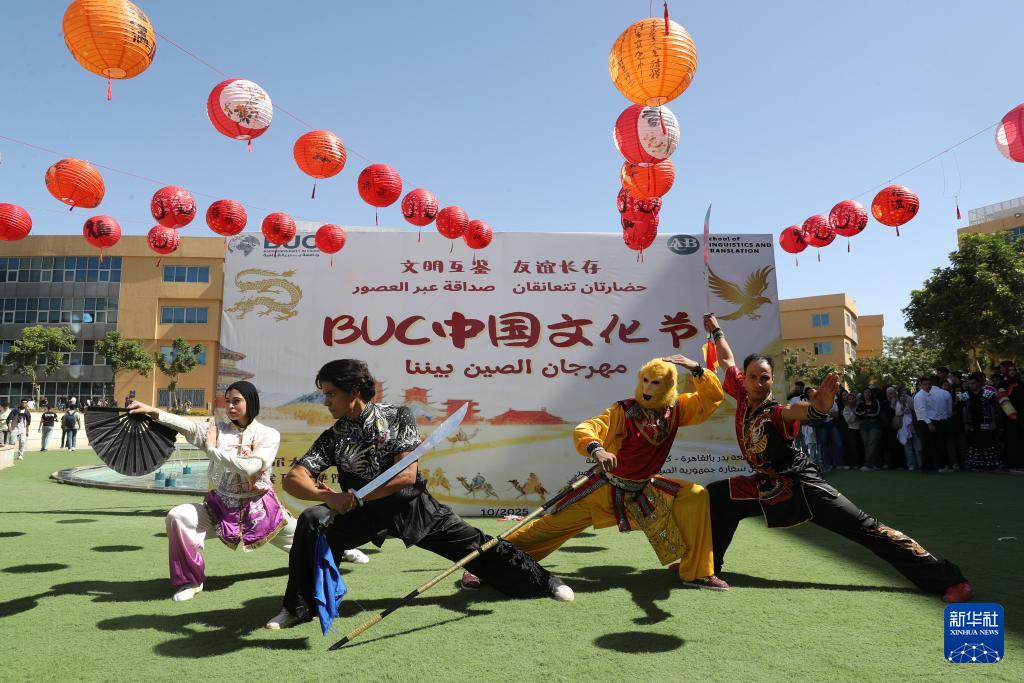
On October 20, 2025, in Cairo, Egypt, performers showcased Chinese martial arts at the Chinese Culture Festival held at Badr University in Cairo. Xinhua News Agency
Observer Network: Looking ahead, where do you see the most promising areas of growth in China-Egypt relations?
Zhao Jun: Looking ahead to the next decade, I believe the area with the most potential for growth in China-Egypt relations is not a single industry, but rather the new growth space formed by the combination of new productive forces, green transformation, and regional hubs. This will be distinctly different from the past, which was dominated by infrastructure and traditional production capacity cooperation.
Firstly, I am most optimistic about artificial intelligence and the digital economy. Egypt hopes to develop its digital economy, enhance government governance and industrial digitalization, while China has a relatively complete industrial ecosystem in 5G, cloud computing, artificial intelligence applications and digital infrastructure. In the future, both sides can move forward from building data centers and computing power infrastructure to joint research and development, talent cultivation and industry applications, particularly in areas such as Arabic language large models, smart cities, transportation, and energy. By 2026, both sides have already explicitly listed artificial intelligence as a key area for deepening cooperation.
Second, there's the new energy and green industry, which could become the most realistic growth driver for China-Egypt industrial cooperation after traditional infrastructure. Egypt boasts superior solar and wind energy resources and is located on the energy corridor connecting Europe, Asia, and Africa. China has an edge in the industrial chain for photovoltaics, energy storage, and electric vehicles. Future cooperation should not be limited to building a few new energy projects, but rather develop a complete industrial chain of "new energy power generation + energy storage + equipment manufacturing + electric vehicles + green hydrogen energy." In fact, China and Egypt have already identified electric vehicles and solar energy as key areas of cooperation.
Third, manufacturing localization and industrial chain upgrading. I believe this is the area that can most transform the quality of China-Egypt economic and trade relations. The TEDA cooperation zone has already proven that Egypt can fully serve as a production base for Chinese companies targeting the Middle East, Africa, and even European markets. The next phase should focus on shifting from labor-intensive and general manufacturing toward high value-added industries such as automobiles, electronics, equipment, and new energy, while raising the share of local procurement, technology transfer, and talent development. By the end of 2025, TEDA's localization rate for employment had already exceeded 95%, demonstrating that this model has a solid foundation for further deepening.
Fourth, it is to truly transform Egypt's hub value into regional cooperation value. The Suez Canal is not only a shipping channel, but also can become a comprehensive hub for industries, logistics, finance, and digital infrastructure. In the future, it can further promote Chinese enterprises to produce in Egypt and export from Egypt, expanding China-Egypt cooperation from "facing the Egyptian market" to "facing the Middle East, Africa, and European markets". This is also an important reason why Egypt hopes to become a gateway for China to enter Africa.
Fifth, I’m especially bullish on a growth area that’s easy to overlook: collaboration on technology and human capital. If China-Egypt ties can move beyond corporate investment into joint labs, vocational training, engineer development, and youth entrepreneurship, the partnership’s sustainability would clearly strengthen. What ultimately determines whether a country can move up the industrial ladder isn’t just capital and equipment—it’s talent and technological know-how.
In short, the greatest potential for the next phase of China-Egypt relations lies not in simply expanding existing cooperation, but in jointly combining Egypt's geographic advantages, China's industrial and technological strengths, and the talent pools of both sides to forge a new growth model oriented toward the Middle East, Africa, and the Global South at large.