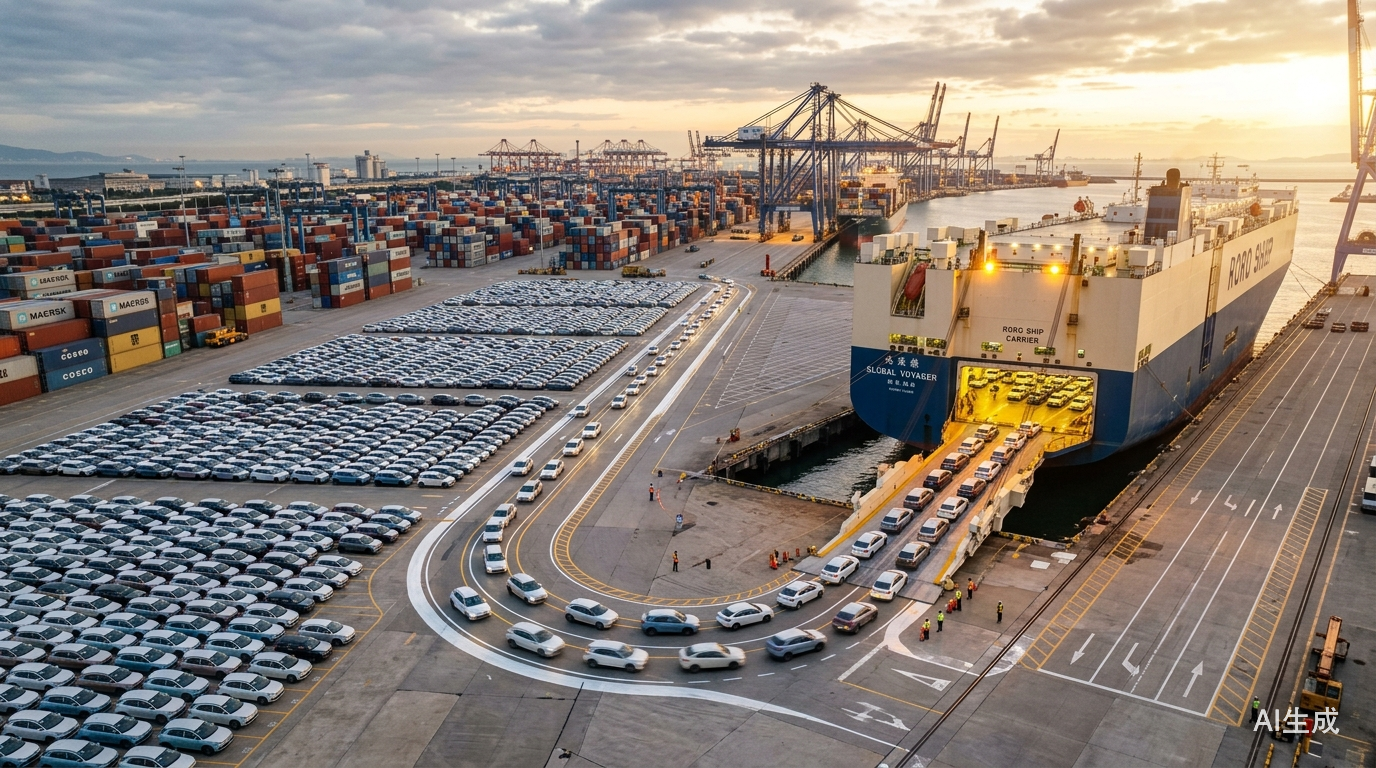
In September 2026, the Ministry of Commerce, the Ministry of Industry and Information Technology, and the State Administration for Market Regulation jointly issued the "Guidelines for Overseas Competition and Compliance in the Automotive Industry". Compared to the common export support or risk alerts in the past, this guideline extends the requirements to the market strategy and business operations of automobile companies overseas. For example, the document suggests that retail prices should form a clear gradient, avoiding frequent and large fluctuations; price differences between different countries should take into account taxes, logistics, and local markets; and it is also necessary to respect the autonomous pricing rights of overseas dealers, clarify rebate and promotion rules.
In 2025, China's automobile exports reached 8.32 million vehicles, sold to over 200 countries and regions, becoming a name card for Chinese manufacturing. At the same time, the focus of policies is also expanding. Why, after Chinese enterprises have achieved this overseas scale, has "how to compete" become a concern for government policies?
It's not just about the cars, policies are starting to focus on how companies compete after going abroad
In the past, policy tools that supported enterprise internationalization mainly addressed how goods could enter overseas markets and how companies could control investment risks. Export credits, credit insurance, customs clearance facilitation, trade fairs, logistics, and overseas warehouses helped companies find customers and complete deliveries; while overseas investment management, safety risks, and general compliance established basic boundaries around a company or a project.
In the past year, the policy focus has shifted from merely facilitating the export of goods and the implementation of projects to the long-term operations of enterprises overseas. In October 2025, five departments issued guidelines to improve the comprehensive service system for overseas operations, proposing the establishment of a service system that matches the scale and development trend of China's foreign investment and trade. The original "going global" public service platform will be upgraded to a national-level "1+N" platform, integrating services such as foreign affairs, law, finance, taxation, finance, logistics, customs, and intellectual property, covering the entire process and chain of enterprises going overseas.
After 2026, the focus of "how to compete" further expanded to become a policy target for various departments and industries. In the first half of the year, multiple departments intensively and jointly released various policies and organized seminars to provide guidance or assistance in areas such as multinational companies' overseas competition, foreign investment, and corporate operations.
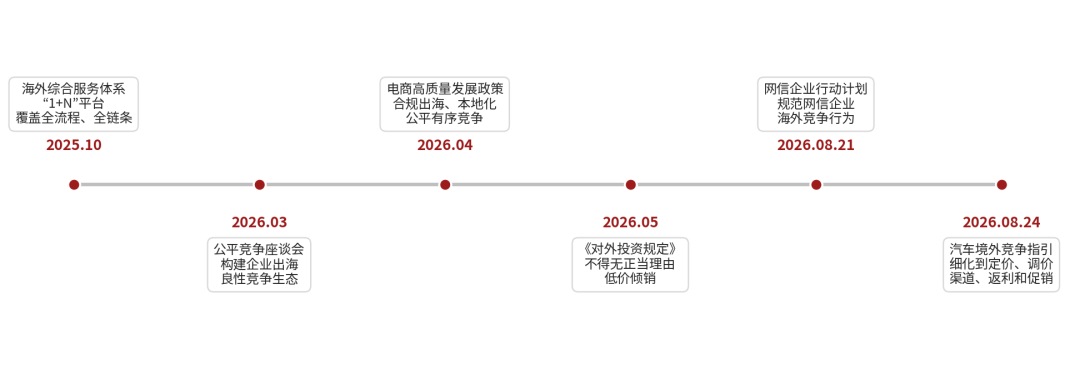
Figure 1: 2025-2026 Timeline of China's Overseas Business Operations and Competition-Related Policies
Information sourced from publicly available documents from the Ministry of Commerce, State Administration for Market Regulation, State Council, and the Cyberspace Administration of China, among others.
These policies have not changed the direction of supporting enterprises in expanding into overseas markets, but the focus of the policies has shifted from "whether enterprises can go out" to how they operate and compete with each other after entering overseas markets. The reason for this change appearing at this time needs to be found in the scale of Chinese enterprises overseas.
When a company's scale expands, its competition transforms into an industry-wide issue.
When a company becomes large enough, the changes it brings about are no longer limited to just its own sales.
When a company is small, adjustments to prices, promotions, and channels are primarily its own business decisions. If a car model is discounted by 50,000 yuan, the most direct result is that sales of the model increase, while profit per vehicle decreases. The impact on the entire market is relatively limited, depending on whether competitors follow suit and whether consumers change their car-buying habits. The company is mainly adapting to existing market prices and competitive environments.
After the market share increases, the same business move will produce different results.
For instance, when Chinese brands have already become major players in the local new energy vehicle market, price changes by industry leaders can serve as a benchmark for other manufacturers to reprice. Competitors must decide whether to match the new prices, dealers need to recalculate the value of their inventory, existing car owners will reassess the residual value of their used vehicles, and prospective buyers may even postpone purchases in anticipation of another round of price cuts.
Once a company's scale is large enough, it has transitioned from being a follower of market prices to a shaper of market prices and expectations.
Companies are getting the orders, but part of the cost is being borne by the entire industry
When a company lowers its prices, it bears the gains and losses alone, and management only needs to determine whether the incremental sales volume can offset the decline in profit margin to make a decision.
However, the situation changes when Chinese companies have a sufficiently large share in a global industry. If Company A lowers its prices, the orders, revenue, and market share still belong to Company A; nonetheless, the resulting global price decline, local industry protection pressure, and trade friction will not be limited to Company A alone.
This is the external cost generated by low-price competition: companies reap their own competitive benefits, while some costs are dispersed along the industry chain. When a company is small, a single price cut is unlikely to change the global market; but when Chinese companies have already taken up most of the production capacity, the quote from a single company can participate in shaping the price expectations of the entire industry.
The photovoltaic industry has undergone such a change. By 2025, China's global share of polysilicon, silicon wafer, and battery production capacity will all exceed 90%, and module production capacity will account for over 80%. Under this market share, price competition among Chinese companies will directly impact the transaction prices of photovoltaic products worldwide.
Since 2024, China's photovoltaic exports have shown a clear trend of rising volumes but falling prices. Some companies have engaged in unchecked low-price competition, even factoring export tax rebates into their overseas pricing to gain bargaining leverage. While orders have stayed with manufacturers, profits have eroded as prices declined. The industry now faces the added risk of trade frictions such as countervailing duties and anti-dumping measures. Once trade restrictions are triggered, the impact typically extends beyond the companies that initially cut prices.
Once the scale is large enough, competition will enter the local government's line of sight
Corporate competition will continue to expand, affecting not only Chinese industries but also the existing industrial and institutional systems of host countries. When Chinese products have a small market share locally, low-priced imports mainly provide consumers with an additional choice. However, once imports reach a sufficient scale, they will impact local enterprises' profits, supply chains, employment, customs, taxation, and product regulation.
The benefits that cheap goods bring to consumers are usually highly dispersed, but the lost orders, shrinking supply chains, and reduced employment that local businesses suffer are concentrated in specific companies, industries, and regions. Businesses, unions, industry associations, and local governments are more likely to form a unified appeal around the concentrated losses in their industries, and market competition thus enters trade policy along the lines of profit and employment relationships.
Growth in low-value parcels entering the EU has crossed a critical threshold. In 2022, roughly 1.4 billion items valued under €150 entered the bloc; that figure rose to 2.4 billion in 2023, 4.6 billion in 2024, and an estimated 5.88 billion in 2025, up 26% year over year. By 2025, China-origin goods accounted for 93% of these shipments by volume and 78% by import value, with an average value of about €8.82 per item.
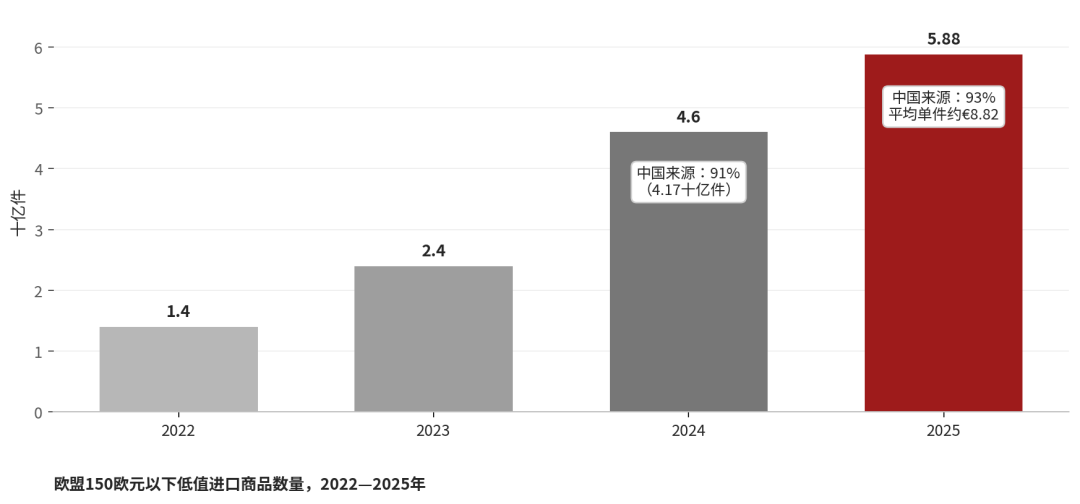
Figure 1: EU low-value imports are growing rapidly
The existing low-value goods arrangement was suitable for small-scale cross-border trade, but as the number of items rose to tens of billions, customs had to handle more declarations, inspections, and risk identification, while issues such as product safety, counterfeiting, environmental protection, and taxation were also magnified. In 2025, the European Commission released a comprehensive toolkit for cross-border e-commerce, placing the growth of low-value goods, customs capacity, product safety, non-compliant goods, environmental impact, and fair competition for local compliant businesses within the same framework.
Tens of billions of transactions have altered the cost-benefit structure of institutional operations. Even if individual platforms operate legally, they cannot eliminate the pressure that overall growth puts on customs, product regulation, and local industries.
At this stage, simply requiring companies to be responsible for their own operations is no longer enough to cover all the issues.
Why can't these issues be completely left for enterprises to resolve on their own?
Companies should bear the risks of overseas investment and operations. However, not all the problems mentioned above can be solved by companies increasing their investment or strengthening compliance on their own.
The industry being affected does not mean companies have the motivation to make concessions voluntarily.
Public services address the issue of a company's "ability to do something," but cannot automatically change the competitive choices between companies. Companies can see the long-term benefits of an industry, but do not have sufficient motivation to maintain this common interest with their own short-term gains. Each company waits for others to make concessions first, resulting in the possibility that all companies will continue to cut prices. This type of incentive conflict cannot be resolved by relying on general compliance requirements.
In the past year, a series of initiatives have emerged, including "building a benign competitive ecosystem for enterprises going overseas", "fair and orderly competition", and prohibitions on low-price dumping without justifiable reasons, as well as regulations on automobile prices, rebates, and dealer relationships. The effects of these policies are being felt in the revenue and cost structures of enterprises. Costs that were previously easily borne by peers, dealers, and the entire industry now need to be reassessed and factored into decision-making by enterprises. The revised competition rules are correcting the deviations between individual enterprise incentives and the long-term interests of the industry.
The fixed costs of global operations are not suitable for being repeatedly built by each company.
After products go overseas, enterprises need to handle laws, labor systems, taxes, intellectual property, data, anti-monopoly, product liability, and political and security risks of different countries at the same time. Large companies can establish global legal, financial and tax, and local operations teams, but many small and medium-sized enterprises find it difficult to configure complete capabilities for dozens of countries.
The country-specific legal databases, intellectual property service systems, trade dispute case libraries, and risk monitoring networks all require significant fixed investments, and once established, can be reused by a large number of enterprises. If overseas enterprises were to build similar systems individually, the total social cost would be very high, and small and medium-sized enterprises would find it difficult to bear. This part of the overseas operation capability has obvious public service attributes.
In 2025, the construction of a comprehensive overseas service system was proposed, starting to integrate law, finance and taxation, finance, intellectual property, customs, risk warning, and overseas service stations. The policy here undertakes the function of reducing the highly repetitive fixed costs of enterprises in global operations, and building overseas operational infrastructure that can be shared by different enterprises.
After being included in the industry policy, enterprises no longer have the authority to coordinate
Companies can choose prices, production capacity, channels, and factory locations, but they cannot decide on the host country's government rules. When a Chinese industry has a profound impact on local industries and employment, business frictions can also shift from corporate operations to economic and trade relations between governments.
This aspect requires country risk monitoring, policy early warnings, trade remedies, standard coordination, and intergovernmental economic and trade communication. The "15th Five-Year Plan" outline proposes "guiding the rational and orderly cross-border layout of industrial chains and supply chains", which also requires information beyond individual projects, including country-specific market capacity, existing and under-construction production capacity of Chinese enterprises, final export markets, and trade policy risks. The macro-industry information, country-specific policy information, and coordination channels possessed by the government can enable enterprises to see the cumulative results of the entire industry when evaluating projects.
As Chinese companies expand their global footprint, outbound policy has not shifted from encouraging market development to simply restricting businesses. The new additions focus on building shared global operating infrastructure for companies, correcting external costs borne collectively by the industry, and addressing cross-border institutional issues that individual firms cannot resolve on their own. The policy attention on overseas pricing is merely the most concrete manifestation of this expanded governance scope.
China's manufacturing sector is starting to learn not just how to expand abroad
When China's automobile export scale was still small, the consequences of how much a company sold abroad were mainly borne by the company itself. Now, with annual exports reaching 8.32 million vehicles, multiple Chinese companies are simultaneously building factories and expanding channels globally, and the impact of pricing, capacity expansion, and investment layout will continue to be felt by peers, local industries, employment, channels, and trade policies.
Chinese manufacturing used to excel at organizing an efficient supply chain. As more and more Chinese companies become key players in the global market, the next step they need to learn is how to embed this efficiency into different countries' markets in the long term.