
Editor's Note: When Chinese companies expand overseas, what is truly the hardest part? Perhaps it is not technology, capital, or markets—but a deceptively simple question: do you really understand the locals? Why does the same management approach work effectively at home, yet hit one obstacle after another abroad?
The 14th session of the "Regional National Studies and Global Leadership" series of themed lectures, co-hosted by the Regional National Studies Institute (Chongyang Institute for Financial Studies) of Renmin University of China and the Global Leadership Academy of Renmin University of China, was recently held in Beijing. Ding Yifan, former deputy director of the World Development Institute of the Development Research Center of the State Council and senior researcher at the Global Governance and Development Research Institute of Renmin University of China, gave a special lecture on "The Role of Cross-Cultural Understanding in Regional and National Studies and Cultivating Global Leadership". In his speech, Ding Yifan pointed out that "understanding" is not equal to "comprehension", and that true cross-cultural understanding requires learning to see the world from the other party's logic, from stereotypes to cultural grammar, and from language habits to corporate management.
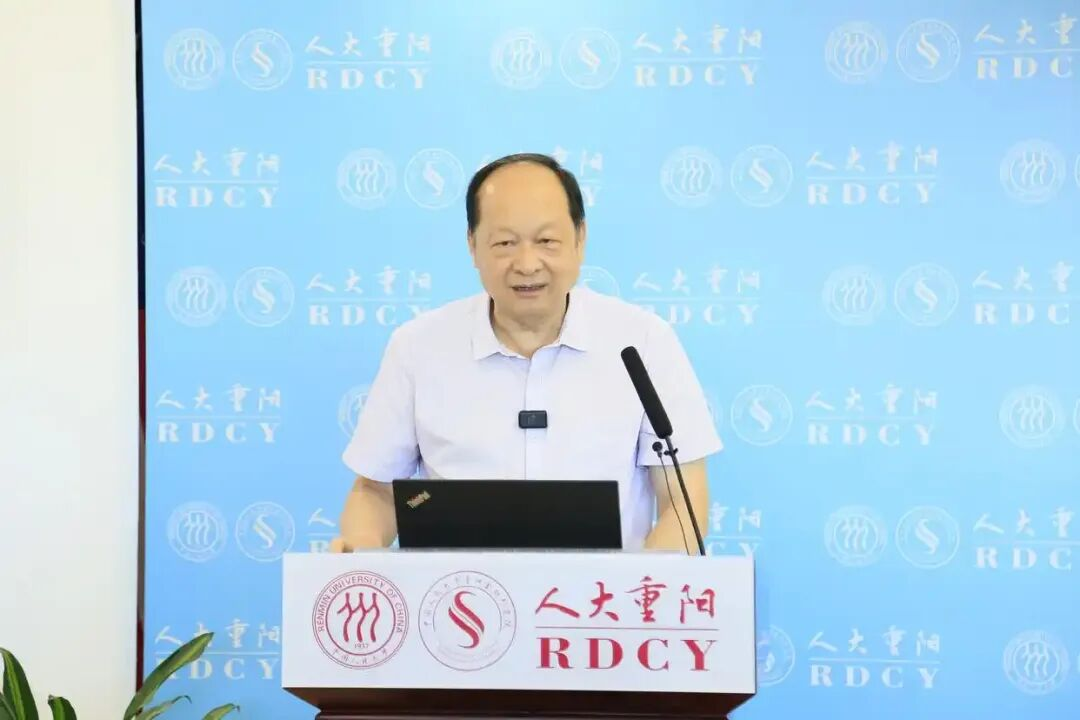
Professor Ding Yifan attends Renmin University's Double Ninth Festival event
Speech/Ding Yifan
I would like to thank the Chongyang Institute for Financial Studies for inviting me to participate in this series of lectures. My choice of topic stems from my reflections and experience with the issues that Chinese companies have encountered in recent years as they expand overseas and advance the "Belt and Road" initiative. While cross-cultural understanding is not my area of expertise, I have encountered practical problems and will approach the topic from that perspective.
To start, I need to provide some background on my research: recently, several well-known economists and sociologists have collaborated on a few books that specifically discuss cross-cultural issues, particularly in the context of the large-scale expansion of multinational corporations during the economic globalization process since the 1990s. In the expansion process, these companies first encountered many cross-cultural understanding problems, and their conclusion is: successful multinational corporations are those that perform better in terms of cross-cultural understanding; precisely because they can understand these things, they perform better; if cross-cultural understanding problems cannot be solved, multinational operations will definitely encounter major problems.
I started from this background and researched the issue, and found that since we want to hold a series of lectures on global leadership development, cross-cultural understanding is an indispensable part of it, and we must recognize its importance, which is the main topic of discussion today.
Today's discussion will cover seven issues:
1. How Cross-Cultural Understanding Is Reshaping Regional and Country Studies; 2. From "Awareness" to "Action": How Cross-Cultural Understanding Forges Global Leadership; 3. The Core Value of Cross-Cultural Understanding; 4. Key Strategies in Practice; 5. Current Challenges and Narratives; 6. Case Analysis; 7. Conclusions and Action Recommendations.
First, one point needs to be clarified: knowing something is not the same as understanding it.
We often say that to understand a country, you need to summarize and distill a large amount of data - now with artificial intelligence, this is easy to do. But does understanding equal comprehension? There is a big difference between the two. Here are a few of the most common obstacles: one is the mirror effect, and the other is stereotypes. They are the most important factors affecting our understanding of the external world.
In international relations theory, there is a major issue that must be avoided, known as the mirror image effect. We are accustomed to using our own thought processes to infer others', assuming that if I think this way, you must think the same way, but the results are often completely different. This is because others' thought processes and decision-making processes are shaped by different cultural values and cultural backgrounds, resulting in outcomes that are entirely inconsistent with our expectations.
This situation often occurs. The mirror effect is not unique to the Chinese - due to the uniqueness of our culture, we tend to think our concepts are universal - Westerners also have the same problem, using their own supposedly universal methods to think about all issues, and using their own logic to imagine others, which can hinder and damage our true understanding of others.
There are also stereotypes. We often say Americans are a certain way, Europeans are a certain way, Japanese people are a certain way, Africans are a certain way, and Southeast Asians are a certain way. Various social media and media outlets spread these stereotypes. Stereotypes are a peculiar thing: when we think of a particular ethnicity or a country's people, a fixed image pops into our minds. This fixed bias, this fixed perspective, also affects our true understanding of others.
Another core obstacle is information overload and the flattening of imagination, which is consistent with the stereotypes mentioned earlier: stereotypes arise from this. How are stereotypes about a particular nation or type of person formed? It's because the information bombardment constantly repeats certain things, and you naturally assume that's what they're like. This is actually a problematic way of thinking.
There is also the question of how information and knowledge are defined. With the internet as developed as it is today, and information so widely available, it is easy to take data and knowledge as given, and to assume these things are facts or even truths. But in reality, the development of artificial intelligence increasingly proves that its output depends on the data and materials you feed into it. Your understanding is controlled by those raw materials. They are not neutral or innocent; they steer your thinking and your views. This is important: we need to maintain a certain vigilance toward knowledge. We used to think that the more knowledge we absorbed into our minds, the better. But we have since discovered that much knowledge is built on biased views, on prejudice and stereotypes, and that makes it very difficult to change how we think.
The definition of understanding is that we must enter into others' logical systems and think according to their logic in order to truly understand them. If we completely follow our own logical system to imagine others, a mirror image effect will be produced - we always think of others based on our own ideas, just like looking at ourselves in a mirror to think about others, and what we see is actually our own thinking method. This is a huge misconception, and many people find it difficult to avoid, once they fall into it, they become deeply entrenched.
Therefore, the importance of cross-cultural understanding lies in the fact that without it, regional and country-specific research is merely a compilation of data - especially with the aid of these tools, it is even easier to degenerate into mere data compilation; and global leadership is merely technical management, rather than genuine charisma and collaboration. It is difficult to imagine bringing people from different cultural backgrounds together. Global leadership is about how to inspire and unite people from diverse cultural backgrounds in complex cultural contexts, which is a major challenge, so you must have cross-cultural understanding to cultivate this ability and charisma.
Finally, a word on China's demand side. China today has a tremendous need for cross-cultural understanding. First, our development was originally concentrated mainly at home. The 2008 crisis was the trigger: after it hit, we realized that our past participation in globalization had relied primarily on the U.S. and European markets—and those markets went into decline after 2008. The financial and economic crisis first erupted on Wall Street, followed by Europe's sovereign debt crisis. The entire Western financial system was plunged into crisis, which in turn triggered economic recession. China could no longer depend on those two markets to keep driving our demand and growth.
It was against this backdrop that the Belt and Road Initiative was launched in 2013. The initiative is fundamentally about broadening China's markets—our focus cannot remain fixed solely on those two traditional markets, important as they still are. The shift is evident in China's export structure: in 2024, trade with Belt and Road partner countries surpassed 50% of China's total for the first time, and rose further to 51.9% in 2025. That is highly significant. It has kept our economic structure relatively stable, insulating us from the impact of US and European moves toward deglobalization and tariff hikes. Previously, exports to these Western markets accounted for over 20% of the total. By 2025, however, exports to the US had fallen to roughly 11% of China's total export value, while the EU's share had declined from nearly 20% in the mid-2000s to around 14%–15%.
Meanwhile, in 2025, China's goods trade surplus exceeded $1 trillion for the first time in history, with growth momentum still strong. If we hadn't done some work, it would have been impossible to achieve today's results. It was after the "Belt and Road" initiative was launched in 2013 that the trade structure underwent significant changes, which has enabled relatively stable economic development and allowed us to hedge against some risks. Therefore, the "Belt and Road" initiative is extremely important, and its significance for our economic development is not only domestic, but also plays a very important role in the global economy.

The Kenya Mombasa-Nairobi Railway project includes content on cultivating local crews. Jiang Liping (right) walks past a Mombasa-Nairobi Railway locomotive with the slogan "Connecting the Nation, Prospering the Country" with student Horace. China's Belt and Road Portal
But why emphasize cross-cultural understanding? It's because some projects have become abandoned, and some "Belt and Road" projects have not gained favor with the people of other countries, largely due to a lack of cross-cultural understanding to a certain extent. Without cross-cultural understanding, some of our decisions, including investment decisions, are not easily implemented, or will encounter various difficulties during implementation. Therefore, cross-cultural understanding is crucial. We must strengthen cross-cultural understanding to enable our projects to benefit all of humanity and the global economy while uniting more countries overseas.
Otherwise, you're just wishfully building the world according to your own way of thinking, and you risk falling into the trap that Europeans fell into back then. Colonialism was exactly such a trap: Europeans thought they could develop the entire world. Although it was entirely driven by capital and profit, they tried to reshape the world according to their own civilizational ideals — and the result was a complete mess. So we need to understand that we cannot repeat the same mistake. To understand others, we must not try to reshape the world according to our own will — that is very dangerous. Cross-cultural understanding is therefore extremely important. That's my opening point.
I. How Cross-Cultural Understanding is Reshaping Area and Country Studies
Area studies have a long history, and this is also the case in China. To give a very simple example, many Central Asian and Southeast Asian countries, when researching their own histories, have to look for information in Chinese books. Isn't that strange? Now, even Uzbekistan has to look to Chinese books to find its own history.
China has a large number of records dating back to the Tang and Song dynasties, with relatively fewer records from the Han dynasty, although there were individuals like Zhang Qian, but fewer records have been left behind. After the Tang dynasty, there were many travelogues and records. These are the initial stages of area studies. At that time, China recorded many things, and you might say that it is too broad to call it area studies, as it was merely travel writing, but these travelogues were extremely detailed, recording many events, and thus became the most important reference materials for these countries to study their own history today. It can be seen that China has a very solid foundation in area studies, with a tradition where people who traveled abroad in the past followed China's recording tradition and documented everything. This is a very significant tradition.
However, there is also another side to this issue. Later, Westerners engaged in colonialism - starting in the 18th century, mainly in the context of colonial competition in the 19th century - and frantically developed overseas resources, competing with each other. In the process of developing overseas resources, they conducted many area studies. Many things we do today in area studies were initiated by them: many terms, the emphasis of area studies, and several disciplines were established during their era. Can you think of these terms? For example, ethnology, which is the study of tribal relationships, characteristics, and interactions; and anthropology, which later became a branch of sociology. Anthropology and ethnology were developed as they conducted research in these places during the colonial period.
But there's a major problem: they all treat their research subjects as static phenomena, lacking in-depth understanding. It can even be said that today's regional and national research in China may be weaker than it was back then, and our research on these issues isn't even as good as that of the colonial era. Because when those Europeans went to the places we now call the "Belt and Road" countries, which they referred to as former colonies, to conduct research, they did so very thoroughly, as they needed to rule these regions - in today's words, they relied on "divide and rule." What's the basis for divide and rule? To divide others, you first need to understand them. So back then, they went to great lengths to understand these tribes, these regions, their histories, and their contradictions, and then took steps to divide and rule, and that's how this knowledge was developed. From a scientific perspective, their goal was to serve their own interests, to serve the interests of colonialism. Regional and national research was born in this context.
Additionally, we need to differentiate ourselves from Europeans. In the research process, we must understand that they have developed in their unique historical and cultural context, and we must acknowledge that they have a complete and independent view of history and values. This allows us to study others' history with a relatively equal status and attitude. This is the difference between our area studies and the colonialism practiced by Westerners in the past, which was a top-down approach. Therefore, we need to further study their historical civilization, understand their thinking, and understand how their history was formed, otherwise we will fall into the Western thought trap.
Let's take a simple research case as a comparison. If we go to study elections in certain countries, and follow the Western framework of democratic elections to see which party someone belongs to, we won't even be able to grasp the surface-level issues, let alone anything deeper. This is because elections as a method of producing leaders were imposed on these former colonial countries by the West. In the process, according to their original social ecology, many other election methods and selection methods have emerged. Western political science has very advanced research on modern elections, with all sorts of techniques, but if we use these techniques to study elections in Asian, African, and Latin American countries, it will be completely irrelevant, and no matter how long we research, we won't understand what's going on, and will only get bogged down in partisan struggles - in fact, their societies are not organized that way, they were only forced to accept elections as a tool for choosing leaders, and of course, this will produce some variations. Therefore, we must study everything behind this, rather than simply following Western political science methods to do statistics, which is meaningless. We need to excavate deeper roots in order to make our area and country studies more meaningful, more profound, and more reflective of changes in the

On December 14, 2025, voters cast their ballots at a polling station in Santiago, the capital of Chile, in the second round of the Chilean presidential election, Xinhua News Agency reported.
Avoiding the "universalism" trap: refraining from directly applying Western models to non-Western contexts
We have grown accustomed to this: the knowledge we originally studied—political science, economics—was initially adopted directly from the West. In the 1980s, when we studied these subjects, that was precisely where we went to learn. After a long revolutionary era, this body of knowledge was broadly abandoned and disappeared. Even though our ancient history also had strong traditions in political science and economics, we gave them up ourselves and turned entirely to Western political science and Western economics. As a result, much of what we have is easily influenced by others through subtle, gradual processes. Applying this knowledge and these discussions directly to non-Western contexts can produce very significant distortions.
So we must be aware that for those of us who conduct area and country studies, especially when researching countries along the "Belt and Road", it's easy to fall into the cognitive traps set by Westerners. This requires more cross-cultural understanding to comprehend how the logic of these countries comes into being.
There are many classic counterexamples. For instance, the World Bank. In the 1980s and 1990s, we received a large number of loans from the World Bank, which were used very effectively in China. We utilized World Bank loans to build the Jingjin Tang Highway, greatly alleviating the pressure on coal transportation, and the project operated exceptionally well, with excellent economic returns and loan repayment. After entering the new century, China no longer met the World Bank's loan criteria - our level of development had exceeded the standards set by the World Bank, and as a result, the World Bank stopped providing loans to China, and China also no longer needed World Bank loans.
A contradiction then emerged: after losing China as a "good customer," the World Bank's days became difficult. Because the World Bank has an inclusive concept, it not only lends to poor countries, but also explains how these loans alleviate poverty and promote local development. Originally, its loans in China were very successful, so the World Bank promoted the "China model" globally, saying that the projects it implemented in China were very effective. After it stopped lending to China, it encountered great trouble and later found it difficult to find loan projects that were equally successful.
Some African countries received loans from the World Bank, but whether the projects were completed is unknown. In Africa, there was a project where countries compared who had the most impressive achievement. The head of one country invited representatives from various nations and pointed to a luxurious mansion, saying it was built with a World Bank loan, and how great it was. The next year, another country summoned leaders from all these countries to a mountain and asked them to look out, saying, "Look at the great wonder we created with the World Bank's help." Everyone looked out and saw only a vast sea, with nothing in sight. The host said, "That's not right, the World Bank did give me a loan, and I built a mirage in the middle of the sea, just for you to see – that's what the World Bank's loan achieved."
These classic counterexamples illustrate that such investments are not worthwhile. As a result, the World Bank later found itself in an awkward situation: loans were difficult to recover, many projects were unsuccessful, and they made no significant contributions to local economic development or helping people escape poverty, resulting in bad debts and damage to its moral image. Without a "model student" like China, the World Bank is in an embarrassing position.
"I a a a top of a top of a a top of a a top of a a top of a a top of a a top of a a a top of a " " " " " " " " " " " " " " " " " " " " " a " " " " " " " " " " " " " " " " " " " " " " " " " " " only " " " " " " " ". " " " " " " " " " " " " " " " " " " " " only " " " " " " " " " " " " " of a " " " " " " " " " " " " " " " " " " " " " " " " " " " " " " " " " " " " " " " " " " " " " " " " " " " "." " " " " " " ". " " " " " " " " a " " " " " " " " " " " " " " " " " " " " " " " " " " " " " " " " " " only " " " " & " " " " " " " " " " " " " " "
Why are Americans now accusing us? Europeans have also started pointing fingers, claiming we are setting debt traps for other countries. This is because it is a tactic they themselves frequently employ: locking debtor nations into dependence through debt. Their terms are conditional — if you cannot repay, there is no rush; take your time, just pay the interest. But in exchange, you must let us build military bases on your soil, and you must cede part of your sovereignty. These are the true objectives of the debt trap, and such arrangements serve their interests over the long term.
"cultural grammar"
Finally, let's discuss a simple concept - "cultural grammar." Since the 1911 Xinhai Revolution overthrew the Qing Dynasty, particularly with the New Culture Movement and the May Fourth Movement, a large number of Western terms have been introduced to China, mostly translated from Japanese. These terms have gradually shaped our understanding today. However, to this day, there are still many words that do not have direct equivalents between Chinese and Western languages, such as English and French, as well as many other languages. As a result, many terms were directly translated from Japanese in the past, and today, many are translated phonetically because there are no direct corresponding concepts. This is a significant issue affecting cross-cultural understanding. It's essential to recognize that this is a matter of "cultural grammar": many concepts are not identical, although they may have similarities and commonalities, but they are not entirely the same. This difference in concepts reflects the differences in culture. Cultures are not the same, and it's precisely because cultures are different that our understanding of many aspects differs. This point needs to be noted.
The Power of Language and Concepts
It is essential to emphasize the role of language and concepts in cross-cultural understanding: key concepts often lack precise corresponding terms in different languages, posing significant challenges to cross-cultural communication and understanding. In this context, learning someone else's language is a crucial means of understanding their thought process. Sometimes we think that with the advancement of machines and artificial intelligence, language learning is no longer necessary. However, without mastering a language, it is difficult to understand the underlying logic of others, as language itself is a manifestation of thought. Mastering someone else's language means grasping their thought logic and methods. Each language and culture has developed its own thought process over time; without understanding it, reliance on artificial intelligence alone is insufficient and may lead to the mirror image effect, where one projects their own thoughts onto others. Only by mastering a certain language and being willing to learn others' languages can one achieve true understanding.
Mastering the basics of a language is crucial, and while it's not necessary to be an expert in the technical aspects, it's essential to understand the boundaries of semantics and place words within the local context to comprehend the underlying reasons.
II: From "Cognition" to "Action": How Cross-Cultural Understanding Forges Global Leadership
This is especially important for large multinational corporations.
Firstly, it is essential to enhance organizational efficiency and coordination benefits, and eliminate communication barriers: under different cultural backgrounds and language habits, it is crucial to establish a unified communication channel and reduce information gaps. In particular, understanding the differences in cultural backgrounds is vital, as some countries have a deep-seated collectivist cultural value, while others have a strong emphasis on extreme individualism or refined individualism.
Second, spur innovation: the clash of multicultural perspectives can break down entrenched mindsets, and multicultural paradoxical thinking can make product design and marketing more creative.
Third is avoiding decision-making risks: gaining a deep understanding of the local market's cultural taboos and risk preferences. I'll give you some specific examples later. We've encountered obstacles in this regard in many countries: you may think a certain practice or market strategy works extremely well in China, but it completely falls apart in another country, which is a common occurrence. Therefore, it's essential to learn to recognize and ultimately identify where the problem lies. Many people struggle to find answers because they operate entirely within their own framework, failing to understand others, and when they fail, they don't even know how to find the reason.
Fourth is to adapt to the market: adapt to the local market, form brand competitiveness, and drive localized operations. Cross-cultural understanding is a prerequisite for enterprises to implement globalization. Westerners have even combined globalization and localization into one word - glocalization, integrating globalization with localization into a single concept.
Westerners are fond of creating such words, and some words have been forgotten in terms of their origins. For example, stagflation, which we now consider a normal economic term that everyone is familiar with, actually originated later: it was first coined by British politician Ian Macleod in 1965, and only gained widespread popularity after the West fell into a stagflation crisis in the 1970s. If you look up dictionaries compiled before the 1970s, whether in English or French, you won't find this word - it didn't exist. This is because, in classical economics, the phenomenon of stagflation doesn't exist - inflation and economic stagnation are contradictory. It wasn't until the 1970s, when this phenomenon emerged and people discovered that Keynesian monetary policies were ineffective in stimulating the economy, resulting in a situation where inflation and economic stagnation occurred simultaneously, that the words "stagnation" and "inflation" were combined to form the term "stagflation". Therefore, it's necessary to conform to local culture, customs, and traditions.
Fifth, improving talent stability and the organizational foundation. This is an area where China is quite strong: we have a culture of family and country, a culture of family. Chinese corporate culture carries a heavy emphasis on family culture, and this matters a great deal. In today's multinational companies expanding globally, a family-culture background is highly important.
Our China COSCO Shipping Group took over the Port of Piraeus in Greece, with Phase I, Phase II, and Phase III all being operated by COSCO, and the operations have been extremely successful. Before COSCO took over the Port of Piraeus, there were frequent incidents of labor disputes and strikes, and efficiency was particularly low. However, since COSCO took over, the entire Port of Piraeus has become a model port, performing very well. Of course, this is also related to the economic context: as the world's largest shipping group, COSCO has been docking its ships at the Port of Piraeus, which used to dock at ports in France, the Netherlands, and other countries, resulting in a significant increase in business and revenue, which is very good. But corporate culture also played a significant role. For example, COSCO organized many activities locally, inviting the families of local employees to participate in corporate events, creating a family culture that has had a profound impact on Greek employees.
Greek workers now take pride in landing jobs at COSCO and other Chinese companies—a shift that rivals, if not surpasses, the wave of Chinese professionals jumping to foreign firms in the early 1980s. Our embassy in Greece regularly receives calls from acquaintances asking, "Can you help get someone I know a job at the COSCO port?" The enthusiasm is remarkable. This underscores a crucial approach: accommodating people from diverse cultural backgrounds and helping them integrate into your corporate culture and the broader enterprise.
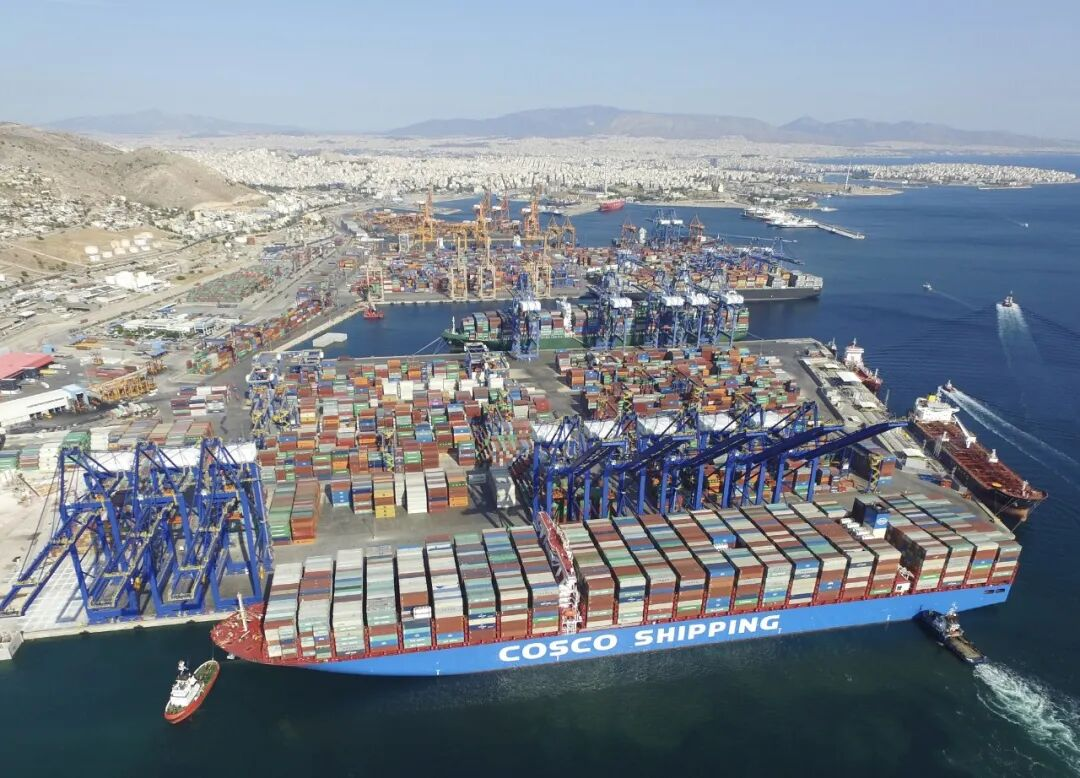
COSCO Shipping's Piraeus Port Project Featured on China's Belt and Road Website
The significance of cross-cultural understanding lies not just in showing respect through etiquette, but in the management capability to transform culture into a strategic asset, which directly determines whether multinational corporations can achieve a qualitative transformation from physical addition to chemical integration in complex international environments. For Chinese enterprises entering the global market, it is crucial and can decide their success or failure in globalization. It not only affects whether an enterprise can integrate into the local market but also has a direct bearing on establishing brand trust - for a multinational corporation to establish a brand locally, to a large extent, depends on its ability to merge with local employees and the local market, thereby producing long-term effects.
III. The Core Value of Cross-Cultural Understanding
First, there is a difference between the flexibility of Chinese companies and the strict compliance of Western companies, which is a problem our companies often encounter when operating overseas. Our market has been very flexible during its growth, and this flexibility has been an advantage for corporate growth. However, when our companies go global, they will encounter difficulties because the other party's logic is different from ours.
Since the reform and opening-up, we have always been experimenting first and then legislating, which is completely different from the way Westerners think. Westerners legislate first and then practice, and only modify the law when it no longer works. For example, now that artificial intelligence has emerged, Europeans are legislating first, stipulating what can and cannot be done; we are experimenting first, and only legislating when problems are discovered in certain areas. Since the reform and opening-up, we have always been doing things in a step-by-step manner: experimenting in certain regions, starting with pilot projects in specific areas, counties, or regions, and then promoting them nationwide. This includes our accession to the WTO, which was also done in a gradual and experimental manner, first testing the waters to see if it would work.
The Western approach of establishing laws first has had a significant impact on many developing countries, including some participating in the "Belt and Road" initiative, as their legislation, procedures, and decision-making processes were transplanted from colonial powers and face similar issues. We may have grown accustomed to taking our time, and companies have also adapted to this approach, so when going abroad, they often operate in the same manner, resulting in significant problems and frequent sanctions due to compliance issues.
Second, there are many cases in Southeast Asia, which I will elaborate on later. Cultural misinterpretation can lead to completely different behavioral expectations among employees, causing numerous problems for companies. There are many such instances, and I will share them with you one by one later.
Third, language barriers and religious taboos can cause some common problems, which may directly lead to the failure of cooperation, and this point is also particularly important.
·Enhance brand credibility
One key aspect is building brand trust among local consumers, which can be achieved through cultural empathy, with cross-cultural understanding being crucial.
For example, these Arab countries developed a habit of drinking tea through interactions on the ancient "Belt and Road", but they had no tea leaves and relied on Chinese tea exports. Now, from the Arabian Peninsula to North Africa, all Arab regions are importers of Chinese tea. There is a Chinese tea brand that failed locally and couldn't be sold anywhere because it used a camel as its logo - the US has Camel cigarettes, so it created a Camel tea, but it sold very poorly. Local people were very offended by this and rejected the tea; if it had used a rose or something similar as its logo, the effect might have been different. We might think that camels are the primary mode of transportation locally, so using one as a logo would be endearing, but it backfired. This is an example of a lack of cross-cultural understanding.
Secondly, TCL successfully integrated into mainstream American culture through sports marketing, achieving a significant increase in market value. When entering someone else's market, using sports culture and other means to build a brand, it is very important to choose the right objects and clients, as the right choices can greatly enhance brand influence.
Third, the "taking root" approach, which involves gaining the trust of local people by being as close to them as possible.
The issue of lacking cross-cultural leadership
One key point is that if this is not handled properly, the consequences will be severe. A lack of cross-cultural leadership can lead to decision-making disconnects, leadership fragmentation, and a lack of overall execution and cohesion within the company.
There are many examples of this. Especially as we moved toward the US and Europe—initially, the "Going Out" strategy was implemented most extensively in developed countries—we saw numerous cases of leadership deficiency and failure among our enterprises in those markets, where they applied Chinese methods and ended up failing.
Second, practices in the North American market show that integrating Chinese and foreign teams requires balancing headquarters control with local autonomy.
As a multinational corporation, not everything can be decided by headquarters, and local teams need to have space to exercise their autonomy - there is a "iron triangle" rule at play here - because it will create new things according to local needs, and if everything is decided by headquarters, problems will arise, but at the same time, consideration must be given to the global strategy of the multinational corporation, so communication is necessary from time to time.
Multinational enterprises that perform relatively well have a training mechanism: they send their employees to North America, Africa, or other places to participate in the operational process and undergo phase-by-phase training. Huawei does this very well, as it sends its high-level management personnel to various places and stages for training; even when hiring new employees, it requires them to sign a contract - it has a somewhat militarized management style - the contract stipulates that they must accept the company's assigned location, with no choice for five years, and they must go and obey; only those who agree to this are hired. After joining, Huawei will periodically send them to Africa, Europe, or other places, allowing them to become familiar with the local environment, familiar with the local roles, and at the same time, familiar with Huawei's global strategy. It constantly conducts this kind of rotation, and without such a mechanism, it would be difficult to achieve success.
Thirdly, multinational enterprises have a strong demand for cross-cultural training.
They are more sensitive than scholars because it involves their success or failure, so it's necessary to conduct cross-cultural understanding and training to equip employees with cross-cultural communication skills. Huawei is possibly our most internationalized company, with research and development centers in many countries, using local people to develop local products. Huawei's headquarters is in Shenzhen, with a large team of foreigners, hundreds of people, on a very large scale. To manage such a large team and so many technical talents, strong cross-cultural management capabilities are required. They have invited me to give lectures several times, and I need to tell them about these things and the context, to help them form this understanding. Corporate executives themselves have a very deep understanding of this: they know that if employees and management do not have cross-cultural understanding, the company cannot be successful, so they are very concerned about it and are willing to let executives understand the situation of global development, understand the reactions of different regions, and continuously communicate. Within a year, their high-level executives stationed around the world will have many exchanges, calling them back for training and then sending them out to rotate. These are all very important things.
Now, cross-cultural understanding has also become increasingly important for diplomats. Many countries send their young diplomats stationed in Asia or other places to Beijing for an internship, where they exchange ideas with Beijing-based think tanks and universities before being dispatched to other locations. These are all important tools for enhancing cross-cultural understanding, and there are many such instances.
4. Key Strategies in Practice
Well-executed cultural sensitivity training can resolve many communication barriers and promote practice.
System Performance Capability Building
First, a cultural training system should be established, comprising a multi-level cultural training system that covers headquarters, regional, and local offices, to enhance the cross-cultural understanding capabilities of all employees.
Although leadership is crucial - leaders must first become adept at cross-cultural understanding in order to communicate with different people - employees also require comprehensive training, especially for large multinational corporations that need to conduct such large-scale training to enhance the overall cohesion of the team. Because without cross-cultural understanding, it will occasionally manifest in small habits and practices; if this ability is lacking, small matters can even escalate into employees complaining about and bearing grudges against each other - we call this "forming cliques" - and in the future, the company's unity and cooperation will always be problematic. This requires cross-cultural training to resolve various misunderstandings among employees.
Second, in terms of selecting and motivating talent, there should be a certain degree of inclination: the more people have cross-cultural understanding capabilities, the more they should be encouraged in multinational enterprises.
This is actually something that has always existed in Chinese history. The reason why China's economic development has been so rapid is that it has this incentive mechanism. We call this incentive mechanism meritocracy: I set a direction for you, and if you do well in that direction, I will reward and promote you; this will form a universal guidance, prompting everyone to strive in that direction. It is precisely this meritocracy mechanism that has enabled China to develop so rapidly, yet this mechanism has been overlooked by many people - Americans and Europeans have neglected it when researching China's economy, but it is actually the underlying logic behind China's economic success and rapid social development. The same applies to companies: you need to establish a meritocracy mechanism, which is biased towards certain aspects, and as the company grows, it should place increasing importance on cross-cultural understanding capabilities as a key standard for rewarding employees and leaders who perform well, gradually forming a corporate culture and strengthening internal unity.
Third, apply digital tools to enable real-time monitoring of cultural risks, promptly identifying and resolving potential cultural conflicts.
Large enterprises will use these digital tools to conduct more monitoring, in order to manage potential cultural conflicts.
Deep localization and integration
First, from a "cultural first-aid kit" to a progressive path of long-term value integration, gradually achieving in-depth fusion between the company and local culture.
Multinational corporations place great emphasis on this matter. Initially, it was all about putting out fires: when problems arose, they would rush to rescue the situation. It wasn't until multinational corporations had developed to a certain extent that they began to establish systems - at the outset, everything was about emergency response, only reacting when problems occurred; no company can anticipate and thoroughly plan for every eventuality from the start, it's always a case of reacting to problems as they arise. Our emergency response department remains crucial today, because in terms of social management, many things are still managed in a reactive manner - when incidents occur, we scramble to come up with solutions to mitigate and resolve them, rather than having comprehensive management systems in place that consider every potential problem from the outset.
However, with the development of digital technology, our social management is gradually moving towards proactive management - not simply responding to situations, but rather designing systems to prevent issues from arising in the first place. Once the system is stable, the probability of problems occurring decreases significantly. This is also a path that multinational corporations have been taking in terms of cross-cultural integration. Initially, it was a simple reactive approach, where conflicts between employees would be resolved after they arose, and the causes would be investigated. Over time, companies have shifted towards designing rules and systems to prevent such issues from happening in the first place, by providing warnings and preventive measures in advance, so that when similar situations arise, they can be handled effectively. This is the path that companies are taking towards cultural integration.
Second, brand product strategy: adopting a “global product architecture + local product matrix” approach preserves the consistency of the global brand you aim to build while addressing the distinct characteristics of regional markets and meeting the personalized needs of local consumers. This is clearly evident.
Third, establish a symbiotic relationship: build a symbiotic relationship with the local community to enhance the company's recognition and influence in the area, a practice that is becoming increasingly common.
Organizational Structure Innovation
First, the “Iron Triangle + localization” team model: headquarters controls strategy while local teams lead operations, fully leveraging the strengths of both. This is a path increasingly taken by multinational companies.
Second, empowerment: although there is headquarters control and overall development strategy, a certain degree of power should be delegated, giving regional decision-making power, to avoid having everything controlled by headquarters, because things are changing quickly and decision-making must be fast.
Third, the job rotation system: Huawei, mentioned earlier, has done an excellent job in this regard. The job rotation system enables employees to acquire better cross-cultural understanding capabilities - cross-cultural understanding capabilities are cultivated and honed through both knowledge acquisition and hands-on practice at the post, and the job rotation system is a very effective method that allows individuals to learn gradually.
5. Current Challenges and Narrative
Previously, we discussed the importance of cultivating and developing cross-cultural understanding. Next, let's talk about the talent gap and bottleneck. In this regard, there is still a severe shortage: in the face of large-scale going overseas and the large-scale construction of the "Belt and Road", there is a severe shortage of talent.
A social survey institution conducted a survey of overseas enterprises, which showed that 49% of these enterprises acknowledged that they lacked cross-cultural management capabilities - they indeed have insufficient management capabilities. Due to inadequate cross-cultural understanding, their competitiveness in the international market has been affected. Competitiveness is not just a simple calculation of production efficiency, price, and quality; perhaps it is precisely because of inadequate cross-cultural understanding that their ability to expand in the global market has been impacted.
A shortage of cross-cultural leaders
A severe shortage of qualified cross-cultural leaders is failing to meet the demands of corporate globalization, a widely shared concern among enterprises. Additionally, when companies need to deploy leaders and senior executives abroad, the pool of such executives is critically insufficient — a major problem in its own right.
Technology empowerment
First, AI translation has started to play a certain role in cross-cultural communication: technology translation software has become increasingly user-friendly through upgrades and iterations, which has been somewhat helpful for cross-cultural understanding. However, as I mentioned earlier, if local leaders or headquarters-sent leaders do not make an effort to adapt to the local culture and learn the local language, it will be difficult for them to integrate, and relying solely on translation will not solve the problem. Therefore, a certain level of understanding is still necessary, to understand the culture and learn from it - in the process of learning about others' cultures, one is actually understanding their thought logic.
Second, a cultural risk early-warning system: this helps companies identify and respond to potential cultural risks in advance, reducing operational risk. This point is crucial. When companies consider this during their overseas expansion, they will be motivated to establish a cultural risk prevention mechanism and risk-control framework.
·The Growing Importance of Cross-Cultural Understanding
First, upgrading from "soft power" to globalized "survival" skills is playing an increasingly important role in corporate development.
Second, successful enterprises are shifting from passive response to proactive construction of cultural competitiveness, transforming cultural differences into innovative advantages.
You need to understand that multinational corporations will inevitably encounter cultural differences, and these cultural differences are obstacles that require communication and understanding. However, cultural differences can also be a driving force for technological innovation and market innovation. Precisely because everyone is constrained by their own cultural background and knowledge, others can provide you with cultural inspiration that you cannot think of on your own - people from different cultural backgrounds have different interpretations, especially in local markets where new things can emerge, providing inspiration. In turn, these inspirations can also promote your domestic market or other markets. All of these are processes of analogy and induction, which are very important.
Six, Case Analysis
The following are some examples of cultural conflicts encountered by Chinese companies when expanding overseas.
For instance, companies in Islamic countries and Europe have experienced management conflicts due to physical gestures and privacy boundary issues, highlighting the impact of cultural differences on corporate management.
It's quite simple: in Islamic countries, physical contact is taboo, and such collisions are avoided; however, Chinese people think that if we have a good relationship, it's normal to pat someone on the shoulder or bump into them, which is even seen as a natural expression of company unity in our corporate culture. But precisely this point is taboo in the Islamic world, and such behavior can be perceived as having homosexual tendencies - if you pat a young man on the shoulder and say "good job, buddy," he'll immediately turn against you. Many of these simple social and cultural standards are different, and if you don't understand them, you'll make big mistakes.
In Europe, there was another incident where someone published employee performance for the sake of evaluation, which Europeans considered a serious invasion of privacy. For example, if you conduct a performance comparison and publicly disclose within the company that a certain employee is underperforming, you would be in trouble - they could sue you for seriously infringing on their privacy. This has happened in European investments made by Chinese companies, and it's a big deal.
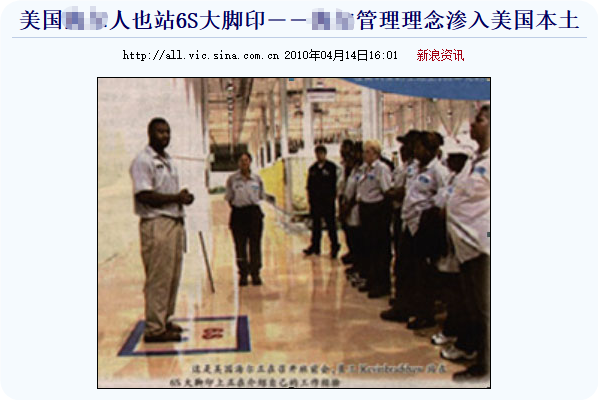
Another example is a home appliance company's US factory. We often think that whoever performs well should have their photo posted in the company to encourage others to learn from them, but this approach completely violates the local cultural background and can cause resentment. The company quickly realized this issue and converted it into issuing shopping vouchers: if you perform well, I'll give you more shopping vouchers, and other employees will follow suit when they see this. There is a significant difference between American and Chinese cultures in this regard.
This company also had a "big footprint" practice, which is a Chinese tradition: whoever performed poorly and was punished would stand at the big footprint, similar to being made to stand in a corner, a form of Chinese punishment. Later, when this practice was implemented at a US factory, it was immediately criticized as humiliating and led to a lawsuit. These are all real events that actually occurred.
For instance, a Chinese auto parts company transplanted its domestic "efficiency is life" model to Mexico, only to find that the production line's speed actually decreased due to cultural differences. If you were to encourage them to turn these words into slogans and post them locally, it would cause huge resentment; in order to show their disagreement, they would become even more sluggish, making the production line increasingly difficult to manage. Such incidents have occurred in Mexican factories.
A conglomerate that acquired a German private company also sparked controversy over the misuse of cultural symbols—a pattern seen before in history. At the time, the group had acquired a German bank and, to celebrate, staged traditional Chinese cultural activities such as lion dances. The effort backfired. Foreigners were already sensitive about Chinese companies acquiring their enterprises, and making the celebration overtly Chinese only fueled resentment among local residents. Some things need to be handled with restraint rather than flaunted. The local media at the time was uniformly saying, "The Chinese are invading; the Chinese are coming to buy us out." In an already hostile atmosphere, amplifying your own cultural symbols so prominently and visibly created immediate friction with the local community. A lot of things can't be taken for granted—you have to account for the broader context.
The example of pearl tea exports was mentioned earlier: Chinese pearl tea (green tea) was exported under the "Luo Tuo" brand, but the result was particularly poor.
There are also cases of Chinese business owners crossing boundaries in workplace communication. Some owners think that since you are employed by them, they can do whatever they want, and some Chinese bosses can be unreasonable, even directly asking translators to translate their words verbatim, resulting in them being sued. Bosses must also respect employees' personal rights and dignity. This boss was eventually sued and had to return to China.
The importance of cross-cultural understanding in international organizations
International organizations bring together members from diverse cultural backgrounds, each with different levels of cross-cultural competence. To improve effectiveness, eliminating communication barriers is essential. Because people differ in cultural distance, risk appetite, and other cognitive frameworks, cross-cultural understanding helps make sense of value conflicts and, in turn, strengthens organizational capacity. The more international the organization, the more these considerations matter. On global issues, cross-cultural understanding is what enables people to find common ground: given differing cultural interpretations, when we talk about "shared global challenges," you have to find language that others can accept. That is not a simple task, and it is not something people readily embrace. Not at all.
You'll find that even with something very simple, such as our "Belt and Road" initiative in Thailand, the Thai people have a hard time understanding it. We say, "Don't you want to develop faster?" And the Thai people say, "What's the point of developing that quickly?" You see, Thailand's cultural background is not one of a fast-paced culture. So, our "Belt and Road" initiative has encountered more difficulties in Thailand than the Japanese have with building temples and implementing projects in Thailand - and those projects don't require much money, making them easier for the Thai people to understand. So, we need to be mindful of these aspects.
There are also some issues encountered by some Southeast Asian countries. In fact, compared to Westerners, Chinese people are already relatively tactful: when faced with a problem or asked to do something, if they are unwilling, Chinese people generally won't directly say no, whereas Westerners will directly say no, and Chinese people will find a tactful way to make you feel that the matter is not feasible. However, in many Southeast Asian countries, they are even more tactful than us: they think directly responding to or directly rejecting you is very impolite, so they will go around in circles with you. Many Chinese managers will think "after talking for half a day, they basically agreed," but in fact, the other party's intention is to reject you. In the end, you continue to push forward, wasting a lot of effort, only to discover that they were not willing to do it from the start. So it's essential to understand that some practices in the other party's cultural background are different.
Moreover, stereotypes and fixed patterns can lead us to perceive some people as lazy or inefficient, when in fact there may be specific reasons. For instance, infrastructure in most countries differs from China's, and telecommunications levels are far lower. So when someone is late, calling them lazy—such ingrained impressions make it hard to understand others. These are things that need to be understood.
Additionally, when operating in the ASEAN and EU markets, it's crucial to avoid making a mistake: assuming they are unified markets where everyone is the same. In reality, they are not. Although they are unified markets, each country in ASEAN has distinct market characteristics and consumer habits. If you treat them as a unified market and design everything with a one-size-fits-all approach, you will never succeed. ASEAN is still a developing region, not a particularly developed one, but even if you apply this approach to the EU's unified market, you will encounter the same problems. The EU is also a unified market, where it seems like everyone is the same, but products placed in Spain and Germany are completely different, and using the same approach will definitely not yield the same results. Therefore, it's essential to recognize the differences within so-called unified markets and explore these differences; without this cultural background and understanding, you may fall into a certain crisis.

On April 23, 2024, a robot demonstrated object handover at the Hannover Messe trade fair in Germany. Xinhua News Agency.
There's another point, we've learned from Americans that business is business, it seems that when everyone does business and makes money, it's the most fundamental principle, very simple. But in many developing countries - like we were in the past - business is a network of personal relationships, especially in these countries, the success or failure of a business depends on the degree of trust, it's not just about everyone making money. Now many of our companies have become very Westernized and Americanized, thinking that as long as they offer benefits to the other party, it's enough; if we only understand it from this perspective, we often fail. Because in many places, it's really not like that.
We also have the problem of habits. As mentioned earlier, habits like tapping someone's shoulder, and casually pointing at people, are not allowed in many countries, but seem to be no big deal in China. However, such practices have led to severe consequences in Southeast Asian countries like Malaysia. Some very simple things, we cannot regard as harmless, thinking they are no big deal, but in fact, the consequences of some behaviors and habits can be very severe.
Additionally, as we mentioned earlier, in regional and national research, we must avoid making the same mistakes that Westerners made in the past, but many people in China are still making these mistakes: taking some principles that are applicable and successful in China and treating them as universal principles to be applied in other countries. There are many places where this approach has gone wrong - forcing corporate internal management systems, institutional internal management systems, and KPIs onto other places, only to encounter resistance, all because we fail to understand local cultures. Many local behaviors have unique cultural values, and if you don't understand them, simply applying the Chinese team management approach can backfire. This is also a relevant context.
VII. Summary and Recommendations for Action
The core message of this lecture is that understanding is not the accumulation of information, but the reconstruction of logic. Only by deeply grasping the other party's logical framework can one truly comprehend what is actually going on.
The purpose of regional research is not simply to provide a basis for "policy footnotes", but to offer decision-makers "alternative common sense", helping them to think about problems more comprehensively. It's not just about conducting regional research to find a solution to a problem, but also to provide decision-makers with the basis and rationale for decision-making, making them aware that these reports and policy suggestions are not so simple to implement, and that they need to consider the characteristics of the other party.
Global leadership is not about persuading everyone, but rather finding an operable intersection among the incommunicable, achieving synergy between different cultures. This is a significant thing: not simply persuading everyone, but rather reaching a consensus through communication as much as possible.
To thoroughly understand a place, one should read local materials; before making decisions, it's essential to force oneself to think from the other party's perspective to avoid mistakes; one should consider things from others' standpoint and learn their language. Cultural misjudgments can result in significant losses for companies and individuals, including project failures and damage to reputation.
To understand a nation's culture, it is essential to reveal the patterns of its norms without diminishing its distinctiveness. This is easy to say—it is a lesson Westerners learned in promoting cross-cultural understanding. Some of these lessons carry universal significance, and we must grasp that universality as well.