A hotel's sign can be changed several times in three years.
In some cities, the answer may be three times, or even more. After the first sign is taken down, the guest rooms are renovated, the front desk changes its logo, and the hotel reopens; a few years later, a second brand moves in, and another round of renovations takes place. By the third time, it's already difficult to tell what brand was originally hung on the building.
Each time a hotel changes hands, it undergoes a "mini-reboot": renovations, system overhauls, reshooting of OTA images, and a new round of marketing for the reopening, during which room rates also get a boost. When it first reopens, the data usually looks promising, as guests and members take notice of the new decor and brand change.
What is uncertain is the length of the uphill climb and subsequent operations.
How many member orders has the new brand brought in? Can the room prices hold up? Has the occupancy rate really improved, or is it just due to the grand opening promotions? Has the investment from the previous renovation been recouped? If several months pass and the hotel returns to its original operating state, the property investors will face not only the financial gains and losses and psychological barriers of rebranding, but also have to consider whether to make another rebranding decision.
This is also an increasingly intriguing question within the hotel industry:
When a hotel repeatedly changes its branding, what really needs to change is whether the logo on the sign or the hotel's original business model.
Why are investors willing to bet again?■
Many hotels rebrand for the first time due to a simple reason: the original brand failed to meet the owner's investment expectations.
When filtering brands, investors typically consider the brand's membership system, central booking, brand awareness, and management support. After the hotel is actually opened, the sources of orders are still specific: surrounding enterprises, local sales, OTAs, and customers accumulated by the hotel over the years. The actual contribution of group members to the business often only becomes clear after a period of operation.
Zhangjiajie Nabaili is a very interesting case.
The hotel is located in the core area of Wulingyuan in Zhangjiajie, with a total investment of approximately 1 billion yuan, a building area of approximately 100,000 square meters, and an initial plan of 698 rooms, as well as supporting facilities such as meetings and banquets. In 2014, the project was entrusted to InterContinental Hotels Group for management during its construction, and in 2016, it began trial operations under the name Zhangjiajie Nanbei Crown Holiday Hotel.
At the end of 2022, the hotel ended its partnership with InterContinental and began operating independently under the name Naburi. The following September, it was rebranded as Hyatt House, becoming the first of its kind on the Chinese mainland at the time. Less than a year later, the hotel was rebranded again, reverting to Naburi Resort Hotel. In September 2025, it was rebranded once more as Zhangjiajie Naburi Hampton Resort Hotel.
In other words, the same property has successively cooperated with three international hotel groups, namely InterContinental, Hyatt, and Howard Johnson, and the hotel name has been changed four times, while the property and the location of Wulingyuan have remained unchanged.

However, this timeline is sufficient to illustrate a point: for large hotel properties, brand cooperation is not a matter of simply signing a name. After operating for several years, owners may still reassess whether the brand is a good match and whether the premium is reasonable.
This is also one of the reasons why investors are willing to rebrand again. The hotel is already there, and a large amount of construction investment has been made, so rather than letting it go to waste, changing the brand at least gives it another chance. As for whether this attempt is worthwhile, it ultimately depends on the business behind the hotel.
What exactly happens behind each change of flag is unclear, as public information lacks a complete answer. Contract terms, operational performance, and owner discretion all belong to the hotel's own business account. What outsiders can see is the same property constantly reselecting brands.

Rebranding, of course, also has real costs. Guest rooms, public areas, signage, linens, and systems may all need to be readjusted according to the new brand's standards; if partial closure for renovation is required, the loss of business during this period must also be factored in. For reopening, the hotel must update product images and OTA pages, employees must receive new brand standard operation training (or new employees must be hired), and the sales team must redevelop clients. For a hotel that has been operating for many years, these are all things that have been done before, but rebranding means doing them all again.
Rebranding a hotel ultimately boils down to a new bet. If the original brand fails to meet expectations, investors will look for other options in the market; if a new brand can provide a more suitable market position and cooperation terms, the project is worth trying again.
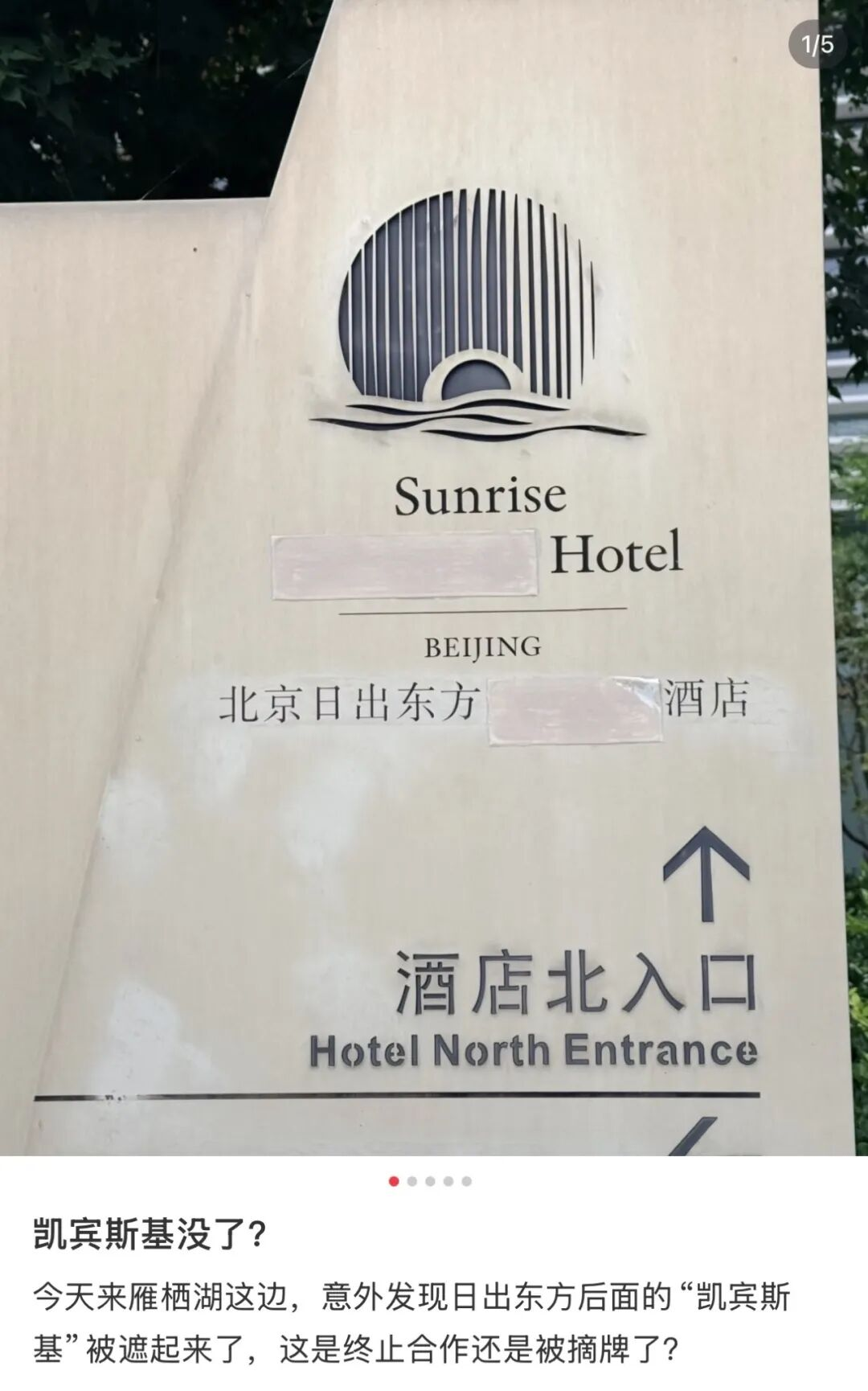
Some problems cannot be solved even with a change of brand.
Only when the sales team, revenue management, and product positioning are adjusted together during a brand overhaul can the membership and channels brought by the brand truly take effect.
Some hotels change their brand, but the staff remains the same, the sales team is unchanged, and they sell rooms in the same way as before. The new brand brings membership and booking channels, and often a brand premium, but the hotel's own sales capabilities have not improved accordingly.

In the past, there were not many corporate guests, and after rebranding, the hotel still relies on online travel agencies (OTAs); from Monday to Thursday, there are not enough guests, and on weekends, they can only make up for it through promotions; the room rates are still set by referencing the surrounding hotels. The new brand can bring in some orders, but it is difficult to solve the operational problems that the store encounters every day.
When renovating a hotel, many restrictions are already in place. Room size, column spacing, bathrooms, elevators, logistics passageways, and parking spaces are all conditions inherent to the property itself. This is especially true for older buildings, where room sizes are often insufficient and demolition and reconstruction can barely increase the area by a few square meters; the plumbing is also problematic, and even if the owner wants to change brands, they are reluctant to undergo major renovations; and there are not enough parking spaces, which cannot be increased even with renovation.
If investors want to upgrade such a hotel to a higher level, the costs often increase exponentially. Public areas can be redesigned, guest rooms can be refurnished and reequipped, and breakfast halls can be upgraded, but some fundamental limitations of the property are difficult to resolve through renovation. The brand operator will also consider these conditions when taking on a project, and if the property's standards are too far from the brand's product standards, subsequent renovations may become a continuously escalating expense.

The situation in business districts is similar. If an area already has a number of hotels of the same caliber and there hasn't been a significant increase in business activities and tourist traffic nearby, the arrival of new brands means that hotels are still competing for the same customers. Everyone is vying for the same corporate clients, the same tourists, and the same individual travelers booking through online travel agencies.
The situation with hotel prices is even more straightforward. Assuming hotels in the same class in the surrounding area are long-term priced at 500 yuan, if a hotel changes its brand and wants to sell for 600 yuan, why would guests be willing to pay the extra 100 yuan? If the room size is similar, the breakfast is similar, and the location is also similar, and the only change is the brand, guests may not be willing to pay for this price difference. During the opening period, relying on promotions and novelty can be tried, but after the market stabilizes, prices will still return to the competitive relationship within the same business district.
Before changing lanes, first calculate the cost of "not changing lanes" ■
When hotels are preparing to rebrand, many investors go to negotiate the terms of the new brand first, but they easily put another option on the back burner: if they don't rebrand, what would happen if they use the money for room renovation, sales, and revenue management instead?
The cost of renovating an old room, even if it's just a partial renovation; the cost of re-hiring and training a sales team due to their insufficient capabilities; and the potential return on investment in a commercial district already saturated with similar hotels, and how many more rooms can be sold in the future. By laying out these costs one by one, rebranding provides a basis for comparison.

Hotel rebranding has become a major trend in China's current hotel market. According to statistics from the Huaqiaowei Data Platform, in 2024, 1,572 mid-to-high-end hotels underwent brand changes, involving approximately 158,000 rooms. This number increased to 1,897 hotels last year, involving around 184,000 rooms, with 1,054 hotels removing their existing brands and 843 hotels rebranding. Contract expiration, entry into a renovation cycle, and owners' reselection of cooperative brands are all common reasons for hotels to experience brand changes.
Some hotels changed hands once, only to change again soon after. In 2025 market data, there were cases of hotels changing brands, then changing back to the original brand, and even continuously switching brands, all within the same year. While brands can be reselected, the money has already been spent.
It's time to break down the transformation itself.
Room renovations, bathroom equipment upgrades, and mechanical and electrical system maintenance are expenses that hotels would have to incur sooner or later, even if they don't rebrand. Signage, linens, uniforms, and adjustments to some public areas, on the other hand, may be directly driven by the new brand's standards. When combined, these two types of investments are often lumped together as "rebranding costs", but they have different impacts on hotel operations.
There is still some money that can be used in areas further related to the brand, such as rebuilding the sales team and redeveloping corporate clients, making revenue management more refined and dynamic, and reorganizing prices for different dates and channels. Alternatively, it could be used to renovate and transform the hotel's hardest-to-sell room types. Assuming the same few million yuan, investors can compare how much more they can sell and how much they can increase the average room price, and weigh it against the cost of rebranding.
The data left over from the previous rebranding cannot be lost. After the transformation, has the house price really increased? What has driven the change in occupancy rates? How many orders have the new brand membership system brought in? Which investments have been recouped and which are still outstanding? If we are to discuss another brand transformation, we must at least know where the previous one fell short of expectations.
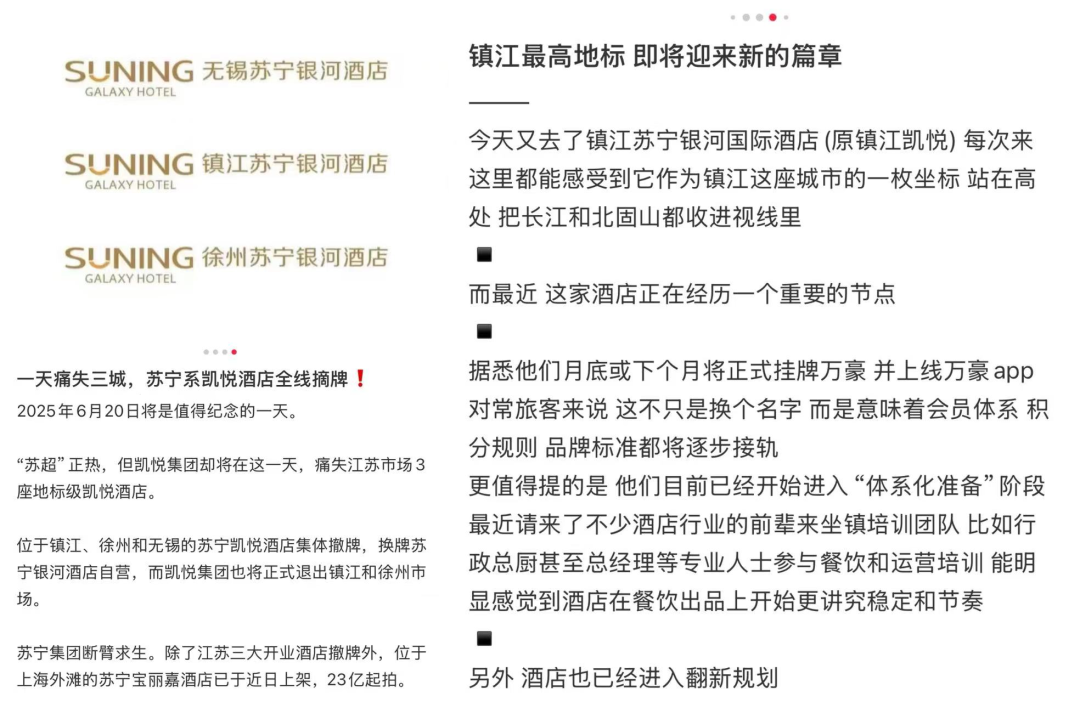

It is inevitable that the market's supply and demand balance has been disrupted, competition is becoming increasingly fierce, and the expected investment returns are not being met, making it difficult to see profits, which has led to more and more owners beginning to lose faith in the brand. This is not caused by a single factor, but emotions and decision-making can sometimes be subjective.
It's not that hotels must stick with a brand, nor that they should never switch. When contracts expire, property conditions evolve, or customer demographics shift, the original brand can simply stop being the right fit. Perhaps it's worth considering: if that money went into the product, sales, or revenue management instead of a new sign on the door, would the outcome be better?
The same building can change its storefront many times over; where the next dollar goes is what investors truly need to decide.
Image source: Xiaohongshu and the internet

Is rebranding a lifesaver or a poisoned chalice?
Is the improvement in business genuine or just a flash in the pan?
Welcome to discuss in the comments section