
The global bond market is experiencing a new round of intense selling.
On September 2, the US 10-year Treasury yield briefly rose to approximately 4.81%, approaching a three-year high, while the 30-year yield climbed above 5.28%, remaining near its highest level in nearly two decades.
On the same day, Japan's 10-year government bond yield broke through 3%, marking a fresh 30-year high. Australia's and Germany's 10-year yields also hit 15-year highs.
A day earlier, the UK 30-year government bond yield touched 5.9% intraday, its highest level since 1998.
"This is not cyclical, but a return to normal," said Kenneth Rogoff, who just attended and spoke at the 2026 Jackson Hole Global Central Banking Conference, in an exclusive interview with NBD.
As one of the most influential economists globally researching sovereign debt, financial crises, and the international monetary system, Kenneth Rogoff served as chief economist at the IMF and is now a professor of international economics at Harvard University. His book "This Time Is Different: Eight Centuries of Financial Folly," co-authored with Carmen Reinhart, former chief economist at the World Bank, systematically examines 800 years of debt and financial crises across 66 countries, establishing itself as a seminal work in the field.
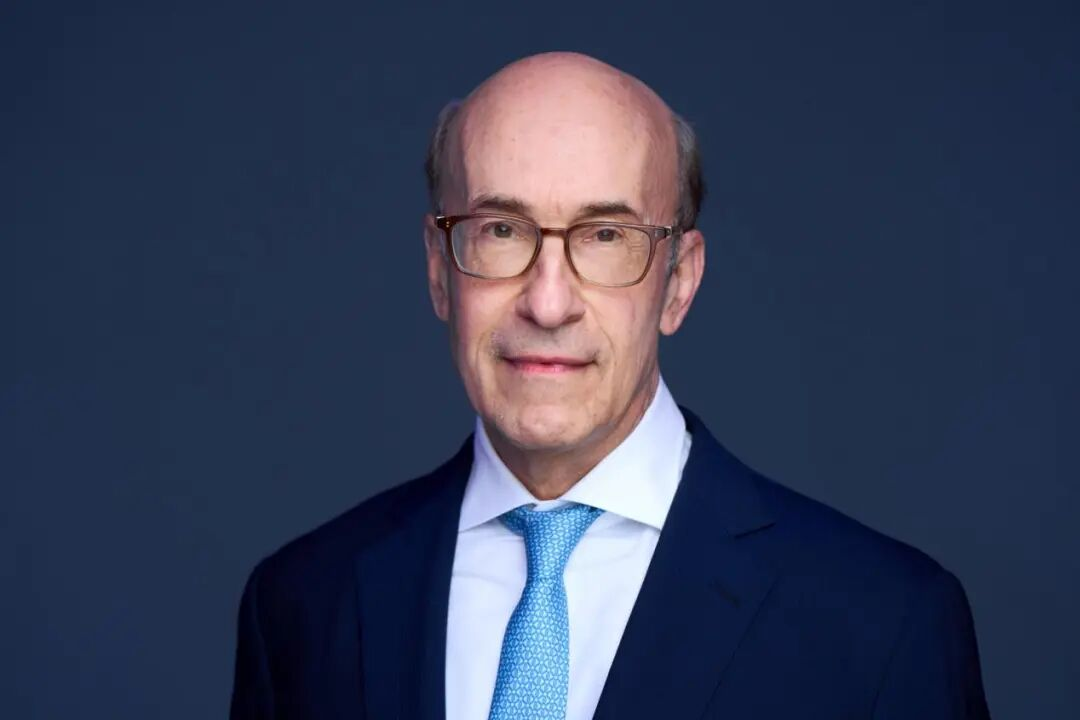
Photo of Kenneth Rogoff, source: provided by the interviewee
For Kenneth Rogoff, what truly warrants reflection is not merely why the 30-year Treasury yield broke through 5%, but the economics profession's collective judgment over the past decade-plus about an "era of ultra-low interest rates."
He criticized Nobel Economics Prize winner Paul Krugman, who has repeatedly stated "debt is our friend", arguing that there is almost no need to worry about government debt.
Against the backdrop of 65 consecutive months of US inflation exceeding the 2% target, expectations of a US Federal Reserve rate hike have intensified, prompting Trump to again call for a rate cut. In response, Kenneth Rogoff believes that the Fed has almost no control over real interest rates, and the US Treasury's attempts to suppress yields by buying back US debt not only are ineffective but also mask the unsustainable reality of US fiscal policy.
This Round of Surging Bond Yields Is Not Cyclical
Interest Rates Return to Normal
NBD: Recently, the 30-year US Treasury yield rose to over 5.3%, reaching its highest level since 2007. How do you interpret this round of rapid increases in long-term US Treasury yields?
Kenneth Rogoff says there are many factors driving up interest rates, including an unprecedented artificial intelligence (AI) construction boom, geopolitical fragmentation, conflicts in Ukraine and Iran, and the rise of global populism, not to mention the massive increase in global debt.
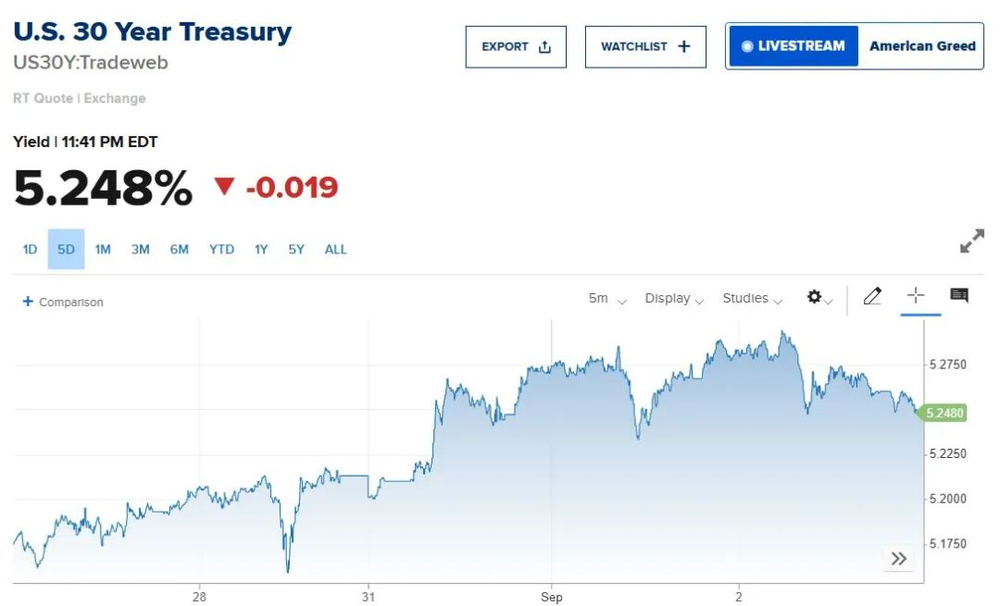
However, the most important single factor is the actual interest rate, or the interest rate adjusted for inflation expectations, returning to normal levels.
After the 2008 global financial crisis, real interest rates plummeted. This is because real interest rates are ultimately determined by the supply and demand of global savings and investment. Following 2008-2009, investors became timid, savers more cautious, and regulators overly active, but these factors would eventually dissipate.
In fact, the prolonged periods of ultra-low and ultra-high interest rates that have recurred over the past few centuries have inevitably led to a mean reversion of interest rates. This normalization process may have occurred even earlier if not for the COVID-19 pandemic.
For those who claim that this round of interest rate hikes is entirely due to the productivity boom brought about by AI, I would like to point out that real interest rates and nominal interest rates have risen significantly as early as three years ago, when the scale of AI investment was nowhere near as large as it is today.
NBD: US federal debt has recently exceeded $40 trillion. Why has US federal debt grown so rapidly in recent years?
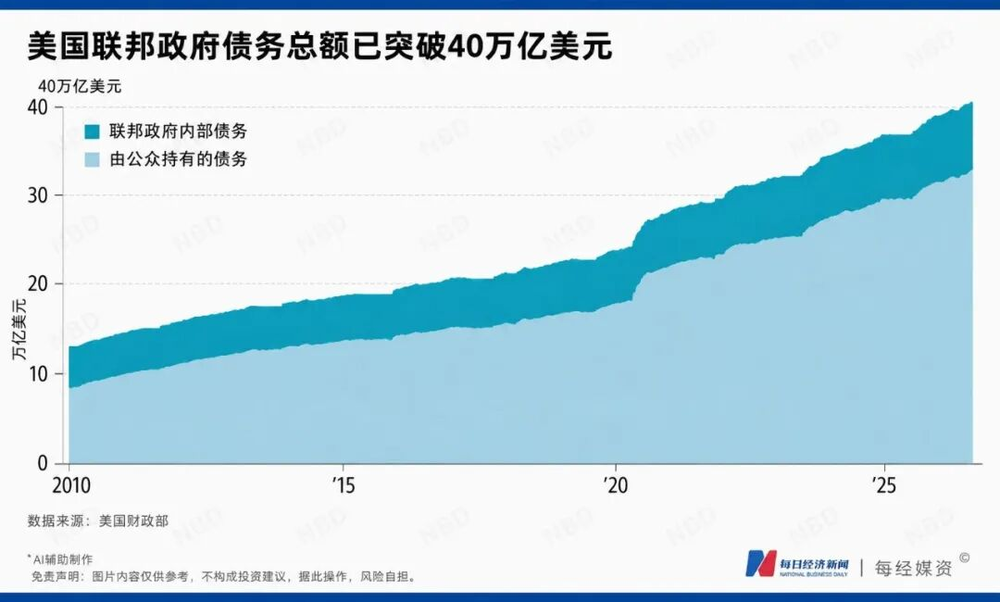
Kenneth Rogoff: The global financial crisis and the COVID-19 pandemic are common factors that have contributed to a large part of the debt growth.
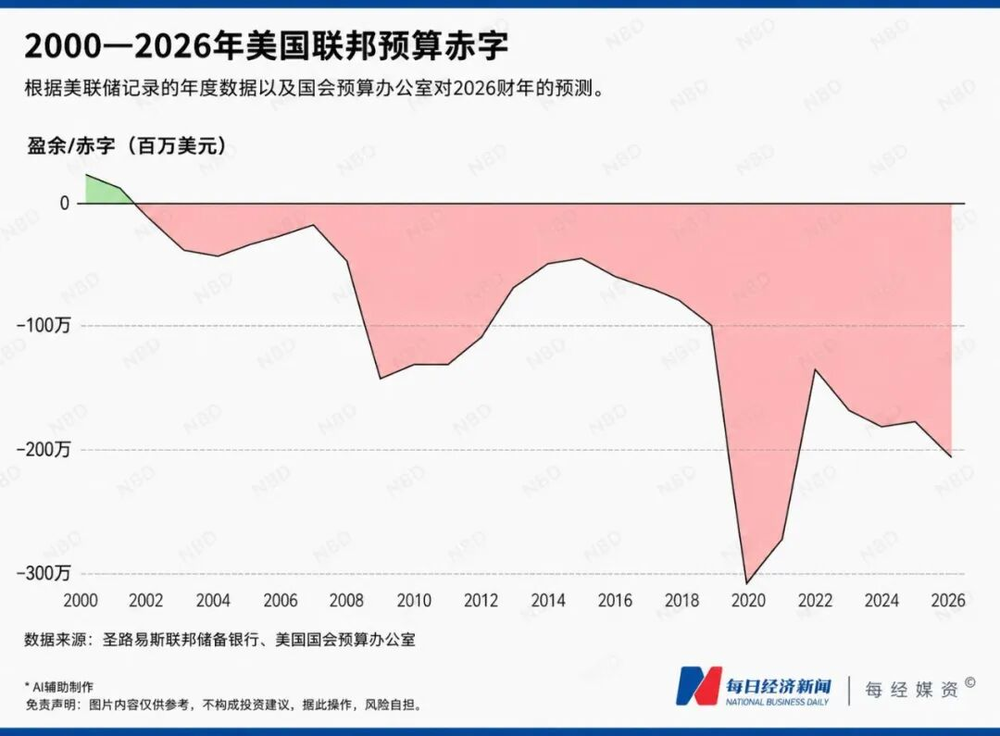
However, the bigger issue is that regardless of which party is in power, none have shown any willingness to control the fiscal deficit.
The first Trump term saw massive fiscal deficits, and so did the Biden administration. On top of that, Trump has now rolled out a sweeping new round of tax cuts. The US fiscal deficit now looks set to exceed 6% of GDP. In peacetime, that is a staggering level.
Currently, US military spending is even lower than the government's debt interest expenditure. In the future, US military spending will definitely continue to increase, and this trend is unlikely to change even if the Democratic Party wins the election in 2028.
There is also the issue that as interest rates normalize, debt-service costs—the interest governments pay on their debt—are surging sharply.
US Government, Central Bank, and Top Economists
Excessive Indulgence in Ultra-Low Interest Rate Environment
NBD: Currently, we are seeing two trends: a rapid increase in debt burdens and a rise in long-term US Treasury yields. How should we understand the relationship between these two?
Kenneth Rogoff: What we are seeing now is more the result of interest rate normalization leading to an increase in debt servicing costs.
The rise in debt levels in the US and globally is certainly one factor driving up interest rates, but it is by no means the only factor.
It is astonishing that the US government, central banks, and some top economists were so enamored with the ultra-low interest rate environment of the 2010s. Many top economists and influential economic commentators even convinced themselves that "this time is different". They believed that factors such as demographic structures, inequality, and low productivity growth would keep interest rates low for the long term.
Nobel laureate Paul Krugman, who has written dozens of influential columns for the New York Times, has claimed that "debt is our friend" and that people hardly need to worry about government debt.
Former IMF Chief Economist Olivier Blanchard also made a similar argument, that economic growth can sustainably outpace interest expenses, and therefore there is nothing to worry about.
Perhaps the most influential view is the "secular stagnation" theory of former US Treasury Secretary and former Harvard University President Lawrence Summers, which posits that if governments do not take on massive amounts of new debt every year, global interest rates will remain extremely low and economic growth will be very slow.

The US Federal Reserve Has Little Long-Term Control Over Real Yields
As of July 2026, the US PCE price index has been above the Federal Reserve's 2% long-term inflation target for 65 consecutive months. At the Jackson Hole annual meeting on August 28, Federal Reserve Chairman Kevin Warsh stated that if policymakers cannot confirm that inflation is falling back to the 2% target range, the Fed must take corresponding policy actions. Subsequently, US President Trump said on August 31, "In my view, we should have the lowest interest rates in the world, and far lower than other countries."
NBD: The trend between the US Federal Reserve's policy interest rate and long-term US Treasury yields is becoming increasingly divergent, raising questions about whether the Fed is losing its influence over long-term financing costs.
Kenneth Rogoff: Long-term interest rates are primarily composed of two parts: one is the real interest rate, which is the yield after excluding inflation expectations; the other is the expected inflation rate.
Inflation expectations have indeed risen, but the vast majority of the change is coming from real yields, over which the Fed has very little long-term control.
On the other hand, fiscal policy has a significant impact on the savings-investment balance that determines global real interest rates.
However, as mentioned earlier, many other factors are also at play, including war and AI.
NBD: Even if the Fed cuts rates, it can't bring down long-term Treasury yields. What does that mean for monetary policy?
Kenneth Rogoff: Given that inflation expectations remain fairly well anchored, if inflation trends themselves don't justify a rate cut, the Fed cutting rates would instead push long-term yields higher.
If the US government wants to lower long-term bond yields, it needs to try to introduce a more credible fiscal consolidation plan, rather than just telling people that economic growth will solve all problems - as the US Treasury Secretary has repeatedly claimed.
The US Department of the Treasury has recently expanded its repurchase operations for longer-term government bonds.
Kenneth Rogoff: Repurchase operations can have some effect by reducing the supply of long-term government bonds, but the impact will not be significant due to the numerous factors influencing long-term interest rates.
Unfortunately, the buyback will have the effect of shortening the term structure of US government debt, making the US government more vulnerable to rising interest rates.
NBD: In the long run, could such interventions by the U.S. Treasury alter the price discovery mechanism of the Treasury market, or introduce new financial risks?
Kenneth Rogoff: Yes, buybacks and other such gimmicks will interfere with price discovery and to some extent mask the unsustainable reality of US fiscal policy, making it particularly easy for politicians to misperceive this.
The NBD asks: Do you think there is a risk of a "debt increase - interest rate hike self-reinforcing cycle" in the United States?
Kenneth Rogoff: The risk is that, with high interest rates, high debt, and political gridlock all present at the same time, the US's resilience in the face of major shocks has decreased.
The US may be forced to rely on financial repression and inflation, and possibly even partial defaults - an idea that was floated in the early days of the Trump administration. This, in turn, would accelerate the decline of the dollar's dominance.