The Ministry of Commerce, the Ministry of Industry and Information Technology, and the State Administration for Market Regulation recently jointly released the "Guidelines for Overseas Competition Behavior and Compliance Construction in the Automotive Industry", which proposes to regulate the overseas pricing and competition behavior of automotive enterprises, avoiding frequent and large-scale price fluctuations. However, as a guiding document "for enterprises to reference", whether it can truly curb the low-price competition of Chinese automobiles in overseas markets remains to be seen.
In actual transactions, some overseas distributors have already factored China's export tax rebates into their procurement negotiations, deducting them from the vehicle price in advance; some Chinese exporters not only fail to truly benefit from the policy advantages brought by export tax rebates but also have to bear the financial pressure caused by the refund cycle. When soft initiatives are difficult to change corporate behavior, is it necessary to adjust export tax rebates to establish hard constraints? How should the relationship between exports and going overseas be coordinated?
The author of this article, based on on-site investigations and industry interviews in over a dozen countries including Southeast Asia, the Middle East, Central Asia, Europe, North Africa, North America, and South America over the past two years, proposes a timely reduction and gradual cancellation of export tax rebates for passenger vehicle exports. The article presents a clear and distinct viewpoint, and is being published for discussion within the industry.
On August 24, 2026, the Ministry of Commerce, the Ministry of Industry and Information Technology, and the State Administration for Market Regulation jointly issued the Guidelines for Overseas Competition and Compliance in the Automotive Industry, which will be officially released to the public on September 1.
Enterprises are required to establish pricing strategies grounded in costs and oriented toward international supply and demand, refrain from disrupting market order to secure unfair competitive advantages, and avoid frequent or sharp price fluctuations when setting suggested retail prices in overseas markets.
The release of the "Guidelines" indicates that relevant departments have taken notice of the risks faced by Chinese automakers overseas, including mutual price-cutting, chaotic sales order, and damage to brand value.
However, the document is positioned as general guidance for reference by enterprises, without accompanying direct penalty clauses, and is not directly linked to export qualifications or tax rebate qualifications. It can release policy signals, but it is difficult to change the cost structure and competitive behavior of enterprises on its own.
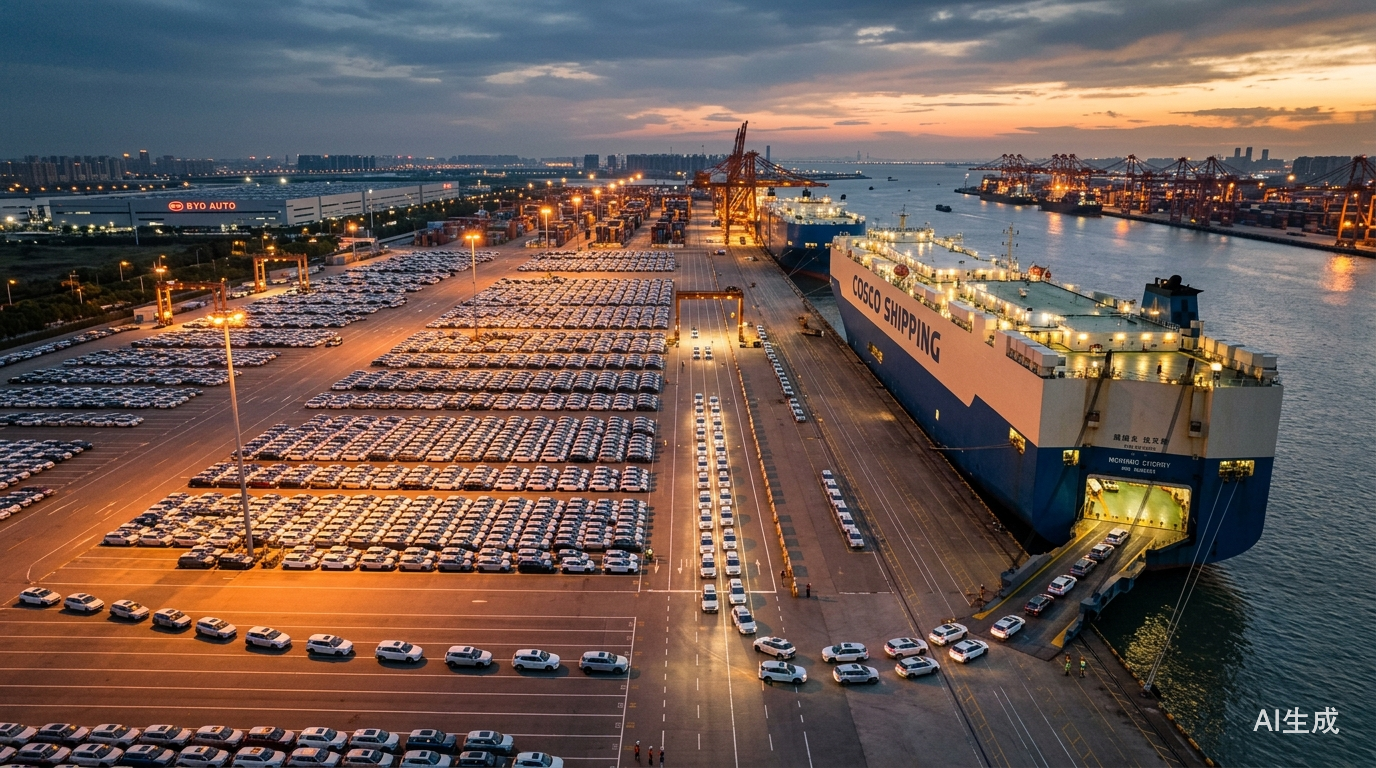
Meanwhile, China's automobile exports continue to grow rapidly. According to customs statistics, in 2025, the country's automobile exports totaled approximately 8.32 million vehicles, shipped to over 200 countries and regions, with an export value of $142.46 billion; the total export tax rebate nationwide was 2.1337 trillion yuan, up 10.7% year-on-year, equivalent to about 30% of the country's domestic value-added tax revenue for the year.
Over the past two years, the author has conducted on-site investigations of overseas automotive markets in over a dozen countries, including Southeast Asia, the Middle East, Central Asia, Europe, North Africa, North America, and South America, and one conclusion has become increasingly clear: in many overseas markets, the most direct competitor to Chinese automobiles is no longer Toyota or Volkswagen, but rather another Chinese brand.
The price advantage of Chinese autos stems from technological advancements, industrial chain efficiency, and decreased production costs, which is the true competitive strength of the industry. However, in some fiercely competitive markets, higher export tax rebate rates have also created room for further price cuts. Research has found that some overseas procurement parties have factored in the potential tax rebates that Chinese companies may receive into their pricing models and are using this as a basis to demand price concessions from exporters.
When a policy aimed at enhancing the competitiveness of Chinese enterprises starts to see some of its benefits being diverted overseas through procurement negotiations, it is necessary to re-examine whether it still suits the current development stage of China's automotive industry.
Why Auto Export Tax Rebates Need Reassessment
The internationally accepted principle of export tax rebates is to achieve a zero tax rate for indirect taxes on exported goods, preventing domestic value-added tax from being factored into export prices. From the perspective of the tax system itself, it is first and foremost a tax-neutral arrangement and does not necessarily constitute an export subsidy in the sense of the World Trade Organization.
However, in the practice of China's reform and opening-up, the export tax rebate rate has also played a role in industrial regulation. When the export tax rebate system was established in 1985, expanding exports and increasing foreign exchange earnings were important policy goals. After joining the World Trade Organization, as the export scale grew, export tax rebates gradually shifted towards structural regulation: reducing or canceling rebates for high-energy, high-pollution, and resource-based products, while maintaining relatively high rebate rates for electromechanical products and high-value-added products.
In recent years, as the development stages of industries such as steel, aluminum, photovoltaics, and batteries have changed, the export tax rebate policies for related products have also been adjusted. The tax rebate rate for photovoltaic and battery products was reduced from 13% to 9% in 2024. Starting from April 2026, the value-added tax export rebate for photovoltaic products will be cancelled, and the tax rebate rate for battery products will be reduced to 6%, and will be cancelled in 2027.
This indicates that the export tax rebate rate is not an unadjustable permanent system, but rather a dynamic tool that can change according to the maturity of industries, the international competitive environment, and domestic policy objectives.
The automotive industry has also reached a stage where reassessment is necessary. In 2025, China exported 2.615 million new energy vehicles, a year-on-year increase of 103.7%. China has formed a relatively complete electrification and intelligentization supply chain, establishing comprehensive competitive advantages in areas such as power batteries, electronic and electrical architecture, whole-vehicle development cycle, manufacturing efficiency, and product iteration speed.
The competitiveness of Chinese autos overseas is increasingly derived from technology, efficiency, scale, and supply chain capabilities. In this context, it is worth discussing whether it is still necessary to maintain a relatively high export tax rebate rate for most qualified passenger vehicles.
Who Benefits from Tax Refund Policies
The export tax rebate, which refunds or offsets the relevant input tax, ensures that exported goods are essentially exempt from domestic value-added tax. However, who ultimately benefits from the resulting price advantage depends on the bargaining power of each link in the industry chain.
When supply falls short of demand and export enterprises have strong pricing power, the price space created by tax rebates may be converted into corporate profits or used for market development, channel construction, and after-sales service. However, in a scenario where domestic production capacity is abundant, the number of export entities is increasing, and multiple Chinese brands are competing in the same market, this space is easily conceded layer by layer during price negotiations.
Based on interviews with some overseas distributors and domestic exporters, some foreign buyers have come to regard China's export tax rebates as an implicit discount that exporters are bound to receive. When negotiating vehicle prices with manufacturers or exporters, they factor the anticipated tax rebates into their procurement cost models and ask the exporters to lower their quotes accordingly.
In name, the rebates were given to Chinese companies; in reality, part of the price benefits formed were transferred to overseas channels through procurement negotiations before the goods were exported.
Not all export businesses are in this situation, and China's price advantage in the automotive sector cannot be entirely attributed to tax rebates. However, in highly competitive markets where exporters have limited bargaining power, tax rebates can indeed be used by overseas buyers as a basis to further push down prices.
Some interviewed exporters also reflected that vehicle procurement, warehousing, logistics, insurance, and channel fees all require advance payment, while tax refunds have to go through customs declaration, document review, and tax declaration procedures. If the tax refund payment cycle is prolonged, enterprises will also have to bear the costs of capital occupation and financing.
This has created a situation worthy of attention: overseas clients are already factoring in the refund of taxes when negotiating vehicle prices, while domestic exporters still have to wait for the refund to be credited to their accounts and bear the pressure of providing upfront financing. Some first-tier exporters have suggested that "no refund is better than a refund", not because they want to increase their tax burden, but because they hope that export entities can return to a clearer post-tax pricing basis, reducing the space for overseas buyers to use tax refund policies to negotiate lower prices.
If calculated theoretically based on the total vehicle export value in 2025 and a nominal tax rate of 13%, the tax involved could reach trillions of yuan. However, this does not equal the actual tax refund for the automotive industry, which still needs to be calculated according to specific tax codes, taxable prices, input tax amounts, and exemption and refund mechanisms.
What truly warrants discussion is not whether tax rebates are legally considered subsidies, but whether the resulting price advantage primarily serves the long-term capacity building of Chinese enterprises. If a significant portion of policy benefits are transferred to overseas channels through price competition, the actual effect of the tax rebate policy needs to be reevaluated.
Soft Guidance Gives Way to Hard Policy Adjustments
The "Guidelines for Overseas Competition and Compliance in the Automotive Industry" propose regulating overseas pricing, promotions, advertising, and channel management to avoid frequent and drastic price fluctuations. The policy direction is very clear, but since the document is positioned as "for reference by enterprises" and lacks accompanying direct penalty clauses, the actual effect still mainly relies on corporate self-regulation and policy guidance.
In comparison, reducing or canceling vehicle export tax rebates will directly impact companies' costs, cash flow, and pricing. Once the tax rebate rate is adjusted, companies must recalculate their export prices and reassess the benefits and risks of their price-for-volume strategies.
It must be acknowledged that canceling export tax rebates means that related vehicle exports will no longer be eligible for the original value-added tax rebate (exemption) arrangements, which has the equivalent economic effect of increasing export tax burdens. Therefore, this adjustment must have clear industrial policy grounds and set a reasonable pace and transition period for phasing out, and cannot be simply understood as a cost-free tool for industry governance.
The guidelines change corporate expectations, while tax rebate adjustments change corporate account books. The former addresses behavioral advocacy issues, while the latter addresses incentive mechanism problems. The two can be used in conjunction: guidelines clarify competitive and compliance directions, while tax rebate adjustments alter the economic conditions of low-price competition.
Of course, eliminating tax rebates does not mean overseas price competition will automatically disappear. Companies may still vie for market share by compressing profit margins, pressing suppliers for lower prices, or increasing channel subsidies. The rebate adjustment is therefore not a complete solution to overseas competition, but it does change the marginal conditions under which companies continue to cut prices, making it a more direct policy tool than general initiatives.
Seizing Strategic Initiative to Improve Trade Environment
Adjusting the export tax rebate for automobiles is not only an internal policy tool for regulating the low-price competition of Chinese brands overseas, but also relates to the strategic initiative of China's automotive industry in the face of trade protectionism.
In October 2024, the EU imposed an additional anti-subsidy tariff of up to 35.3% on Chinese-made pure electric vehicles, on top of a 10% base tariff, resulting in a combined tax rate of up to 45.3%. In 2026, the EU further established a price commitment filing mechanism and accepted minimum import price commitments from individual companies and for specific models.
This means that in some price commitment cases, the conditions faced by Chinese automakers are no longer limited to tariffs and minimum prices, but may also involve import quantities and local investment requirements, with trade constraint tools likely to become more comprehensive in the future.
In accordance with World Trade Organization rules, the zero tax rate for indirect taxes on exported goods is a common international tax arrangement and does not necessarily constitute an illegal export subsidy. The anti-subsidy measures taken by Europe and the US against Chinese electric vehicles mainly target low-interest loans, land, raw materials, and other factor support, and canceling export tax rebates cannot directly eliminate related investigations and tariffs from a legal perspective.
However, the legal attributes and international political narratives are two different things. Against the backdrop of increasingly politicized trade issues, "export tax rebates" can easily be packaged by foreign political forces as evidence of "Chinese government subsidies to enterprises for low-priced exports", becoming a ready-made label for mobilizing protectionist policies and public opinion.
Therefore, reducing and gradually canceling export tax rebates for some passenger vehicles can reduce the risk of excessive transfer of price benefits to overseas channels, even if it cannot lead to the automatic cancellation of trade barriers by Europe and the US. This also helps to reduce the space for external parties to package export tax rebates as "China's fiscal support for low-price expansion", and allows China to negotiate more room for maneuver in terms of price commitments, tariff arrangements, and local investment.
In this sense, adjusting export tax rebates is not a passive concession under external pressure, but rather a proactive recalibration of policy tools to improve the international competitive environment. Rather than being forced to change after trade barriers keep escalating, it is better to complete the policy pivot early and keep the initiative in our own hands.
Exports and Going Global: The Impact of Tax Rebate Adjustments
If the export tax rebate rate for passenger vehicles is suddenly reduced to zero in the short term, it will inevitably put significant pressure on the entire vehicle export sector. For companies and traders that heavily rely on CBU exports, have limited bargaining power, and low profit margins, a sudden change in the tax rebate policy may result in losses for some orders that have already been quoted or contracted, and the growth rate of automobile exports may also slow down temporarily.
Thus, the cancellation of directives can be clear at once, but the exit from tax rates needs to be implemented in stages, allowing enterprises sufficient time to adjust their pricing, fulfill contracts, and transition their business models.
A decline in the growth rate of complete vehicle exports does not necessarily mean that China's efforts to take its automotive industry global are weakening. Exports primarily refer to vehicles being produced domestically and then sold overseas through commodity trade, whereas going global encompasses overseas research and development, local production, supply chain construction, channel operations, financial services, after-sales systems, and brand management. Exports are an important component of going global, but they cannot be the only measure.
In markets with high tariffs, high logistics costs, and strict localization requirements, overseas production will gradually replace some domestic whole-vehicle exports. The key is not whether China exports one fewer vehicle, but what China's automotive industry retains in the global value chain.
If overseas factories use key components, production equipment, software systems, engineering services, and management standards from China, while core research and development, key technologies, brand management, and global supply chain hubs remain domestic, then reducing whole vehicle exports may lead to increased exports of components, equipment, software, and technology services. This is not a simple case of industrial loss, but rather an upgrade in export structure.
Conversely, if building factories overseas evolves into a wholesale relocation of R&D, core manufacturing, key components, and supply chains, leaving only brands and capital platforms at home, then going global could bring the risk of industrial hollowing-out.
Therefore, policies should neither prevent companies from setting up local factories overseas in order to maintain the number of complete vehicle exports, nor regard all overseas factory construction as inherently correct. A more reasonable approach is to drive China's automotive industry to transition from simply trading complete vehicles to parallel overseas local manufacturing and domestic core supply chain exports: domestically retaining research and development, key technologies, high-value components, advanced production equipment, and global management hubs, while overseas operations take on market-oriented complete vehicle manufacturing, adaptive development, channel services, and necessary local supply chain construction.
Shifting from vehicle exports to global operations takes time. Companies need to readjust overseas pricing, channel contracts, domestic supply chain arrangements, and localized production layouts, which cannot be completed in the short term. Overseas factories also typically require several years to go from planning and approval to construction and official production. Therefore, the tax rebate policy should announce a complete exit route at once and implement specific tax rates in stages, matching the policy pace with the adjustment of companies' business models and the landing of production capacity in key markets, to avoid a market "vacuum period" where vehicle export costs rise suddenly and overseas operating capabilities are not ready to take over.
The tax rebate adjustment will also lead to industry differentiation. Export businesses that mainly rely on low-price resale, tax rebate funds, and short-term price differences will see their profit margins significantly narrowed. In contrast, enterprises that have established their own brands, channels, and after-sales systems will place greater emphasis on overseas profits and long-term operational capabilities.
But the policy objective should not be simplistically interpreted as eliminating small and medium-sized exporters. Some SMEs play important roles in market development, channel innovation, and serving niche market segments. What needs to change is the business model characterized by heavy reliance on low prices, inadequate after-sales service, and disruption of channel order—not the classification of support or restriction targets based simply on company size.
In the future, measuring China's auto industry internationalization will require more than just looking at the number of vehicles exported, but also at how much revenue and profit Chinese companies earn globally, how much brand premium they create, how many exports of parts, equipment, software, and technology services they drive, and how much global value ultimately flows back to the country.
Based on the above analysis, the following suggestions are made:
First, implement the policy in stages, starting with a reduction and then a cancellation. The photovoltaic tax rebate was reduced from 13% to 9% and then to zero in less than two years. The same approach can be applied to automobiles: first, reduce the export tax rebate rate for complete vehicles from 13% to 9%, observe the market reaction for half a year to a year, and then further reduce it to 5% or cancel it altogether. This would give enterprises a reasonable adjustment period, avoiding the supply chain shocks caused by a "one-size-fits-all" approach.
Second, differentiated treatment can be implemented. New energy vehicles and traditional fuel vehicles can have different adjustment paces. Since new energy vehicles have far superior competitiveness compared to traditional fuel vehicles, their tax rebates can be canceled first; traditional fuel vehicles can be given a longer transition period.
Third, the saved fiscal resources will be precisely reinvested. The hundreds of billions of yuan saved each year from tax refunds should be directed towards three areas: providing low-interest loans and policy-based insurance to support automakers' overseas localization of production; increasing investment in the research and development of cutting-edge core technologies such as solid-state batteries, silicon carbide chips, and high-level intelligent driving; and subsidizing the domestic consumer market to offset the potential pressure of domestic production capacity release caused by export adjustments.
Fourth, improve the supporting mechanisms for facilitating overseas investment. While abolishing tax rebates, efforts should be made to accelerate the simplification of approval procedures for outward investment, relaxation of foreign exchange controls, and facilitation of visa applications for overseas employees, thereby reducing the institutional friction costs for companies "going global".
The export tax rebate system has played a crucial role in China's manufacturing rise over the past 40 years. However, the value of policy tools lies in their ability to exit as industries mature. The photovoltaic industry has exited, the steel industry has exited, and the lithium battery industry has exited. The automotive industry should be no exception.
The 13% tax rebate, once an engine driving exports, has now become a hotbed of cutthroat competition at low prices. Canceling it will not weaken the competitiveness of Chinese autos in overseas markets, but rather force the industry to move towards a higher level of competition - from price wars to value-based competition, and from trade exports to global operations.
This is a turning point China's auto industry must complete in its overseas expansion. A proactive turn beats a forced one.