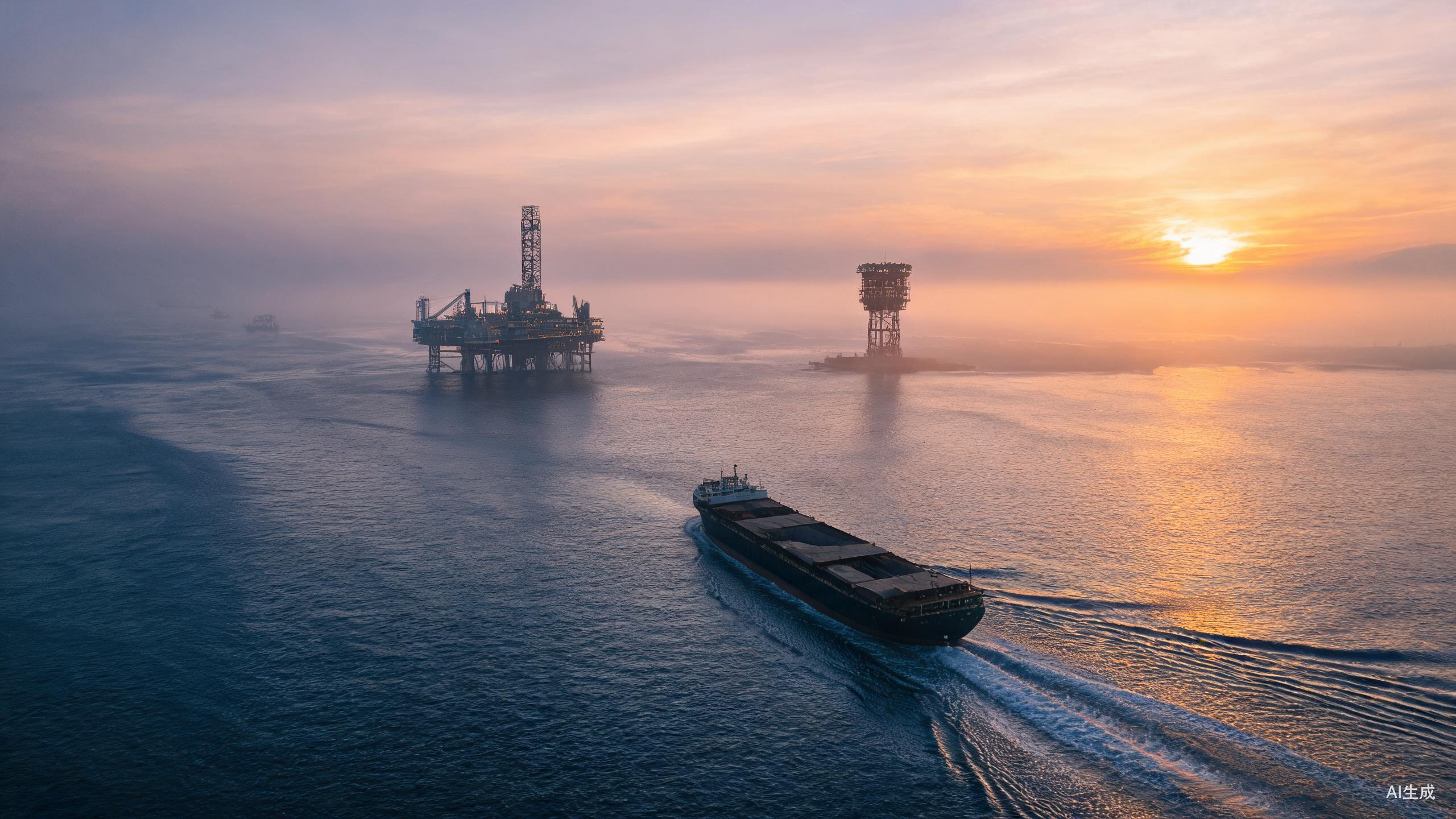
Six months have passed since the US-Iran war began. Some characterize it as a less thorough Gulf War, or an Iraq War without a ground campaign.
Others argue the Iran war is fundamentally different from the Iraq War, and could become "Trump's Vietnam," ultimately costing the US part of its sphere of influence.
Since the war began, 18 US service members have been killed and more than 750 wounded. Over 40 military aircraft, including drones, have been lost. Numerous military bases and early-warning radars across the Middle East have been damaged, and a significant share of Patriot and THAAD interceptor inventories has been expended.
In scale, the current conflict is nowhere near the Vietnam War, which lasted years and killed 58,220 US troops. By comparison, the Iran fighting is a one-day affair.
On July 13, Trump was asked at a press conference whether exchanges of fire with Iran had become the new normal for Americans. He replied: "We were in Vietnam for 19 years — we've only been here four months (now it can be changed to six)."
Though the direct costs of the two wars are incomparable, their indirect effects share similarities.
In terms of external impact, the fall of Saigon in April 1975 did not trigger the widely predicted global chain reaction, but it still greatly weakened US influence in Southeast Asia, with the socialist bloc's reach extending to South Vietnam, Laos, and Cambodia.
The 2026 US-Iran war has similarly eroded US influence in the Middle East. Losing the Strait of Hormuz now looks highly probable, bases inside the Persian Gulf will struggle to return to pre-war operational status, and countries such as Oman, Iraq, and Qatar may tilt further toward neutrality.
After the Vietnam War, the Le Duan administration grew increasingly bold, and it cannot be ruled out that post-war Iran may show a similar tendency.
An Islamic Revolutionary Guard Corps general said in an interview: "In the past we never experienced a real war, but in these months we have learned, and we saw that the American military is weaker than we imagined."
On domestic impact, Harvard history professor Logevall noted: "Many of the problems troubling American society today—division, resentment, cynicism, distrust of government—stem from the Vietnam War era. It destroyed people's enthusiasm for believing in change and working for change. It was in this polarized political ecosystem that Trump was able to flourish."
The Iran conflict has further deepened divisions within American society and weakened the moral authority of US engagement in international affairs.
Past presidents during wartime engaged in extensive "moral justification"—fighting for freedom, fighting for order—but Trump alone was too lazy to bother with such explanations.
The image below shows President Johnson delivering a televised address on the Vietnam War from the White House on May 13, 1965. He said the goal of the war was to ensure that "every nation can shape its own destiny," and that "only in such a world can Americans secure their own freedom."
Compared with the decision-making teams of previous major wars, the Trump administration was the most "rough-hewn."
McNamara, the US defense secretary during the Vietnam War, served in the Army Air Forces during World War II. After the war, he was hired by Ford Motor Company for his data-analysis expertise, became president of Ford at 45, and in 1961 accepted President Kennedy's invitation to serve as secretary of defense.
McNamara was directly involved in the Third Berlin Crisis, the Bay of Pigs, the Cuban Missile Crisis and the Vietnam War escalation, playing a role in many major Cold War decisions. After leaving office, he was nominated to lead the World Bank, where he served for 13 years.
Hegseth, the current counterpart, is best known for television production. His statements and decisions have been highly controversial during the war, and it is hard to imagine him receiving a major appointment after leaving office.
A growing number of Republicans are openly expressing dissatisfaction with Hegseth. Senator Thom Tillis said, 'I have lost confidence in him. I think he is scattered emotionally and lacks experience managing a large organization.'
The prevailing view is that Hegseth's main skill is inflating the president's ego. He may not be adept at managing the military, but he is very good at catering to his boss's self-regard, showing a zeal to support all of Trump's fantasies at any cost.
Among other core figures, Secretary of State and National Security Advisor Rubio is known for handling Latin American affairs. Vice President Vance rose largely because of his bestselling book. Son-in-law Kushner and golf partner Witkoff, who has been given a major role, are complete amateurs.
The US-Iran war has lasted more than six months. More precisely, Iran has been in a 'stop-and-go' state for most of the past two years, punctuated by two wars with the US and Israel as well as blockades.
This situation has markedly worsened living conditions for most Iranians. Official Iranian reports put year-on-year inflation at 89%, with food inflation at 127%.
Over the past few months, Iran's oil and gas facilities, petrochemical plants, steel factories, as well as residential buildings, ports, airports and bridges, have all suffered varying degrees of damage.
Iran, one of the world's most resource-rich countries, is facing increasingly severe fuel and electricity shortages, and the government has cut fuel quotas for private vehicles.
Difficult as the situation is, it depends on the comparison. Compared with North Vietnam in the 1960s and 1970s, Iran is in a much better position.
From Dec. 18 to 30, 1972, U.S. forces bombed Hanoi and Haiphong heavily for 12 consecutive days and nights, attempting to 'bomb North Vietnam back to the Stone Age.' The image below shows Hanoi after the carpet bombing.
By comparison, Iran's air-defense capabilities are significantly superior to North Vietnam's, and Tehran has only suffered 'light damage.'
Within Iran's current establishment, one faction hopes to resolve the issue through diplomacy, while another wants to fight until the U.S. is defeated and backs down. But all insist on the bottom line of 'never making major concessions to the U.S. and Israel.'
In fact, the U.S. also faces enormous difficulties in carrying out a long-term military blockade.
According to an Aug. 30 Washington Post report, the Pentagon's Army, Navy and Air Force chiefs, along with senior commanders of European Command, Indo-Pacific Command and Southern Command, jointly warned Defense Secretary Hegseth against continuing military operations in Iran.
The warnings are detailed in the Secretary of Defense Orders Book (SDOB) published Aug. 14. Senior commanders believe that continuing to commit military resources to Iran would severely undermine the ability to respond to threats in other theaters.
Additionally, the escalation of the US-Iran war has heightened concerns over the stability of US finances, with the US Treasury, once considered a 'completely safe asset,' facing increased selling pressure - with long-term US bond yields surging from 3.9% to 4.7% in just six months.
The US federal government's annual interest expenses have exceeded $1 trillion, with rising interest rates compressing the room for maneuver in military spending.
Unlike the Vietnam War, a significant portion of the costs of the US-Iran war are being borne by countries around the world, disrupting the existing model of 'cheap oil' and 'cheap shipping'.
Although nobody dares to say it out loud, many countries are actually holding Trump accountable for this bill.