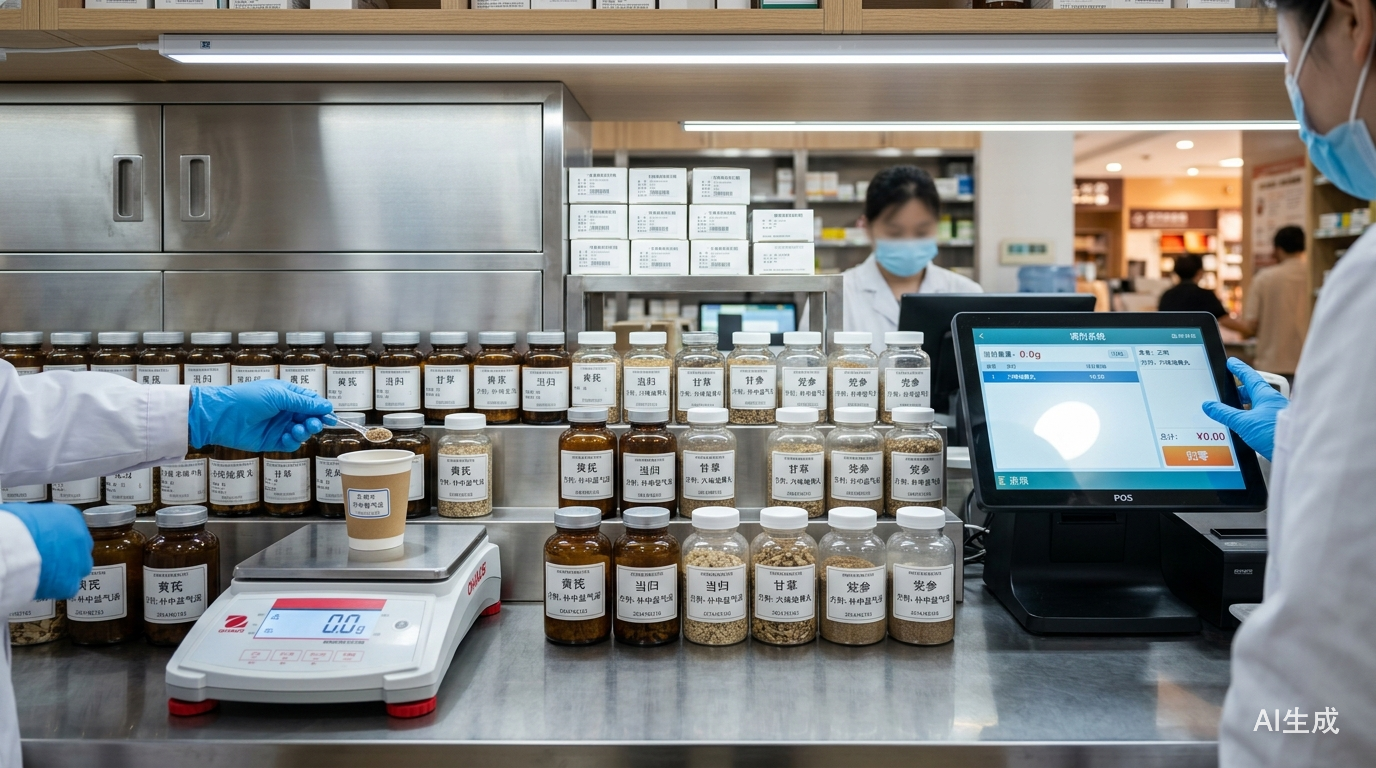
On August 25, the Hunan Medical Insurance Bureau's "Notice on the Comprehensive Implementation of Zero-Markup Policy for Chinese Medicine Prescription Granules" was officially posted online, clarifying that starting from September 15, all public medical institutions at all levels in the province will fully cancel the markup on Chinese medicine prescription granules, and sell them at zero markup based on the actual purchase price. With this, the last price protection mechanism for Chinese medicine prescription granules has been abolished, marking the end of the golden age for Chinese medicine prescription granules.
In April, the General Office of the State Council issued "Several Opinions on Improving the Drug Pricing Mechanism", which explicitly included Chinese medicine formula granules in the zero-markup management range of public medical institutions and required all formula granules to be procured through provincial-level medical procurement platforms. Shandong and Hunan were the first to respond, and other provinces across the country are following suit.
For over 20 years, Chinese medicine formula granules have enjoyed special pricing policies, with public medical institutions able to sell them at a markup of up to 25% based on the actual purchase price. Additionally, Chinese medicine formula granules are managed with reference to decoction pieces, and are not subject to the "medicine occupancy ratio" assessment restrictions, nor are they concerned about price cuts from collective procurement, so the more they sell, the more they earn, and hospitals are naturally willing to prescribe them more frequently.
In 2021, the market size of traditional Chinese medicine formula granules reached a high of 24 billion yuan, with leading enterprises such as China Chinese Medicine and Hongri Pharmaceutical also reaping huge profits.
However, with the implementation of the zero markup policy this year, changes have taken place at the clinical end. A doctor from a hospital in Beijing told Jian Shi Ju that their hospital has basically stopped prescribing Chinese medicine formula granules and now only prescribes decoctions. Chinese medicine formula granules take up space in the pharmacy and require more personnel, and it is impossible to stock all varieties, which is no longer cost-effective after the zero markup policy, making it unnecessary to continue. In contrast, the hospital now encourages patients to purchase Chinese medicine outside the hospital, and even offers free decoction services, which saves manpower and resources.
This also reveals a dangerous signal: if the enthusiasm of hospitals begins to wane, the market cooldown for Chinese medicine formula granules may have only just started.
Zero Markup: Buy and Sell at Cost Price
Before the zero-markup policy was fully implemented, the traditional Chinese medicine formula granule industry had already felt the first round of pressure from centralized procurement.
On October 27, 2023, China's first cross-provincial joint procurement of traditional Chinese medicine formula granules was held in Shandong, with the average price of winning bids falling by more than 50%. Less than half a year later, in March 2024, the Beijing-Tianjin-Hebei "3+N" alliance launched a volume-based joint procurement for traditional Chinese medicine formula granules. After the winning bids were implemented, the price of some common varieties fell by more than 40% when they were introduced locally, with Tianjin seeing an average price drop of 68.76%.
The centralized procurement policy has largely brought down the artificially high prices of traditional Chinese medicine granules, but it has not fundamentally solved the problem.
Chinese medicine formula granules, as a form of innovation in traditional Chinese medicine, have been around for only 25 years. In 2001, the State Drug Administration officially named them "Chinese medicine formula granules" and included them in the management category of traditional Chinese medicine, approving six pilot enterprises to produce Chinese medicine formula granules. Over the next 20 years, the market for Chinese medicine formula granules remained small. In 2021, the National Medical Products Administration and three other departments jointly issued an announcement to end the pilot program, and Chinese medicine formula granules entered a new stage of record-keeping management, with more enterprises gaining eligibility to enter the market and supply increasing.
From the perspective of manufacturers, the requirements for raw materials for Chinese medicine formula granules are lower than those for ordinary traditional Chinese medicine pieces; in terms of clinical management, Chinese medicine formula granules are still classified as traditional Chinese medicine pieces, allowing hospitals to add a price markup. This combination of lower costs and higher pricing has resulted in extremely large profit margins for Chinese medicine formula granules.
The Medical Insurance Bureau has proposed canceling the surcharge for traditional Chinese medicine prescription granules, while also introducing a compromise supplementary compensation mechanism: collecting a dispensing fee for traditional Chinese medicine prescription granules.
After the cancellation of the surcharge, public hospitals can still collect a dispensing fee when prescribing traditional Chinese medicine formula granules, equivalent to the service fee for pharmacists' prescription review, dispensing, and verification. However, no such fee is collected for traditional Chinese medicine decoction pieces. Hunan aims to completely distinguish between traditional Chinese medicine formula granules and decoction pieces to avoid irregularities such as "prescribing decoction pieces but collecting formula granule dispensing fees".
As for how much room for maneuver the dispensing fee can leave for hospitals, Hunan has not set a specific standard this time. In reference to other provinces, this fee is unlikely to be too high. Previously, the standard dispensing fee for traditional Chinese medicine prescriptions in Shandong Province was 4 yuan per prescription.
Even with the payment, hospitals cannot cover the management costs of traditional Chinese medicine granules, as the storage and dispensing process is more complicated and requires higher humidity and insulation standards, resulting in significant expenses. Therefore, the zero markup plus dispensing fee policy will inevitably bring lower revenue to hospitals compared to before, which will affect their enthusiasm for using these medicines.
Before the relevant policies took effect this year, the China Association of Chinese Medicine had submitted a report to the National Medical Insurance Bureau on the situation and policy suggestions for not implementing a zero markup rate for Chinese medicine formula granules, pointing out that implementing a zero markup rate policy for Chinese medicine formula granules alone may further increase the cost pressure on medical institutions, causing some hospitals to control the use of formula granules and affecting patients' access to traditional Chinese medicine. Now that this policy has been implemented, for hospitals, whether the limited dispensing fee can make up for this part of the cost is a very practical problem.
China's Traditional Medicine Industry Faces Major Test
New policies in Hunan may be just the beginning, with more provinces likely to take measures to squeeze the high profit margins of traditional Chinese medicine formula granules.
In January, China Traditional Chinese Medicine Co., Ltd., the leading company in the prescription granule industry, issued a profit warning and reported its first annual loss in a decade. The pressure continued in the first half of the year, with the company's semi-annual report showing that its traditional Chinese medicine prescription granule business revenue was 1.933 billion yuan, down 35.4% year-over-year. Similarly, another leading company in the prescription granule industry, Red Day Pharmaceutical, achieved revenue of 2.188 billion yuan in the first half of the year, down 21.72% year-over-year, with its traditional Chinese medicine prescription granule business revenue reaching 1.071 billion yuan, down 12.99% year-over-year.
Times are tough for leading companies, and even tougher for mid-tier ones. In the first half of the year, Shenwei Pharmaceutical's formula granule revenue was 336 million yuan, a year-on-year decrease of 31.1%. The company attributes the decline in performance mainly to the implementation of centralized procurement of traditional Chinese medicine formula granules in Hebei, which led to a significant drop in the winning bid prices of products, with an average decline of over 30%.

It is worth noting that Shinwei Pharmaceutical also mentioned an interesting change, where the main effect of centralized procurement is a price decrease, but the sales demand from medical institutions in the first half of the year did not show a significant decline.
This may mean that the toughest time for Chinese medicine formula granules has yet to come. In the second half of the year, as the zero-markup policy is implemented in various regions, the real problem to be faced is: after zero markup, how to make hospitals still willing to sell? If zero markup further affects terminal usage, the entire industry may face a situation where both quantity and price decline.
At that time, the entire traditional Chinese medicine formula granule industry must answer a question that was never thought about before: if there is no policy tilt, is the product itself worth the hospital's adoption and worth the enterprise's investment?