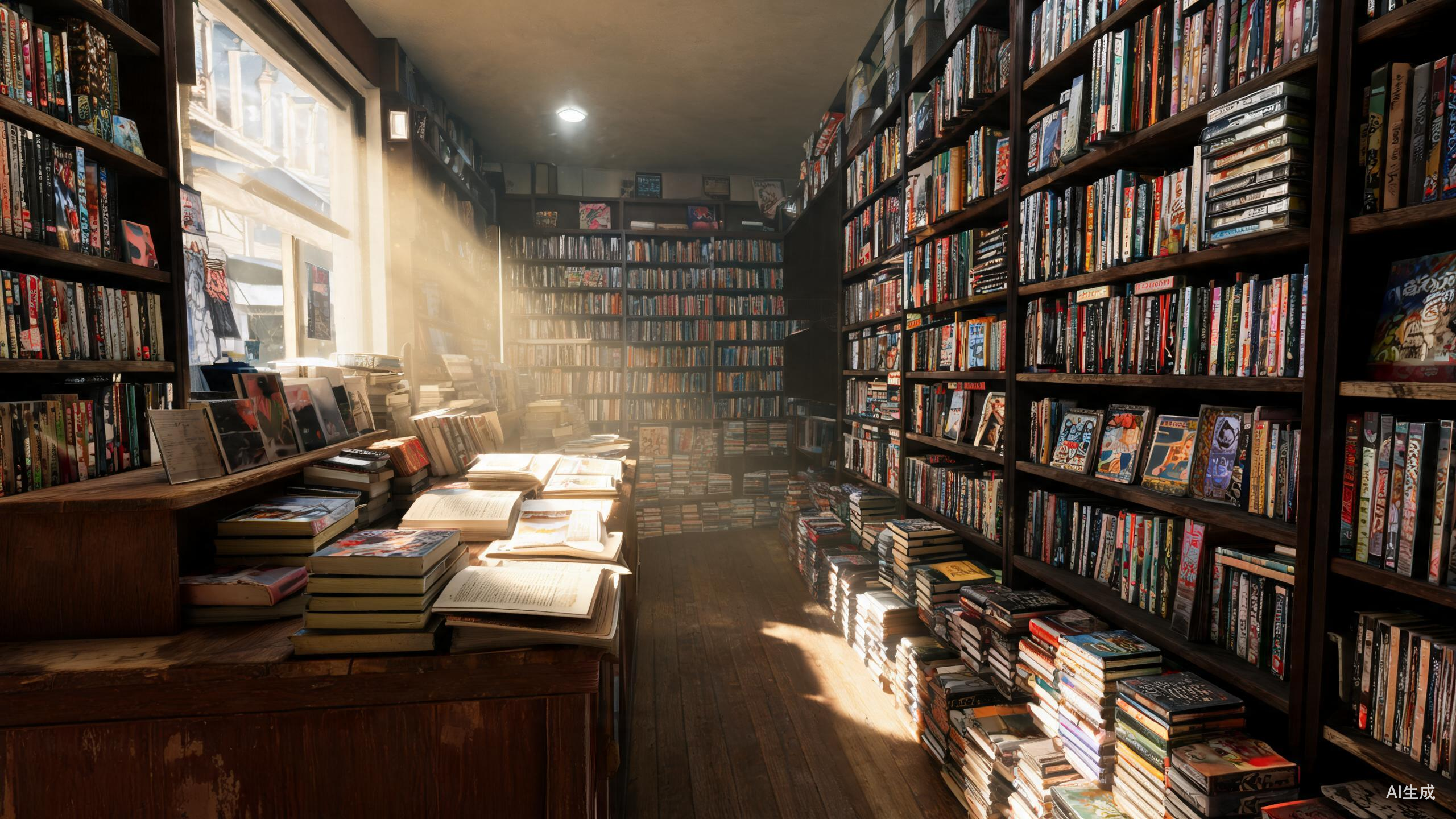
On the shelves of Victoria Circulating Library and Music House, there is no literary hierarchy. Mills & Boon romances sit squeezed beside literary classics, while political biographies rest atop Tintin comics. Along the narrow aisles, dog-eared thrillers rise in tall stacks, with DVDs, CDs, and Hindi bestsellers layered one upon another, packed as tightly as a game of Tetris.
The store appears to be in disarray, but owner Arif Merchant is well aware of the location of every book. For 40 years, he has been rooted in the Mahim district of Mumbai, accumulating a vast collection that caters to the tastes of local readers.
"There's still a human touch here," he said, gently shifting the piles of books stacked on the counter.
In India, using a public library is often not an easy task, which is why cramped and cluttered shops like Victoria's play a vital role. These privately run lending libraries, known as circulating libraries, typically charge a low monthly fee and an additional fee per book borrowed, with a wide range of titles available, from popular novels to books in local languages and comics. This model has existed for centuries, long before the government set up public libraries, and is now experiencing a resurgence, catering to the public's strong demand for reading materials.
According to the latest statistics, India has 46,746 public libraries, ranking among the top in the world. However, behind the impressive numbers, there are shortcomings that cannot be ignored. Preedip Balaji, a researcher at the Indian Institute for Human Settlements in Bangalore, pointed out that the statistics include small reading rooms with few books and fully-equipped formal libraries in the same calculation, which does not accurately reflect the actual situation of people's access to library services.
Policies of the central, state, and local governments vary, and library funding across the country is also vastly different. Balaji explained that among India's 36 states and union territories, 17 have yet to enact legislation related to public library funding; many libraries face budget constraints and staffing shortages, making it difficult to meet community needs.
"We are a vast and populous country with significant regional differences," he said, "libraries are a kind of 'third space' where people can gather regardless of their origin or family background."
Bureaucratic procedures can also be a difficult hurdle to overcome. Many public libraries have not truly become open public spaces, and applicants who want to obtain a library card often have to submit identification photos, proof of address, and application forms signed and stamped by their school or employer.
Mercant's business model is much simpler. He has around 150 customers a month, whose names are recorded in a thick notebook. Readers pay a refundable deposit of 300 rupees ($3.15) and a rental fee of up to 20% of the book's retail price. He keeps track of readers' preferences and updates his collection accordingly, whether it's niche comics or the latest Geronimo Stilton series, as long as readers want it, he will try to stock it.
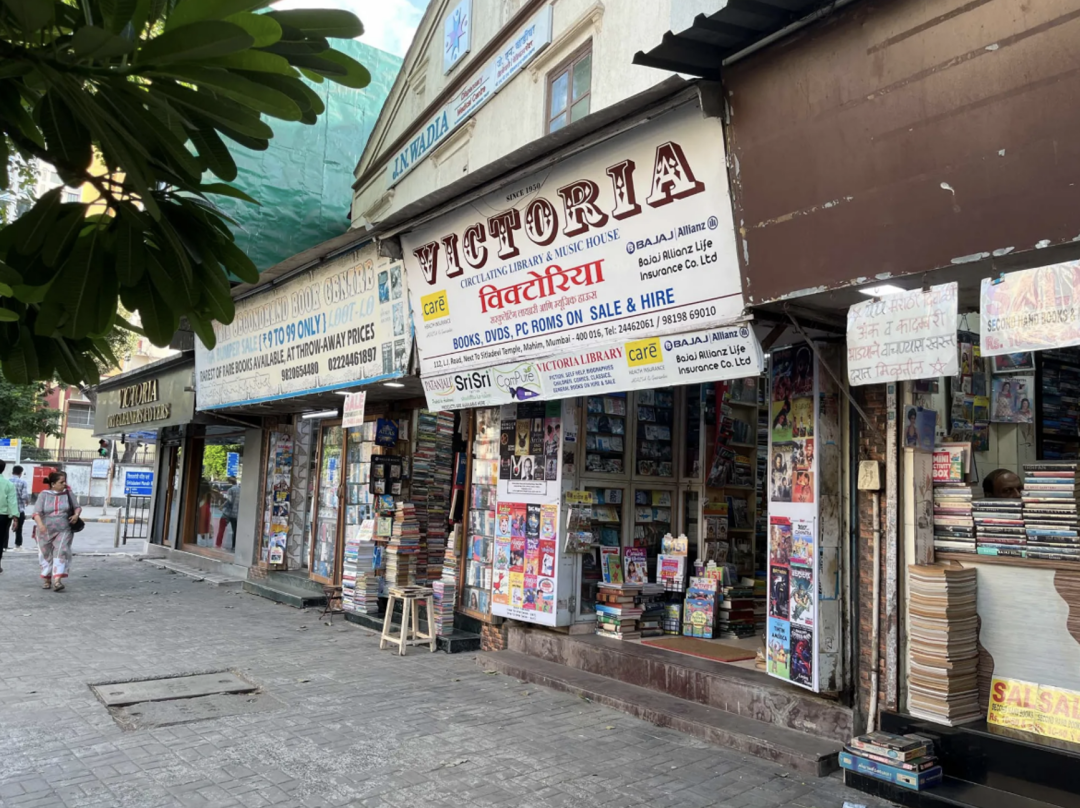
Mumbai's Victoria Terminus library and audio store. Photographer: Akanksha Singh/Bloomberg
Bernard Andrade, a resident of Mahim, has been a regular at Victoria for over 30 years, drawn by its vast collection of books. "There are serious non-fiction works, classics, and local language works mainly in Hindi and Marathi," he said, "as well as films and magazines."
India's Ministry of Culture is pushing to modernize public libraries through funding, staff training, digital infrastructure development, and policy guidance to states. But the Free Libraries Network, an organization advocating equal access to reading, learning, and information resources for all, says much more needs to be done. With a population of over 1.4 billion, only a small fraction of Indians have convenient access to libraries, and socioeconomic barriers rooted in caste and class continue to block many from reaching library resources. The organization is calling for universal library coverage to boost national literacy and numeracy rates. According to data from World Population Review, India's literacy rate stands at 81.7%, below Sri Lanka's 92.7% and the global average of 87.7%.
"Few people have seriously considered what children will miss out on if they can't access books," said Jatin Lalit, head of the free library network. "There will always be a segment of people who are disconnected from the school and university education system, so where else can they go? Community and public libraries should belong to everyone."
India's Ministry of Culture did not respond to a request for comment.
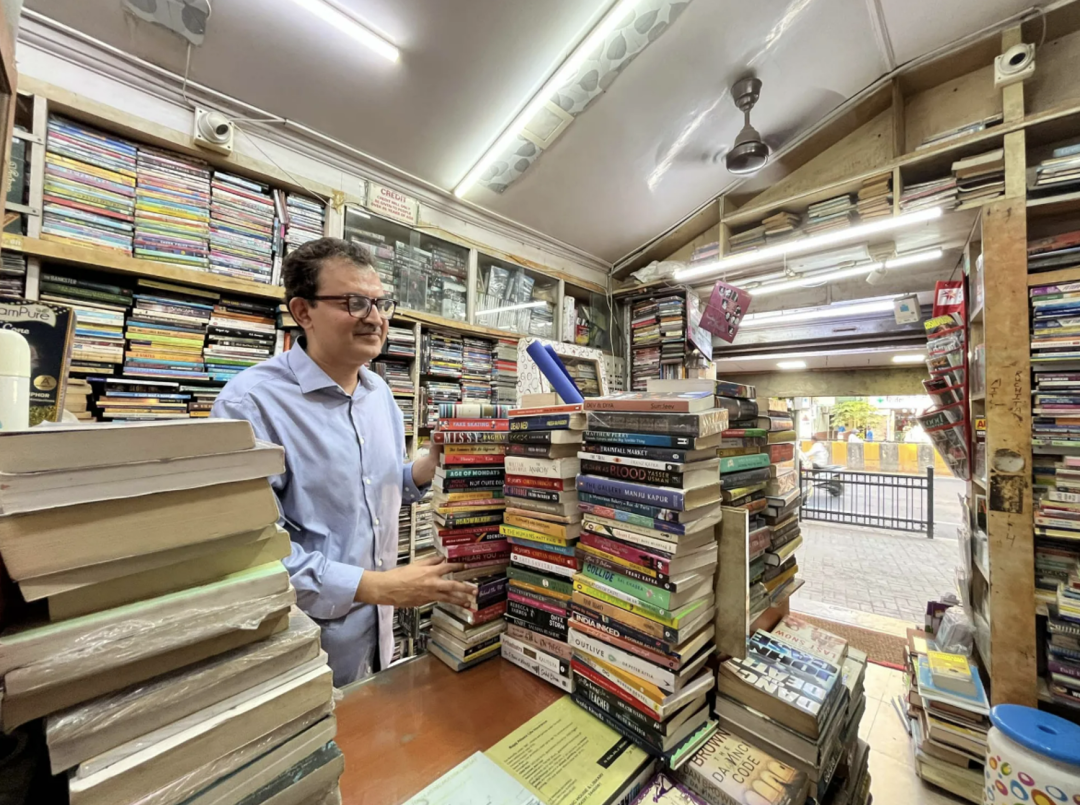
The owner of Victoria's Circulating Library and Audio Store, Arif Merchant, updates the collection based on readers' tastes. Photograph: Akanksha Singh/Bloomberg
Rahul did not wait for government action. In 2024, he founded a free, community-run library in Bans village, a rural area in Uttar Pradesh. The library now has around 4,500 books, wireless internet and computers, and 4,500 members, and also extends its services to an additional 54 villages through a mobile library van.
Indians are renowned book lovers. According to data from the World Population Review, Indians spend an average of 352 hours per year reading, second only to the United States' 357 hours.
Balaji believes that in India, where access to public library resources is unevenly distributed, circulating libraries like Victoria are meeting people's strong demand for reading and filling a gap in social infrastructure.
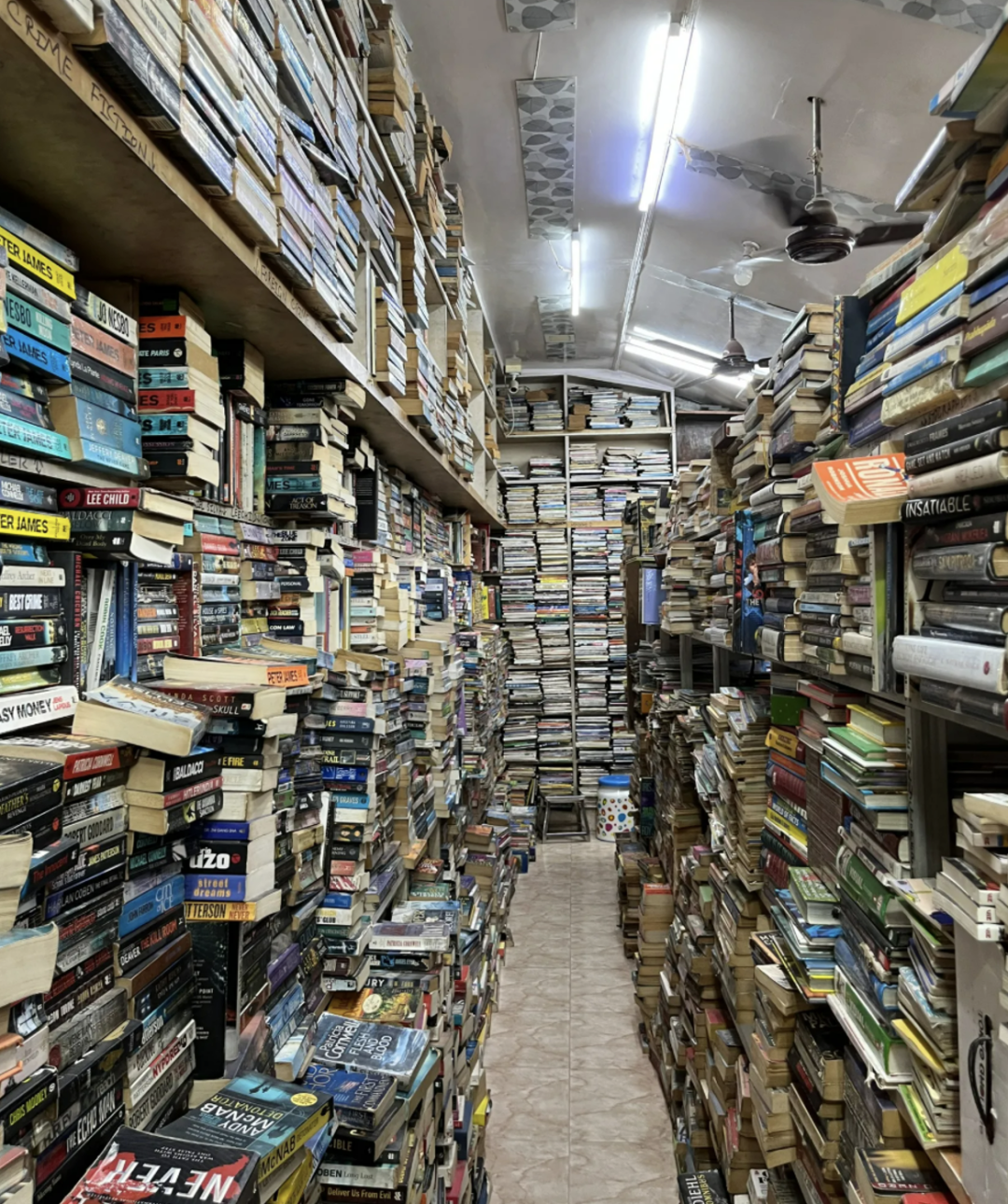
Victoria's bookshelf has everything from classic literature to genre fiction. Photo: Akanksha Singh/Bloomberg
According to the Oxford Encyclopedia of British Literature, circulating libraries flourished in the UK from the mid-18th century, thriving for about 100 years and playing a significant role in the formation of a mass reading culture. Jane Austen herself was a member of a circulating library and mentioned such institutions in her letters and novels, including Pride and Prejudice.
India's earliest circulating libraries date back to 1709, when the British Anglican missionary society established the first circulating library in Kolkata, followed by the opening of several others over the next few decades. Today, the UK has largely replaced these private lending libraries with free public libraries; however, major cities in India still retain this type of private book rental business, including Eloor Libraries, which was established in 1979 and now has three branches.
Merchant's street-side old store seems to have been forgotten by time, while its peers, such as Easwari Lending Library in Chennai and Choose&Read in Coimbatore, have introduced online ordering and door-to-door book delivery services. During the COVID-19 pandemic, the number of customers plummeted, and the entire industry was severely impacted; to this day, the industry still faces numerous challenges, including rapid rent increases that outpace membership fee growth and digital entertainment diverting time away from physical reading materials.
Even so, Merchant said that after the epidemic, the store's business has picked up, especially with a significant increase in young customers.
"Parents bring their children to get in touch with books," he said, "as long as someone is willing to take the books home to read, I am satisfied, what could be more important than this?"