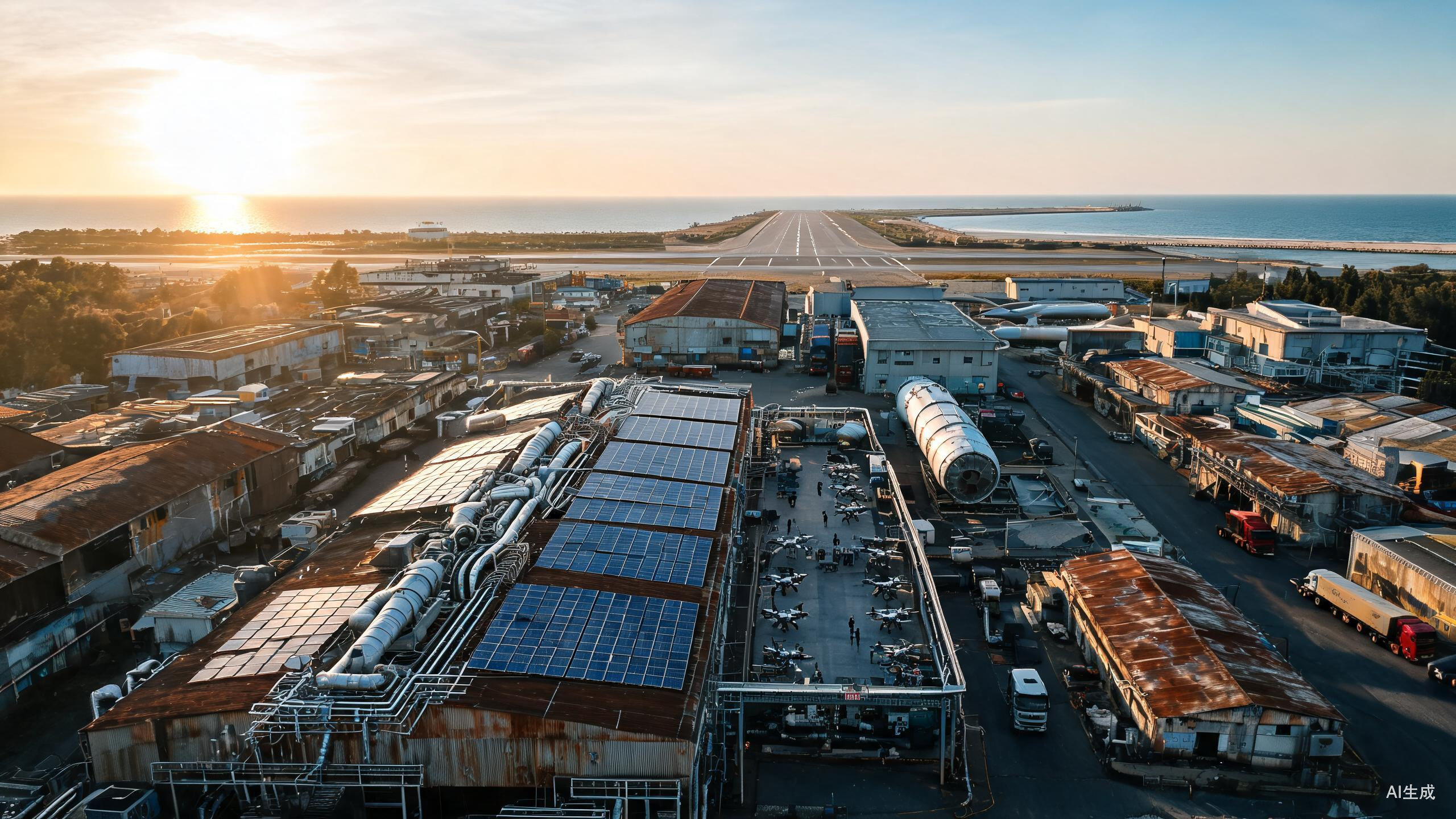
There is a small town called El Segundo in California, USA, adjacent to Los Angeles International Airport.
Over the past three years, this place has become the most densely packed area for hard tech startups in the US - with companies making drones, small nuclear reactors, and pharmaceuticals in space, all on one street. Top Silicon Valley funds are taking helicopters to come and scoop up projects.
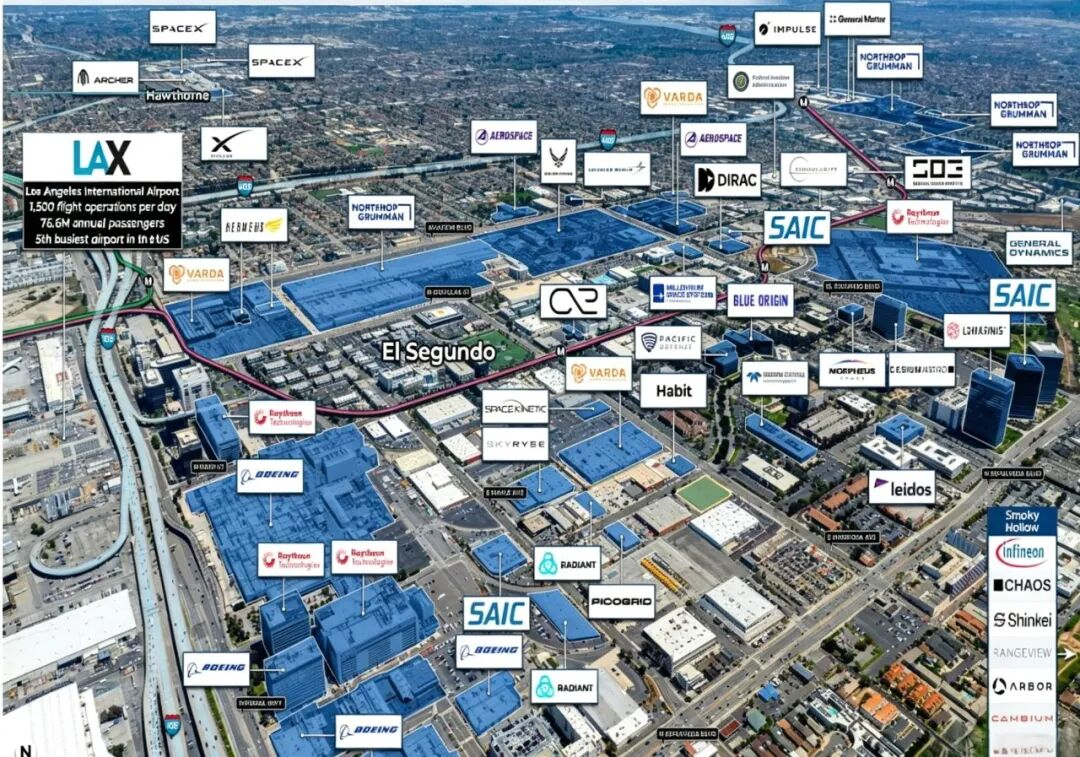
El Segundo is densely packed with tech companies
A journalist once interviewed the mayor and asked: What is the most contentious issue discussed at the city council meetings? Is it hypersonic technology, the China threat, or supply chain security?
The mayor said:
The permit for the chili cooking competition has been approved.
At first, we thought it was just a joke, but later we realized it was actually a profound truth.
Let's start with some data to whet our appetite.
The first set of data is about how small it is.
The entire city of El Segundo spans 5.5 square miles, or 14.2 square kilometers, while Shanghai's Yangpu Riverside area has a total area of approximately 15.6 square kilometers, making it larger.
The town has a permanent resident population of 16,000.
But with a daytime population of over 80,000, it is a "work container".
Then you also have to consider that within these 14.2 square kilometers, the Chevrolet refinery alone occupies over 1,000 acres (4 square kilometers), leaving limited space for development, with the core area called Smoky Hollow spanning only 120 acres, or 0.49 square kilometers, roughly the size of 70 football fields.
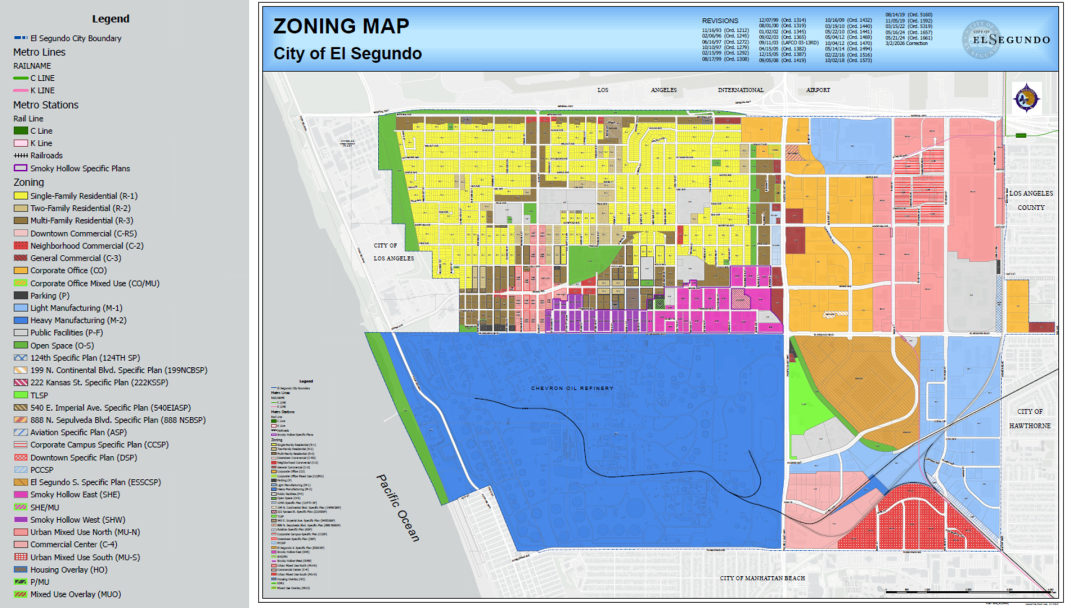
The land use planning map of El Segundo shows that the blue heavy industrial area is the refinery built by Chevron in 1911,
Smoky Hollow is the purple and pink area to the north of the refinery
The second set of data is about what happened in these 70 football fields.
A US media person who conducted an on-site interview said in March this year that $5.9 billion in venture capital is flowing down Franklin Street here.
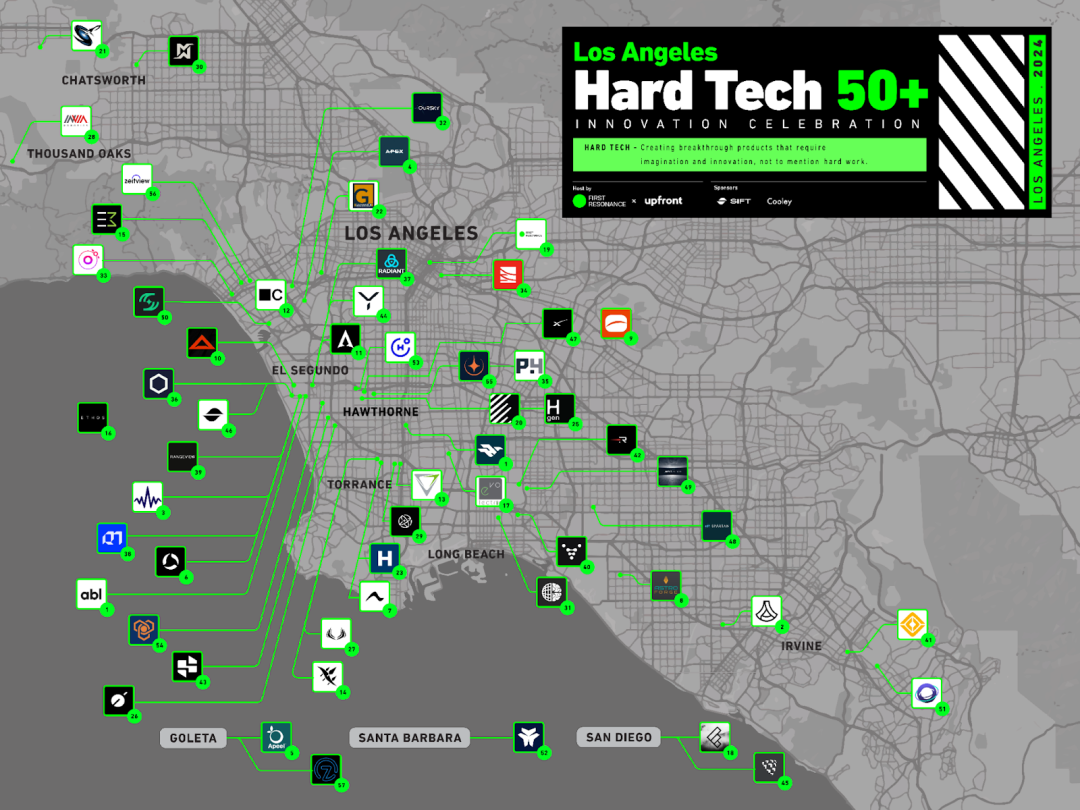
In 2024, a local real estate broker who has served over 30 hard tech companies reported that El Segundo has 32 hard tech companies, the most in Los Angeles County. Los Angeles City itself ranked second with 19 companies, followed by Torrance with 13, and Long Beach with 12.
By 2026, the South Bay Hard Tech Map, maintained by the same individual, has already tracked over 250 companies.
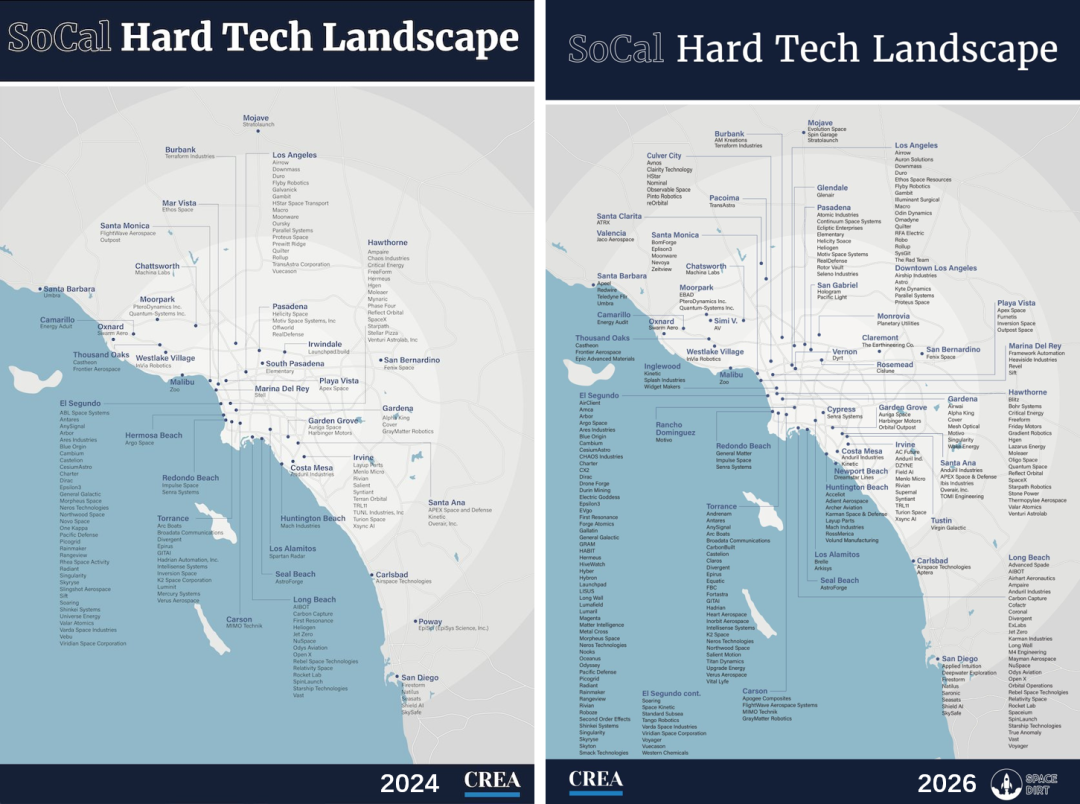
The third set of data is about these companies
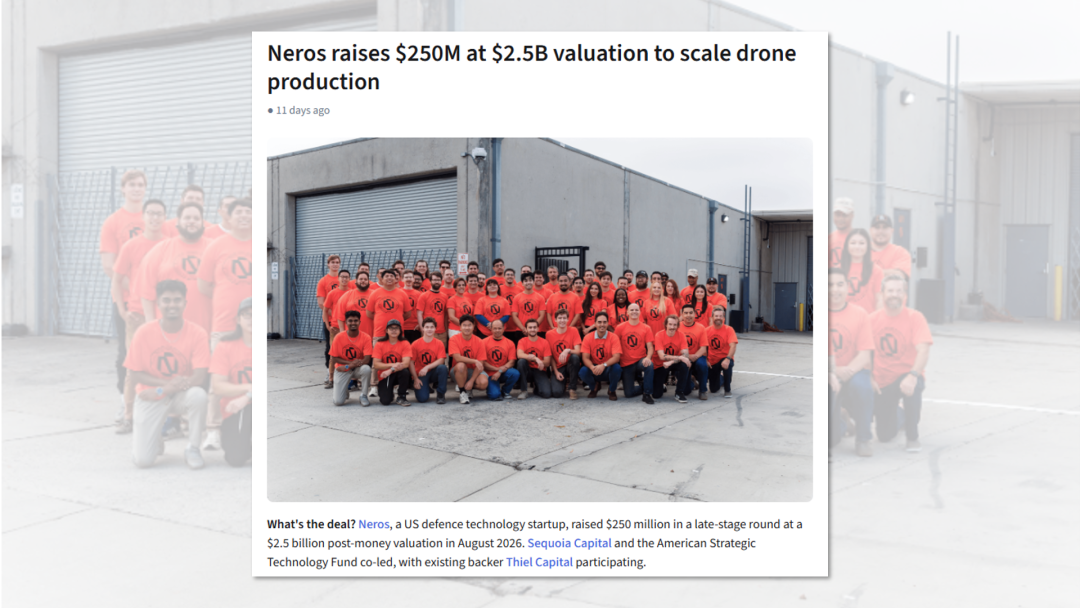
Neros was founded in 2023 by two young men who originated from drone racing, aged 22 and 24. The company's product is the Archer crossing machine, priced at around $2,000, with a key selling point being that it contains no Chinese components, from the overall machine to the chips. In 2026, Neros secured a $500 million contract from the US Army and completed a Series C financing round of $250 million, with a valuation of $2.5 billion.
Valar Atomics, a developer of small nuclear reactors, relocated to Smoky Hollow from Idaho in 2024. In 2025, it became the world's first venture-backed company to achieve criticality. In August 2026, the company completed a $1 billion Series B funding round led by Sequoia, with an additional $200 million credit facility.
Varda: conducts drug crystallization in space and then returns the capsule to Earth, having completed multiple launch-return cycles. Its financing trajectory includes a $90 million Series B round in 2024, a $187 million Series C round in 2025, and a $250 million Series D round in January 2026.
In 2026, 38% of venture capital in the Los Angeles area went to the defense and aerospace sector, the highest among all industries.
Among the new unicorns that year, half belonged to the aerospace and defense security fields.
The combined valuation of all aerospace and defense unicorns in the area is approximately $416 billion, accounting for 78% of the total value of unicorns in Los Angeles.
A small town with a population of 16,000, with a core area the size of 70 football fields, has driven the shift of a trillion-level industrial belt.
This is what we are going to study today.
The Anti-Silicon Valley People
Nubia Drinks Silicon Valley's Milk
This place has a nickname called "The Gundo". It started trending on Twitter in November 2023 and later became an identity - "Gundo Bros".
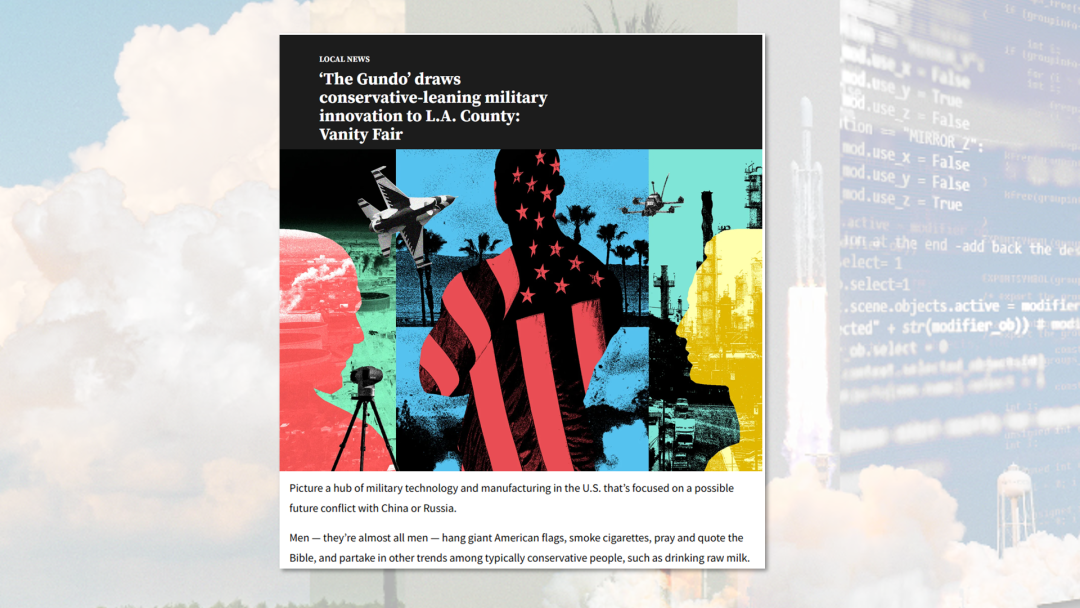
Their self-narrative is extremely vivid, to the point of being a bit over-the-top:
We do atoms, not bits.
We make things, not apps.
Silicon Valley has fallen, and the US needs to relearn how to manufacture.
These people hang two-story-high American flags in their warehouses, have bonfires on the beach on Fridays, pump iron and write code while chewing nicotine bags and downing energy drinks. When heading to Stanford for a national defense tech event, they carpool from El Segundo, singing patriotic songs along the way, stopping at the roadside to pray before launching a drone.
If transposed to China, this scenario would look something like this:
A group of people involved in hard technology rented a bus, and on board, they passionately sang "I Love China" in unison. Along the way, they stopped at the side of the road, first held a solemn flag-raising ceremony, then had a barbecue together. The entire activity was recorded using drones - this was indeed very unconventional.
Fortunately, Silicon Valley is still willing to pay for it:
For example, Neros' seed round, Series A, and Series B were all backed by Sequoia Capital, one of Silicon Valley's oldest software funds. Valar's $1 billion Series B was led by Sequoia. Varda is backed by Founders Fund, Peter Thiel, and Khosla Ventures.
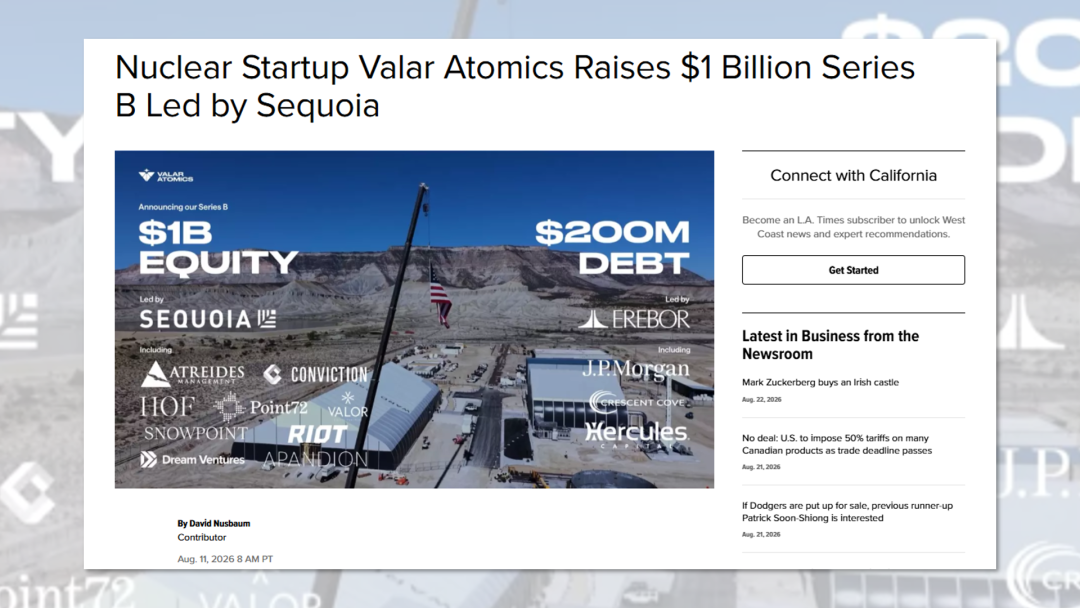
Valar Atomic, a nuclear reactor development company, has just secured $10 million in funding.
Discipulus, the organization that specializes in Gundo startup accelerators, raised $30 million in its Series B funding round in June 2026, with reported LPs including the founder of Anduril and the founder of Coinbase. General Matter, which focuses on uranium enrichment, was also incubated within this fund for almost a year before making its public debut.
Discipulus Ventures is focusing on El Segundo and hard technology
Bringing 10-20 new tech companies to El Segundo every year
The money basically comes from Silicon Valley, which is the first layer, but what's really interesting is the second layer —
These people not only took money from Silicon Valley, but were also trained in Silicon Valley's methodologies.
For example, as we previously wrote about SpaceX, one of its core innovations is applying the way of doing things from the software industry to hardware:
Rapid prototyping, rapid failure, and manufacturing around 85% of components in-house to cut out supplier markups and lead times.
This stuff was heresy in the aerospace community in 2002.
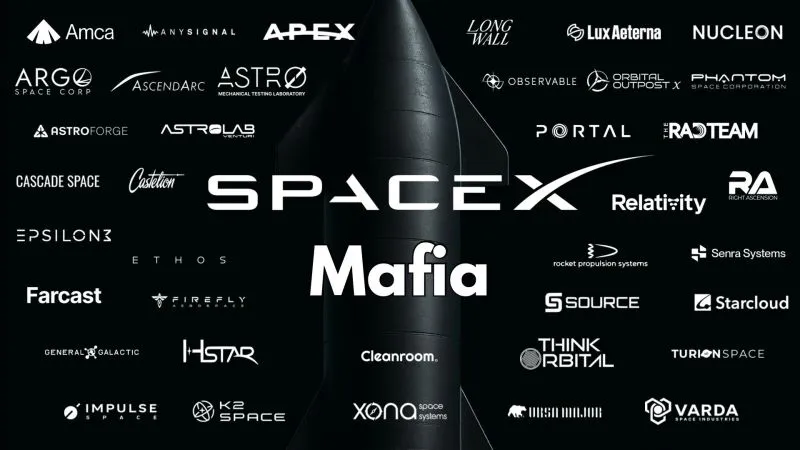
The Rise of SpaceX's Mafia: A Group of "Lords" Believers Are Dividing Up the Trillion-Dollar Future of Hard Tech...
But now let's look at Neros' production line:
It takes approximately 45 minutes to assemble a drone from end to end, with one drone rolling off the production line every two minutes. Each completed machine must undergo its maiden flight in the on-site testing chamber, with flight data fed back into the simulator. The flight testing team conducts experiments at the desert testing grounds for at least five days a week, with engineers able to propose a test idea in the morning and receive results by that evening.
This is the physical version of continuous integration and continuous delivery (CI/CD), putting DevOps on a propeller.
So Gundo is not about "Americans returning to traditional manufacturing" because the traditional manufacturing approach is: design freeze, follow the process, one model every five years. But Gundo's approach is:
Build it first, fix the problems later, and we'll have the data by tomorrow night —
It is making manufacturing in a software-like way.
Why This One?
Now, we've come to the most critical issue.
The US has plenty of old industrial cities, idle factories, and patriotic young people, so what makes this tiny area, roughly the size of 70 football fields, so special?
We can break it down into 4 layers —
First, talent.
SpaceX has cultivated an entire generation of hardware engineers within a 10-kilometer radius.
The team at Neros includes former engineers from SpaceX, Palantir, and Anduril; Varda was founded by former SpaceX personnel; and General Matter's CEO is an early SpaceX engineer who worked on the Merlin engine and Dragon spacecraft projects.
This requires a phenomenal company to operate at high intensity in the same location for over a decade.
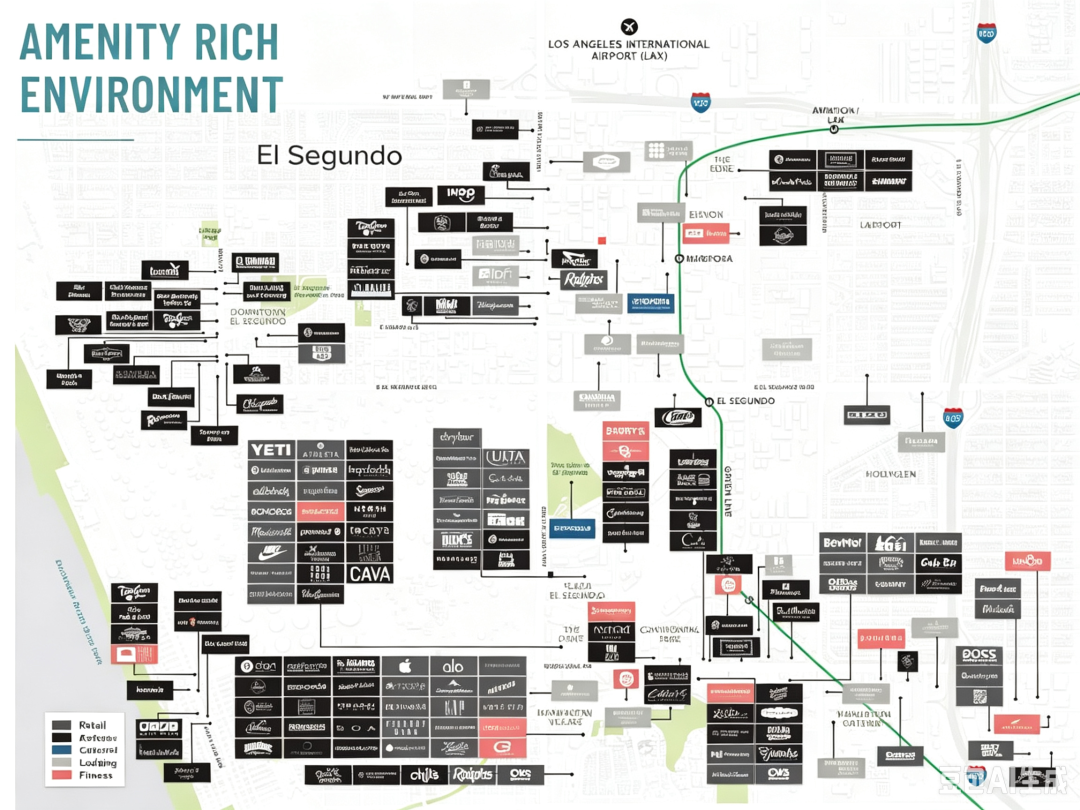
The second tier: affordable.
Almost every article that mentions Gundo notes that its land prices are far lower than those in Silicon Valley.
However, this statement is incorrect, because the kind of space that hard tech truly needs - South Bay factories with sufficient ceiling height, ample power supply, and cargo unloading capabilities - is now being quoted at prices approaching those of R&D spaces in Silicon Valley.
El Segundo itself is one of the most expensive submarkets in the South Bay, with an industrial vacancy rate approaching zero. If a building has sufficient power supply and is put up for rent, it gets snapped up immediately, with multiple parties competing for it.
Why?
Due to electricity.
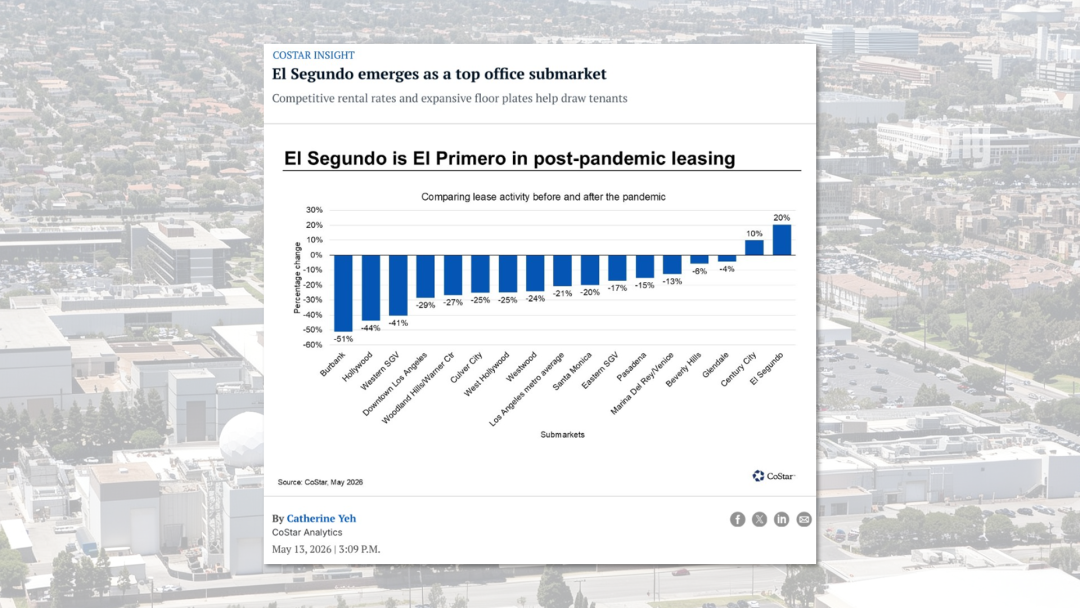
The Greater Los Angeles area's post-epidemic rental performance is led by El Segundo
In 2026, the constraints on US industrial real estate have shifted from land to power: large users often have to wait one to two years for a power supply, and routine expansions can take a year. The procurement cycle for transformers and switchgear has become the earliest decision point for development projects, determining whether to move forward or not.
Due to the nationwide shortage of electricity, "existing industrial plants that have already been connected to the power grid" have become gold mines.
Those buildings constructed between the 1940s and 1980s to meet manufacturing demands were originally equipped with industrial-grade power supply, which is a historical legacy rather than a planned outcome.
Moreover, this history is hard to replicate because it relies on a 30-year-long industrial decline:
The demand from industries disappeared, and these buildings were not demolished to make way for high-density office buildings; they became "functionally obsolete" and suffered from long-term low rents; due to the long-term low rents, they managed to survive until 2023.
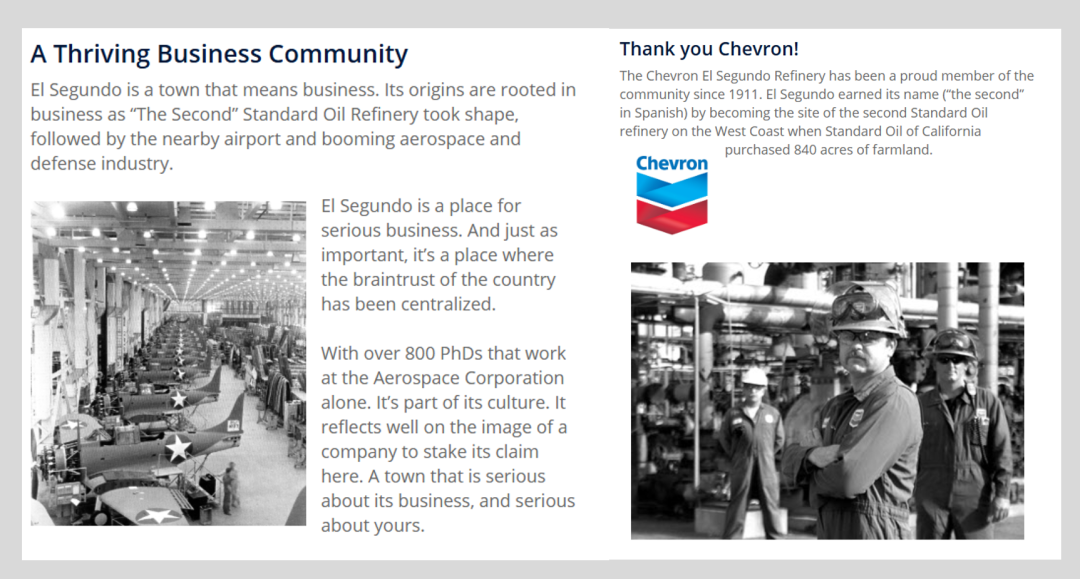
El Segundo is a traditional American manufacturing area, with many heavy industry factories built there last century.
They are treasured by hard tech entrepreneurs - "factories built 30 years ago, unused for 20 years, but never demolished because they were too valuable to give up" - and happen to match their needs extremely well.
The third tier: mayors who know every founder personally
As mentioned earlier, this is a town with a population of 16,000, 329 buildings, and a two-digit number of hard tech companies.
So here, the mayor can recognize every founder.
With such a small population, relying on memory alone is sufficient. The mayor knows what's happening in each building, which company just landed a contract, which one is planning to expand next quarter, and where the paperwork is stuck. That's how governance achieves its granularity.
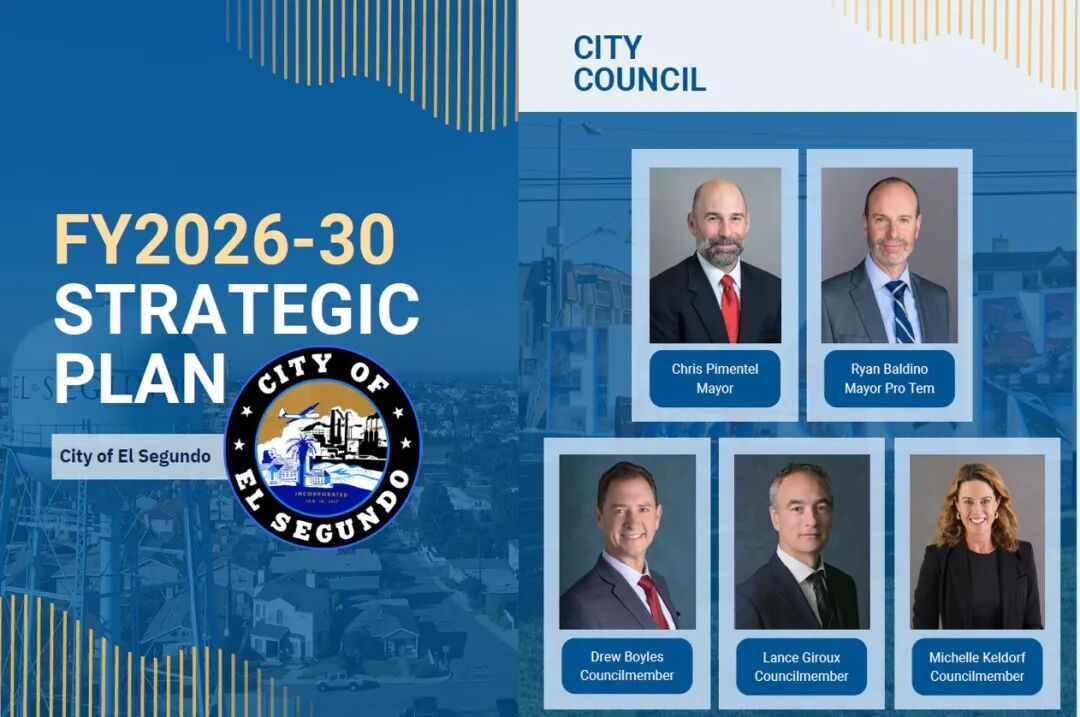
El Segundo City Council
Let's take a look at what the El Segundo municipal government has done specifically —
At the infrastructure level (which occurs before the wave arrives):
Fiber-optic cables are being laid on Franklin Street because the row of former machining workshops already had industrial power, what was lacking was a network.
Previously, founders had reported that precision equipment was damaged in the unpaved alley between buildings, prompting the municipal government to pave the alley.
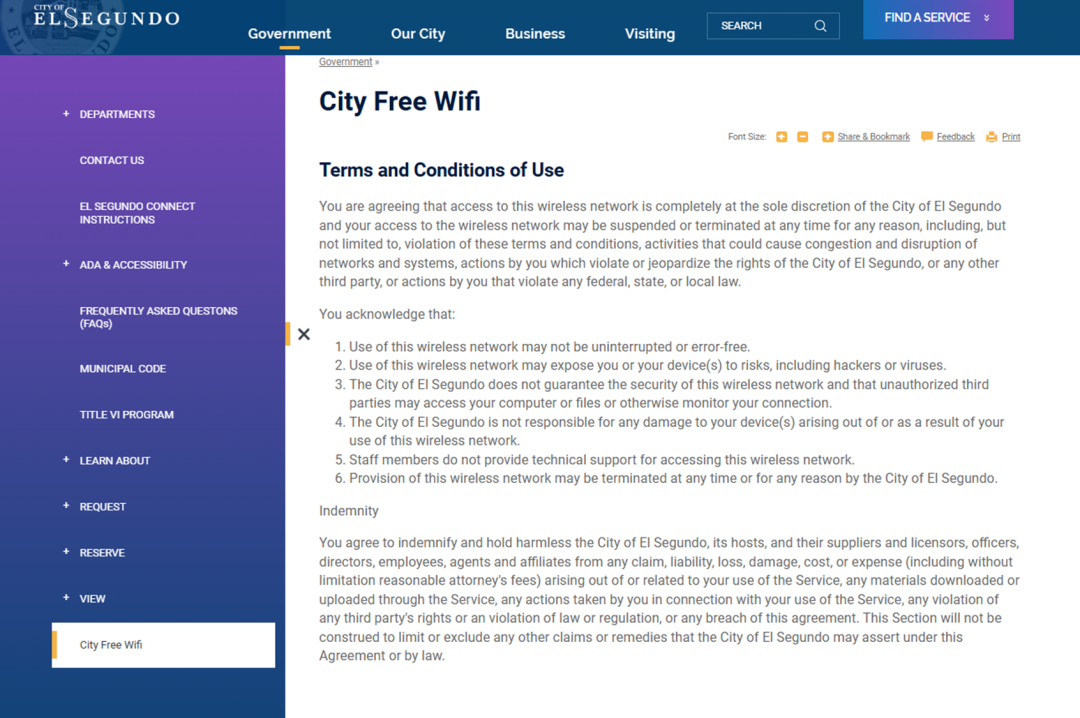
El Segundo prioritizes urban infrastructure and operates its own free municipal WiFi system.
The mayor's words essentially meant: clear, concise, and predictable regulation; the government's role is to work with businesses to find solutions, rather than being the department that only says no.
Fire inspections found that the lines were not marked, and the approach was to assist in rectification rather than suspend production.
The head of the planning department answered the phone.
Yes, "the planning minister answers the phone" is being treated as an achievement.
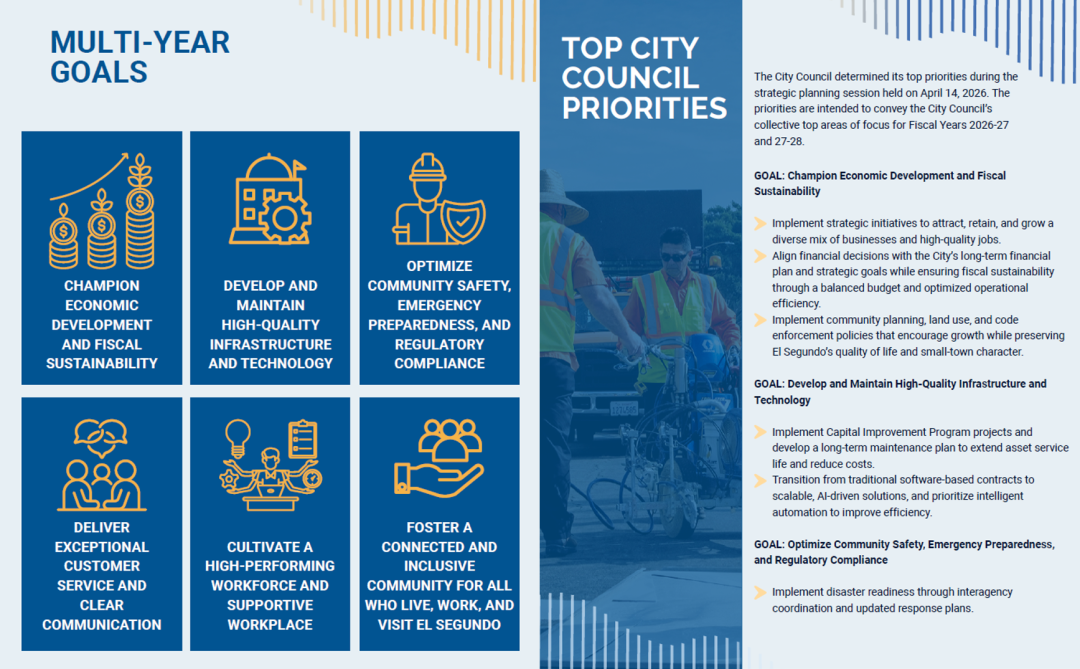
El Segundo's new development plan includes
Driving economic development and fiscal sustainability is its primary objective
Investment attraction and service layer (these two are very clever):
During the pandemic, the city government proactively went to Silicon Valley to pitch El Segundo to venture capitalists that invest in "companies that make physical products", taking the initiative to go upstream to the source of capital rather than waiting for businesses to come to them.
After the collapse of Silicon Valley Bank, some early-stage entrepreneurs in the town suddenly lost their matching services, so the municipal government acted as an intermediary to help connect them with lawyers, financial services, and investors.
The mayor explained the matter with a particularly vivid phrase, which roughly translates to:
These people are building nuclear reactors, but their taxes are probably still being handled by their dad (since they're not yet at an age where they file independently, which can be up to 24 years old in the US). You have to keep in mind what stage of life they're at.
From Zero to One
But a city like this can never be mass-produced.
For example, Neros:
Before mass production, it had around 20,000 square feet in El Segundo, but after mass production began, it set up 250,000 square feet in Torrance (as of 2026). Although its headquarters is still registered in El Segundo, its manufacturing capabilities have been relocated.
Additionally, Valar Atomics, which originated from Smoky Hollow, relocated to Torrance after gaining mass production capabilities, renting 512,500 square feet, making it one of the largest new leases in Los Angeles in Q2 2026.
The most classic example is SpaceX: it was one of El Segundo's earliest tenants (2002) → Hawthorne (2008, a 1 million square foot former Northrop aircraft factory) → Brownsville, Texas.
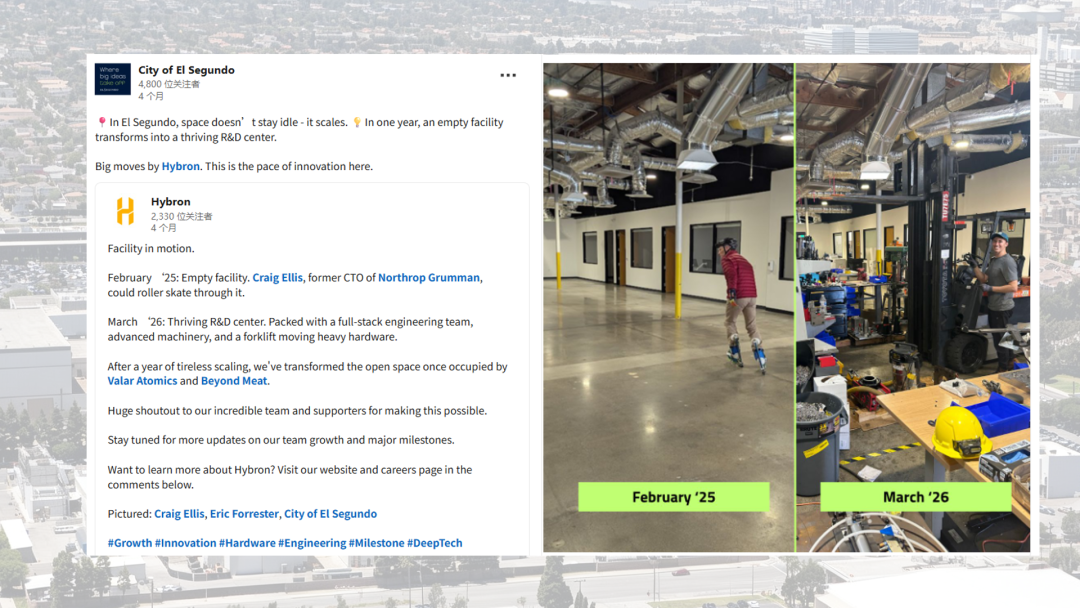
After Valar Atomics moved out, hardware startup Hybron moved into the former Valar facility,
and soon began to invest in research and development
The reason is physical and insoluble:
Industrial vacancy rates are approaching zero, and expanding power supply takes 18 months.
El Segundo positions itself as a launchpad for high-value startups, a hub that incubates companies until they are ready for mass production and then spins them off.
Its KPI is "the number of companies it incubates that eventually set up factories elsewhere".
There is another layer, especially important for China:
Gundo's narrative is partly motivated by a desire to counter China's manufacturing industry.
Neros' core selling point is "no Chinese components from the entire machine to the chip level", and its explicitly targeted competitor is DJI.
This is part of its financing story and also the basis of its pricing.
Food for Thought
Now, let's move on to the implementation stage. I will try to make each point correspond to a specific action, without using vague phrases like "we should attach importance to" or "we should strengthen".
Five Copiable Items
The first article: The power capacity of each building will be made public.
This is something I think has the highest cost performance but almost no one does.
In the marketing materials, the available electrical power capacity (kVA), expansion cycle, and expansion cost are disclosed for each building, just like the disclosure of floor height and load-bearing capacity.
For hard tech companies, the importance of this number surpasses that of rent. It is also a means of differentiation with extremely low costs - because most parks are unaware of (or cannot accurately calculate) this number.
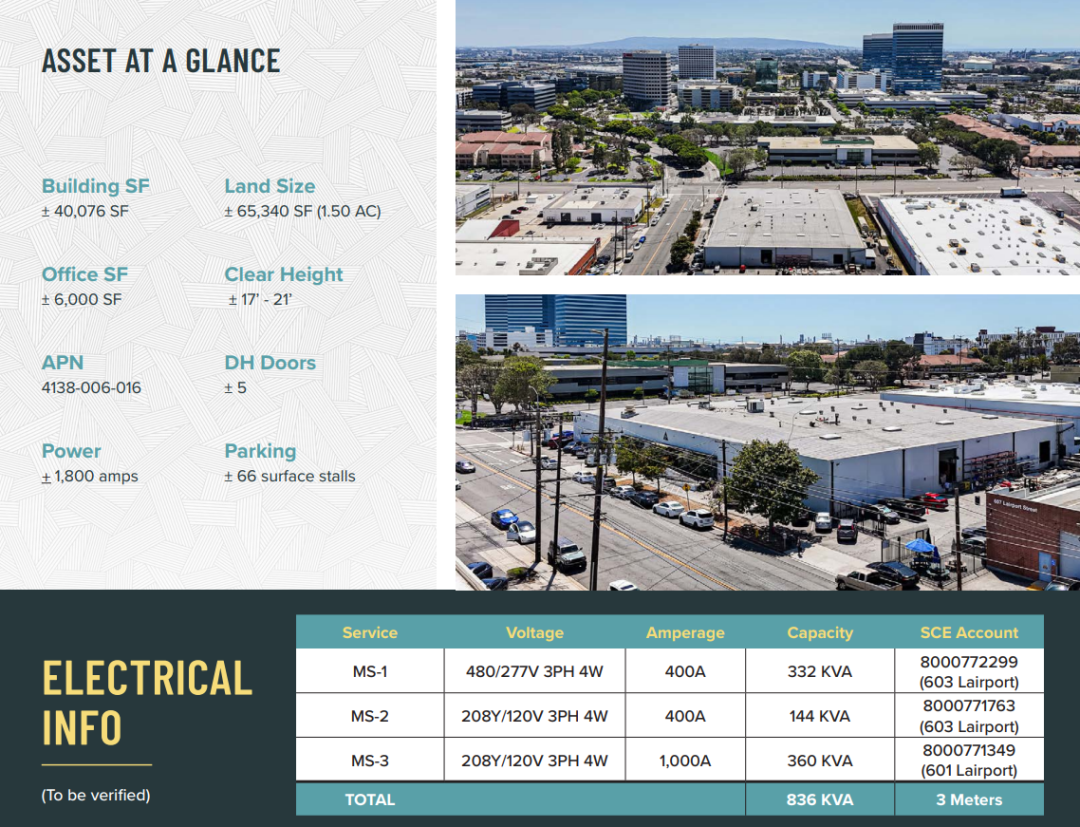
A marketing brochure for the El Segundo facility
Here, power capacity is one of the most critical indicators
Article 2: Turn "time" into a product, rather than turning "subsidies" into a product.
Specific actions:
a planner in charge who can answer phone calls (this is actually something that can be assessed)
Fire and environmental inspections will be assisted by rectification instead of production suspension;
Provide a promised timeline - for example, "the approval period for transformation projects will not exceed X working days, and if it is exceeded, it will automatically enter the green channel".
For a company that completes a round of financing every 12 months,
A certain 30 days is worth more than an uncertain subsidy.
Article 3: Recognize itself as an incubator and then adjust the assessment indicators.
If the physical conditions of your industrial park make it impossible to support mass production - such as being in a high-density urban area, a precious waterfront location, or surrounded by residential areas - then do not evaluate it based on output value and production capacity realization rate.
What should be evaluated is the number of incubated enterprises, as well as the investment amount of enterprises that have "graduated" from here and set up factories in other parts of the province or metropolitan area.
Let core urban areas serve as routers and have peripheral cities undertake production capacity.
Article 4: Allow some areas to be "not pretty".
A founder of Gundo described El Segundo as "a place that smells of oil."
He said it's a feature, not a bug.
If a 10-square-kilometer area cannot be zoned to allow for a 0.5-square-kilometer space for unloading, outdoor equipment, and noise, then "hard technology industrialization" will only be a label.
Article 5, refine the granularity,
The building's granularity: 329 small buildings;
The granularity of property rights: can be rented for 3,000 square feet
The granularity of distance: a two-minute walk to borrow a CNC machine from next door;
The granularity of governance: the mayor is acquainted with every founder.
These four granularities are the same thing, and together they determine one thing —
The smallest unit of trial and error is how small.
The essence of hard tech entrepreneurship is high-frequency trial and error, but the frequency of trial and error is limited by the granularity of physical space.
So, to sum up, I want to reiterate the part about the chili cooking competition.
A city council's most important agenda item was the licensing of a chili pepper competition.
That's not to say the government is doing nothing.
On the contrary, this suggests that all industry-related matters have been easily resolved at that level - so easily that they are not even worth discussing at meetings.
This is the highest form of business environment:
It does not need to be discussed.