This wave of trending topics has swept away all previous news in an instant.
But compared with the romantic entanglements of the ultra-wealthy, I'm far more concerned about another piece of news — one that has touched the hearts of countless ordinary people.
The impact of this matter on social morality and public sentiment far outweighs that of any billionaire gossip.
On August 17, an elderly person from Qidong, Hunan, entered a roadside chess and card room to rest, suddenly collapsed, and the store staff provided assistance and called 120, but unfortunately the elderly person passed away.
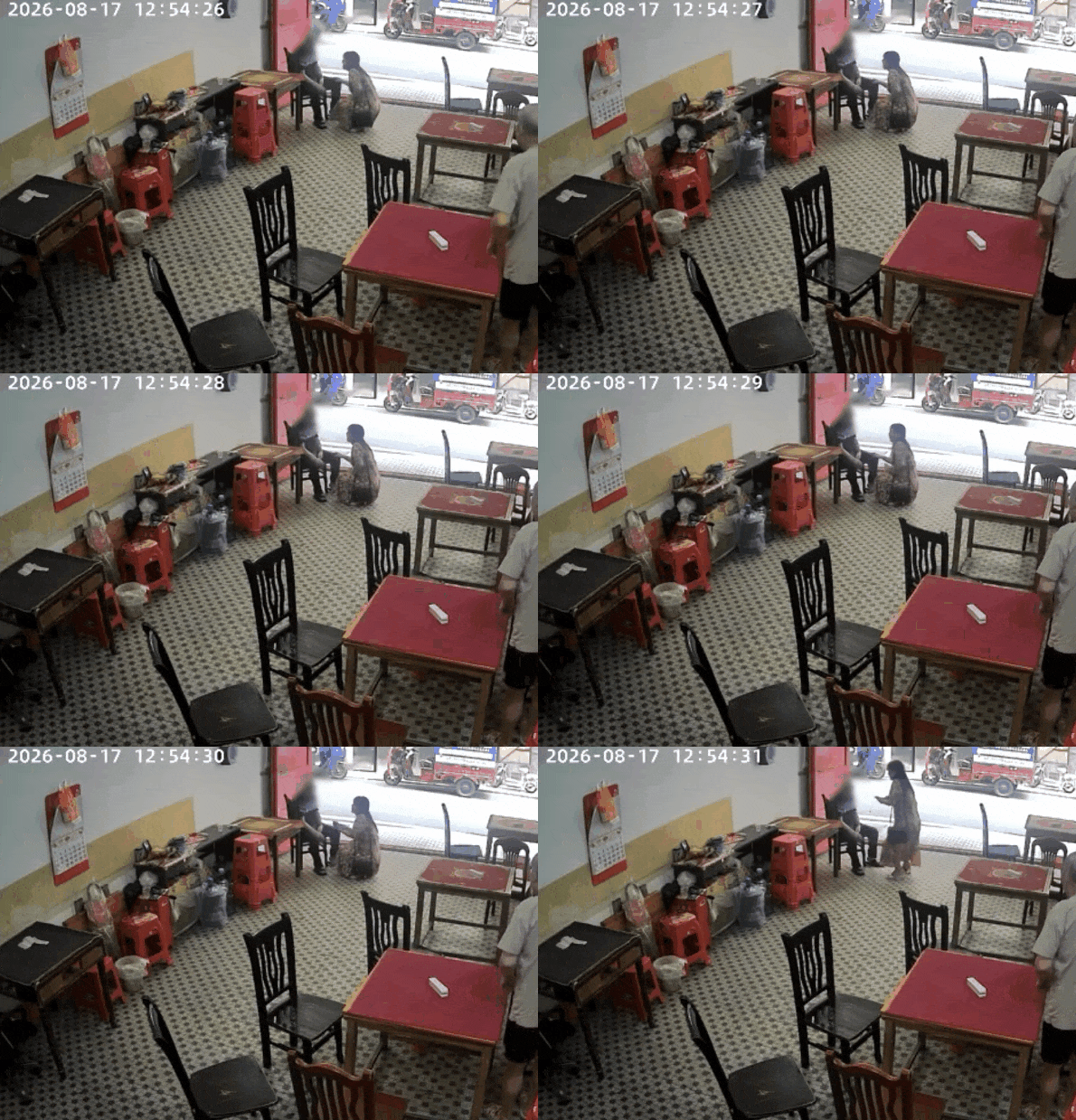
Surveillance footage from the store where the incident occurred
In the afternoon, the family demanded 100,000 yuan in compensation from the owner of the chess and card room.
Following an investigation by the authorities, it was determined that the elderly person's death was due to their own illness, and the owner of the card room actively provided rescue efforts and promptly called for medical attention, bearing no responsibility.
On August 19, after two rounds of mediation, the store owner paid 19,000 yuan in humanitarian compensation.
Afterwards, the shop owner's son posted about the incident on social media, causing a huge stir, as he was innocent and had even helped rescue people, yet was still fined 19,000 yuan without any justification.
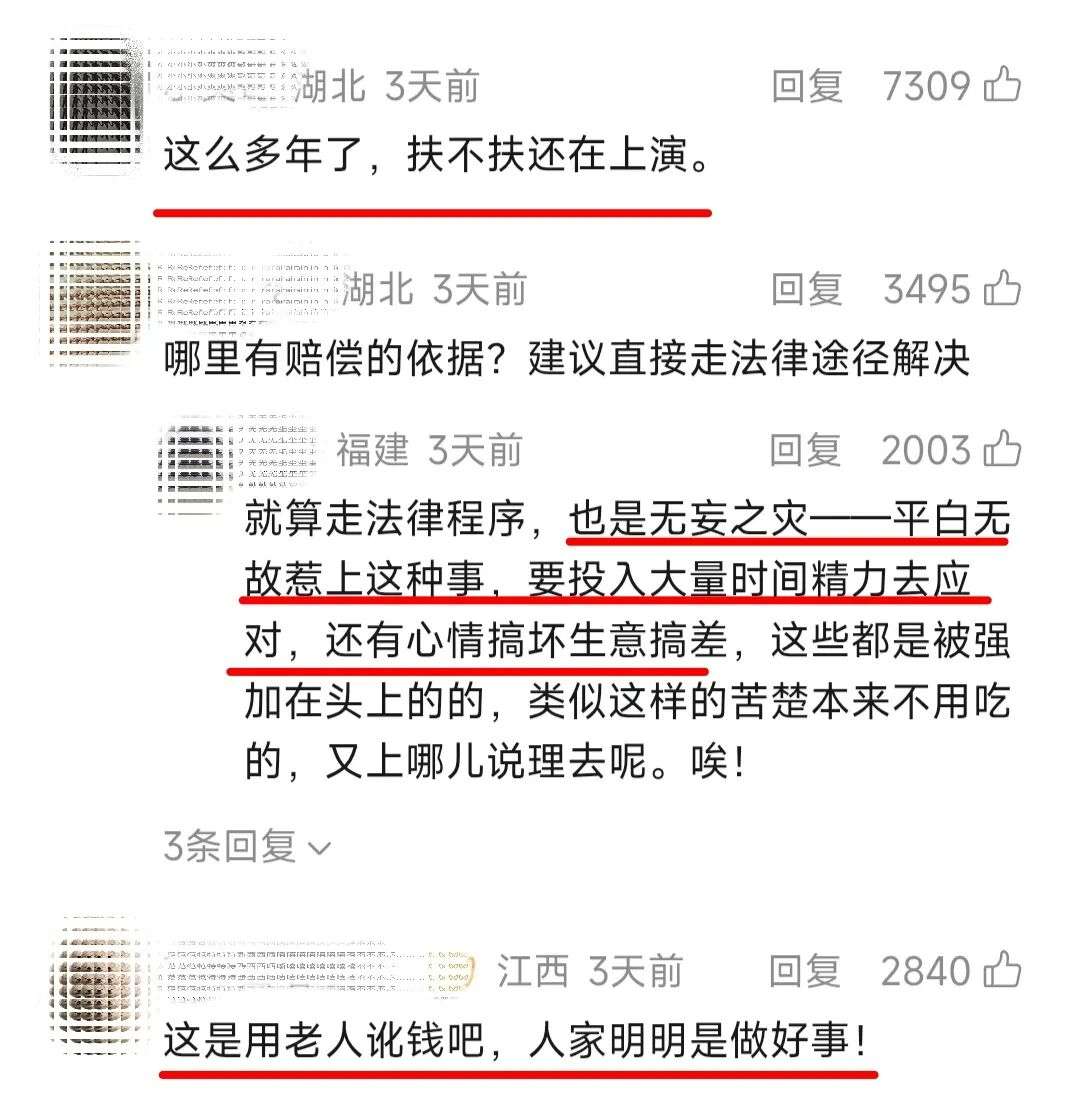
Netizens unanimously believe the store is not at fault and should not pay compensation
On August 24, a local company delivered 20,000 yuan to the shop owner, and on the morning of August 26, Luo Yonghao (and his friends) arranged a transfer donation of 100,000 yuan.
These donations from non-governmental third parties are intended to help offset the losses suffered by the hedge shop owners, while also conveying solidarity and support.

Local entrepreneurs donate and screenshots of transfers from Old Luo
After fermentation of public opinion and efforts by relevant departments,
On the afternoon of August 26, the elderly person's family returned the store owner's compensation of 19,000 yuan, and in the presence of local authorities, both parties signed a new "Certificate of Acknowledgement" that evening, formally confirming the refund and settlement.
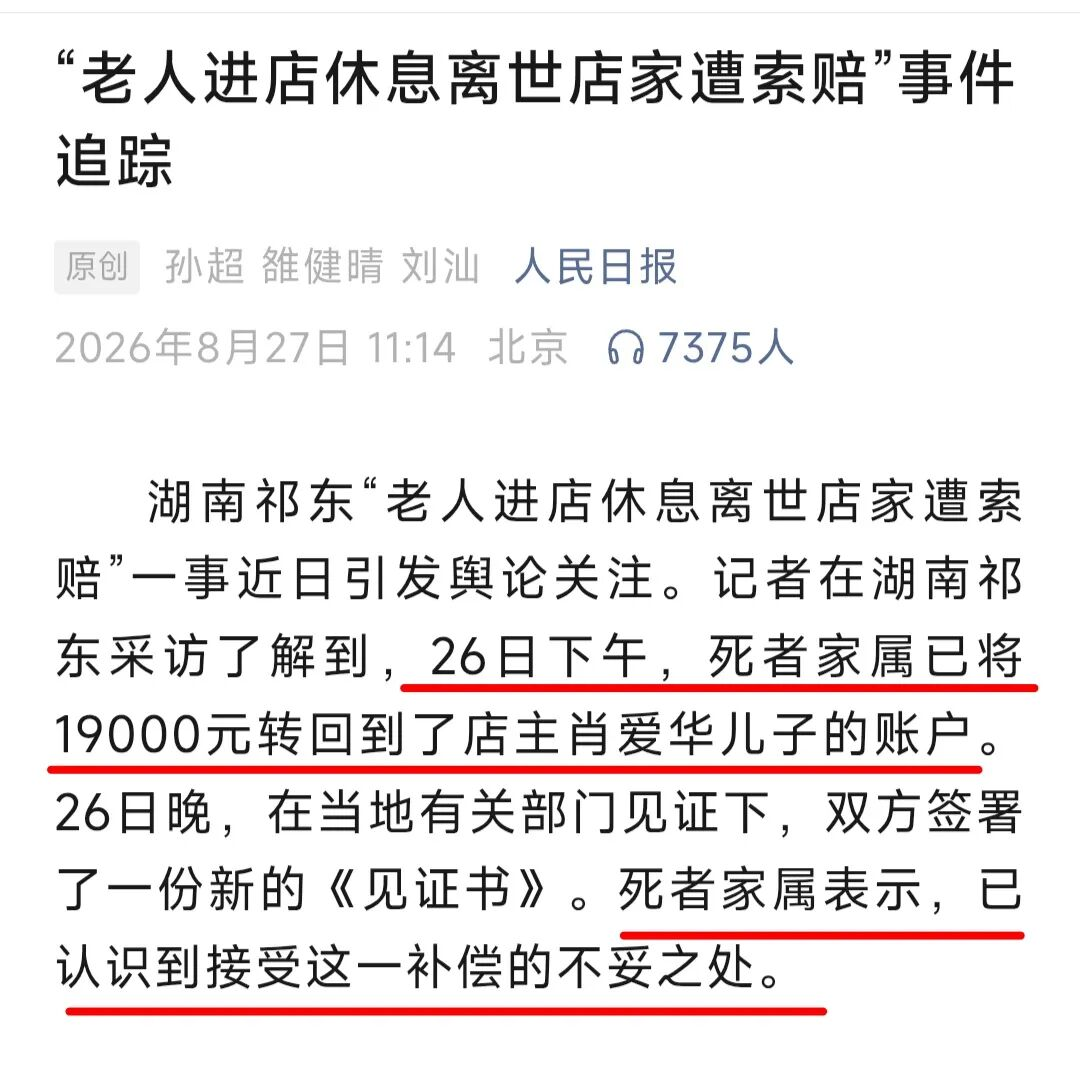
Source: People's Daily
On August 28, the shop owner's family posted donation certificates on social media, donating all 120,000 yuan donated by social figures to local public welfare departments.

Source: Jupai News Weibo
the a top of a top of a "I place of a place of a top of a "I place of a the a "I place of a "I place of "I only place of "I only place of " in a place of "I only place of "I "I only place of "I "I only "I only place of " in a "I only place of "I "I only place of "I "I "I only place of "I "I "I "I only place of " in "I only "I "I only "I " also "I only "I " "I only " "I only " "I only " "I only " "I of " " " " " " " " " " " " " " " " " " " "ore " " " " " " " " " " " " " " " " " " " " " " " " " " " " " " " " " " " " " " " " " " " " " " " " " " "." " " " " " " " " " " " " "." " " " " " " "." " " " " " " " " " " " " " " "
This incident has sparked so much discussion because it has struck a sensitive nerve in people's minds.
Starting from the Peng Yu case in Nanjing 20 years ago, "helping the elderly" has become a sensitive wound that society cannot touch.
It is clear that helping others is a natural instinct of human kindness, but in reality, the scenario of being taken advantage of after offering help is repeatedly played out.
With the increasingly advanced means of communication, local incidents can quickly spread nationwide, having a profound impact on social trust and a lasting trauma on the public psyche.
It's already 2026, and we're still debating whether to help someone in distress, which is truly lamentable.
People often say: based on facts, guided by law.
What are the facts and laws surrounding this matter? Answering these two key questions will provide clarity.
The first key question is: Should the store owner save the old man?
Morally, we are encouraged to help others, and we often hear sayings like "saving one life is better than building a seven-story pagoda" and "helping others is the foundation of happiness..."
"I" top of a "I" " " " " " " " " " " " " " " " " " " " " " only " " " " " " " " " " " " " " " only " " " " " " ". " " " " " " " " their " " " " " " " " " " " " " " " " " " " " " " " " " " " " " " " " " " " " " " a " " " " " " " " a " no " " " " " " " " " " " " " " " " " " " " " " " " " " " a " " " " " " " " " " " " ", " " " " " " " " " " " " " " a " " " " " " " " " " " " " " " " " " " " " " " " " " " " " " " " a " " " " of " " " " " " " " " " " " " " " " " " " " " only " " " "." " " " " " " " " " " " " " " " " " " " "
In this incident, the elderly man entered the store and sat down, and the store owner, noticing that something was amiss, approached him to ask questions and provided support when he fell, promptly dialing 120 for emergency medical assistance, and an ambulance arrived quickly.
The store owner's actions have exceeded legal requirements and are also morally impeccable.
A second key issue is whether the store owner bears any responsibility for the elderly person's unfortunate death.
It is often reported in the news that a good Samaritan successfully saves a life, and the family is grateful, with everyone rejoicing.
But in reality, things don't always go smoothly, and situations are complex and varied, often not unfolding as planned.
The Civil Code, Article 184, clearly states that if a person suffers damage while voluntarily providing emergency assistance, the rescuer does not bear civil liability.
The official investigation concluded that the elderly person died from complications of their underlying medical condition and the store owner was not held responsible.
Fortunately, the in-store surveillance cameras captured the entire process.

Several major media outlets reposted the over 10-minute long clear and complete video
It should have been the end of the story, but reality has added an exclamation mark instead.
Something that should have been non-controversial was easily torn open by the four words "allocation based on clamor".
The normal thought process is: the elderly person died due to underlying health conditions, although they couldn't be saved, the shop owner had made an effort, and they would visit to express gratitude.
But there are also some people, like the family of this elderly man, who think that as long as someone collapses in your store, you should compensate them.
They initially demanded 100,000 yuan and even threatened to make a scene with a coffin if they didn't get the money. After two mediations, the amount was eventually reduced to 19,000 yuan.
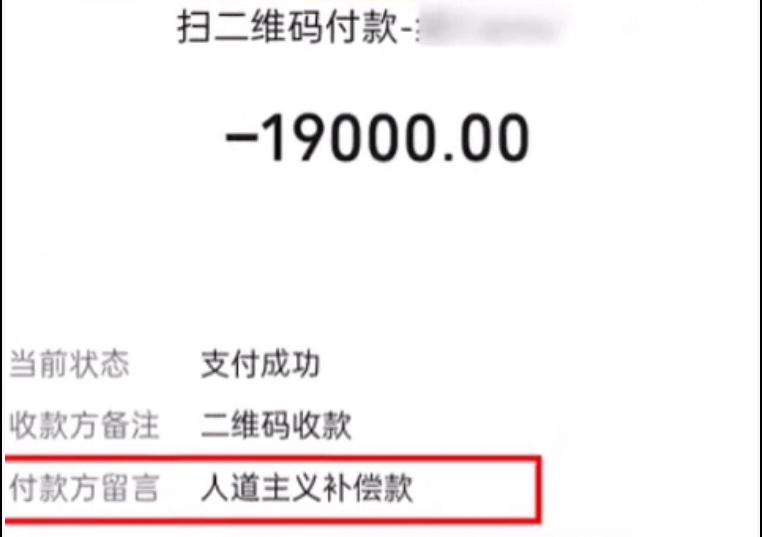
Although the shop owner was legally deemed not liable, why is mediation still necessary? The mediation institution should be a credible department that upholds justice, but what is the outcome?
The shop owner's family ultimately agreed to humanitarian compensation, not willingly, but because they had no other choice and wanted to put the matter to rest.
Why appease?
There is a very practical problem: if the shop owner does not agree to compensation, who or what institution can ensure that her normal life is not disrupted? Can the relevant departments uphold justice?
As long as the demands of the deceased's family are not met, there will inevitably be conflicts and actions. For small business owners, time, energy, business, and physical health cannot withstand such a prolonged ordeal. The owners are exhausted physically and mentally, feeling wronged and helpless, and ultimately have no choice but to pay for peace.
So-called "humanitarian compensation" is more like "buying off troubles with money".
Although the final amount was reduced, in my view, the nature of it remains the same.
What appeared at the time to be a successful mediation actually blurred the lines of right and wrong, owing to the authorities' inaction and muddle-through attitude. As a result, the party who had offered help without fault or liability ended up paying compensation. Isn't this effectively rewarding those who make a scene?
From the mediator's perspective, as long as someone compromises in the end, the case can be closed. On the surface, it seems like a low-cost solution to conflicts and disagreements, but in reality, it has left the entire society disheartened and has come at the cost of the most expensive social moral cost.
What would happen if this occurred in Germany?
If the same thing were to happen in Germany, the answers to these two key questions and the way things would unfold would not be entirely the same as in China.
In Germany, it is against the law to fail to provide assistance to someone in distress.
Under Section 323c of the German Criminal Code, if one witnesses another person experiencing an accident, danger, or distress, bystanders have a duty to provide assistance if they can do so without putting themselves in significant danger and without violating other important obligations. Failure to act or hindering rescue efforts may result in a sentence of up to one year's imprisonment or a fine.
Of course, it's not necessarily about self-sacrifice or recklessness that constitutes assistance.
Reporting the incident, seeking help from others, and such actions all constitute fulfilling one's obligations; in any case, you cannot pretend you did not see it and stand by idly.
This is somewhat stricter than domestic law.

German Criminal Code
I once received specialized first-aid training in Germany, where I learned how to handle various emergencies and assist others.
During the training, the instructor emphasized from the start that everyone has an obligation to render assistance to the best of their ability, and that if you simply walk away, you will be held accountable afterwards.
In Germany, there are corresponding laws that stipulate that if rescue efforts are unsuccessful, or if improper rescue methods cause secondary injuries, property damage, or other issues, the rescuer is usually exempt from liability and will not be held responsible for the outcome.
This is similar in meaning to the provisions of Article 184 of our country's Civil Code.
If this happened in Germany, the shop owner would be deemed not liable, and that would be the end of it.
Due to Germany's principle of "liability only for fault, no compensation without fault," there is no concept of "humanitarian compensation" that compromises on the matter.
Even if someone were to take advantage of the situation to cause trouble and demand money, the straightforward Germans would not give in to such demands, because the laws and regulations are clear and unambiguous, and no matter how much of a fuss you make, you would still be in the wrong.
In Germany, if an elderly person falls, any passerby will unhesitatingly come forward to help, as it is not only a legally mandated obligation, but also a fundamental moral consensus that has long been upheld by the entire society.
The same event, handled differently, can have distinct demonstrative effects.
In fact, our ancestors made this principle clear more than two thousand years ago.
Confucius had a disciple named Zilu, who rescued a drowning person and accepted a cow as a gift from the rescued individual. Upon learning of this, Confucius highly praised him, saying "The people of Lu must rescue those who are drowning."
This means that after this example is set, people from Lu will be brave enough to rescue those who have fallen into the water in the future.
In this case in Hunan, the shop owner who lent a helping hand was at a disadvantage, while the family members who made unreasonable demands gained an advantage, and although the matter was eventually corrected, the shop owner's family was physically and mentally exhausted throughout the process.
Such incidents are not uncommon.
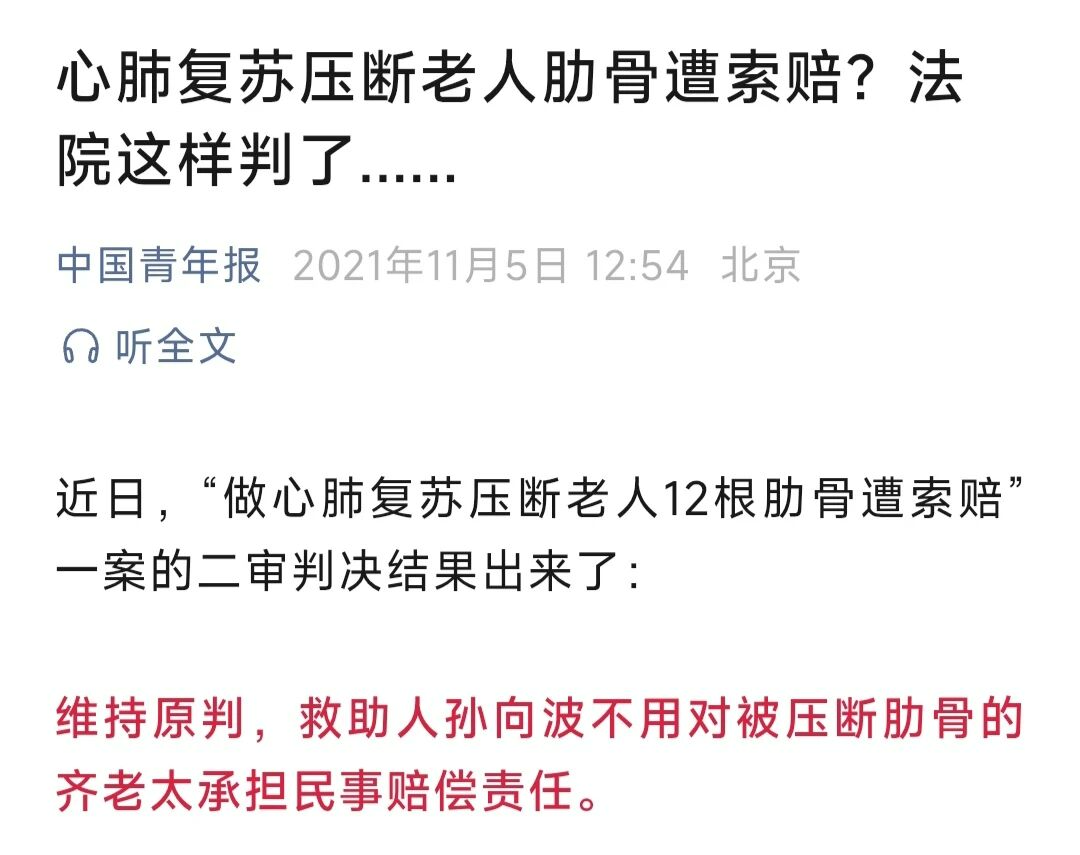
A 72-year-old woman from Shenyang suddenly fainted while buying medicine at a pharmacy a few years ago, and the pharmacy owner, Sun Xiangbo, promptly performed CPR and sent her to the hospital, fortunately, she was saved.
As a result, after the old lady escaped, she sued Sun Xiangbo for breaking her own ribs, demanding that he compensate her for medical expenses, nursing fees and other costs of nearly 10,000 yuan, and after the injury assessment is completed, she will also require him to pay nearly 100,000 yuan in compensation.
Although the courts of first and second instance ultimately ruled that Sun Xiangbo was not liable, the lawsuit lasted for four years, and Sun Xiangbo, who was sued for saving a life, was forced to close his pharmacy, with his life greatly affected.
Source: China Youth Daily
Each similar case increases the cost for people to do good deeds.
Ordinary people's perception is that doing good deeds may invite trouble.
So, the question is, the next time people encounter an elderly person in need of help, will they dare to be the first to offer assistance?
What if there's no surveillance or the surveillance is malfunctioning, how can one prove their innocence in such circumstances?
This time, the store owner's son posted the video on social media and it happened to be popular, but if it wasn't, and didn't get any clicks, what would they do then?
If we indulge in "distribution based on clamor", isn't the outcome already predetermined from the moment the elderly person has an accident in the store? Whether or not someone helps, they will have to pay compensation; no matter what, they will have to pay a sum.
In recent years, it has become increasingly apparent that the world is gradually aging. Even young people, when alone and away from home, inevitably encounter illnesses and accidents, and everyone has times when they need help from others.
If we don't dare to help others, when we encounter difficulties, no one will dare to help us, what a cold society it would be.
Previous generations cut down trees, and later generations suffer from exposure to the sun. The malicious actions of a small number of people are paid for by everyone.
It's not just that people are reluctant to help the elderly in emergency situations, but also that various aspects of their daily lives are being affected.
Last year, major media outlets reported in depth that there is an unwritten rule in the rental market: not renting to older people.
Due to concerns that elderly individuals may encounter accidents or pass away, even if the rental contract is clear and straightforward, landlords may still bear unnecessary responsibilities or risks, so to avoid trouble, they simply reject them outright.

Source: CCTV.com, Sanlian Life Weekly

Kindness, compassion, and selflessness are particularly precious things, a weakness in human nature that requires the protection of laws, institutions, and social consensus - a hard armor - in order to flourish.
Bad examples will make everyone feel insecure, and the instinct to seek benefits and avoid harm will cause people to repeatedly weigh their options, hesitate, and even give up on seeking help, ultimately leading to a worsening social atmosphere.
Good examples and consensus can bring out the good side of human nature, allowing people to stand up without hesitation, and even if they encounter difficulties, others will lend a helping hand, this is the kind of world we want.
The incident in Hunan has dealt another blow to the compassionate core of the public, reawakening the dark memories accumulated over the years about helping elderly people who fall.
Finally, I couldn't help but think of writing a few more sentences that perhaps I shouldn't write,
Shouldn't the work attitude of the "relevant departments" also be updated with the times? Without public opinion, they mediated a compensation of 19,000 yuan, but after public opinion emerged, they allowed the family to return the compensation. The official media reported that "the family recognized the inappropriateness of accepting the compensation".
Is that all - just "inappropriate"?
I can't help but sigh at such fence-sitting.
What's the difference between this and snatching something from someone on the street, only to throw it back due to pressure from the onlookers?
Is such conduct merely inappropriate? Shouldn't it be prosecuted as a crime of malicious extortion in violation of public order and good morals?
If it's just a minor issue, what risks and costs do scammers face, and are those who come to their rescue still on edge.