When you're checking in for Chongqing's magic, you might be overlooking the city's history. On September 3, I'll take you to a place without long lines of internet celebrities.
My university dormitory's lower bunk mate was a straightforward and outgoing girl from Chongqing. After graduating, we became close like family, good sisters.
My trip on the Three Gorges cruise ended in Chongqing.
She pulled me into a Chongqing acquaintances group, where classmates and teachers were warm and enthusiastic, and they all took out their exclusive strategies for visiting famous restaurants, planned out a travel route for me, and arranged my meals for the day.
I was in magical and lively Chongqing, where I rode the cross-river cable car, ate at Liziba Light Rail, climbed the trendy neighborhood of Xiaoxi, and took in the stunning view of the two rivers converging, and was packed in so tightly at Hongyadong that I couldn't even turn my head...
It was at the last turn of the 18th ladder that we stumbled upon the 18th Ladder Air-Raid Shelter Site Memorial Hall.
They never told me everything about the Chongqing air raid shelters.
The 18 Steps scenic area is described as: a old street alley connecting the upper and lower halves of Chongqing, and is a popular spot for experiencing the old Chongqing style.
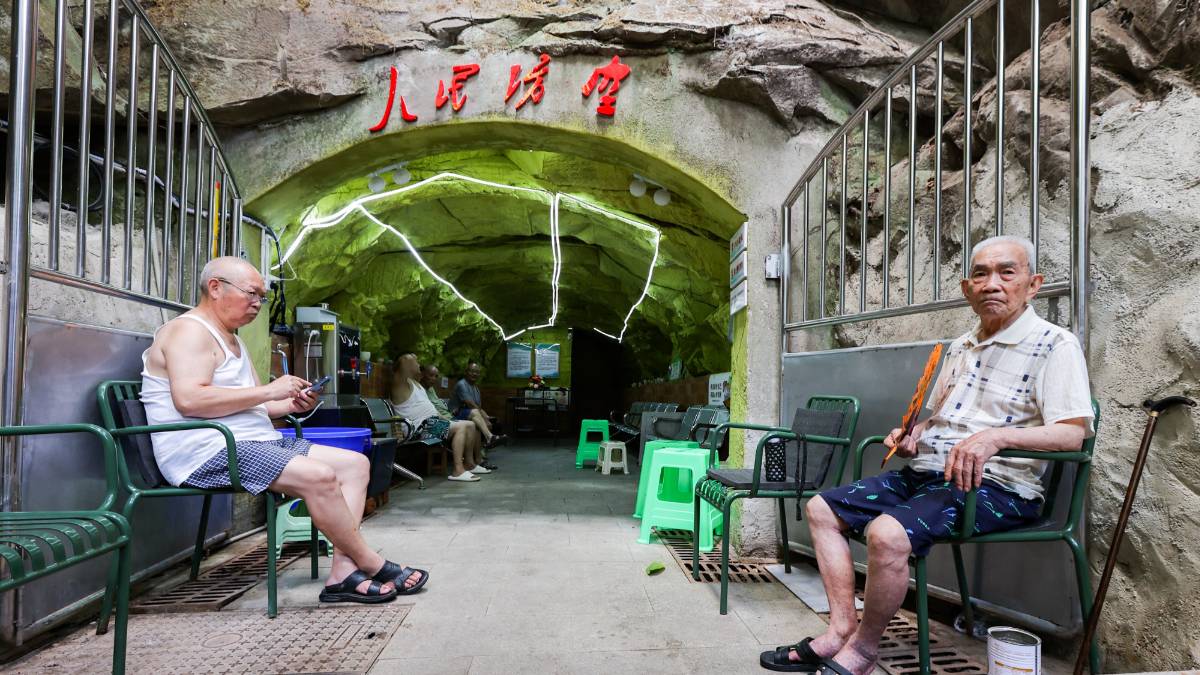
As I was walking down the stairs, I bought jasmine flower garlands and sachets, and happily checked in at the old district, when I suddenly saw the entrance to an air raid shelter.
It blends quietly into the lively atmosphere of the scenic area, without being conspicuous, and the entrance is just a security guard standing there, reminding everyone to watch their step.
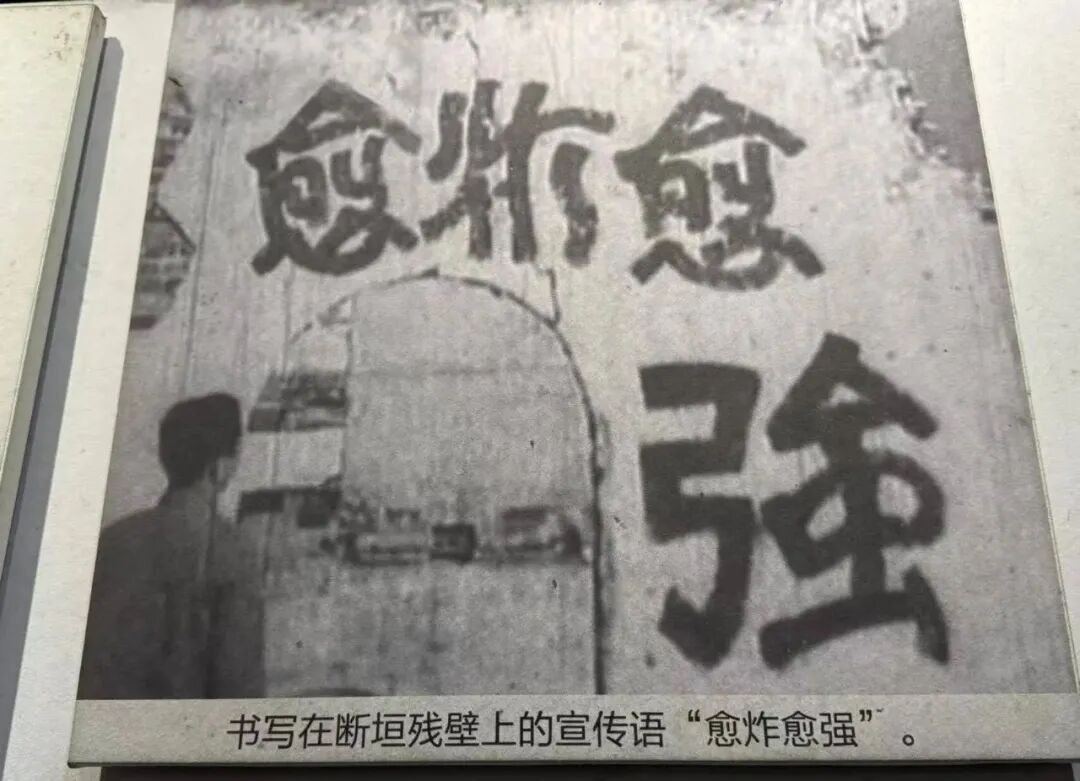
Upon entering, the first thing that catches the eye is the phrase "the more it's bombed, the stronger it becomes" written on the broken walls.
The exhibition preface states that in order to completely destroy China's will to resist, the invading Japanese army carried out a strategic bombing campaign against Chongqing and its surrounding areas for as long as 6 years and 10 months.
The resilient people of Chongqing, taking advantage of the city's mountainous terrain, built a large number of air-raid shelters to protect the safety of its citizens.
The Chongqing bombing refers to the series of aerial bombardments carried out by the Japanese military against the city of Chongqing during the Second Sino-Japanese War. The bombing campaign began in February 1938 and continued until August 1943, lasting over five years. It was one of the longest sustained aerial bombing campaigns in history, targeting both military and civilian areas, and causing significant casualties and destruction. The prolonged nature of the bombing is often less emphasized in general historical accounts, which is why many people may not be fully aware of its extended duration.
I picked up my phone and entered the Chongqing friends group: "6 years and 10 months! I cursed.
My friendship with the girl from Chongqing has lasted for 4 years.
In nearly seven years, a newborn can grow up and start elementary school, and a first-grader can become a middle school student.
At that time, people in Chongqing were doing only one thing, "the more they were bombed, the stronger they became".
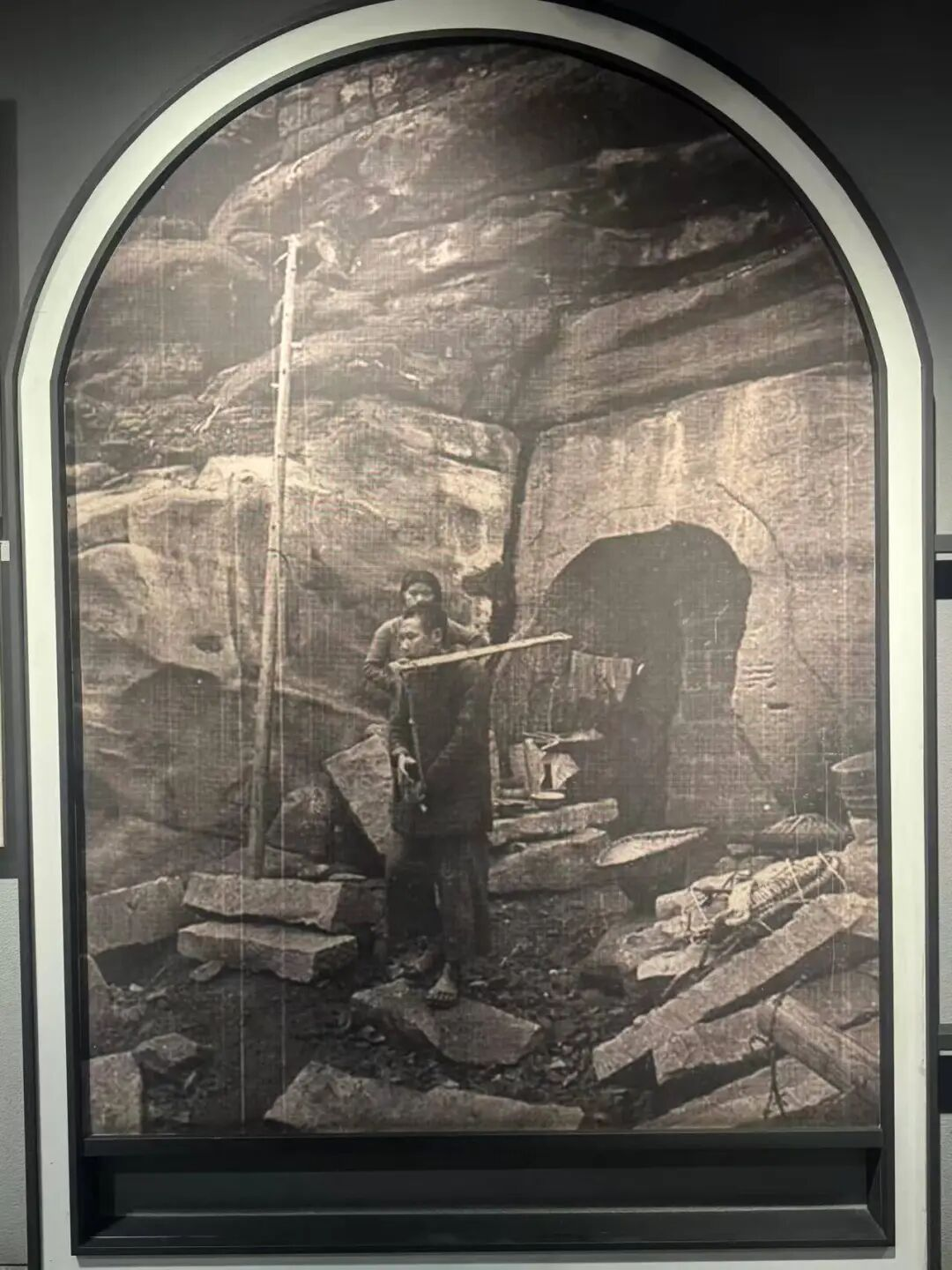
Part of the exhibition consists of harsh historical facts and figures, while more of it showcases the resilience of Chongqing residents as they bravely struggled in such a difficult environment, with everyone contributing what they could, whether it be money or labor, using crude tools to excavate air-raid shelters, and when the alarm sounded, helping the elderly and young children take shelter, and caring for one another in the poorly ventilated and harsh conditions inside the tunnels.
A cry of "Ow" was heard nearby.
At the end of the air raid shelter site exhibition hall, an unfinished cave from that time has been recreated, with dim lighting to showcase its original appearance as much as possible, making the space feel cramped, and some people accidentally bumped their heads.
Strangers around them expressed their concern.
I squinted at the dark recess, trying to figure out how to hide as many people as possible, but the walls were rocky and uneven, with protrusions of all sizes, and couldn't be leaned against.
As I turned to leave, a couple was right behind me, and I said, "Watch your head."
The two of them thanked me.
At that moment, I suddenly thought that we, a group of strangers from all over the world, briefly relying on each other in this dark cave, were just a tiny fraction of what people experienced in their daily lives back then.
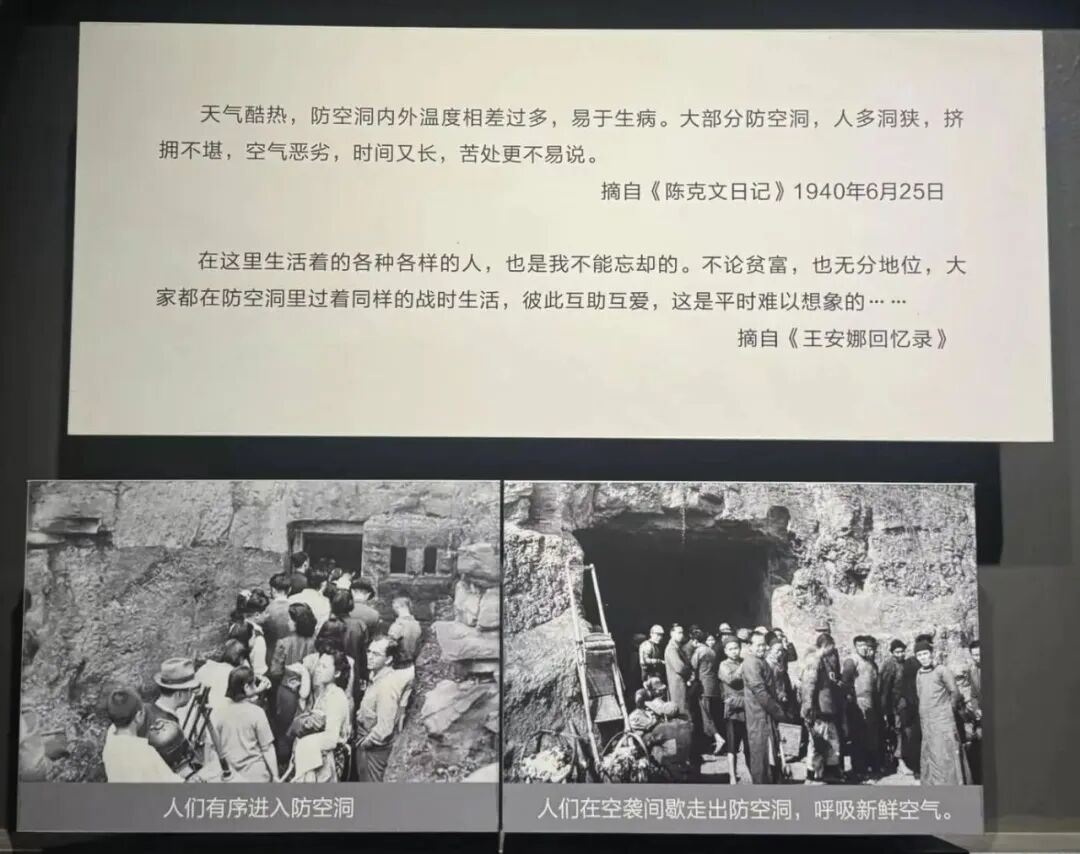
Every minute and every second after the alert was lifted was used by the people of Chongqing for production, study, firefighting, and reconstruction - they completed the most unyielding resistance with the most ordinary persistence.
No matter how frequent the bombings, people would go to work as usual the next morning after the all-clear sirens sounded; stores that had not been destroyed would hang out "business as usual" signs the next day; and children would shoulder their school bags and return to school.
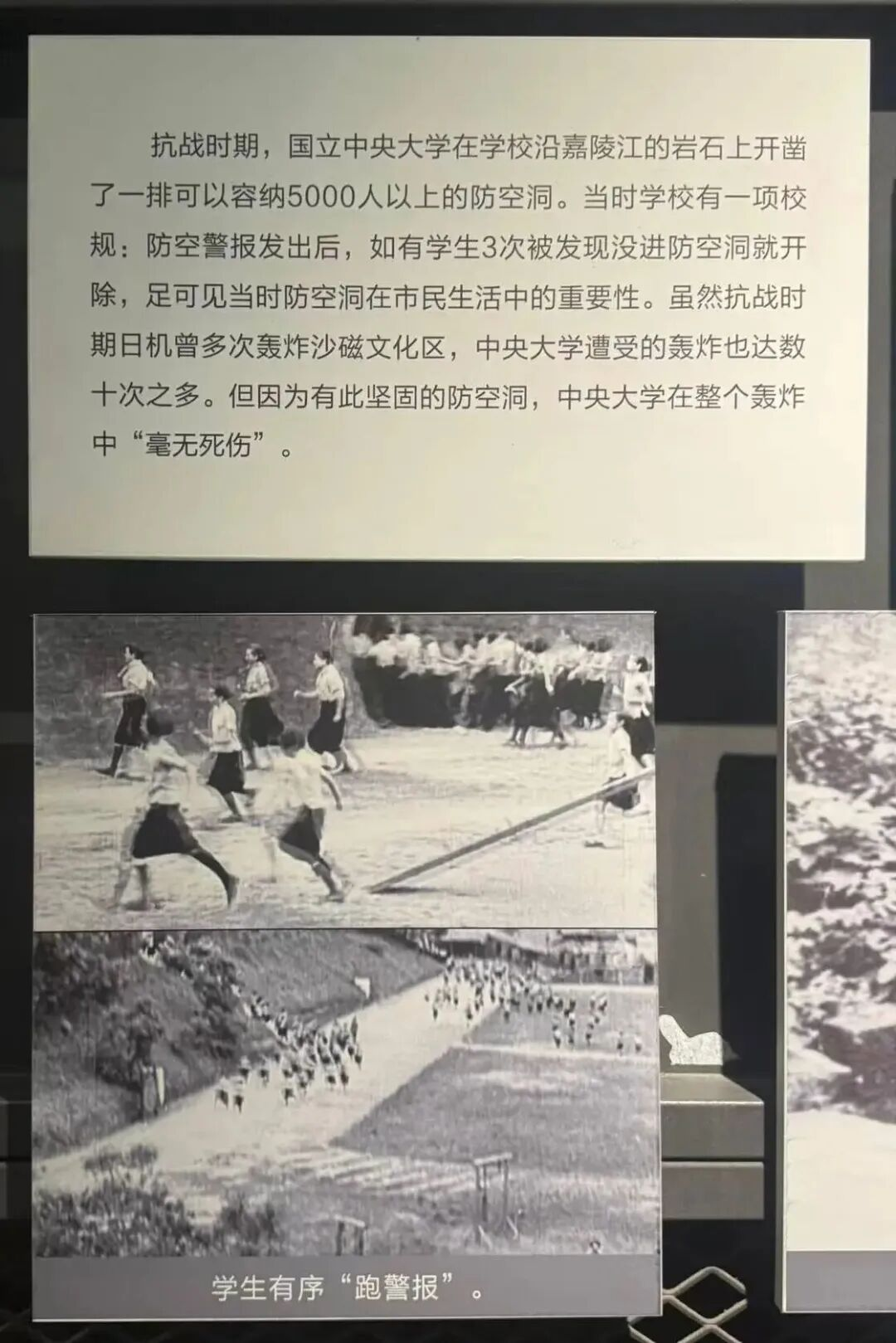
Many factories relocated their equipment to air-raid shelters to continue production, providing bullets, shells, and military supplies to the front lines. According to statistics, in 1941 alone, the ordnance factories in Chongqing produced 526 artillery pieces and over 600,000 shells.
The massive fire triggered by the bombing was another disaster. At the time, the city had only a limited number of fire trucks, and it mainly relied on a "volunteer fire brigade" composed of more than 8,000 citizens. These citizens, who were usually shop assistants or students, became warriors when the fire broke out. The citizens also spontaneously stored sand and water, and used basins and wooden buckets to relay water to put out the fire. Even monks organized a rescue team. A total of 81 firefighters died while fighting the fire, and the casualties among the volunteer fire brigade, which was composed of civilians, were impossible to count.
On the ruins, the people of Chongqing wrote the four big characters "the more we're bombed, the stronger we become". They also came up with a slogan to counterattack: "We're not afraid of you, turtle egg, we'll launch a big counterattack!"
Although the city has been repeatedly destroyed, the people here have used their unyielding spirit, along with bamboo and mud, to rebuild their homes time and time again.
Even during holidays, they hold celebratory events, including dragon dances and singing performances.
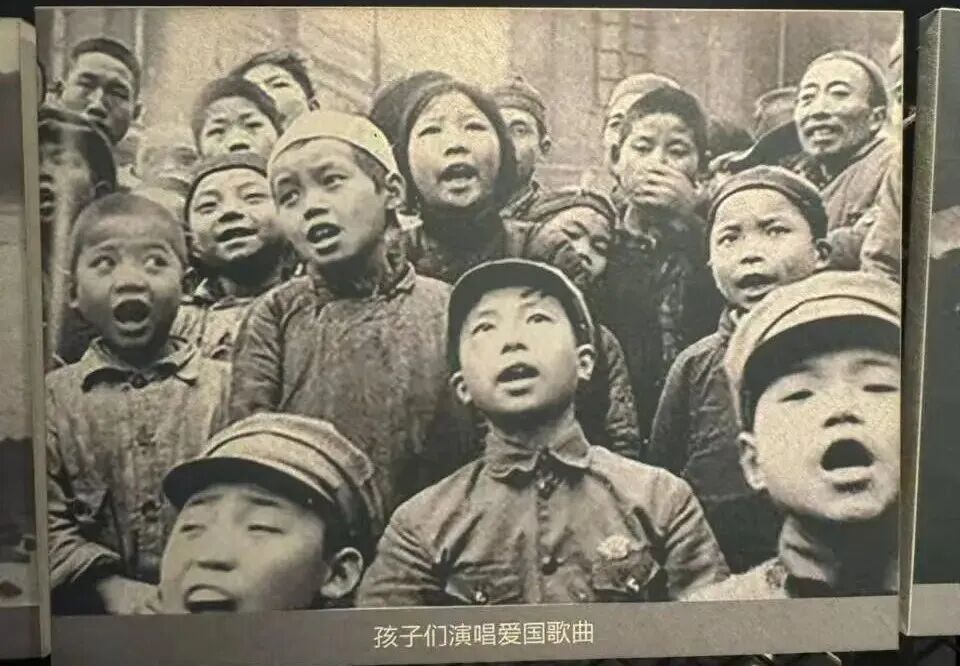
A father and daughter with Asian faces walked past me, conversing in English, and I only caught one sentence, with the father pointing at a photo on the wall and saying to the little girl: "People Fighting!"
People Fighting!has been translated to People Fighting! However a more natural translation would be A Brawl Erupts!or A Fight Breaks Out! But if you want to keep "People Fighting" then it is People Fighting!
I was suddenly overcome with tears.
Looking at the children in the photos, I often wonder what became of them.
I recalled the commemoration of the 80th anniversary of the Chinese People's War of Resistance Against Japanese Aggression and the World Anti-Fascist War, which took place on September 3 last year, where children took to the streets, laughing and cheering at the rainbow trailing behind the planes flying overhead.
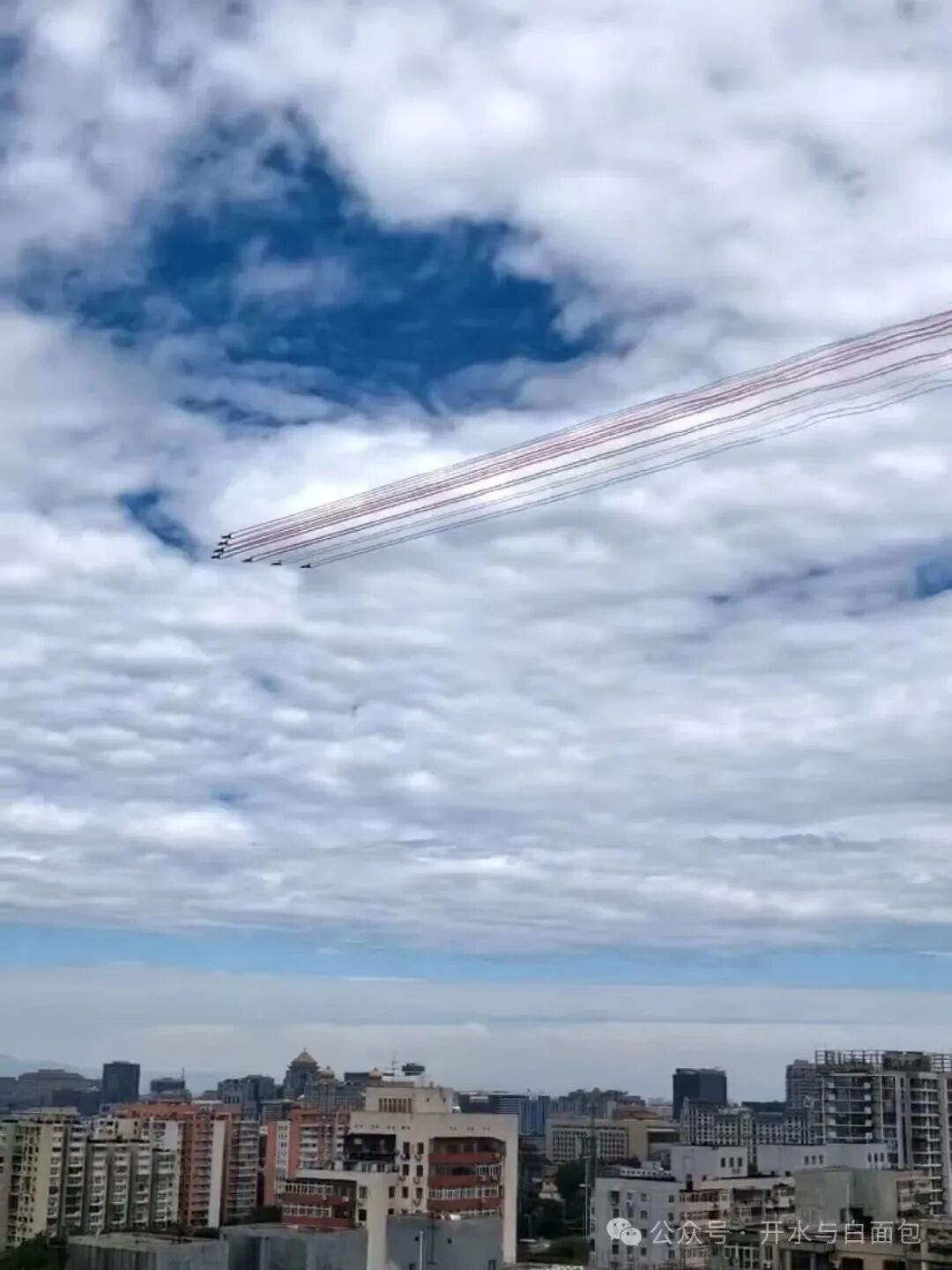
I still remember when I posted on social media, saying that in this world, there are not many countries where the sound of planes flying overhead makes children laugh and run out to take a look.
And at this moment, the exhibition reminds everyone that in the not-so-distant past, there was blood and tears of pain.
In 1941, Chongqing completed a monument known as the "Spiritual Fortress," which inspired the Chinese people to fight for victory in the War of Resistance. After being damaged by bombing, the unyielding people of Chongqing erected a tall pole in the middle of the street, symbolizing the indomitable spirit of the war effort.
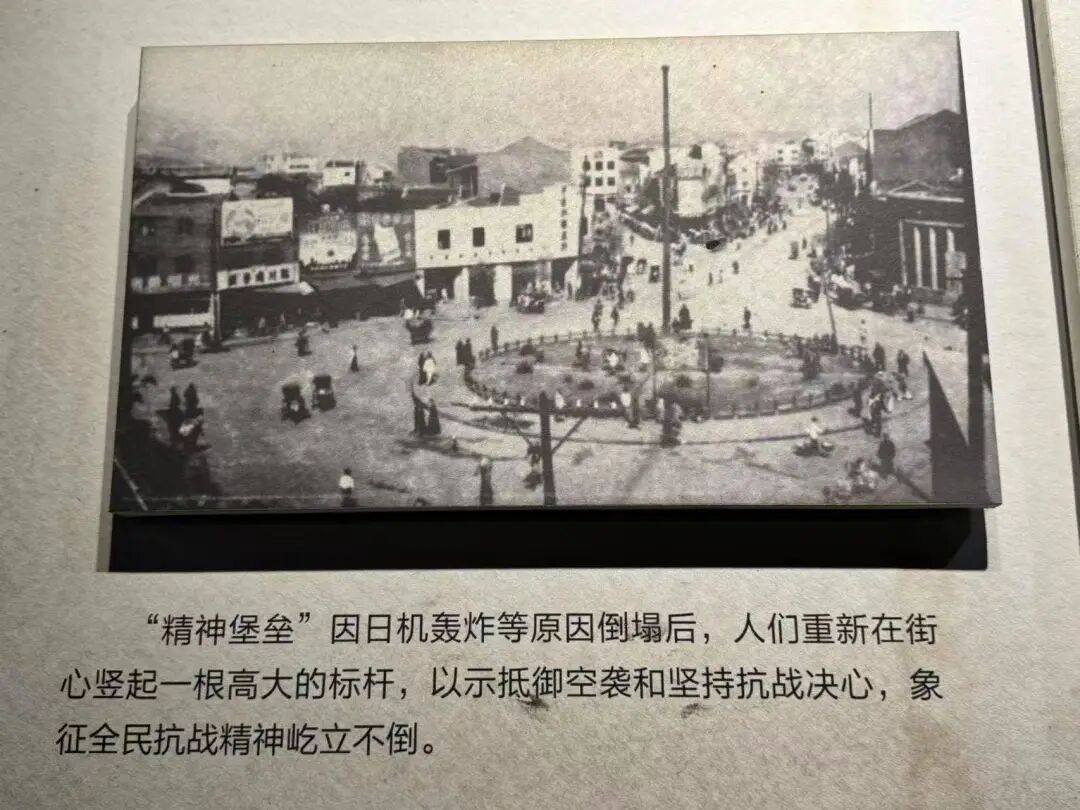
Later, the Monument to the Victory of the War of Resistance and the People's Liberation Monument were erected here.
Today's Liberation Monument is the center of Chongqing, with tourists milling about, chatting and laughing.
At the exhibition, I also saw the achievements of industry predecessors, and traditional media, which had been suppressed by the internet, was once again inspired.
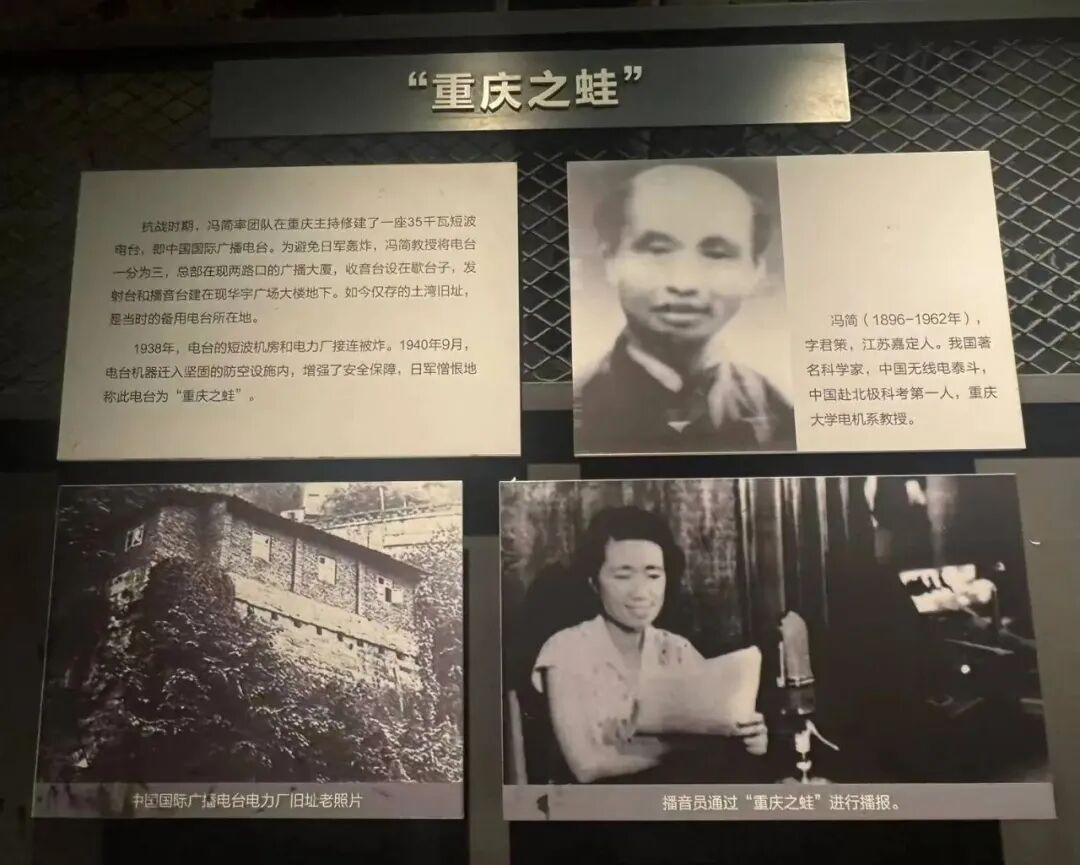
After the Pearl Harbor incident, it became the only shortwave radio station available to the Allies in the Far East, and foreign journalists used it to report on Japanese atrocities. Having withstood multiple bombings without interruption, it moved into an underground air raid shelter in 1940 to ensure continuous broadcasting. On August 10, 1945, it was the first to report Japan's unconditional surrender, and on the 15th, it broadcast the Emperor's surrender edict.
At the end of the air-raid shelter site exhibition hall, the brightest light is the Chongqing Emergency Broadcast.

Family members in the group replied to me, and a girl from Chongqing said, "Yes, my grandmother used to spread warnings back then."
She didn't recall much of the past, just like during the university freshman self-introduction session, when classmates from all over the country passionately introduced the cultural heritage of their hometowns, she just smiled modestly.
It wasn't until the news of the Chongqing people fighting the mountain fire went viral that the whole nation witnessed this bloody battle.
It turns out that this stubbornness has been passed down through tradition.
Friends introduced that: after climbing up the 18th ladder, there is a Chongqing Great Bombardment relic site near the top at the Lijiachangkou area.
The girl from Chongqing added: Yes, right next to it is Delicious Food Street.
So I stood on the street, laughing and crying as I spoke on my phone.
That's just how people from Chongqing are.
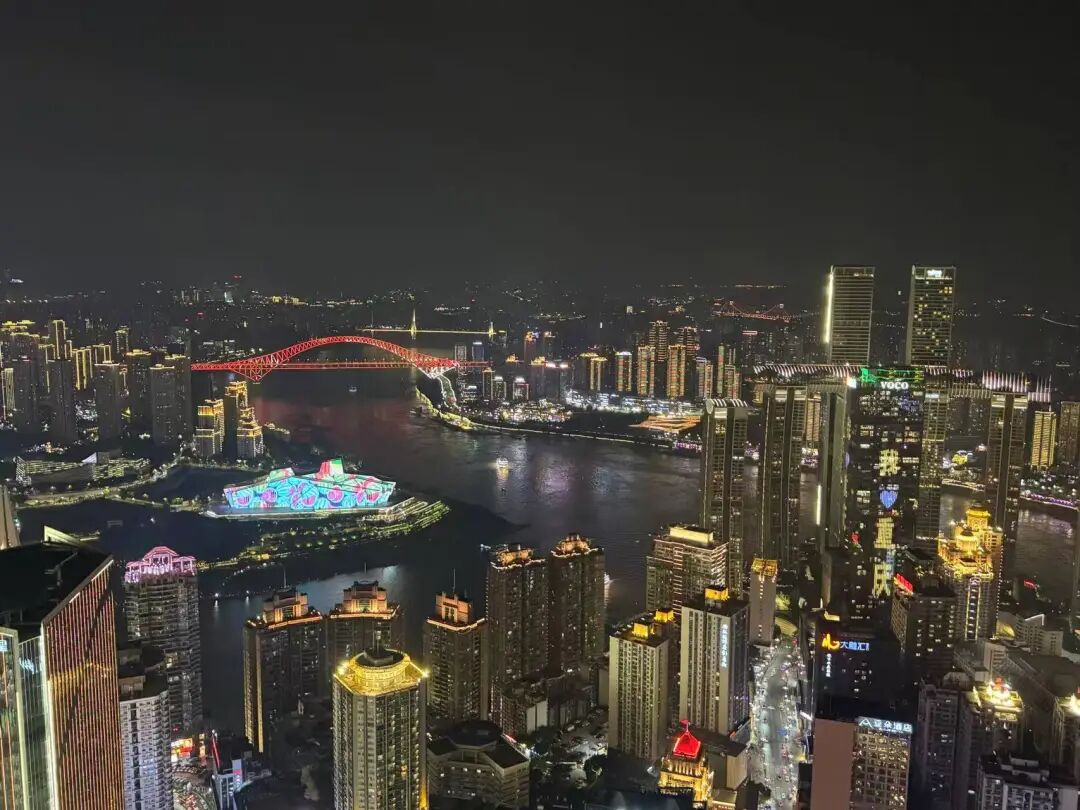
At night, I ascended the Cloud Eye observation deck to take in the night view. In every direction, the city glittered with countless lights, a bridge stretched across the river, and colorful boats drifted leisurely by.
"The bleak autumn wind blows again, and the world has changed."
Chongqing is definitely worth visiting, with delicious food, fun activities, handsome men and beautiful women, and a strong backbone like a mountain.