
Recently, a wave of marketing mishaps has swept through the beauty industry. Four domestic brands with relatively high national recognition - Vinona, Hanshu, Baiqilian, and Guyu - have all stumbled into the same "ditch" in roughly the same period, albeit in different ways.
However, if these are viewed as four isolated public opinion incidents, the key point is missed: two of these incidents involve the brand's long-standing issue of exaggerated claims, while the other two involve AI-generated advertising content.
Using offense, exaggeration, and anxiety to grab attention is an old trick in the advertising industry. What AI has changed is not the approach, but the cost: in the past, creating an ad like this required a script, filming, and approval; now it can be generated with just a few sentences. As the cost of crossing the line approaches zero, accidents have changed from "occasional" to "frequent". This is the real change that the industry should be wary of.

Acne treatment and hair loss prevention have always been categories prone to regulatory risks. The administrative penalties imposed on Viyonora and the marketing mishap of Han's, both issues ultimately point to the boundaries of efficacy claims.
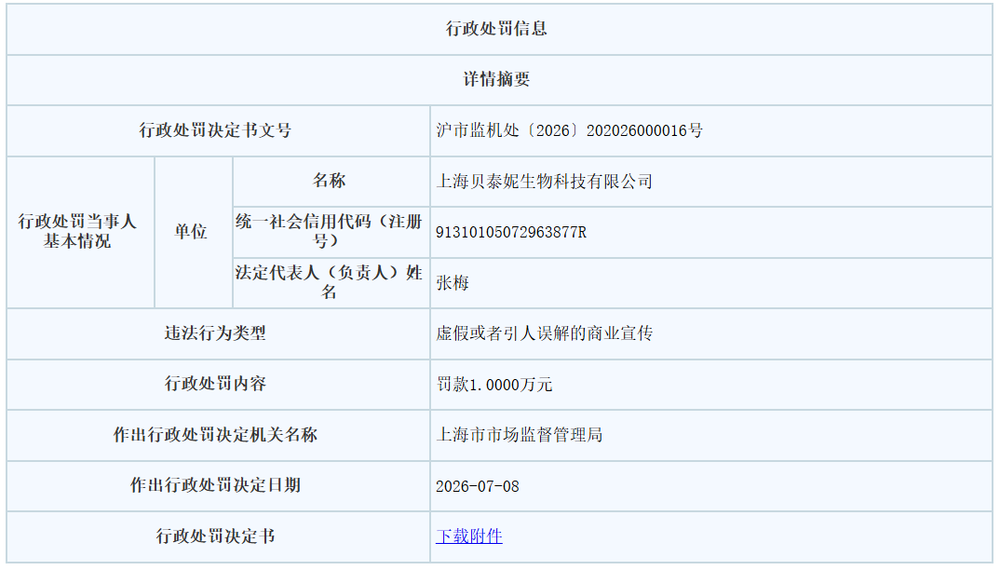
According to the administrative penalty notice released by the Shanghai Municipal Market Supervision and Administration Bureau, in March 2026, it was discovered during advertising monitoring that the Viennona brand was suspected of engaging in false advertising during online live sales. After verification, it was found that Shanghai Beiteeni Biotechnology Co., Ltd. sold cosmetics through live streaming on its self-operated Kuaishou account "Viennona Flagship Store" in January 2026, with promotional language including "acne removal and acne mark removal" in the live content, but the actual cosmetics involved in the case had not obtained the requisite registration for acne removal claims.
The amount of 10,000 yuan is not large, but it exposes a fairly common loophole in the brand promotion system: most brands have mature compliance review processes for packaging copy and product detail pages, but live streaming scripts are relatively lacking in scrutiny.
Han Shu stumbled over its anti-hair loss and hair care shampoo. Some consumers reported on the Hei Mao complaint platform that the merchant used the slogan "if your hair doesn't grow in seven days, we'll pay 10,000 yuan" to attract purchases, which they believed constituted consumer fraud.
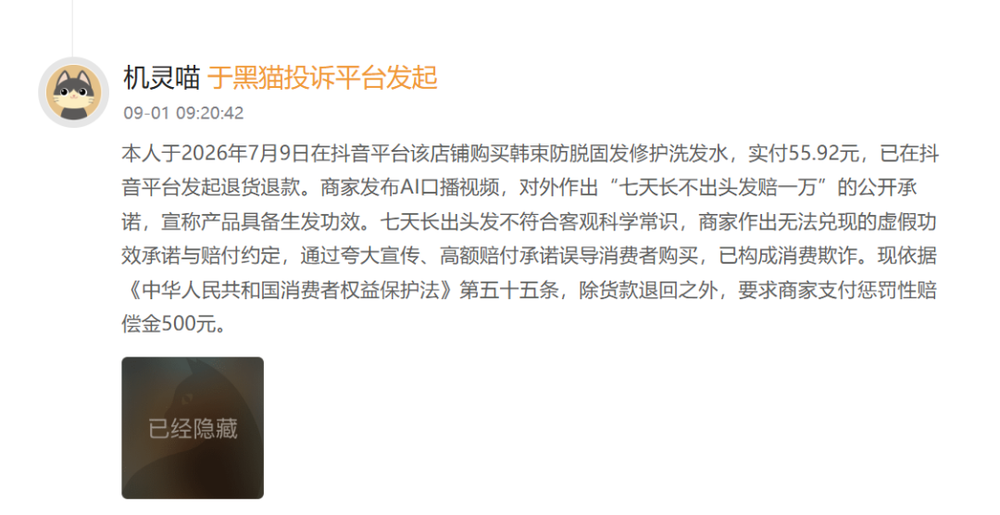
The complaint was resolved after intervention by the Shanghai market regulation authority, and Han's related stores have now taken down the exaggerated hair growth video advertisements.
If the first two instances were factual transgressions - claiming nonexistent efficacy - the latter two were cases of turning what could have been well-expressed statements into offensive ones. AI is amplifying the old problems of beauty marketing, and the real "new disaster zone" lies here.
The video was also accompanied by anxious subtitles such as "people can suddenly become beautiful" and "if you start to get old", which has been questioned for bundling appearance anxiety and body anxiety to sell products. The authorized account involved in the controversy has taken down the AI video.
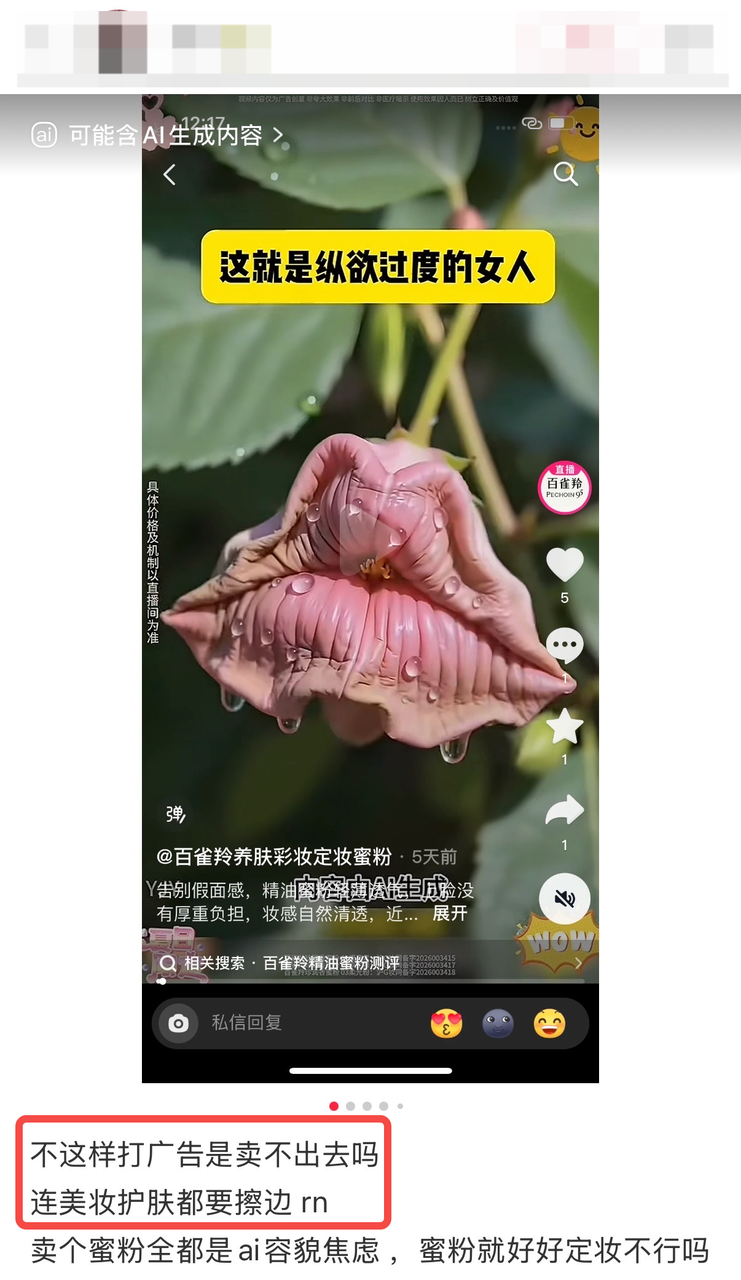
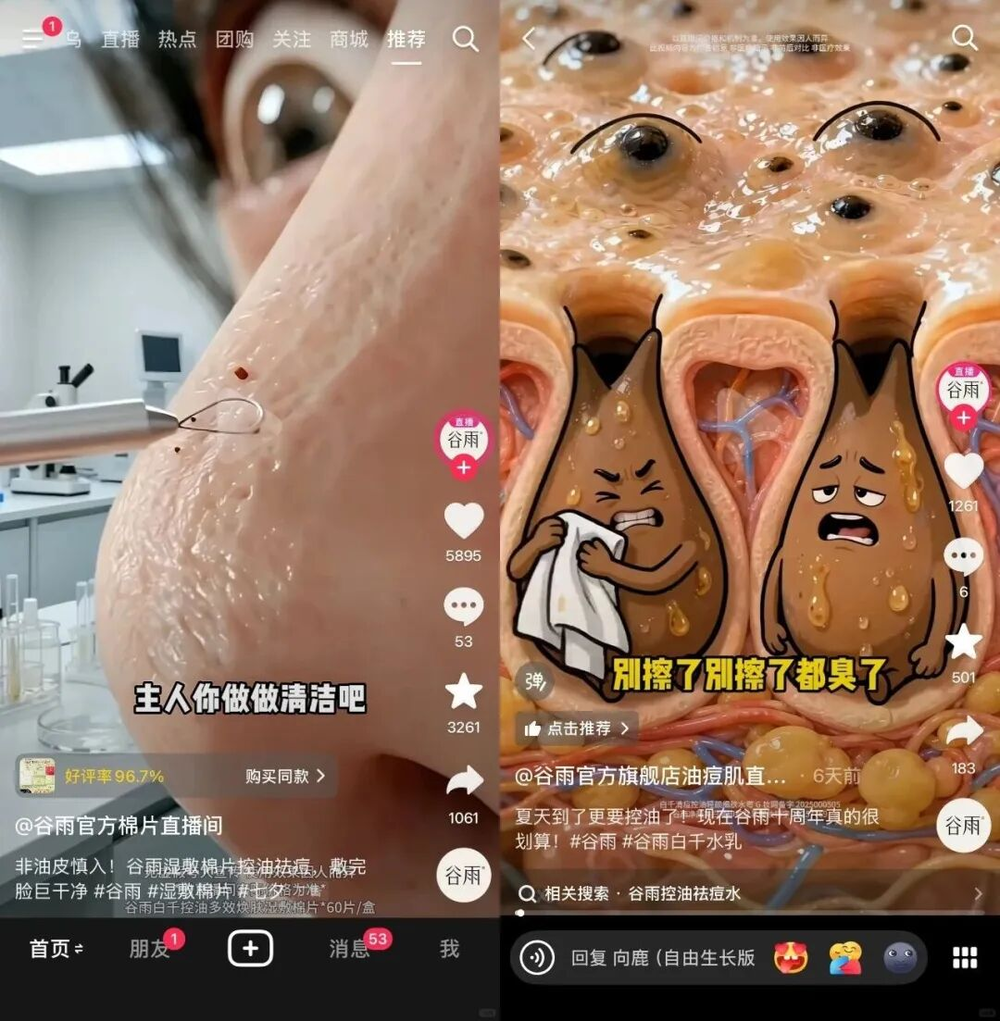
Many consumers have expressed their disgust on social media platforms, taking issue with the fact that Guyu uses users' appearance anxiety as an entry point for its conversion funnel, which is a typical example of "downward marketing" and is seen as being in poor taste.
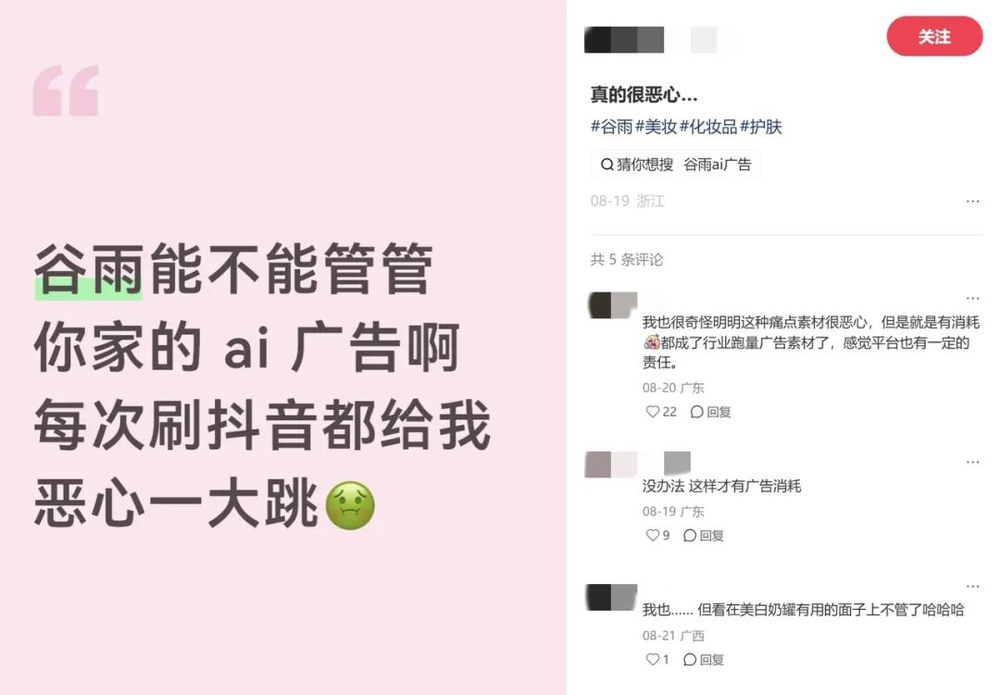

When the four cases are put together, their similarities are more striking than their differences.
Second, AI has lowered costs and also lowered the threshold for mistakes. In the past, a controversial advertisement required scripting, filming, and review; now AI can generate one with just a few sentences. With lower costs and faster production speeds, audit mechanisms and judgment standards have not been upgraded in tandem. As a result, borderline, ethically chaotic, and humiliating content is being mass-produced, and mistakes have transitioned from being occasional to becoming the norm.
As the identification system for AI-generated content and advertising compliance reviews become increasingly stringent, the next brand to suffer a setback may be any company that prioritizes attracting traffic above all else.
Before that, it's worth every marketer asking themselves: if the person being humiliated in the ad were sitting in the same conference room as you, would the ad still be released?
This issue shouldn't be answered solely by marketers. As ordinary consumers who are bombarded with these ads every day, we are also part of it - seeing, forwarding, or swiping away, every reaction is a vote for this type of content.
So, to wrap up, I'll pass the mic to you in front of the screen: what's the most "eye-searing" beauty ad you've seen? Which slogan or image made you the most uncomfortable, feel free to rant in the comments~