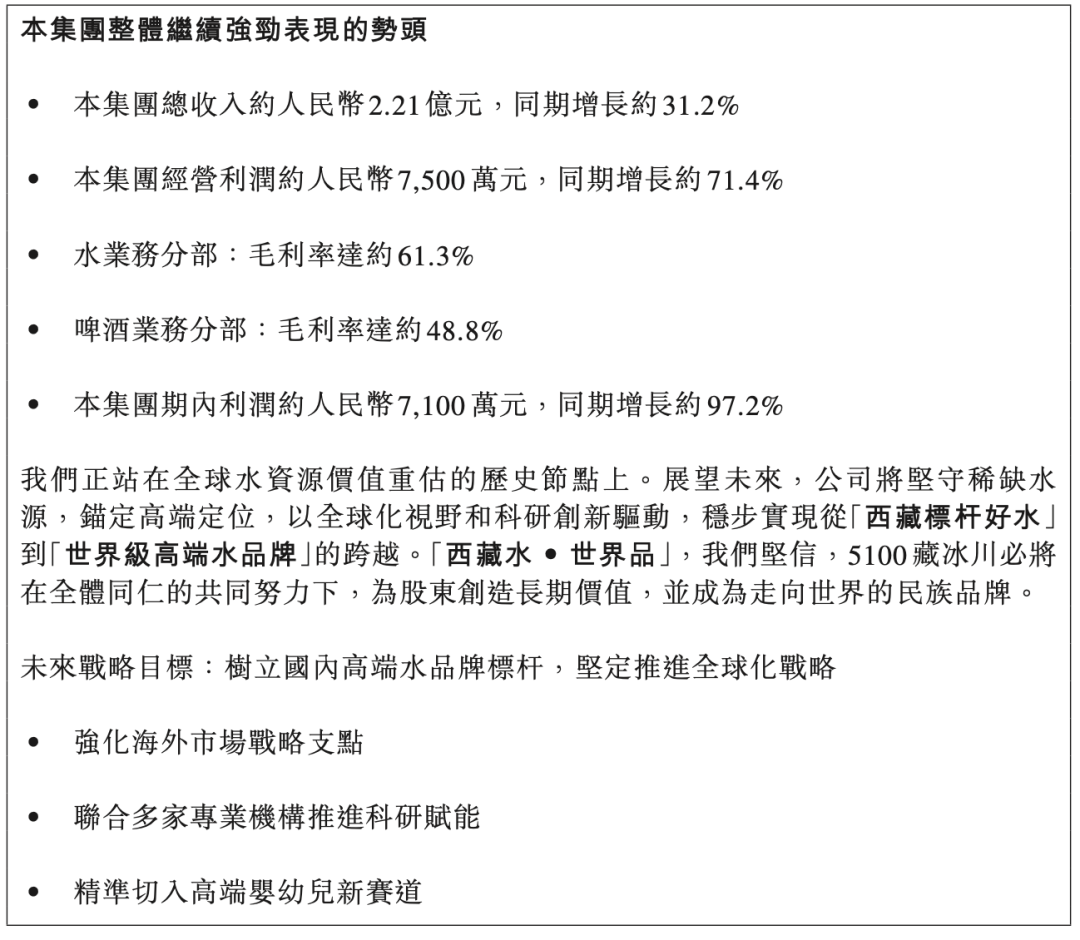
On August 31, 5100 Tibet Glacier (01115.HK) released its 2026 interim results. First-half revenue reached 221 million yuan, up 31.2% year-on-year; profit attributable to shareholders totaled 71.375 million yuan, up 97.2%. This marks the company's second consecutive growth report after years of losses. Chairman Chen Di said in his letter to shareholders that the company stands at a historic inflection point in the global revaluation of water resources.
The financial statements in the same announcement show that as of June 30, the company had cash and cash equivalents of 7.57 million yuan, compared to 96.74 million yuan at the beginning of the year. The company reported a half-year profit of 71.37 million yuan, but its cash balance decreased by 89.17 million yuan. Correspondingly, the net amount of trade receivables increased from 205 million yuan to 301 million yuan, and there was also a 1.028 billion yuan receivable from a third party.
The Mystery of Doubling Profits
The announcement showed that the pre-tax profit for the first half of the year was 7.705 million yuan, with "other income, net" of 2.717 million yuan, including foreign exchange gains of 2.229 million yuan and government subsidies of 571,000 yuan. The company's functional currency is the Hong Kong dollar, and the financial statements are presented in renminbi, with three tranches of Hong Kong dollar-denominated convertible bonds issued. During the reporting period, the renminbi appreciated against the Hong Kong dollar, and the liabilities denominated in Hong Kong dollars were translated into renminbi at a lower amount, resulting in a non-cash gain on the income statement.
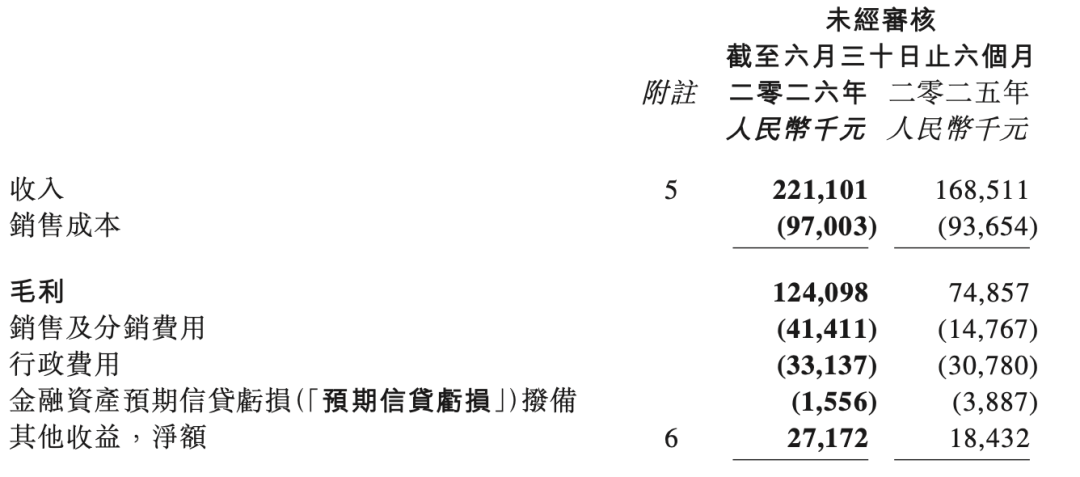
Other comprehensive income in the same report showed a foreign exchange difference loss of 21.25 million yuan due to the conversion of functional currency into the presentation currency, which was in the opposite direction and similar in amount to the profit in the income statement. As a result, the company's total comprehensive income for the period was only 50.12 million yuan, lower than the net profit of 71.37 million yuan. Government subsidies were business support funds issued by local authorities, noted in the announcement as "discretionary grants". The total of foreign exchange differences and subsidies was approximately 28 million yuan, accounting for 36% of pre-tax profit.
The incremental revenue isn't coming from the water business either. First-half revenue rose 52.59 million yuan from a year earlier, with the beer segment contributing 41.41 million yuan and the water segment contributing 11.28 million yuan. Water revenue reached 129 million yuan, up 9.6% year-on-year; the announcement said the segment implemented both price increases and volume growth. Beer revenue came in at 91.67 million yuan, up 82.4% year-on-year.
The cost structure of the beer division is noteworthy. Revenue increased by 41.41 million yuan, while sales costs only rose from 40.83 million yuan to 46.95 million yuan, a 15% increase, with the gross margin rising from 18.8% in the same period last year to 48.8%, an increase of 30 percentage points in the first half of the year, surpassing national breweries such as Tsingtao Beer and China Resources Beer. The announcement attributes this to "increases in both volume and price" and optimization of the product structure.
During the same period, the company confirmed licensing revenue of 4.3 million yuan, compared with zero in the year-ago period. In the 2025 annual report, when beer gross margin last posted a significant increase, the company gave the same explanation: the recognition of licensing revenue.
The risk of revenue recovery is reflected in the segmental information disclosed in the announcement. In the first half of the year, the beer segment provisioned RMB 7.97 million for expected credit losses on financial assets, while the water business segment reversed RMB 7.055 million, and the corporate and other segments provisioned an additional RMB 641,000. The total net impairment recorded in the consolidated income statement was RMB 1.556 million. The composition of this RMB 1.556 million is also noteworthy: according to the notes to the financial statements, the provision for other financial assets measured at amortized cost was RMB 15.45 million, while the provision for trade receivables was RMB 110,000. During the half year, trade receivables increased by RMB 95.76 million, with a corresponding net provision of RMB 110,000.
A larger exposure is being seen in accounts receivable. As of June 30, the net balance of trade receivables was 301 million yuan, an increase of 95.76 million yuan from the beginning of the year, which is 1.8 times the incremental revenue for the same period, and equivalent to 1.36 times the company's total revenue for the first half of the year.
The aging structure shows receivables under six months rose from RMB114 million to RMB202 million, while those over two years fell from RMB96.57 million to RMB41.81 million, a decline of RMB54.76 million. The company classifies aging by invoice date, meaning the passage of time automatically shifts each receivable into a longer aging bucket. Of the RMB33.27 million in the one-to-two-year bucket at end-2024, the portion with earlier invoice dates should have moved into the over-two-year category by end-June, yet that bucket's balance instead contracted. Over the same period, total bad debt provisions fell from RMB95.18 million to RMB79.79 million. The announcement does not state whether the more than RMB50 million in aged receivables was collected or written off.
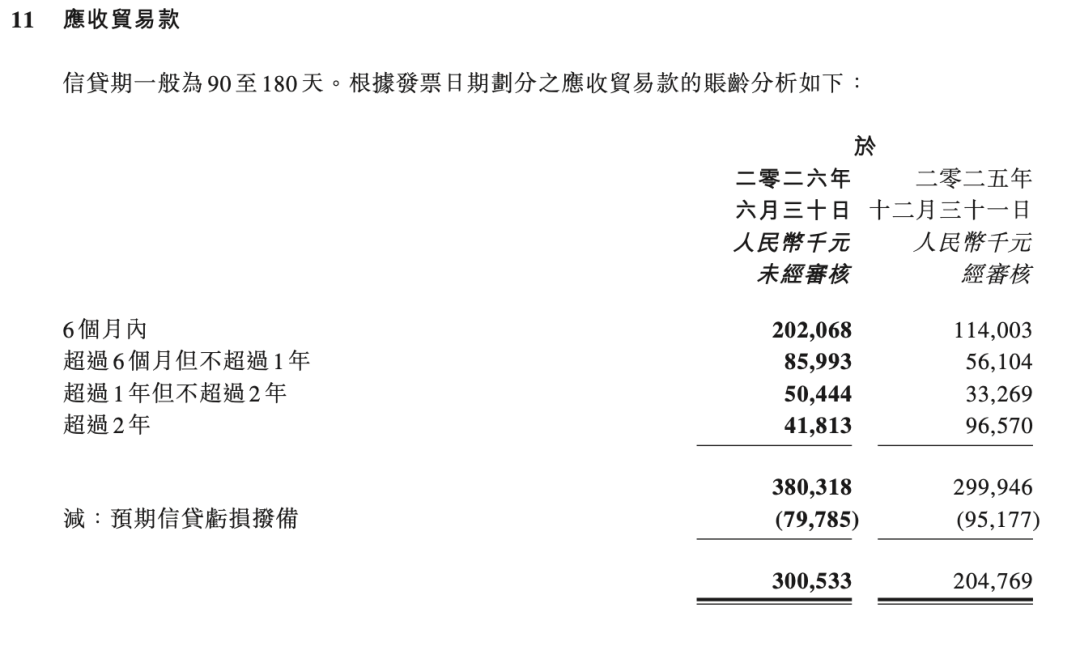
The company provides a credit period of 90 to 180 days for distributors, and management stated in discussions and analyses that it has provided credit and account periods to support strategic cooperative distributors in expanding their business, with "good repayment conditions after the period." As of June 30, the company's bank borrowings due within one year totaled 349 million yuan, with 194 million yuan in convertible bond liabilities, and cash on the balance sheet of 7.57 million yuan. In the first half of the year, the company added two new bank loans, increasing the total loan amount from 321 million yuan to 480 million yuan.
It lost 1 billion yuan over three years.
The starting point of the 5100 business model was an underwriting contract. Starting in August 2007, the Ministry of Railways provided 5100 Tibet Glacier Mineral Water to passengers free of charge on some bullet trains; from 2008 to 2010, the Ministry of Railways underwrote approximately 200 million bottles. According to the prospectus, sales from China Railway Express accounted for 76.8%, 81%, and 80.5% of the company's annual revenue from 2008 to 2010, respectively.
The company was listed on the Hong Kong Stock Exchange on June 30, 2011. Half a month after its listing, it announced that China Railway Express had replaced its procurement contract, resulting in a sales decline of nearly two-thirds, and the procurement contract between the two parties was changed from a long-term agreement to a one-year contract. After the railway system's anti-corruption case emerged in 2013, the company issued a clarifying announcement. In 2015, its cooperation with China Railway Express ended, and the company was renamed Tibet Water Resources. It then relied on e-commerce platforms, convenience stores at gas stations, and other channels, and launched a water card for family users. In August 2014, Sinopec Sales Company and its subsidiary, Tibet Highland Natural Water, jointly launched the Easy Joy Zhuoma Spring brand. In October of the same year, Sinopec acquired a 40% stake in Highland Natural Water. In 2019, China National Petroleum Corporation invested in Shannan Yala Xiangbu, and Gesang Spring entered the Kunlun Good Guest convenience store chain. In March 2021, the company acquired a 31% stake in Yala Xiangbu for 465 million yuan.
In January 2017, the original controlling shareholder sold approximately 28% of its shares within two days, with 18% transferred to the Horgos Tianshan No. 1 Industry Investment Fund at HK$3.5 per share. The company announced that the original controlling shareholder would no longer be the controlling shareholder. In the same year, the company's revenue peaked at 932 million yuan, and then declined year by year. In 2019, revenue was 721 million yuan, with a net loss of 745 million yuan. From 2022 to 2024, the company reported losses of 102 million yuan, 353 million yuan, and 574 million yuan, respectively, with a total loss of over 1 billion yuan in three years. Revenue fell to 226 million yuan in 2024. Over the six-year period, the company incurred losses for four years, with a cumulative loss of nearly 1.8 billion yuan.
2025 marked a turning point, with the company issuing three tranches of convertible bonds totaling HK$600 million in principal, two of which were fully converted in the same year. As a result, the company's share capital increased from 4.579 billion shares at the end of 2024 to 5.588 billion shares. In October, the company changed its name to 5100 Cang Ice River. The company reported revenue of 358 million yuan and achieved a turnaround in losses that year. In the first half of this year, the third tranche of convertible bonds was converted into 40 million shares.
There have been concurrent changes in management. In February 2026, Du Hui resigned as Co-CEO; after the annual general meeting of shareholders on June 26, independent non-executive director Lo Wai Shun retired, resulting in the company no longer meeting three listing rules: the board has no independent non-executive directors with accounting or financial management expertise, the audit committee has fewer than three members, and the chairman of the nomination committee is not qualified. The audit committee reviewing the interim results currently has two members. Another independent non-executive director, Cheng Ke, was absent from the annual general meeting due to other business matters. The company said it expects to fill the vacancies within three months.
In June this year, the company announced the acquisition of Shannan Water Source, with a consideration of 237.6 million yuan, all paid in 380 million new shares, equivalent to approximately 0.625 yuan per share. The announcement stated that the issue price was about 80% higher than the previous closing price. Nine years ago, when the company's control was transferred, its shares were valued at 3.5 Hong Kong dollars per share.
Upslope's high-end water
Industry data shows that China's packaged drinking water market was approximately 220 billion yuan in 2025, with Nongfu Spring and China Resources C'estbon together accounting for nearly half of the market share, and the price war driven by Green Bottle Pure Water has pushed mainstream packaged water prices to a low level.
High-end mineral water is one of the fastest-growing segments, with a retail scale of 24.258 billion yuan in 2025, up 11.3% year-on-year, with participants including Yiyun, Kunlun Mountain, Baishui Mountain, and Diqiu Disanji, among other brands. The Tibet Autonomous Region already has 56 natural drinking water production enterprises that have obtained food production licenses, of which six are large-scale enterprises.
The figure of 2.4258 billion yuan is based on the retail sales endpoint, while the water business revenue of 129 million yuan for the first half of the year for 5100 is based on the ex-factory endpoint, and the two numbers cannot be directly divided. Even if the industry's common ex-factory price and retail price multiplier is used for restoration, 5100's position in the high-end water market is still at the bottom: the company's water business annualized revenue is less than 300 million yuan, while brands such as Kunlun Mountain and Baishui Mountain have annual sales scales of tens of billions of yuan. The company currently has a water production capacity of 300,000 tons and a beer production capacity of 2 million hectoliters (1 hectoliter equals 100 liters, and 2 million hectoliters is equivalent to approximately 200,000 tons), which is the same as last year's period; in the first half of the year, it purchased properties, factories, and equipment for 2 million yuan, and some production lines were rented out to affiliated companies, with rental income of 2.575 million yuan for the half year. Despite underutilized production capacity, the company plans to build a
In terms of channels, the competition among leading brands has shifted towards instant retail and terminal density. According to calculations by the Ministry of Commerce's International Trade and Economic Cooperation Research Institute, China's instant retail market is expected to reach 971.4 billion yuan in 2025, with a year-on-year growth rate of 24% (note that different institutions have varying estimates, with some predicting a scale of over 18 billion yuan). After losing the railway channel, 5100 has turned to special channels such as JD Home Delivery, air transport, cinemas, hotels, and the "Tonton" water delivery card for families. The delivery card is a pay-first-then-deliver model, with contract liabilities of 35.196 million yuan in the current period, an increase of only 3.35 million yuan from the beginning of the year. Meanwhile, accounts receivable increased by 95.76 million yuan during the same period. In the first half of the year, transportation costs totaled 15.08 million yuan, up 43% year-on-year, accounting for 6.8% of revenue. This expense fluctuates with changes in shipment volume and frequency, and is a necessary logistics cost for shipping from Tibet to other parts of the country,
Overseas, the company disclosed that it obtained Malaysian halal certification in May this year and signed a contract with a local general agent in August. In July, it granted the agency rights for Hong Kong and Macau to Kwong Mei Wan and fully sponsored the 2026 Hong Kong Miss Pageant. The mid-term performance did not disclose revenue by region, and the scale of overseas sales is unknown. In the first half of the year, advertising and market promotion expenses were 20.789 million yuan, of which 16.281 million yuan was share payment generated by granting stock options to distributors, with an exercise price of 0.60 Hong Kong dollars, and the sales target must be completed within 12 months. Excluding this non-cash expenditure, the actual investment is approximately 4.5 million yuan.
The announcement shows that no interim dividend will be distributed for the period, the same as the corresponding period last year. As of June 30, the company's total assets were 3.911 billion yuan, including 721 million yuan in goodwill, 764 million yuan in investments in affiliated companies, 1.028 billion yuan in accounts receivable from third parties, 282 million yuan in properties, plants and equipment for water and beer production, and 7.57 million yuan in cash.
Tibet 5100 Glacier, a Tibetan water resource company, has reported its interim results, with its packaged drinking water business driving growth, particularly in the high-end water segment, although the company's accounts receivable have increased, sparking concerns among Hong Kong stock investors.