
Summary:
The shattered career dreams of hundreds of new graduates have triggered an urgent compliance investigation by a German automotive giant from across the ocean. The "choose one of two options" voluntary resignation controversy at Xingyu Co., Ltd. has blown up into more than just a labor dispute, but also an ESG compliance minefield in the global supply chain.
This is the 2132nd original article of Global Zero Carbon
At the beginning of autumn in 2026, hundreds of newly graduated students who had just left school and were full of career aspirations were dealt a harsh blow.
According to public reports, in July 2026, a total of approximately 440 new graduates joined Xingyu Co., Ltd., a leading domestic automotive lighting company.
However, just one month later, the company's HR department cited "poor industry market conditions" as the reason to talk to and "persuade to leave" more than 100 college recruits in batches.
For this batch of new employees, mostly with master's degrees who originally signed on for R&D technical positions, Star Universe Shares has offered two handling schemes: if they actively sign a voluntary resignation agreement, they can receive half a month's salary as compensation.
If they refused to leave, the company would forcibly transfer them to a frontline production line position, with their salary and benefits changed to a piecework mode for ordinary workers. Ultimately, 107 new graduates were forced to resign.
What's even more egregious is that, according to recordings and reports provided to the media by multiple recent graduates, the human resources department also implied during these talks that refusing to sign might affect future career background checks.
On August 25, the Changzhou Human Resources and Social Security Bureau released an official report, determining that the company's approach during negotiations was "overly simplistic and rigid, lacking sufficient and effective communication".
Meanwhile, the share price of Xingyu Co. has continued to decline, falling from above 147 yuan at the end of May to around 74 yuan at the close of trading on September 3, a drop of nearly 50% that has halved the stock's value.
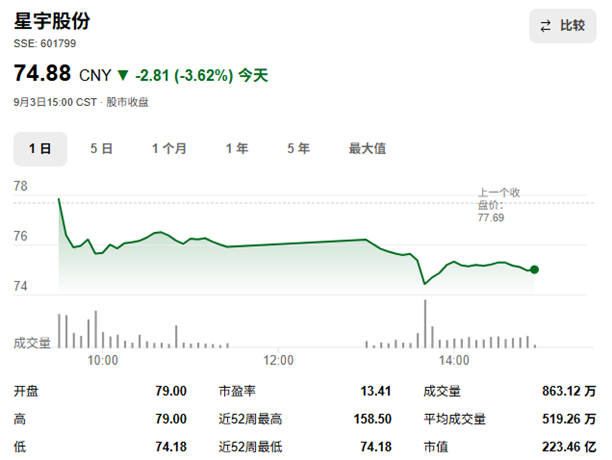
Source: Refinitiv
Under public pressure, Xingyu Shares issued an apology letter on August 27, acknowledging "management decision-making errors" and introducing a remedial plan that includes job search subsidies, extended accommodation, and six months of salary compensation.
The story has gotten to a point that is not particularly new, as labor disputes and news of freshly graduated students being laid off can be seen almost every year.
But what's new is that for Xingyu Shares, which has already embedded itself in the global supply chain, this "deterrent" incident is evolving into an ESG compliance storm in the global automotive supply chain.
According to reports, this labor dispute has gone beyond the scope of internal personnel adjustments, triggering a number of leading EU automakers, including Volkswagen, Mercedes-Benz, and BMW, to conduct special compliance audits and ESG due diligence on their supply chains.
Previously, some Apple suppliers had been removed from the supply chain due to poor ESG performance.
The ESG concept has been popular for five or six years now, but many companies still approach it with a mindset similar to creating a promotional brochure. They hire a third party, collect data, design it, write a few sentences of commitment, and produce a thick report just for show.
Now, newly minted students, armed with these lofty standards, regulations, promises, and initiatives, are issuing a soul-searching inquiry into the substance of ESG: Is this for real? Prove it to us.
Beautiful Reports Can't Withstand the Test of 'Dissuasion'
Xingyu Shares' 2025 ESG report emphasizes the highlights of campus recruitment and university-enterprise cooperation in the employee section from the outset.
Xingyu Shares' 2025 ESG report shows that the company conducted 121 campus recruitment activities that year, cumulatively signing contracts with 564 graduating students.
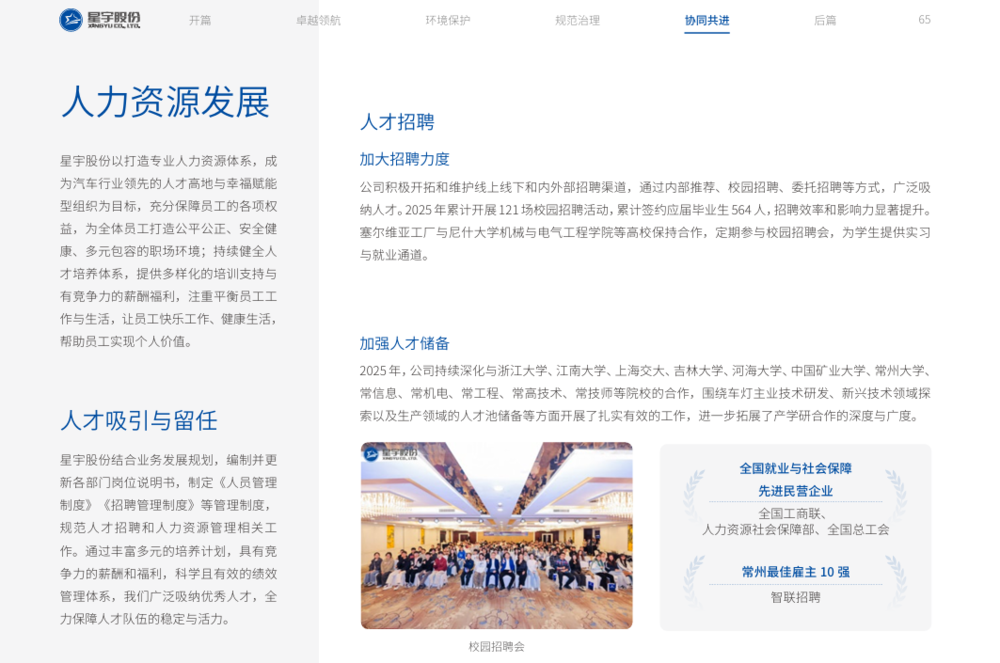
Source: Xingyu Shares
In terms of employee communication, the company has shown respect for employees' opinions by establishing the "Employee Representative Congress System", creating an open, trusting, and smooth communication environment.
However, in practice, Xingyu Shares has given graduates a mandatory "either-or" option, which is a darkly humorous move.
According to a Caixin investigation, the practice of forcing employees to quit by transferring them to undesirable positions occurs at Star Universe every two to three years. The employees who are forced out include not only recent graduates, but also middle-aged people with families.
This controversy over the cancellation of contracts for new graduates has also uncovered more of Xingyu Shares' past labor practices.
According to the Hong Kong IPO prospectus and annual report of Xingyu Shares, at the end of 2024, the company had approximately 10,400 employees; by the end of 2025, this number had decreased to around 7,500, a reduction of nearly 3,000 people in one year.
While the total number of employees decreased, the scale of outsourced labor expanded.
The company's disclosed outsourced labor hours increased from 2.384 million hours in 2022 to 10.874 million hours in 2025, approximately 4.6 times the original amount. In 2025, the compensation for outsourced labor reached 302 million yuan, representing a year-on-year growth of 24.20%.
In addition, the prospectus also revealed that the company and its subsidiary, Foshan Xingyu, had previously exceeded the 10% upper limit set by relevant regulations for the proportion of labor dispatch workers, and completed rectification before May 31, 2026.
During the reporting period, the company also had a situation where it failed to pay social insurance and housing provident fund in full for some employees.
As the laid-off workers submit relevant materials to the Hong Kong Stock Exchange and European clients such as BMW, Mercedes-Benz, and Volkswagen, this time it is not just the workers who bear the risk of layoffs.
According to Caixin, on September 1, Volkswagen Group officially responded to the controversy surrounding the use of recent graduates as workers by its first-tier supplier, Xingyu Shares, and launched a special compliance investigation at the first opportunity.
Volkswagen emphasizes that respecting and protecting the legitimate rights and interests of workers is a core principle of the group's global operations, with this standard covering the entire upstream and downstream supply chain, requiring all cooperating suppliers to strictly implement labor rights protection mechanisms.
This is also the first substantive official response given by a mainstream foreign-funded car company in this year's graduate cross-border rights protection incident.
Additionally, screenshots circulating on social media show that Mercedes-Benz has filed a case through its exclusive enterprise compliance agency BPO (Business and Personnel Protection Office), generating a unique case number WB0011869, officially classifying this labor dispute as a serious labor misconduct in the supply chain, and transferring it to a professional compliance team for in-depth ESG compliance review.
It is unclear whether these complaints have been accepted by the relevant authorities or whether they will lead to regulatory consequences.
This incident undoubtedly shows that, at present, the competition for enterprises going overseas has transcended the dimensions of products and prices, with corporate governance, compliant employment practices, and social responsibility becoming the baseline for supply chain access.
Labor Rights, Supply Chain Compliance Become Key Metrics
In various global ESG standard systems, supply chain management, including supplier social standard assessments, as well as employment and labor relations, are all key issues in the social dimension.
The 2026 semi-annual report shows that Xingyu Shares' clients include Volkswagen, Mercedes-Benz, BMW, General Motors, Toyota and other multinational automakers and their joint ventures.
These multinational automotive clients have strict supplier evaluation systems, and component companies must meet certain rating requirements to be selected.
In pursuit of sustainable development, mainstream multinational automakers generally require suppliers to complete a Sustainability Assessment Questionnaire (SAQ) and achieve corresponding scores.
The SAQ was developed and is regularly updated by an automotive industry collaborative initiative "Drive Sustainability", which is led and operated by CSR Europe.
The automotive industry cooperation alliance has 21 automotive companies participating, with most of Xingyu Co., Ltd.'s multinational automotive clients among them.
In addition, Chinese automakers Geely Auto, Chery Auto, and Great Wall Motor, as well as Volvo Cars and Polestar, which are controlled by Geely Holding Group, are also members of the alliance.
SAQ has set up multiple modules, including company management, labor rights, health and safety, business ethics, and more. Suppliers are required to provide answers and submit original evidence to support their responses.
In the labor rights module, SAQ requires companies to standardize their recruitment processes, eliminate practices such as collecting deposits and withholding identification documents, and ensure employees' freedom to leave their jobs.
SAQ also requires companies to establish smooth complaint and appeal channels, support anonymous feedback from employees, and ensure the confidentiality of the channels and protection of complainants from retaliation.
If the automaker's final investigation finds that Xingyu Co., Ltd.'s responses in the SAQ are inconsistent with the actual situation, Xingyu Co., Ltd. may face the risk of a lowered rating, or even fail to meet the automaker's supplier evaluation standards.
At the same time, Germany's Supply Chain Due Diligence Act, which came into effect on January 1, 2023, requires companies with more than 1,000 employees in Germany to conduct due diligence on their supply chains.
This means that German car companies such as Volkswagen Group and Mercedes-Benz will all need to complete the review work required by the bill.
The company's obligations include: appointing a compliance officer; conducting regular risk analyses; issuing a human rights policy statement; establishing preventive measures in its own business and for direct suppliers; taking remedial measures in case of violations of the law; establishing a complaint mechanism; conducting due diligence on indirect suppliers; and recording and reporting on the fulfillment of due diligence obligations.
In addition, EU enterprises are also faced with the Corporate Sustainability Due Diligence Directive, which requires eligible companies to identify, prevent, mitigate and remediate adverse impacts within their own operations and value chains.
Even if Chinese suppliers are not directly subject to EU regulations, they may still be indirectly affected due to their presence in global supply chains, with customers requiring them to undergo due diligence investigations, and thus paying attention to their protection of labor rights, major labor disputes, and how they are handled.
Hong Kong-Listed Companies Face Major ESG Test
This wave of college graduates terminating their contracts is just the beginning, in response to the inquiries from the main respondents in the chain.
According to reports, on July 29, Xingyu Shares submitted an application for H-share listing to the Hong Kong Stock Exchange, and on August 15, it received the CSRC's approval for overseas listing, with the company currently pushing forward with its "A+H" dual-listing layout.
If STAR Market-listed companies like Star Universe were to seek a Hong Kong listing, they would directly face the Hong Kong Stock Exchange's more stringent ESG governance requirements.
As of January 1, 2025, the Hong Kong Stock Exchange has upgraded its ESG disclosure rules, with the "ESG Reporting Guidance" elevated to the "ESG Reporting Code", and key performance indicators (KPIs) on the environmental and social fronts have been fully converted to mandatory disclosure.
The employee-related issues in the ESG Reporting Guidelines, including employment, health and safety, development and training, and labor practices, all fall under the mandatory disclosure category of "Part B".
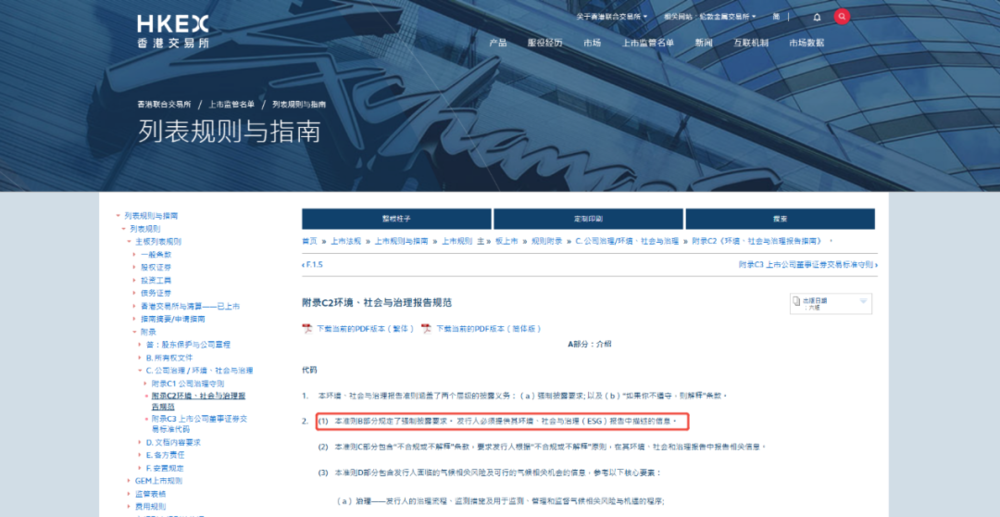
Source: Hong Kong Stock Exchange
At the same time, the Stock Exchange of Hong Kong requires issuers to disclose compliance information regarding relevant laws and regulations that have a significant impact on them in the "Listing Rules". If there are significant defects in labor issues, they must also be disclosed truthfully.
According to a report by Observer Network, after receiving related complaints, the Hong Kong Stock Exchange has transferred the materials to the Listing Department and launched an investigation into the matter as a individual case.
The Stock Exchange of Hong Kong's disclosure requirements for new listing applicants cover employee situations, recruitment policies, labor disputes, major violations, internal controls, and ESG risks.
The applicant must also explain the potential impact of significant risks on its business, financial performance, financing capabilities, and value chain.
This means that if the incident is deemed to have a significant impact on corporate governance, supplier qualifications, or customer relationships, Xingyu Shares may need to provide additional disclosures on the incident's circumstances, potential liabilities, and rectification measures, and the sponsor may also need to conduct further checks on the company's recruitment decisions, labor disputes, and internal controls.
This controversy over the "deterrence" of new graduates is at a juncture where the issue of "employee relations" is transitioning from an internal human resources problem for companies to a global supply chain governance issue.
For Xingyu Shares, properly placating this year's graduates is only the first step in crisis public relations.
To alleviate public concerns and Mercedes-Benz's investigation doubts, and to pass the Hong Kong Stock Exchange's stringent ESG disclosure review, what is needed is not just a simple apology, but a thorough restructuring of its human capital values and risk governance system from the board level.
As ESG awareness increases across the entire society, the effectiveness of corporate ESG governance tools becomes more pronounced, and whether it's domestic or overseas companies, whether it's suppliers or the main chain, they will all face the same challenges and tests.
Source:
Southern Weekly: Xingyu Shares persuades graduates to leave, stating that employee rights are not a company's "internal matter"; August 29, 2026
The chairman of Star Universe (Xingyu) has apologized again as the contract termination controversy remains unresolved.
Volkswagen, Mercedes-Benz, and BMW responded to the news that Xingyu Shares had laid off a batch of college graduates, with the incident occurring on September 1, 2026.
According to Wall Street News, Xingyu Shares is taking a controversial approach on its road to a Hong Kong IPO. The company has been receiving government subsidies for job creation, but has been terminating contracts with recent graduates.
Ifeng Auto: The termination of contracts with new graduates triggered a chain reaction of public opinion earthquakes, and an in-depth review of the Xingyu Shares incident.
Daily Economic News: Investors question "stock price plummeting to unbearable levels", Xingyu Shares responds. The HR director who was suspended, who is it exactly? Some companies are recruiting students who were terminated by Xingyu near its headquarters.
Caixin: Volkswagen Launches Investigation into Labor Disputes at Xingyu Shares, Why is Supervising Supply Chains a Must for Multinational Automakers? September 2, 2026
Caixin: Star Universe Lays Off Recent Graduates, Sparking Cross-Border Rights Protection; Partner Automotive Company Initiates Compliance Review; September 1, 2026
Caixin: New Graduates Laid Off Right After Graduation, How Much of a Loss Is It; August 28, 2026
Caixin: After Mass Layoffs of New Graduates, "China's Top Automotive Lighting Stock" Issues Public Apology; August 28, 2026
The Hong Kong Exchanges and Clearing Limited has introduced the ESG Academy, which provides a platform for listed companies to learn about environmental, social, and governance practices. According to the Rules and Regulations, the ESG Academy offers training and resources to help companies enhance their ESG disclosure and performance. The academy's website provides information on ESG-related rules and regulations, including the Environmental, Social and Governance Guidance for Boards and Directors, and the Guide on ESG Disclosure. The website also includes a list of ESG-related laws and regulations in Hong Kong, such as the Securities and Futures Ordinance, and the Companies Ordinance. Additionally, the academy provides a range of training programs and workshops to help companies develop their ESG capabilities and improve their sustainability reporting.
Drive Sustainability's member companies include BMW Group, Chrysler, Daimler AG, Ford Motor Company, Honda, Jaguar Land Rover, PSA Group, Renault, Toyota Motor Corporation, Volkswagen Group, and Volvo Group, among others, totaling 12 companies.