A metal ring weighing about 4 grams with no screen is planned to be listed on the Nasdaq as early as September.
Oura, a 13-year-old Finnish smart ring company, plans to raise up to $30 billion through an initial public offering, valuing it at over $160 billion. The underwriting syndicate includes top investment banks such as Goldman Sachs, Morgan Stanley, and JPMorgan Chase. According to data from Omdia, in the first half of 2025, Oura accounted for around 74% of global smart ring shipments, with an even higher share in its home market in the US.
If it lists successfully, it will be the largest IPO in the consumer wearables sector in over a decade, surpassing Peloton's $8.1 billion in 2019 and Fitbit's $4.1 billion in 2015.
However, two things are more noteworthy than the amount of funds raised.
First, existing shareholders are selling their shares on a large scale. Insiders revealed to Bloomberg that current investors are expected to offload a significant proportion of their stock in the IPO. Oura has accumulated over $1.5 billion in funding, with institutions such as Fidelity, ICONIQ, and Whale Rock waiting for an exit window. The company's valuation was $5.2 billion at the end of its Series D financing in 2024, and surged to $11 billion in its Series E financing in October 2025 - more than doubling its valuation on paper in less than a year. Under DPI pressure, this exit is an inevitable part of the capital cycle, rather than a simple bearish signal.
Second, its most valuable story is being challenged by a class-action lawsuit. In December 2025, three consumers filed an auto-renewal class-action lawsuit (case number 3:25-cv-10997) in the US District Court for the Northern District of California, alleging that Oura failed to clearly disclose automatic renewal terms and made cancellations difficult. In August 2026, a class-action lawsuit over the accuracy of sleep monitoring struck at the core value of the product - a fundamental conflict between the hardware technology route and marketing promises.
13 Years from Finnish Geek Circle to $100 Billion Valuation
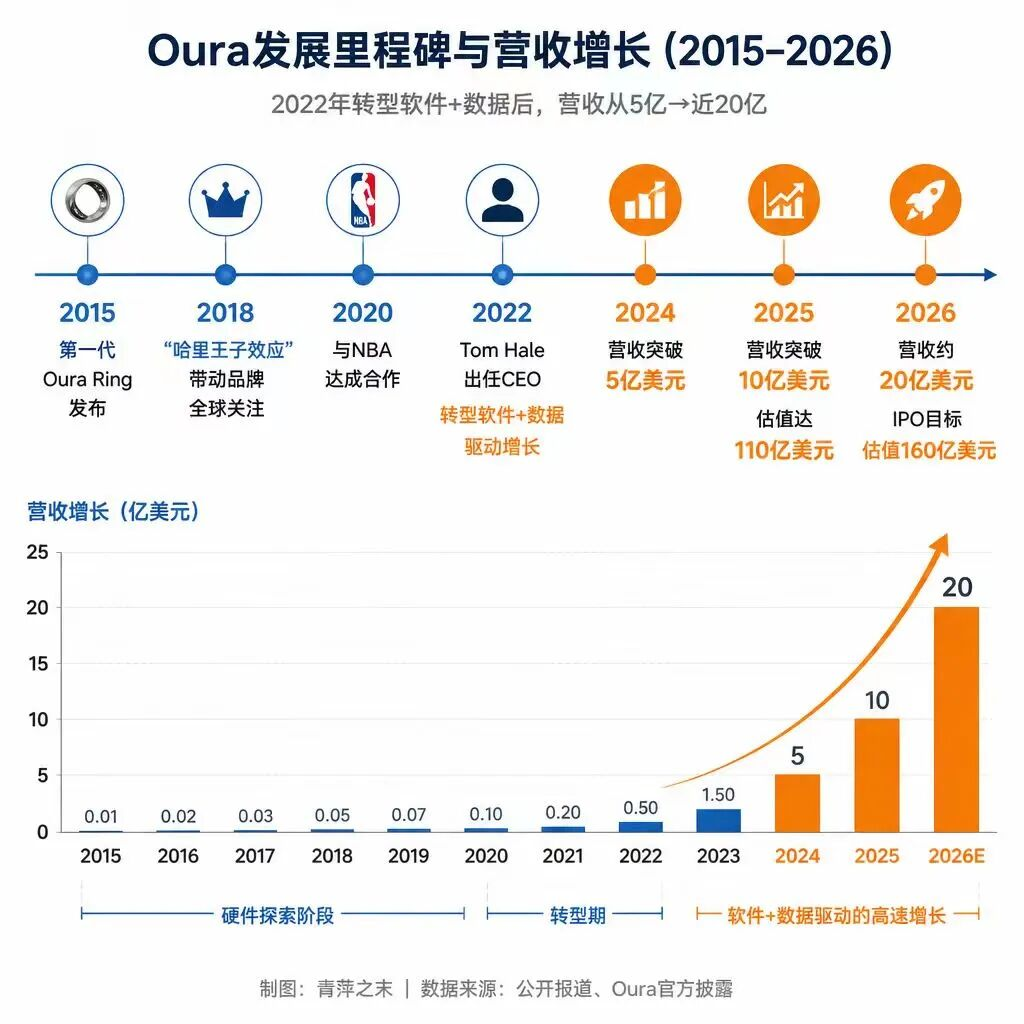
In 2013, three Finnish engineers founded Oura near the Arctic Circle in Oulu, a city that was once one of Nokia's key R&D hubs. After Nokia's exit, a large number of wireless communication and sensor engineers remained, forming the technological foundation of Oura.
The founding team initially envisioned the ring as a health data monitoring device, with the choice of a ring being somewhat unconventional: the rich capillaries on either side of the finger can provide high-quality photoplethysmography signals, and the comfort of wearing a ring makes it suitable for long-term use by users.
After the first-generation Oura Ring was released in 2015, it existed in a niche circle of Silicon Valley geeks. The real turning point came in 2017, when a New York hedge fund manager decided to invest and take on the role of president himself, propelling the Finnish hardware company into a global consumer brand.
In 2022, Tom Hale, a professional manager with a software background, took over as CEO. His core judgment upon taking office was that Oura is essentially facing software, data, and AI, rather than hardware. Since then, the growth curve has been steep: $500 million in revenue in 2024, doubling to $1 billion in 2025, and expected to approach $2 billion in 2026. In May 2026, Oura's paid memberships are expected to exceed 5 million this quarter, growing fourfold over the past two years; more than 80% of members choose to renew after the first year.
Core Selling Point Lands in Court, 'Like Flipping a Coin'
Just as Oura is rushing towards an IPO, a lawsuit has put its core product logic on trial.
On August 20, 2026, the US District Court for the Northern District of California accepted a proposed class-action lawsuit against Oura, alleging it deceived consumers about the accuracy of its sleep-tracking feature.
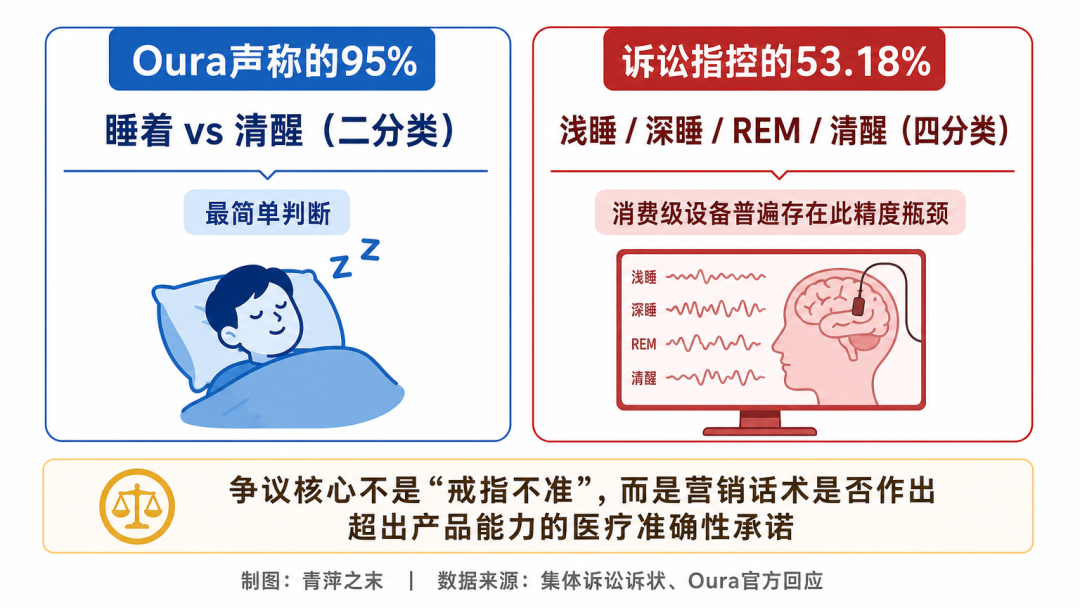
The core argument of the lawsuit is sharp: sleep occurs in the brain, not in the fingers. The medical community's gold standard is polysomnography, which requires professional equipment such as electroencephalography to measure brain activity. The Oura ring, worn on the finger, does not have the capability to measure brain electrical activity. A study cited in the complaint and published in the journal Nature said Oura's accuracy in distinguishing between wakefulness, light sleep, deep sleep, and REM sleep is approximately 53.18%, which the plaintiff described as "similar to flipping a coin."
However, it's necessary to distinguish between two key concepts: Oura's claimed 95% accuracy rate refers to the binary judgment of "asleep vs awake", whereas 53.18% refers to the classification accuracy of four sleep stages - these are completely different metrics. Consumer-grade wearables generally face technical bottlenecks in terms of sleep stage accuracy. Oura responded by citing an independent study published in Sensors in October 2024, which stated that the Oura Ring outperformed the Apple Watch Series 8 in distinguishing between light sleep, deep sleep, and REM stages. Oura emphasized that its product is not a medical device and cannot replace professional sleep detection.
The crux of the controversy is that inferring brain sleep states from peripheral signals, such as heart rate, body temperature, and physical activity, is an industry-wide challenge, not a problem unique to Oura. The core battleground of the lawsuit is not about whether the ring is accurate or not, but whether Oura's marketing materials made medical accuracy promises that exceeded the product's actual capabilities - this is the true boundary of the legal dispute.
Beyond product and technology disputes, Oura's "hardware + subscription" business model itself faces compliance pressure. In December 2025, three consumers filed a class action lawsuit over automatic renewal in the U.S. District Court for the Northern District of California, alleging that Oura failed to clearly disclose automatic renewal terms during the purchase process and erected barriers in the cancellation flow, in violation of California's Automatic Renewal Law. The subscription model is the key pillar supporting Oura's valuation shift from a hardware company to a SaaS framework, and renewal compliance issues are precisely what is undermining that pillar.
Is AI a Story or a Bubble?
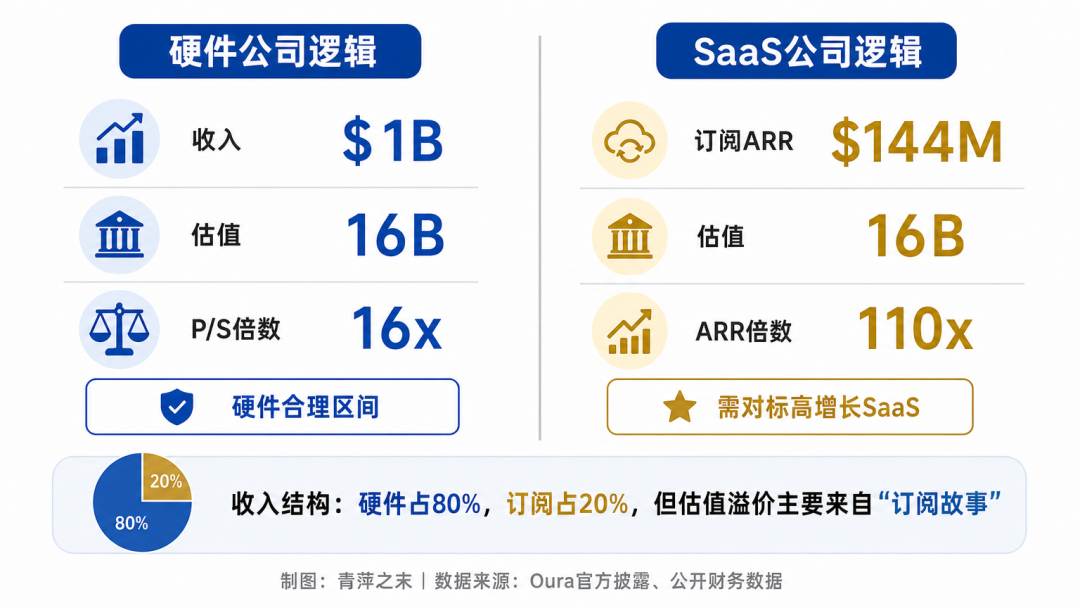
In October 2025, Oura was valued at $11 billion in its Series E financing. Less than a year later, its IPO target valuation has risen to $16 billion, a increase of over 45%. The growth in valuation comes from both hardware sales and the AI narrative - in 2024, Oura launched its AI health assistant, Oura Advisor.
But what does Oura Advisor actually do? Based on publicly available information, it primarily delivers text-based summaries and trend interpretation drawn from sleep, HRV, and temperature data—not medical diagnosis, but "personalized health insights." That means the AI isn't creating a genuinely new revenue stream; it's repackaging existing health data. If it's merely a natural-language summary of data the company already collects, it's hard to see how it independently supports an AI premium in the valuation.
A bigger issue is the credibility of the data. How much credibility will the health data provided by Oura have with doctors? The FDA has warned that there are unauthorized smart devices on the market that claim to measure blood pressure and non-invasive blood glucose levels. The more critical the health issue, the harder it is for consumers to judge for themselves.
What's more worth exploring is the structure of the subscription data. Oura officially disclosed: "This quarter, paid members are expected to exceed 5 million, growing fourfold over the past two years; more than 80% of members choose to renew after the first year." If calculated based on cumulative sales of over 5.5 million units, the non-subscription ratio is approximately 9%, and the subscription conversion rate is already excellent in the consumer hardware sector. However, the future challenge lies in whether the customer acquisition cost and renewal stickiness will change when transitioning from 5 million to 10 million - this will determine whether the SaaS narrative can be sustained.
Time Window Before Major Players Like ByteDance Enter the Market
The bigger question is: how long can Oura maintain its first-mover advantage?
Samsung launched a smart ring two years ago, and the Galaxy Ring 2 is currently in development. Apple is reportedly developing a smart ring, led by Eddy Cue, senior vice president of Services and Health, although it's worth noting that the Apple ring is still an industry rumor and has not been officially announced, with risk weight considered a medium- to long-term variable rather than an immediate threat.
Oura faces competition that goes beyond just rumored giants. Fitness tracker company Whoop has seen its valuation soar to $10 billion by expanding into areas such as hormone tracking. In the Chinese market, while major players like Zhuiqi are entering the scene, brands like RingConn are quickly gaining market share with their no-subscription-fee and high-cost-performance models. In November 2025, Oura initiated a 337 investigation (case number 337-TA-1468) with the US ITC, accusing over a dozen companies including Samsung, Reebok, and Huami of patent infringement, and requesting a limited exclusion order and cease and desist order. However, at the same time, Oura itself is also under pressure from a 337 investigation initiated by Samsung (case number 337-TA-1478), with Oura listed as a defendant.
Oura is both an attacker and a defendant in patent wars. Domestic competitors currently mainly occupy the mid-range market, and have a low overlap with Oura's North American high-end market, which is priced over $300, with the main threat being the long-term risk of a price war.
Another often-overlooked moat for Oura is its B-end business. Oura's collaboration with the US Department of Defense, which began in 2019, is currently its largest enterprise client. The company has also frequently acquired corporate health analytics firms and connected its data with virtual women's health platform Maven Clinic. Although this portion of B-end revenue is not disclosed separately, it forms an important underpinning of the Oura data platform narrative.
Behind the $16 billion valuation lies a quadruple risk, including collective lawsuits, the fulfillment of AI narratives, old shareholders cashing out, and attacks from major manufacturers. What Oura needs to prove is not whether smart rings can be sold, but whether this niche category can grow into a truly independent $10 billion market under the squeeze of Apple and Samsung.
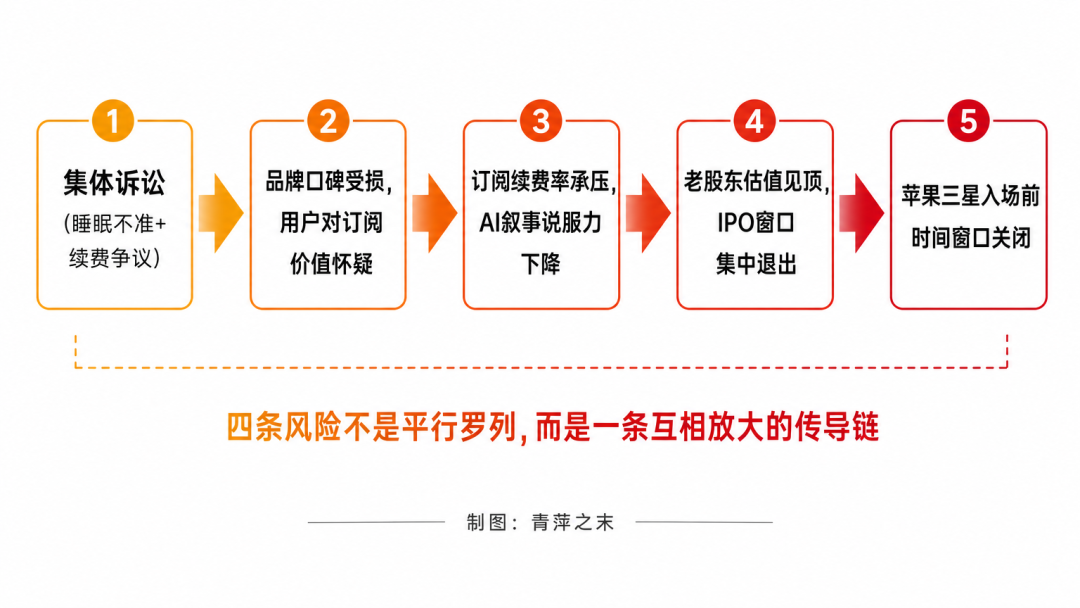
There are two possible scenarios:
Scenario A: Oura successfully goes public, defending its high-end health ring niche, relying on its first-mover advantage and brand reputation to become a small yet premium independent brand with high profit margins.
Scenario B: After Apple and Samsung enter the market, the competition becomes fierce, and the barrier of health data is undermined by the advantage of their ecosystems, squeezing out independent manufacturers. The $3 billion in funding is only buying some time before the major manufacturers fully enter the market.
The Oura IPO is essentially a perpetual question in the consumer health sector: how close can data obtained through peripheral sensors get to medical truth. The answer provided by Oura will also define the valuation ceiling and narrative boundaries for a large number of subsequent health hardware companies, with the prices of two scripts already included in the $16 billion valuation.