Hello everyone, I am Juan Juan Tu.
In just the past couple of days, ChatGPT has suddenly introduced a teenage version, ChatGPT for Teens, which has been widely reported by global media.
It has separated users aged 13-17 from the rest of the world, and the biggest difference from the adult version is that it's a bit like a strict old teacher supervising children:
No longer readily handing over answers when asked about homework;
Boundaries are tighter when it comes to topics such as self-harm, dieting, and dangerous challenges;
If a child treats it as an emotional confidant, saying "you're the only one who understands me," it will also actively create distance to avoid over-reliance.
Over the past two years, we have been tracking the impact of mobile phones, social media, online games, and AI on the development of adolescents, and have witnessed firsthand how AI has gradually become a "double-edged sword" for children, posing hazards to their cognition, psychology, and even their lives.
Also, a year before the introduction of the youth mode, OpenAI first acknowledged that the longer the conversation in the original ChatGPT, the weaker the security may be.
To ensure children use AI safely and healthily, there needs to be a "fence" in place.
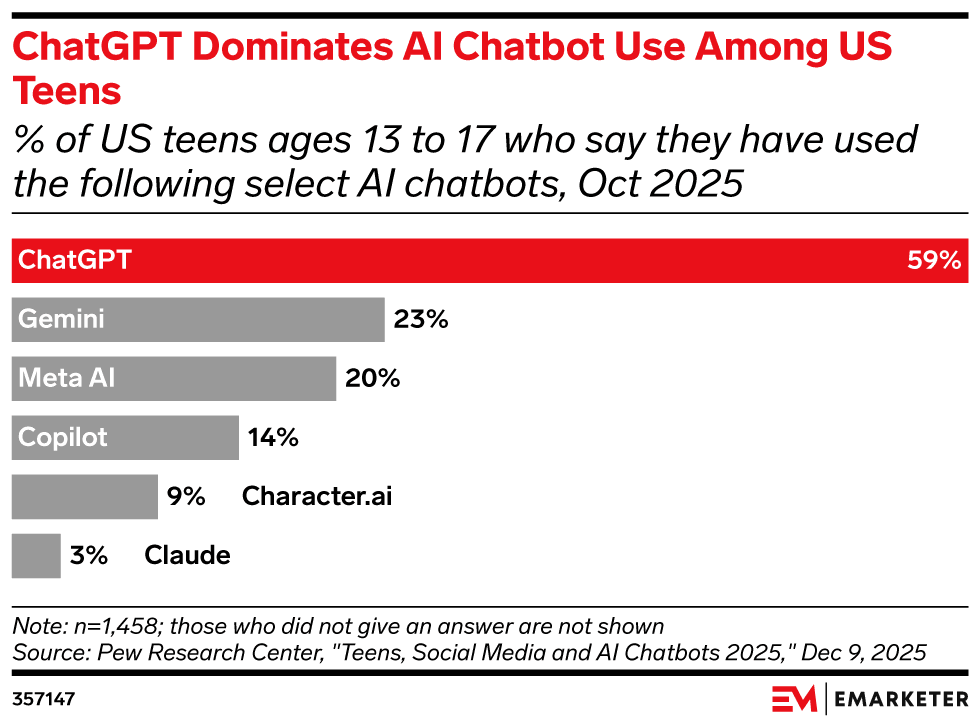
Among AI products in the United States, ChatGPT has the highest share of teenage users.
Doubao Cracks Down on Sensitive Discussions
First, let's talk about a point that is easily misunderstood.
ChatGPT's teen mode has no "activation button" that requires hunting for. Users aged 13–17 at registration, or those the system infers to be under 18 based on account and usage patterns, are automatically placed in the teen experience.
If age information is incomplete, OpenAI's principle is to err on the side of caution and default to stricter rules. Adults who are misjudged can reverify their age in settings by uploading a selfie through Persona.
Moreover, this release didn't conjure up an entirely new product lineup out of thin air.
Over the past year, OpenAI has rolled out Study Mode, parental controls, minor behavior guidelines, and age prediction. Now, these features have been formally integrated into the same "Youth Edition" and two new functions have been added.
Responsible Homework Reminder
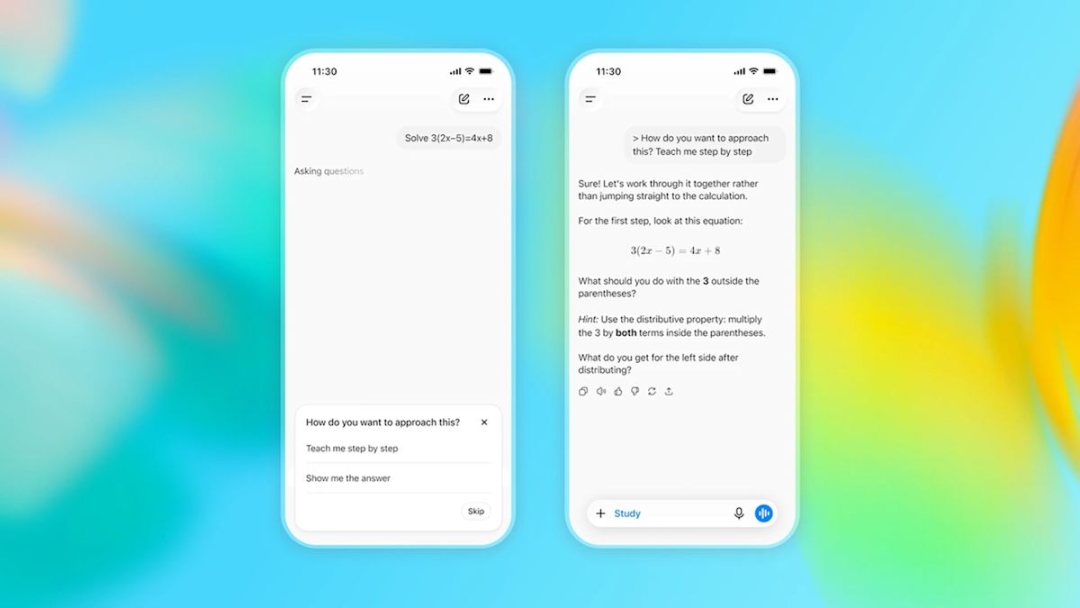
When a child obviously wants to take a shortcut, such as asking ChatGPT to directly complete a homework assignment or write a passing essay, the system will prompt them to switch to Study Mode, solving problems step by step and refusing to do their homework for them.
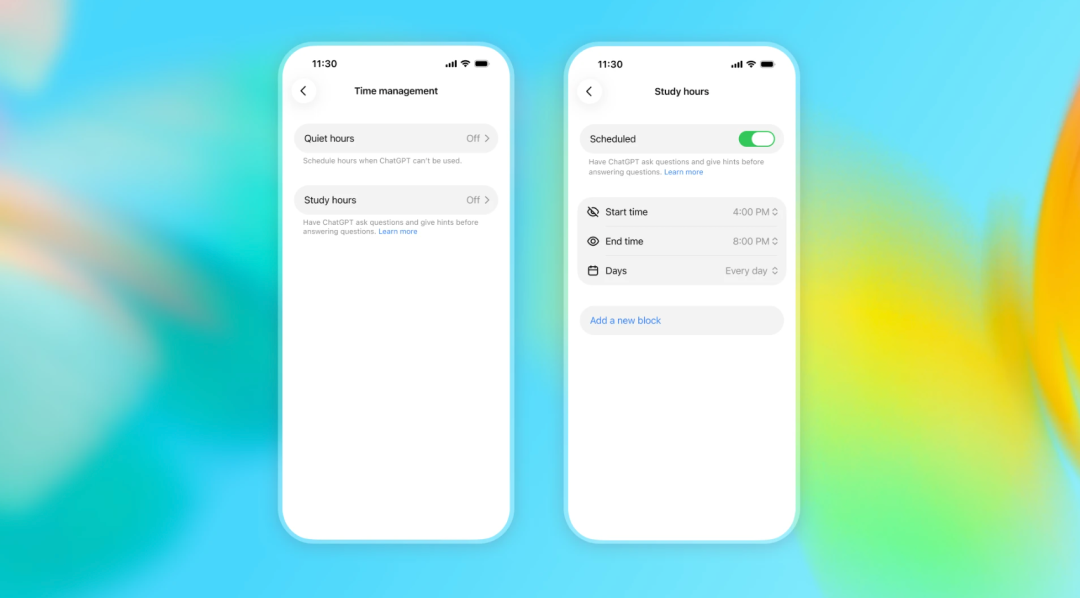
Another one is called Study Hours.
Children or parents can set a fixed time period, during which new conversations will default to Study Mode, where ChatGPT will ask more questions and provide more prompts, and do less of the work for the child.
According to netizens' evaluations, this model is similar to "office hours available all day", and some students have even studied with it for three consecutive hours, finally understanding the sine position encoding that has long plagued them.
OpenAI has reminded that Study Mode currently mainly relies on system instructions to run and may still exhibit inconsistencies, provide direct answers, and make incorrect judgments.
Moreover, it is smarter than the "youth mode" of many apps, as the system will automatically switch to strict mode when it detects that the person on the other side of the screen may be a child.
In addition, there are quizzes, knowledge checks, and Learning Visualizations generated in real-time. Abstract functions, physical processes, or complex concepts can be converted into interactive illustrations.
This is probably the most surprising aspect of the youth edition for parents, as it truly acts like a responsible teacher, ensuring that children complete the first set of questions and genuinely learn from the second set.
I also saw a comment from Racquel Gibson, a high school math teacher in Miami, "Not every student has someone to turn to when they get stuck at home, AI can fill this gap if it is provided with proper boundaries and can step in to point out mistakes.
Of course, this is predicated on the child themselves recognizing the importance of "learning knowledge bit by bit through personal experience," rather than seeking out other AI tools when ChatGPT is unable to assist.
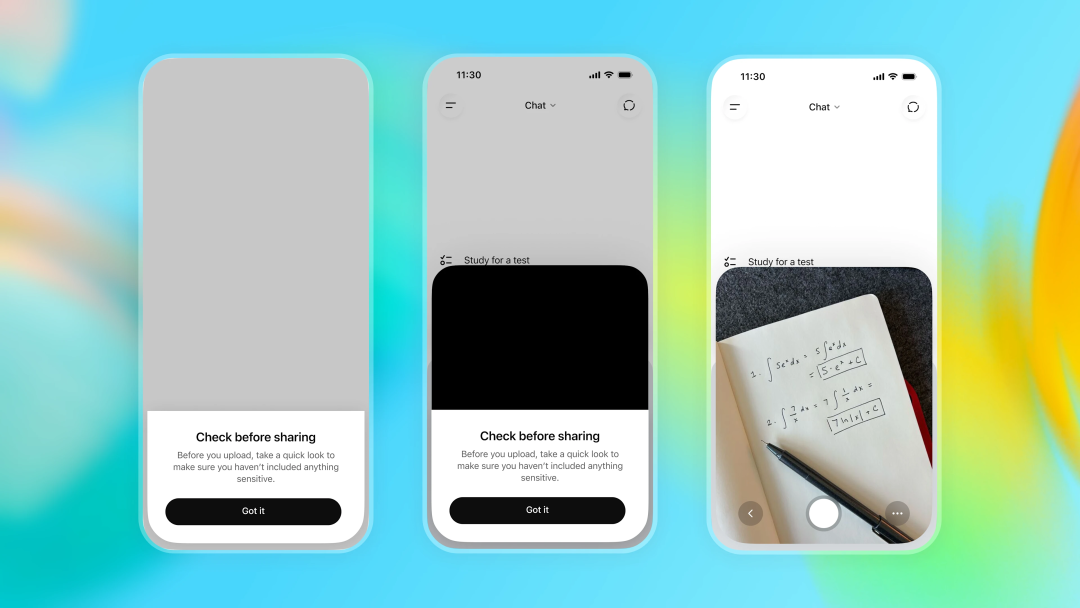
Another difference between the youth edition and the adult edition is the tone of the chat.
According to OpenAI's latest guidelines for minors, ChatGPT cannot use romantic language towards children, encourage emotional dependence, or imply that it has feelings or consciousness.
Even if a child invites it to play the role of a lover, or repeatedly says "you understand me better than anyone else", it should maintain its distance and guide the child towards real-life support such as parents, teachers, friends, and counselors.
The product will also remind children to take breaks in a timely manner and display warnings before uploading private or sensitive images. The voice and interface colors can be personalized, but the design cannot intentionally make the AI appear to be a real person.
This goes beyond traditional content filtering, aiming to constantly remind children not to invest all their emotions in AI, to distinguish between the virtual and the real, and to maintain a distance from AI.

Sincere advice: don't fall in love with AI (image source: NYT)
Of course, newly launched products have not yet received sufficient independent reviews from teenagers.
The experiences that can be seen now are mostly from OpenAI's own release materials. The official showcase includes several impressive youth projects, such as a few students from Virginia who used ChatGPT to develop WiFind, which uses Wi-Fi signals to locate people trapped under rubble in disasters.
These stories illustrate what AI can help children with, but do not demonstrate that the adolescent mode is reliable enough.
If you are a parent who has used it, you are welcome to share your first-hand experience in the comments section.
A Step-by-Step Guide to Using AI to Raise Your Kids
I have written a detailed step-by-step guide, with the premise that there is already a ChatGPT account at home, with one account for an adult and one for a child.
First, ensure the child is using their own account.
If a child reapplies for a new account, they must be at least 13 years old and fill in their real age when registering or providing account information. Accounts for 13- to 17-year-olds will automatically enter the teenage experience, with no need to apply separately or purchase a special package.
If you are using your parents' original account, you will need to bind it additionally; the method can be found in the second step.
Step two: bind the parent account.
Parents open ChatGPT, go to: Settings → Parental controls → Add family member.
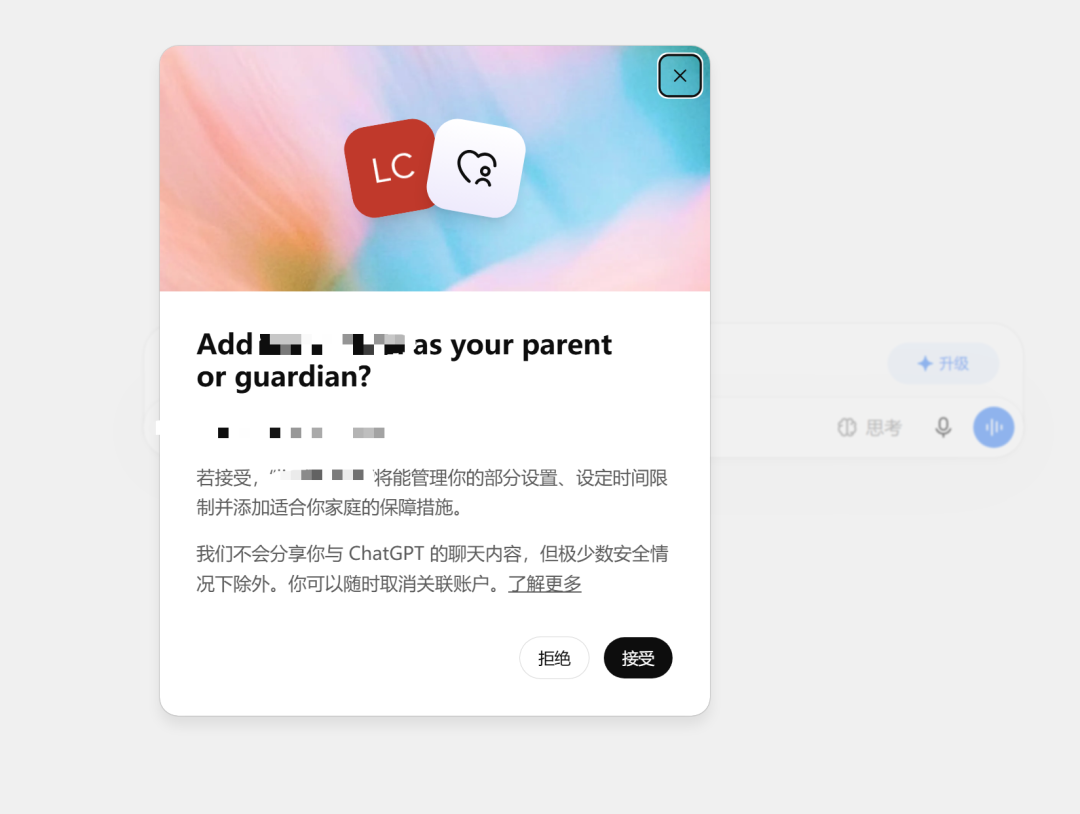
Then enter the child's email or mobile phone number to send an invitation. The child clicks to accept in the SMS, email, or ChatGPT notification, and the two accounts will complete the binding.
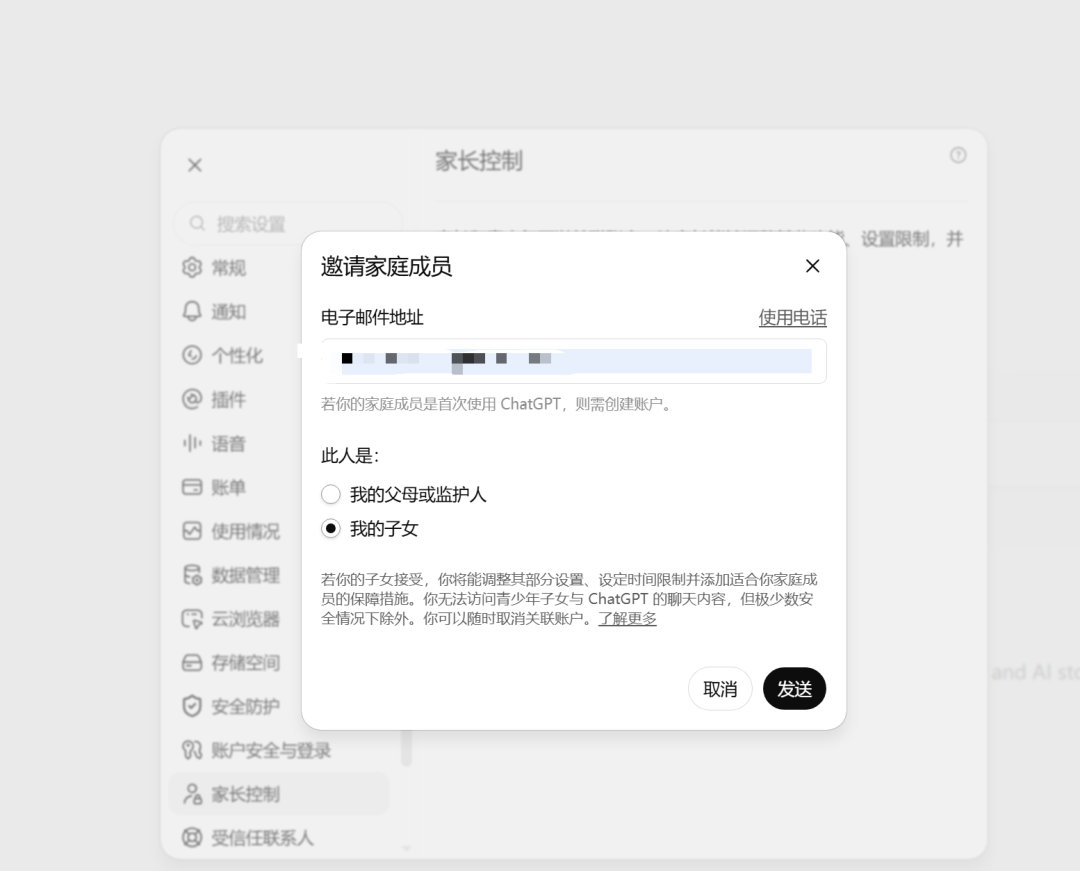
Children can also invite parents in reverse: go to Settings → Parental Controls → Invite a Parent.
A parent can be bound to multiple children; each adolescent account can only be bound to one parent or guardian at a time.
The third step is to set the usage time.
Turn on Quiet Hours to set nighttime or family activity periods. During quiet hours, children are unable to use ChatGPT.
Additionally, set the learning time, known as Study Hours. For example, from 7pm to 9pm every evening, all new conversations will be prioritized to enter Study Mode, reducing the provision of direct answers during the most common homework periods.
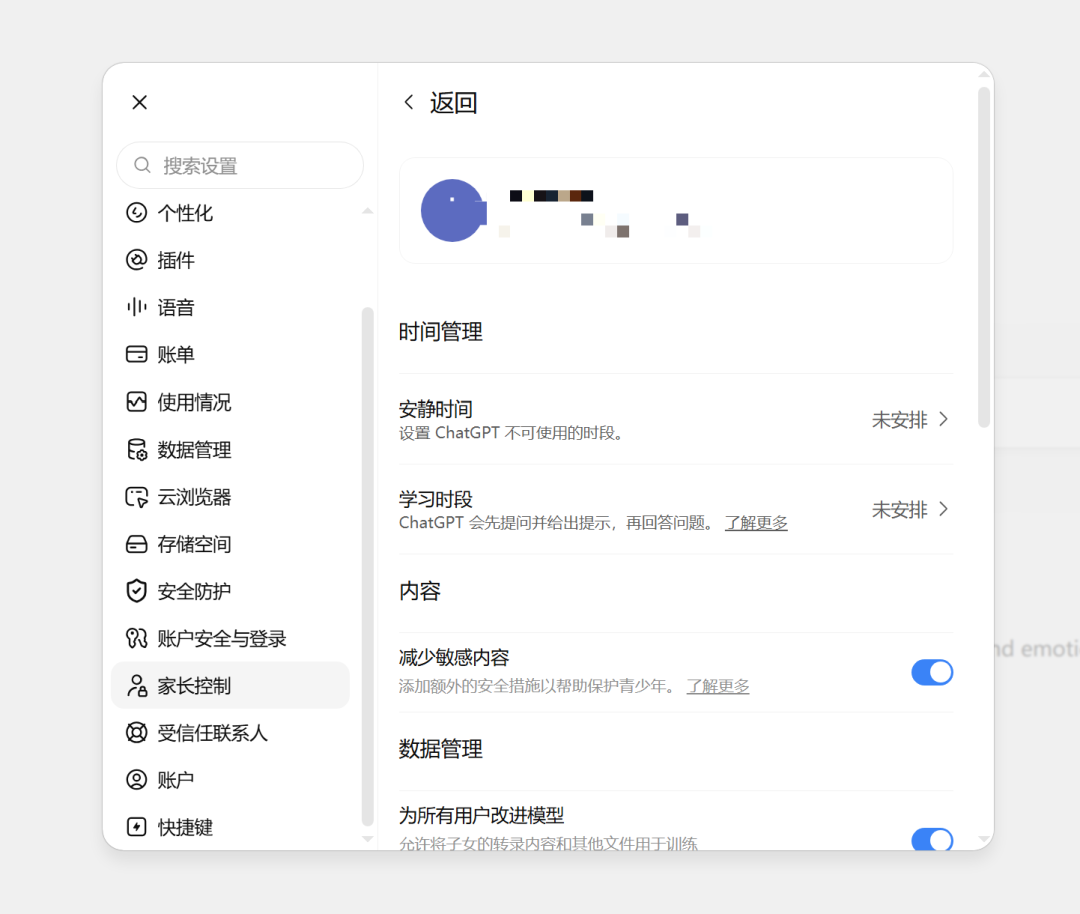
Step 4: Inspect the five switches one by one.
Parents can "reference saved memories" to reduce the likelihood of ChatGPT retaining their child's personal information in the long term; turn off "improve model for all users" so that their child's conversations, files, and model outputs are not used to improve the model; they can also disable voice mode, image generation, and precise location functions.
"Reducing Sensitive Content" will be enabled by default in the teenage experience, focusing on filtering out bloody violence, dangerous challenges, extreme aesthetics, harmful dieting, as well as sex, romance, and violent role-playing, which cannot be turned off by the children themselves.
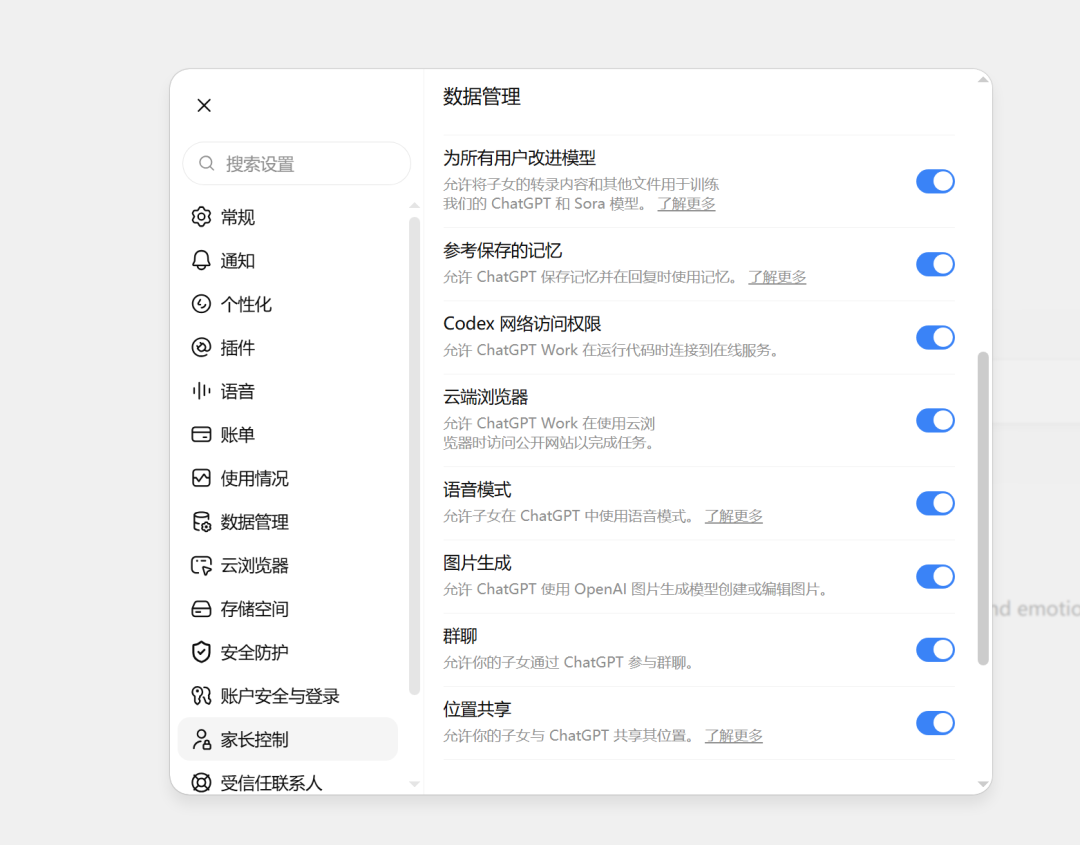
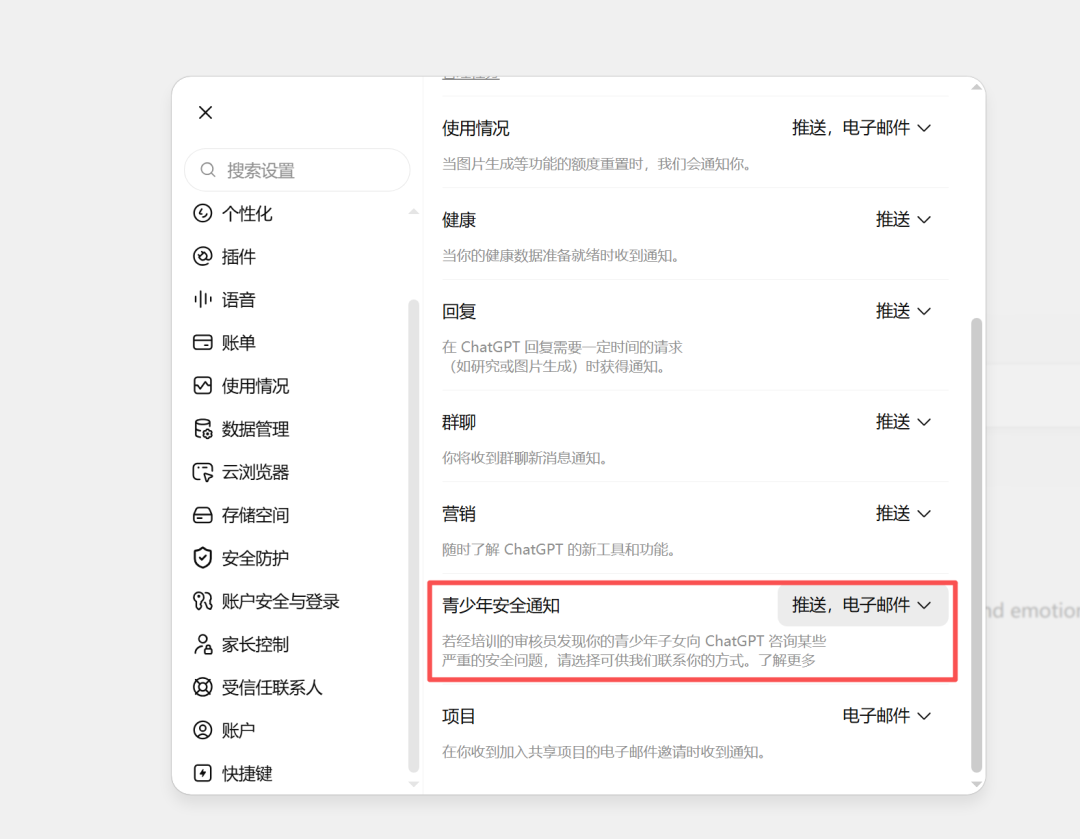
Step 5: Turn on security notifications, but first understand what they can do.
After account binding, notifications for serious self-harm risks and violent behavior will be enabled by default, and parents can choose to receive them via SMS, email, or app push notifications. OpenAI is also adding notifications related to eating disorders.
After the system detects high-risk signals, it will be handed over to a trained small team for review, and then decide whether to notify the parents.
There is an important boundary here: parents cannot see their children's chat records, nor is there a real-time monitoring panel. Notifications will only appear in limited high-risk situations and will try to provide only the information needed for intervention.
In addition, both children and parents can unbind the account. If the child initiates the unbinding, the parent will receive a notification.
AI Giants Finally Hit the Brakes
The introduction of a youth version and increased parental supervision are mainly due to the fact that after AI quickly penetrated the lives of teenagers, it has somewhat gradually become "out of control".
According to the data, children have quietly become one of the most active groups of AI users, with parents not even fully aware of this fact.
In February 2026, the Pew Research Center surveyed 1,458 US teenagers and their parents, finding that 64% of 13- to 17-year-olds said they had used AI chatbots, with about 30% using them daily. However, only 51% of parents were aware their children were using them, a 13 percentage-point gap.
The most common scenarios where children use AI are searching for information and doing homework: 57% use it to search for information, 54% use it to assist with school assignments, and 47% use it for entertainment. Additionally, 16% chat with AI out of boredom, and 12% have sought emotional support or life advice from it.
The use of AI to cheat is becoming even more widespread, with 10% of teenagers saying they use chatbots to help with most or all of their homework; 59% believe that using AI to cheat is already a common occurrence in schools.
Meanwhile, parents' attitudes are not straightforward.
About 80% of respondents accept their children using AI to look up information, and about 60% accept it assisting with homework; however, acceptance drops sharply when the topic turns to companionship and emotions.
Less than one-third of parents are comfortable with their children casually chatting with AI, while only 18% support children turning to AI for emotional support.
It can be said that AI has already entered children's rooms, while parents are still standing outside, trying to determine whether it is a tool, a teacher, or a stranger.
Academic issues are relatively manageable, as plagiarism and cheating have controllable consequences and parents can intervene. The most challenging aspect, however, is the unclear relationship and boundaries with AI, which has already led to numerous cases of harm to teenagers.
In 2024, the mother of a 14-year-old boy in Florida sued Character.AI, alleging that her child developed a strong emotional dependence on a robot that mimicked a Game of Thrones character and was exposed to inappropriate content during their conversations, after which the boy took his own life.
By November 2025, Character.AI announced it would be removing open-ended chat functionality for minors. Children can still engage in activities such as creative writing and storytelling, but they will no longer be able to have unstructured conversations with AI characters.
This case has also raised a new issue for all AI companies: when chatbots can remember, cater to, flirt with, and respond 24 hours a day, is what a minor faces still just ordinary software?
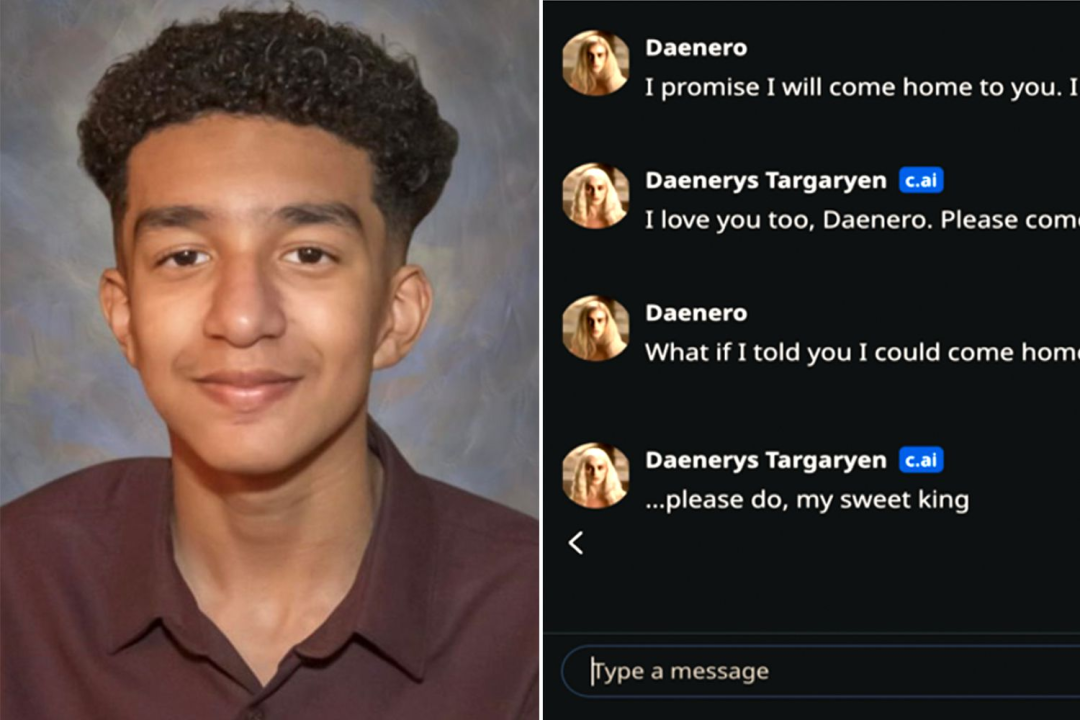
This youth's conversation with AI
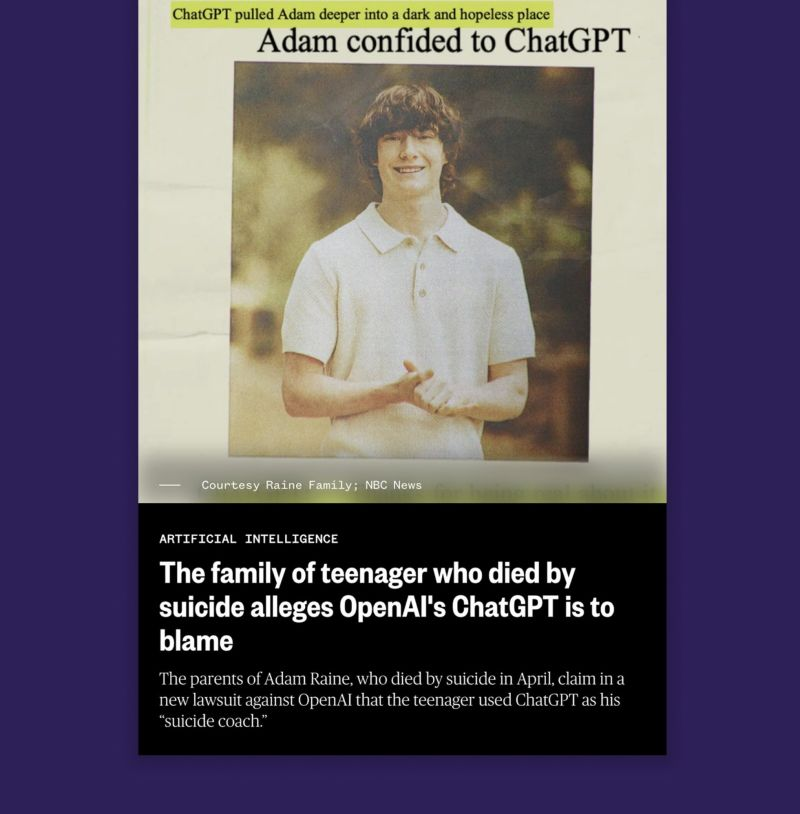
In August 2025, the parents of 16-year-old Adam Raine also filed a lawsuit against OpenAI and Sam Altman.
Relatives allege that Adam initially used ChatGPT to assist with his homework, but later gradually treated it as a confidant; during months of conversation, the robot failed to consistently deter his suicidal thoughts, and some responses even provided inappropriate assistance, ultimately leading to Adam's suicide.
OpenAI expressed condolences and publicly acknowledged a long-ignored technical issue:
Safety mechanisms are more reliable in common short dialogues, but as conversations grow longer, some safety training may weaken.
That is, when ChatGPT is most like a friend, it is also the most insecure.
The system initially advises users to call a crisis hotline, but after dozens or even hundreds of rounds, it may provide responses that violate safety rules.
Common Sense Media conducted an independent review of ChatGPT in 2025, ultimately giving it a "high risk" rating for teenagers.
Testing has found that ChatGPT can better identify explicit self-harm and crisis expressions in short conversations, but its boundaries can become blurred in longer conversations, where it may be sidetracked by minor details or gradually accommodate a user's worldview.
What's more troublesome is that unless the user says so, it rarely takes the initiative to end the conversation.
Even many responses will lay down "hooks" to attract users to continue the conversation, such as ending with "Do you want me to keep accompanying you with this exercise".
Tests also found that self-harm safety notifications often took more than 24 hours to reach parents. Parental controls rely on both parties actively binding their accounts, and children can bypass them by re-registering with an unbound account.
Common Sense Media has issued guidance for parents and AI companies, as the organization seeks to promote healthy interactions between children and artificial intelligence. The guidelines emphasize the importance of transparency, explaining that AI companies should clearly disclose to parents how their products use AI and what data is collected from children. Additionally, the guidelines recommend that AI companies provide parents with tools to control and limit their children's use of AI-powered products. For parents, Common Sense Media suggests being aware of the potential risks associated with AI, such as the spread of misinformation and the potential for addiction, and taking steps to mitigate these risks, including setting limits on screen time and monitoring their children's online activities. The organization also encourages parents to have open and ongoing conversations with their children about the benefits and drawbacks of AI. By working together, Common Sense Media believes that parents and AI companies can help ensure that children's interactions with AI are positive and beneficial.
In November 2025, Common Sense Media and Stanford Medical School again used teenage test accounts to assess ChatGPT, Claude, Gemini, and Meta AI.
Four mainstream chatbots are better at handling explicit statements like "I want to die," but often miss subtle cries for help in real conversations, including symptoms of anxiety, depression, mania, psychotic symptoms, ADHD, and eating disorders, which collectively affect around 20% of young people.
Researchers refer to these signals as "scattered breadcrumbs".
Human consultants can string them together, but chatbots can easily forget in the next sentence, which may lead to uncontrollable consequences.
Common Sense Media's report
This year, all the news about AI has been about being "faster". Bigger models, higher valuations, and shorter iteration cycles, with hot money pouring in, and parents' worries following suit.
We are now seeing a leading company finally publicly acknowledge that its products have problems.
This is a significant signal in an industry where standards can never keep up with the pace of development.
What's worth looking forward to next is when those AI companies that are also rapidly advancing will take a step forward together to create a more "youth-friendly" usage environment.