GoPro is trying to turn its business around.
On September 1 local time, action camera manufacturer GoPro announced that it has signed a definitive merger agreement with US optical photonics company Starman Optical. Under the agreement, GoPro shareholders will receive a total of $285 million in cash, approximately $1.14 per share, and retain around 10% of the shares in the merged company. GoPro's existing debt of approximately $92 million will be fully repaid upon completion of the transaction.
The transaction is expected to be completed by the end of 2026, subject to the approval of GoPro shareholders and regulatory authorities. Upon completion of the merger, GoPro will remain listed on the Nasdaq, and its existing camera, subscription, and cloud services businesses will be retained.
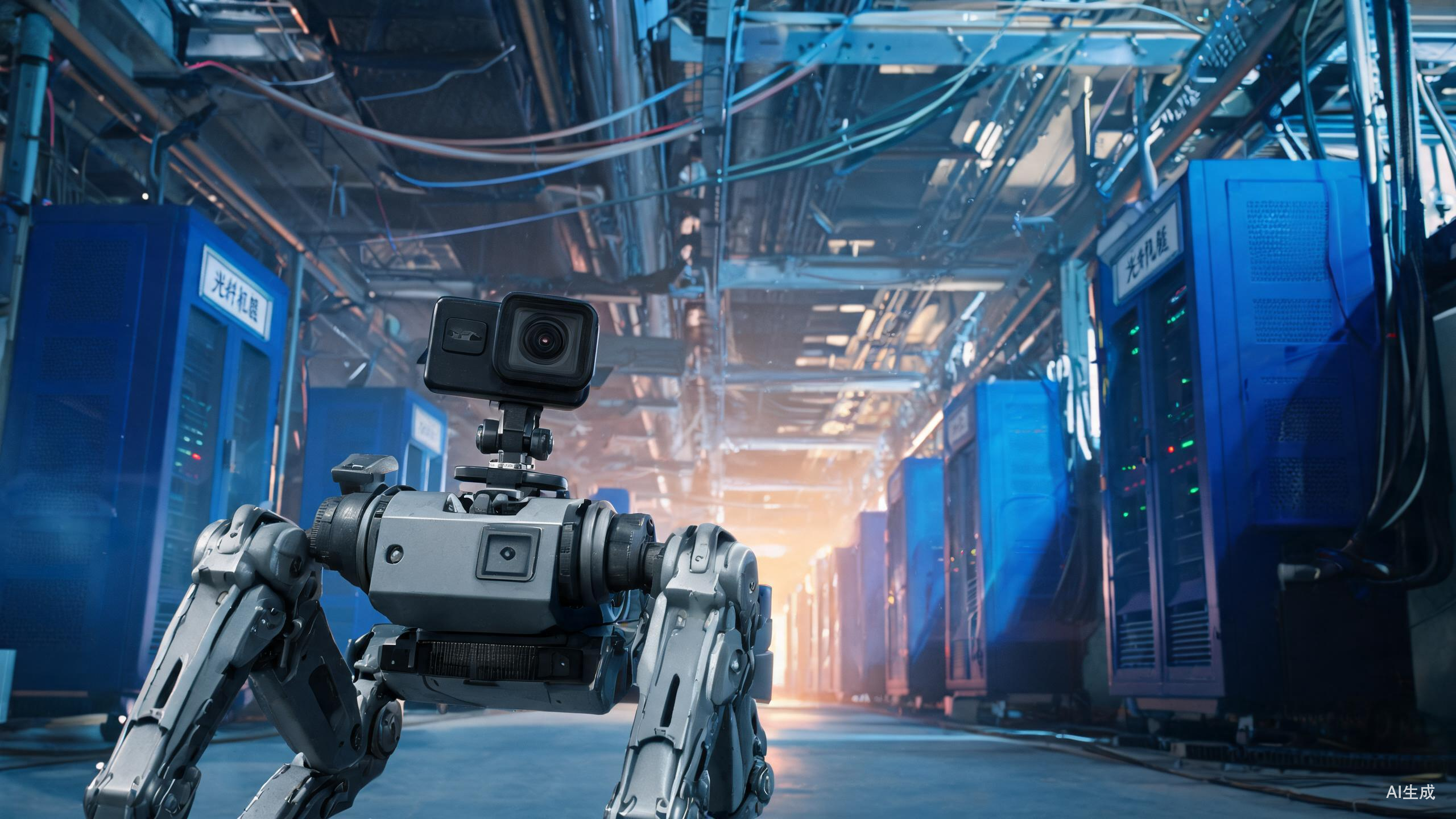
The deal extends GoPro's brand while rewriting its self-definition. The combined company plans to expand into AI data centers, government, defense, aerospace, and robotics markets. GoPro, which once helped users capture extreme sports, now wants to enter the vision of machines.
A "Lifeline" Deal
GoPro has opted to sell, initially as a financial self-rescue.
In the second quarter of 2026, GoPro generated revenue of $105 million, a 31% year-over-year decline; camera sales were approximately 291,000 units, a 38% year-over-year decline; and GAAP net loss widened to $51 million from $16 million in the same period last year. Compared to its quarterly revenue peak of $634 million in the fourth quarter of 2014, GoPro's current quarterly revenue has shrunk by more than 80%.
The smartphone continues to replace standalone cameras, and Chinese companies such as Insta360 and DJI are rapidly iterating in the action camera, panoramic camera, and handheld imaging device markets. Rising storage chip prices, tariffs, and procurement costs are further squeezing GoPro's profit margins.
In May 2026, GoPro initiated a strategic review, putting options such as a sale or merger on the table, while collaborating with consulting firm Oliver Wyman to explore the defense, aerospace, unmanned systems, and professional imaging markets. Several months later, Starman emerged as a potential acquirer.
The buyer's scale and reputation are far inferior to those of GoPro. Starman Holding is a private holding group with businesses spanning consumer electronics accessories, technology distribution, medical products, semiconductors, and real estate, and owns consumer electronics accessory brands such as Incase, Incipio, and Griffin.
The core asset behind the deal, Starman New Photonics, primarily manufactures high-speed optical modules for AI data centers. Its current product lineup includes 800G and 1.6T optical transceiver modules used to connect large-scale GPU clusters.
Starman also plans to invest $150 million in a high-speed optical module manufacturing project in New Jersey, USA, renovating approximately 100,000 square feet of factory space and creating 250 jobs. The project has been approved for a $37.5 million tax credit by the New Jersey Economic Development Authority.
GoPro contributes its brand, patents, imaging technology, and public listing platform, while Starman brings AI optical modules and a US-based manufacturing story. Together, the two aim to repackage these assets into an optics company spanning consumer electronics, AI infrastructure, and defense markets.
GoPro founder and CEO Nicholas Woodman said the combined company will be a US-based imaging and optics solutions company, entering the national security space related to cameras, optics and AI infrastructure.
For GoPro, the deal can pay off debt and repair its balance sheet; for Starman, it acquires a Nasdaq-listed company and more than 2,500 US patents. The $285 million purchase also includes GoPro's accumulated capabilities in miniaturized imaging, motion stabilization, video processing, and extreme environment shooting over the past 24 years.
From Recording to Understanding
The robotics business is the more imaginative part of this deal.
According to GoPro's announcement, the merged company plans to leverage its intellectual property as well as its optical and imaging capabilities to enter the defense, government, robotics, and aerospace markets. However, the two parties have not yet disclosed specific robotic products, customers, orders, or investment plans.
GoPro's technical accumulation indeed has a transferable foundation. Robots require smaller, lower-power visual devices that can withstand vibrations and complex environments, which intersects with the problems that action cameras have solved in the past. GoPro's experience in lenses, image processing, stabilization, video encoding and decoding, and cloud-based content management can also be applied to drones, quadruped robots, inspection equipment, and military unmanned systems.
However, there is still a technological divide between action cameras and robotic vision.
The mission of an action camera is to capture clear and stable images, whereas a robot needs to further determine the distance of objects, spatial structure, motion state, and action risks. It not only needs to record the environment but also convert images into data that can be understood by models and make decisions, and drive the machine to react within milliseconds.
This means that if GoPro truly wants to become the "eyes" of robots, it still needs to fill in the gaps in depth perception, multi-sensor fusion, edge reasoning, low-latency transmission, and compatibility with embodied large models. GoPro has a mature camera engineering foundation, but for now, it has not demonstrated a complete robot perception solution.
The high-speed optical module brought by Starman is also unable to directly solve the problem of robotic vision. The optical module is responsible for transmitting massive amounts of data within AI data centers, while the GoPro camera is responsible for image collection, with both being in different positions within the AI infrastructure. Whether the merged company can connect optical devices, imaging systems, data transmission, and AI algorithms remains to be seen.
GoPro is not entering a completely vacant market. The machine vision industry has already formed a supply chain consisting of depth cameras, lidar, binocular vision, tactile sensors, and edge computing. An increasing number of Chinese companies are integrating perception hardware with algorithms, data collection, and model training tools. GoPro's brand advantage accumulated in the consumer electronics market in the past may not be easily converted into procurement orders from industrial clients.
Thus, this merger is more like GoPro getting a ticket to enter the robotics vision market, and whether it can take a seat at the table depends on the product investment after the deal is completed.
From being the high-flying leader in action cameras to seeking a new owner for $285 million in cash, GoPro's fate reflects the cruel cycle of the consumer electronics industry. The camera market in users' hands is shrinking, while the camera market on machines has just begun to open up.
In the past, GoPro taught people to record the world in first-person perspective. Next, it hopes to enable machines to perceive the world in first-person perspective. The distance between the two is the gap from "seeing" to "understanding".