"Reversing the tide of history" has always been one of the most irresistible gameplay modes in historical simulators. On August 20, an interactive film game called "Shao Song: Return My Rivers and Mountains" went online on Steam, where players take on the role of Emperor Zhao Gou of the Song Dynasty, redeeming his historical reputation.
Shao Song: Rivers and Mountains is an interactive film game adapted from the online novel Shao Song by Yuwen Group's Starting Point author Liu Dan Pa Shui, produced by Interactive Star, which was recently invested in by Stephen Chow's Bijiao Group, with over 10 hours of real-life footage, and the original work ranking first in the historical category's dual list. After the game went online, the peak number of concurrent players on Steam once exceeded 12,000.
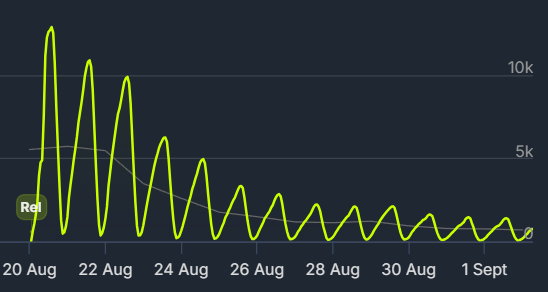
However, the number of players online has been declining daily, according to SteamDB.
Adding earlier entrants such as Bananatime and MangoTV, companies at each link in the film and television chain, from ticketing to production to broadcasting, have already taken games based on films and television shows as a confirmed new direction. The frequency of blockbuster hits is also increasing, with the results of "Sheng Shi Tian Xia Nv Di Pian" being clear to see.
It appears that 2026 will be a year of significant transformation and growth for China's interactive video game industry. Data from DataEye Research Institute also shows that the Chinese interactive video game market is expected to exceed 1.8 billion yuan in 2026, with a year-on-year growth rate of 20%, and the industry continues to expand.
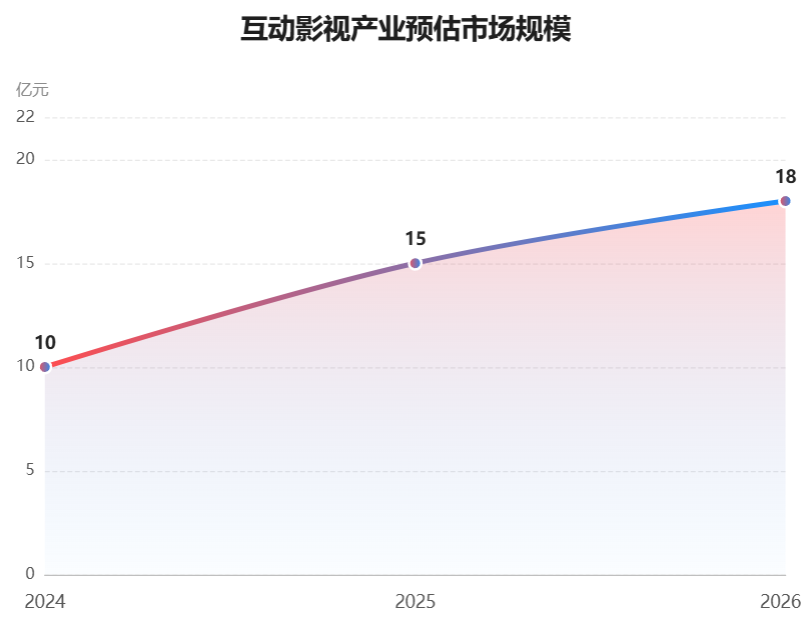
Data source: DataEye/Industrial Securities Media Weekly compilation
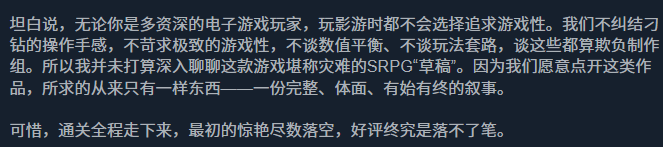
Different types of players roughly have their own selling points and prior expectations for graphics sources: Steam
Currently, most popular interactive film games are emotional consumption-type works. In the category of Chinese domestic themes that players can most easily identify with, the historical theme and strategic gameplay of "Shao Song" naturally cater more to players who enjoy hardcore narratives, with male players making up the majority. This shows that the subject matter of interactive film games is expanding from emotional consumption to hardcore narratives.
Controversy surrounding core gameplay
The core gameplay of "Shao Song: River and Mountain" is a three-layer structure of "real-life video + branching choices + chapter-based tactical battles". By selecting branches and watching the plot unfold, players can progress through the game, interspersed with QTE-style instant reactions, character affinity changes, and faction stance shifts. Key military plot points (such as the Night Crossing of the Huai River and the Battle of Xiacai) feature turn-based tactical battles, where players deploy generals, release skills, and capture cities on a grid-based map.
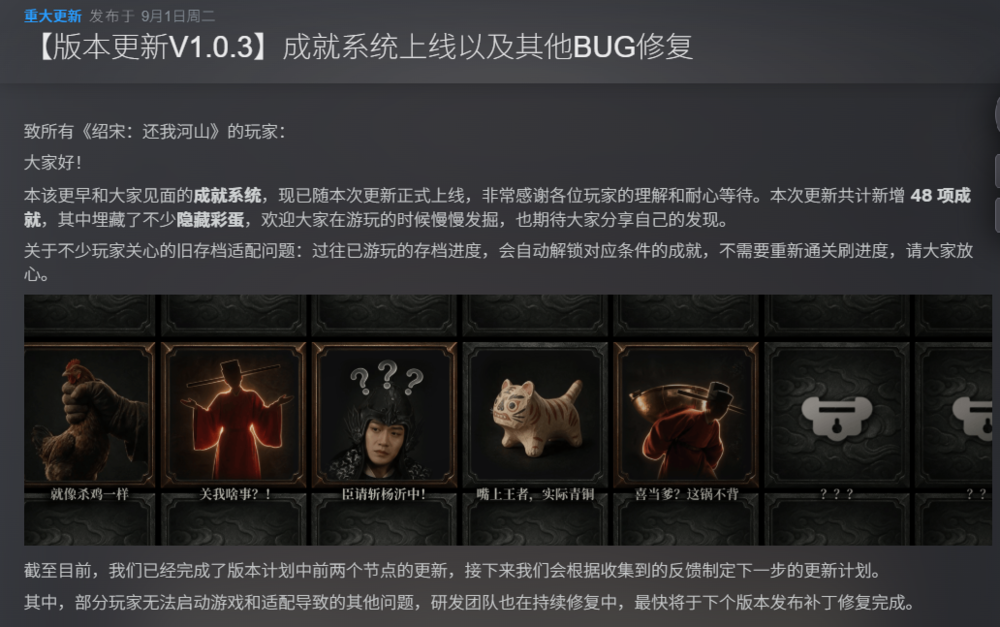
The official release of the game's third version update since its launch has been sourced from: Steam
In an official update on September 1, the production team made corrections to the most controversial strategy gameplay, adding a skill animation skip button that allows players to skip skill animation playback by clicking on the bottom right corner. As for the gameplay itself, each round of the strategy game now includes an additional chance to undo a move, reducing the difficulty of trial and error. It is rare for interactive games to make adjustments to their gameplay. Precisely because of this rarity, this adjustment has put the core issue of interactive games front and center: how to balance "gameplay" and "cinematic experience"?
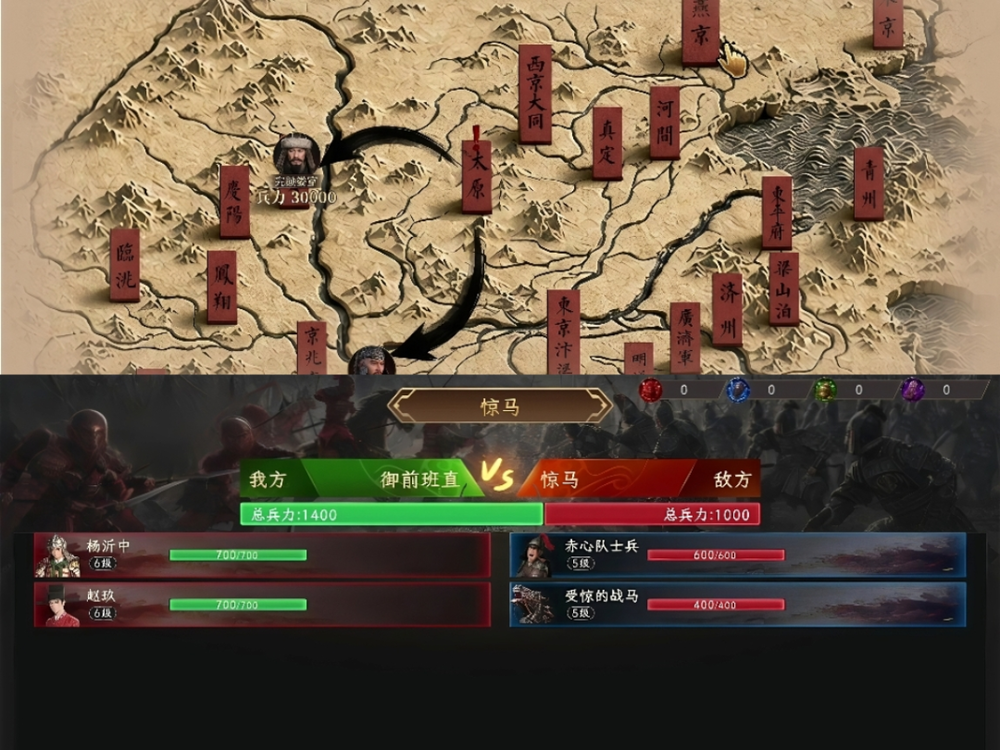
The tactical part's graphical style is somewhat like a mini-program game
The controversy surrounding the strategy game stems from the disconnect between media formats. The film and television portion of Shao Song is highly visual, with images completing the audience's imagination; in contrast, turn-based strategy games are essentially a type of miniature game that relies on players actively using their imagination to envision the brutality of the battlefield. When the production team handed over key plot points to the strategy game, the "branching choices" approach commonly used in film and games was replaced, resulting in insufficient immersion in battles and leaving players with a sense of disconnection, feeling like they are "only handling internal affairs." The more obvious disconnect comes from the art style: the strategy game's artistic texture is similar to that of mini-program games, and the character portraits in the cutscenes evoke memories of Chengguang Games, making the juxtaposition with the live-action film's visuals even more jarring, further amplifying the sense of disconnection.
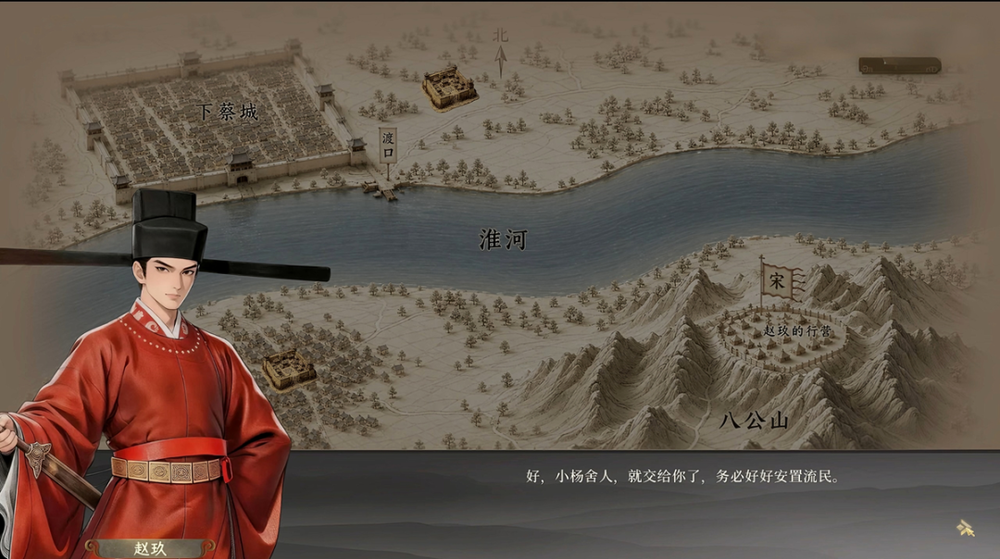
The film has four different visual styles (2D animation, tactical gameplay, live-action, and AI-generated)
Secondly, the war history genre itself amplifies the gap between expectations and reality. In works with war and strategy as their core background, "battles" are the focal point for niche players, who have clear expectations for the form, style, and quality of battles. There is a fundamental rule in the film and game industry: no matter how rich the gameplay is, it must be based on a solid storyline and feedback; once the foundation is shaken, the piled-up gameplay design will appear somewhat ridiculous. After stripping away the war strategy elements, the gameplay of "Shao Song" is left with only branch choices and some QTEs that do not affect the plot. This shows that the script is the product, and the film and game category does not have a moat of gameplay.
With an 80% positive review rate, aside from the original work, what else are people playing?
Shao Song initially received a wave of negative reviews after its release. Although it has seen some improvement in its reputation, new players continue to point out its major problems and weaknesses. Overall, Shao Song's adaptation of the original work has its strengths and weaknesses, both of which are quite apparent.
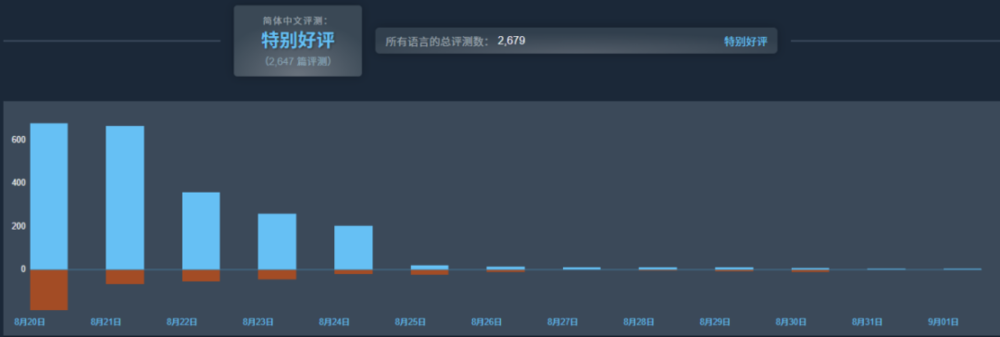
Like "The Simulator of the Chongzhen Emperor", 2,798 comments are mostly from the Simplified Chinese community, and there are also some long-tail insufficient image sources: Steam
Adapting a big IP involves translating an emotionally resonant core, already validated by the market, into the language of a new medium. Film and television-based games are one of the most IP-dependent categories, as they are content-driven, high-cost, and have low replay value. Without an IP, it would be necessary to educate the market from scratch, which is too unpredictable for interactive film and television games with production costs often in the hundreds of millions.

But touching a major intellectual property inevitably invites strict scrutiny from fans of the original work. Anyone who has read the novel knows that the appeal of *Shao Song* lies in its extremely rigorous, well-grounded body of knowledge and narrative craftsmanship. Even as alternate history, its setting, logic, and language are all meticulously constructed. When such a highly literary, mature work undergoes cross-media adaptation, some loss of texture is natural. And the more complete the original work, the narrower the design space becomes for the core of film and game adaptations—branching narrative. Multi-line expansion either gets accused of reckless alteration or degenerates into a reskinned retelling. This is one of the many controversies facing *Shao Song: Restore Our Rivers and Mountains*.
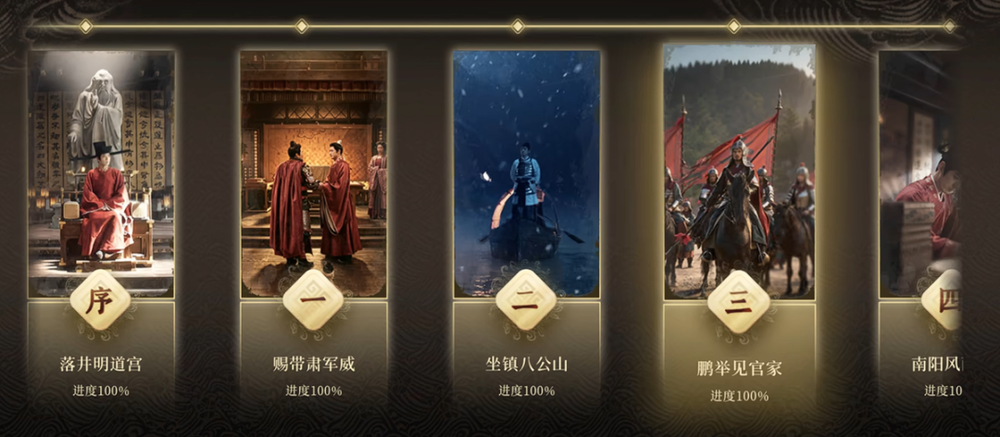
Each chapter can freely backtrack and choose a new branch, but some are "false branches"
However, the game doesn't require players to devise strategies from scratch or make crucial decisions, but rather allows them to enter a "performance" context with the actors, following a designed alternate storyline and experiencing a historical period through drama and light interaction. When ordinary people first encounter interactive video games, their most common comment is: isn't this just a PPT with choice buttons? But doing this kind of light interaction well has a higher threshold than it appears. The "pseudo-branching" and homogeneous endings of interactive video games are a hard injury that illustrates this point.
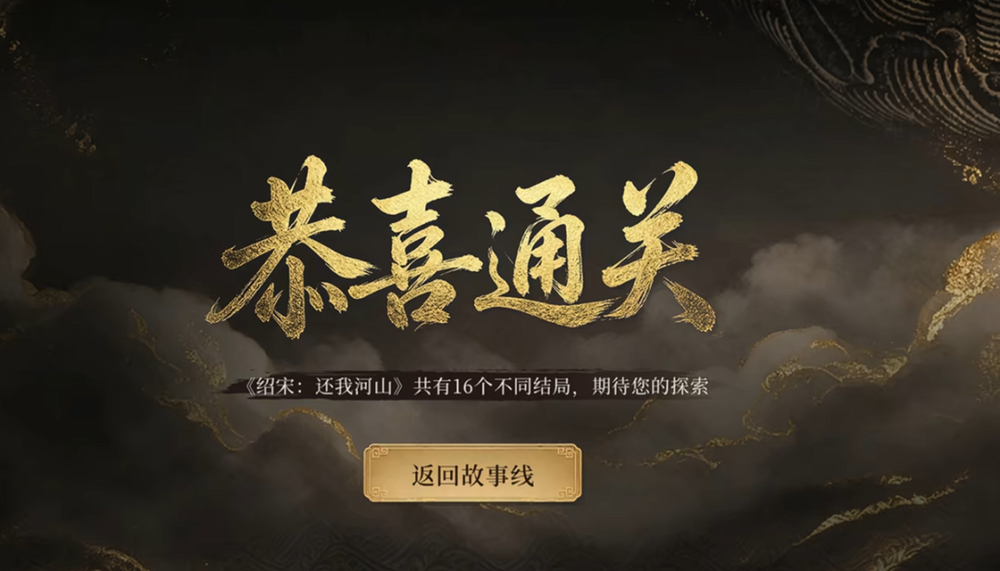
There are a total of 16 different endings
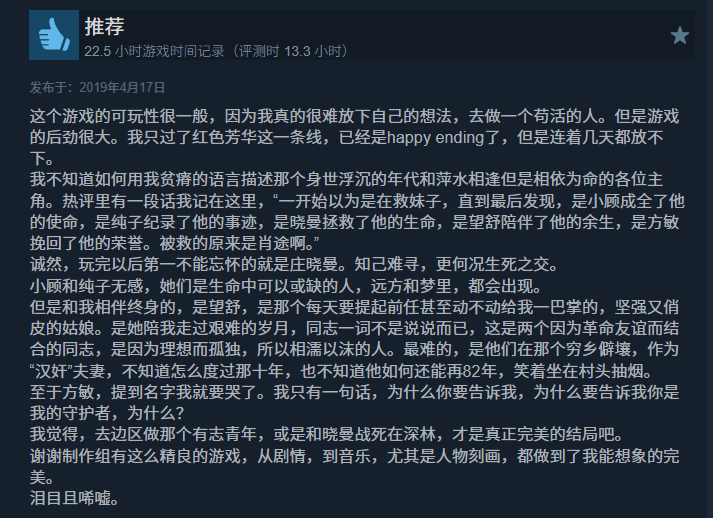
The game "Invisible Guardian" has a unique charm that doesn't lie in the complexity of its operations, but rather in the resonance of its narrative, as seen on Steam.
Based on player feedback, the first two or three chapters of "Shao Song: Return My Rivers and Mountains" have met the expectations of some non-original players in terms of thrilling moments, including recalling Li Gang, killing Liu Guangshi, crossing the Huai River at night to capture Cai City, and unconditionally reusing Yue Fei, among others. In these highlights, players successfully played the role of a "true Song Dynasty official" who is good at using people, decisive in killing, and clear-headed.
The Future of Interactive Entertainment in the AI Wave
The shift of interactive film games toward short-drama formats is most directly visible on the user side. In 2024, *Wan Dan* launched on Douyin's mini-program platform, and in 2026, *Shengshi Tianxia* completed a synchronized release across all four platforms. The latter's publisher noted that mini-program users skew heavily toward audiences of short dramas and short videos. On the regulatory front, the *Micro-Drama Development Management Measures*, effective September 1, explicitly names interactive film games, placing them under the same set of rules as short dramas.

Shao Song: Rivers and Mountains is expanding across film, gaming, and short drama categories
In terms of scale and production style, "Shao Song: Return My Rivers and Mountains" is essentially a short drama. AI's involvement in game and short-drama production appears to be an industry-wide norm — the short-drama sector releases 128,000 new titles per quarter, with AI-generated content accounting for over 95%. On the gaming side, AI-generated character art and AI voice acting have also quietly become widespread. Yet players of "Shao Song: Return My Rivers and Mountains" remain somewhat resistant to the AI involvement.
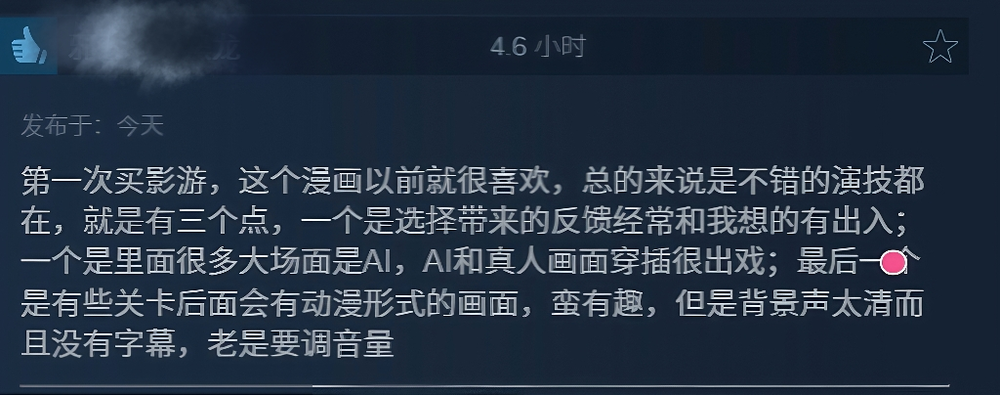
Praise for the game also can't help but mention AI, image source: Steam
Interactive movies, also known as FMV (Full Motion Video) games, have long been defined as a category that uses "live-action footage as a medium". It is precisely the two words "live-action" that have borne the greatest leverage for interactive movies to break through categories. The live-action format allows film and television audiences who do not normally play games to enter without any barriers, and for the cross-category genre of film and games, live-action has connected two user pools with the lowest learning cost.
The role of AI has become more subtle. One of the focal points of the negative Steam reviews for "Shao Song" is the AI-generated images and comic-style cutscenes inserted between live-action scenes, with some players stating that the use of AI to present large-scale war scenes is "really hard to accept," even if it's understandable due to cost constraints.
On the other end is "Min Guo Gui Shi", which emerged in the summer of 2026. The small team of four, with core members from NetEase and DiZhi Paper, features no real-life actors, with all visuals generated by AI, and incorporates a "二合解谜" puzzle-solving element into the Chinese supernatural genre, with its Steam wishlist exceeding 20,000 and receiving widespread positive feedback at the ChinaJoy trial play session.
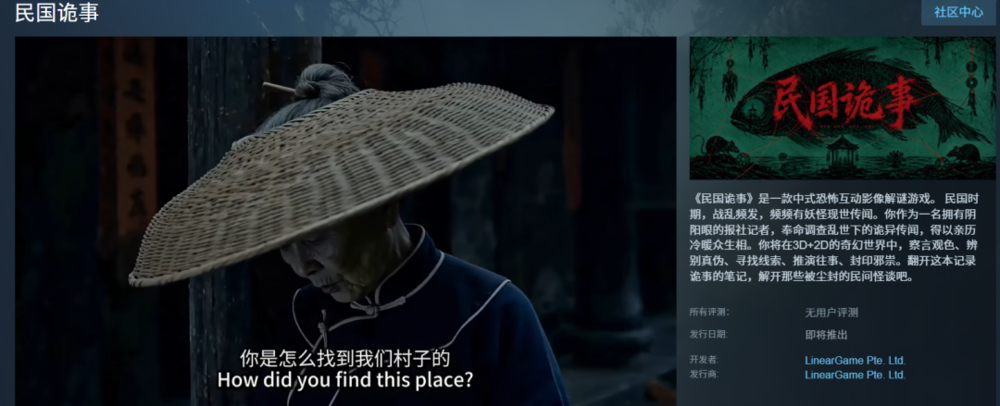
The "Chinese-style horror" has a high degree of natural compatibility with AI, source: Steam
This may suggest that what players truly care about is not the AI itself, but how it is used and where it is applied: "Shao Song: Return My Rivers and Mountains" is difficult because it tries to balance two things, with live-action scenes raising expectations to the level of a big-budget film, but large-scale battle scenes are replaced with AI and strategy elements, diluting the historical feel and impact of the grand scenes. However, when it comes to large-scale scenes, it is easy to get caught up in the trade-off between cost and production quality, which may remind industry professionals that when creating interactive video games with live-action elements, they should consider whether the cost can support the "high-quality live-action" core of the story.
In conclusion
Despite these issues, they do not prevent "Shao Song: Still I Rise" from becoming a noteworthy new product in the current film and game market. Interactive films and games have inherently inherited the genes of film and television, and have been empowered by game interaction, making them the best medium to arouse and carry players' emotions and perceptions. After polishing the story's depth, positive player feedback has almost doubled.
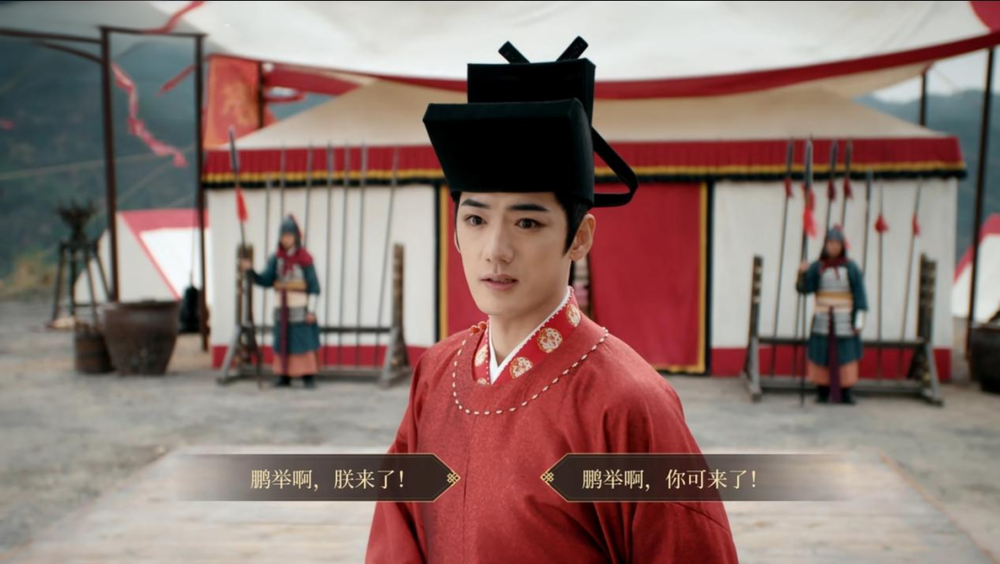
Even with numerous complaints about its shortcomings, many players who were moved to tears by the phrase "Peng Ju, I'm here" are not uncommon, and what everyone regrets is perhaps that it could have been even better, even "greater". We look forward to seeing more impressive new products emerge in the future gaming landscape.