
In "Moneyball", the real crisis for the Oakland Athletics wasn't losing a game, but rather the fact that their old winning formula had suddenly stopped working.
Star players are being bought away by wealthier teams, while teams with limited budgets, a fraction of the big clubs', still have scouts discussing who has a more elegant swing and who looks more like a star.
General Manager Billy Beane began to ask another question: if you can't afford the best players, what really determines wins and losses?
Then came Moneyball. Its purpose wasn't to figure out how to spend less, but to recalculate what was worth keeping once a growth model had run its course.
Keep also reassessed itself. Is it still worth opening Keepland? Are low-margin large equipment worth doing? How many people are needed for events?
Many things that people used to think "Keep" should have are being brought back to the table, only to disappear gradually.
This set of measures has taken effect. In 2025, Keep achieved its first annual adjusted profit since listing; by the first half of 2026, adjusted net profit was 5.88 million yuan, with net losses narrowing to 12.19 million yuan.
Just after the semi-annual report was released on August 24, another question arose. In the first half of 2026, Keep's revenue was 825 million yuan, up 0.4% year-over-year. In 2025, Keep's full-year revenue was 1.637 billion yuan, down 20.7% year-over-year.
Revenue has finally stopped declining noticeably, but it's not making any real progress forward either.
Wang Ning summarized at the performance meeting: "The revenue scale remains stable, but the core is getting stronger." He also defined the first half of 2026 as an adjustment period proactively chosen by Keep, acknowledging that "the current numbers do not look good."
The issue has also become clearer. What Keep has found is not a new growth curve, but a way to continue surviving without growth.
The Best Times Don't Require Such Calculations
If you've been using Keep for a long time, you might still remember what it looked like initially - it wasn't so complicated back then.
Want to lose weight but don't know where to start, open Keep; can't do squats, put your phone on the ground and practice along.
The most important capability is to simplify something that was originally quite troublesome.
Let's get started, and people will soon follow. In 2022, Keep's average monthly active users reached 36.39 million, with approximately 2.1 billion workouts completed throughout the year.
More than 30 million people have gathered on an app, and for an internet company, many bills can be paid later.
What Wang Ning wants is far more than just a fitness app. In 2018, after surpassing 100 million users, he explicitly stated in an interview that Keep aims to be a sports brand, with the app being "just the starting point"; if he had to name a reference, he mentioned Nike.
In his vision, Keepland corresponds to cities, while KeepKit smart hardware enters households, with clothing, content, social interactions, and user data collectively forming a complete sports ecosystem.
This almost explains why Keep later developed so many different products. Yoga mats, treadmills, fitness trackers, clothing, food, Keepland, events, live streaming, and an e-commerce platform were all gradually added under the same brand.
To get users to move from their mobile phones to the living room, gym, and more consumption scenarios, and then bring the data back to Keep. The logic is not complicated: since people are already here, we should do more business around them.
The problem is that users are leaving. The average monthly active users have dropped from 36.39 million in 2022 to 29.92 million in 2024, and then to 21.77 million in 2025, with a further decline to 18.58 million in the first half of 2026.
In four years, nearly half of its monthly active users have disappeared. The Keep that was constantly expanding outward eight years ago has started to retract.
At the 2025 performance meeting, Wang Ning summarized this change as "reducing fat and increasing muscle": proactively cutting low-margin businesses and reallocating resources to focus on membership subscriptions, fitness equipment, and apparel.
Keep's revenue in 2025 decreased by 20.7% year-over-year, but the company achieved its first annual adjusted profit since listing.
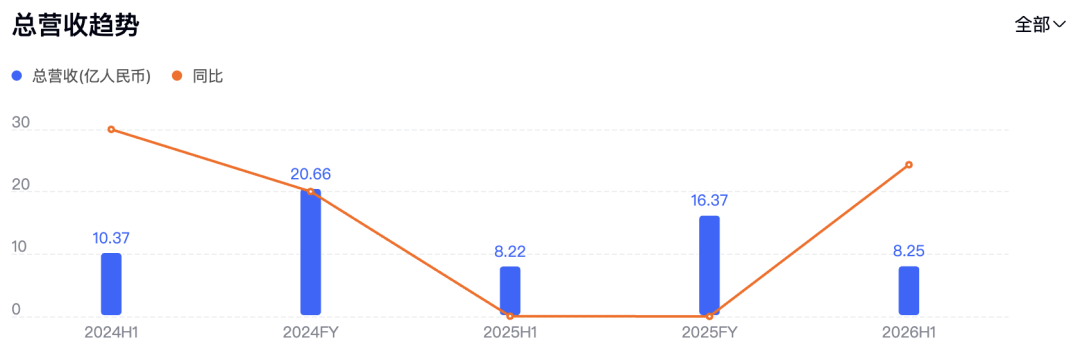
From "having everything" to re-examining "what's worth keeping", Wang Ning's business logic over the past eight years has almost come full circle, a transformation that has also taken place among users.
Regarding the continuous decline in MAU, Wang Ning explained that the user structure is evolving towards a "high-stickiness, high-frequency" healthy model.
The first-half earnings report did provide some evidence: average revenue per monthly active user increased from 6.1 yuan to 7.4 yuan, and average monthly exercise time grew 15.3% year-over-year. However, the paid user data did not support this narrative. During the same period, Keep's average monthly paid subscribers fell from 2.79 million to 2.17 million, a decline of over 20%; the membership penetration rate also decreased from 12.4% to 11.7%.
A decline in Monthly Active Users (MAU) can be attributed to actively filtering out users with low exercise motivation; however, when both the number of members and member penetration rate decline simultaneously, it becomes difficult to continue attributing this solely to "user purification".
What's being lost is not just disposable traffic, but also the accounts that were previously obscured by growth, which are now emerging one by one.
The company's full-time employees decreased from 827 at the end of 2024 to 632 in the middle of this year, with employee benefits expenses falling 22.7% year-over-year in the first half, administrative expenses dropping 32.3%, and research and development expenses declining 23.2%.
Cutting losses has indeed resulted in smaller losses, but there is a limit to cutting.
Internet Profit Margins Continue to Shrink
The business that is currently performing the best is sports products.
In the first half of this year, revenue from self-owned brand sports products reached 483 million yuan, accounting for 58.5% of total revenue, with a gross margin rising from 34.8% to 40.1%. The growth came from products such as yoga mats, dumbbells, kettlebells, pull-ups, and protein food, which are lighter, easier to turnover, and more suitable for content e-commerce.
Douyin's sales grew by over 50%, with a 34% increase in distribution channels; overseas revenue reached 22.1 million yuan, primarily through sales of sports equipment on Amazon and TikTok.
Keep is working to achieve something that has not been fully accomplished in the past: allowing brands to sell products independently of apps. A consumer can browse Douyin, come across a Keep resistance band, and place an order directly.
From the perspective of consumer brands, this is progress.
It can even be said that it has approached Wang Ning's 2018 concept in an unexpected way: the app is no longer the sole central hub of Keep, and the three characters "Keep" itself has begun to complete transactions as a brand.
But the problem lies precisely here.
In 2018, Wang Ning said that the app was just a starting point, and he didn't want to make a profit by selling treadmills through hardware price differences. In his plan, the true value of hardware and offline spaces lies in disseminating Keep's content, services, and social functions, and then bringing user data back in.
Eight years later, what's propping up Keep's revenue is first and foremost yoga mats, dumbbells, kettlebells, pull-ups and sports nutrition products.
This has created a rather ironic contrast: Wang Ning once wanted to use the internet to redefine a sports brand, and now Keep is indeed becoming more and more like a sports brand, just not necessarily the kind he originally envisioned.
The most intense scrutiny also comes from this. In the first half of the year, the gross profit of the sports products business increased by approximately 5.569 million yuan, but the gross profit of the online membership and paid content business, which has a higher gross margin, decreased by approximately 6.058 million yuan. The gross margin of the former was 40.1%, and the latter was 73.0%.
Compared to physical goods, online membership revenue does not require bearing the same scale of production, storage, and logistics costs; selling a device means incurring production, storage, logistics, platform commissions, and after-sales expenses. In the first half of the year, Keep's fulfillment expenses increased by 19.6%, and sales and marketing expenses also rose with the increase in product revenue.
What is happening now is not just "products rising, members falling". More accurately, high-margin internet revenue is shrinking, while lower-margin but easier-to-grow consumer goods revenue is making up for it.
The revenue scale has been temporarily stabilized, but the quality of revenue has changed.
The capital market reacted to this earlier than the financial report. In August 2023, Keep's stock price once reached HK$42.40, with a market value of approximately HK$22.2 billion; on August 24, 2026, the day the interim report was released, the stock price closed at HK$1.76, with a market value of less than HK$900 million.

AI Reconstruction: More Than Just a Membership Card
Wang Ning is pinning his next opportunity on AI.
In February 2025, he announced "All in AI" in an all-staff email. Several months later, Wang Ning gave this transformation a fairly aggressive scorecard: in July 2025, Keep AI's daily active users (DAU) were approximately 150,000 to 200,000, with AI revenue exceeding 1 million yuan; he predicted that by the end of the year, AI DAU could reach over 1 million, and the company also forecast that 2026 AI annual recurring revenue (ARR) could exceed 200 million yuan.
One year later, Keep has introduced Keepace.ai, App 9.0, AI courses, AI coaches, and super AI memberships. AI has begun to be applied in course generation, exercise Q&A, voice accompaniment, diet recognition, and data analysis of eating, exercising, and sleeping habits.
AI was first proven to help Keep continue to streamline its operations. In the first half of this year, Keep launched over 8,000 AI-generated courses, with daily Token consumption more than doubling compared to before the app's revamp.
Meanwhile, the company's research and development expenses continue to decline. Keep attributes this to the fact that its AI investments are more of a replacement rather than a straightforward increase in costs. In other words, AI has started to change the way Keep produces content and organizes its resources.
However, cost reduction is not the answer the market is waiting for.
Keep has already proven that AI can make course production cheaper, but it has yet to prove that AI can bring back more users, let alone that users are willing to pay more for it.
The current prices are 19 yuan for regular membership and 68 yuan for Super AI membership.
This means Keep has actually given users a very specific question: is AI worth paying an extra 49 yuan per month?
After the launch of the Super AI membership, public social media platforms have seen varied reviews regarding the AI's recognition accuracy, the personalization of its training plans, and its operational experience.
These feedbacks do not necessarily represent all Keep users, but they point to the most difficult layer of AI commercialization: users will not automatically increase their willingness to pay just because a product has an additional AI entry point.
Wang Ning's own timeline is also drawing near.
In March 2026, after Keep's first annual adjusted profit, Wang Ning set a goal for 2026 that was not just "continued adjustment". The company explicitly forecast that full-year revenue in 2026 would achieve double-digit growth, recovering to over 2 billion yuan. Half a year later, Keep's revenue was 825 million yuan, up 0.4% year-on-year.
At the mid-August performance meeting, Wang Ning began to prioritize more substantial growth for later. He acknowledged that the current numbers are not looking good, and the focus now is on continuing to solidify the model and product capabilities.
These two statements are more interesting when considered together than when viewed individually.
In March, the market heard that revenue would be restored to over 2 billion yuan in 2026. By August, the market was told that the company's products and AI capabilities would be further realized over the next few years.
Another notable aspect is another target left by Wang Ning: the AI ARR may exceed 200 million yuan in 2026. In this semi-annual report, Keep disclosed a large amount of AI usage, course numbers, and capability metrics, but did not separately disclose AI revenue, AI subscription numbers, or the current progress of ARR.
How many people are actually willing to pay for Keep's AI on a continuous basis.
Moneyball was ultimately successful, not because the Oakland Athletics reduced their payroll, but because Billy Beane found an undervalued yet truly winning variable in the market.
Wang Ning also found a set of effective variables for Keep: cutting inefficient businesses, downsizing the organization, refocusing on categories, increasing single-user revenue, and then using AI to reduce content and organizational costs. In 2025, the company achieved annual adjusted profitability for the first time.
However, they are solving the previous question: how to reduce losses and survive. The next question is growth.
This is also the biggest difference between Wang Ning today and Wang Ning in 2018.
At the time, Keep had over 100 million users, and he was thinking about how to turn an app into a sports brand like Nike, and how to get Keep into more people's living rooms, gyms, and lives; today, he is facing a much smaller and more efficient Keep, and is trying to use AI to regain growth.
Over the past eight years, Keepland has shrunk, with large equipment being reduced and the number of employees decreasing, while monthly active users have also been on a downward trend.
A company's Moneyball approach ultimately can't just be about making losses cheaper.
Next, Wang Ning needs to prove whether AI can simply make Keep more efficient or if it can help the company win again.