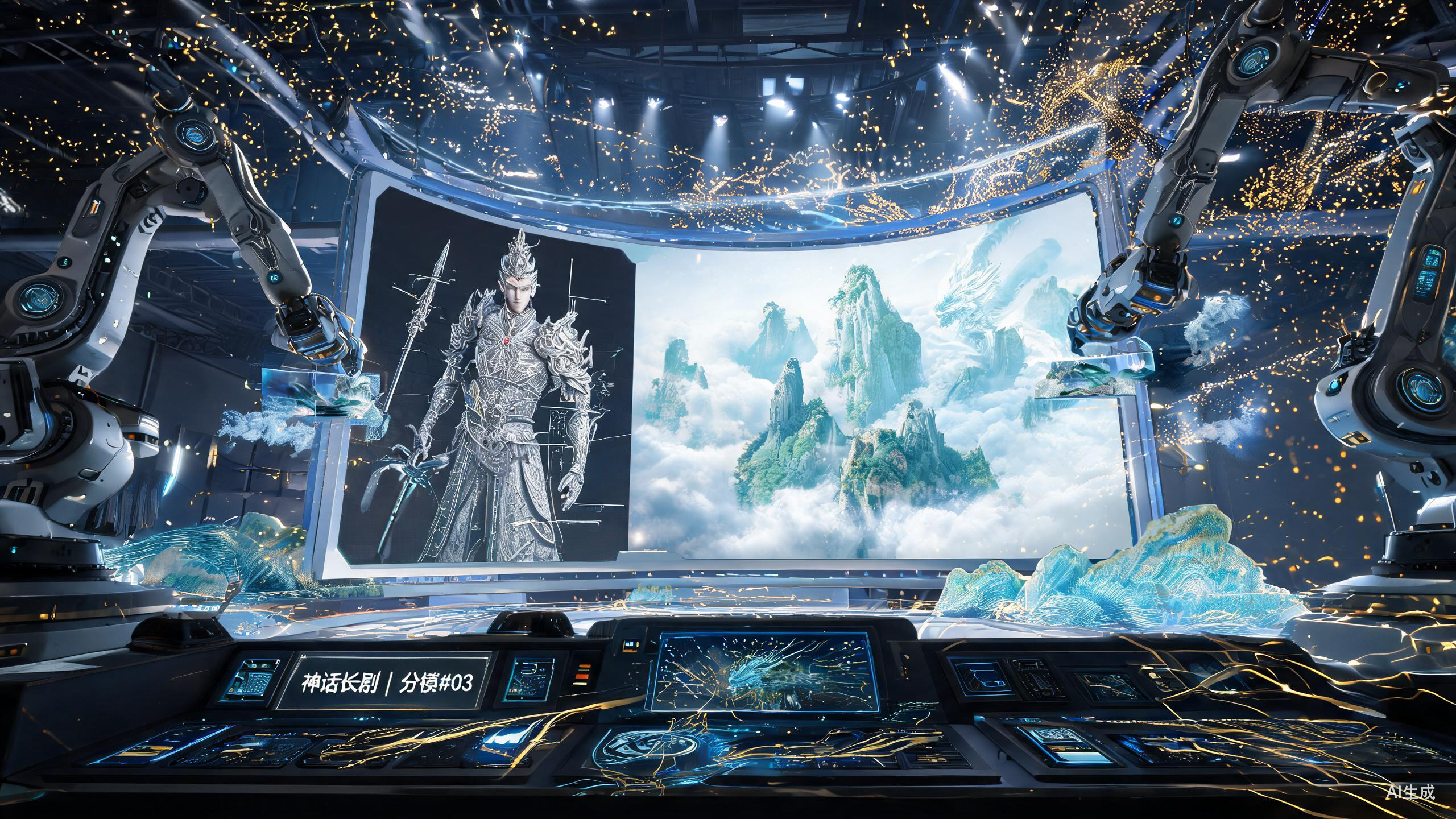
On August 31 at 6:00 PM, China's first AIGC long drama to be broadcast on satellite, "Journey to the West: After", went live on Mango TV, and at 8:00 PM, it premiered on Hunan Satellite TV's prime-time slot. On August 31 and September 1, Mango SuperMedia's stock rose by the daily limit of 20% for two consecutive trading days.
Prior to this, AI short dramas had been dominating the short drama track, almost overwhelming traditional productions. According to the DataEye-ADX "2026 First-Half AI Drama Data Report", in the first half of 2026, more than 221,900 new AI short dramas were released online. AI is gradually lowering the threshold for film and television production, and continuing to do so.
Once this door is opened, will it reveal a blue ocean or another brutal elimination contest?
Doubao's AI-Generated Animation Costs Less Than Traditional Methods
One in Ten
AI-generated content is attractive because it can help "save money".
In traditional film and television production, every stage, from art design and set construction to filming and post-production special effects, requires a large amount of manpower and financial investment. Especially for genres such as animation, science fiction, and fantasy, complex scenes and visual effects often mean high costs. However, AI is particularly well-suited for these genres.
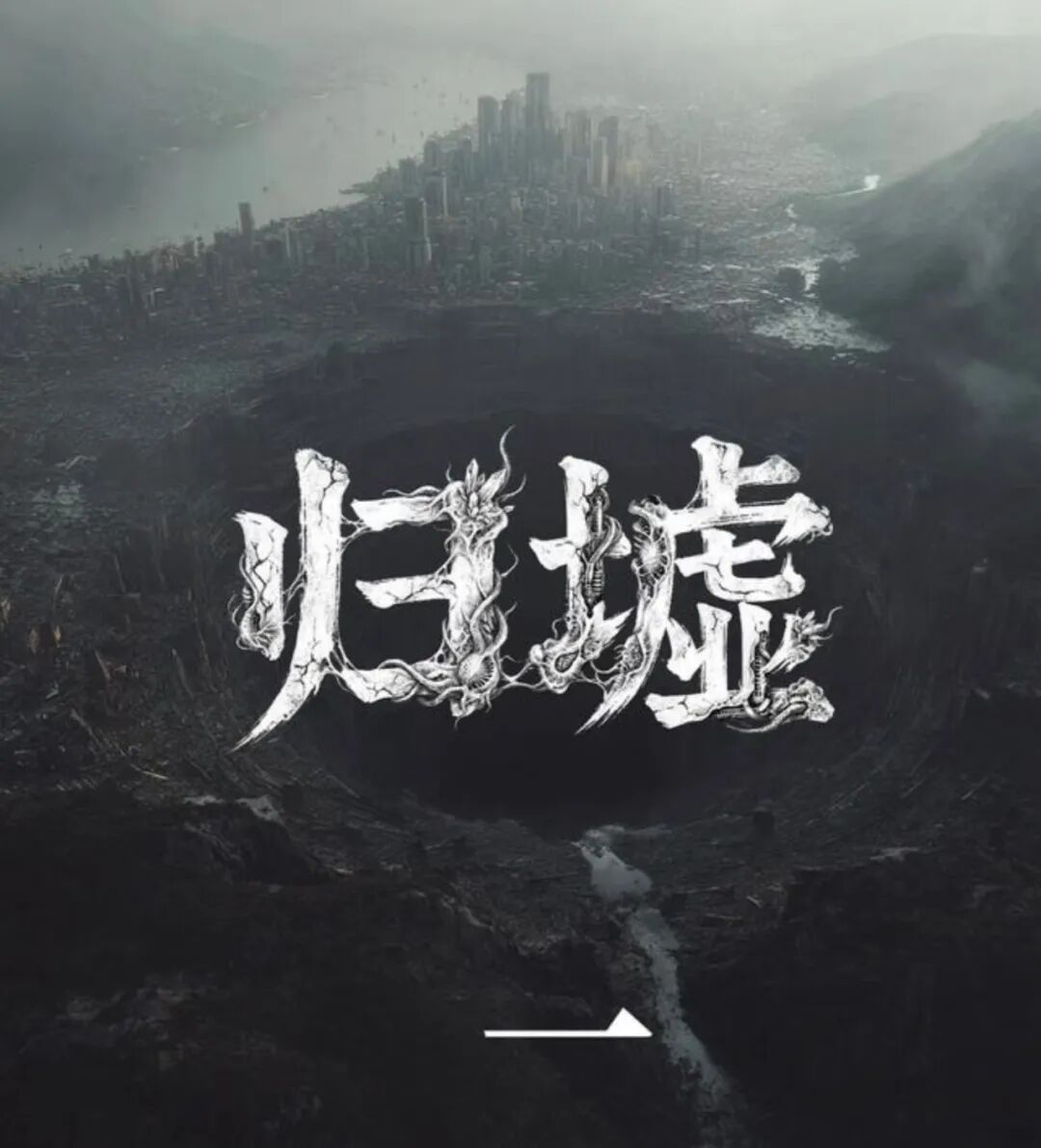
Shanghai resident Chen Yu (pseudonym) told IT Times that she was initially uninterested in AI-generated dramas, but after repeated recommendations from friends, she tried watching a few episodes of the popular short series "Gui Xu" and found that "AI is quite suitable for making disaster films."
"Riot in the Void" tells the story of a black rain carrying a special DNA virus that rewrites biological genes, causing the ecosystem to collapse step by step, from insects to animals to humans. "This scenario of mutant creatures running amok and cities collapsing, if shot in live-action, would have prohibitively high costs in terms of manpower, time, and money. AI, on the other hand, became the most suitable solution, at least more comfortable than watching a 50-cent special effect in a movie theater."
This logic also applies to long-form AI content.
The emergence of AI tools has given small teams and even individual creators the opportunity to enter the film and television production chain.
Shaanxi-based individual creator Xiao Lin, whose real name has not been disclosed, is not a professional in the film and television industry, and her production of AI-generated dramas is driven more by interest, with a current focus on short dramas. So far, she has completed three AI works, one of which is a foreign drama that has been released online. "The total cost for 50 episodes was around 15,000 to 20,000 yuan, and it took two months to complete," Xiao Lin told IT Times reporters, adding that each episode, which is approximately 150 seconds long, costs less than 400 yuan to produce. Such an investment is almost unimaginable in traditional film and television production.
"Even outsiders can enter this industry," Xiao Lin told IT Times reporters, adding that his work was also selected for the "Dimensional Folding" micro-short film creation program at the Shanghai International Film Festival this year and has already achieved profitability.
However, Kobayashi believes that although the technical and cost barriers have been lowered, there is still a huge gap between being able to use tools and actually producing recognizable works. Whether or not one can produce "recognizable and excellent works" depends not on computational power, but on aesthetics, sense of rhythm, and narrative ability - these "soft strengths" that AI cannot replace.
Additionally, scene complexity is the biggest variable for long dramas. "Scenes with a large amount of information are the most difficult to produce, with many details and grand scenes being particularly time-consuming," said Kobayashi. Simulated human drama episodes pose an even greater challenge, as large models have many limitations when it comes to generating human faces, resulting in significantly higher time costs and overall costs that exceed those of ordinary AI dramas. The total cost of a high-quality AI simulated human short drama is controlled within 200,000 yuan, while the cost of a high-end real-person short drama ranges from 1.5 million to 3 million yuan.
From Personal Experiments to Platform Expansion
From Xiao Lin's 150-second "handmade" short dramas to Li Dongshun's team's 40-minute "Journey to the West", in 2026, AI is accelerating its entry into the film and television industry, and the capital market is welcoming this trend, as evident from Mango Supermedia's two consecutive days of price limits.
Because it may have resolved a long-standing core contradiction in the long-form video industry: high content costs have led to prolonged losses for platforms.
The competition among long-form video platforms is essentially a high-input content war. An S+ level project often requires top-notch actors, a large production team, high-cost scenes, and significant post-production investment, and if the ratings are not good, it may result in a total loss. The emergence of AI means that production costs can be significantly reduced, thereby directly translating into increased platform profits, and the space for trial and error is also greatly increased.
For video platforms, the value of AI lies not just in "cost savings," but more importantly, in changing the content production process.
In the past, a long drama would go through a lengthy cycle from script development, filming, and production to post-release distribution. With the introduction of AI, character settings can be consolidated into digital assets, scenes can be quickly generated, and some production processes can be advanced in parallel.
Original characters' faces are considered "assets," and aside from that, scenarios, props, and scripts can also be viewed as AI assets. "If you have a good script, it's almost equivalent to succeeding halfway," said Kobayashi.
Mango SuperMedia Chairman Cai Huaijun also revealed in an interview that the "Mango Lingchuang" platform has accumulated 109 role assets and 143 scene assets, which can be repeatedly called upon in subsequent development, with marginal costs continuously decreasing. This is the first time the company has publicly disclosed the cost structure of AIGC long dramas, also confirming the industry's general judgment that "AI-made dramas are more cost-effective".
For long-video platforms that have been losing money and seeing their stock prices slump, this "AI booster shot" appears to be effective, at least for now.
Video Models Start to See Discounts
However, behind the differing production costs for various types of AI-generated dramas lies a vast disparity in AI computing power consumption.
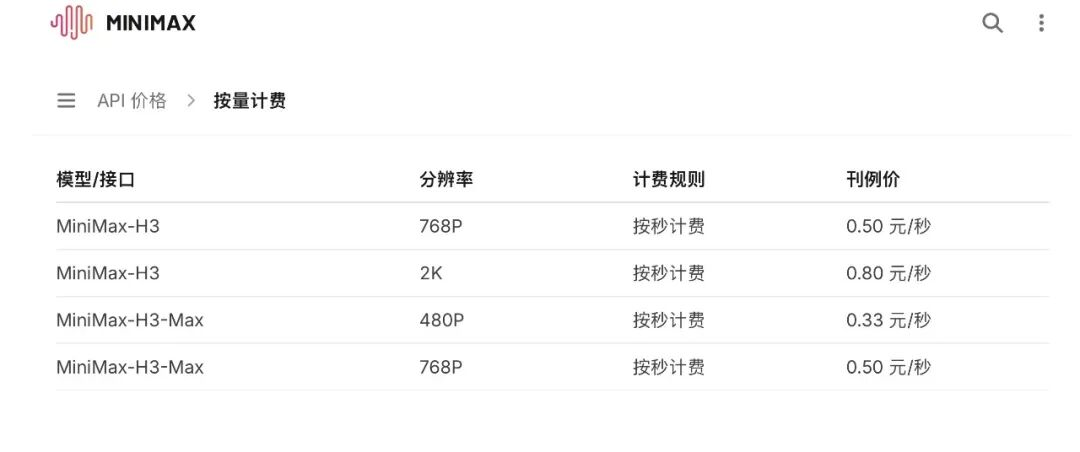
Xiaoling has used almost all mainstream large models on the market. For video generation, ByteDance's Seedance remains her go-to choice, "with its outstanding performance in semantic understanding and smooth motion." Recently, she has become enamored with MiniMax H3, "because it's cheap." According to official information released by MiniMax, the price of 2K video generation for H3 is 0.8 yuan per second, approximately one-third that of comparable flagship models.
"Seedance has recently been offering discounts," Kobayashi added. Perhaps feeling the pressure of competition from latecomers, leading model service providers have begun to lower their prices in order to compete for users.
From August 7 to September 7, Volcano Engine is offering limited-time discounts for SeeDance 2.0 mini and fast versions. The mini version is priced at 40% of the standard rate, with a minimum of around 0.2 yuan per second at 720P resolution; the fast version is priced at 75% of the standard rate, with a minimum of around 0.6 yuan per second. However, the standard version 2.0 and professional version 2.5 are not participating in this promotion and remain at higher prices.
"I think it's best if one platform doesn't dominate the market," said Kobayashi. This is not only a simple expectation of ordinary creators for the market competition landscape, but also resonates with the deep-seated anxiety of many creators about the AI generation tool ecosystem. When tools are monopolized, pricing power and rules no longer belong to creators.
According to industry media reports, around 90% of AI short video companies are still losing money, with platform commissions continuing to decline, while the broadcast of "Journey to the West" on Hunan Satellite TV's prime-time slot may signal that the public's curiosity about AI long-form content is turning into consumption intent.
While some live-action dramas are being criticized for "watered-down scripts, poor acting, and sloppy special effects," AI-generated dramas may be seizing an opportunity to fill the gap and gain visibility through their "crude yet charming" approach.
Typesetting / Ji Jiaying
Source: IT Times public account vittimes