Recently, a claim has been circulating online that "women should never exercise on an empty stomach, as it can be very harmful to their health".
Clicking in, the explanation exudes an air of scientific rigor: the female endocrine system is sensitive, and fasted exercise raises cortisol while lowering sex hormones, leading to abdominal fat accumulation, metabolic decline, and irregular menstruation. Then come a few cited papers, a curve chart, and some English abbreviations—very convincing at first glance.

Image: Screenshot of Xiaohongshu
However, the fact that something appears to be scientific and has literature to support it does not necessarily mean it is true.
In July this year, researchers from New Zealand and the UK published a review in the Proceedings of the Nutrition Society, examining several popular female exercise and diet tips on social media, including the notion that women cannot exercise on an empty stomach. After systematic comparison and evaluation, the authors concluded that these recommendations all lacked strong scientific evidence.
Women's sports already face more challenges and should not be further hindered by rumors.
Before reading on, take a look at this section
The views expressed in this article are based on the results of sports nutrition research and are mainly applicable to healthy adult women who engage in regular exercise.
If you are a minor, pregnant, breastfeeding, or have physical conditions such as endocrine disorders, or mental and psychological conditions such as eating disorders, or if you have specific exercise goals, needs, or preferences, please arrange your exercise and diet according to your individual situation and consult a doctor if necessary.
Rumor 1
All women should not exercise on an empty stomach
This rumor claims that women's neuroendocrine and reproductive systems are sensitive, and exercising on an empty stomach can increase cortisol levels and decrease sex hormone levels, leading to menstrual disorders, abdominal fat accumulation, poor metabolism, and muscle loss.
Let's follow this review and take a look at these impacts one by one to see if they really exist.
Cortisol levels will rise, but it may not be a bad thing
Research has indeed confirmed that exercise can temporarily raise cortisol levels, but this is usually a good thing, as cortisol can increase energy supply during exercise and promote muscle recovery afterwards. It is only when cortisol levels remain elevated over the long term that negative effects occur.
Regarding exercise on an empty stomach, a 2009 study compared the reactions of 8 men and 8 women to 2 hours of cycling, finding that salivary cortisol levels increased significantly after exercise, but the increase was not significantly different between the fasting and post-meal states, and there was no difference between genders. This means that, relative to men, women's cortisol levels did not increase more after exercise; and relative to post-meal exercise, fasting did not cause cortisol to increase more.
Therefore, the conclusion that "exercising on an empty stomach will cause women's cortisol levels to be too high and harm their physical health" is not supported by current research results.
However, for individuals with chronic insufficient energy intake, Cushing's syndrome, or other conditions that affect cortisol levels, cortisol is already chronically elevated, and fasting exercise may have different effects on these populations.
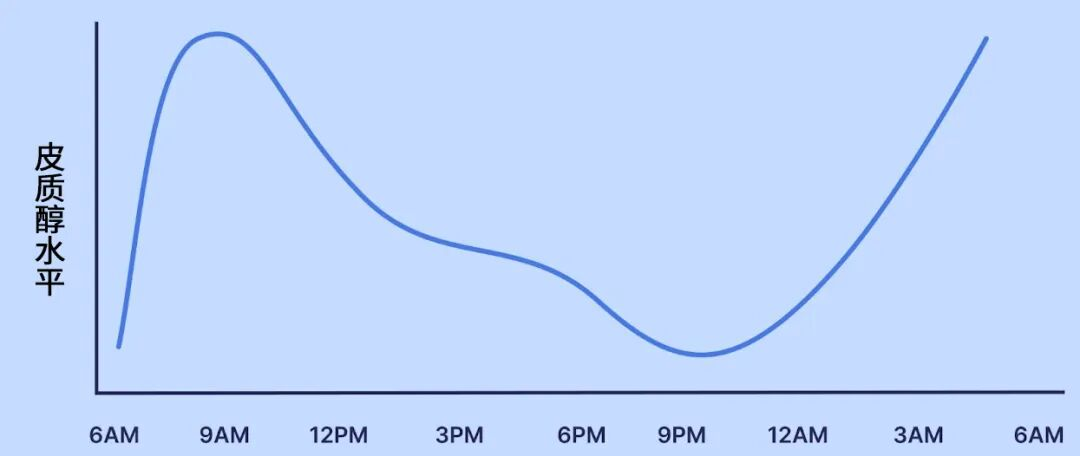
In a normal person, cortisol levels are typically higher in the morning and lower at night, and may increase during exercise but generally remain within the normal physiological range, before naturally falling back.|allarahealth
Menstrual disorders are not caused by skipping one meal, but by not eating enough throughout the day.
Proponents of the claim that women should not exercise on an empty stomach often cite research that kisspeptin affects reproductive function and is sensitive to energy availability. In rodent studies, fasting for 3 days has been shown to decrease kisspeptin levels in females, weaken luteinizing hormone secretion, and alter the estrous cycle.
Human trials have also shown that women's reproductive and neuroendocrine systems are more susceptible to the impact of insufficient energy than men's.
However, note that the key phrase is "prolonged energy deficiency," referring to the imbalance caused by eating too little and exercising too much over multiple consecutive days, rather than fasting exercise itself. Some women who claim that fasting exercise has stopped their menstruation often simultaneously follow a diet and do not just skip the pre-workout meal, but eat insufficiently throughout the day.
Currently, there is no research measuring the kisspeptin levels in healthy women with sufficient energy after fasting exercise, nor is there any research confirming that fasting exercise damages the reproductive and neuroendocrine functions of women. Therefore, the conclusion that "fasting exercise is harmful to healthy women with reasonable diets" is also unfounded.


Menstrual disorders may be caused by insufficient daily diet and excessive exercise|Little Red Book @Bobo Nai Lv/YiYi Ma Mi
Visceral fat, instead of accumulating, has decreased
Proponents of the claim that "exercising on an empty stomach increases abdominal fat accumulation" often cite a mouse study that found increased liver fat in female mice during fasting. However, this study examined the effects of 9 months of alternate-day fasting and did not compare the impact of exercising on an empty stomach versus after eating on fat metabolism, and the results of mouse studies cannot be directly applied to humans.
In human trials, a 2026 study comparing the metabolism of 24 men and 25 women after overnight fasting found no significant difference in carbohydrate and fat oxidation between men and women when cycling at the same ventilatory threshold, an indicator of exercise intensity.
Additionally, research has made direct comparisons of the impact of fasting and post-meal exercise on body composition. The results found that after 18 sessions of high-intensity interval training over 6 weeks, 16 overweight or obese women saw reductions in fat percentages in their abdomens, legs, and overall bodies, as well as increases in lean body mass in their legs and buttocks - and these changes were unrelated to whether they exercised on an empty stomach or after a meal.
In another study, 16 women of normal weight saw decreases in both weight and fat after four weeks of aerobic exercise and diet control, with no difference between the groups that exercised on an empty stomach and those that exercised after a meal.
Of course, these studies have limitations in terms of small sample sizes and narrow population scope. That said, no research to date has confirmed gender differences in markers such as carbohydrates, insulin, or fat during fasted exercise, nor have any studies found differences in women between exercising in a fasted versus fed state.
As for "losing muscle", the actual situation is that if you do resistance training on an empty stomach, not only will you not lose muscle, but the rate of muscle growth may not be inferior to training after a meal.
In 2025, a study had 22 women undergo 12 weeks of resistance training, finding no significant difference between fasting and fed states, with increases in muscle volume, strength, and power after training.
There is also research supporting that in terms of "metabolism", there is no difference in the impact of resistance training on body composition and resting energy expenditure, whether done on an empty stomach or after a meal.
In brief,
There is currently no sufficient evidence to prove that healthy women will be significantly adversely affected by exercising on an empty stomach when they have sufficient energy throughout the day.
For most healthy women, fasting exercise is safe as long as daily diet and exercise intensity and duration are well-controlled.
As for whether exercising on an empty stomach or after a meal is better, there is no standard answer, as it depends on your exercise goals, daily energy needs, and personal feelings.
Additionally, regardless of whether you are a woman or a man, consider the following before exercising on an empty stomach:
It is recommended that individuals with diabetes, thyroid disease, Cushing's syndrome, gastrointestinal disease, cardiovascular and cerebrovascular disease, eating disorders, a history of hypoglycemia, or those who are pregnant or breastfeeding consult a doctor before use.
If the goal is to improve athletic performance, training on an empty stomach is generally not recommended.
For those who have a habit of exercising, want to exercise immediately after waking up in the morning, and experience bloating, stomach pain, or nausea after eating and exercising, consider trying exercising on an empty stomach.
When exercising on an empty stomach, it is necessary to ensure sufficient energy intake throughout the day, especially carbohydrate intake the night before.
When first starting fasting exercise, strictly control the intensity, duration, and frequency at low levels (significantly lower than the usual amount and intensity of post-meal exercise), carry emergency food with you, and eat in a timely manner after exercise.
Rumor 2
Women are more prone to dehydration than men
The second rumor claims that women's hormone levels fluctuate with their menstrual cycle, and during certain phases, their core body temperature, weight, and sweating in response to exercise change, making them more prone to dehydration than men.
Water content in the body fluctuates with the menstrual cycle, but the response to exercise remains unchanged.
In a 2025 study, 11 women with regular menstrual cycles were tested during the early follicular phase and mid-luteal phase, respectively. Results showed that core temperature, estradiol, progesterone, and aldosterone levels were higher during the mid-luteal phase, with a slight increase in body weight as well. However, in a 180-minute high-temperature walking test, there were no significant differences in fatigue level, sweat rate, urine output, hematocrit, or dehydration indicators.
Another study compared responses to exercise during three periods of the menstrual cycle and also found no differences in fluid intake, urine output, sweat rate, or changes in body weight.
Although current research evidence is limited, existing results indicate that while water levels in women's bodies fluctuate with the menstrual cycle, their response to exercise does not change significantly.
The percentage of water in women's bodies is lower than that in men's.
It's often said that "women are made of water," but on average, the proportion of body weight accounted for by water is lower in women than in men, due to women having less muscle mass and a higher body fat percentage.
Additionally, due to women's generally smaller average body weight and lower total body fluid, when they sweat 500 milliliters, the proportion of sweat to total body fluid is higher than that of men, making women more prone to dehydration from this perspective.
The question is, if people exercise with the same intensity and training status, does the gender difference in sweating still exist, and current research has not provided an answer.
At the other end of dehydration is overhydration, which can cause exercise-related hyponatremia, also potentially life-threatening. In 2005, a study that conducted blood tests on 488 Boston Marathon finishers found that 13% had hyponatremia, with a higher incidence in women than men, but the difference between the sexes disappeared after adjusting for factors such as body mass index and finishing time.
Regarding the supplementation of water and electrolytes, there is currently no strong evidence to support that women require a different approach than men.
Moreover, there is no standard supplement amount for either women or men, as the amount of sweat and electrolyte quality in sweat can vary by more than 10 times from person to person.
Replenishment is needed during exercise based on individual sweating, weather conditions, and exercise duration. To replenish more accurately, one must conduct multiple measurements themselves to calculate the required replenishment amount for the next exercise.
Rumor 3
It is necessary to consume protein within 30 minutes after exercise
This is probably the most widespread rumor in the gym. Indeed, adequate protein intake is beneficial for maintaining health and can also promote muscle repair after exercise and reduce muscle loss when energy is insufficient.
However, there are rumors that women's metabolism differs from men's, and the window for consuming protein after exercise is shorter, requiring protein intake within 30 minutes.
In terms of resistance exercise-induced muscle protein synthesis, most existing research has indeed focused on male subjects, but some studies have included females, and these found no significant gender differences.
Regarding the anabolic window, a 2019 study divided 43 women into two groups, one of which received carbohydrate and protein supplements before and after training, while the other did not. After 5 weeks of resistance training, there was no significant difference in body composition or lower limb muscle strength between the two groups of women.
Another 2025 study took a more granular approach. Thirty-six women completed eight sets of lower-body resistance training. Researchers found that compared with a placebo group, those who consumed 20 grams of protein showed elevated levels of essential amino acids in the blood—yet their post-exercise muscle protein synthesis rate showed no significant change. In other words, the raw materials for building muscle were delivered, but the factory didn't clock in for overtime.
According to current research, there is no significant difference between women and men in the "protein window" following resistance exercise. Moreover, for both sexes, the most effective dietary approach for muscle growth is consuming adequate protein throughout the day and distributing it evenly, rather than focusing narrowly on the half-hour after a workout.
For ordinary people, instead of hastily drinking protein powder or looking for something to eat after exercising, it's better to carefully calculate: how many grams of protein do they need in total every day, and whether they are getting enough and eating it evenly.
Additionally, as a general rule, it is not advisable to consume foods high in protein, fat, or fiber before exercise, as they offer no significant benefit to performance and may cause gastrointestinal discomfort.
Insufficient research on women
But rumors shouldn't fill the void.
All of the above rumors cannot withstand scrutiny. Compared to the rumors themselves, what is more worth exploring is why there are so many rumors in the field of women's health and fitness.
Insufficient scientific evidence is a major reason, and the lack of evidence reflects a broader issue - compared to men, there is a relative lack of research on women's health in the field of exercise, and many studies are not rigorous enough, such as not determining the phase of the menstrual cycle through hormone testing, and not distinguishing between women with natural cycles, those using birth control, and those using intrauterine devices.
Gaps in evidence are easily filled by half-truths and misleading content—so long as it's eye-catching enough, rumors will spread like wildfire on social media. Meanwhile, insufficient evidence leaves even professionals struggling to push back or offer accurate guidance.
In the face of such confusion, it's better to ignore all the advice on social media and focus on the physical activity and dietary guidelines set by the national health and sports departments, as well as the personalized advice given by doctors.
Differences between individuals can transcend gender.
What suits oneself is the best
"Women are not small men," and this statement holds true, particularly in the realm of sports nutrition and health, where women have numerous differences from men.
However, the differences between individuals can sometimes transcend gender, and the differences between two women can be greater than those between women and men.
Moreover, many times the differences do not stem from gender itself, but from factors such as low body weight, minimal muscle mass, or insufficient exercise. It just so happens that women are more likely to possess these characteristics, and as a result, are often lumped together as a single group and subject to rumors that deem them unsuitable for certain sports or diets.
In reality, these methods may help some women maintain good health habits, but may not be suitable for some men.
The best approach is the one that fits you. Start by clarifying your fitness goals, health status, exercise needs, and preferences one by one. Then, with safety as the priority, experiment, observe, and adjust. In time, you'll find the optimal solution that works for you.
References
Researchers Fraile-Martínez, Liviu Boaru, de Castro-Martínez, Ortega, and García-Montero published a narrative review in the journal Nutrients, volume 18, issue 10, with the publication number 1502, in 2026, examining sex-specific responses to intermittent fasting across physiological, clinical, and psychosocial contexts.
Astorino, T. A., MacDonald, A. J., Anderson, A., et al. No sex differences in fat oxidation in response to exercise prescribed according to maximal heart rate or ventilatory threshold. European Journal of Applied Physiology 126, 1645–1656 (2026).
Researchers from various institutions, including Boot N, Hermans WJ, Kuin LM, Malowany JM, Hendriks FK, Warnke I, Senden JM, Overman A, Goessens JP, Zorenc A, Kornips E, Verdijk LB, and van Loon LJ, conducted a study published in the Journal of Nutrition in December 2025. The study found that consuming 20 grams of whey or canola protein does not further increase muscle protein synthesis rates during recovery from resistance exercise in healthy, young females, as reported in the journal's December 2025 issue, volume 155, issue 12, pages 4123-4135.
Matsuzaki T, Iwasa T, Kinouchi R, Yoshida S, Murakami M, Gereltsetseg G, Yamamoto S, Kuwahara A, Yasui T, Irahara M. Fasting reduces the kiss1 mRNA levels in the caudal hypothalamus of gonadally intact adult female rats. Endocr J. 2011;58(11):1003-12.