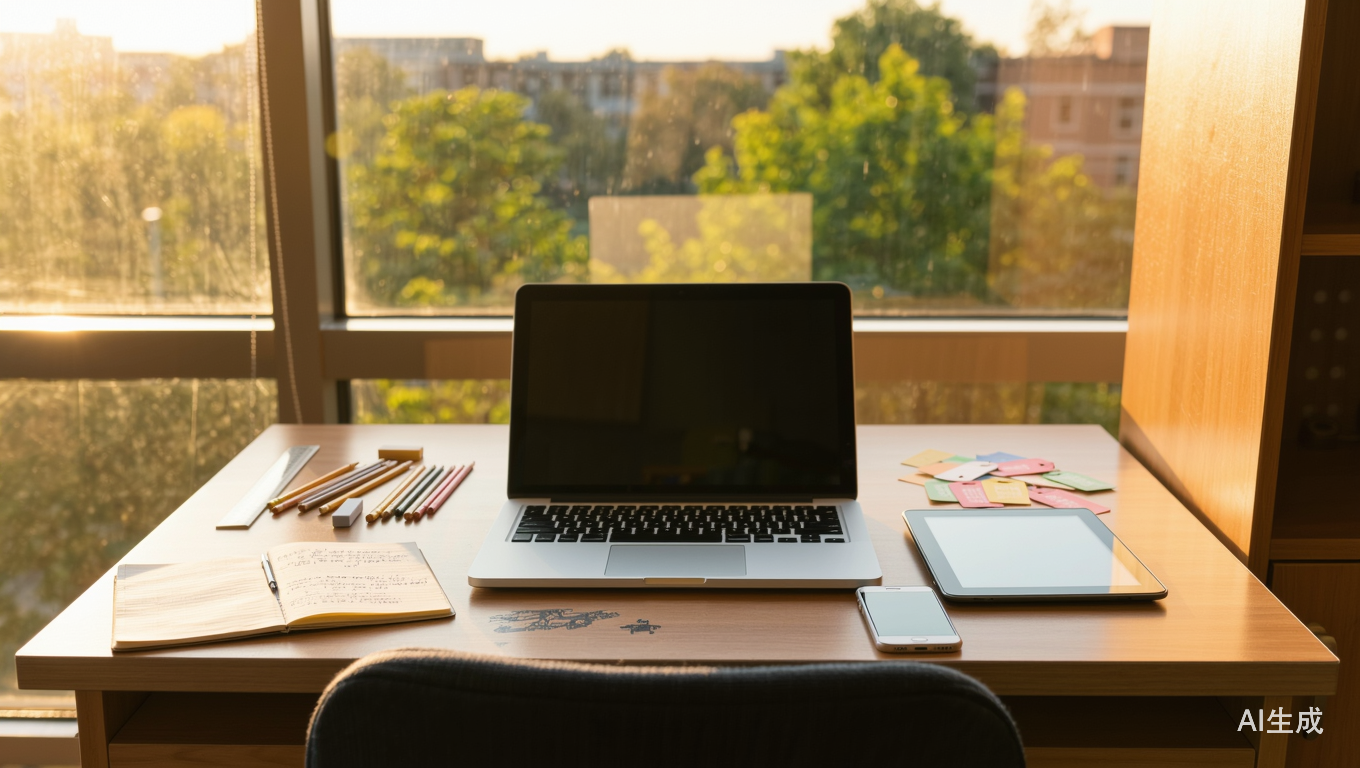
"This summer, many people saw posts on social media asking, 'Do you need a computer to attend university? Can you write code by hand?' In these posts, parents often raised thunderous questions that seemed to belong to the previous century, such as 'What do you bring to class if not a pen and paper, a computer?' or 'I don't believe you can't learn computer science without a computer.' However, apart from some fake responses, the posters were likely students themselves, who needed to cite comments from the comment section to prove to their parents that having a series of electronic devices is indeed necessary for university."
In recent years, after the college entrance exam, the summer vacation has seen the rise of the "back to school several sets" trend among soon-to-be university students. Young people who are used to wearing uniforms and having a uniform daily schedule are already showing consumption disparities before even entering university. With the latest round of price hikes for digital products, this expense has become a hidden burden for some families.
As the new semester begins, while parents of primary and secondary school students are cheering the return of their "digital pets" to school, university parents' emotions are more complex.
Every July and August, incoming university students purchasing school supplies sparks a wave of consumer spending. A 2025 survey by the Social Investigation Center of China Youth Daily of 1,337 incoming freshmen found that electronic products, driver's licenses, and travel topped the summer consumption list.
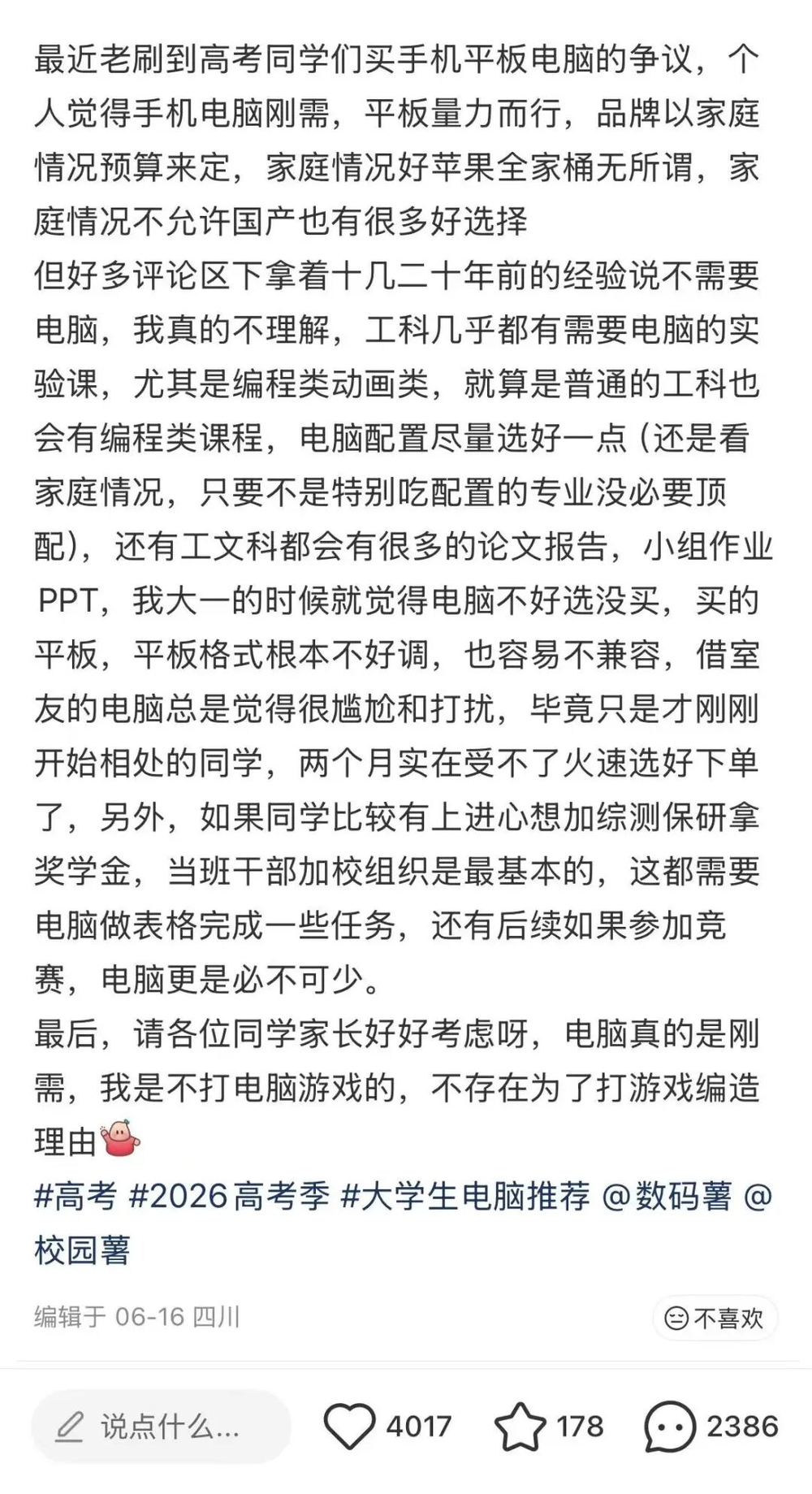
Some netizens have posted that university freshmen buying computers is indeed a necessity. (Photo/Social media screenshot)
This year, the prices of products such as mobile phones, laptops, and solid-state drives have risen across the board, with mainstream manufacturers like Apple, Samsung, Xiaomi, and Lenovo adjusting their product pricing and configurations; meanwhile, on social media, digital purchasing strategies have gone viral, with discussions about new students showing off their equipment and choosing brands remaining highly popular.

The back-to-school season has coincided with a surge in electronics prices, placing a burden on some families. (Photo/Social media screenshot)
For university students, new digital devices are a ritual to start university life, with some calling it a "digital coming of age". However, this "coming of age gift" has become more expensive than in previous years.
Buying a month late would mean an increase of 1,000 yuan.
After the college entrance exam ended, Qi Qi's parents drove to pick her up and take her home. The curtain had fallen on three years of high school life, and the whole family felt a weight lift off their shoulders. Taking advantage of the relaxed atmosphere, Qi Qi discussed with her parents her desire to buy an iPad. Her reasoning was sound: she could use the tablet to take notes and read literature in college, and during the upcoming summer vacation, she could also use it to watch dramas and learn English, killing two birds with one stone.
The offline authorized store was more than 20 kilometers away from her home, and it wasn't worth making a special trip. At the time, online shopping had government subsidies, which made it even cheaper than buying from a physical store. So, she ordered a rose-pink iPad she had been eyeing from the official website that evening for over 2,400 yuan, and it was delivered to her hands the next day.
It's only been a month, but her classmate bought an iPad with the exact same configuration, and the price had already risen by over 1,000 yuan.
In this round of consumer electronics price increases, laptops have seen the sharpest rise. The core driver is the explosive growth in global AI computing demand, which has created a structural imbalance in storage chip supply. According to data from the China Academy of Information and Communications Technology, domestic AI computing demand surged 417% year-on-year in Q1 2026 alone, while supply growth reached only 128%, leaving the supply-demand gap to widen continuously.
To capture the high-profit market, international storage giants such as Samsung Electronics, SK Hynix, and Micron Technology have shifted over 70% of their advanced production capacity to AI-specific high-bandwidth memory (HBM), directly squeezing the production capacity of consumer-grade DRAM memory and NAND Flash hard drives needed for personal computers.
With the tightening supply of core chips such as CPUs and discrete graphics cards, the prices of laptops have been pushed up. In industry jargon, this is called "chip inflation," but for consumers, it translates to genuine price hikes.
In addition, the annual e-commerce promotions in June, combined with the summer buying spree, typically lead to periodic price increases for electronic products. Qi Qi managed to avoid the price hike for tablets, but was unable to dodge the price increase for laptops. As a liberal arts exam-taker, she didn't have high requirements for laptop performance and had planned to buy a basic office laptop for around 5,000 yuan. She wanted to wait until her major was confirmed after the admission results were released before making a purchase, but by the time she paid in July, the same model had increased in price by over 1,000 yuan compared to when she had looked at it in April.
This summer, Qi Qi, a university student, purchased two items from the "university student digital trio". The iPhone 16 in her hand was bought a year ago when she was in her second year of high school. Before that, she used a domestic mobile phone that cost around 2,000 yuan, which she used continuously for five years. The battery drained quickly, and she had to bring a portable charger when going out.
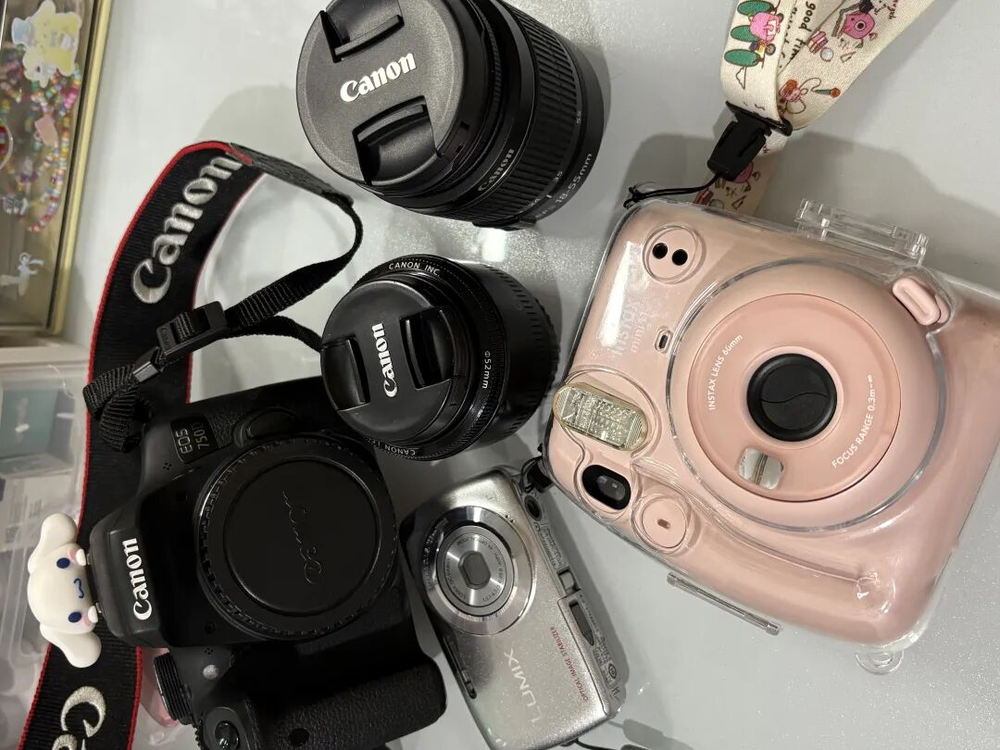
Qi Qi bought a single-lens reflex camera and an instant camera on the second-hand website Taobao. (Photo provided by the interviewee)
In addition to Qi Qi, computer science freshman Chen Yu is also facing price increases. After the college entrance exam, she first replaced her old phone with an iPhone 15 that has better camera performance, and also bought a fourth-generation earphone, and enrolled in a driving school. The total expenses added up, and her parents had already spent over 10,000 yuan. When it came time to buy a computer, her parents discussed with her and decided to postpone the purchase until after the National Day holiday.
"The price increase during summer vacation is too aggressive, and I won't even be using a computer during the first month of school for military training, so I'll wait until the price drops before buying," Chen Yu said. Chen Yu's parents had set a budget of 4,000 yuan, but as a computer science major, the equipment configuration requirements are higher, so Chen Yu decided to cover the excess amount himself.
To go for generics or name brands?
Members of Generation Z, born between 1995 and 2009, grew up during a period of rapid digital technological advancement. They have a clear understanding of digital products and value both brand experience and user experience, and are also willing to pay for emotional value and cutting-edge technology. In recent years, they have also become increasingly concerned with "cost-effectiveness," often reading reviews and watching evaluations to do their homework before making a purchase.
Qi Qi's selection strategy is very typical, she likes Apple's design and ecosystem, and has chosen Apple for her phone and tablet, but when it comes to computers, she didn't blindly go for a "full set". She first consulted with seniors, and after reading many reviews, found that the Mac system is not ideal for compatibility with some professional software, so she decisively switched to the more cost-effective Asus.
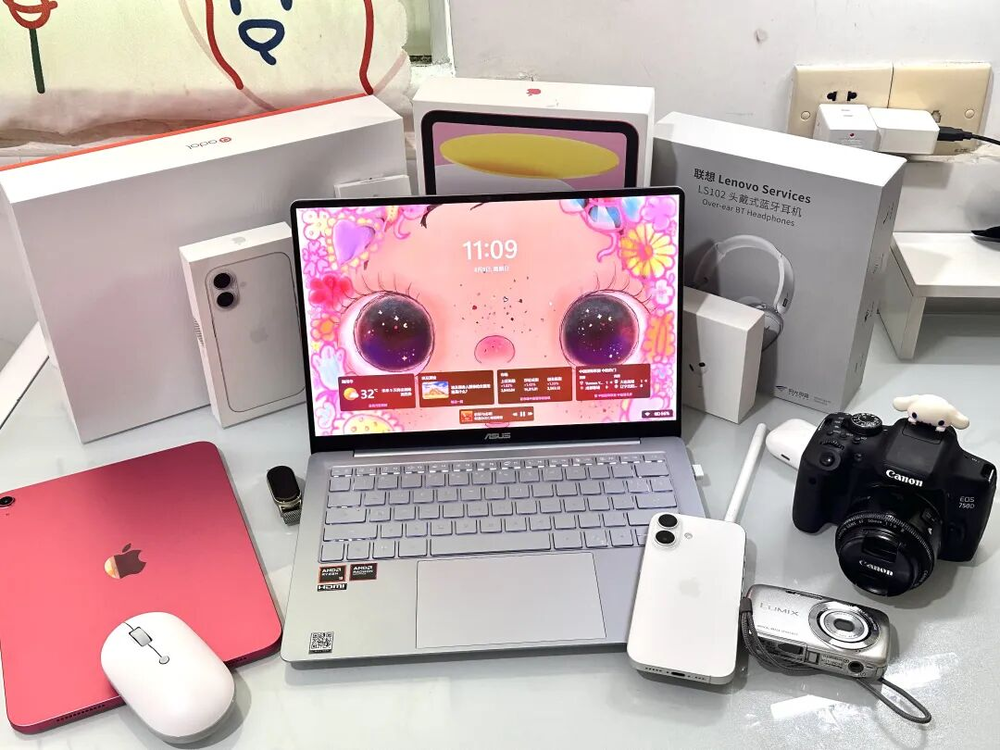
College-bound Qi Qi's digital gadget collection. (Photo provided by the interviewee)
As for the touchscreen pen that comes with the iPad and costs around 700-800 yuan, she didn't hesitate to buy a substitute for over 100 yuan. After all, she's a liberal arts major and mainly uses it for note-taking, not drawing, so the substitute is more than sufficient. She chose a 69-yuan version of earbuds from Huaqiangbei, which has a similar interface and setup to the authentic version, and it still works well after three years. She's quite nonchalant about it: "When people ask me what earbuds I use, I directly tell them it's a Huaqiangbei version. Being able to find cheap and useful products is also a skill of mine."
Xixi, who enrolled in 2021, is a practitioner of essential consumption. When she first started college, she was still using her old high school phone. Her idea was very simple: "If I don't need it, I won't buy it." However, one time when she went to the cafeteria and stood in line to pay by scanning a code, her phone's poor pixelation made it completely unclear when zoomed in, and it was also very slow, causing the people behind her in line to wait. She felt on the spot that "this phone must be replaced."
This was also her first time buying a phone with her own money. At the time, her budget was set at 3,000 to 4,000 yuan, with a maximum of 5,000 yuan. She believed in "you get what you pay for," and didn't dare buy anything too cheap, as she would have to rely on it for four years of university. Her requirements for the phone were clear: "large battery capacity, clear camera, and a good appearance."
Once she had settled on her requirements, she first checked reviews on Bilibili, shortlisted two or three models that fit the criteria, then scoured real-user comments on shopping apps. If a physical store carried the same model, she made a special trip to handle the device and gauge its feel and weight. In the end, she bought a 3,000-yuan Realme phone—clear camera, solid battery life—and it served her without a hitch all the way through graduation.
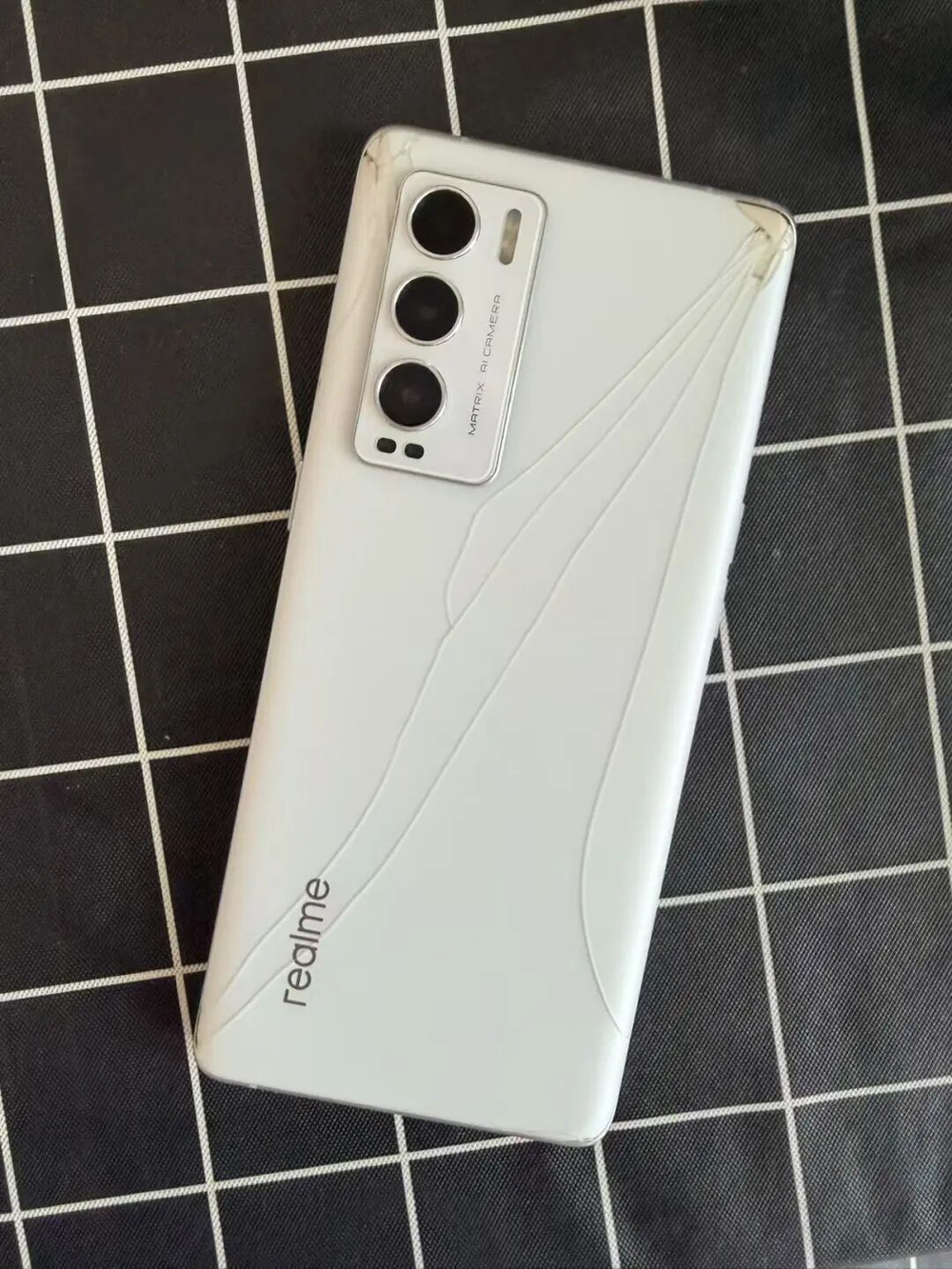
Xixi said the phone she used throughout her university years was "extremely durable". (Photo provided by the interviewee)
Xixi's laptop was also purchased after she started college. She majors in architecture, which requires drawing and has high configuration requirements. Her budget is set at around 10,000 yuan, and she can accept up to 12,000 yuan. Her parents are also willing to spend this amount of money. "Everyone else has a computer to use, and you don't, so how can you do your homework? So, you definitely need one," they said.
Xixi attends a local university and doesn't have many expenses. Before starting college, she had saved up a small amount of money, and during her summer break, she worked part-time at a milk tea shop, where she had two days off per month and earned a salary of just over 3,000 yuan, most of which she saved. She never bought a tablet because she had heard many people say that "you're productive before you buy one, but after buying, you just watch iQIYI." She said succinctly, "I thought about it, but later I found out I just didn't need one."
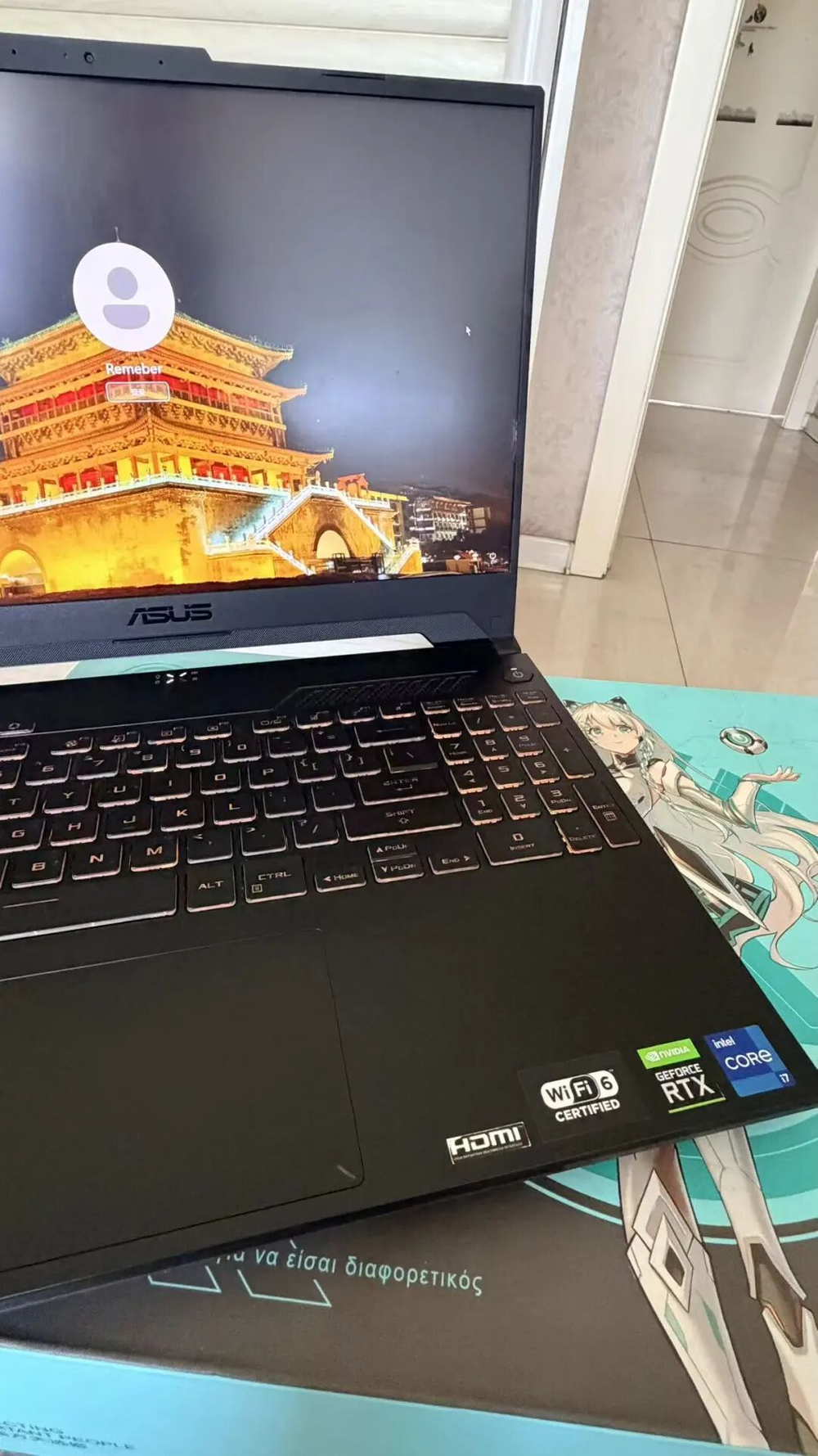
The computer Xixi used during her university days. (Photo provided by the interviewee)
In 2022, before Golden Fish started her first year of college, her family had already prepared an Apple phone, headphones, and laptop for her, and even got her an Apple Watch during high school to make it easier to stay in touch on campus. She admitted that she prioritizes brands, partly because her mother has always used an iPhone and she has gotten used to it through exposure, and partly because she thinks the Apple ecosystem is comprehensive and comfortable to use with its complementary products.
When it comes to budgeting, she says she doesn't set a limit in advance, instead considering the price of something she likes and whether she can accept it, "if I really like it, I can grit my teeth and afford it." She believes that money spent on food can't be cut back on, and that electronic products should be replaced when needed. After being admitted to graduate school this year, she became interested in photography, and her family gave her money to buy an instant camera and a mirrorless camera, so she often attends offline anime and manga events this summer.
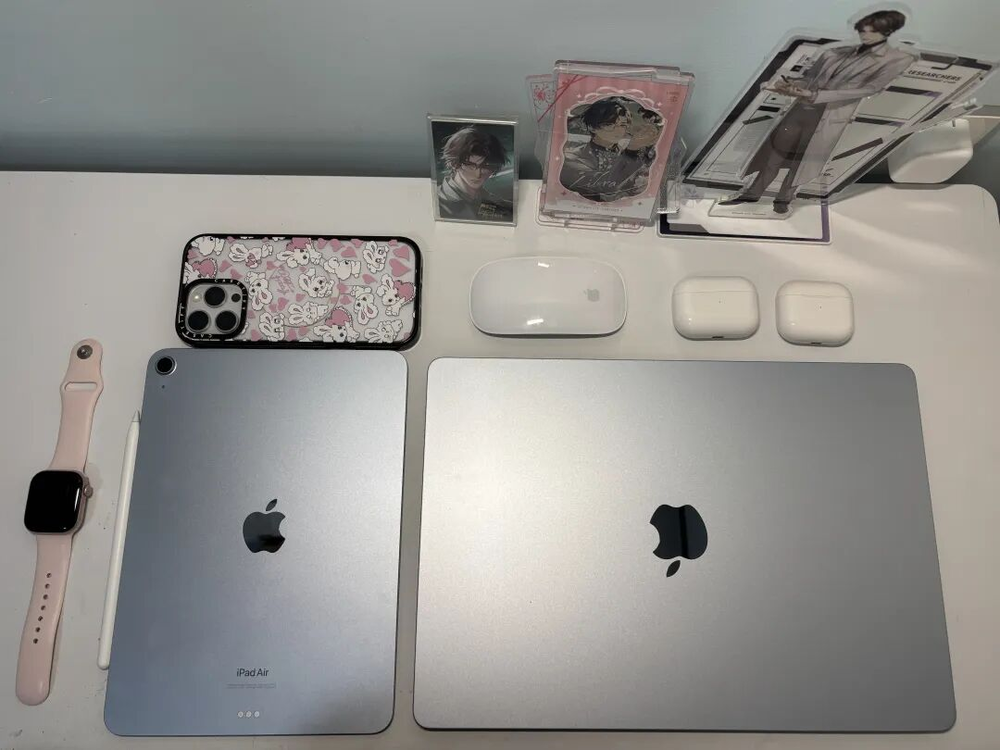
Electronic products used by Jinyu during his university days. (Photo provided by the interviewee)
However, Jinyu didn't blindly follow the brand either. Her roommates hadn't initially planned to buy a tablet, but after seeing how Jinyu's iPad could really aid her studies, they subsequently made their purchases.
As for Apple's full range of products, Jinyu takes a dim view: "Once you have the full suite, the mystique is gone. People tend to put a filter on things they haven't gotten yet, but once they actually have them, they're just ordinary."
Before and After the Gaokao
In the general context of Chinese society, "gaokao" and "18 years old" are almost synonymous.
The end of the gaokao marks more than the close of an academic chapter—it serves as a symbolic rite of passage into adulthood. It signals the moment when students leave years of exam preparation behind and begin their journey toward independence: leaving home, gaining control over their own time and finances, and, not least, the freedom to choose their own digital devices.
Prior to this, students were not financially independent. Parents, as the main source of family income, had long been in control of the distribution of material resources. As a result, the first digital device for some young people was rarely brand new, but rather often "inherited".
Chen Yu's phones have almost been a microcosm of her parents' history of upgrading their devices. "Every time they upgrade, the old one is passed down to me," she said. As a result, she has always used iPhones, while opting for affordable brands for accessories like earphones, which she pays for herself. For her, the phones and computers inherited from her parents do not strictly belong to her.
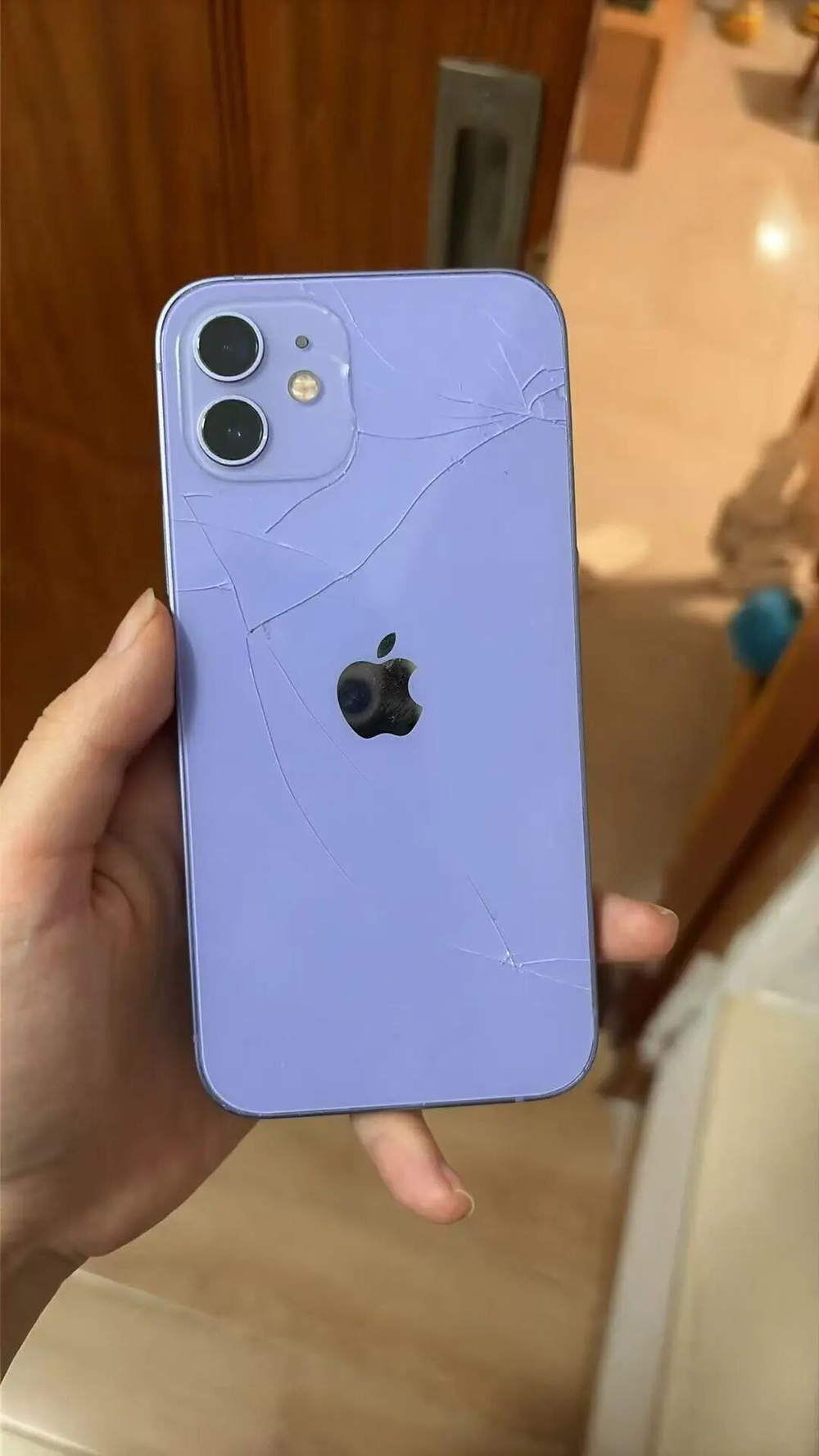
The iPhone 12 Chen Yu used during middle school was passed down from her mother. (Photo: Courtesy of the interviewee)
As times change, many primary and secondary school students are almost constantly immersed in the world of electronic products from a young age, with parents also purchasing electronic products for their children's study or daily needs, such as tablets for online classes and smartwatches for staying in touch with family.
In 2015, when Xi Xi started junior high school, she got her first mobile phone, an 800-yuan Coolpad phone bought by her parents from the local mobile phone market. Later, when Apple phones became popular, her father gave her his used iPhone 4s, which was also her first experience with the Apple system. It wasn't until she went to college that she was able to buy the electronic products she wanted using her own savings.
Having autonomy and being able to make one's own decisions is the first step towards becoming part of society. It's not just about digital products, but also about expenses such as taking driving tests, traveling, and purchasing daily necessities, each of which carries the expectation of a new life.
Contrary to the stereotype of impulsive spending and status-driven herd behavior, consumption patterns among young people have shown a clear trend toward rationalization over the decade from 2015 to 2025. Their purchasing decisions are increasingly insulated from external influences, with greater emphasis on aligning needs with personal financial capacity. They favor moderate consumption, reject conspicuous spending, exercise greater caution with money, and are more actively saving and seeking ways to cut costs.
Qi Qi's consumer philosophy reflects this shift, "My parents taught me that you should save when you need to save and spend when you need to spend."
In junior high school, Qi Qi bought a second-hand instant camera for 280 yuan. "The money was given by my grandfather, and I felt sorry for him, thinking it wasn't necessary to buy such an expensive one." After getting the camera, the first thing she did was take a photo with her grandfather. During her junior high school years, she also earned about 1,000 yuan by taking photos for others, which was her first experience of "earning money by herself". In high school, she bought a second-hand SLR camera on Idle Fish for 2,500 yuan and planned to take it to college.
On the topic of buying Apple products, Qiqi said: "It's reasonable to buy a phone and computer for college, but buying something the family can't afford is not."

Ji Xiaoli. Notebook Computer Price Hikes: The Global "Chip Inflation" Conundrum. China Economic Herald, 2026-07-16(003). DOI: 10.28095/n.cnki.ncjjd.2026.000908.
Insights into Gen Z's Mobile Phone and Digital Interests Report by Shanghai iResearch Market Consulting Co., Ltd., included in the 2023 iResearch March Research Report Conference Papers, 2023: 596-638.
Hou Shaoxun, Ji Shiyu, Huang Kai. The Ebb Tide of Consumerism Among Youth Groups and Its Driving Mechanisms: An Analysis Based on the Survey of Chinese College Students' Social Mentality (2015–2025)[J]. Youth Exploration, 2025, (5): 44-55. DOI:10.13583/j.cnki.issn1004-3780.2025.05.004.