
By end-August, all six listed new-style tea beverage companies had released their interim results.
Mixue continued to lead by a wide margin with revenue of 15.216 billion yuan, but as new CEO Zhang Yuan predicted at end-March, gross margin fell for the first time under comprehensive slowdown measures, ending near his estimated 30% red line. Guming found new growth in the coffee market, overtaking Chagee with 7.47 billion yuan in revenue to become the industry's No. 2. Shanghai Aunty and Chabaidao kept expanding in lower-tier cities, while Nayuki still struggled with losses.
After its 2025 earnings were released, Chagee founder Zhang Junjie apologized to the market at a briefing, admitting the team underestimated the impact of the delivery war on its offline store base, and announced it would appropriately slow the frenetic pace of domestic expansion.
Missing the delivery war put the brakes on Chagee's rapid expansion. But does the end of the subsidy battle mean everyone can return to the same starting line?
Forced to slow down, Chagee entering 2026 began confronting its transformation challenge: shifting from rapid territory expansion via franchising to a wave of direct-operated stores. On one hand, it took back some loss-making stores; on the other, it changed its cooperation with franchisees from selling goods to a 17% commission on GMV. On the product side, Chagee moved from a back-to-basics hero-product strategy to aggressively launching new products.
Consumers' direct impression is that Chagee is experiencing its fastest-paced new-product season. The brand launched 17 new products in Q2, a record for a single quarter. But in the same Q2, Chagee also lost nearly 3 million active members.
After six months of major adjustments, Chagee's Q2 interim results remain contradictory: on one hand, the headline numbers are striking, with GAAP net profit surging to 464.8 million yuan from 77.2 million a year earlier; on the other, the decline in Greater China per-store GMV has not been halted. In addition, due to adjustments to its franchise store network and changes in the cooperation model, Chagee's net revenue from franchise stores plunged to 2.474 billion yuan from 3.02 billion.
As the industry shifts from competing on scale to competing on per-store quality, do Chagee's drastic moves mean the brand has found a new rhythm of its own?

If you only look at the most eye-catching figures in the financial report, Chagee's Q2 operating income grew 387.6% year-over-year, and GAAP net profit jumped from 77.2 million to 464.8 million.
But this surge needs to be viewed against the special circumstances of the same period last year. In Q2 2025, Chagee had just completed its IPO, incurring substantial share-based compensation and professional service fees. At that time, Chagee generated nearly 630 million in profit, but after paying total IPO-related incentives and other expenses of up to 550 million, reported profit was only just over 70 million. In Q2 this year, Chagee's non-GAAP net profit fell below 490 million, but without the burden of that 550 million in expenses, reported net profit surged year-over-year.

Screenshot from Chagee's official website, same below.
When the data is placed in a 2026 comparison, core operating metrics show varying degrees of warning signs.
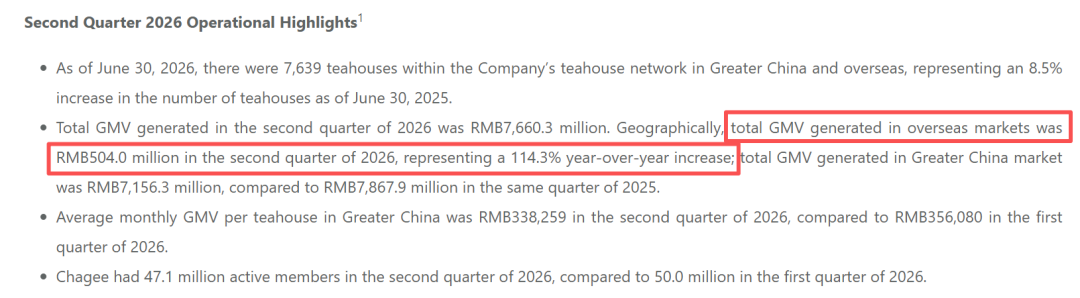
The Q2 report shows Chagee's total store count still grew 8.5%, but Greater China total GMV fell to 7.1563 billion yuan from 7.8679 billion yuan in the same period last year, and average monthly GMV per store declined to 338,000 yuan from 356,000 yuan in Q1 this year.
An objective fact is that quality locations on the market are limited, and the number of domestic milk tea consumers has largely stabilized. Store count is increasing, but the overall pie is shrinking, so each store gets a smaller slice. The economies of scale driven by rapid store expansion in recent years have gradually shifted toward diseconomies of scale.
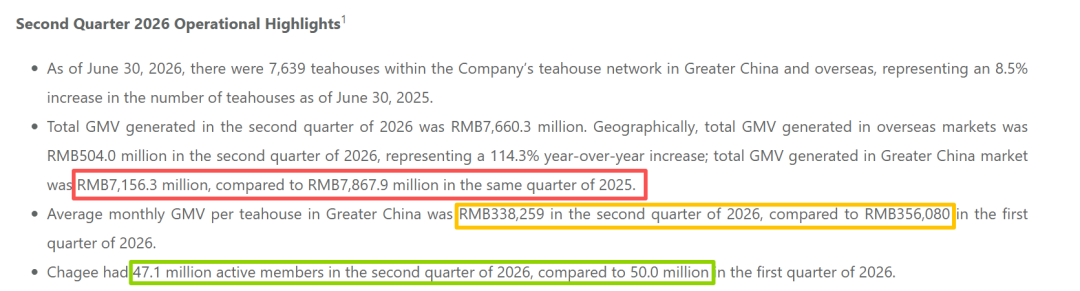
Management is not unaware. After the 2025 results were released, Chagee explicitly stated that in 2026 it would not simply pursue high-speed growth, but would return to a high-quality operating cycle and prioritize same-store recovery as its primary goal. However, based on the interim report, the decline in same-store performance has not yet been halted.
Management disclosed at the meeting that "same-store sales in July showed a low single-digit decline," defining it as "a meaningful improvement from the first half," while hoping that August would see a return to positive year-over-year growth.
Objectively speaking, the decline in per-store profitability is not a problem unique to Chagee, but a cold snap affecting the entire new-style tea beverage sector in 2026.
Naixue's directly-operated stores saw declines in average daily sales per store, order volume, and average order value. Mixue Bingcheng did not disclose per-store data, but according to Dingjiao One's calculation based on the company's shipment revenue to franchisees divided by the number of stores at period end, each store contributed an average of about 273,000 yuan in the first half of 2025, falling to about 231,000 yuan in the first half of 2026 — a dilution of roughly 15% in per-store contribution.
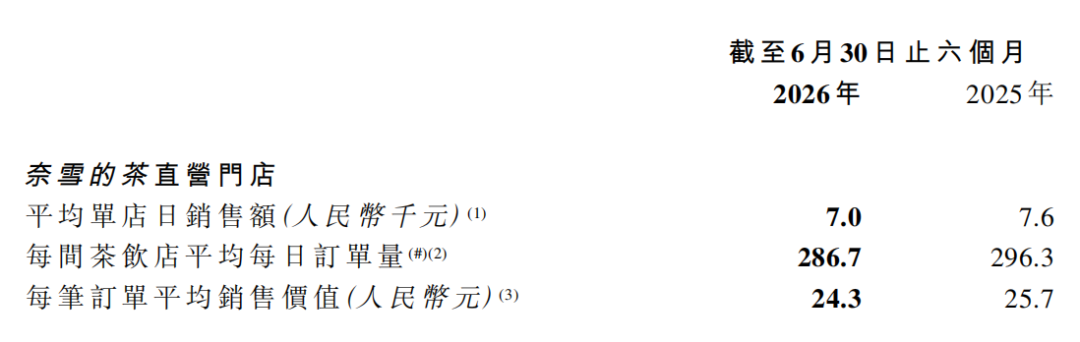
Source: Naixue Q2 earnings report.
Guming is an exception. Its per-store GMV and cup count both posted positive growth. In its earnings report, the company attributed the gains to better-quality stores and to incremental volume from new product lines such as coffee, which partly offset the negative impact of the delivery war.
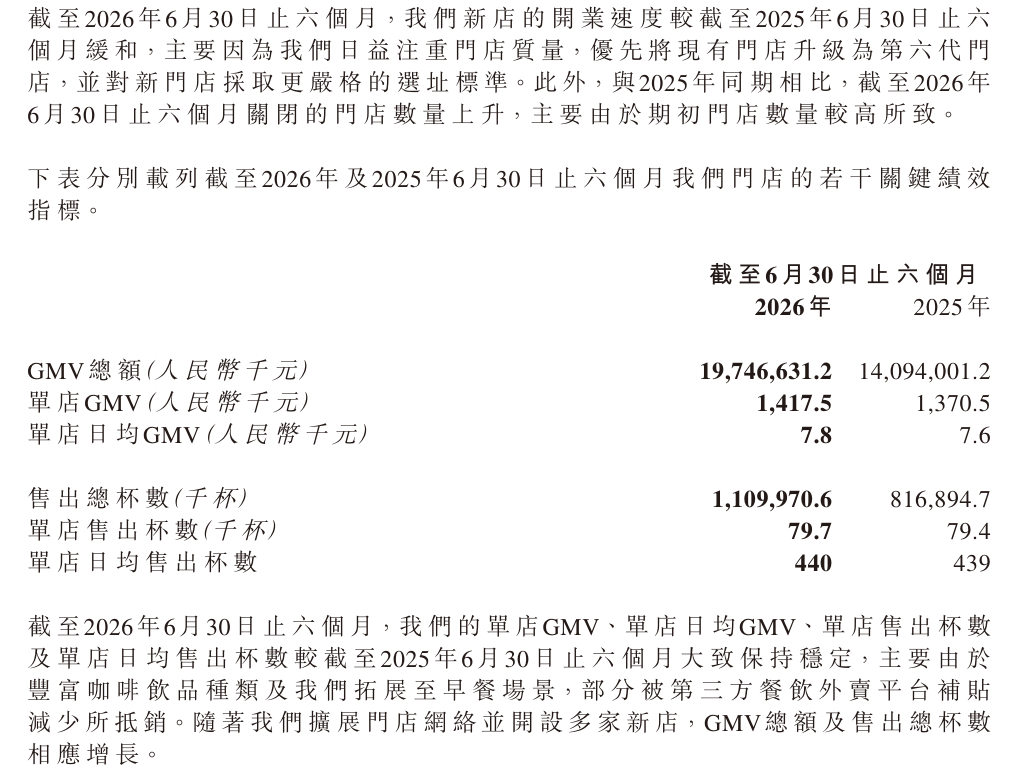
Source: Guming Q2 earnings report.
By comparison, Chagee's store-level decline is narrowing, but it clearly remains far from reversing the trend.

From a consumer perspective, Chagee has been the most aggressive on the product front. The brand, which once built its success on the blockbuster drink Boya Juexian, is now rolling out new offerings at an unprecedented speed.
It wasn't just the Q2 that executives touted as 'record-breaking' on the earnings call. Chagee has been sprinting through the first nine months of 2026: from the matcha series in January to Da Hong Pao in February; in April it launched Longjing Genmai Cheese and tea-based specialty drinks; in May it introduced regional limited editions across five provinces and rolled out Geelato, an Italian-style tea gelato; then from June to August, in addition to new Geelato flavors, it also released kombucha, lemon milk, sparkling tea specialties, and even an iced-brew version of an older product.
Brands may hope that a high-density product launch cadence will revive market momentum, but the question is whether frequent new product releases truly translate into better per-store performance and revenue.
The supply-chain strain from rapid product launches has yet to be fully assessed, but the data showing "more launches, more customer churn" is already visible in financial reports.
At its March earnings call, Chagee noted that the "Return to Yunnan" product line launched in December 2025 reactivated 51% of dormant members and drove a 16.2% quarter-over-quarter increase in overall GMV. But one detail easily overlooked: the 2025 financial report also revised the definitions of dormant and active members, expanding the scope from its mini-program to third-party platforms such as Taobao Flash Purchase and Meituan, where a single order within a given period counts as active.
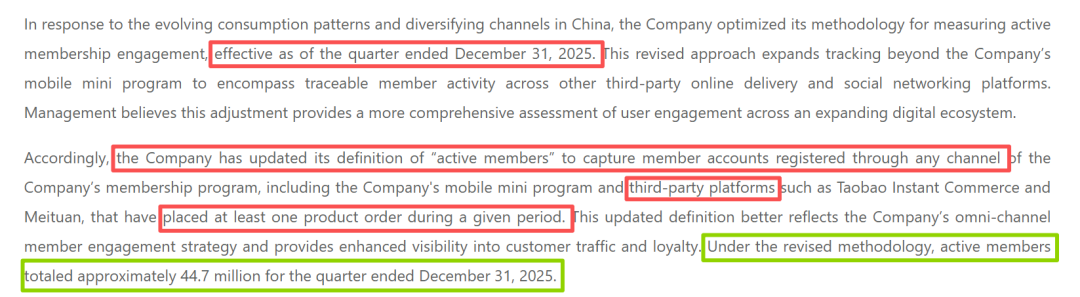
Source: Chagee 2025 annual report.
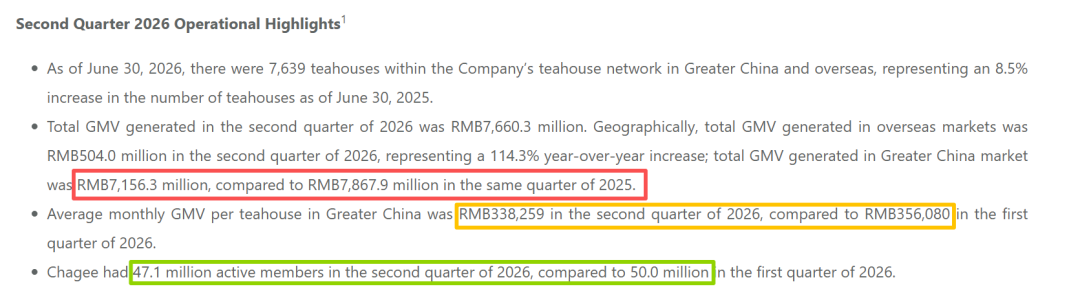
Under the new definition, active members stood at 44.7 million at the end of 2025 and rose to 50 million in Q1. But in Q2, despite a barrage of new product launches, Chagee's active member count fell back to 47.1 million, a loss of nearly 3 million in a single quarter, suggesting diminishing marginal returns from new product stimulus.

Even as its product lineup undergoes major changes, Chagee's relationship with franchisees is also being restructured.
This year, Chagee overhauled its franchisee fee structure: it now charges a uniform brand service fee of 17% of store GMV, cut ingredient costs by 20-40%, eliminated various fixed fees, and tied headquarters revenue directly to store GMV. The goal is to share risk, protect the majority of franchise stores that can still operate, and avoid a wave of mass closures.
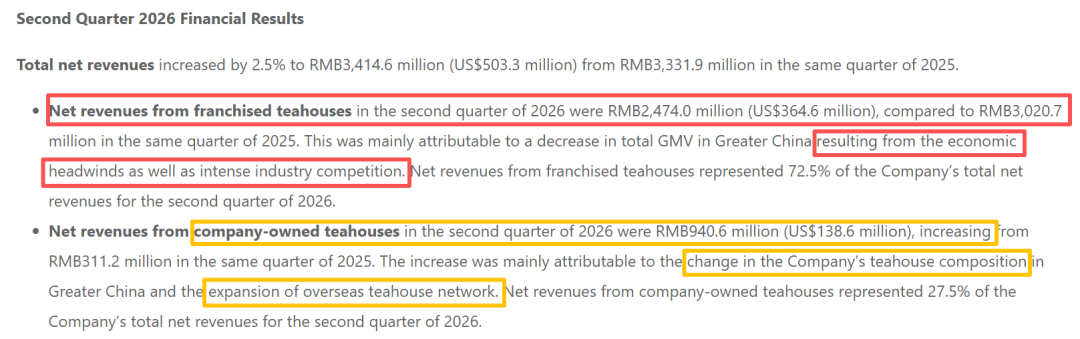
This model is described as a shift from "supplier" to "partner." Looking at Q2 results alone, revenue from the franchise business fell sharply, from 3.02 billion to 2.474 billion yuan, down 18%. During the same period, Chagee's franchise store count remained broadly stable, while Greater China GMV declined only 8%.
The gap between the two essentially represents the profit concession Chagee gives to franchisees.
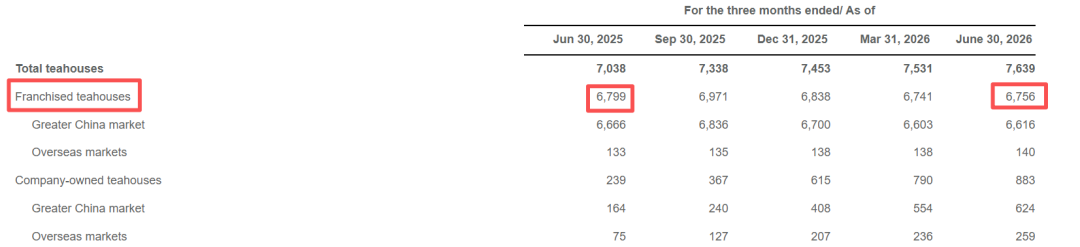
According to DoNews, Chagee has rolled out two remedies for underperforming stores: optimization, which lets franchisees relocate to lower-rent locations, and store buyback, under which the company directly acquires the store and converts it from a franchise to a direct-operated unit. LatePost also reported: “Last spring, franchisees all wanted to sell their stores to Chagee, but Chagee was only willing to acquire stores with losses within 20%.”
The shift to direct operation is selective, and whether deeply loss-making stores can turn around under the partnership model remains uncertain.
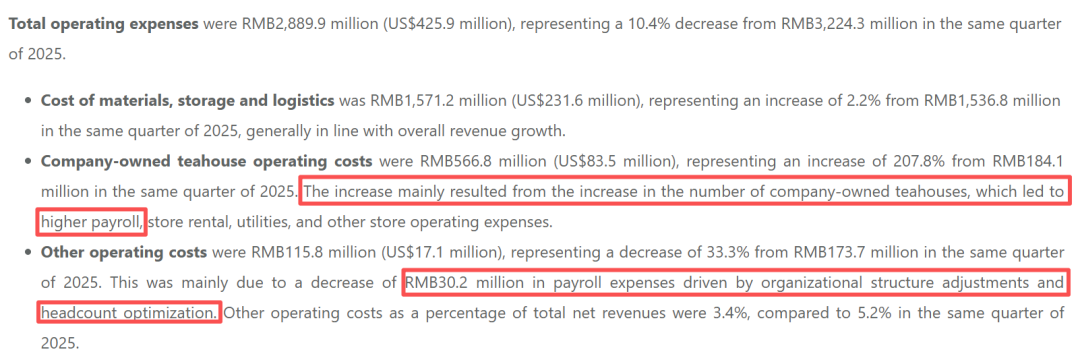
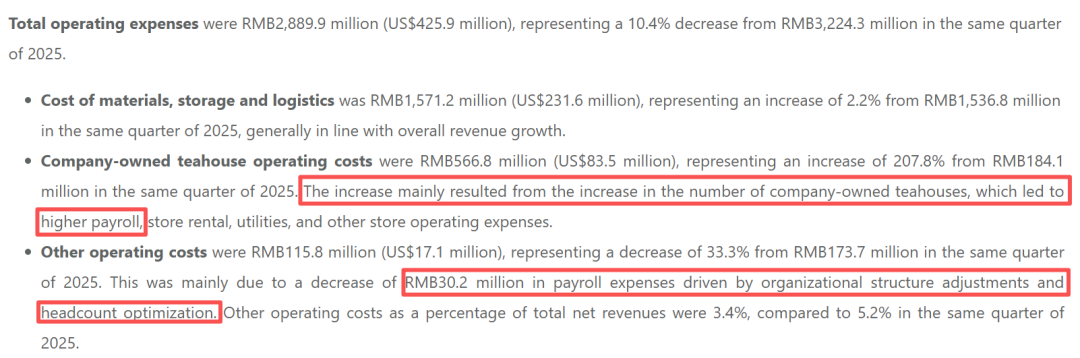
Meanwhile, direct-store operating costs surged from RMB 184.1 million to RMB 566.8 million, with the number of direct-operated stores at home and abroad nearly quadrupling year-on-year, driving higher frontline manager and staff labor costs, rent, equipment, and other expenses.
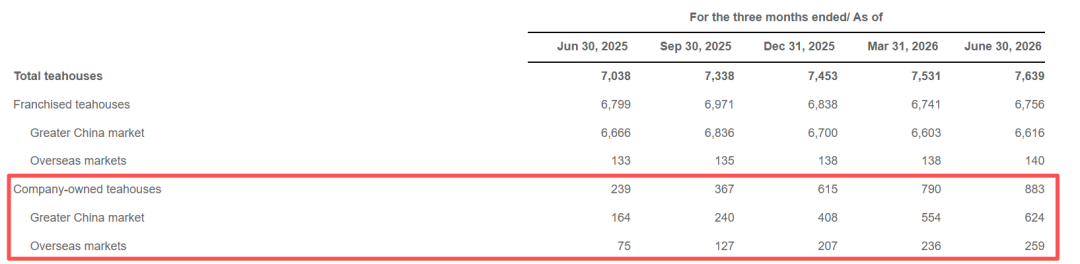
Between the decline and the increase, Chagee appears determined to move away from its previous asset-light model of pure franchising and supply-chain margin capture, and gradually fill the asset-heavy gap by building its own direct-operated stores. At this crossroads, Chagee clearly aspires to follow Heytea in strengthening brand control through direct stores, while avoiding the asset-heavy quagmire that Nayuki fell into.
But this is bound to be a harder path. The company must not only counter the industry-wide decline in per-store sales, but also absorb the bleeding from shifting its asset structure toward heavy assets.

For Chagee, the biggest hope clearly lies overseas.
Chagee's overseas GMV reached RMB 504 million in Q2, up 114.3% year-on-year, with total overseas stores expanding to 399. Since Q2 2025, overseas GMV has posted sequential gains for four consecutive quarters.
In April, Chagee entered the South Korean market. A clip of Jang Won-young tasting Chagee in Guangzhou went viral online again earlier this year, and the newly opened stores in South Korea saw queues.


Investors are closely watching these impressive numbers, hoping Chagee can replicate its formula of turning viral content into offline sales in more countries. But objectively, Chagee's overseas revenue of over 500 million yuan accounts for less than 10% of its total revenue of over 7 billion yuan. It serves more as a sentiment boost to investor confidence than a meaningful hedge against the domestic slowdown in the short term.
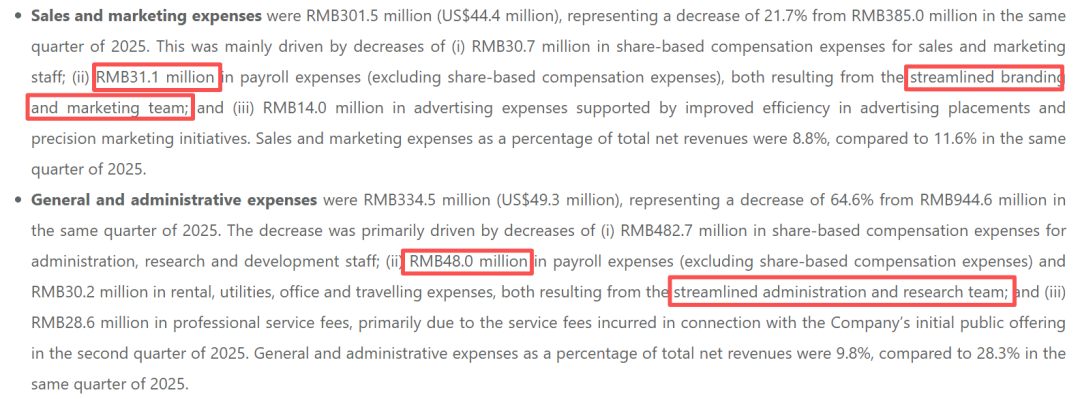
The sharp personnel and capital shifts in the Q2 report show that Chagee has made major organizational changes: headquarters is cutting costs, with pure salary expenses for administration and R&D reduced by 48 million yuan, brand and marketing teams by 31.1 million, and other organizational adjustments by 30.2 million.
At the end of the earnings call, CFO Huang Hongfei said the board and management are considering a capital return plan that includes regular dividends. Combined with the previously executed $30 million share buyback, the company appears to be signaling to investors that even if store performance recovers slowly, ample cash flow can still protect shareholder interests through dividends and buybacks.
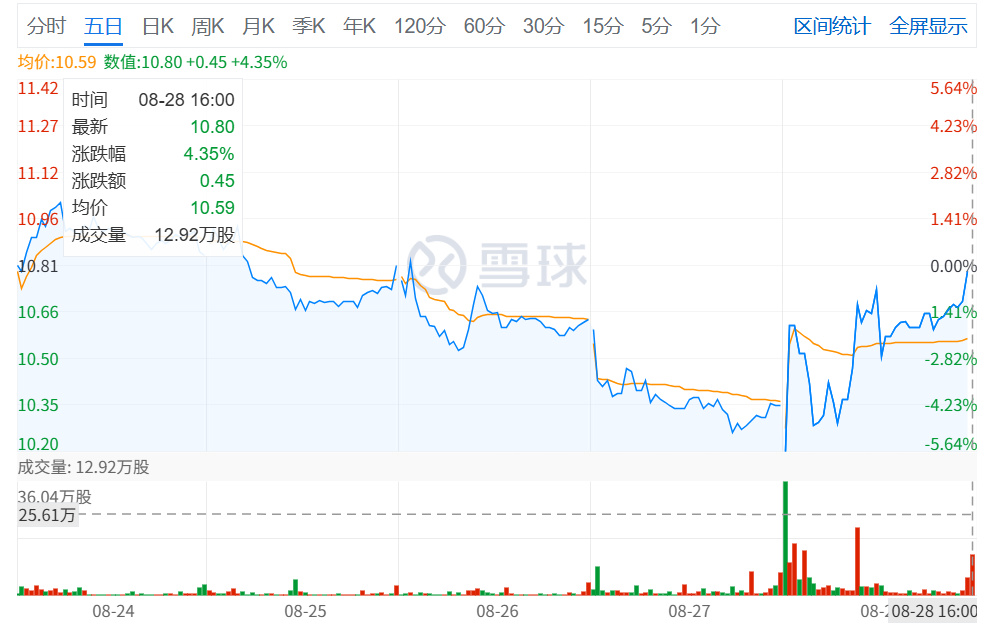
The promise appeared to calm the market. The stock rose 4.35% on the day of the earnings release, keeping its market capitalization at $2.06 billion.
Halfway through 2026, Chagee's series of moves make clear that the era of relying on a blockbuster product and an asset-light franchise model to force growth has come to a definitive end.
Among peers, Guming used its new coffee segment to achieve positive same-store growth and a 44% profit increase, while Auntea Jenny proved there is still room in lower-tier cities with 42% revenue growth. On Chagee's chosen path, product development has found a rhythm but the impact of new launches is unproven, franchisee and store resources are being reallocated, overseas scale remains small, and key financial metrics have yet to show real results — though they are not enough to be the sole measure.
During the Q&A session, Zhang Junjie clearly characterized 2026 as a year of adjustment and stabilization. He stressed: "This year's core goal is not rapid scale expansion, but to lay a stronger foundation for sustainable growth in the next phase."
For now, Bawang Chaji's cash flow and rapid overseas growth are still buying it time for its transformation, but the exploration through the deep-water zone of reform is clearly far from over. Until a real turning point arrives, the company will have to keep enduring the pain in pursuit of "stability."