
On the surface, Miniso appears to be maintaining its rare high-growth momentum in the consumer cold winter, but the capital market has given it a diametrically opposite cold reception.
Under the guise of growth, the phenomenon of increasing revenue without increasing profits has become a summary of Miniso's current situation.
Our core views are as follows:
Miniso's revenue growth has real fundamental support, with overseas expansion and TOP TOY being the two major drivers, but the high costs of direct overseas operations are eroding profits.
IP strategy is a double-edged sword, with licensed IP contributing to revenue, but licensing fees and marketing expenses are wildly eroding profit margins.
Its in-house IP YOYO is a crucial piece for Miniso to transition from being a "logistics provider" to an "originator", but for now, it remains a cost center that requires continuous financial support from its parent company.
Looking back at Miniso's actions over the past two years, it is clear that the management team attempted to hedge against cyclical fluctuations by chasing after consumer hotspots, but in hindsight, pursuing them too quickly has not been beneficial.
The two major engines simultaneously slowed down, with revenue growth hitting a three-year low
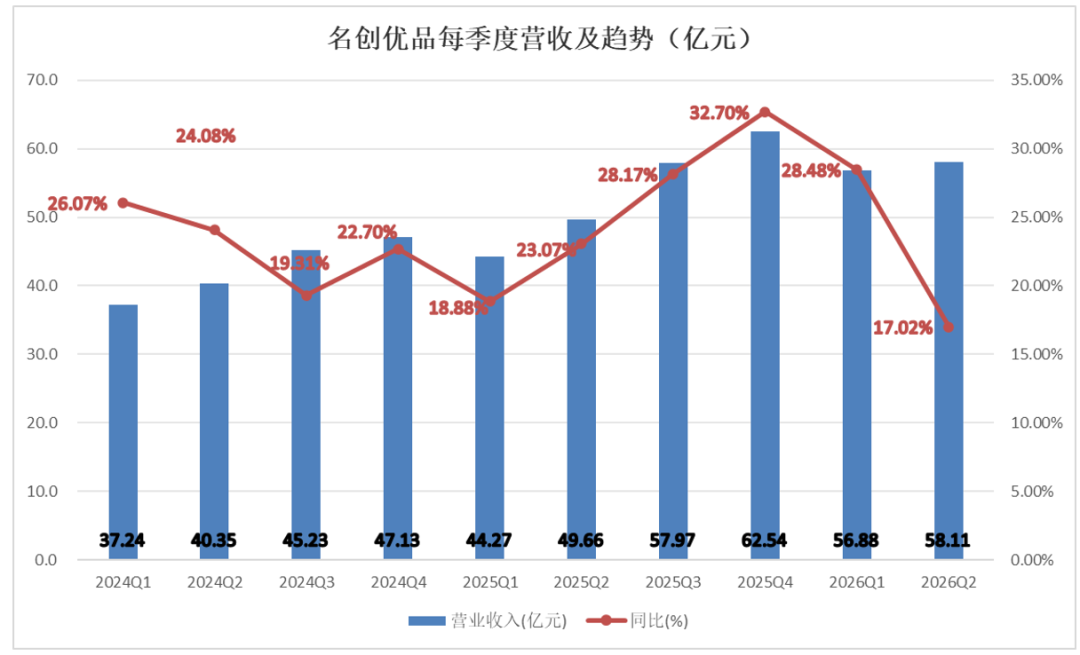
In the second quarter of 2026, Miniso recorded single-quarter revenue of 5.811 billion yuan, representing a year-over-year increase of 17%. The single-quarter revenue growth rate fell below 20% for the first time in three years.
In the first half of the year, domestic revenue was 7.28 billion yuan, up 24.4% year-on-year, while overseas revenue was 4.22 billion yuan, up 19.3% year-on-year, with the growth rate of overseas revenue slowing down more significantly.
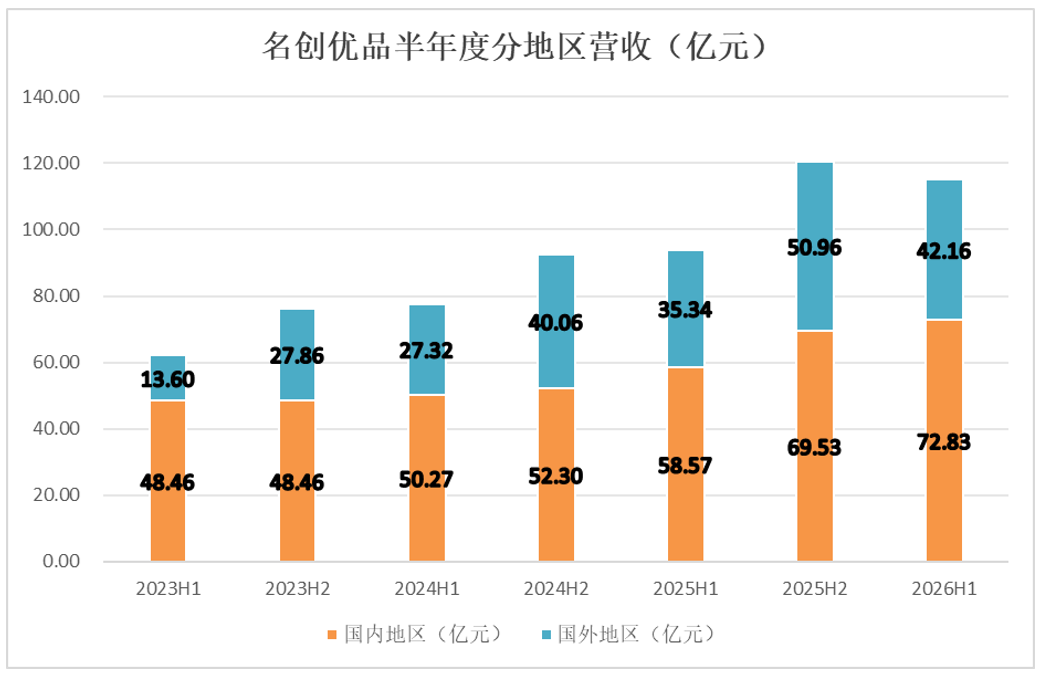
Last year's second half saw Miniso's overseas proportion reach 42.3% through collaborations with global top IPs such as Disney and Marvel, as well as localized efforts, including the launch of long robe pocket wet wipes for the Middle East and slippers for Southeast Asia, but so far this year, the revenue contribution has slid to 36.7%, underperforming domestic growth.
By brand, TOP TOY performed relatively well. The trendy toy brand, which directly competes with Pop Mart, recorded revenue of 990 million yuan in the first half of the year, up 32.7% year-over-year, with the number of stores increasing to 365. Within the Miniso system, TOP TOY is the fastest-growing business line and has the most room for imagination. However, compared to last year's nearly doubling growth rate, it has also shown a decline.
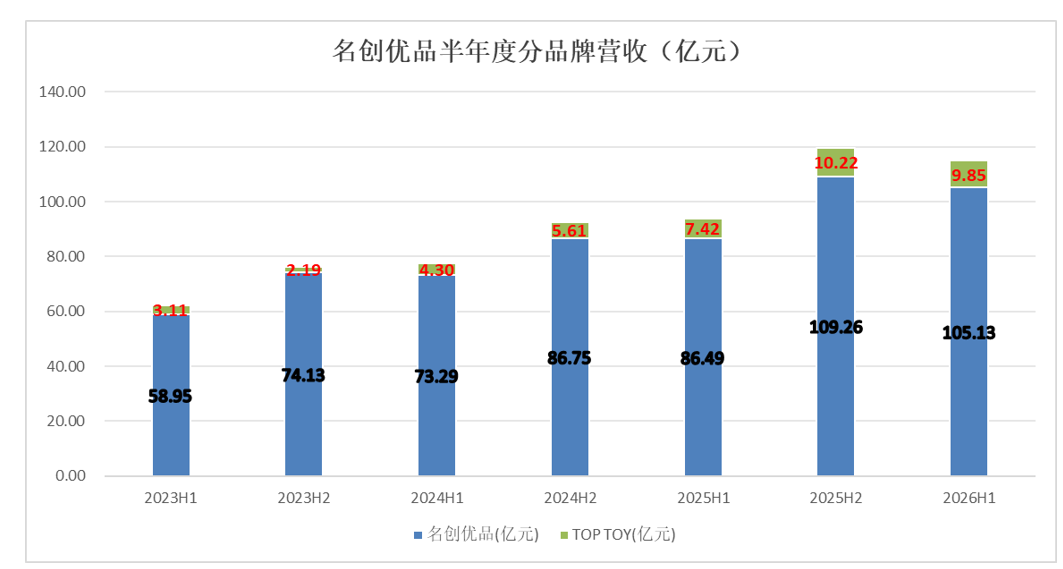
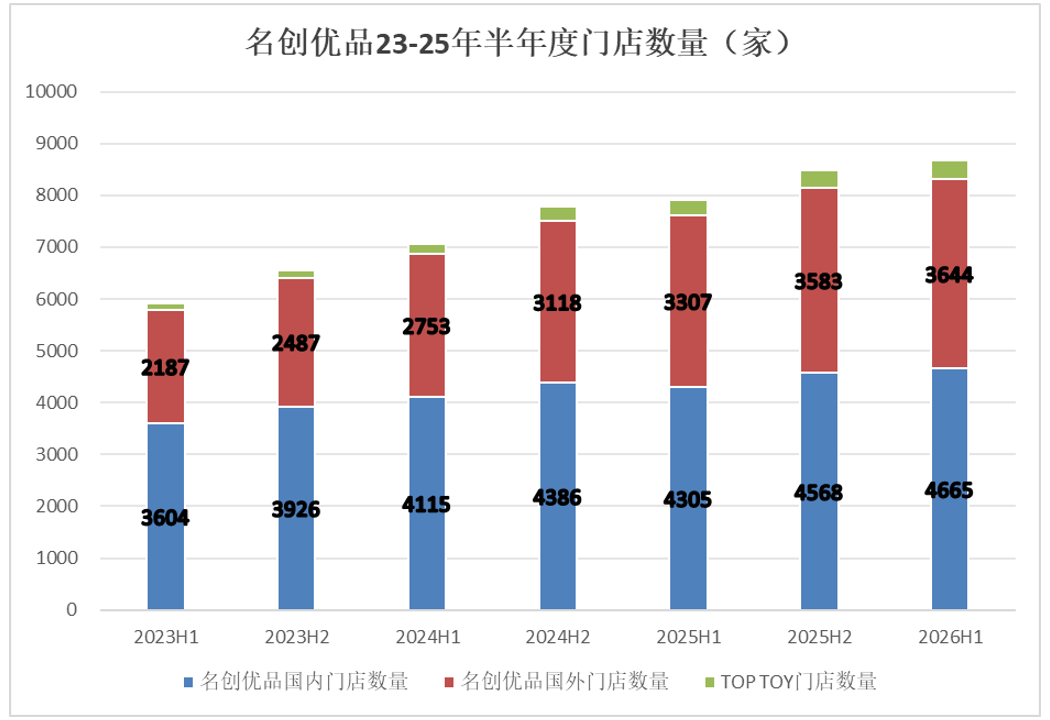
Two growth engines have both slowed to some extent, affecting the overall growth rate of Miniso. The core reason behind the slowdown is the deterioration of core operating efficiency.
In fact, since last year, high growth overseas has masked the sluggish same-store sales:
On the one hand, overseas growth, although rapid, is limited in quality. In Q1 and Q2 of 2026, direct-store related expenses increased significantly faster than overseas revenue growth. According to management's statement at the earnings conference, the current profit contribution of overseas stores is only around 10%-15%, while revenue contribution is in the range of 35%-45%. This means that the more overseas stores are opened, the thinner the profits become.
On the other hand, the efficiency of domestic store expansion is becoming increasingly low. In the first half of this year, Miniso opened 97 new domestic stores compared to the end of last year, and the growth rate also showed a significant decline compared to the second half of last year.
The IP premium has not yet materialized, but costs and expenses have already been locked in.
In the second quarter of 2026, Miniso's gross margin rebounded to 45.26%, representing a year-over-year increase of 98 basis points.
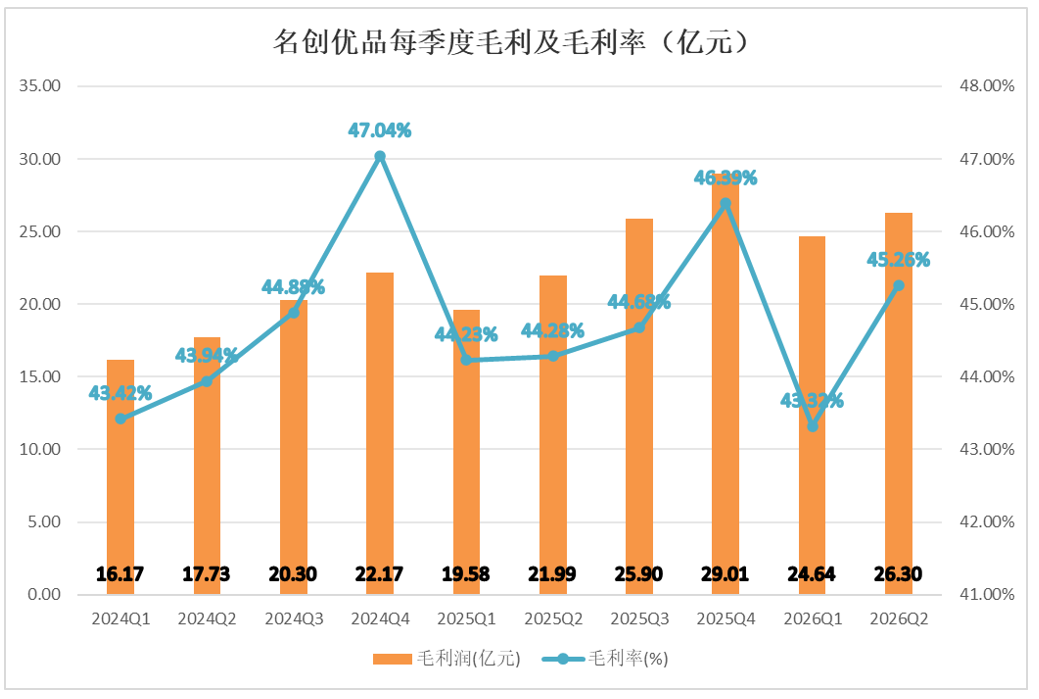
The true point of profit loss lies in the expense side, with sales and distribution expenses reaching 1.57 billion yuan in the second quarter of 2026, a year-on-year increase of 36%, and a fee rate increase of 373 basis points year-on-year. Looking at the first half of the year as a whole: the rent for directly-operated stores increased by 100 basis points, promotion and advertising expenses increased by 50 basis points, IP licensing fees increased by 50 basis points, and equity-based compensation increased by 40 basis points.
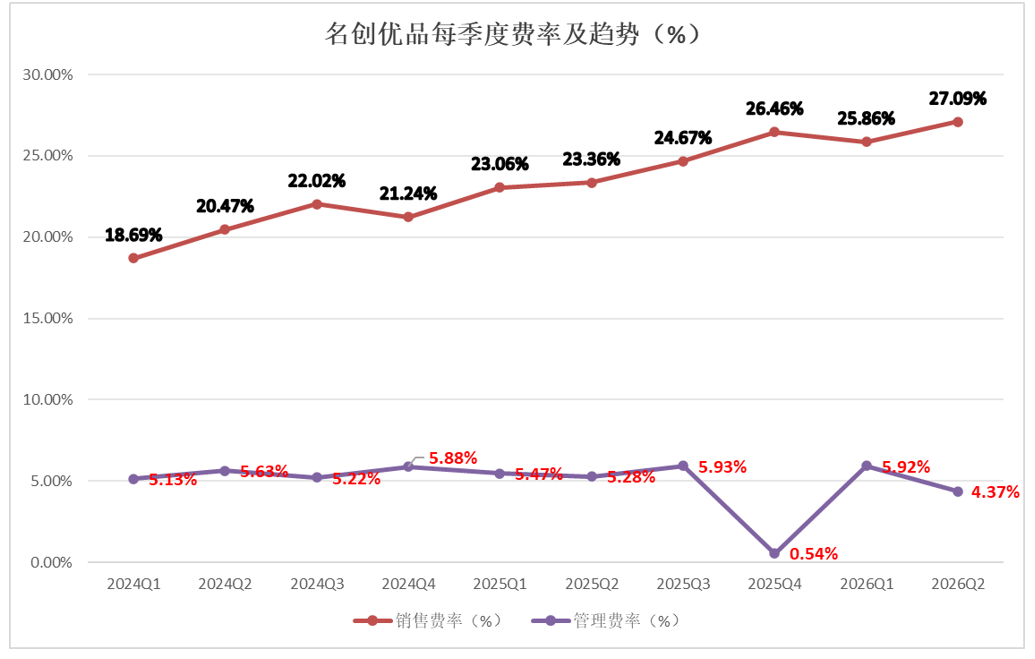
Among these, IP authorization fees are the most rigid, with historical data showing that in 2024, the full year reached 421 million yuan, and in the first half of 2025, an additional 241 million yuan was spent, with a year-on-year increase of 31.7%; in the first quarter of 2026, authorization fees increased by 42% year-on-year, accounting for approximately 2.6% of revenue.
Miniso has established partnerships with over 180 global IPs. 90% of the IP products in its stores come from external IPs such as Disney, Sanrio, and Harry Potter. For each co-branded product sold, Miniso must pay a licensing fee. The more popular the IP, the higher the licensing fee, and the more products Miniso sells, the more money it has to pay to the copyright holders.
Miniso is essentially a laborer for IP parties, acting as a middleman. In comparison to Pop Mart, the gap is evident.
Pop Mart's revenue in 2025 was 37.12 billion yuan, up 184.7% year-over-year, with a gross margin of 72.1%. The MONSTERS series, which includes LABUBU, generated 14.16 billion yuan in revenue. Miniso's gross margin of 45% was 27 percentage points lower than Pop Mart's. Pop Mart sells its own IP, retaining most of the profit, while Miniso sells others' IP, earning only the labor costs of channel distribution.
Miniso has put forward the product concept of "good-looking, fun, and useful". This concept was self-consistent when the company was selling affordable daily necessities, but in the context of IP retail, the first two aspects are the real reasons that attract young people to the stores. Whether the products themselves are useful or not becomes secondary in the face of IP.
This precisely highlights the issue - consumers are drawn to the IP, not to Miniso. The popularity of the IP determines foot traffic, and the IP licensor determines the profit margin, with Miniso merely serving as an executor in the entire chain.
Miniso is currently undergoing a radical transformation of its store formats, ranging from the high-end MINISO SPACE in top-tier business districts to the thousand-square-meter immersive park MINISO LAND, as well as MINISO FRIENDS targeting Gen Z, and then to Super Miniso, flagship stores, regular stores, and pop-up stores, with IP density decreasing progressively across the seven levels.
The higher the level of the store, the more priority is given to exclusive first releases and limited editions, with a higher proportion of IP products. Ordinary consumers who want scarce IP products have to go to the top three tiers, while regular necessities can be found in ordinary stores. This hierarchical logic sounds clear, but there is a fundamental contradiction that needs to be faced:
The large-store model has changed MINISO's turnover gene. MINISO LAND, the world's first global store, which opened on Shanghai's Nanjing East Road nine months ago, has achieved sales of over 100 million yuan, with an expected annual GMV of over 150 million yuan, a truly impressive figure. However, such stores require 2,000 square meters of space, prime location selection, high rent, and labor costs, which is also another major reason for the increase in marketing expenses in the first half of the year.
As the company plans to expand its Miniso stores from the current 65 to 200 by the end of 2026, it is actually disrupting the past retail essence of Miniso, which was "small stores with high efficiency, quick entry and exit". Large stores bring experience, but prolong user retention time and inventory turnover days.
At this stage, YOYO is not yet the solution.
Miniso apparently realized the limitations of "helping others sell goods" and thus came up with YOYO.
YOYO is Miniso's first original artist IP, which launched its first series of products in June 2025. In the first quarter of 2026, sales reached 165 million yuan, and in June 2026, monthly sales in the Chinese market exceeded 1 billion yuan. The full-year domestic sales target is 600 million yuan, and with overseas sales, it is expected to reach 1 billion yuan. In less than a year after its launch, it has appeared at the Met Gala, Paris Fashion Week, and the CCTV Spring Festival Gala. Ye Guofu said this is "currently the fastest IP product to achieve sales of over 1 billion yuan in the domestic market".
The speed is indeed fast, but being fast does not necessarily mean it is good.
This is largely due to relying on a "creating explosive fast-moving consumer goods" marketing strategy, with promotional and advertising expenses increasing 36% year-over-year in the second quarter of 2026. Adjusted net profit was only 529 million yuan, with the adjusted profit margin plummeting from 13.94% in the same period last year to 9.1%.
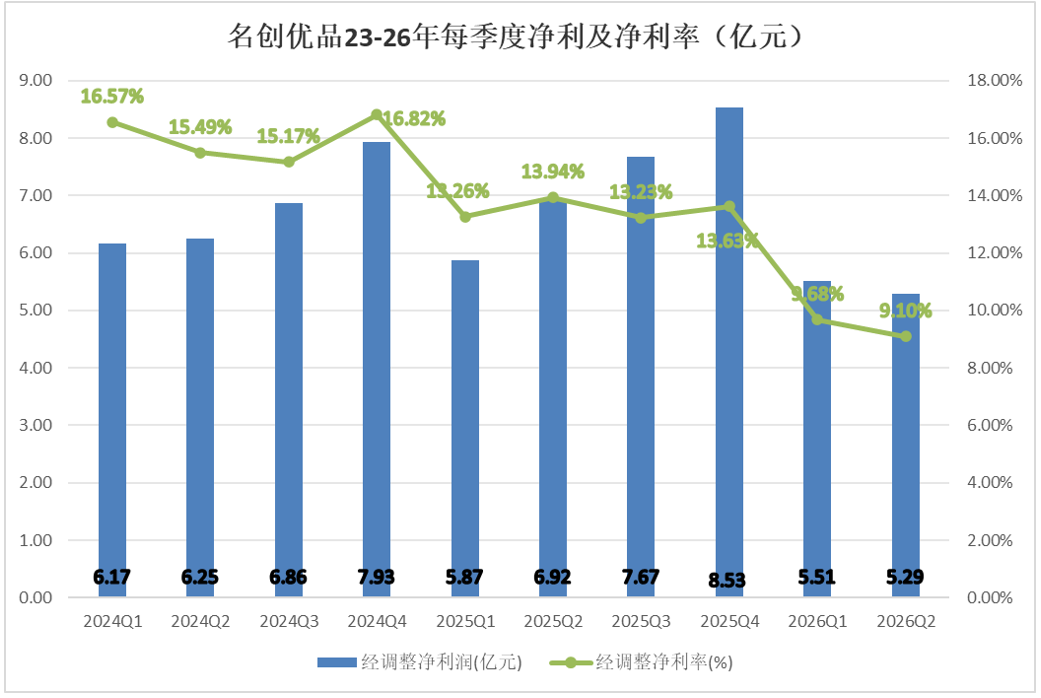
Clearly, the proprietary IP is not yet self-sustaining in terms of revenue generation and remains a cost center that requires continuous financial support from the parent company.
Ye Guofu has his own methodology for IP operations: "First, sign exclusive IP or incubate self-owned IP; second, develop products; third, put them on store shelves for sale while collecting data; fourth, conduct seeding and promotion for IPs with good data."
The essence of this methodology is the logic of retail blockbusters, which involves data screening, concentrated marketing, and a horse racing mechanism. It's like using the method of growing Chinese cabbage to grow trees, or using the ultimate efficiency of retail to operate IPs. Growing Chinese cabbage can be done quickly, but growing trees takes time. IPs require users to spend time discovering, understanding, and possessing them, and to inject personal meaning into them. This process cannot be accelerated, as seen in the case of Pop Mart's LABUBU, which took a full 5 years from signing to explosion.
YOYO is currently experiencing a typical case of "overexposure syndrome". When something that was originally a "small companion on the user's desk" is pushed onto the Met Gala red carpet, the user transforms from the owner to the audience. On Idle Fish, YOYO blind boxes have fallen to 50-60% of their original price, with free shipping. The hype created by marketing is fading away just as quickly.
More critically, Miniso currently has 16 self-owned IPs, but only two or three of them are truly popular. The foundation of its entire IP transformation is built on an IP that may be declining. If Miniso fails to incubate a second IP of the same level before the popularity of YOYO fades, its strategy will be disrupted.
Haste makes waste
It's clear that Ye Guofu has been a bit anxious over the past two years.
The acquisition of Yonghui, investment in an AI company, large-scale expansion of overseas direct operations, and aggressive promotion of its own IP YOYO, as well as the rollout of large MINISO LAND stores, all make sense individually. However, when viewed together, they indicate one thing: the company's leaders are seeking growth amidst anxiety, attempting to use speed to offset the uncertainty in the consumer market.
In September 2024, Miniso acquired a 29.4% stake in Yonghui Supermarket for 6.27 billion yuan. From Ye Guofu's on-site inspection of Pald at the end of July to the official announcement on September 23, it took less than two months; the transaction was completed in the first quarter of 2025, and Yonghui was consolidated into the financial statements using the equity method from the second quarter of that year.
One year later, the first report card was released. In 2025, Yonghui suffered a full-year loss of 2.552 billion yuan. Miniso bore an investment loss of 813 million yuan according to its shareholding ratio. Net profit plummeted from 2.635 billion yuan to 1.21 billion yuan, with Yonghui contributing 57% of the decline.
Yonghui saw an improvement in 2026, but also experienced setbacks, posting a profit of 253 million yuan, while revenue declined by nearly 20%.
Miniso and Yonghui, one being a light-asset retailer selling IP-related peripherals and the other a heavy-asset supermarket selling fresh produce, have almost no overlap in their supply chains, operational logic, or user demographics. The synergistic effects of this investment remain unclear to this day.
Another investment in AI company MiniMax also resulted in a floating loss of nearly 600 million yuan for Miniso.
Meanwhile, Miniso's asset-liability ratio has risen from 42.85% at the end of 2024 to 65.6% in the 2026 mid-year report, as diversification away from its main business increases leverage on the balance sheet.
Learning from Pop Mart, learning from Pinduoduo, investing in AI - Miniso has attempted to replicate others' successful formulas in every popular field. However, there is no such thing as "copying homework" to achieve success in the business world.
Miniso has also gradually come to recognize its own problems, with its interim results meeting expectations. The management team has conducted in-depth introspection on the slowing overseas business and explicitly stated that it will adjust its expansion speed and improve the profitability of its single-store model.
At the end of the day, Miniso's success relies on "supply chain efficiency" and "affordable pricing strategy". If it blindly pursues areas it is not skilled in, it will lose its supply chain and cost advantages, which is clearly putting the cart before the horse.
Those who are impatient may run fast, but they don't necessarily run far. (Author: Sui Yu)