The six emerging carmakers are divided into three tiers.
Original by Dingjiao One
On September 1, new energy vehicle companies submitted their August performance reports as usual.
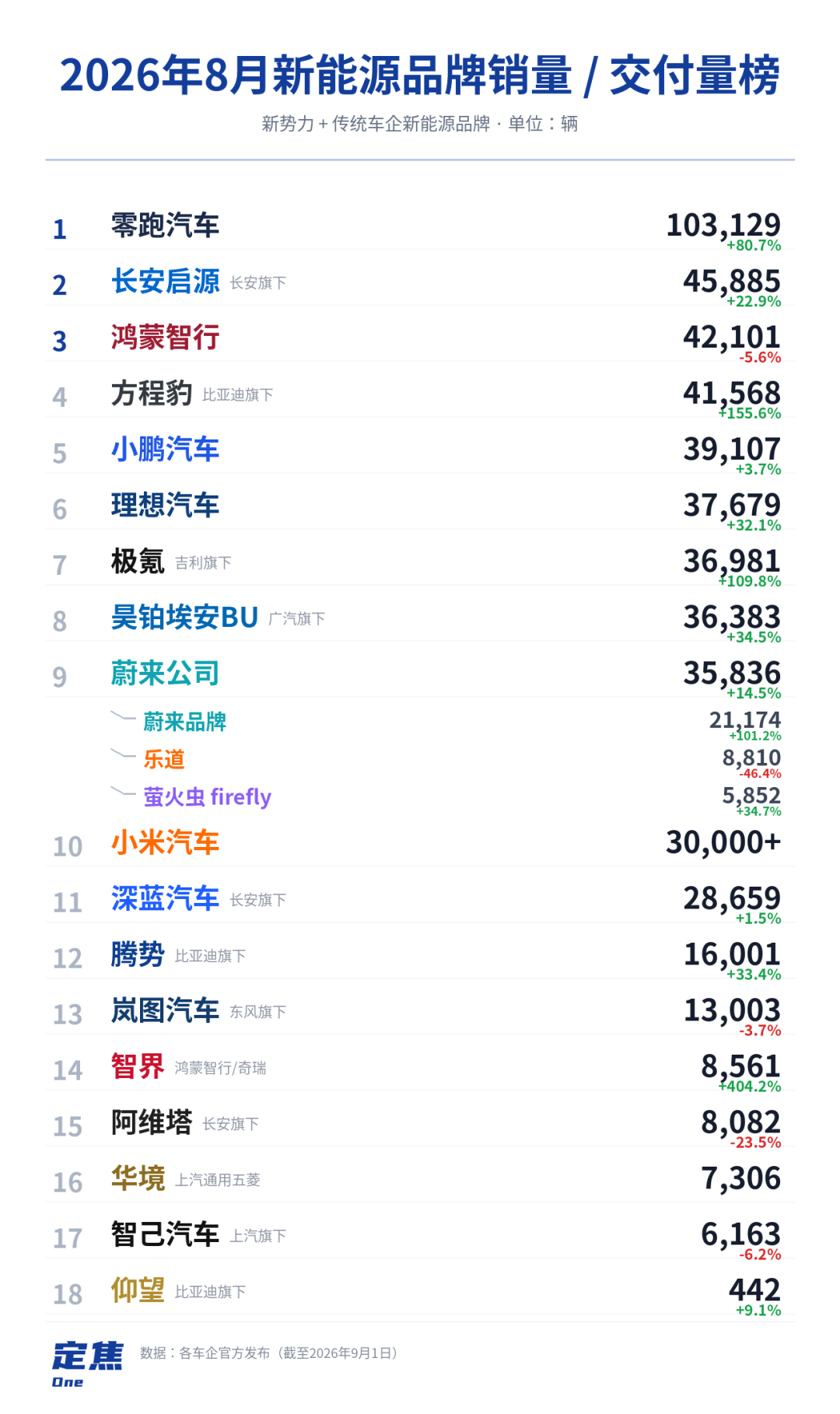
The top two rankings have remained unchanged for three consecutive months, while the gap in the middle remains narrow. Leapmotor continued to lead with 103,100 units delivered, Harmony Intelligent Mobility Alliance followed in second with 42,100 units, and XPeng ranked third with 39,100 units. Li Auto delivered 37,700 units, moving up to fourth place. NIO delivered 35,800 units, while Xiaomi only disclosed deliveries of "over 30,000 units."
Six new forces have formed into three tiers, with Leapmotor alone in the first tier, and Huawei's AITO, XPeng, Li Auto, and NIO concentrated between 35,000 to 42,000 vehicles, while Xiaomi has defended a threshold of over 30,000 vehicles.
It's worth noting that the partner car companies of Hongmeng Zhihang have released their August sales data. Sales of "Serilis Auto", which corresponds to the Askar brand, were 20,700 units in August, roughly the same as in July, while sales of Zhiji were 8,561 units, representing a year-over-year increase of 404.2%.
Expanding the scope to traditional automakers, based on the new energy vehicle sales data disclosed by leading automakers, BYD sold 433,400 vehicles in August, Geely New Energy sold 175,900 vehicles, and Chery New Energy sold 120,900 vehicles. The new energy business of leading traditional automakers' passenger cars has already reached the level of 100,000 to 400,000 vehicles.
At the brand level, traditional car manufacturers also have several new energy brands ranked at the top of the list. The competition is fierce in the 30,000-40,000 vehicle range, with Changan's Changan Kaicheng (45,885 vehicles) and BYD's Fangchuan (41,568 vehicles) exceeding 40,000 vehicles. Geely's Zeekr (36,981 vehicles) and GAC's Aion BU (36,383 vehicles) are in the 30,000 vehicle range.
Moving down the list, Deepal (28,659 units) is approaching 30,000; Denza (16,001 units) and Voyah (13,003 units) sit in the 10,000-to-20,000 range; Avatr (8,082 units), Huajing (7,306 units) and IM Motors (6,163 units) cluster between 6,000 and 8,000 units. BYD's higher-positioned Yangwang brand sold 442 units, a volume that puts it in a different league from the mass-market brands.
The sales range of traditional automakers and new forces has clearly overlapped. For new forces, even if monthly deliveries reach 40,000 units, it's difficult to pull away from brands in the same tier. The next thing to watch is whether new cars can continue to contribute to incremental growth and whether existing models can maintain their sales.
01. Leapmotor Stabilizes at 100,000, Hongmeng Zhihang Continues to Decline
The top two spots on the August list remained unchanged, but the gap between them has widened.
NIO delivered 103,129 vehicles, while Huawei's Harmony Auto delivered 42,101 vehicles, with a difference of approximately 61,000 vehicles, an expansion of around 4,800 vehicles from July. NIO has topped 100,000 vehicles for the second consecutive month, while Harmony Auto has seen two consecutive months of decline from its intra-year high in June.
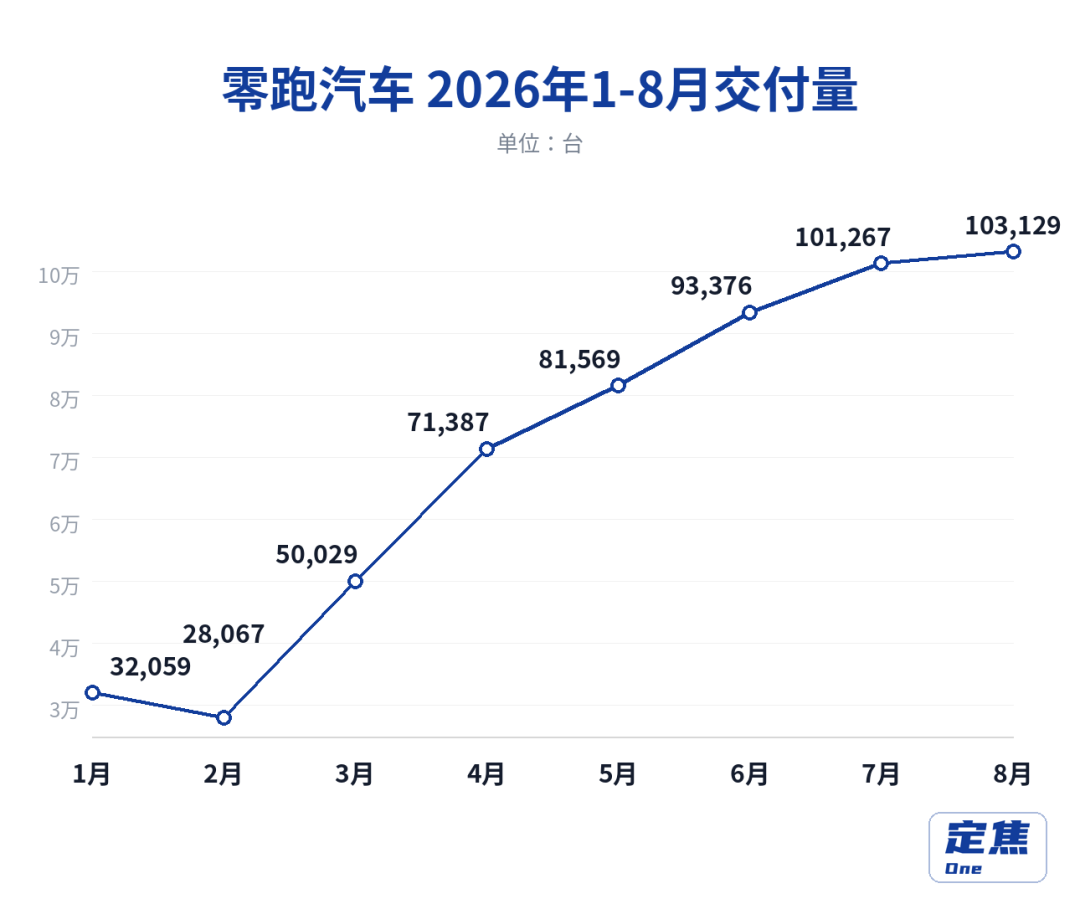
From March to August, XPeng has seen six consecutive months of month-over-month growth, with August growth slowing to 1.8% month-over-month.
This month, the company has taken numerous product-related actions. The A05, which was launched on August 11, further expanded the A series' coverage to the 60,000 to 90,000 yuan price range, extending the lineup from SUVs to sedans. Since the A05 was only launched mid-month, its full contribution is not yet reflected in August's delivery numbers. The previously updated B01 and B10 also entered their first full delivery month in August. Additionally, with the "818" car-buying privileges, XPeng is still seeking to gain market share through new models and promotions.
NIO has been able to consistently deliver 100,000 vehicles, mainly because multiple price ranges have models that contribute to sales. The A series is responsible for driving sales below 100,000 yuan, while the B and C series hold their ground in the mainstream price range, and the D19 attempts to push prices upward. Overseas markets have also provided some incremental growth. Several product lines have collectively boosted sales and reduced NIO's reliance on a single model.
In the first eight months of the year, NIO delivered a cumulative total of 560,883 vehicles. To meet the company's goal of delivering 1 million vehicles, it would need to deliver approximately 110,000 vehicles per month for the remaining four months, a threshold about 6,700 vehicles higher than in August.
While scaling up, Zerun also needs to balance the relationship between the large sales volume of low-priced models and gross margin. In the first half of the year, Zerun's delivery volume grew by 60.8%, revenue increased by 57.2%, and the company's net profit was 210 million yuan, but the gross margin dropped from 14.1% to 11.7%.
If low-priced models like the A05 continue to see increased sales, Zerun Auto can expand its sales volume, and its product structure will further shift towards low-priced models. Going forward, Zerun Auto will need to rely on its mainstay A series models to drive sales, while also using its D series to increase average prices.
Hongmeng Zhihang ranked second, delivering 42,101 vehicles in August, down 6.5% month-over-month and 5.6% year-over-year, marking its second consecutive month of decline.
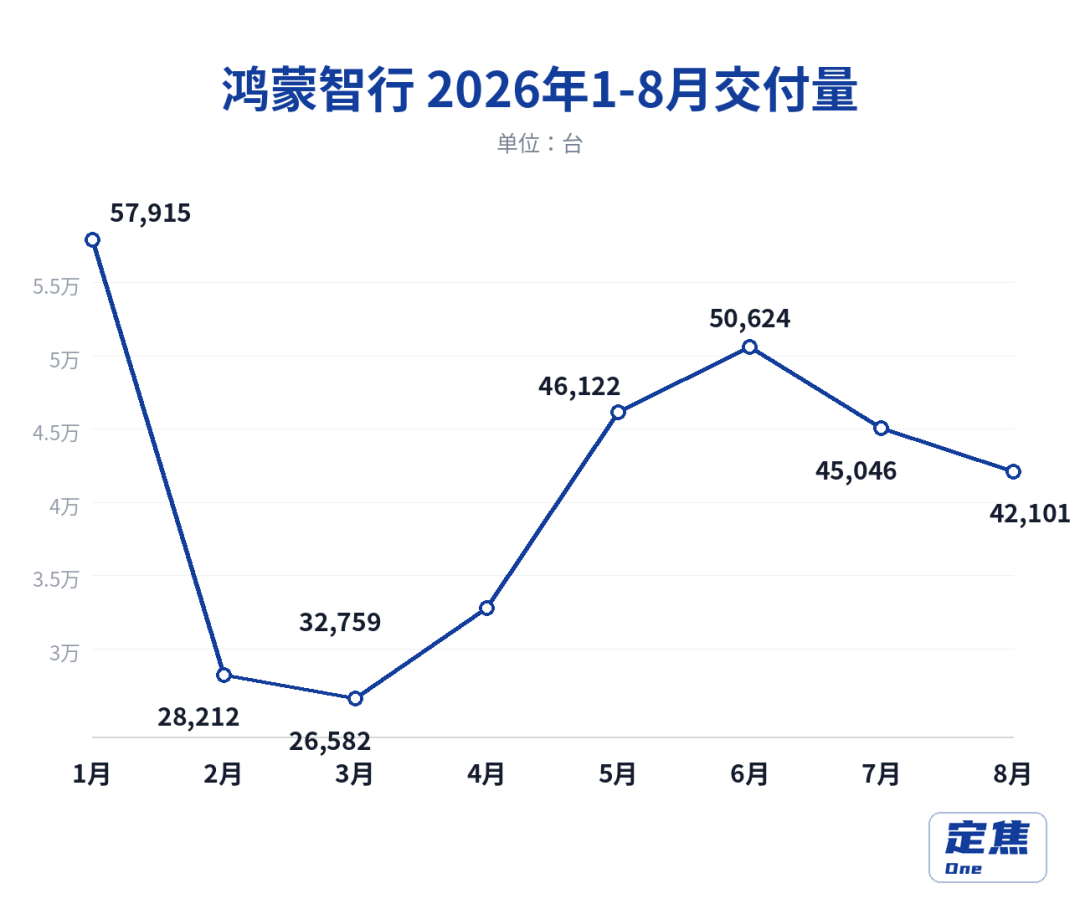
Deliveries by Harmony Intelligent Mobility fell from 50,624 units in June to 42,101 units in August, a decline of 8,523 vehicles over two months, or nearly 17%. Cumulative growth also slowed, from 18.6% in the first half to 10.8% in the first eight months. Overall volume continued to slide, though performance varied across individual brands.
Let's start with AITO, the sales mainstay. AITO did not disclose its August delivery figures separately. According to Seres' production and sales report, "Seres Automobile"—which essentially corresponds to the entity producing and selling AITO vehicles—sold 20,652 units in August, down 49.7% year over year. In July, it sold 20,480 units, up less than 1% month over month.
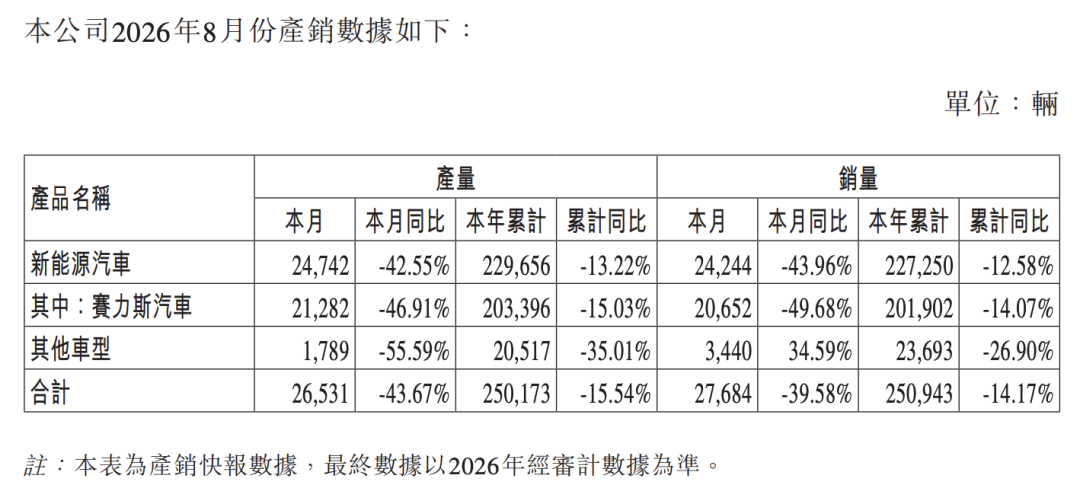
In August, Saic Motor's sales volume reached 443,000 units, with the company's production totaling 426,000 units.
In the first half of the year, the most important new product for Qijia was the M6. The M6 was revealed to have cumulative deliveries exceeding 40,000 units within 97 days of its launch by the end of July, and by the end of August, it was revealed that cumulative deliveries had exceeded 45,000 units within four months of its launch. The all-new M9 and other models are also being delivered, but the total sales of Seres Automobile in August were still around 20,000 units, indicating that Qijia's sales have not been significantly boosted by these new cars yet.
Looking at Chery's production and sales data, the sales volume of the Tiggo 8 in August was 8,561 units, up 404.2% year-over-year. According to data disclosed by Hongmeng Zhixing, the retail delivery volume of the Tiggo 8 V9 was 8,312 units, which was the main force for the month. For an MPV with a price approaching 500,000 yuan, this volume is not low.
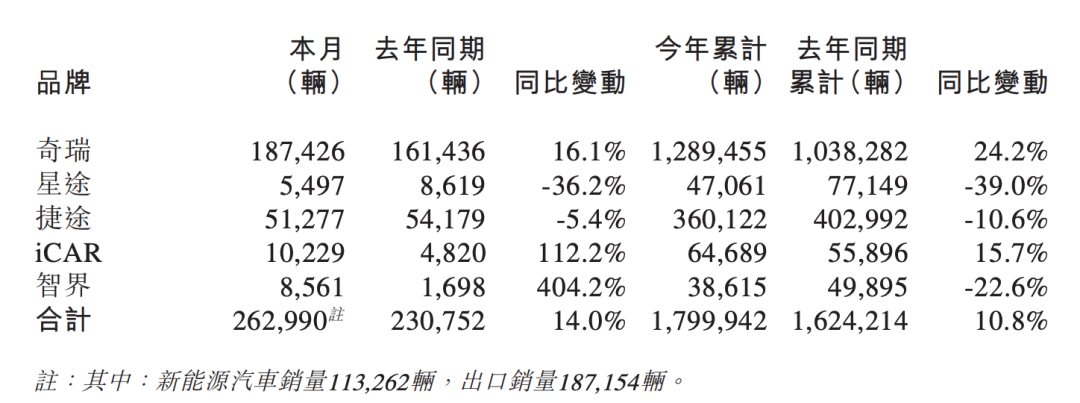
Chery Automobile's production and sales data for August showed that the company produced 13,019 vehicles and sold 12,511 vehicles during the month. The cumulative production and sales from January to August reached 143,041 and 134,039 vehicles, respectively.
However, over an extended period, Zhiyi's cumulative sales for the first eight months were 38,600 units, still down 22.6% year-over-year. Whether Zhiyi can recover its growth momentum depends on whether the V9's sales can be sustained and whether other models can keep pace.
The Jixiang G9, Zunxiang V800, and V680, which were launched in August, received a total of 8,500 orders within 24 hours of going on sale. However, these orders still need to be converted into deliveries. Moreover, the three models primarily target the market above 400,000 to 1 million yuan, and their impact on the average price and brand positioning is more direct than their effect on boosting sales volume.
Hongmeng Zhixing needs to boost overall sales, which requires asking Qiuji to restore growth, Zhijie to maintain its current scale, and let Shangjie and other brands continue to contribute to sales.
Based on the cumulative total of approximately 328,000 vehicles for the first eight months, if the lower limit of 1 million vehicles proposed at the beginning of the year is still used as a benchmark, the remaining four months would require an average monthly delivery of approximately 168,000 vehicles, nearly four times that of August. Compared to achieving the full-year target, a more pressing and realistic problem at present is to raise the monthly delivery back above 50,000 vehicles.
Xpeng held at 40,000, Li Auto rebounded
Xpeng ranked third and Li Auto ranked fourth, with a difference of only 1,428 vehicles, but the two companies had different performances in August, with one experiencing a small increase and the other rebounding from a low point.
Xpeng's sales rose from 38,027 units in July to 39,107 units, a month-on-month increase of 2.8% and a year-on-year increase of 4%, marking the second consecutive month with sales near 40,000 units. Li Auto's sales climbed from 30,468 units to 37,679 units, a month-on-month increase of 23.7% and a year-on-year increase of 32.1%, surpassing NIO once again.
In August, XPeng GX delivered 7,338 units, achieving consecutive month-over-month growth for three months. The MONA L03 entered its first full delivery month, and the G9L also started pre-sales on August 11.
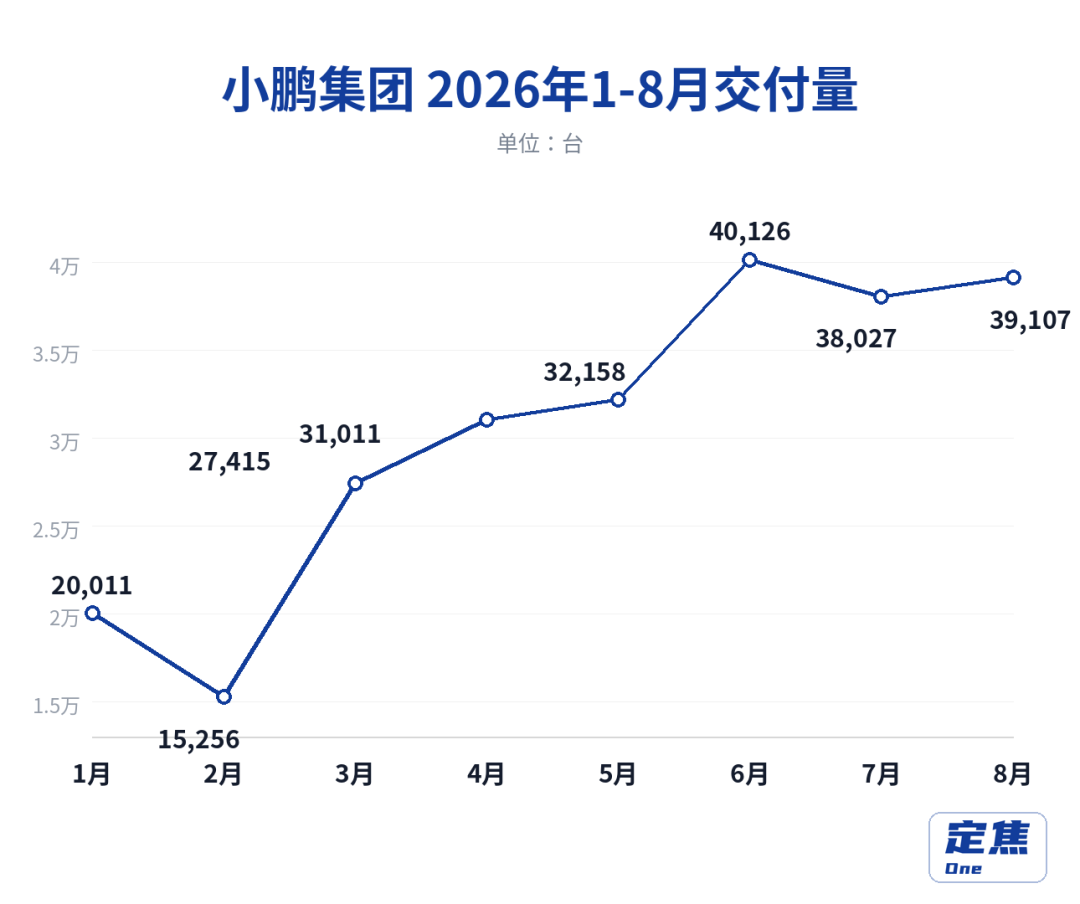
However, Xpeng's total deliveries in August only increased by 1,080 vehicles from July. The new car has contributed to sales, but its incremental increase was partially offset by fluctuations in other models.
Based on the company's third-quarter guidance, August's performance was largely in line with expectations. Xpeng forecast deliveries of 115,000 to 121,000 vehicles in the third quarter, with a total of 77,134 vehicles delivered in July and August. Delivering 38,000 to 44,000 vehicles in September would be enough to meet the guidance. By this measure, Xpeng is unlikely to struggle to meet the lower end of its guidance, but the overall volume has not expanded significantly.
In the second quarter, Xpeng's delivery volume only grew 0.1% year-over-year, with the automotive business gross margin declining from 14.3% to 12.1%, and the net loss expanding from 480 million yuan in the same period last year to 1.34 billion yuan. The L03 needs to first boost sales and stabilize its market position, while higher-priced models like the G9 and G9L will be tasked with improving the product structure and automotive gross margin. Only by accomplishing both tasks can the company's operations see a significant improvement.
After completing this round of product upgrades, Li Xiang's sales began to recover, rebounding to 37,000 units in August.
The new-generation L6, which was listed in mid-July, saw its first full delivery month in August; the L9, L8, and L6, the three main extended-range models, have also completed their upgrades. Meanwhile, the headlamp supply issue that affected the i6's production in July has been resolved.
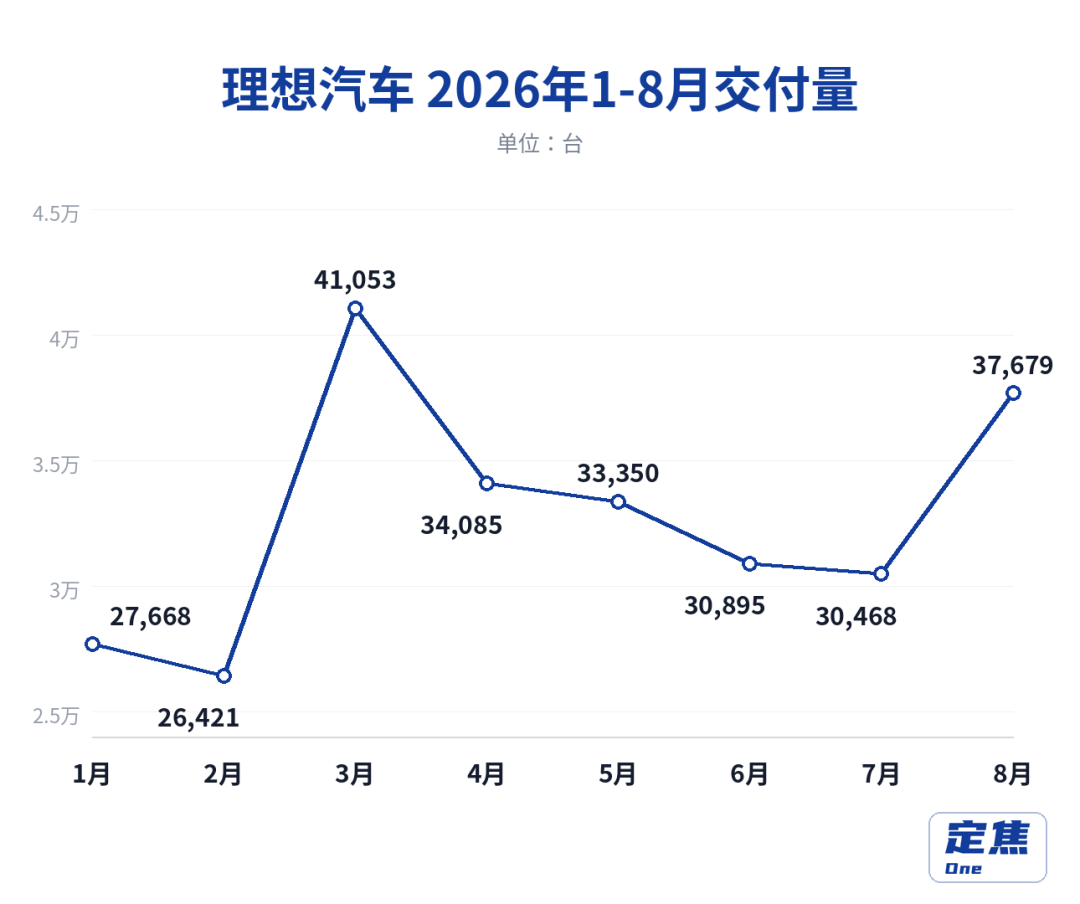
In terms of monthly trends, Li Auto has seen sales decline for four consecutive months since March, with July sales falling to just over 30,000 vehicles. August marked the first month-over-month increase in five months, but delivery volume was still lower than in March.
Profit recovery will be slower. Ideals' second-quarter deliveries fell 11.5% year-over-year, revenue declined 15.1%, and vehicle gross margin dropped from 19.4% in the same period last year to 9.4%, with a net loss of 1.7 billion yuan for the quarter. New high-end models like the L9 helped boost the vehicle gross margin from the first quarter, but it still lags far behind last year's level.
The delivery guidance for the third quarter is no longer a major concern. With cumulative deliveries of 68,147 vehicles in July and August, only around 27,000 to 32,000 vehicles need to be delivered in September to meet the guidance of 95,000 to 100,000 vehicles. What's more worth noting is whether the rebound in August can be sustained at a level of around 40,000 vehicles.
This round of updates has solved the short-term supply shortage of extended-range models, but pure electric products still mainly rely on the i6. After the new MEGA and i9 are launched, Li Xiang needs to have multiple pure electric models contribute to sales together, while improving the product structure. Whether pure electric sales and gross margin can keep up will depend on the next few quarters.
03. NIO sees internal trade-offs as Xiaomi awaits volume from Peng Cheng.
NIO delivered 35,836 vehicles, while Xiaomi continued to deliver over 30,000 vehicles, with both companies maintaining a delivery level of over 30,000 vehicles, but neither did so easily.
NIO has been stuck at around 36,000 vehicles for two consecutive months. In June, NIO once delivered 40,000 vehicles, but then fell back to a level of around 36,000 vehicles per month in the second quarter.
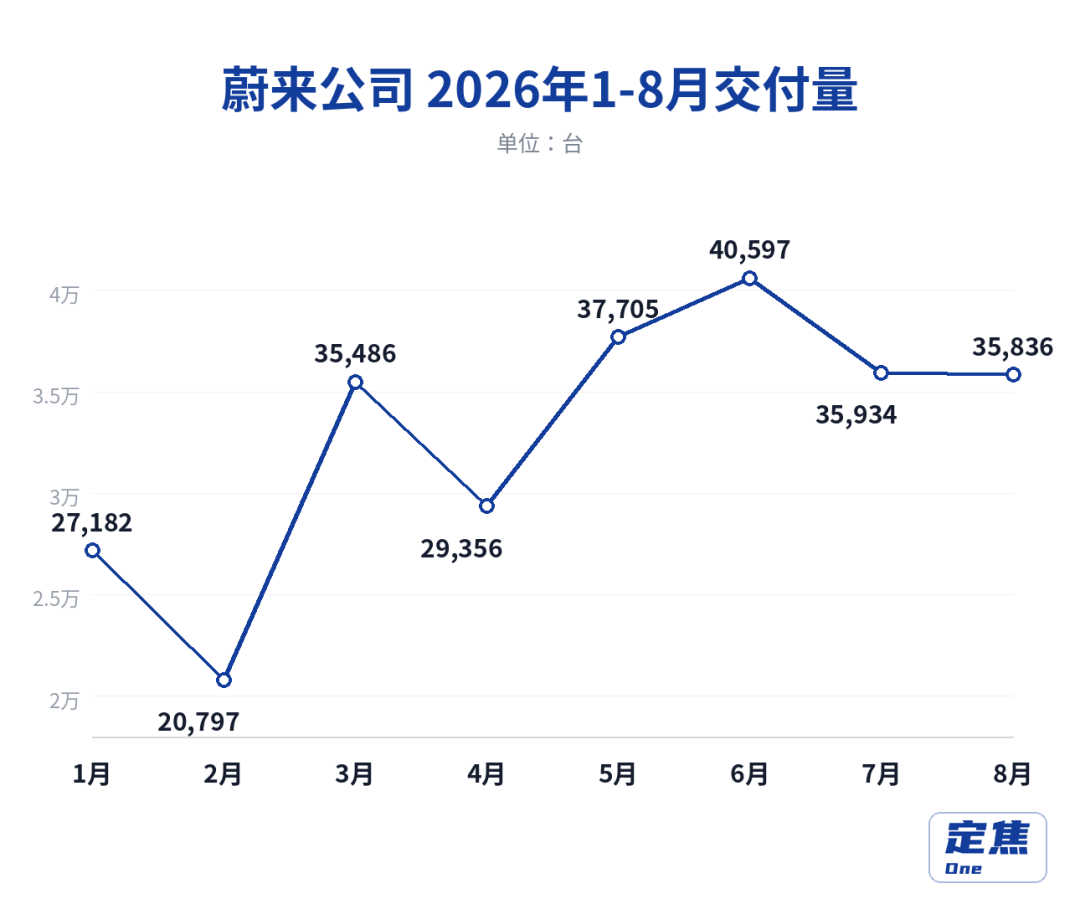
By brand, after the new ES8 large five-seater version started deliveries in July, NIO's main brand continued to maintain deliveries of over 20,000 vehicles, with 21,174 vehicles delivered in August, an increase of 1,166 vehicles from July; EC6 (5,852 vehicles) also remained at around 5,800 vehicles; ALPINE, on the other hand, fell from 12,029 vehicles in May to 8,810 vehicles in August, marking a third consecutive month of decline.
NIO's high-end and compact car product lines have basically stabilized, with total volume unable to return to 40,000 units, mainly because the ES series, which undertakes the task of scale, is still declining.
According to the latest financial report, NIO's loss in the second quarter narrowed significantly year-over-year, with the vehicle gross margin rising from 10.3% in the same period last year to 18.5%; the company's net loss for the quarter was 528 million yuan, with an adjusted net profit of 26.1 million yuan.
This round of improvement is mainly driven by own-brand and high-end models. Next, own-brand models need to continue to maintain their gross margin, while Lidao needs to restore growth and make up for the loss in scale.
NIO expects to deliver 108,000 to 111,000 vehicles in the third quarter. Having delivered a total of 71,770 vehicles in July and August, delivering approximately 36,200 to 39,200 vehicles in September would be enough to meet the guidance, which is not particularly challenging. This guidance is close to the actual delivery of 107,700 vehicles in the second quarter, indicating that the company will maintain its current scale in the third quarter.
Xiaomi has delivered more than 30,000 vehicles for five consecutive months, but the monthly trend has not continued to rise.
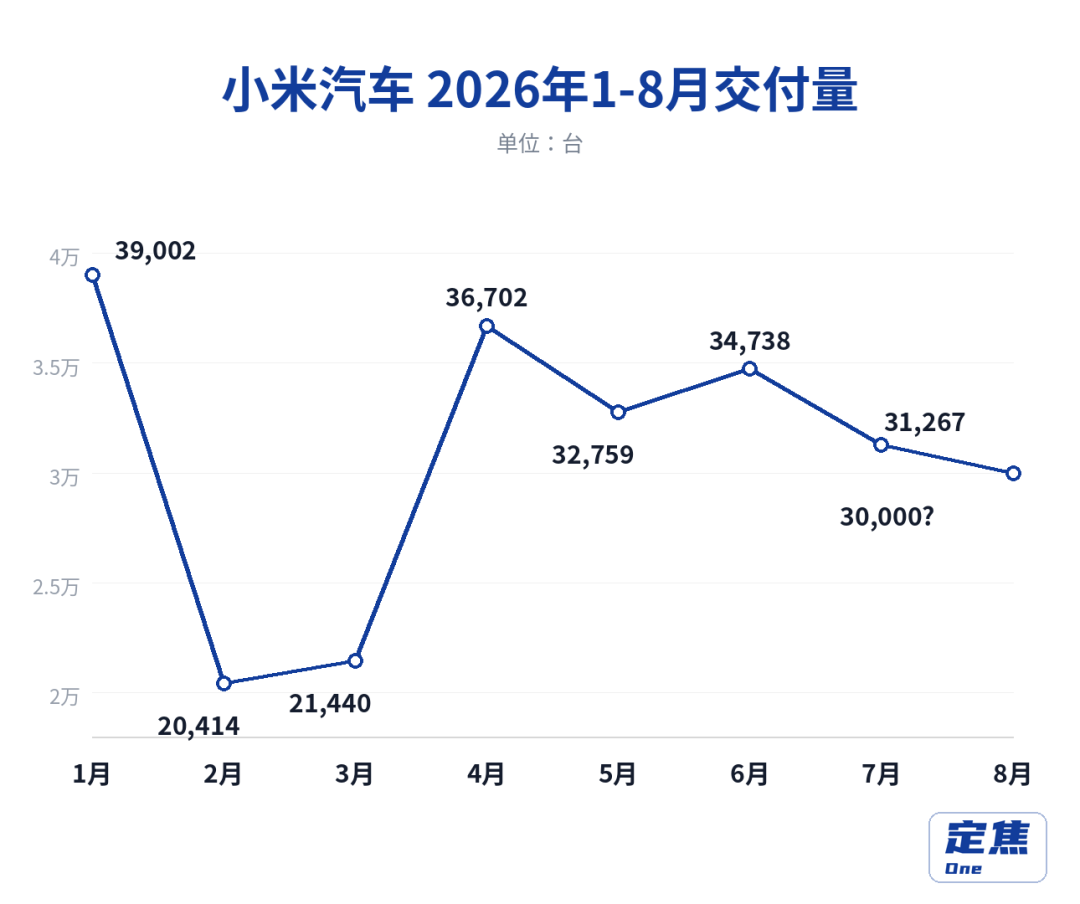
In January, Xiaomi delivered 39,000 vehicles. Due to the impact of product switching, deliveries dropped to just over 20,000 in February and March; after the new generation SU7 was delivered, deliveries rebounded to 37,000 in April. Since then, monthly deliveries have fluctuated between 31,000 and 35,000 vehicles. In August, it was disclosed that deliveries exceeded 30,000, but it is currently unclear whether this represents a rebound from July.
So far this year, Xiaomi has maintained a sales floor of 30,000 vehicles, but after the new generation SU7 was delivered in batches in April, the combination of the two models has not pushed monthly deliveries to a new level.
The full-year target and the current delivery speed are still far apart. According to the China Association of Automobile Manufacturers' retail data, in the first 8 months of this year, Xiaomi delivered at least 246,300 vehicles. In comparison to the full-year delivery target of 550,000 vehicles, the remaining 4 months will require a monthly average of approximately 76,000 vehicles, nearly twice the highest monthly sales this year. If the SU7 and YU7 continue to maintain their second-quarter monthly average of around 35,000 vehicles, Xiaomi will still need to increase deliveries by approximately 41,000 vehicles per month to approach its full-year target.
Therefore, the task Pengcheng shoulders is clear: the N70 and N90 must not only open up new customer segments through extended-range technology and family SUVs, but also quickly ramp up to volume deliveries after their September launch.
04. Conclusion
In August, there were plenty of new cars and purchase privileges, but most emerging automakers wanted to continue to push up delivery volumes, which has become increasingly difficult.
From an industry-wide perspective, the trend of new energy replacing fuel-powered vehicles remains, but the overall growth rate of the auto market has slowed down. Traditional automakers and new forces are simultaneously increasing their brands and models, resulting in more competitors in similar price ranges. New products and price cuts can still attract orders, but most of these are now a result of brands competing for existing market share.
This pressure is already reflected in the half-year report, as price cuts and purchase incentives have lowered the final transaction price, while the cost of some raw materials and parts has risen. At the same time, the development of new models, multi-brand operations, and channel expansion will also increase expenses. Sales growth may not necessarily lead to an improvement in gross margin, and losses may not shrink simultaneously.
How can they break through going forward? An investor focused on new energy vehicles told "DingJiao One" that product efficiency and profitability are fundamentally the issue. Adding more models can broaden market coverage, but it also risks price overlap and customer cannibalization. As a result, automakers need to ensure clear differentiation across their product lines, extend the stable sales cycle of their core models, and simultaneously cut costs across the entire chain—from R&D to sales—by sharing platforms and components, improving capacity utilization, and controlling marketing and channel expenses. When upstream costs fluctuate, supply chain management and pricing must also adjust in a timely manner.
Overseas markets do present opportunities, but progress varies significantly across companies. Some automakers have already secured meaningful sales abroad, while many others are still testing the waters—scouting channels and building local teams. Adapting to local regulations, establishing sales and after-sales networks, and reconfiguring supply chains all require time and investment, making it difficult for overseas markets to quickly fill the gap left by soft domestic demand.
This situation is also changing the way capital markets evaluate new forces. Electrification and intelligentization once led the market to view them as tech growth companies; but as the industry enters a stage of scale and profit realization, the market is starting to place more emphasis on gross margin, cash flow, and supply chain efficiency. Meanwhile, as funds and market attention focus on AI, some new forces are also beginning to emphasize AI, robotics, and embodied intelligence.
AI can enhance intelligent driving and cabin experiences, and potentially increase research and development, production, and sales efficiency. The robotics business, however, requires a longer research and development and commercialization cycle, and will also increase investment. These investments will take time to translate into stable business, and before that, the main automotive business still needs to bear the tasks of sales and profitability.
The monthly delivery rankings only reflect the current position of the automakers. Whether they can move beyond the plateau phase depends on their ability to generate profits from domestic operations, increase overseas sales, and successfully integrate AI investments into specific products that drive revenue.
The cover image is from the official Weibo account of XPeng Motors.