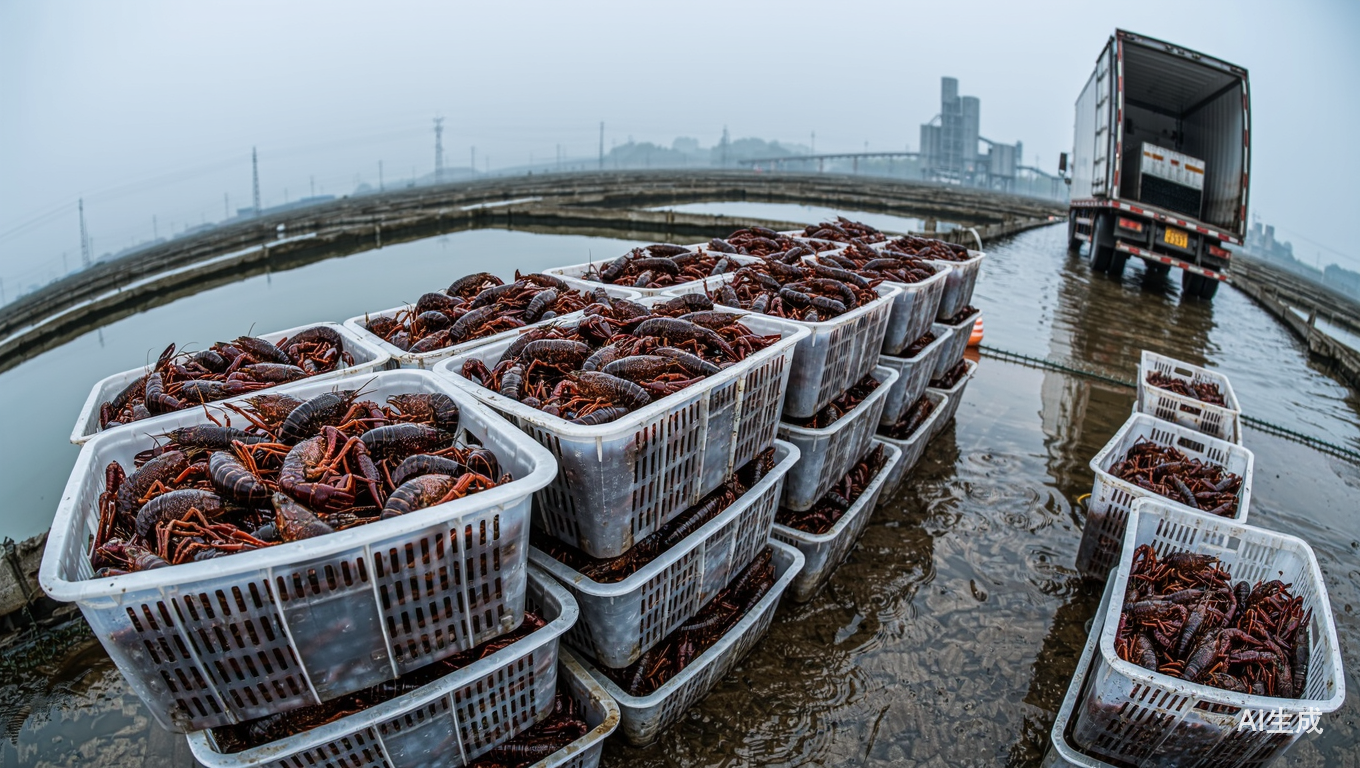
When restaurants are not selling well, where have the little lobsters gone?
After packing and shipping the last box of crayfish, Liu Qin's business for the year came to an end.
The August crayfish season is coming to a close, and the harvesting of crayfish from ponds is also nearing its end, with farmers busy clearing ponds, sorting, and boxing up the last batch of crayfish for shipment.
But this year, Liu Qin did not see a good harvest. "The market is weak, and we can't get good prices. Purchase prices dropped about 10 yuan from last year, and nine out of ten farmers are losing money," she said. She has been farming high-temperature shrimp in Dangtu County, Anhui, for four years. On the same 150 mu of shrimp ponds, she made 120,000 yuan last year but lost 90,000 yuan this year.
This year, the crawfish market has been unusually sluggish. Not only in Dangtu, but also in Tianmen, Hubei Province, the wholesale price at the farm gate has fallen to around 8.5 yuan per kilogram, while the cost line for farmers is around 8 yuan. After working hard for half a year, many small crawfish farmers are facing the reality of losing 1 yuan per kilogram sold.
What's even more unusual is that farmers are worried about low prices, but consumers are not excited about it. In the past, small lobsters were a typical example of a product where "the lower the price, the stronger the demand" - price cuts would stimulate consumption, and consumption would support upstream prices, forming a thriving industry chain between breeding, circulation, and catering. However, in 2026, this cycle seems to have failed to kick in.
Breeding farms are losing money and restaurants can't sell them, so where have all these constantly growing small lobsters gone?
Farmers suffered heavy losses
"Both volume and price have fallen," a common experience for many breeders this year.
According to statistics from the crayfish industry branch of the China Aquatic Products Circulation and Processing Association, from January to July this year, the overall price of crayfish of different specifications was approximately 30% lower than the same period in the previous two years.
"Not yet ashore, another year of futile effort." After completing the year-end work, Liu Qin calculated her investment over the past four years and found that the business still hadn't broken even, which made her consider quitting the breeding industry.
At Liuqin's several ponds, the yield per mu this year is only 100-170 jin, a significant decline from previous years. Meanwhile, the average purchase price at the ponds has decreased by about 10 yuan per jin compared to the same period last year, and even high-quality high-temperature shrimp are having difficulty selling for the prices they commanded in previous years.
"I was busy the whole year and lost 90,000 yuan, while the aquaculture farmer next door lost over 100,000 yuan," Liu Qin told Red Catering Net, this year's crayfish breeding market was very poor, with nine out of ten farmers operating at a loss.
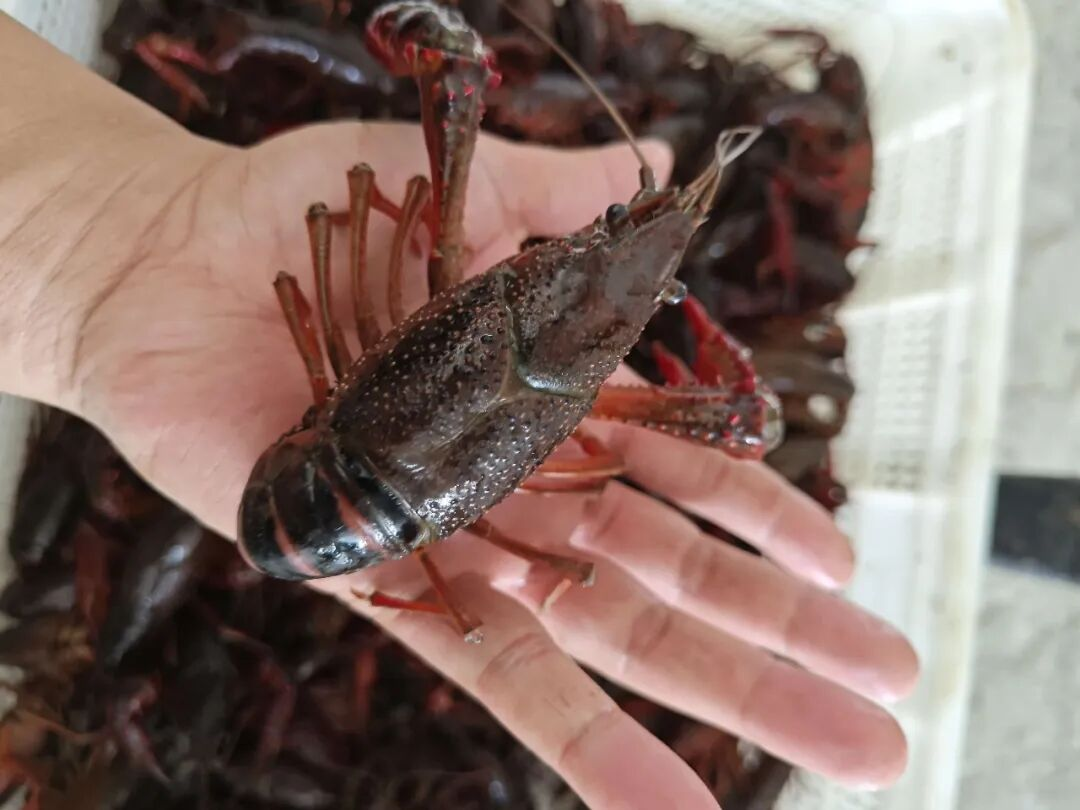
Photo source: provided by the interviewee
In Anhui Ma'anshan, another breeder, Xu Jun, has also experienced a similar situation in his shrimp farm this year, where "there are fewer shrimp and they cannot be sold at a good price".
Xu Jun started raising shrimp in 2015, and his current ponds cover 450 mu. This year, the average yield per mu is about 200 kilograms, with some ponds producing even less than 200 kilograms, whereas in previous years, the yield per mu could reach 250-300 kilograms.
Xu Jun recalled that the price of Tangkou had dropped to around half of last year's level in the early part of this year, and was even lower at times. Taking medium-sized shrimp priced at 4-6 yuan as an example, the average purchase price was only 12 yuan per catty, with the highest price being around 15 yuan per catty, "resulting in profits shrinking by about two-thirds compared to previous years."
Anhui production areas saw both output and prices fall, and Hubei was much the same. Wei Yang, who farms crayfish in Honghu, Hubei, said plainly that this year’s prices are the lowest in three years. “For 150 mu of crayfish ponds, the cost is 7.8 yuan per jin, and the average price is 15 yuan. I lost 120,000 yuan this year.”
Behind the price hitting a near three-year low
The sluggish upstream market is attributed to the unusual weather, which is the direct driving force behind it.
According to monitoring data from the National Climate Center, the national average temperature during the 2025-2026 winter was more than 1.5℃ higher than the same period in previous years. After the water temperature rose, crayfish ended their winter hibernation, foraged, and molted ahead of schedule. Early shrimp, stored pond shrimp, and newly stocked shrimp entered the market in concentration, with their launch time overall advancing by half a month to a month compared to previous years.
This caused the supply that was supposed to enter the market in a staggered manner to instead concentrate in the same sales cycle this year. By the traditional peak launch period of May and June, the novelty of the crayfish had already been consumed in advance.
In addition to the abnormally high temperatures, excessive rainfall has also increased uncertainty for aquaculture. Wei Yang said that continuous rainfall can easily cause changes in the water quality and bottom conditions of shrimp ponds, increasing the risk of stress, disease, and death among small lobster, and resulting in higher management costs and increased losses for farming.
Notably, the abnormal weather led to reduced yields per mu of shrimp ponds, but the overall quantity of small lobster in the market did not decrease. Oversupply is the direct cause of the decline in upstream procurement prices.
In recent years, the crawfish market has been booming, attracting a large number of farmers to enter the industry. In traditional production areas, large-scale farming has become increasingly common, and new production areas are constantly emerging.
According to estimates by the Red Cuisine Industry Research Institute, the national crayfish breeding area is expected to reach approximately 31 million mu in 2025, with a breeding output of around 3.75 million tons. In addition to traditional production areas such as Hubei, Anhui, Hunan, Jiangsu, and Jiangxi, emerging production areas including Guangxi, Hainan, and Heilongjiang are also developing crayfish breeding.
Restaurant sales slump: where did nearly 4 million tons of crayfish go?
The price of small lobster has hit a new low, but consumption enthusiasm on the catering end has not increased accordingly.
In the past, summer nights often centered around crayfish. Nowadays, categories such as barbecue, hot pot, Sichuan cuisine, and fried chicken are all vying for the same nighttime consumption. Crayfish has gone from being the "main character" of nighttime snacks to just one of many options for consumers, with consumption heat continuing to decline.
In response, Xu Jun's reaction was straightforward: "Money is getting harder and harder to earn. People don't have much money left in their pockets. Everyone is tightening their belts, and fewer people are eating out."
According to Hongcan Big Data, in September 2024, there were approximately 99,000 crayfish restaurants nationwide, which had shrunk to around 61,000 by April 2026, a decrease of nearly 40% in over a year. The reduction in stores means that the offline consumption scenario for crayfish is shrinking year by year.
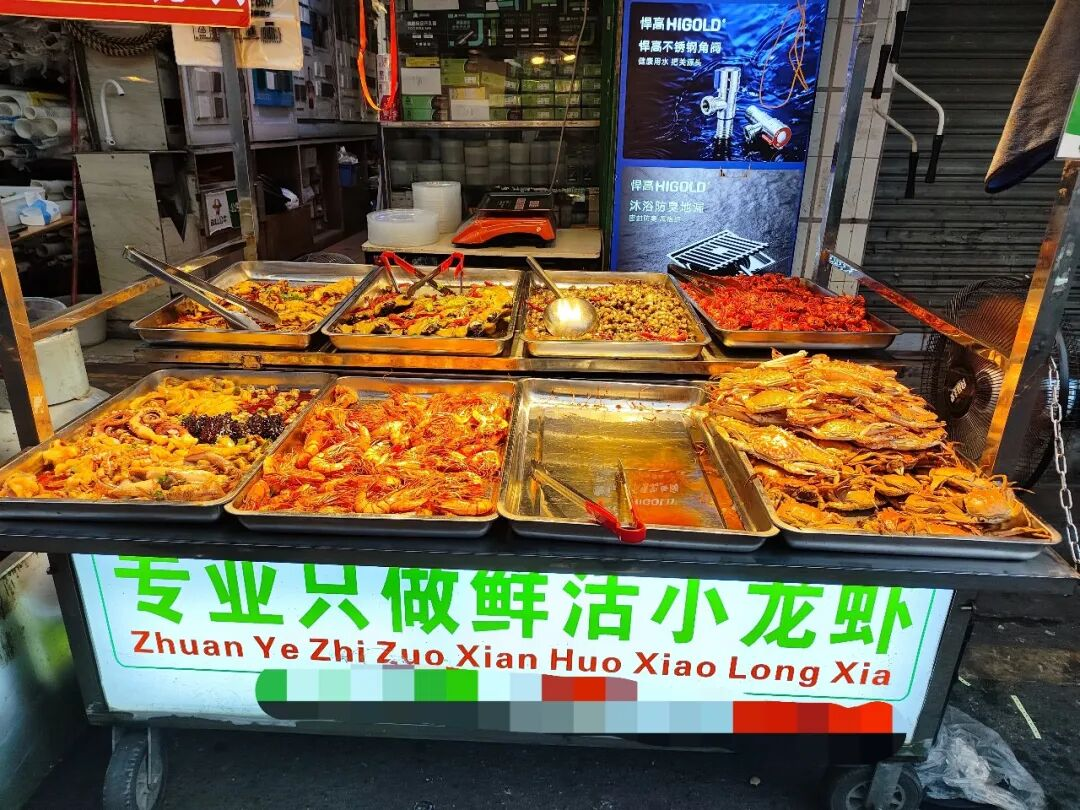
Photo source: taken by Red Catering Net
A new contradiction has emerged: while restaurant demand softens, crayfish output keeps climbing. Where is all the surplus going?
The answer is – shifting from offline banquet tables to family dinner tables.
Over the past two years, supermarkets, e-commerce platforms, and livestreaming channels have emerged as new sales outlets for crayfish. Consumer purchasing habits are also shifting from dining out to buying crayfish to prepare at home.
According to Xinhua Net, from January to July 2026, the sales of fresh small lobster at Yonghui Supermarket increased by 33% year-over-year, with approximately 880,000 customer purchases, a year-over-year increase of nearly 30%. The sales of pre-packaged small lobster products online are also growing: in a Jiangsu agricultural assistance live broadcast in June, the sales of Xuyi small lobster exceeded 330,000 boxes in a single session; during the Labor Day holiday, the sales of small lobster on Douyin's group buying platform increased by 69% year-over-year.
This also means a new possibility for farmers: instead of just waiting for wholesalers to come and collect the shrimp, they can proactively sell the shrimp directly to consumers.
Xu Jun has been selling small lobster online for over two years. He told Red Catering Net that online sales are higher every year, and the profit is also higher than selling directly to pond mouth purchasing agents.
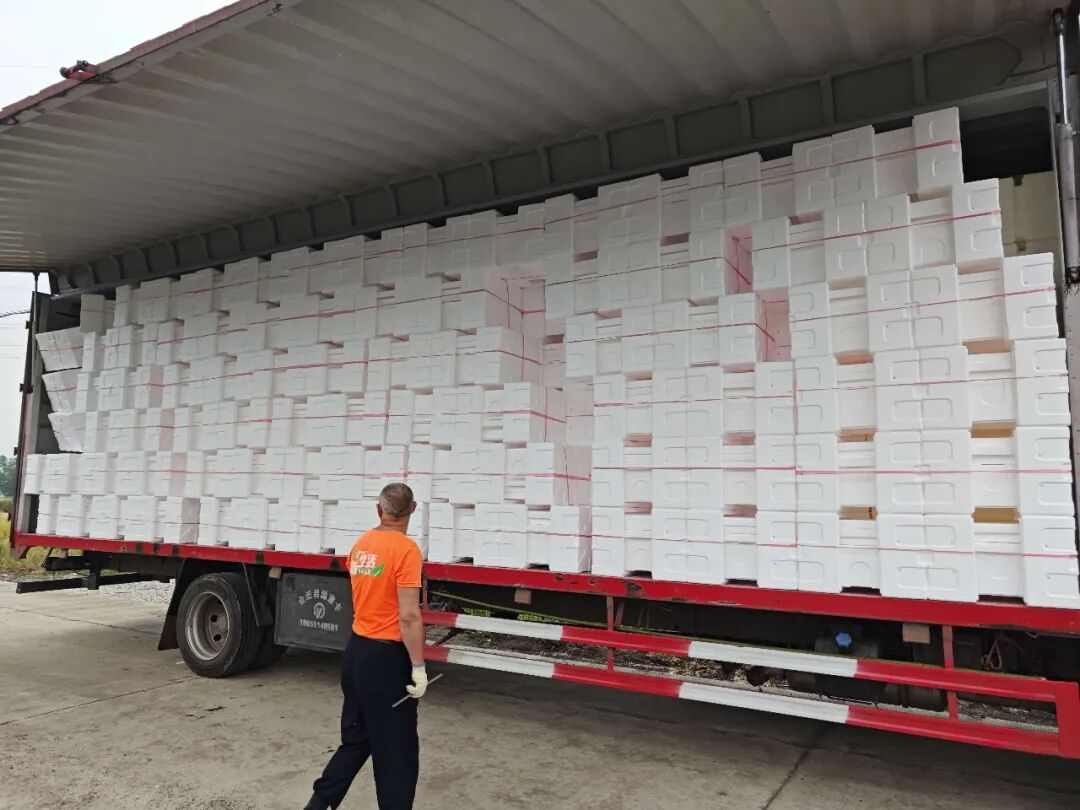
Another approach is to turn live small lobsters into processed products that are easier to circulate.
Live crayfish are constrained by transportation radius and shelf life, leading to significant price volatility and high risks for farmers. However, processing them into products such as crayfish tails, seasoned crayfish, and ready-to-eat varieties not only extends the sales cycle but also enhances the product's added value.
Hunan Shunxiang Food Co., Ltd. is a case in point. This company, which originated from crawfish farming, has been continuously extending its business to deep processing in recent years, shifting from selling live crawfish to seasoned dishes and pre-packaged meals, and further expanding into supermarkets and overseas markets.
According to the Xiangxiang Morning News, Shunxiang Food has partnered with major supermarkets such as Sam's, BBK, and Yonghui, with sales reaching 820 million yuan in 2025. As of early June this year, the order value has exceeded that of the entire previous year, and sales are expected to exceed 1.1 billion yuan in 2026.
This year, Shunxiang Food also plans to invest 1 billion yuan in the construction of a crayfish production workshop at the Zhuhe Modern Aquatic Products Industrial Park in Hubei, with an expected annual processing capacity of 40,000 to 50,000 tons of crayfish.
According to reports from Hongcannet, many individual investors have also started to send large quantities of small lobster to factories. At its peak, Wei Yang's 150 mu of lobster ponds can harvest over 30,000 jin per day, with around 7,000 jin of qualified lobster being sent to local processing plants.
From live sales to deep processing, crayfish are seeking new outlets beyond catering, which will also drive the adjustment and upgrade of the entire crayfish industry chain in the long run.
As the peak-season dividend fades, crayfish now faces a more mature market—consumption will not keep growing at breakneck speed. The industry's real challenge is no longer just how to farm crayfish, but how to sell and process more of it, and secure more stable consumption scenarios.
In this sense, the low-price wave of 2026 may be more than just a downturn in the crayfish market—it is an adjustment as this rapidly expanding industry begins to rebalance supply and demand.