
In June this year, Sam's Club reduced the daily purchase limit for a box of 30 fresh eggs from 10 boxes to 5 boxes, and then further to 2 boxes.
Two months later, the price of this box of eggs rose from 18.9 yuan to 21.8 yuan. Sam stated in the announcement that the original price had been maintained for several months, but due to supply shortages and insufficient quantities, a price adjustment had to be made.
In the same summer, Walmart released its Q2 earnings report for fiscal year 2027. The company's China region reported net sales of $7 billion, representing a 20.7% year-over-year increase, making it the fastest-growing market for Walmart globally. In contrast, same-store sales in the US rose by only 2.6%, a more than six-year low, and the company's stock price fell by over 6% in pre-market trading following the earnings release.

Walmart CFO John David Rainey said that in terms of total revenue, Walmart's best-performing stores are in China - specifically, its Sam's Club stores in the country.
Another factor supporting China's performance is membership data. Walmart China CEO Zhu Xiaojing provided three numbers: it took Sam's Club 21 years to go from zero to its first 1 million paid members, three years to reach the second 1 million, and nine months to reach the third 1 million.
As of the first half of 2026, Sam's Club China's membership has reached a historic high, with annual revenue from membership fees alone approaching 3 billion yuan. Total sales across all channels have exceeded 140 billion yuan, contributing to more than 80% of Walmart China's revenue, with average annual sales per store exceeding 2 billion yuan.
In a market where physical retail is generally contracting, Sam's Club is one of the few players that is still accelerating.
On one hand, there are price hikes and purchase restrictions, while on the other hand, membership sign-ups are accelerating. These phenomena collectively form one of the most noteworthy aspects of China's retail consumption market in 2026.
In 2023, LatePost reported that Sam's only sells ordinary eggs for 0.8 yuan each and grain eggs for no more than 1.9 yuan each, with only two packaging options: 30-piece and 60-piece sets, and no small retail packages of 2, 6, or 10 pieces.
This epitomizes Sam's "wide category, narrow SKU" strategy, which offers a wide range of categories but only one to three options per category, allowing consumers to trust Sam's without being overwhelmed by excessive choices.
This logic is efficient and convenient in daily operations, but its vulnerability is also exposed when there are drastic fluctuations in external supply.
The rise in the price of Sam's eggs is not coincidental. In 2025, the layer chicken breeding industry was in a state of loss for 11 months out of the year. A large number of breeders culled old layer chickens ahead of schedule, and the willingness to replenish stocks with new chicks was sluggish.
By the second quarter of 2026, the national inventory of egg-laying hens had fallen to a recent low, with effective production capacity decreasing by 5% to 6%. Coupled with the high costs of feed such as corn and soybean meal, the wholesale price of eggs rose by more than 30% in a short period.
Monitoring data from the Ministry of Agriculture and Rural Affairs shows that the wholesale price of eggs reached 5.1 yuan per kilogram in early June, a high for the same period in nearly a decade.
Sam's Club, Boxed Meal, and JD 7Fresh almost simultaneously implemented purchase limits. However, their situations differ. Boxed Meal and 7Fresh offer over a dozen to several dozen types of eggs, allowing them to flexibly adjust their product mix in response to shortages. Sam's Club only has three types of eggs. When the upstream supply chain tightens, the "small but refined" product selection becomes "small but lacking," with extremely limited room for maneuver.
Although Sam's Club initially chose to absorb the price increase, wholesale prices have been rising consecutively since April, and the company maintained the original price for nearly four months, while repeatedly tightening purchase limits. Eventually, the price of 1.59 kilograms of selected fresh eggs was adjusted from 18.9 yuan to 21.8 yuan, a increase of approximately 15%, which is significantly lower than the over 30% increase in the wholesale market during the same period.
First, they absorb the costs, then implement purchase restrictions, and finally make slight price adjustments. The logic behind this operation is that in a membership-based model, goods are not the profit center, but rather membership fees are.
The most interesting thing is that Sam's eggs were once targeted by daigou and scalpers, and despite the purchase limit being reduced from 10 boxes to 2 boxes, they were still in short supply. On social media, some members complained that they couldn't get their orders in online. A user who buys eggs from Sam's every week said that when she opened the app, it showed that they were sold out for a whole week.
No one would have imagined that a retailer with annual sales exceeding 140 billion yuan would be stumped by a carton of eggs.
If the egg shortage was just an external shock on the supply side, then Sam's own problems stem from internal issues of growing too quickly.
On June 15, 2026, the Market Regulation Bureau summoned Walmart (China) Investment Co., Ltd., also known as the Sam's Club headquarters, in accordance with the law. The reason was "repeated food safety issues discovered by regulators and exposed by the media at Sam's offline stores and online shops over a period of time." The summons was not related to an isolated incident at a single store, but rather a systemic issue.
On the same day, the headquarters of Sam completed its business registration change, with Liu Peng taking over as the legal representative and chairman. Subsequently, Sam's Chief Procurement Officer, Zhang Qing, submitted his resignation.
Replacing the two most critical management positions during a period of rapid expansion itself underscores the severity of the issue.
Liu Peng's resume is intriguing. His most core professional experience was at Alibaba, where he served as general manager of Tmall International, president of Tmall's import and export business, vice president of Alibaba Group and president of the B2C retail business group, and president of the brand business development center of Taobao Group. He left Alibaba in April 2024 and joined Sam's Club in October 2025. An industry insider who has worked with Liu described him as a "typical professional manager".
Walmart has appointed a former Tmall president to oversee Sam's Club China, valuing his experience in managing large-scale organizations and high-growth businesses.
Media reports say that Sam's Club plans to open 8 to 10 new stores every year, accelerating from its previous pace of around 6 per year.
However, the management complexity brought about by rapid expansion has far exceeded linear growth. A previous report by ifeng.com stated that the research and development cycle for Sam's products used to be 12 to 18 months, but has recently been compressed to 3 to 6 months. The East China specialty products team was disbanded, and the product selection strategy shifted from "specialty first" to "efficiency first".
A supplier quoted in a LatePost report said that Sam's procurement team has "a microscope" in their eyes, being extremely sensitive to both cost and quality, and able to break down a product's complete cost model from raw materials to logistics within over an hour. This capability is built on long-term accumulation and a stable team.
When the chief procurement officer changes, the procurement team is adjusted, and the product research and development cycle is significantly shortened, it is uncertain whether the precision of the microscope can still be maintained.
Sam's biggest competitor in China is not Boxed Mart, nor Costco, but time.
Costco opened its first store in Shanghai in 2019 and currently has only 7 stores in mainland China, with the last new store opening dating back to 2024. Costco CEO Ron Vachris denied that growth has "stalled," saying it is a "deliberate pace" - first entering the market, opening a few stores to understand the culture, and then entering a stable growth trajectory. Costco plans to increase its number of stores in China to 16 by the 2030 fiscal year, with 5 in South China and 4 in East China.
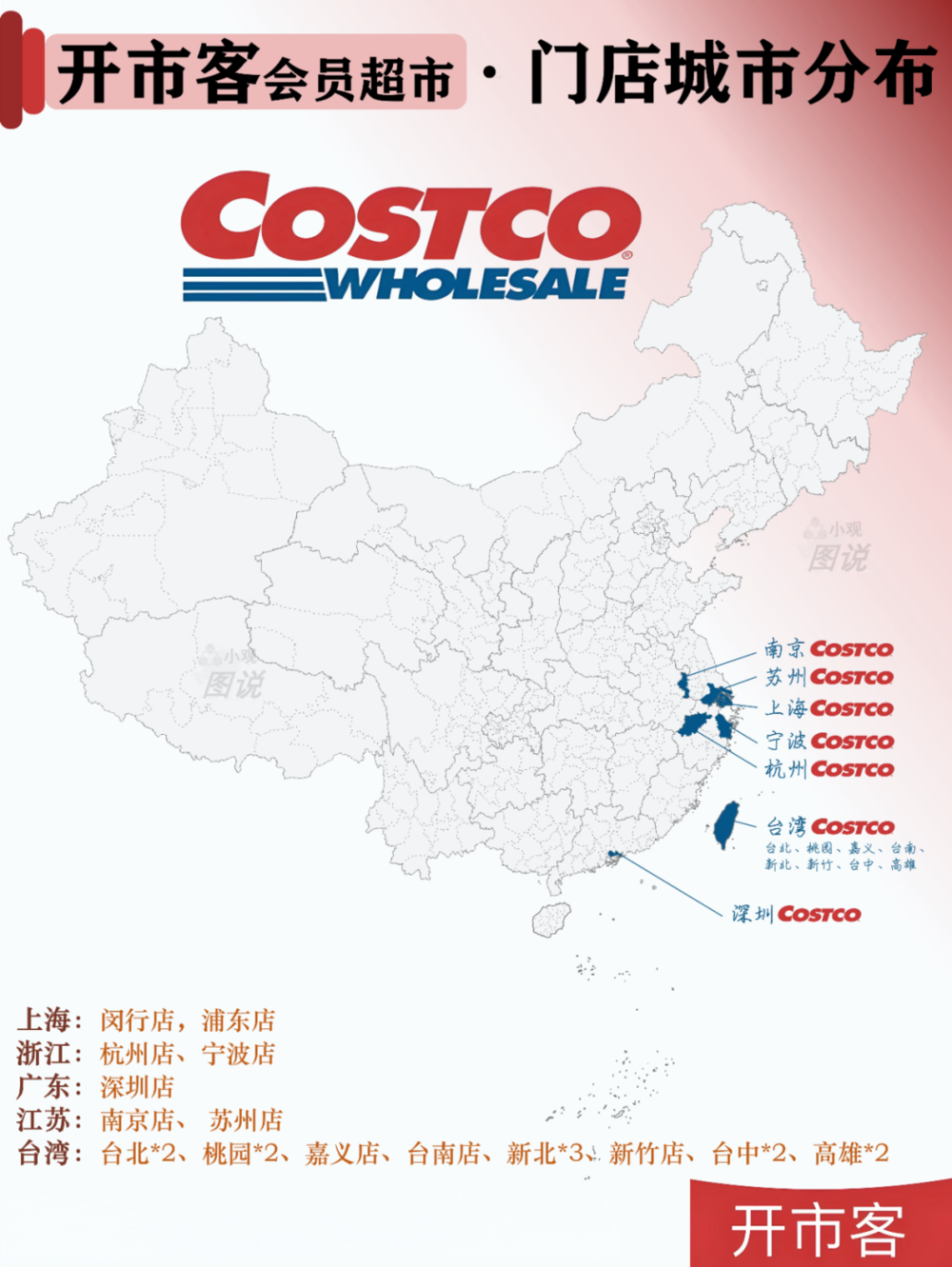
Costco has 16 locations versus Sam's Club's nearly 70. Closing that gap will be difficult in the near term.
Costco is more extreme than Sam's Club. Globally, it insists on a 17% gross margin, and when opening new stores, it insists on purchasing land and building its own facilities to reduce long-term costs, even going so far as to install gas stations at its Nanjing location. However, in China, it only offers next-day delivery and does not provide instant delivery. In contrast, Sam's Club, leveraging Dada's delivery network, can already achieve one-hour delivery in most cities. In a Chinese market where consumers have been spoiled by instant delivery, not offering one-hour delivery means giving up a large number of middle-class users who are too lazy to go out.
Boxma was once considered the most promising challenger to Sam's. In 2020, Boxma established X Member Stores, directly targeting Sam's. However, Boxma Fresh and X Member Stores share the same membership system, and the two business models have conflicting logic: Boxma Fresh hopes users will not stock up and instead receive deliveries within 30 minutes, while X Member Stores encourage users to visit the store and stock up using large refrigerators. Under one system, the two models are mutually exclusive. After several years of adjustments, Boxma has yet to find a clear path forward.
In 1995, Carrefour was the first to enter China, followed by Walmart, Metro, and Wumart. Thirty years have passed, and Carrefour and Wumart have disappeared, while Metro was acquired by Wumai. Among foreign retail companies in China, only Walmart remains thriving - and Walmart's success in China can be attributed to Sam's Club.
Sam's moat is its approximately 4,000 products refined over 30 years, its network of stores and front warehouses in over 30 first- and second-tier cities, its partnerships with over 100 strategic suppliers, and its millions of users willing to pay annual fees of over 260 yuan. While competitors can develop a few better products or initiate several rounds of price wars, it's difficult for them to compete with Sam's 4,000 products simultaneously.
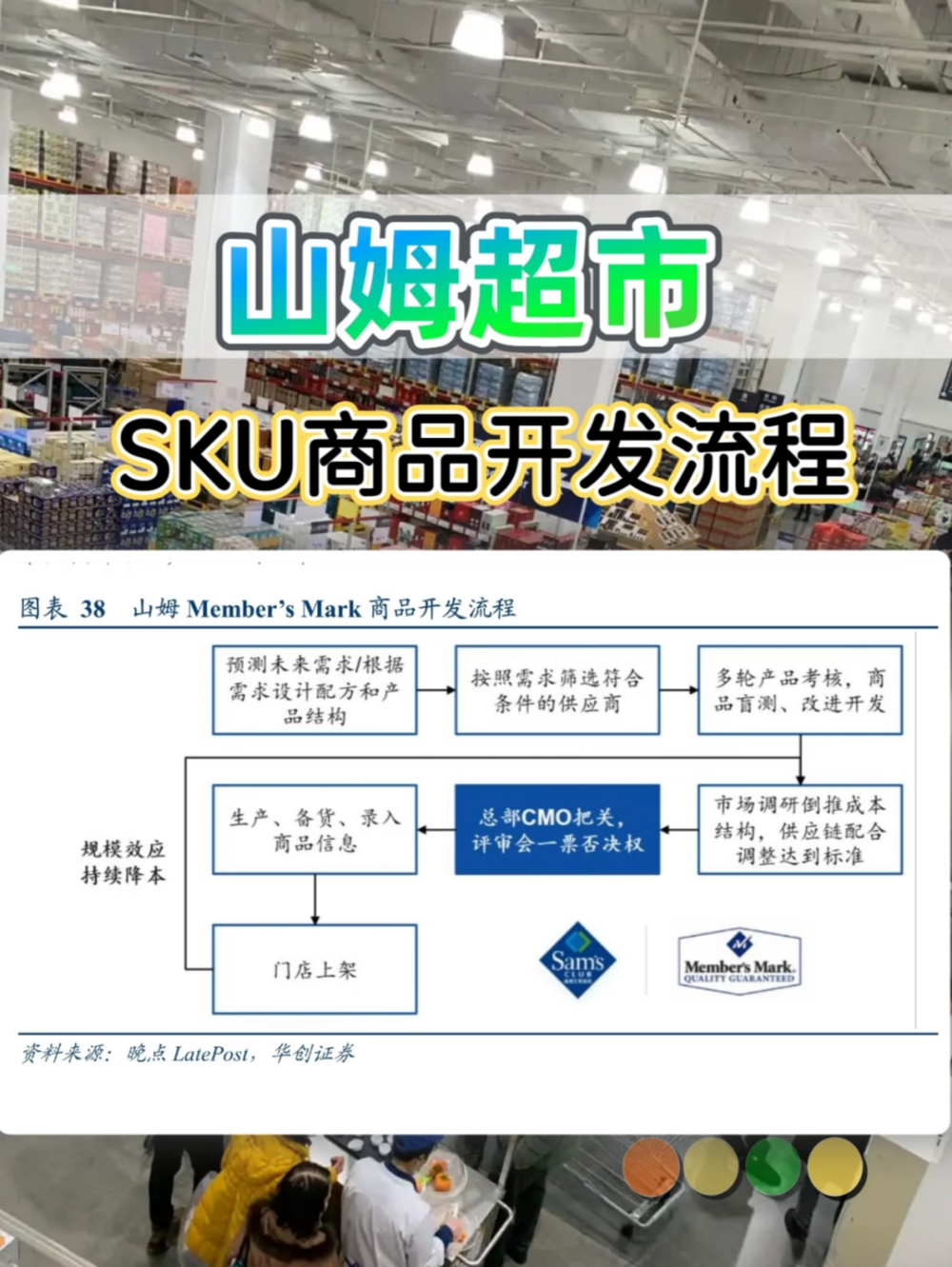
But the question posed at the end of LatePost's report three years ago still stands: can Sam resist the temptation of high profits in a market that is not yet fully competitive?
Data from 2023 shows that the gross margin of Sam's baked goods category can reach 20% to 25%, with some exclusive products having a gross margin as high as 30%. In contrast, Costco globally adheres to 17%. The extra 10-odd percentage points that Sam's has are the growth space for its competitors.
Sam's Club has been in China for 30 years, with the first 20 years seeing relatively little attention, but the last 10 years have seen rapid acceleration. In the past 9 months, 1 million new members have joined. The faster the growth, the higher the demands on management capabilities, supply chain control, and quality consistency.
Thus, the core challenge Sam faces is not the rise in egg prices, nor Costco's expansion, nor even being summoned by regulators. Rather, it is whether he can ensure that the Swiss rolls in the 70th store are just as good as those in the first store in Shenzhen's Futian district, while running at a pace of opening 8 to 10 new stores every year.
Do one thing well and repeat it 4,000 times, this was the summary people had of Sam three years ago.
The current issue is whether Sam can still handle it when the 4,000 tasks are repeated simultaneously across the existing 70 stores and the hundreds of stores to come.