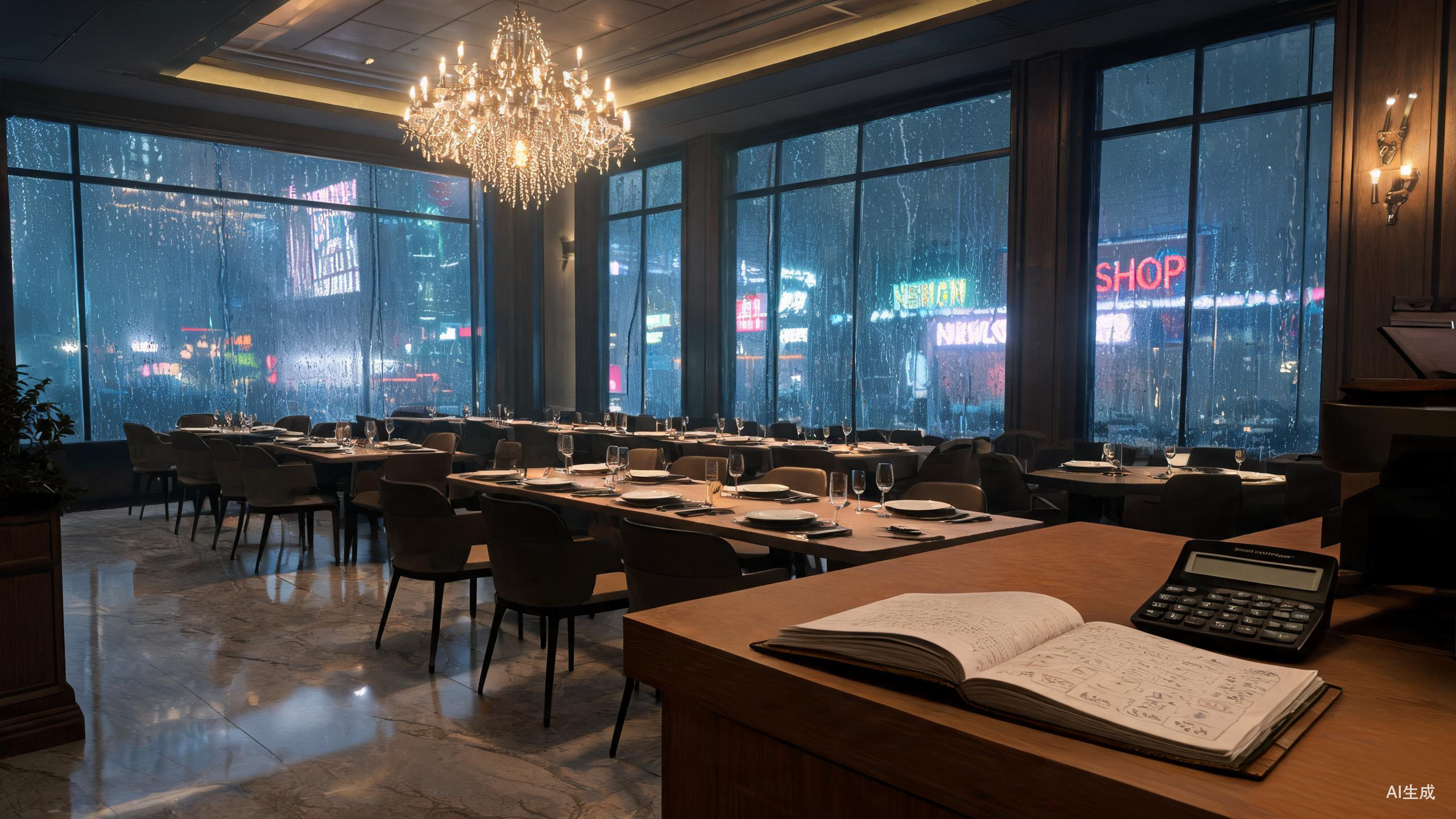
For the past two years, whenever the topic of internet-famous stores going bankrupt comes up, almost everyone says the same thing: emotional consumption is unreliable, and once young people's novelty-seeking fades, the stores lose their appeal.
The remark is quite relieving, and also carries a sense of "I saw it coming" insight.
But that is incorrect, and the mistake is quite significant.
Emotions have never been as powerful as people think. They are neither capable of propping up a business nor bringing it down. The relationship between emotions and a company's success is much smaller than most people imagine.
What really kills these stores is right there in the ledger, it's just that nobody wants to look. Because looking at the ledger is more painful than venting emotions.
First, a Counterintuitive Fact: Emotion Isn't Just for Viral Stores
Many people view "emotional value" as something invented by internet celebrities, as if it's a new concept that has emerged in recent years, a trick used by capital to deceive young people.
No, all long-lived offline businesses are doing emotions.
A traditional noodle restaurant that has been open for thirty years, where the owner recognizes every regular customer and greets them with "the usual today?" - that's atmosphere. The opening sequence, the pace of serving dishes, and the posture of waiters introducing menu items at a Michelin-starred restaurant - that's atmosphere. The small husband-and-wife shop downstairs, which fills with a warm and savory aroma of stewed goods mixed with the heating in winter - that's also atmosphere.
They are all selling products while selling atmosphere, experience, and that intangible sense of comfort.
So the problem has never been about "creating an atmosphere". It's impossible to open a store without creating an atmosphere - even if you don't do anything, the empty, cold, and neglected state is still a kind of atmosphere, just a negative one.
The real issue is that some stores only create a atmosphere, but don't do anything else.
These two matters are worlds apart, but they have been conflated, and emotions have taken the blame instead of the real issue.
The worst consequence of this incident is not the misjudgment of one person, but rather that all entrepreneurs may draw a wrong conclusion: "from now on, let's not try to be fancy and just focus on making products honestly."
This conclusion sounds simple, but it can be just as deadly. Because today, a store without any emotional value cannot survive. If you cut off its wings, no matter how stable the chassis is, it still can't take off.
Emotions Can Bring Customers In, But Not Bring Them Back
To understand what emotions can and cannot do, we must first clarify that a store's business consists of two parts.
The first move: to get someone who has never been here before to come in.
The second move: letting someone who has been here before come in again.
These two accounts are completely different things, relying on completely different sets of abilities. And the main reason why most internet-famous stores die is that they take the first account to the extreme, while the second account is never even opened.
Sentiment is highly efficient in the first accounting.
Why would someone be willing to go to a restaurant they've never tried before? Since they've never eaten there, they can't judge whether the food is good or not. At this point, the only things they can rely on are external signals: whether the decor looks good, whether it's photogenic, whether friends have posted about it, and how lively the atmosphere is.
These signals are all emotional. So when it comes to customer acquisition, emotion is the cheapest and fastest lever. Spend 200,000 renminbi making your store photogenic, and you may draw in more foot traffic than the same amount spent on ads—and those visitors will spread the word for you organically.
That's why everyone has been investing heavily in emotional aspects over the past two years, and it has the best cost-performance ratio in the first account.
But the problem lies in the second account.
After one person has been there once, they have new information: whether the food is good or not, whether it's worth the price, how comfortable the service is, and how long they had to wait.
Once he has this information, those external signals become useless. He no longer needs to judge you based on how beautifully you are decorated, as he has already tasted it personally.
So let's take a look at why emotions are not very effective in the repurchase cycle.
The first time you enter a very unique space, you'll be surprised because you've never seen it before. The second time you come, the surprise is halved. By the third time, the space has become a backdrop, and you won't even give it a glance.
But products are different. A delicious bowl of noodles, you eat it 100 times, and it's still delicious every time. Its effectiveness doesn't diminish, and it may even increase due to familiarity - the flavor becomes tied to your memories.
So the emotional and product curves over time are in opposite directions: emotions are diminishing, while products are accumulating.
A store with only atmosphere and no products is equivalent to putting all its bets on a curve that always goes downward. Its business was destined to decline from the day it opened, it's just that the initial customer flow was too strong, masking the downward trend.
The Real Killer: A Money-Losing Model from Day One
What I mentioned earlier is still on the level of traffic, the truly lethal thing is in the accounts.
This is the part that I think most analyses have not thoroughly explained. Internet-famous stores were not just unprofitable after their traffic declined, many of them were already in the red even when their traffic was at its best.
First, let's take a look at what its cost structure looks like.
To look good in photos, renovations have to be redone, and for a 200-square-meter store, the renovation investment can be as high as 2 million yuan or more, which is common in internet-famous stores. To attract foot traffic, the store must be located in the best spot in the core business district, with rent being two to three times that of ordinary storefronts. To maintain popularity, batches of store promoters have to be invested in, and short videos have to be produced one by one, which is a fixed monthly expense.
These three factors combined have raised the store's break-even point to a very high level.
How high? High to the point where it has to maintain the long queues of the first two months just to barely break even.
This is where the problem becomes fatal: it treats "abnormal conditions" as "daily conditions" when making financial models.
What about the customer flow in the first two months of opening? It's the result of a combination of novelty, concentrated influencer marketing, and social media buzz. This is a peak, not a steady state. The customer flow during the opening period of any store is always significantly higher than its daily average, which is common sense.
However, when internet-famous stores do their accounting, they often use these peak numbers. The owners look at the first two months' revenue and think the store is extremely profitable, so they immediately start preparing to open a second and third location.
When passenger traffic returns to normal levels - and this decline is inevitable, not unexpected - those frighteningly high fixed costs will not decrease by a single cent.
Rent won't be reduced just because you have fewer customers today. The decoration expenses have already been spent and are sunk costs. You still need to continue investing in marketing, because if you stop, customer flow will drop even faster.
So the losses came, and they were precipitous, because there were no buffers in its model, it was operating at the tightest possible margin.
So why would the boss make such a mistake?
Investment means spending a sum of money to reap long-term benefits. However, the marketing investment of internet celebrity stores loses its effect immediately once it stops, because it only buys popularity, which is not retained. It does not accumulate into anything, neither into a brand nor into repeat business.
So essentially, this money is not an investment, but rent. You're renting the fact that you're being seen, and you pay monthly - once you stop paying, you disappear.
The boss had recorded it under investments, so he thought the money was well spent, but when he discovered it was rent, he found himself locked in and unable to back out.
After Going Viral, Quality Often Collapses
There is also one place that is often the most direct cause of death for many internet-famous stores.
They didn't die during the quiet times, but were struck by the hidden dangers that were buried during their peak.
A store suddenly became extremely popular, with orders surging from 200 per day to 1,500 per day. It sounds like a good thing, but when you translate it into kitchen language, it's like this:
Eight people used to handle 200 orders a day. Now the same eight-person team is expected to push out 1,500. There's no time to hire, and even if we did, there's no time to train them. The entire workflow, equipment, and food-prep process was built around 200 orders. Now it's running at seven times capacity.
The inevitable outcome is: slower food service, with customers waiting for an hour; in order to speed up, procedures are simplified, with the most time-consuming steps being cut; ingredient procurement falls behind schedule, and new suppliers are temporarily found, resulting in unstable quality; the kitchen is overwhelmed, and hygiene details begin to suffer.
Going viral in itself is a stress test for a store's supply chain and management capabilities, and the vast majority of popular online stores are not prepared for this.
Because when it opened, it was thinking about "how to be popular", not "what to do after becoming popular".
There's a particularly cruel mechanism: going viral sends the most fastidious and impatient group of people to your doorstep in the first instance.
Those who came because of the hype had extremely high expectations - they had seen many beautiful pictures, heard numerous praises, and their mental expectations had been raised to the peak. But the day they visited the store happened to be the busiest and most unstable time for the business.
High expectations, met with the worst experience. This combination gives rise not to disappointment, but to the anger of being deceived.
Bad reviews emerged one after another, spreading much faster than good ones. The store went from being a "must-visit" to a "must-avoid" in often just three months.
So, you see, what killed it wasn't the novelty wearing off, but rather the flood of novelty that overwhelmed a foundation that was never solid to begin with.
Franchising Depletes Doubao's Last Bit of Brand Foundation
There is also a batch of internet-famous brands that are failing even faster, because from the start they weren't actually in the catering business.
They are in the business of "selling franchises".
The logic behind this approach is as follows: first, invest money to make one or two directly operated stores extremely popular, creating a scene with long queues, and then use this as promotional material to attract franchisees. The franchisees, seeing the popularity, pay the franchise fee, deposit, purchase equipment, and buy materials.
The money earned by brand owners mainly comes from these fees, rather than from the goods sold in stores.
Once this pattern is established, all the actions of the brand side will change.
What it's most concerned about is not whether a single store can make a profit, but whether it can maintain the impression that "this category is very popular", because this impression is used to attract merchants. Therefore, it will go all out to invest in marketing and create momentum, rather than polishing its supply chain and operational systems.
But has the single-store profitability model been proven to work? No one has verified it. Some brands have opened only two directly operated stores before starting to recruit franchisees nationwide, and one of those two stores may still be relying on grand opening events to stay afloat.
The result is: franchisees are left with an unproven model, opening stores in their own cities with completely different customer traffic, while headquarters fails to provide genuine operational support - because it doesn't have any itself.
Three months in, franchisees started to lose money. Half a year later, the first batch of stores closed down. Once the closures reached a certain scale, it became impossible to recruit new franchisees, the brand owner's cash flow was cut off, and the entire business collapsed.
The collapse of this type of brand has nothing to do with consumers. It was never eliminated by the market, but rather was undermined by its own business model.
To attribute this kind of death to the idea that "emotional consumption is unreliable" is to give emotions too much credit.
Sixth, what did the survivors do right
Looking back at those internet-famous stores that have grown into long-standing brands, it's clear that they are also creating an atmosphere, making short videos, and attracting customers who come to take photos and check in.
The difference lies not in whether to be emotional or not, but in the order and proportion of the two things.
First, their cost structure is calculated based on "daily passenger flow", not "explosive passenger flow".
This point is the most crucial, but also the most inhumane.
For a store owner, seeing a booming start in the first two months of operation, it requires great restraint to not take it as the norm. Since everyone is congratulating him and all the data is encouraging him, it's very difficult to calmly say, "This number is false, I'll calculate based on half of it."
But nearly all the survivors did the math the same way: They kept rent, renovation costs, and staffing at a level that would let them stay afloat even with only half the customers.
When passenger traffic declines, they are not panicked, because the numbers after the decline are already factored into their model.
Second, they used that period of explosive popularity to do other things.
Most popular online stores, when they are booming, are busy expanding, taking on more orders, and rushing to open several more stores while they are still hot.
As for those that survived, during the period of explosive growth, they were busy doing a few other things: stabilizing the supply chain, standardizing the food production process, recruiting and training enough staff, and figuring out how to get customers to come back for a second time.
They have exchanged traffic dividends for accumulated capabilities.
These are two completely different mindsets, one treating popularity as a harvest to be reaped as soon as possible, and the other viewing it as a limited-time window of opportunity to fix existing issues while people are still paying attention.
The hype will pass, and both sides are aware of this. The difference is that after the hype passes, one side is left with nothing, while the other side has a system that can sustain itself in the long term.
Words of Advice for Those About to Open a Store
After saying so much, it all comes down to concrete actions.
First, consider the reasons for repeat business, then think about the grand opening ceremony.
This is an issue of priority. The vast majority of people are opposed, he first thinks about "how to attract people", how to create a buzz with the decoration, how to create momentum for the opening, and which influencers to find. The question of "why they would want to come back a second time" is pushed to be considered later.
The problem is that by the time it's "later", the money will have been spent, the store will have been fully decorated, and the model will have been finalized and cannot be changed.
The reasoning for repeat business must be clear before the renovation plans are finalized, as it will in turn determine your store location, pricing, product structure, and even whether you should open the store at all.
Separate the emotional budget from the product budget and examine whether the proportions are reasonable.
Take a piece of paper and divide the startup costs into two columns. One column is for "getting customers to come" and includes expenses such as decoration, storefront, marketing, influencers, and grand opening events. The other column is for "getting customers to come back" and includes expenses such as ingredients, equipment, research and development, staff training, and supply chain management.
Look at the ratio of these two columns.
If the first category accounts for 80%, then what you're running isn't a store, it's an exhibition hall. The characteristic of an exhibition hall is that people come, take a look, snap a photo, and then leave.
Conduct a stress test simulation: what if I get fired.
Before opening, I think about whether my kitchen can handle it if customer flow suddenly increases fivefold, whether my suppliers can keep up, whether I have enough staff, and how much slower the food will be served.
This issue appears to be a fantasy, as if it's a dream, but it's actually the most practical problem, because going viral is a common occurrence for internet-famous stores, and the collapse of quality caused by going viral is one of their main causes of demise.
Stores that are prepared to capitalize on the surge in traffic can take off because of it, while those that are unprepared will be overwhelmed.
Finally, the marketing expenses were moved from the "Investment" column to the "Rent" column.
Treat ongoing marketing expenditures as a fixed cost in your ledger, on par with rent. Then ask yourself: if this spending were to stop, what would be left of my business?
If many customers stick around, it means you have genuine repeat purchases. If few stick around, you're not building a business—you're renting foot traffic, and the lease only lasts for the month you paid for.
I don't want to defend emotions too vigorously, because they are not, after all, the main course.
But attributing the collapse of internet-famous stores entirely to emotional factors has the biggest drawback of preventing people from learning from the experience.
If the conclusion is "atmosphere is unreliable," the lesson learned by shop owners would be "don't bother with atmosphere." This lesson is not only useless but also harmful, as today's consumers are increasingly concerned with experience, aesthetics, and feelings, and a store without any atmosphere will not survive for long.
If you turn the account over, the lessons you see are completely different: it's not about not being emotional, but about not using emotional money to fill the product's gap; it's not about not chasing traffic, but about not treating rented traffic as your own assets; it's not about not going viral, but about not going viral before you're prepared.
These lessons are what can be put to use.
Consumers are willing to enter a visually appealing store at least once, and this is not their superficiality, but rather the market giving new stores an opportunity.
Whether or not it can retain people after they enter is another matter, and it is the only thing that truly determines life or death.
Emotions have brought people to the doorstep.
What's behind the door has always been what you put there yourself.