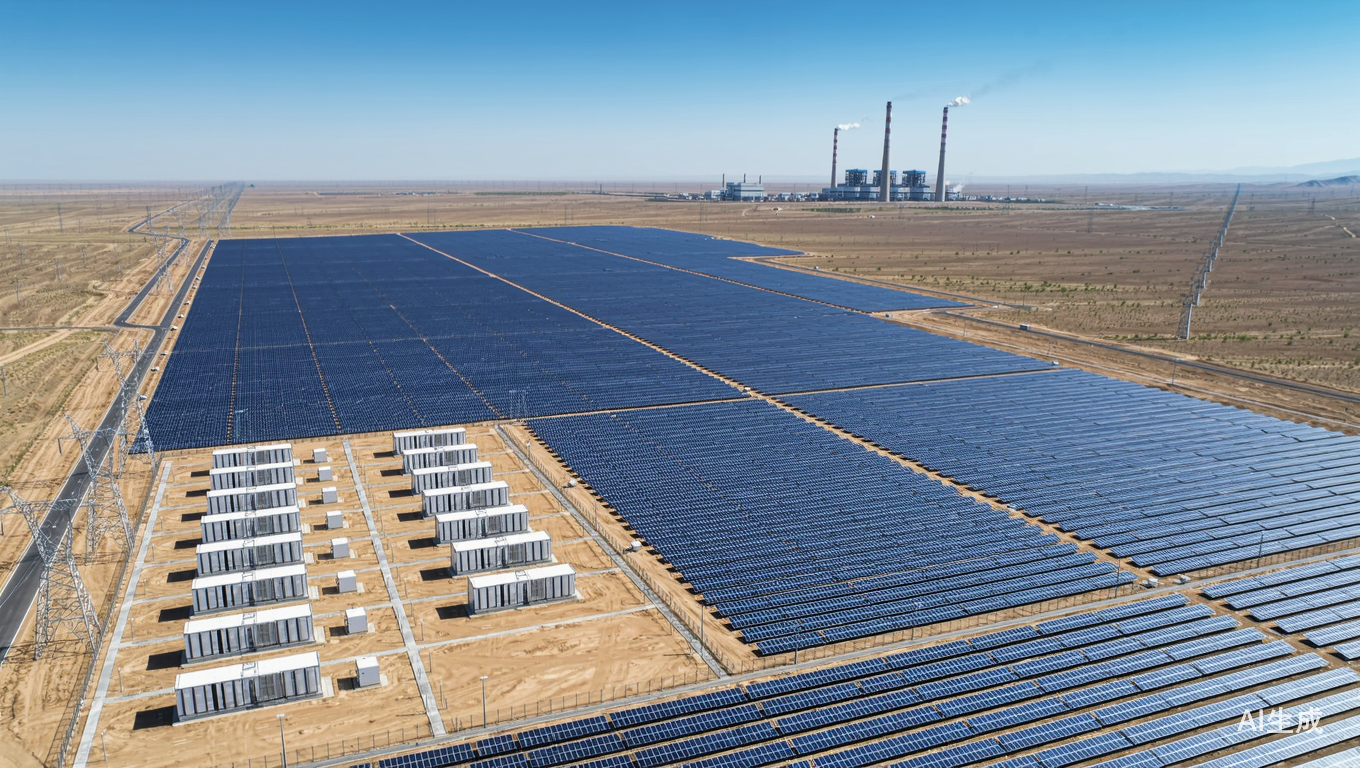
On September 1, the Guangdong Power Trading Center released the "2026 Guangdong Power Market Semi-Annual Report". Two counterintuitive numbers caught the author's attention. The average bidding price for the power generation side in the spot market was 0.3139 yuan/kWh, with coal-fired power averaging 0.3892 yuan/kWh, gas-fired power averaging 0.8177 yuan/kWh, and new energy averaging -0.0350 yuan/kWh, resulting in a negative bidding price.
On the settlement side, the new energy online power directly participating in market transactions totaled 239.4 billion kilowatt-hours, with an average price of 0.2690 yuan per kilowatt-hour, significantly lower than that of coal-fired and gas-fired power.

The reasons for the negative pricing of new energy at the generation side include the guaranteed full purchase of new energy power by the grid companies, as well as the pressure to meet the non-hydro renewable energy consumption targets set by the government. As for why the final settlement price of new energy is far lower than that of coal-fired and gas-fired power, it is because the cost of new energy, particularly wind and solar power, has decreased significantly in recent years due to technological advancements and economies of scale. Additionally, the government provides subsidies and tax incentives to support the development of new energy, which further reduces the cost. Meanwhile, the cost of coal-fired and gas-fired power remains relatively high due to factors such as fuel prices and environmental protection measures. As a result, the settlement price of new energy is generally lower than that of traditional energy sources.
After consulting various parties, the author has concluded that the price gap at the generation end is the result of a combination of factors, including cost structure, market rules, and competition among power sources.
The bidding price is a direct reflection of the cost of electricity. The quotes for coal-fired and gas-fired power need to cover their fuel costs, especially the gas-fired power quote of 0.8177 yuan/kWh, which is essentially a reflection of its high fuel costs. In contrast, the marginal cost of wind and solar power is close to zero, and the incremental cost of generating one more kilowatt-hour can almost be ignored. As a result, new energy sources have a huge cost advantage in terms of pricing and can quote prices far lower than those of thermal power to ensure their generation volumes.
Thus, during periods of concentrated wind power generation, even when power supply exceeds demand, new energy sources can still prioritize grid connection and report low prices, or even negative prices. As long as the losses are not too great, selling the power is still more cost-effective than wasting it, which is also a business choice for new energy enterprises to "choose the lesser of two evils".
It can be understood that in the power market, coal-fired power and gas-fired power are the price makers, and their quotes are already setting the market price, while new energy is the price taker, with a strategy of prioritizing low prices to ensure quantity.
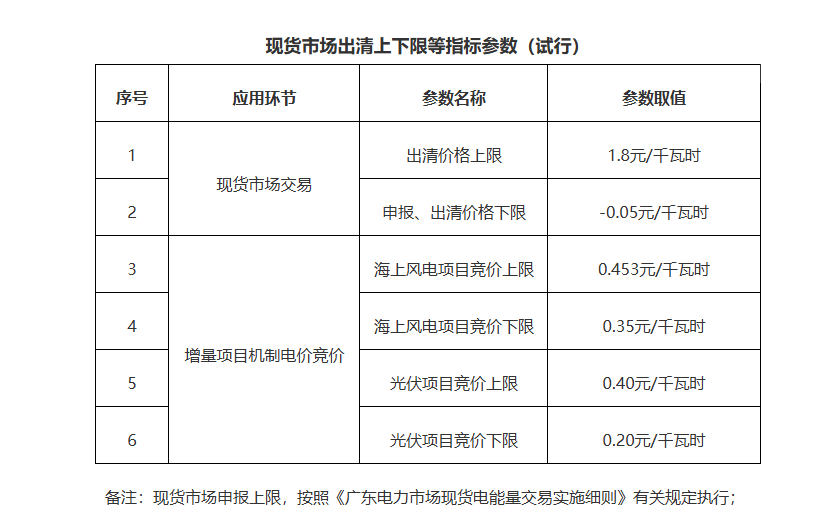
On the other hand, the "Implementation Plan for Deepening the Market-oriented Reform of New Energy On-grid Tariffs and Promoting High-quality Development of New Energy" issued by the Guangdong Provincial Development and Reform Commission and the Guangdong Provincial Energy Bureau clearly states that the lower limit of the spot market declaration and clearing price is -0.05 yuan/kWh (i.e., -50 yuan/MWh), providing an institutional basis for new energy to report negative prices in extreme cases of oversupply.
Furthermore, the "2026 Guangdong Power Market Semi-Annual Report" shows that in the first half of the year, the environmental value of green power in Guangdong was only 0.0182 yuan/kWh. Even with the addition of green certificates, carbon benefits, and some guaranteed benefits, new energy sources are still cost-effective in spot market bidding at negative prices, with the strategy being to sacrifice electricity revenue in exchange for higher utilization hours and environmental rights.
So, a new question arises, since everyone is cleared uniformly and settles at the marginal price, why is the average price of new energy still much lower than that of coal power at the settlement end?
This can only be attributed to the mismatch between the quantity and price of power supply and demand, as well as the different ways in which new energy participates in power trading.
New energy's power generation has characteristics of intermittency, volatility, and counter-peak regulation. Taking photovoltaics as an example, its power generation reaches a maximum during the noon period, but this coincides with the off-peak period of electricity demand.
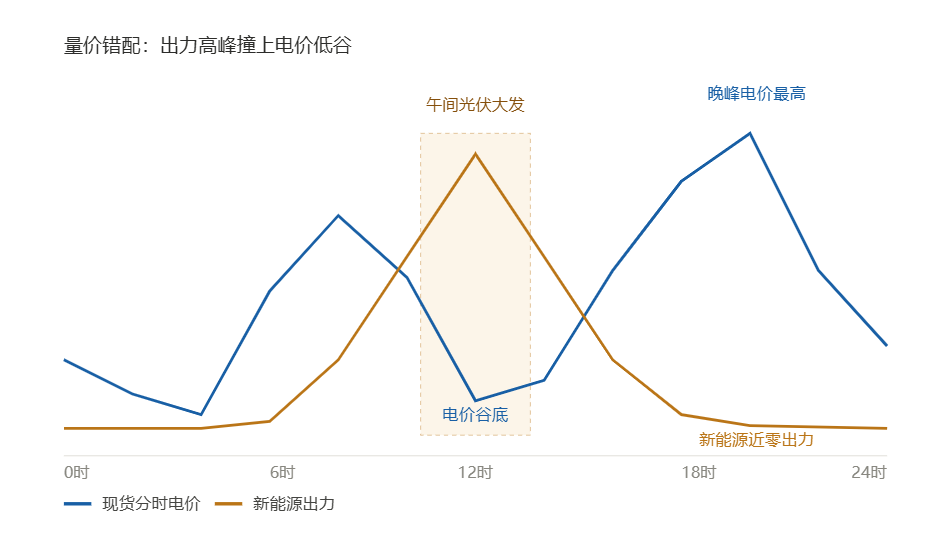
According to the 2026 Guangdong Electricity Market Semi-Annual Report, Guangdong's installed photovoltaic capacity reached 67.38 million kilowatts, 3.4 times that of wind power, which was 19.82 million kilowatts. The output of local new energy is likely to be dominated by photovoltaics, with peak output at noon, which coincides with the lowest electricity price of the day. However, during the evening peak when electricity prices are highest, photovoltaic output has already dropped to zero. As a result, most of the new energy electricity is traded at low prices, and the weighted average settlement price is systemically dragged down to 0.269 yuan per kilowatt-hour.
Differences in settlement mechanisms also led to different final settlement prices.
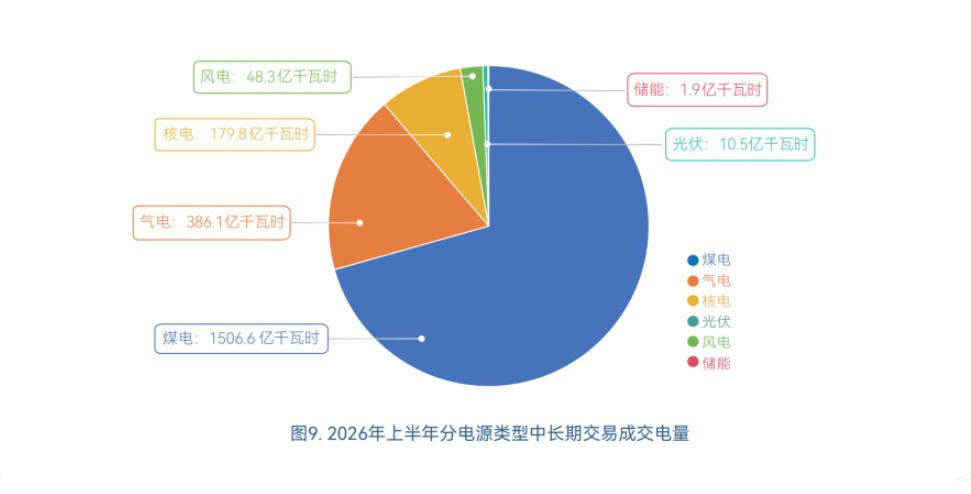
In the first half of 2026, the total transaction volume of Guangdong's medium- and long-term power market reached 2,133.2 billion kilowatt-hours, with an average price of 0.3784 yuan per kilowatt-hour. About 90% of the market's electricity was locked in with medium- and long-term contracts in advance, providing coal-fired and gas-fired power with stable profit expectations and making their pricing strategies more resilient. However, the medium- and long-term transaction volume for wind power was 48.3 billion kilowatt-hours, and even less for photovoltaic power, at 10.5 billion kilowatt-hours, with the scale of participation in the medium- and long-term market being relatively small, leaving more of their electricity exposed to the volatile spot market with drastic price fluctuations.
Spot market prices also confirm the above argument, with Guangdong's spot market transactions in the first half of the year showing that the day-ahead market traded 25.15 billion kilowatt-hours of electricity at an average price of 0.2815 yuan/kilowatt-hour, while the real-time market traded 28.37 billion kilowatt-hours of electricity at an average price of 0.2675 yuan/kilowatt-hour.
It can be said that the huge price gap between new energy and coal-fired and gas-fired power is not a market failure, but a true reflection of the different economic characteristics and supply and demand relationships of various power sources under the market-oriented reform of the power sector. While new energy enjoys priority consumption policies, it also faces market price risks due to its own power generation characteristics.
This also further prompts the industry to adjust its development strategy in a timely manner and accelerate its adaptation to the new market competition rules. On the one hand, new energy development entities need to proactively optimize their trading strategies, improve the accuracy of their power output forecasts, and increase their participation in medium- and long-term trading, thereby mitigating the risks of price fluctuations in the spot market by locking in more contract revenue in advance. Moreover, the return on investment models for wind and photovoltaic projects also urgently need to be switched from the previous "utilization hours × benchmark electricity price" to the "time-of-use electricity price × output curve" mode.
On the other hand, the industry also needs to further explore market mechanisms that adapt to the characteristics of new energy, and supporting energy storage, long-term green power/green certificate agreements, power prediction accuracy, and flexible regulation are the core variables that determine the cost of electricity per unit. Especially for wind power, making output closer to peak price periods and truly monetizing environmental value is the key to escaping a low-price fate.