
When the urban temperature soars above 40℃, closing windows and turning on air conditioners is the simplest solution for most people to combat the heatwave. However, this cool comfort is not accessible to everyone.
In July, the national average temperature was 23.5℃, 1.3℃ higher than the same period in previous years, setting a record for the second-highest temperature in the same period in history. Chongqing, Fuzhou, and Hangzhou experienced more than 20 days of high temperatures; Chongqing, Urumqi, and Shijiazhuang saw temperatures exceed 40℃.
From the southwestern basin to the northwestern arid region, extreme high temperatures are no longer an occasional natural phenomenon, but have evolved into an annual survival challenge that residents must face.
Air conditioners are also becoming increasingly popular. In 2024, the country had an average of 150.6 air conditioners per 100 households, with more than 1.5 units per household.
However, not every household has an air conditioner.
In Qinghai, there are only 4.8 air conditioners per 100 households, meaning 21 households share one unit on average; meanwhile, Gansu, Tibet, Heilongjiang, and Yunnan have fewer than 20 air conditioners per 100 households.
As summer heats up and "staying home to turn on the air conditioner" isn't an option for everyone, where can people in the city find some cool relief?
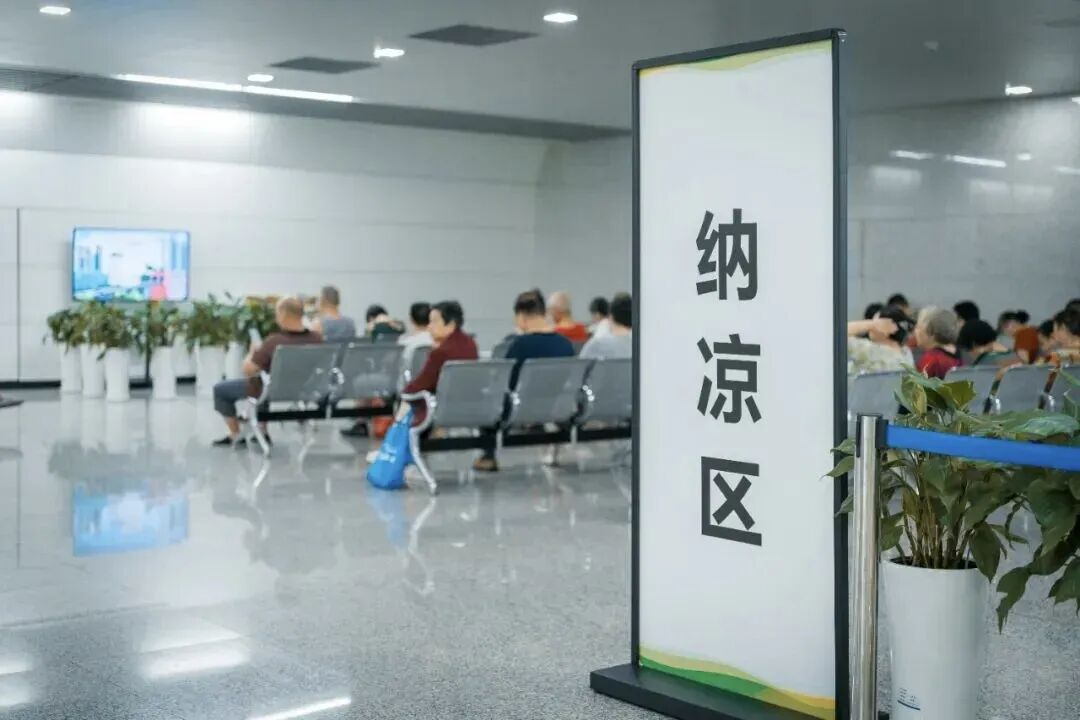
Chongqing metro stations have opened cooling areas, where citizens stop to rest and escape the summer heat.
(Source: Chongqing Release)
Not Everyone Can Easily Enjoy Staying Cool at Home
The national average temperature in 2025 reached 10.9℃, tying with 2024 as the highest since 1951. The national average number of high-temperature days reached 16.5 days, 7.4 days more than the average from 1991 to 2020, setting a new historical record.
This means that, compared to the past, people will have to face not just a sudden heatwave on a given day, but an increasing number of high-temperature days.
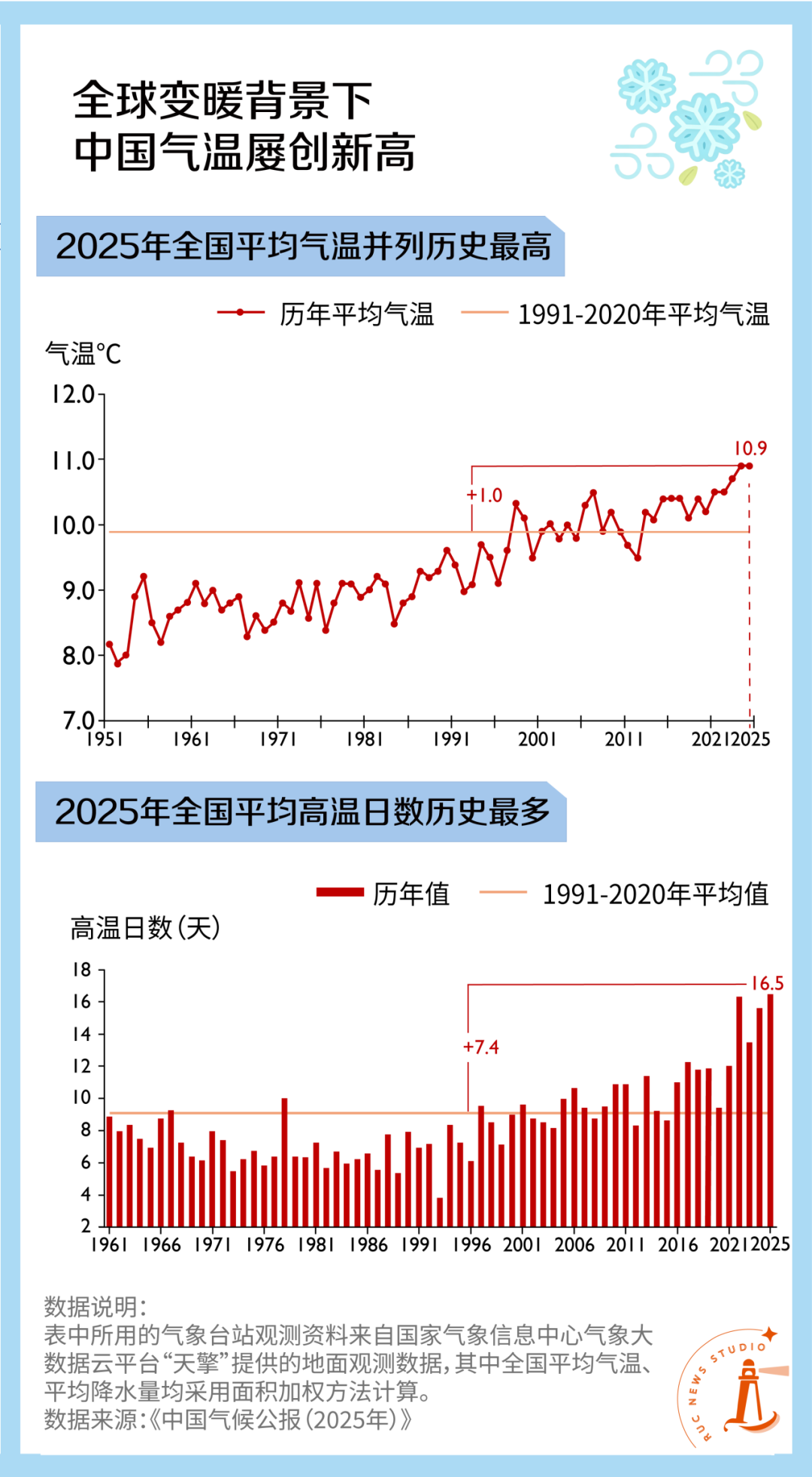
Even traditional summer resorts have seen increasingly frequent high temperatures in recent years. According to Xinhua News Agency, from July 23 to 27, some areas in the Hexi region of Gansu, as well as parts of Longzhong and Longdongnan, experienced high temperatures above 35 degrees Celsius, with temperatures in the western and eastern parts of Jiuquan City and the northern part of Zhangye City reaching above 40 degrees Celsius, prompting multiple locations to issue high-temperature warnings.
In mid-to-late August, the average temperature across Qinghai Province was 0.8°C above the historical norm, with 64% of counties (districts) recording temperatures above 30°C. Daily maximum temperatures in Ledu and Datong broke the local August records dating back to 1961.[7]
Rising summer temperatures have driven air conditioners into more homes, with the average number of air conditioners per 100 households in China reaching 150.6 units in 2024, meaning each household owns more than 1.5 air conditioners on average. This metric has continued to rise over the past five years, with a growth of approximately 28% in 2024 compared to 2020.
In 2025, the Northeast experienced extreme high temperatures, with air conditioners becoming scarce, and installation technicians from multiple locations rushed to the Northeast to meet demand. This year's humid and hot weather has further stimulated people's consumption needs.
Data from the JD platform from August 1 to August 6, 2026, shows that air conditioner transaction volumes in Jilin, Liaoning, and Heilongjiang increased by more than 10 times, more than 8 times, and more than 3 times year-over-year, respectively.
Air conditioners have gradually become a necessity for many families to stay cool. In Yunnan, where the climate is mild year-round, the number of air conditioners in households has grown with the development of the travel economy, making it the province with the fastest growth over the past 10 years, with an increase of more than 10 times.
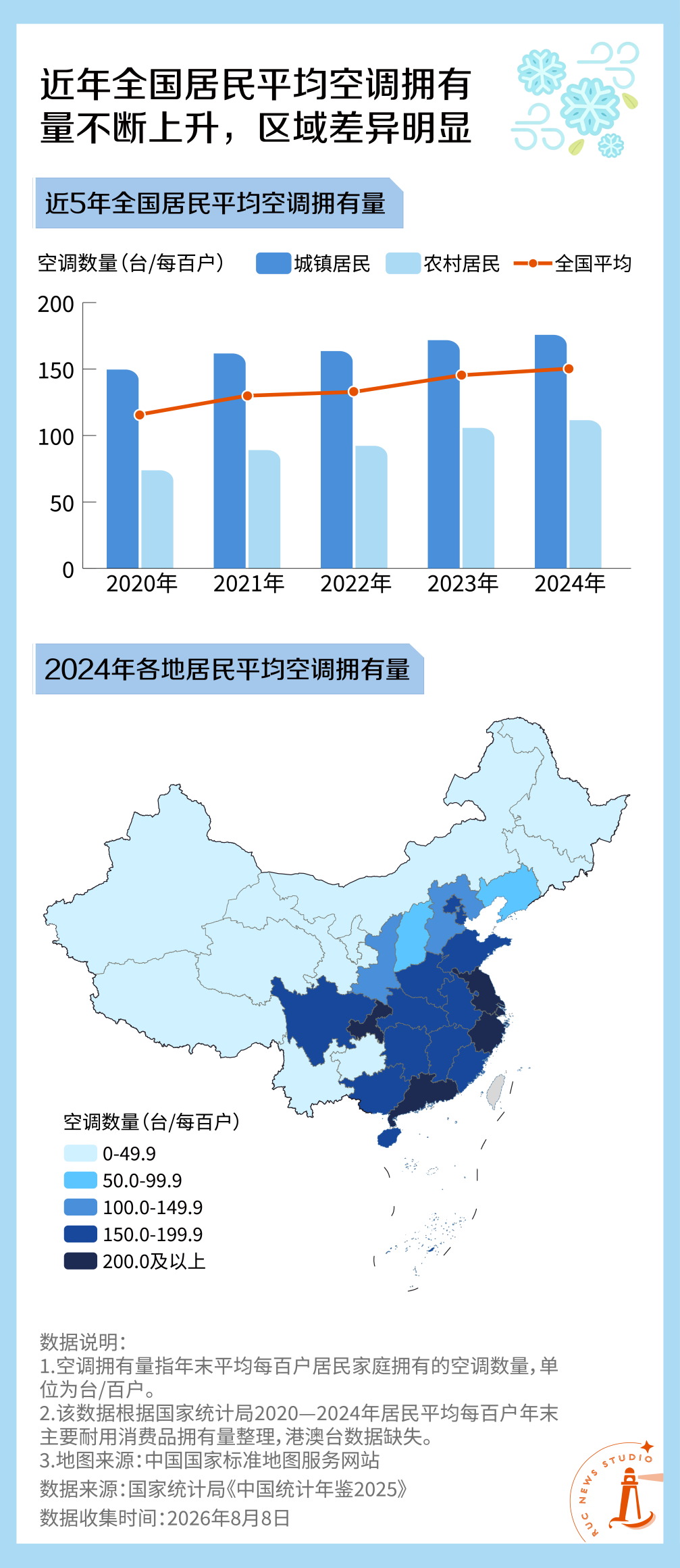
Despite this, disparities between regions and urban and rural areas still exist. Affected by multiple factors such as climate, economy, and living habits, the possession of air conditioners per 100 households is generally higher in eastern and central China than in the west and northeast. Jiangsu has 243 air conditioners per 100 households, ranking first in the country, while Zhejiang, Chongqing, Guangdong, and Shanghai all have more than 200 air conditioners per 100 households.
In comparison, places such as Qinghai, Gansu, Tibet, Heilongjiang, Yunnan, and Xinjiang have fewer than 30 air conditioners per 100 households. In these areas, many families do not have air conditioning installed, and once they encounter extreme high temperatures, they lack the basic conditions for staying cool at home.
From an urban-rural perspective, the gap in air conditioner ownership between cities and the countryside is narrowing. Between 2020 and 2024, rural households' air conditioner ownership rose from 73.8 to 111.5 units per 100 households, an increase of roughly 51%. Over the same period, urban households' ownership climbed from 149.6 to 175.7 units per 100 households, up about 17%.[3]
Apart from Air Conditioning, Electricity Fees Are Also a Barrier
Now that air conditioners have been installed, can they be used continuously, as electricity bills pose another hurdle, with the hardware being affordable to purchase, but requiring additional economic costs to use sustainably.
We selected five mainstream 1.5 horsepower first-level energy-efficient inverter air conditioners available on the market, with a rated cooling capacity of approximately 3500W and an APF of 5.27 or higher. The average power consumption during the cooling season was 343.2 kW·h, which translates to an average hourly power consumption of approximately 0.3 degrees.
Given that air conditioners, refrigerators, and water heaters are running simultaneously in the summer, many households' cumulative electricity consumption can easily exceed the first-tier electricity quota and enter the second-tier pricing bracket. To this end, we calculated the monthly electricity expenses for air conditioners based on the first-tier and second-tier electricity prices for residents in different regions, using three usage scenarios: light, standard, and heavy. The light usage scenario assumes 8 hours of daily operation, the standard scenario assumes 12 hours, and the heavy scenario assumes continuous operation for 24 hours a day, for 30 consecutive days, simulating the monthly air conditioner electricity expenses under different usage intensities.
Swipe left or right to see more.
Calculations show that if only the first-tier electricity price is considered, the air conditioning electricity bill for ordinary urban residences is still bearable for most families. Taking Shanghai as an example, using the air conditioner for 8 hours a day results in a monthly electricity bill of approximately 44.4 yuan; using it for 12 hours a day results in a bill of approximately 66.6 yuan; and running it 24 hours a day results in a monthly bill of approximately 133.3 yuan. For Beijing, Guangzhou, Chengdu, and Wuhan, the monthly electricity bills for heavy usage in ordinary residences are mostly concentrated in the range of 100-135 yuan.
Once household electricity usage triggers the second-tier pricing, the electricity bill will increase further under the same usage intensity. For a Shanghai household that keeps the air conditioner on for 24 hours a day, the estimated electricity bill for next month will reach 146.2 yuan under the second-tier pricing.
In terms of absolute amount, this does not seem to be an unbearable expense. However, the same electricity bill, when borne by households with different incomes, results in vastly different economic pressures. We also calculated the proportion of electricity bills to the average monthly disposable income of households with different incomes, based on the first-tier and second-tier electricity prices.
In five cities, the burden of electricity costs on low-income households is significantly higher than on other groups. Taking Shanghai as an example, under the first-tier electricity price, heavy use of air conditioning results in electricity costs accounting for 15.76% of the monthly disposable income of low-income households, and this proportion further increases to 17.28% after switching to the second-tier electricity price. Other cities, such as Beijing and Guangzhou, also exhibit the same pattern.
In contrast, for high-income households, whether in Tier 1 or Tier 2, electricity bills generally account for less than 2% of household income.
Many households' high air conditioning electricity bills are not solely due to the air conditioner itself, but rather the cumulative power consumption of various home appliances during the summer, which causes the total electricity usage to exceed the tiered threshold, resulting in a higher overall electricity price, thereby increasing the electricity burden in the summer. In reality, some households will even be subject to the third-tier electricity price, further exacerbating their electricity cost burden.
In addition to these factors, there are also large numbers of migrant workers, outdoor laborers, and mobile populations with limited living conditions. By the end of 2025, the total number of rural migrant workers nationwide had reached 301 million, including 180 million outward-bound rural migrant workers and approximately 131 million rural migrant workers living in towns and cities. Some of these individuals rent urban rental housing, while others live in temporary accommodations such as construction sites, which due to various restrictions, may not be able to install air conditioning or have limited air conditioning usage. Furthermore, outdoor laborers like food delivery riders and sanitation workers often find it difficult to return home to enjoy air conditioning during the hottest working hours.
Thus, "beating the heat" is no longer just a matter of household consumption, but has become an urban issue: when we can't stay cool at home, where else can we go?
Where Else Can We Go to Escape the Heat Besides Home?
Domestic public cooling spaces are not temporary emergency measures to cope with heatwaves, but rather a people's livelihood network that has grown gradually with urban development.
As early as 2002, Chongqing took the lead in exploring the use of air-raid shelters for cooling; in 2003, Wuhan and Hangzhou followed suit, with Wuhan further extending cooling services to community party mass service centers. After 2013, with the rapid development of urban rail transit, Wuhan, Hangzhou, Ningbo, and other places have successively opened up new cooling scenarios in metro stations.
As public cooling spaces expand, targeted protections for specific groups are also improving: in 2014, Guangzhou established its first batch of "worker rest stations," incorporating heat relief into worker welfare protections; in 2017, Xi'an launched "care stations for outdoor workers," providing dedicated cooling spaces for those working in high-temperature conditions.
After more than 20 years of exploration, a multi-level cooling network has gradually taken shape in China, with civil air defense engineering as the core, subway communities as a supplement, and special service stations as a safety net.
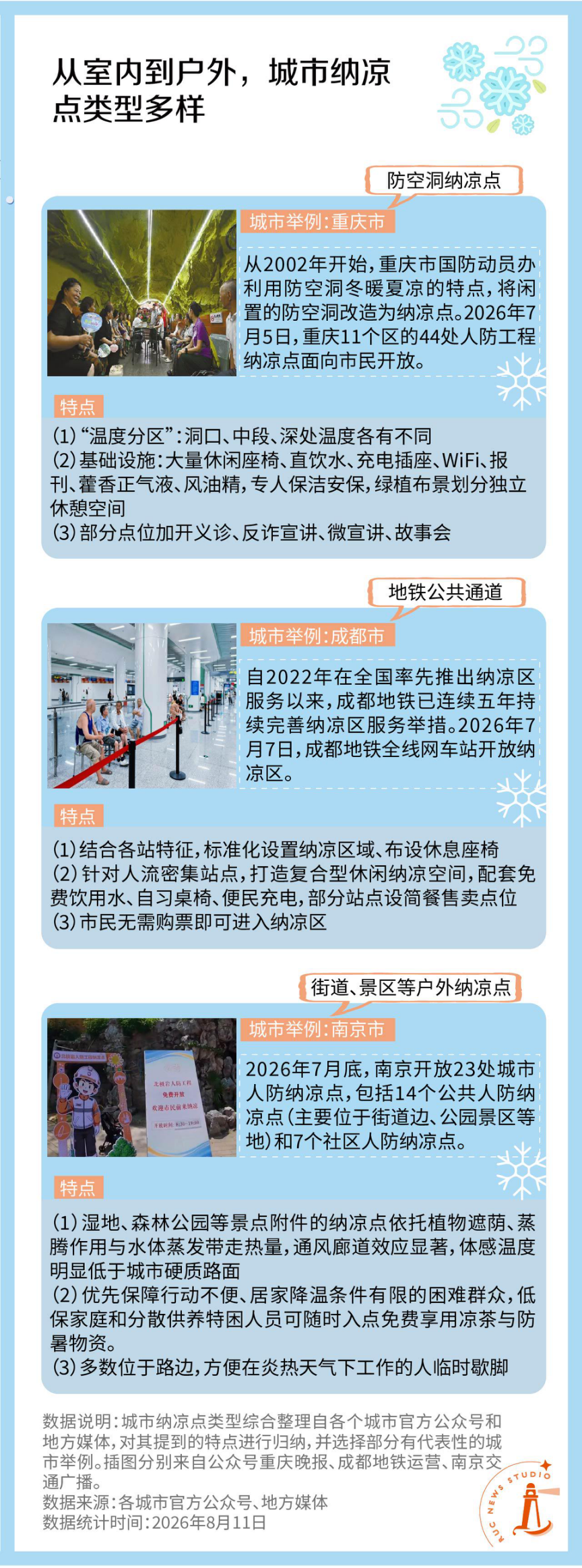
In Chongqing, spending the summer in air raid shelters has become a unique way for residents to escape the heat. As of summer 2026, 11 districts in Chongqing have opened 44 civil air defense engineering cooling points, with a total area of over 11,000 square meters.
These rest stations are not only equipped with seating, but also provide direct drinking water, charging outlets, and heatstroke prevention medication, and are maintained by dedicated personnel. Some locations also offer additional activities such as free medical consultations, anti-fraud lectures, and community storytelling sessions, upgrading from simple heat relief venues to community convenience hubs, and providing a replicable model for the civilian use of people's air defense assets in a "combined peacetime and wartime" approach.
While air-raid shelters require citizens to make a special trip, metro stations have incorporated cooling services into daily commute routes. Leveraging the stable air-conditioning system and dense layout of rail transit, the public passageway cooling areas in metro stations have become the most accessible convenience for the public to cool off.
Taking Chengdu as an example, in 2022 it was the first in the country to introduce standardized subway cooling zones, and by 2026 it had achieved full coverage of all stations on the network. Commuters, parents picking up their children, and outdoor cyclists can all take a temporary break during their journey, greatly reducing the time cost of getting cool, and turning cooling off from a specially arranged activity into a convenient adjunct to daily travel.
In addition, outdoor rest areas along streets and in parks form a peripheral network for grassroots heat relief.
Among the 23 cooling spots that opened in Nanjing in 2026, nearly half are located in communities, streets, and around parks, relying on vegetation shading and water evaporation to form natural cool islands, with the average park in the Yangtze River Delta city cluster able to bring a cooling effect of 2.57℃.
These rest stations are located near urban roads, on the one hand providing temporary respite for outdoor workers such as sanitation workers and food delivery riders, and on the other hand offering free cool tea and heat-relief supplies to low-income and disadvantaged groups with limited access to cooling at home, bringing coolness to the forefront of residents' daily lives.
Free Cooling Spaces Reflect Urban Inclusiveness
People are flocking to public cooling centers, not just to escape the heat and save on electricity bills. In fact, many citizens who have air conditioning at home are still willing to come to air-raid shelters and subway cooling areas.
In a closed-off home environment where one can only stay cool alone, public rest areas are the city's free "community living room": elderly people sit and play chess, chatting casually, children play together, neighbors run into each other and chat, and outdoor workers can take a short break and socialize. In today's urban landscape where neighborhood relationships are becoming increasingly distant, these public cool spaces unintentionally repair the scarce face-to-face social interactions in daily life.
From a deeper level, public rest areas embody the public nature of a city, with no consumption threshold, no distinction between high and low income, and open to all who need them. They are not just emergency facilities for high temperatures, but also public venues where ordinary people can gather freely. Here, cooling is a basic function, and the encounters between people are equally precious.
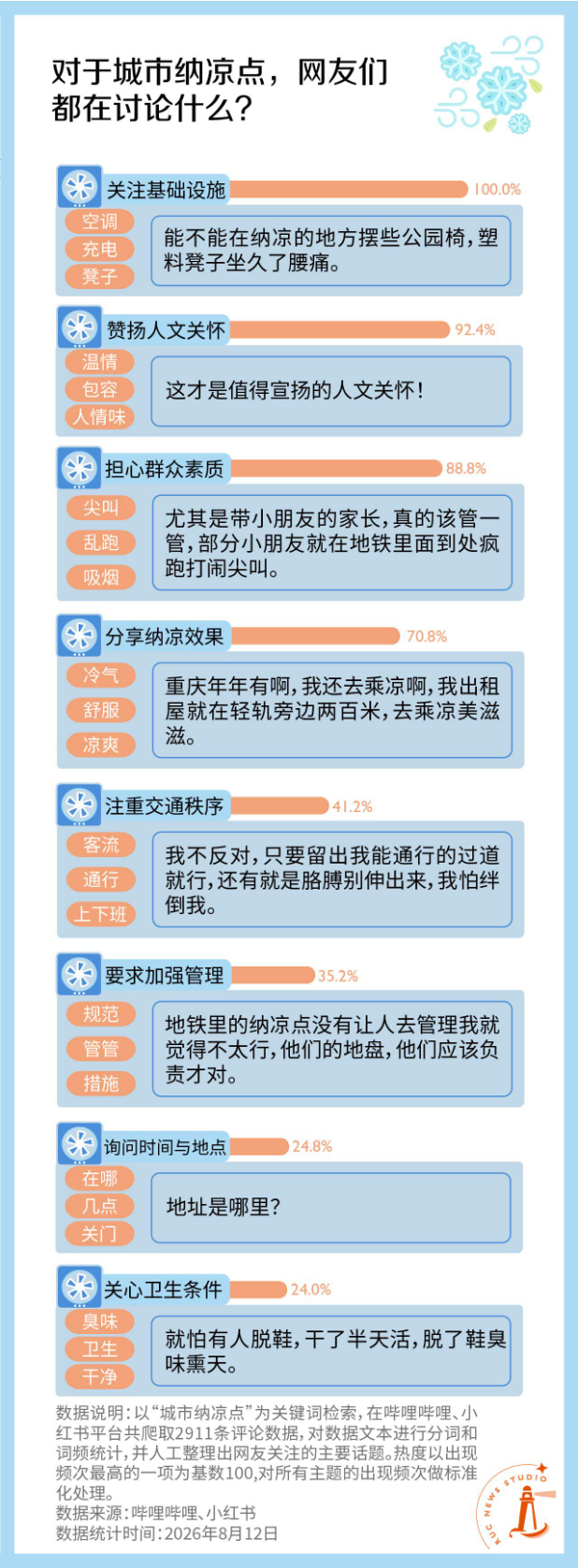
As public air-conditioning becomes more widespread, discussions on social media also reflect the dual nature of real-life experiences.
The public's demands have shifted from "whether or not there are cooling spots" to "how user-friendly they are": the insufficient comfort of plastic chairs, the lack of charging interfaces, and the uneven cooling effects are all frequent complaints. At the same time, many netizens have affirmed this urban kindness - free cooling spaces, which are a tangible representation of the city's warmth and inclusiveness.
Shared spaces can't avoid governance contradictions. The noise of children and occasional uncivilized behavior can easily disrupt the on-site tranquility; in subway stations, disputes over crowds occupying passageways to cool off frequently occur. The demands of different groups, such as resting to cool off, quietly resting, and commuting normally, collide with each other, making the boundaries of use the most troublesome governance challenge for cooling spaces. In addition, the lack of transparency in information about location and opening hours, as well as the hygiene conditions of enclosed venues, are also areas that citizens repeatedly suggest need improvement.
As extreme heat becomes increasingly normalized, home air conditioning cannot cover the entire population. Public cooling spaces test not just how many sites a city has built, but how it accommodates the needs of different people — cities must strike a balance between openness and maintaining order, both providing a safety net for vulnerable groups seeking relief from the heat and preserving free public spaces where ordinary people can gather.
References:
National Climate Center. 2026 Main Flood Season Climate Trend Forecast [EB/OL]. (2026-04-01) [2026-08-26] https://www.ncc-cma.net/channel/news/newsid/100923
Liu Rui and Zhang Tianyu reported that in 2025, China's warm and humid climate characteristics were prominent, with online rumors claiming "El Niño will bring the hottest summer in history" being neither an exaggeration nor a cause for anxiety. Climate experts analyzed the high-temperature trend for this summer, according to a report by China Meteorological News Press on May 8, 2026, accessed on August 26, 2026, at https://www.cma.gov.cn/2011xwzx/2011xqxxw/2011xqxyw/202605/t20260508_7778318.html.
National Bureau of Statistics. China Statistical Yearbook 2025 [M/OL]. Beijing: China Statistics Press, 2025: 88 [2026-08-19]. https://www.stats.gov.cn/sj/ndsj/2025/indexch.htm
Liu Rui. "China Climate Bulletin (2025)" released, revealing prominent warm and humid climate characteristics in China in 2025. China Meteorological News Press, (2026-01-29) [2026-08-26]. https://www.cma.gov.cn/2011xwzx/2011xqxxw/2011xqxyw/202601/t20260129_7573865.html
Wu Wei and Pan Hongxu, the "China Climate Change Blue Book (2026)" was released [EB/OL]. CCTV News Client, (2026-07-02) [2026-08-26]. https://www.cma.gov.cn/2011xwzx/2011xmtjj/202607/t20260702_7898395.html
Wang Peng. Local areas in Gansu issue high-temperature red alerts. Xinhua Net, (2026-07-23) [2026-09-01]. https://www.news.cn/politics/20260723/b8ef484212b64b418cb1de1fbaa9c9db/c.html.
Ding Yumei, Zhao Haimei. Qinghai's rainfall in early to mid-August was 30% less than the same period [EB/OL]. Qinghai Daily, (2026-08-24) [2026-09-01]. http://www.qinghai.gov.cn/zwgk/system/2026/08/24/030107175.shtml.
National Bureau of Statistics of China. China Statistical Yearbook [DB/OL]. [2026-08-19]. https://www.stats.gov.cn/sj/ndsj/
Yang Xiaotong: The Hottest Summer on Record, Even Northeasterners Can't Resist Buying Air Conditioners. Houlang Research Institute, (2025-07-23) [2026-08-21]. https://mp.weixin.qq.com/s/I_-f_p1XWD7jvt6erTk0og
Li Ziman: Three sentences to sell an air conditioner! This summer, even Northeasterners can't hold on? [10]
Xiaobai Bear: Local temperatures in Northeast China are about to break historical records, with JD.com air conditioner sales in Liaoning Province increasing by 800% year-over-year, according to China Household Electric Appliance Association, as of July 25, 2025, accessed on August 21, 2026, https://ac.cheaa.com/2026/0806/657150.shtml
Who's on an air conditioner buying spree. The Northeast surpasses Jiangsu, Zhejiang, and Shanghai, Yunnan sees a 10-fold increase in 10 years. According to data, the Northeast region has become the largest market for air conditioners in China, with sales exceeding those of Jiangsu, Zhejiang, and Shanghai. In particular, Yunnan Province has seen a significant surge in air conditioner sales, with a 10-fold increase over the past decade.
National Bureau of Statistics. 2025 Migrant Workers Monitoring Survey Report [EB/OL]. (2026-04-30) [2026-08-31]. https://www.stats.gov.cn/sj/zxfb/202604/t20260430_1963472.html
The Chongqing Municipal Office for National Defense Mobilization announced that 44 civil air defense engineering facilities in the city have been converted into cooling points, which are open to the public for free.
Li P, Wu W, and Yin Y published a research paper titled "Enhanced accessibility to park cooling services in developed areas: Experimental insights on the walkability in large urban agglomerations" in the journal Building and Environment, volume 272, with the article number 112665, which can be accessed online, and was retrieved on August 31, 2026, from https://linkinghub.elsevier.com/retrieve/pii/S0360132325001477.