On the evening of August 28, Fosun International (00656.HK) announced that its subsidiary, Club Med Lifestyle Group, has submitted a listing application to the Hong Kong Stock Exchange, planning to list independently on the main board.
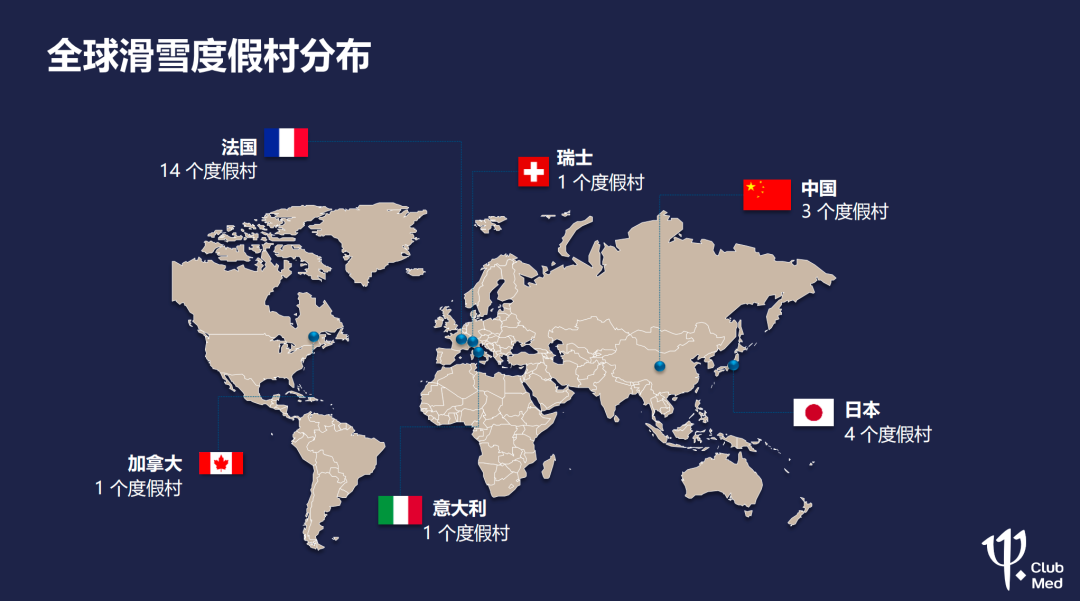
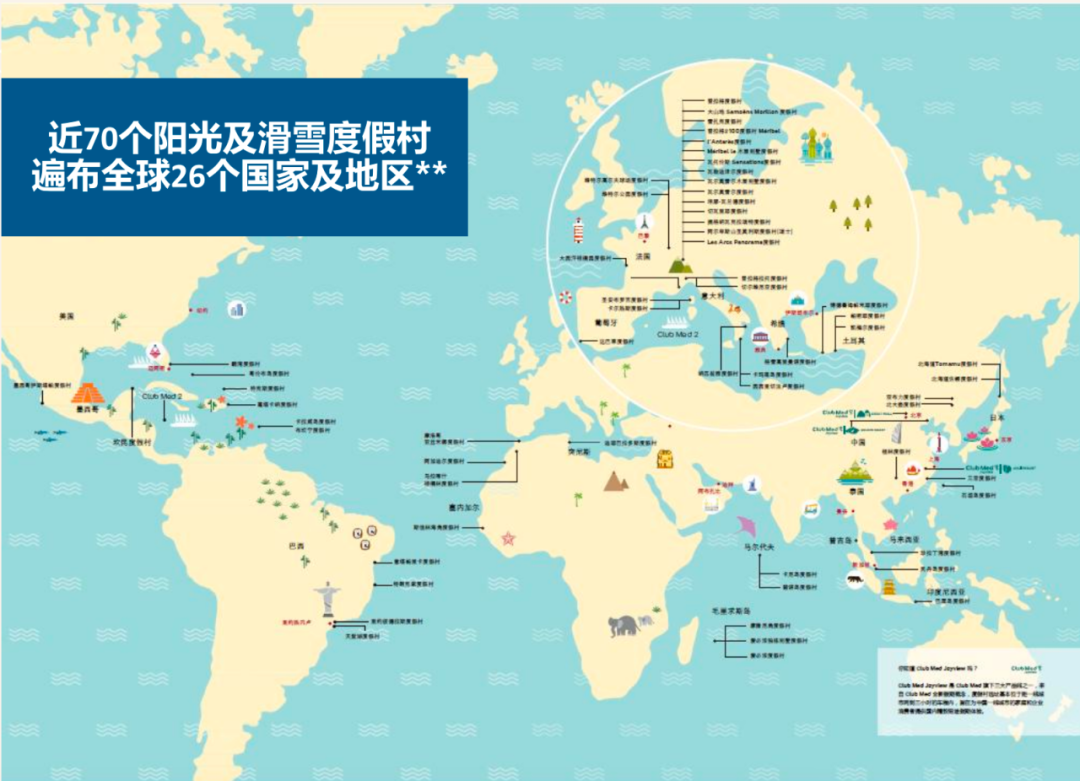
According to the listing application materials, Mediterranean Resort Group, with Club Med as its core brand, operates 69 high-end all-inclusive resorts in over 40 countries and regions across six continents, covering two core scenarios: mountain skiing and seaside sunshine. By 2025 revenue, Club Med is the world's largest resort brand, ranking first in Europe, Africa, the Middle East, and the Asia-Pacific region. By the number of resorts, it is also the world's largest mountain skiing resort brand and the only all-inclusive resort brand with a presence in the four major core skiing destinations: the Alps, Hokkaido, North America, and Northeast China.
This is also the third capital operation for this asset in nine years. For those who have been continuously following Fosun Tourism and Club Med, the plot is not unfamiliar: delisted from the Euronext Paris in 2015, listed on the Hong Kong stock exchange as the core asset of Fosun Tourism (01992.HK) in 2018, and delisted again in March 2025. Just a year and a half later, the same assets have been re-packaged as "Mediterranean Holiday Group" and are once again seeking to list on the Hong Kong exchange.
A 76-year-old brand and Fosun's nine years of three migrations
Club Med was founded in 1950 by French entrepreneur Gérard Blitz, who pioneered the "all-inclusive" vacation model in Mallorca, Spain, and quickly gained popularity in post-war Europe. In 1957, the brand opened its first ski resort in Lesseens, Switzerland, establishing its "sea and snow" dual-core product structure. The introduction of Mini Club Med in 1967 pioneered professional childcare services in the global vacation industry, later becoming a key barrier to entry in the family vacation market. In 1979, Club Med entered the Asian market with its debut in Cherating Bay, Malaysia. In 2004, under the leadership of Henri Giscard d’Estaing, Club Med launched a comprehensive high-end transformation, gradually exiting the mass-market segment, and introduced its top-tier product line, Exclusive Collection, in 2007.
Fosun's involvement dates back to 2010, when Fosun International first made a strategic investment in the French company, and in May 2013, it launched a tender offer with an initial price of 17 euros per share. Italian billionaire Andrea Bonomi later joined the bidding, with both sides raising their offers in succession, as Fosun issued eight tender offers, dragging out the longest takeover battle in French securities trading history for a year and a half. In December 2014, Fosun raised its offer to 24.6 euros per share, valuing Club Med at approximately 939 million euros. In January 2015, Bonomi announced his withdrawal; and in March of the same year, Club Med delisted from the Euronext Paris exchange and officially became part of the Fosun system.
In December 2018, Fosun packaged its cultural and tourism assets, including Club Med and Sanya Atlantis, into Fosun Tourism Culture Group, which was listed on the main board of the Hong Kong Stock Exchange at an issue price of HK$15.6. However, the external environment at the time was not optimistic, and Fosun Tourism's public offering was undersubscribed, with the stock price falling on the first day of trading and remaining sluggish for a long time. From 2020 to 2022, Fosun Tourism accumulated losses of over 5.8 billion yuan due to the impact of the pandemic. To cope with debt pressure, the company has been "slimming down" since 2023, selling off its Casa Cook and Cook's Club hotel brands and overseas businesses, as well as selling its stake in Thomas Cook Tourism (UK) to Polish online travel agency ESKY. During this period, Club Med has always been a "non-sellable item", with Fosun Tourism only expressing an open attitude towards selling a small portion of its shares.
In November 2024, Fosun Tourism Group suddenly suspended trading on the originally scheduled release date of its third-quarter report; on December 11, the company announced its privatization. In March 2025, the privatization proposal was approved by the shareholders' meeting with a support rate of over 99%, and Fosun Tourism Group completed its delisting at HK$7.80 per share, with a total valuation of HK$9.7 billion. At the time, the company stated that after delisting, it could escape the short-term performance pressure of the secondary market and accelerate its transformation towards a light-asset operation.
After delisting, the capitalization path of Fosun's cultural and tourism segment has become clearer. By the end of March 2026, Fosun had submitted an application to the Shanghai Stock Exchange in the form of a commercial property publicly offered REIT, with Sanya Atlantis Hotel and Water Park as the underlying assets. In the same month, the market reported that Club Med was evaluating an initial public offering (IPO), with Hong Kong, Paris, and Amsterdam listed as potential listing locations. At the time, Fosun responded by saying that there were "no clear capital market plans" yet. It wasn't until the evening of August 28 that the mystery was revealed.
IPO Prospectus Breakdown:
The world's largest, with growth hitting the brakes
From 2023 to 2025, Mediterranean Holiday Group's operating revenue was 1.862 billion euros, 1.923 billion euros, and 1.949 billion euros, respectively, with growth slowing from 3.3% to 1.3%; even at constant exchange rates, growth in 2025 was only around 4%. In contrast, net profit plummeted from 68.768 million euros to 10.917 million euros, a decline of over 80% in two years.
In terms of operations, the average daily bed price rose from 220 euros in 2023 to 235 euros in 2025, and further to 261 euros in the first half of 2026; however, the number of guests received during the same period remained around 1.5 million, with an occupancy rate per bed hovering around 62%. Although "high-endization" drove up the average price per customer, the scale of the customer base failed to expand in tandem.
According to data from Zhi Shi Consulting, the global resort market is expected to reach approximately $232.5 billion in 2025 and grow to $325.9 billion by 2030, with the all-inclusive segment growing at a rate of 7.6%, the Asia-Pacific region seeing a compound annual growth rate of 8.7%, and ski resorts being the fastest-growing segment with a growth rate of 9.9%.
However, this is a highly fragmented market: in 2025, the top five global resort brands combined accounted for only around 4% of the market, with Club Med ranking first globally with a 1.1% overall share and a 5.3% share in the all-inclusive segment.
In the premium segment, Club Med's primary competitors include regional leaders such as Sandals, RIU, and Iberostar, which are deeply entrenched in mature markets like the Caribbean and the Mediterranean. By contrast, Club Med has built a differentiated competitive edge through its global footprint, full-scenario operational capabilities, and established children's resort programs. Looking at the business mix, ski resorts contribute approximately 35% of revenue and represent the fastest-growing segment. Europe remains the dominant market, with France alone accounting for over 30% of revenue, while Asia-Pacific—particularly China—is viewed as the core engine for future growth.
After High-End Transformation:
Acceleration of Expansion and Fosun's Capital Layout
Since Fosun's acquisition, Club Med's strategic focus has been on high-end development. In 2024, Club Med announced that 100% of its global resorts had completed the Premium and Exclusive Collection tiering, fully completing the brand's high-end upgrade.
Since 2025, Club Med has significantly accelerated its global layout and product iteration: in July 2025, the seaside and safari hybrid resort in South Africa started trial operations, combining wild luxury animal hunting with seaside vacations for the first time; in June 2026, it announced a partnership with VICI Properties to restart the Saint Croix Island resort in the US Virgin Islands, officially returning to the US mainland market; projects such as the Canadian Mont-Tremblant, Indonesian Manado, and Italy's second ski resort have all been signed, and are expected to open one after another before 2028; in August 2026, the Exclusive Collection luxury resort in Thailand's Koh Samui was officially grounded. According to plan, by 2030, the brand's global resort network will expand to around 85 locations.
In the Chinese market, aside from traditional resorts, the Joyview Mediterranean Neighborhood Getaway product launched by the brand earlier failed to meet expectations, with less-than-ideal market feedback. In April 2026, Club Med introduced its Urban Oasis city resort product line, with the Hangzhou Longwu Resort opening as the first store, replicating the all-inclusive model from remote resorts to urban leisure scenarios to explore shorter-cycle vacation demands. Additionally, the brand's direct booking channel proportion has increased to 73%, and multiple resorts worldwide have obtained BREEAM and LEED green building certifications.
This is also the significance of the IPO, as shown in the prospectus, the raised funds are intended to be used for expanding the global resort network, upgrading holiday products, developing digitalization and AI capabilities, with the remainder used for optimizing the capital structure and daily operations.
Looking back at the Fosun International level, the significance of this spin-off may be more important than the valuation of a single asset. After Fosun Tourism's delisting, the idea of restructuring Fosun Tourism's assets has become clear: heavy assets will be securitized, with Sanya Atlantis applying to list on the Shanghai Stock Exchange in the form of publicly offered REITs; light assets will be financed through equity, with Club Med being spun off independently to list in Hong Kong.
Mediterranean resort group officials stated that after listing, the company will establish a governance structure adapted to the standards of a listed company, and the vacation business will also obtain an independent financing platform, without having to mainly rely on Fosun International. This is in line with the previous statement by Xu Bingxian, Co-President of Fosun Tourism and Culture Group and CEO of Club Med China: "In the past, the model of real estate + tourism will not be the main direction of Fosun Tourism and Culture Group's future development, but instead will focus on light-asset operation capabilities as the core development."

Club Med's capital journey has been in sync with the ups and downs of the global vacation market, and its listing in Hong Kong is not only a revaluation by Fosun of this "jewel in the crown," but also a public test of the results of its 12-year high-end transformation. For this 76-year-old vacation brand, landing on the Hong Kong stock market is just the beginning of a new journey.

How do you view
Club Med's capital operation path involves a series of strategic moves, including its 2015 acquisition by Fosun International, a Chinese conglomerate, for approximately 939 million euros. Following the acquisition, Club Med underwent significant restructuring and expansion efforts, aiming to increase its global presence and competitiveness in the luxury tourism market. In 2020, Fosun International announced plans to list Club Med on the Hong Kong Stock Exchange through a spin-off, seeking to raise capital and further accelerate the company's growth. This listing would provide Club Med with the necessary funds to invest in new resorts, enhance its services, and explore emerging markets, particularly in Asia. By leveraging Fosun's extensive resources and network, Club Med aims to solidify its position as a leading global player in the high-end tourism sector.
What are your holiday experiences with it?
Welcome to share your thoughts in the comments section